Prep
30 minutes
Cook
1 hour 30 minutes
Total
2 hours plus 4 weeks maturing
Serves
6 x 250ml jars
Key takeaways
- 1kg cooked garden beetroot + 500g cooking apples + 250g onion + 300ml malt vinegar = 6 jars
- Cook chutney to spoon-trail consistency, around 90 minutes total simmer
- Mature 4 weeks minimum before eating, 8 weeks for best flavour
- Keeps 12 months unopened in a cool dark place, 8 weeks once opened in the fridge
- Sterilise jars in a low oven (110C for 15 minutes) before filling hot chutney
- Roast or boil beetroot first; raw beetroot makes a watery, less-flavoured chutney
From the Garden
Grow these for the recipe: Beetroot, Cooking apples (Bramley), Onion, Garlic.
Ingredients
Main ingredients
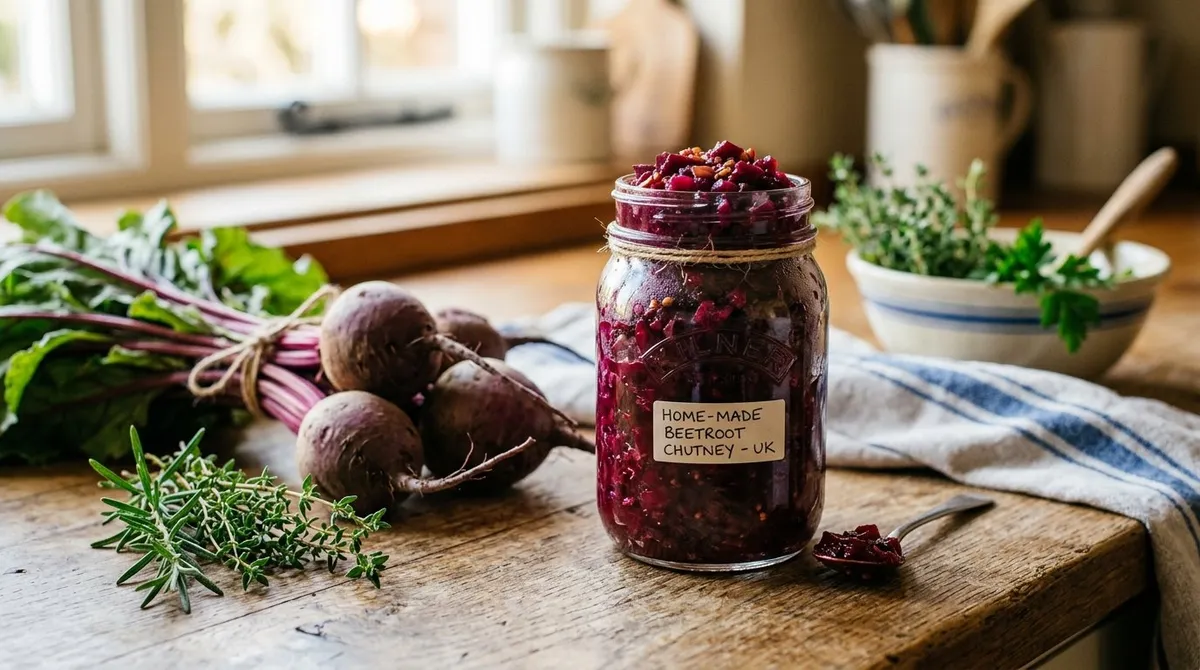
- • 1kg cooked beetroot, peeled and diced (about 1.3kg raw)
- • 500g Bramley cooking apples, peeled and diced
- • 250g onion, finely chopped
- • 2 garlic cloves, finely chopped
Vinegar and sugar
- • 300ml malt vinegar
- • 200g light brown sugar
- • 100g granulated sugar
Spices
- • 1 tbsp mustard seeds
- • 1 tsp ground ginger
- • 1/2 tsp ground allspice
- • 1/2 tsp ground cloves
- • 1 tsp fine sea salt
- • 1/2 tsp freshly ground black pepper
Equipment
- Large heavy-based pan (5 litre minimum, stainless steel or enamelled cast iron)
- 6 x 250ml glass jars with vinegar-proof lids (Kilner or similar)
- Wooden spoon
- Sharp knife
- Oven for sterilising jars
Method
- 1
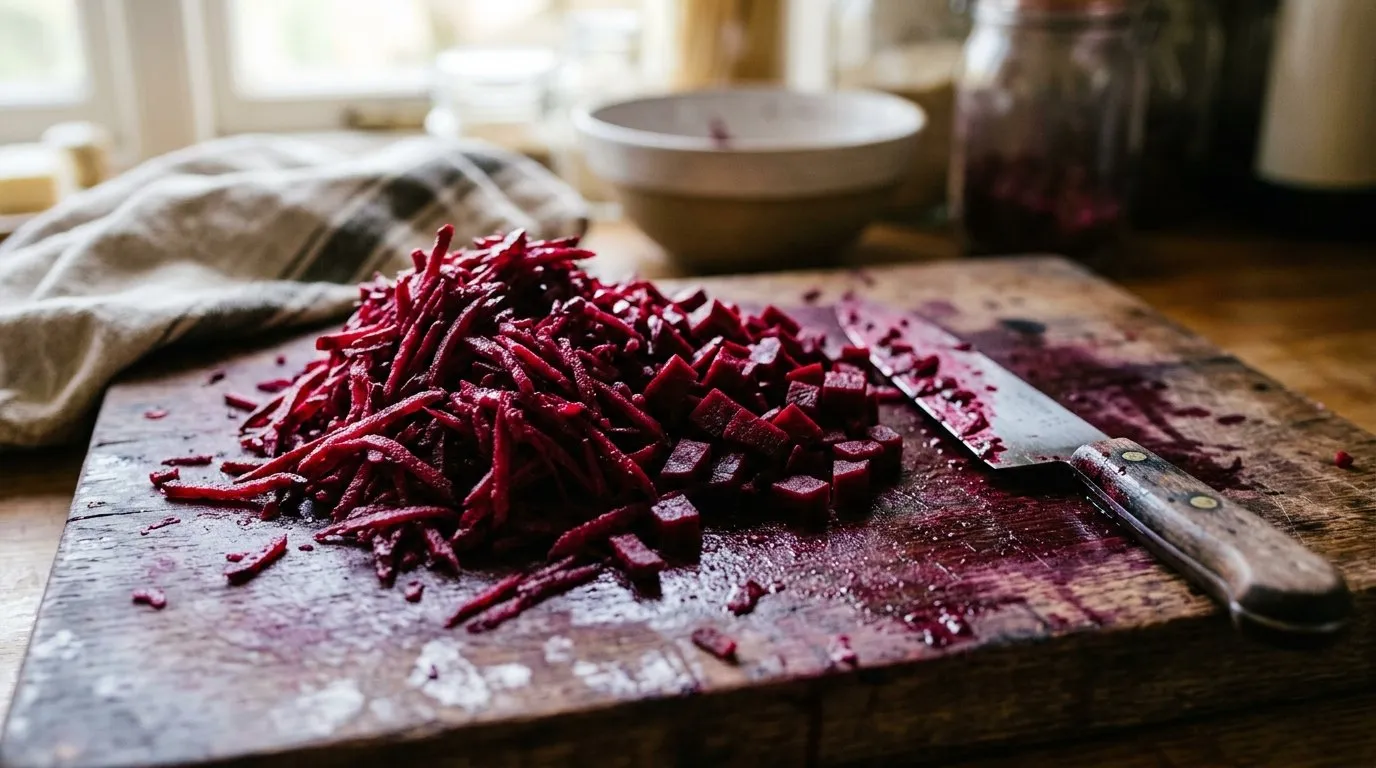
Preheat oven to 180C/160C fan. Wrap whole unpeeled beetroot in foil parcels (3-4 medium beetroot per parcel). Roast for 90 minutes until tender to a knife. Let cool until handleable, then peel by rubbing the skins off with kitchen paper. Dice into 1cm pieces.
- 2
Prepare the rest. Peel, core, and dice the apples. Finely chop the onion and garlic.
- 3
Sterilise the jars. Wash in hot soapy water, rinse, then place in a 110C/90C fan oven for 15 minutes. Boil the lids in water for 10 minutes. Keep jars warm until filling.
- 4
Combine the diced beetroot, apple, onion, and garlic in the large pan. Add the malt vinegar, both sugars, all the spices, and salt and pepper. Stir well.
- 5
Bring to a gentle boil over medium heat, stirring until the sugar dissolves. Reduce heat to low and simmer uncovered for 60-90 minutes, stirring every 10 minutes. The chutney is ready when a wooden spoon drawn across the bottom of the pan leaves a trail that takes 3-4 seconds to fill back.
- 6
Pot the chutney into the warm sterilised jars while still hot. Fill to 1cm below the rim. Wipe the rims clean. Seal immediately with the boiled lids.
- 7
Label with the date. Store in a cool dark place for 4 weeks before opening. The chutney is at its best after 8 weeks of maturing.
Storage
Unopened jars keep for 12 months in a cool dark place (larder, garage, kitchen cupboard away from cookers). Once opened, refrigerate and use within 8 weeks. The chutney darkens and deepens in flavour as it ages. Use within 18 months of making for best flavour even if unopened.
You will find the roast-don’t-boil beetroot method, the spice ratios that work for UK palates, and the maturing schedule that turns a fresh-and-vinegary jar into the deep-flavoured preserve worth giving as a Christmas present. Pair this with the garden beetroot growing guide for full crop-to-jar continuity.
Why this recipe works
The beetroot is the star, but the supporting cast matters. Cooking apples (Bramley) collapse during the simmer and thicken the chutney without extra pectin. Onion adds sweetness as it cooks down. Garlic, mustard seeds, ginger, allspice, and clove give the warming spice profile that distinguishes UK chutney from Indian-style versions.
The vinegar-to-sugar ratio (300:300 by weight) gives a balanced sweet-sharp finish. Increase the sugar by 50g for a sweeter chutney; reduce by 50g for sharper. Vinegar percentage cannot drop below 5% acidity or the preserving function fails.
Variations
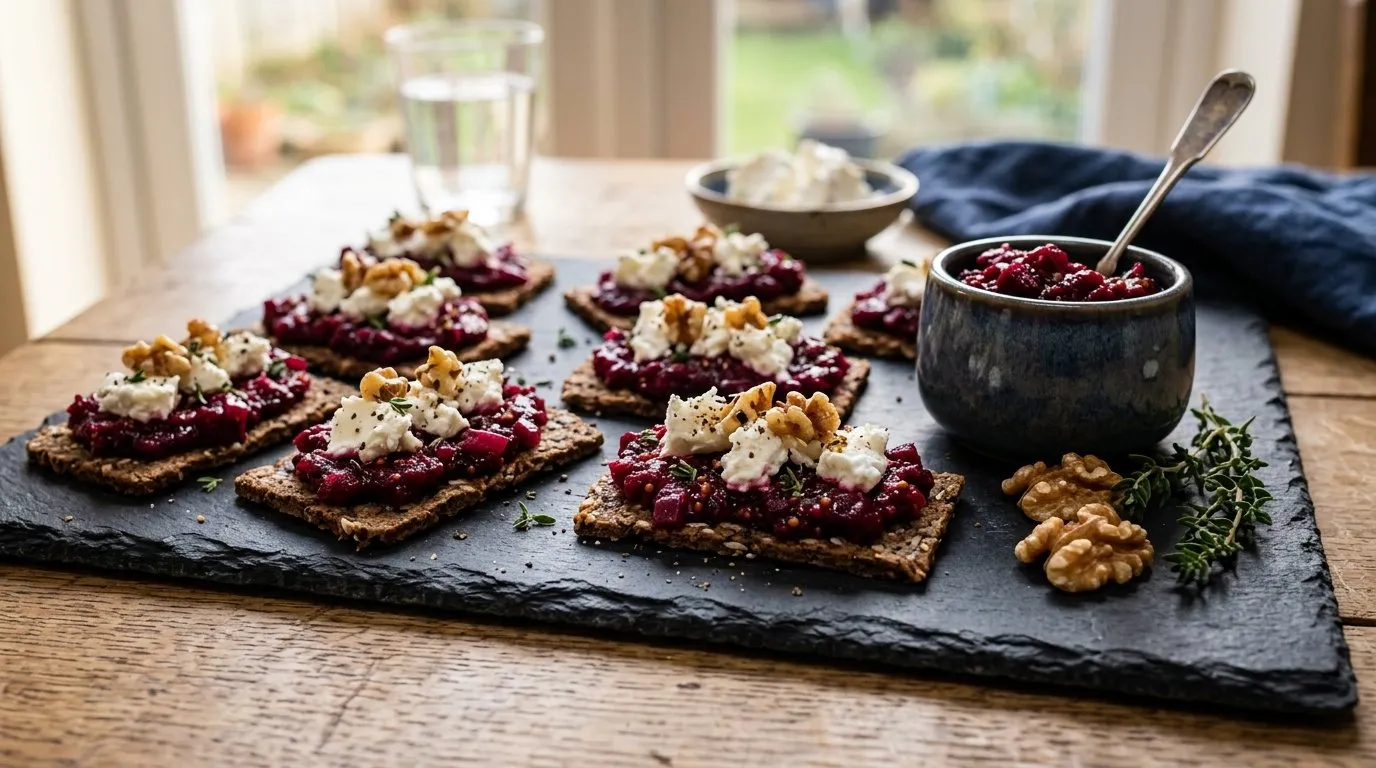
Beetroot and orange. Add the zest and juice of 1 orange at the simmer stage. Bright, citrus-forward variation that pairs especially well with goat’s cheese.
Beetroot and ginger. Triple the ground ginger to 1 tablespoon. Adds heat and pairs with smoked fish.
Beetroot and horseradish. Stir in 2 tablespoons fresh grated horseradish at the end of the simmer. UK classic with cold beef.
Beetroot and red onion. Replace half the onion with red onion for a slightly milder, sweeter result.
Best cheese pairings
The chutney’s earthy-sweet-sharp profile works with most strong cheeses. Top combinations:
- Mature Cheddar (Westcombe, Montgomery, Quicke’s). The sharp Cheddar cuts through the chutney’s sweetness.
- Stilton. Blue cheese plus beetroot is the UK Christmas-cheeseboard classic.
- Lancashire (creamy, crumbly type). Mild enough to let the chutney shine.
- Goat’s cheese (Capricorn, Wensleydale chevre). Lightly tangy, brightens the beetroot.
- Hard sheep’s cheese (Wigmore, Berkswell). Nutty notes complement the spices.
Avoid mild young cheeses (mozzarella, brie); the chutney overpowers them.
Common mistakes
Boiling instead of roasting beetroot. The single biggest flavour reduction. Always roast.
Skipping the maturing time. Fresh chutney tastes harsh. Wait 4 weeks minimum.
Using eating apples. Bramleys collapse; Galas don’t. Stick to cooking apples.
Filling cold jars. Cold jars crack when hot chutney goes in. Always pre-warm to 100C+ in the oven.
Skimping on the simmer. Under-cooked chutney is watery and goes off faster. Look for the wooden-spoon trail test before potting.
Frequently asked questions
Should I roast or boil beetroot for chutney?
Roast it. Roasted beetroot wrapped in foil at 180C for 90 minutes concentrates sugars and gives deeper colour and flavour than boiling. Boiling leaches sweetness and colour into the cooking water. The roasted version makes a darker, richer chutney with no extra effort beyond the oven time.
Why is my chutney too watery?
Three causes: under-cooking, using eating apples instead of Bramleys, or boiled beetroot adding extra water. Return to the pan and simmer for another 20-30 minutes. The chutney is ready when a wooden spoon drawn across the bottom of the pan leaves a clean trail for 3-4 seconds before the chutney closes back over.
Can I use apple cider vinegar instead of malt vinegar?
Yes, cider vinegar works and gives a slightly fruitier flavour. White wine vinegar also works for a milder result. Avoid balsamic vinegar (too sweet, wrong flavour profile) and rice vinegar (too mild). The 5% acidity is what preserves the chutney; any 5%+ acidity vinegar will work.
How long does beetroot chutney need to mature?
Beetroot chutney needs at least 4 weeks to mature before eating. Fresh chutney tastes harshly vinegary and the spices dominate. After 4 weeks the flavours marry. After 8 weeks the chutney reaches peak balance. The flavour continues developing for 6 months in the jar before any decline.
What goes well with beetroot chutney?
Beetroot chutney is brilliant with strong cheeses (mature Cheddar, Stilton, Lancashire), cold cuts (ham, beef, pork pie), and oily fish (smoked mackerel, herring). Spread on cheese-and-pickle sandwiches, in ploughman's lunches, or alongside a Sunday roast beef. The sweet-sharp profile cuts through fatty meats and rich cheeses.
Our team produces practical UK gardening guidance from source research, contributor records and established horticultural practice. Editorial standards are overseen by Matt W.