Prep
45 minutes (plus 24 hours brining)
Cook
10 minutes
Total
1 hour 5 minutes plus 24 hours brining and 6 weeks maturing
Serves
4 x 500ml jars
Key takeaways
- 1kg garden shallots + 1 litre malt vinegar + spices = 4 x 500ml jars in 30 minutes
- Make in early November to be ready for Christmas (6 weeks minimum maturing)
- Brine the peeled onions for 24 hours; this draws out water and keeps them crisp
- Use pickling shallots (Long Red, Pikant) or pearl onions; full-size onions go mushy
- Spiced vinegar uses peppercorns, cloves, mustard seed, allspice, and bay leaf
- Keeps 18 months unopened in a cool dark place, 6 weeks once opened
From the Garden
Grow these for the recipe: Shallots (Long Red, Pikant, or Echalion), Pickling onions (Paris Silverskin, Buffalo).
Ingredients
Onions and brine
- • 1kg shallots or pickling onions
- • 100g fine sea salt
- • 1 litre cold water
Spiced vinegar
- • 1 litre malt vinegar (or 50:50 malt and white wine vinegar)
- • 100g granulated sugar
- • 2 tbsp black peppercorns
- • 2 tbsp mustard seeds (yellow or brown)
- • 1 tbsp whole allspice berries
- • 1 tsp whole cloves
- • 1 tsp coriander seeds
- • 4 bay leaves
- • 2 dried red chillies (optional, for heat)
Equipment
- Large bowl (4 litre minimum) for brining
- Heavy-based pan for vinegar
- 4 x 500ml glass jars with vinegar-proof lids
- Small squares of muslin for spice bags (optional)
- Sharp paring knife
- Large bowl of cold water for peeling
Method
- 1
Peel the shallots. Cut a small X in the root end of each, then dunk in boiling water for 30 seconds, then ice-cold water. The skins slip off easily. This step takes 30-40 minutes for 1kg of shallots; persevere.
- 2
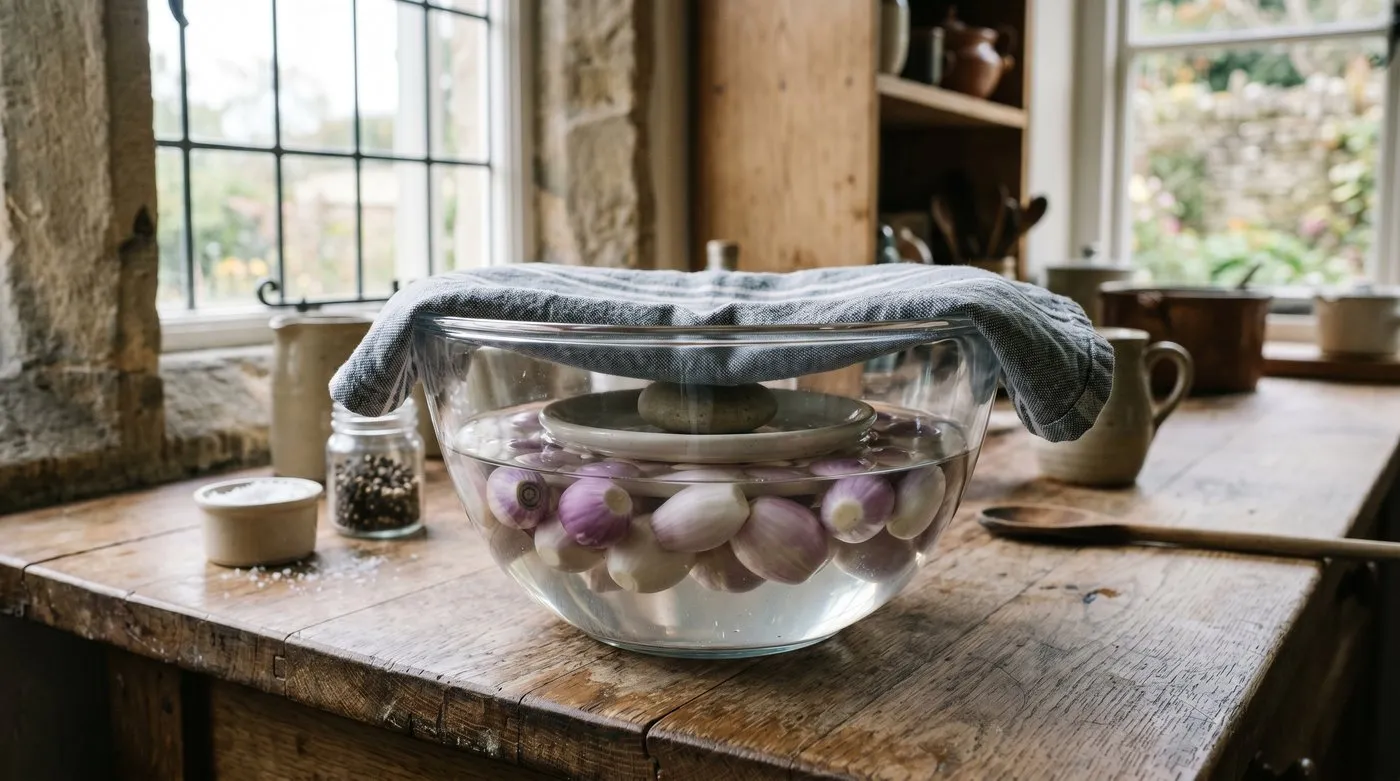
Place the peeled shallots in a large bowl. Dissolve the salt in the cold water and pour over to cover. Weight down with a small plate so all shallots stay submerged. Cover with a tea towel.
- 3
Brine for 24 hours at room temperature. The salt draws water out of the shallots, which gives crisp pickles.
- 4
Sterilise the jars. Wash in hot soapy water, rinse, then place in a 110C/90C fan oven for 15 minutes. Boil the lids in water for 10 minutes. Keep jars warm until filling.
- 5
Drain the shallots and rinse in fresh cold water 3 times to remove the salt. Pat dry on a clean tea towel.
- 6
Make the spiced vinegar. Combine the vinegar, sugar, and all the spices in a saucepan. Bring to a boil, then reduce heat and simmer for 5 minutes. Take off the heat and let infuse for 10 minutes.
- 7
Pack the shallots into the warm sterilised jars, leaving 2cm headspace at the top. Pack tightly but don't crush.
- 8
Strain the spiced vinegar through a sieve into a jug, or distribute the loose spices among the jars (1-2 teaspoons per jar). For neater jars, tie loose spices in a small muslin bag and add 1 bag per jar.
- 9
Pour the hot spiced vinegar over the shallots, covering completely. Tap the jars gently to release air bubbles. Top up with more vinegar if needed.
- 10
Wipe the rims clean. Seal immediately with the boiled lids.
- 11
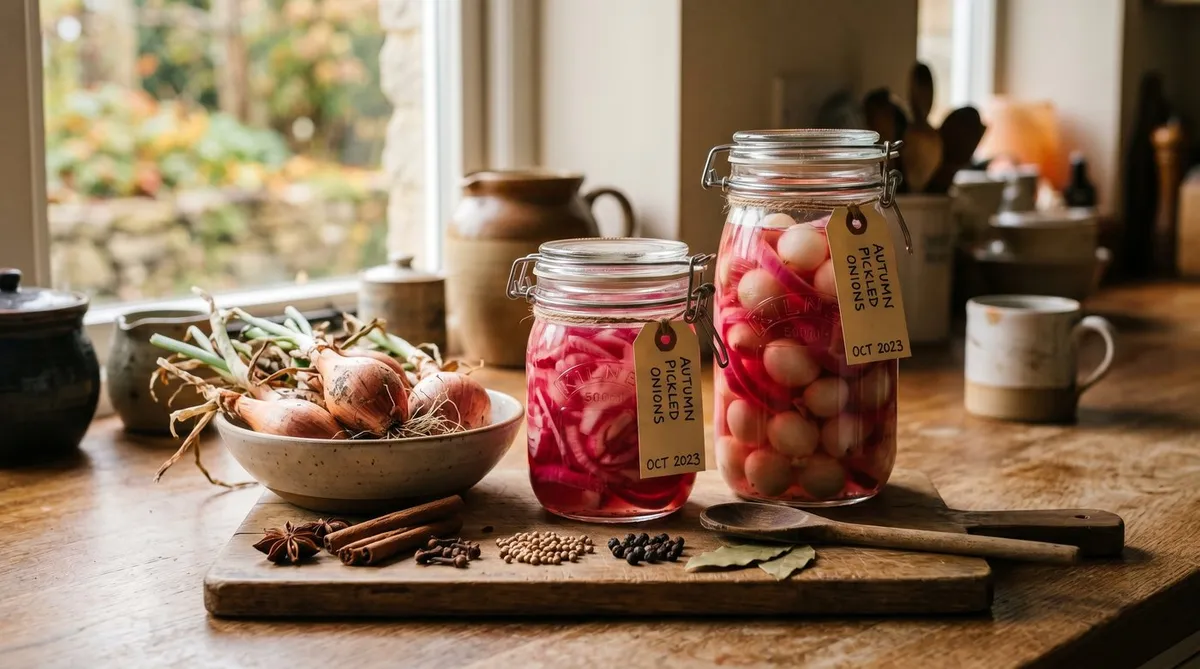
Label with the date. Store in a cool dark place for 6 weeks before opening. Best after 8 weeks for fully developed flavour.
Storage
Unopened jars keep for 18 months in a cool dark place. Once opened, refrigerate and use within 6 weeks. The onions stay crisp for the full storage life if the brining step was done properly. Cloudy vinegar is normal; it doesn't affect quality. Discard if you see any mould or smell anything off.
You will find the brining step that keeps the onions crisp, the spice mix that gives the UK character, and the maturing schedule that turns harsh fresh jars into the deep-flavoured pickle worth a place on every Christmas cheese board. Pair with the shallot growing guide for the right cultivar to plant for pickling.
Why this works
The 24-hour brine is the single most important step. Shallots and onions are 90% water. Without brining, that water leaches into the vinegar over the maturing weeks, diluting the flavour and softening the texture. The salt brine draws the water out before the vinegar goes in, so the onions stay crisp and the vinegar stays full-strength.
The hot vinegar pour is the second key. Cold vinegar takes 4-6 weeks to penetrate through the onion skins. Hot vinegar penetrates within hours. The result is faster maturing and more even flavour distribution.
The spice mix is the UK signature. Black pepper, mustard seeds, allspice, cloves, coriander, bay, and chilli all contribute. Each delivers a different note. Together they give the warm, slightly spicy character of British pickled onions, distinct from the sweeter Continental versions.
Variations
Sweet pickled onions. Increase sugar to 200g for a milder, sweeter pickle. Pairs better with cold meats than with cheese.
Hot pickled onions. Add 4-6 fresh red chillies (whole) to the jars. The vinegar takes on the heat over 6 weeks, giving spicy onions for curries.
Christmas-spiced. Add 2 cinnamon sticks and the zest of 1 orange to the vinegar simmer. Festive flavour profile, especially good with cold turkey.
Pickled cocktail onions. Use the smallest pearl onions (1-2cm). Reduce vinegar to white wine for a clear, milder pickle. Use as garnish for Gibsons and Bloody Marys.
Burmese-style. Add 2 tbsp turmeric and 2 tbsp mustard powder to the vinegar. Yellow-orange pickle that pairs with curries.
Best uses for UK pickled onions
- Ploughman’s lunch. Pickled onion + mature Cheddar + crusty bread + chutney. The British classic.
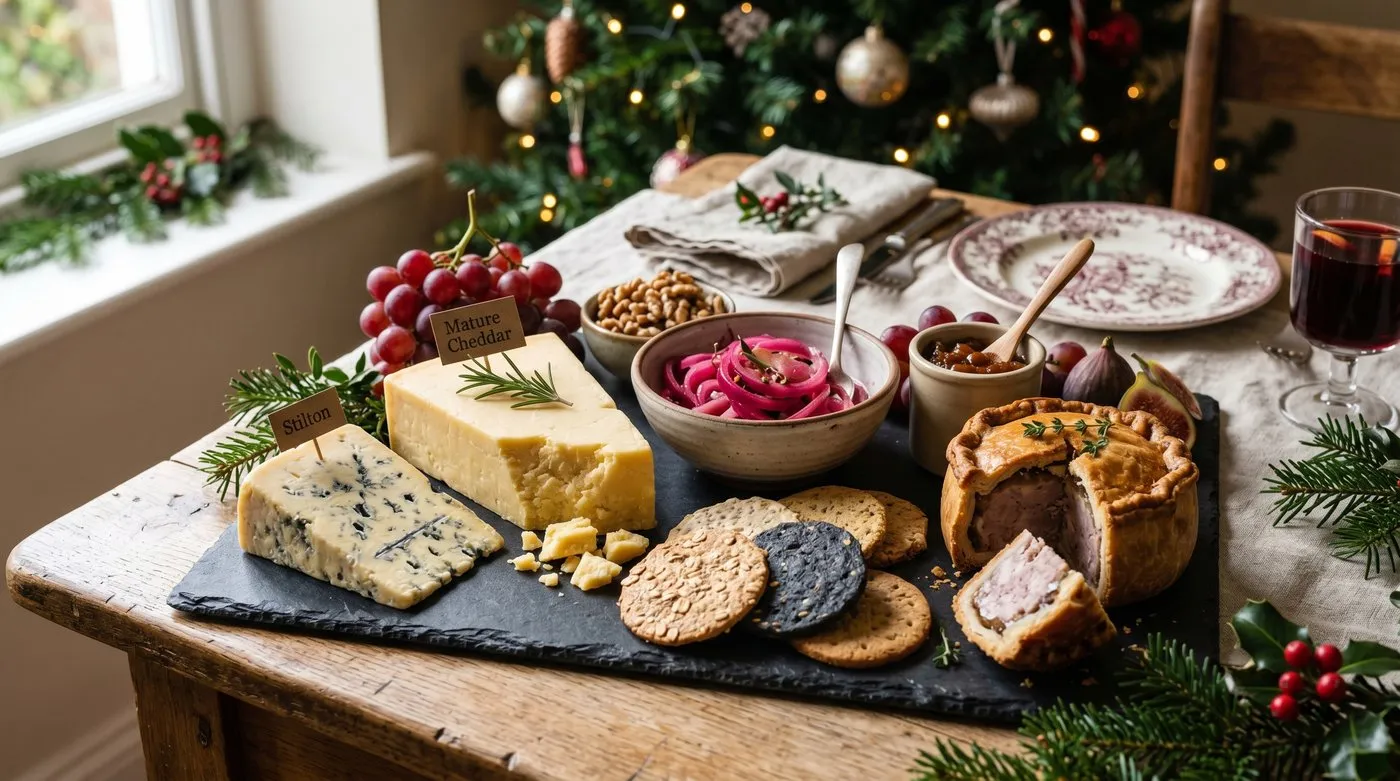
- Christmas cheese board. Pickled onions, Stilton, Cheddar, Wensleydale, plus oat biscuits and a glass of port.
- Cold meat sandwiches. Sliced into ham or roast beef sandwiches.
- Curry condiment. Sliced into Indian curries as a fresh-acid contrast.
- Bar snack. Single pickled onion on a cocktail stick with cubed Cheddar.
- Roast beef Sunday lunch. Three or four pickled onions on the side, sharp against the rich beef.
Common mistakes
Skipping the brine. Soggy pickles within 4 weeks. Always brine 24 hours.
Using full-size onions. They go mushy. Stick to shallots or pickling onions.
Cold vinegar. Slow penetration, uneven flavour. Always pour boiling hot.
Filling cold jars. Cracks them. Always pre-warm to 100C+.
Eating too soon. Fresh pickled onions taste raw and harsh. Wait 6 weeks minimum, 8 weeks for best.
Reusing old vinegar. The acidity drops with use. Always use fresh vinegar for safe preservation.
Frequently asked questions
What onions are best for pickling in the UK?
Shallots (Long Red, Pikant, or Echalion types) and pickling onions (Paris Silverskin, Buffalo) are the best for UK pickled onions. Both stay firm and crisp through the pickling process. Avoid full-size salad or storage onions; they go mushy. Pickling shallots are 2-3cm in diameter; full-size shallots can be quartered if needed.
Why do my pickled onions go soft?
Three causes: skipping the brine step (draws out the water that makes onions crisp), using the wrong onion variety (full-size onions go mushy), or not boiling the vinegar before pouring (cold vinegar takes weeks to penetrate). Always brine 24 hours, use shallots or pickling onions, and pour the vinegar boiling hot over the packed jars.
How long do pickled onions need to mature?
Pickled onions need at least 6 weeks to mature before eating. Fresh pickled onions taste harsh and watery. After 6 weeks the vinegar penetrates, the spices integrate, and the onions reach the right balance of crisp texture and tangy flavour. After 12 weeks they hit peak. Most UK home cooks make them in early November for a Christmas serve.
Can I use white wine vinegar instead of malt vinegar?
Yes, white wine vinegar gives a milder, sharper pickle. Cider vinegar works too with a fruitier note. Malt vinegar is the UK traditional choice and gives the deepest flavour. A 50:50 malt-and-white-wine blend is the best compromise. Avoid balsamic (too sweet) and rice vinegar (too mild). All vinegars must be 5%+ acidity for safe preservation.
What goes well with pickled onions?
Pickled onions are the UK ploughman's lunch classic. Pair with mature Cheddar, Stilton, Lancashire cheese, pork pie, sliced ham, and a chunk of crusty bread. Serve alongside a roast beef Sunday lunch as a sharp contrast. Chop into sandwiches with cold cuts. The Christmas-season favourite is mature Cheddar plus pickled onion plus crackers as a between-meal snack.
Our team produces practical UK gardening guidance from source research, contributor records and established horticultural practice. Editorial standards are overseen by Matt W.