Prep
10 minutes
Cook
25 minutes
Total
35 minutes
Serves
6
Key takeaways
- 1.5kg courgettes + onion + 1 litre stock = 6 generous portions of velvety summer soup
- Cook total 35 minutes: 8 minutes sweating onion, 25 minutes simmering courgettes
- Use any size courgette, even the marrow-sized monsters; just remove the seeds first
- Add basil for a Mediterranean version or mint for an English country garden version
- Freezes for 4 months; stir in cream or yoghurt only at serving, never before freezing
- Cost per portion is under £0.50 when made with home-grown courgettes
From the Garden
Grow these for the recipe: Courgettes (any variety, any size), Onion, Garlic, Basil or mint, Parsley.
Ingredients
For the soup
- • 1.5kg courgettes (de-seeded if over 25cm long)
- • 1 large onion, chopped
- • 3 garlic cloves, finely chopped
- • 3 tbsp olive oil
- • 1 litre vegetable or chicken stock
- • 1 tsp fine sea salt
- • Freshly ground black pepper
Mediterranean finish
- • Large handful fresh basil leaves
- • Zest and juice of 1 lemon
- • 30g grated Parmesan
- • Drizzle of good olive oil
English garden finish (alternative)
- • Large handful fresh mint leaves
- • 100ml double cream or thick natural yoghurt
- • Squeeze of lemon
- • Garden chives, snipped
Equipment
- Large heavy-based saucepan or stock pot (4 litre minimum)
- Stick blender or jug blender
- Sharp knife
Method
- 1
Heat the olive oil in the pan over medium heat. Add the chopped onion. Cook for 5-6 minutes, stirring, until soft and lightly golden. Add the garlic and cook for 1 more minute.
- 2
Add the diced courgettes. Stir well to coat in the oil. Cook for 3-4 minutes, stirring occasionally, until the courgettes start to release their water.
- 3
Pour in the stock. Add the salt and several twists of pepper. Bring to a gentle boil, then reduce heat to a simmer. Cook for 15-18 minutes, until the courgettes are completely tender and breaking down at the edges.
- 4
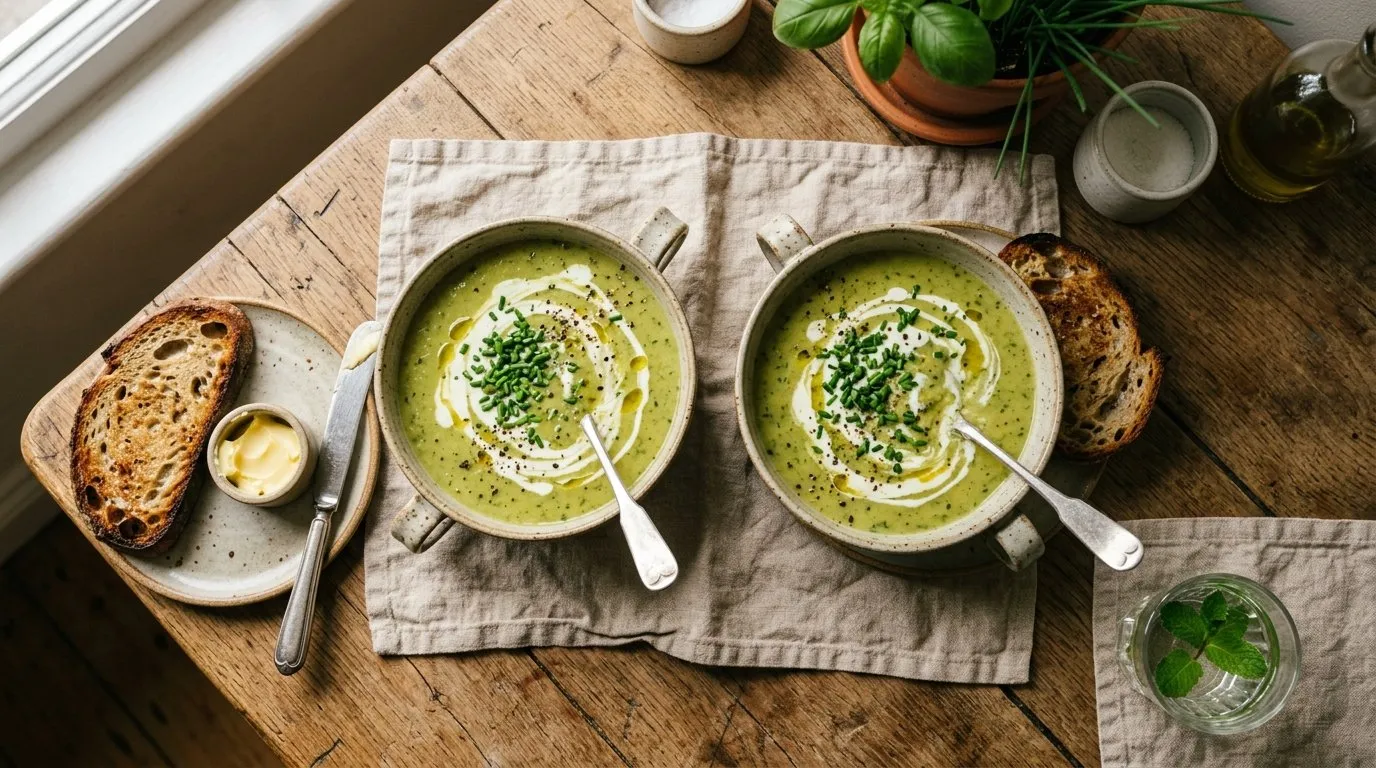
Take the pan off the heat. Add the basil (or mint, depending on version). Blend with a stick blender until completely smooth. The soup should be a pale green-yellow colour with no visible flecks.
- 5
Taste and adjust seasoning. The soup may need more salt; courgettes are mild and absorb seasoning.
- 6
For the Mediterranean version: stir in the lemon zest and juice. Ladle into bowls, top with grated Parmesan and a drizzle of olive oil.
- 7
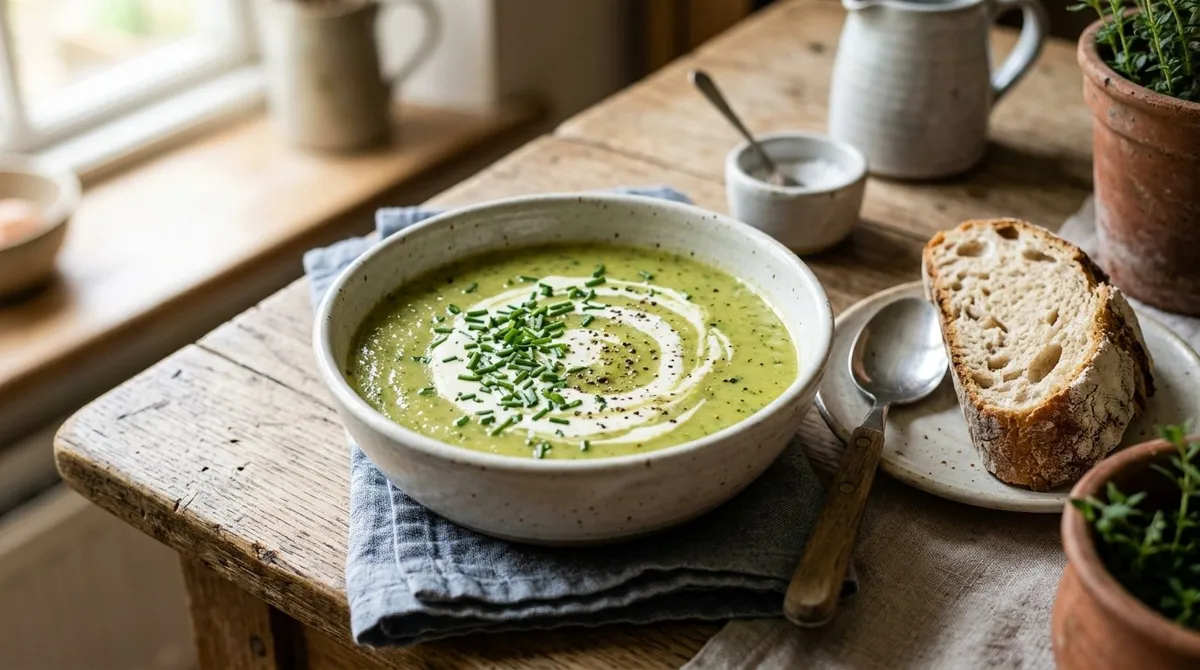
For the English garden version: ladle into bowls, swirl in cream or yoghurt, scatter with snipped chives.
Storage
Refrigerate for up to 3 days. Freeze for up to 4 months in 2-portion containers. Defrost overnight in the fridge and reheat gently on the hob. The texture stays good through freezing. Always add the cream, Parmesan, and herbs after reheating, never before freezing.
The August courgette mountain is one of the great UK gardening problems. A single plant in good conditions produces 8-12 courgettes a week; a 4-plant bed dumps 30-50 onto your kitchen counter every Saturday morning. You eat them sliced. You eat them stuffed. You eat them in fritters. You eat them grated into pasta. By mid-August your family has reached courgette saturation. This soup is the answer.
You will find the seeded-marrow technique that lets you use even the giant courgettes you forgot under the leaves, the two finishing options (Mediterranean basil-lemon or English mint-cream), and the freezing system that turns one Saturday afternoon’s cooking into 12-16 weekday lunches. Pair with garden basil or mint for the finishing herb.
Why this works
Courgettes have very mild flavour on their own. The soup builds intensity through three layers: the slow-fried onion gives caramel sweetness, the garlic gives savoury depth, and the herbs (basil or mint) add the aromatic top note. The vegetable stock carries the body. Without these layers, the soup tastes of nothing.
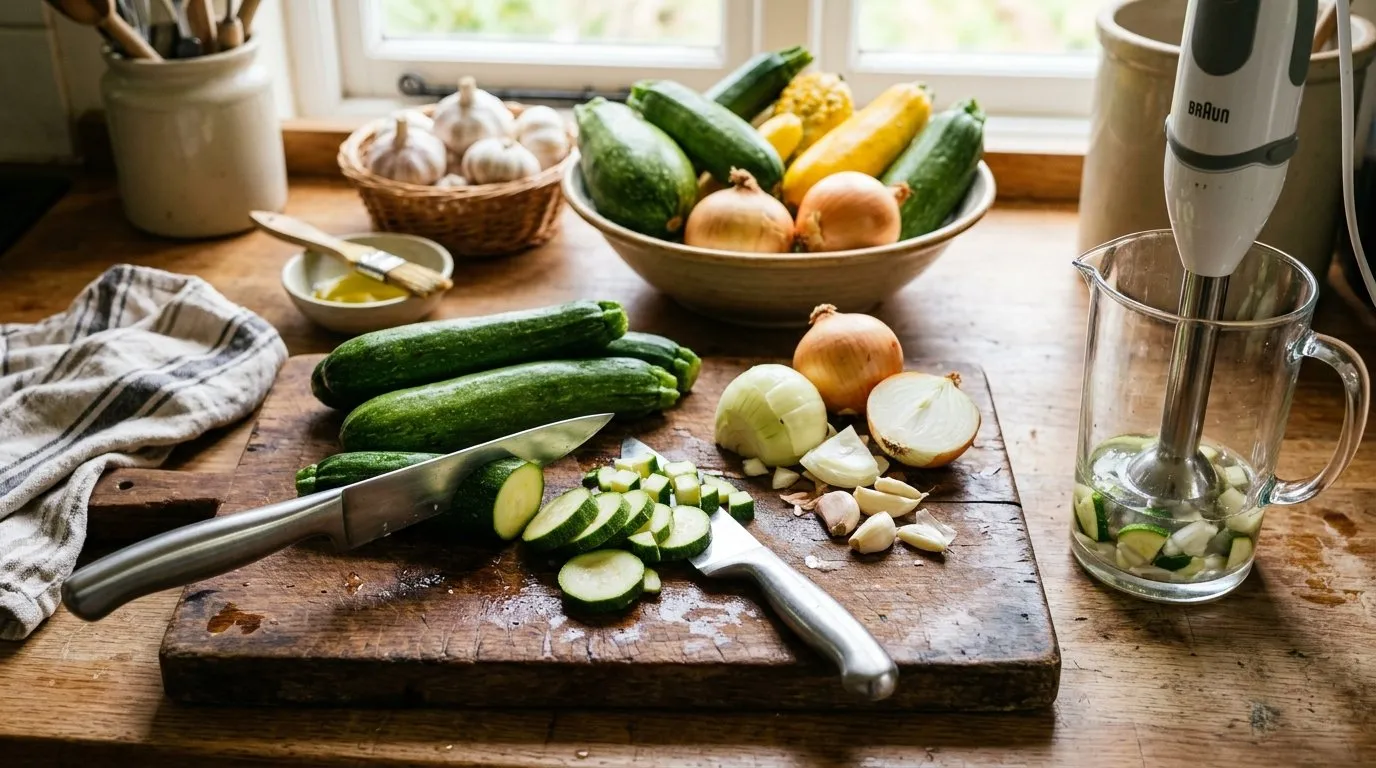
The blending matters. A fully smooth velvet texture is what makes this soup feel restaurant-grade rather than home-style. A chunky version is also fine but loses some of the elegance.
Mediterranean vs English garden version
Mediterranean (basil + lemon + Parmesan). The classic Italian approach. Bright, sharp, summer-feeling. Best in July-August when basil is at peak.
English country garden (mint + cream + chives). The British version. Milder, creamier, suits cool late-August evenings when mornings start to feel autumnal. Both versions use the same base; pick the herbs and finish to match your garden’s harvest.
Variations
Cold soup. Cool the blended soup, chill 4 hours, serve with a swirl of cream and a sprig of mint. Excellent with sourdough on a hot August day.
Curried courgette. Add 1 tablespoon mild curry powder and 1 teaspoon turmeric with the onions. Finish with yoghurt instead of cream.
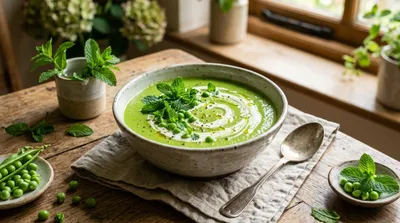
Courgette and pea. Add 200g frozen petits pois in the last 5 minutes of cooking. Bright green, slightly sweeter.
Spiced courgette and ginger. Add 1 tablespoon grated fresh ginger with the onion. Finish with a swirl of cream.
Common mistakes
Skipping the de-seeding on big courgettes. Watery, seedy soup is the classic UK glut-soup failure. Always check size; over 25cm gets de-seeded.
Not browning the onion. A pale, raw-onion-tasting soup is what happens when you rush the onion stage. 5-6 minutes minimum.
Under-salting. Courgettes need more salt than they look like they need. Taste and adjust.
Adding cream before freezing. Cream splits in the freezer. Always finish bowls at serving.
Using too much stock. 1 litre is the maximum for 1.5kg courgettes. Anything more and the soup is too thin. Reduce if needed; you can always add stock back.
Frequently asked questions
Can I make courgette soup with marrow-sized courgettes?
Yes, but you must remove the seeds first. Big courgettes (over 25cm) have developed seeds and a watery middle. Slice lengthways, scoop the seeds out with a teaspoon, then dice the firm outer flesh. The yield drops by 30-40% but the soup texture stays good. Keep the seeds for the compost heap.
Why is my courgette soup watery?
Courgettes are 95% water, so their soup is naturally thinner than potato or carrot soup. Three thickening options: blend an extra 100g cooked potato into the soup, add 50g of cooked rice, or simmer uncovered for 10 extra minutes to reduce. Cream at serving also thickens. Avoid flour; it deadens the fresh courgette flavour.
Can I freeze courgette soup?
Yes, freezes well for up to 4 months in airtight containers or freezer bags. Cool the soup completely first, then portion into single or double servings. Defrost overnight in the fridge. Reheat gently on the hob, stirring well; the soup may separate slightly during freezing but blends back together with stirring. Add cream, herbs, or Parmesan only after reheating.
What can I add to make courgette soup more interesting?
Five additions that lift the basic recipe: 100g crumbled feta or goat's cheese stirred at serving, 50g toasted pine nuts on top, a tablespoon of pesto swirled in each bowl, 100g cooked white beans (cannellini) blended with the soup for protein, or a teaspoon of smoked paprika for warmth. Each works without altering the base method.
How many courgettes does one plant produce?
A healthy UK courgette plant produces 8-12 courgettes per week at peak (mid-July to mid-September). A four-plant bed produces 30-50 courgettes weekly during the glut. One soup batch uses 1.5kg, or roughly 8-10 medium courgettes. Most UK gardeners need to make this soup every fortnight to keep ahead of a serious courgette bed.
Our team produces practical UK gardening guidance from source research, contributor records and established horticultural practice. Editorial standards are overseen by Matt W.