Prep
10 minutes
Cook
25 minutes
Total
35 minutes
Serves
4
Key takeaways
- 750g floury potatoes + 2 leeks + 1 onion + 1 litre stock = 4 portions in 35 minutes
- Use floury potato varieties (Maris Piper, King Edward, Desiree) for the best velvety texture
- Sweat leeks and onion in butter for 8 minutes before adding potatoes; this builds flavour
- Blend half the soup for a smooth-but-chunky texture; or fully blend for a velvet bowl
- Garden chives and a swirl of cream finish the bowl; add at serving, never during cook
- Freezes 3 months; reheat gently and stir in the cream after thawing
From the Garden
Grow these for the recipe: Potatoes (floury varieties), Leeks, Onion, Chives, Bay leaf.
Ingredients
For the soup
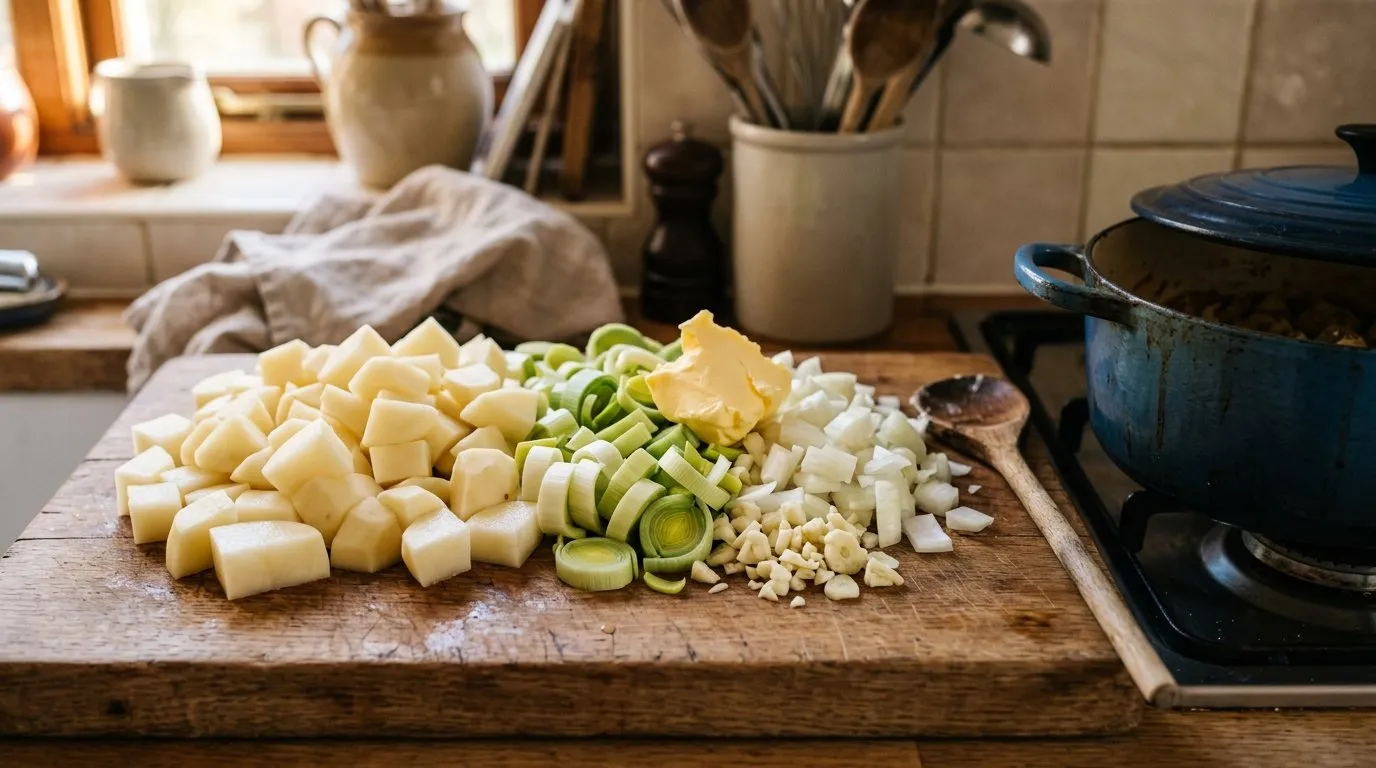
- • 750g floury potatoes (Maris Piper, King Edward, or Desiree), peeled and diced
- • 2 medium leeks, white and pale green parts only, sliced
- • 1 small onion, finely chopped
- • 50g unsalted butter
- • 1 tbsp olive oil
- • 1 litre chicken or vegetable stock
- • 200ml whole milk
- • 1 bay leaf
- • 1 tsp fine sea salt
- • Freshly ground black pepper
To finish
- • 100ml double cream (optional)
- • 2 tbsp finely chopped fresh chives
- • Crusty bread to serve
Equipment
- Large heavy-based saucepan or stock pot (3 litre minimum)
- Wooden spoon
- Stick blender or jug blender
- Sharp knife and chopping board
Method
- 1
Melt the butter with the olive oil in the pan over medium-low heat. Add the sliced leeks and chopped onion. Sweat gently for 8 minutes, stirring occasionally, until soft and translucent. Do not let them brown.
- 2
Add the diced potatoes and stir for 2 minutes, coating in the buttery leeks. Pour in the stock, add the bay leaf, salt, and a few twists of pepper.
- 3
Bring to a simmer, then reduce heat to low. Cover and cook for 15-18 minutes until the potatoes are tender to a fork.
- 4
Remove the bay leaf. Pour in the milk. For a smooth-but-chunky soup, blend half the soup with a stick blender, then stir back into the pan. For a fully velvet soup, blend everything until smooth.
- 5
Taste and adjust salt and pepper. The soup should be silky but pourable; if too thick, add a splash more stock or milk.
- 6
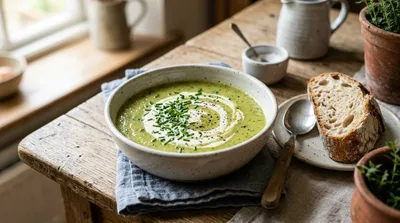
Ladle into warmed bowls. Drizzle each bowl with a tablespoon of double cream (if using) and a generous scattering of chopped fresh chives. Serve with crusty bread.
Storage
Refrigerate for up to 3 days in an airtight container. Reheat gently on the hob, stirring well; the texture firms up in the fridge and may need extra stock. Freezes for 3 months in 2-portion bags. Defrost overnight and reheat. Add the cream and chives only at serving, never during freeze.
You will find the alliums-first method that builds flavour, the floury-potato variety choice that gets the right texture, and the chive finish that lifts the bowl. Pair with garden chives for the green flourish.
Why this works
The soup builds on a classic French principle: sweat the aromatics first, then add the body. Eight minutes of low-heat sweating in butter takes the harshness off the leek and onion, draws out their natural sweetness, and creates a flavoured fat that coats every potato cube. The potatoes simmered in stock with the bay leaf cook through and start to break down at the edges, naturally thickening the broth.
Variations
Vichyssoise. The cold version, served chilled with cream and chives. Cool the soup, refrigerate for 4 hours, then ladle straight from the fridge. A summer dish despite the autumn ingredients.
Cheesy potato soup. Stir in 100g grated mature Cheddar at the end, just before serving. Adds depth without dominating.
Smoky potato soup. Add 100g cubed smoked bacon at the start with the leeks. Pre-cook the bacon to render the fat before adding the leeks to it. Skip the butter.
Potato and watercress. Stir 100g chopped watercress into the soup at the very end and blend; gives a peppery green-tinted version.
Curry potato soup. Add 1 tablespoon mild curry powder and 1 teaspoon turmeric with the potatoes. Finish with a swirl of yoghurt instead of cream.
Common mistakes
Browning the leeks. Burnt leek tastes bitter through the whole soup. Always low and slow.

Using waxy potatoes. They won’t break down or blend smooth. Stick to floury types.
Skipping the bay leaf. A small detail that makes a noticeable difference.
Adding cream during the cook. The cream splits if boiled. Always stir in at serving.
Under-seasoning. Potato soup needs more salt than you think. Taste twice and adjust.
Frequently asked questions
What is the best potato for potato soup?
Floury potatoes give the best velvety texture for soup. Maris Piper is the UK standard. King Edward has slightly more flavour. Desiree (pink-skinned) holds shape better if you want a chunky soup. Avoid waxy varieties (Charlotte, Anya, Jersey Royals); they stay too firm and won't blend smoothly.
Can I make potato soup without leeks?
Yes, but use 2 large onions instead and add 2 cloves of garlic for flavour depth. The classic UK recipe pairs potato with leek for good reason; leeks bring a milder, sweeter allium note than onion. If you don't have leeks, the all-onion version still makes a fine soup, just slightly different in flavour.
How do I make potato soup thicker?
Three options: blend more of the soup smooth, simmer uncovered for 5-10 extra minutes to reduce, or mash some of the potatoes against the side of the pan with the back of a spoon. Adding cream also thickens. Avoid flour or cornflour; they make the soup gluey rather than naturally creamy.
Can I freeze potato soup?
Yes, but freeze without the cream. Cool the soup completely, portion into freezer bags or containers, freeze for up to 3 months. Defrost overnight in the fridge and reheat gently on the hob. The texture firms slightly in the freezer; stir well during reheating and add a splash of stock or milk if it's too thick. Add cream and chives only after reheating.
What goes well with potato soup?
Crusty bread is the classic, especially sourdough or a granary loaf. Mature Cheddar grilled on toast is excellent. Buttered soda bread suits the Irish-style version. For a heartier meal, top the soup with crispy bacon bits, fried croutons, or a swirl of cream and snipped chives. The soup also pairs with a green salad for a light supper.
Our team produces practical UK gardening guidance from source research, contributor records and established horticultural practice. Editorial standards are overseen by Matt W.