Tulipa 'Flaming Parrot'
Tulipa 'Flaming Parrot'
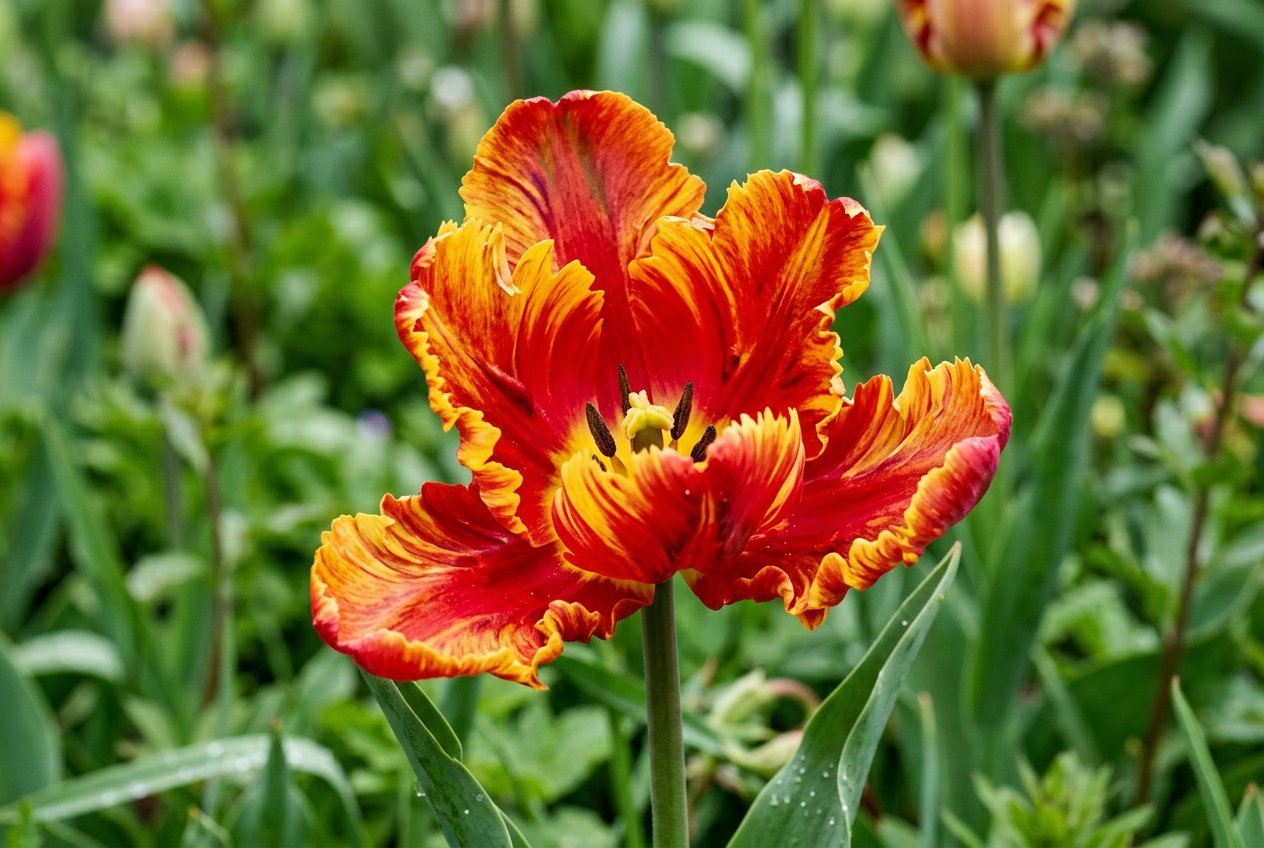
A spectacular parrot tulip with enormous fringed flowers combining deep red flames on a yellow background. Each petal is feathered, twisted, and ruffled. Flowers in late April to May. One of the most flamboyant tulips available. The heavy exotic blooms are stunning in vases. A show-stopper in UK borders.
Where to plant
Best aspect
Border position
When to plant and expect flowers
Plant
Flowers
How to grow tulipa 'flaming parrot'
Plant 15-20cm deep in November. The enormous ruffled flowers need a sheltered position to prevent wind damage. Opens wide in sunshine to reveal the extraordinary colour pattern. Exceptional as a cut flower. Support stems in exposed positions.
Soil requirements
Soil type
loam, sand, chalk
Moisture
well drained
pH
neutral, alkaline
Aftercare
Allow foliage to die back naturally after flowering. Remove spent flower heads to prevent self-seeding.
Propagation
- Offsets in autumn
- Seed
Wildlife value
Toxicity
All parts toxic, especially bulbs. Contains tulipalin A and B causing skin irritation and gastrointestinal upset.
Common problems
- Tulip fire (Botrytis tulipae)
- Squirrels digging up bulbs
- Slugs on young shoots
- Bulb rot in waterlogged soil
Similar bulbs to grow
Related guides
The 70-30 Rule for Better Garden Borders
The 70-30 planting rule explained: 70% structure and foliage, 30% seasonal flowers, measured by area, so your UK border looks full in every month.
Air-Purifying Houseplants: What They Really Do
Do air-purifying houseplants work? The honest answer, the ten easiest plants to grow anyway, which are pet-safe, and what actually freshens indoor air.
Allotment Planner: Month-by-Month
A friendly month-by-month allotment planner for the UK: what to sow, plant, pick and tidy each month, plus a handy sowing and harvest chart.