Key takeaways
- Camping in your own garden is fully legal in the UK and needs no permission or booking
- A 4-person family tent costs 60 to 150 pounds and pitches on a lawn in about 15 minutes
- UK summer nights still fall to 8 to 12C, so insulation under the body matters more than air temperature
- A roll mat or airbed plus a 2 to 3 season sleeping bag keeps most children warm to 5C
- Late May to early September is the reliable window, with July and August the warmest and driest
- Leave the back door on the latch as your safety net, so a nervous child can come inside at any point
Garden camping is the easiest adventure a UK family can have, because the campsite is already outside your back door. There is no booking, no long drive and no packing the car. You pitch a tent on the lawn, and an ordinary Friday evening becomes something children remember for years. If a child gets cold, scared or simply needs the toilet, the house is metres away.
Is it legal and safe to camp in your own garden?
Garden camping is completely legal in the UK. You own the land, so the wild camping restrictions that apply elsewhere simply do not exist here. You can pitch a tent on your own lawn for a night, a weekend, or longer. The only grey area is a tent left up permanently for weeks, which a few local councils treat as a structure, so take it down between camps.
Safety is about supervision, not risk. The garden is the safest possible place for a first camp because an adult is always within reach. Leave the back door on the latch so a nervous child can come inside at 2am without waking the street. Walk the lawn before pitching and remove anything sharp, from rose prunings to dog mess. Check the tent is clear of overhanging branches that could drop in wind.
For mixed-age groups, pair a younger child with an older sibling or a parent. The Royal Society for the Prevention of Accidents recommends adult supervision for any open flame around children, which matters if you plan a fire pit or stove.
What you need for a comfortable garden camp
You need less than a campsite trip, because the house supplies the rest. The core kit is a tent, something to sleep on, something to sleep in, and light. Everything else is comfort.
A 4-person family tent is the practical size for two or three children. It costs 60 to 150 pounds for a decent dome model and gives room for an adult to sit up. Pop-up tents cost 30 to 60 pounds and pitch in under two minutes, but they are tighter on space. The real comfort upgrades are what goes underneath the body, not the tent itself.
| Item | Budget option | Comfort option | Cost | Role |
|---|---|---|---|---|
| Tent | Pop-up 2-person | 4-6 person dome | 30 to 150 pounds | Shelter, pitches in 2 to 15 min |
| Sleeping mat | Closed-cell foam roll mat | Self-inflating mat or airbed | 10 to 45 pounds | Ground insulation, the top priority |
| Sleeping bag | 1 season rectangular | 2 to 3 season mummy bag | 15 to 50 pounds | Body warmth, match to the forecast |
| Lighting | Wind-up torch | Rechargeable LED lantern | 5 to 25 pounds | Safety and atmosphere |
| Extras | Spare blanket, pillow from bed | Hot water bottle, fleece onesie | From home | Backup warmth |
Raid the airing cupboard for spare duvets and pillows. A duvet folded under a child works as a sleeping mat in a pinch, and a hot water bottle pushed into the foot of a sleeping bag at bedtime keeps small feet warm for hours.
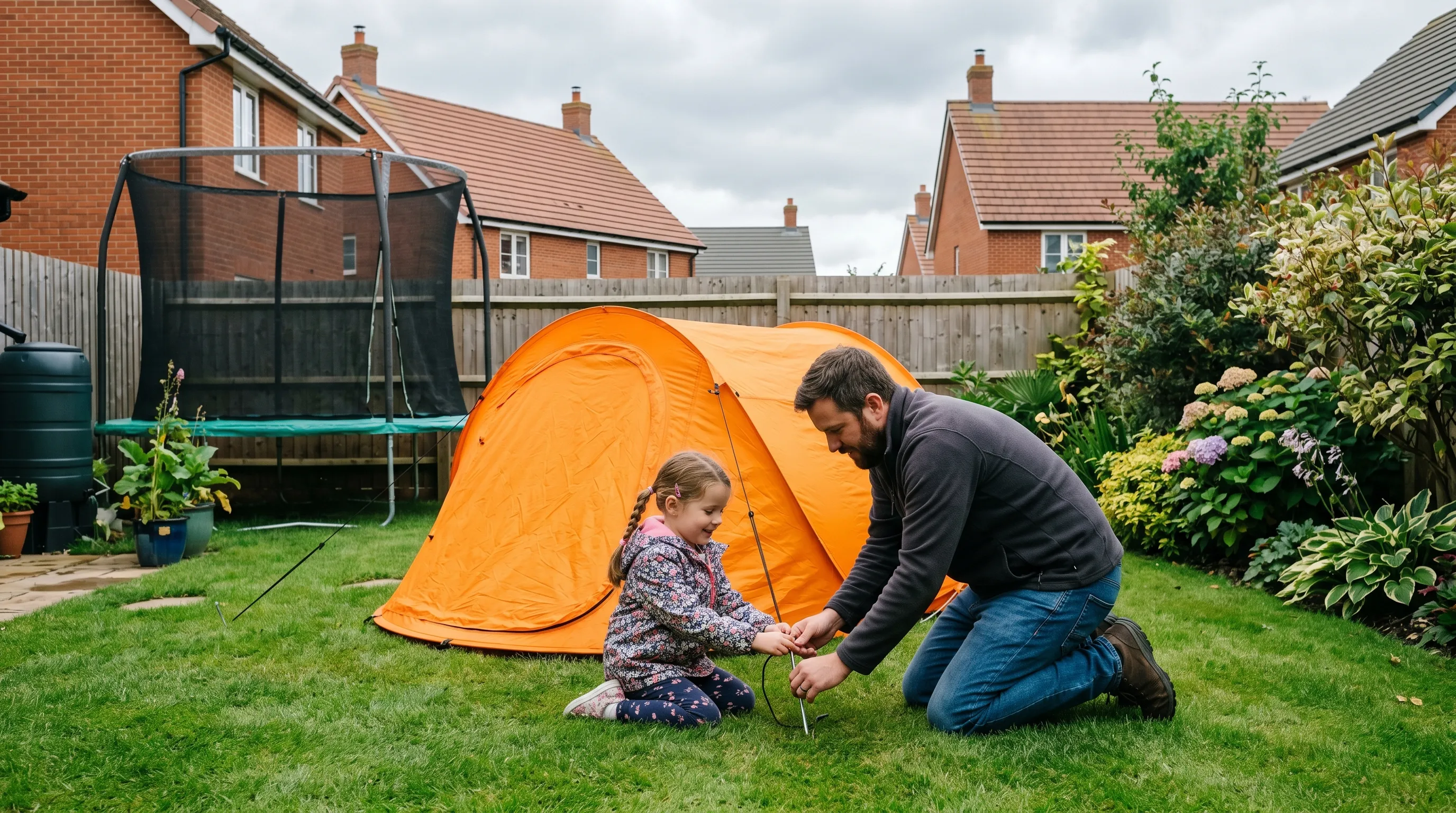 A pop-up tent goes up in under two minutes, which is ideal for younger children who want to be inside it immediately.
How to pitch a tent on a lawn
Pitching on grass is easier than on a campsite pitch, because a mown lawn is soft and level. Choose the flattest part of the garden and avoid any dip where rainwater collects. A slight slope is fine if you sleep with heads at the higher end.
Lay a groundsheet or footprint first. This protects the tent floor from damp and from stones pressing up overnight. Peg the tent corners taut, then the guy lines. Lawn pegs hold well in soil that is not bone dry, so water a parched lawn lightly an hour before pitching if pegs will not bite. Angle each peg at 45 degrees away from the tent for maximum grip.
Position the door away from the prevailing wind, which in most of the UK means facing it east or south-east. This stops the wind funnelling straight in. If you plan a fire pit, pitch the tent upwind of it so smoke and sparks blow away from the canvas, never towards it.
How to keep children warm in a tent overnight
This is where most garden camps succeed or fail. The science is simple: a tent traps almost no heat, so the inside sits within 1 to 2C of the air outside. On a clear UK summer night the lawn can fall to 8 to 12C even when the day hit 24C, because a clear sky radiates warmth away. The Met Office overnight minimum, not the daytime high, is the number that matters.
Cold reaches a sleeping child two ways, and the order matters:
- From below (around 70% of heat loss): the ground is colder than the air and draws heat straight out of the body through a thin tent floor. This is the main cause of a cold, wakeful child.
- From the air (around 30%): the surrounding air cools the top and sides of the sleeping bag.
Most families pile on blankets to fight the air and ignore the ground, which is why the child still wakes cold. Insulate from below first. A closed-cell foam roll mat (10 to 15 pounds) or a self-inflating mat under the sleeping bag breaks the conductive path to the cold lawn. Add an airbed for comfort, but note that a bare airbed alone can feel colder, because air inside it circulates and carries heat away, so always put a mat or blanket on top of it.
Sleeping bag tog and temperature guide
Match the sleeping bag season rating to the overnight forecast, then add a layer of margin for children, who lose heat faster than adults.
| Forecast overnight low | Sleeping bag rating | Under-body layer | Extra layer |
|---|---|---|---|
| 15C and above | 1 season | Roll mat | None needed |
| 10 to 14C | 2 season | Roll mat or airbed plus mat | Fleece pyjamas |
| 5 to 9C | 3 season | Self-inflating mat | Hot water bottle, hat |
| Below 5C | Camp indoors instead | n/a | Too cold for young children |
Dress children in dry fleece layers and a hat, not the day’s clothes. Damp clothes from playing all evening chill fast. A thin wool hat cuts a surprising amount of heat loss, because a child’s head is a large share of their body surface. Send everyone to the toilet right before bed, as a full bladder makes the body work harder to stay warm.
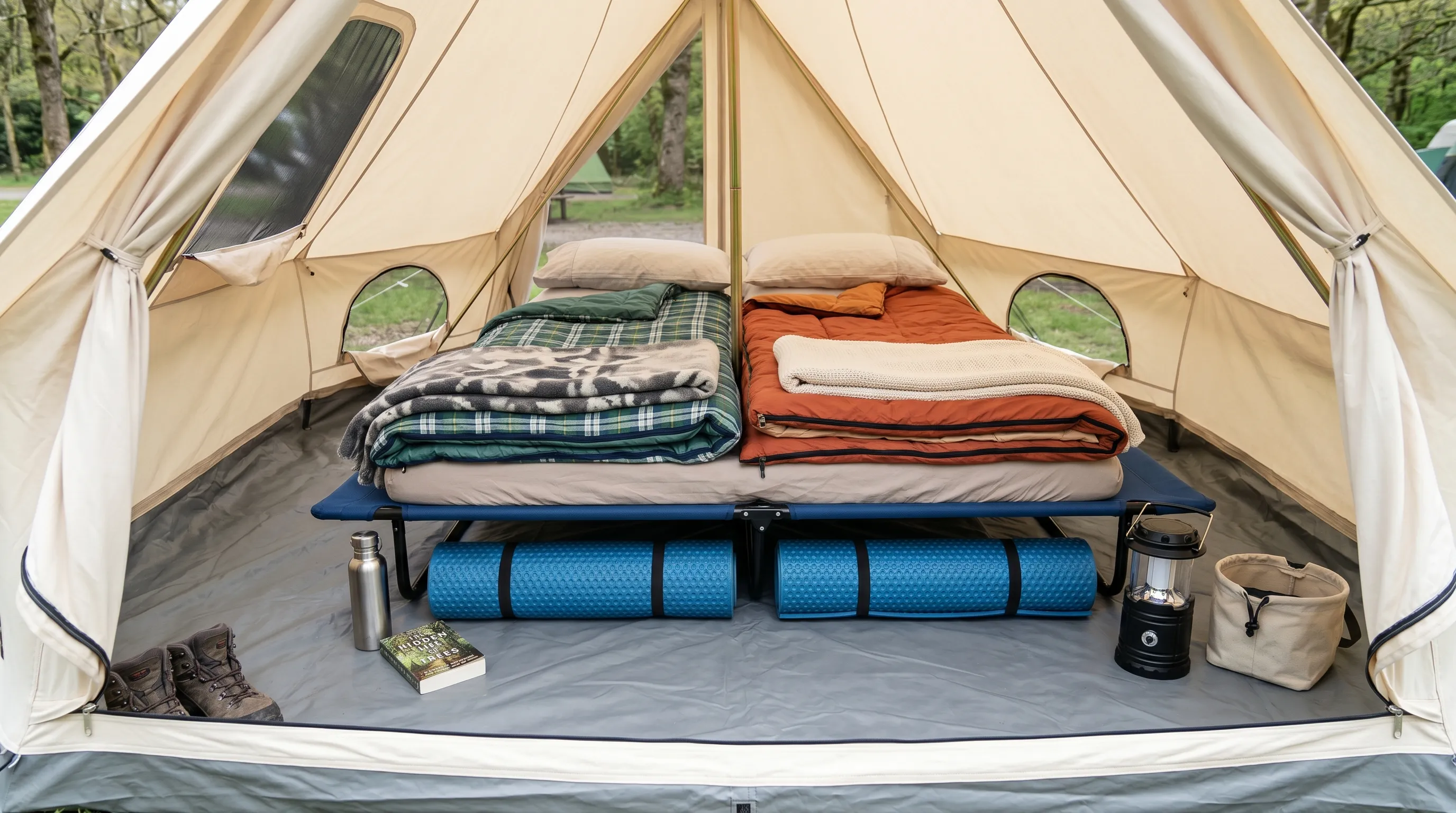 A warm setup, built from the ground up: footprint, roll mat, then airbed and sleeping bag. The mat under the bag does the real work.
A dusk-to-dark garden camping itinerary
A loose plan stops the evening fizzling out before bedtime. Keep each activity to 20 to 30 minutes and let the night wind down naturally. The novelty of sleeping outside carries most of the excitement, so you do not need to overfill the time.
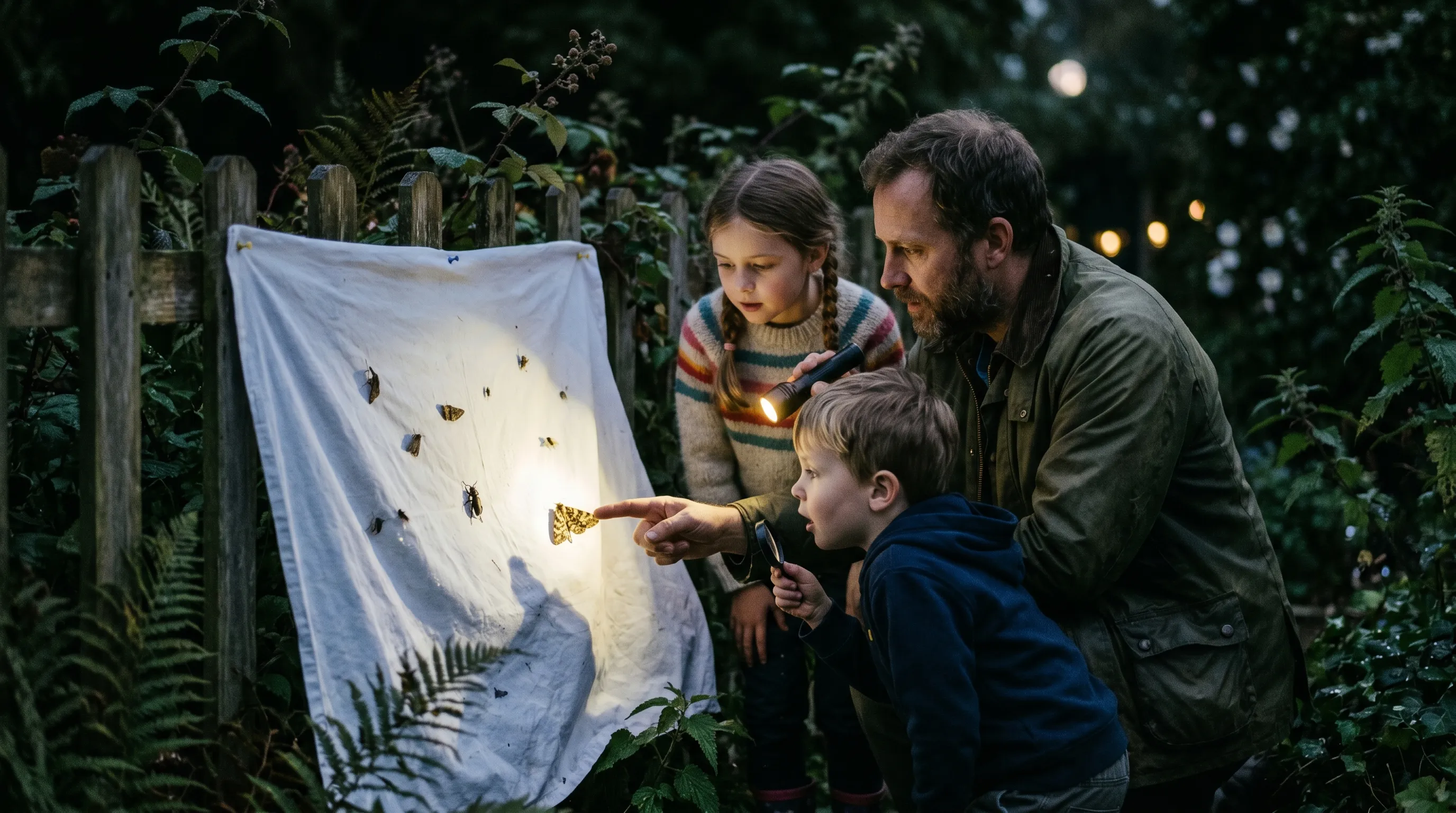 A sheet, a torch and twenty minutes of patience turn the garden into a nature reserve after dark.
Food and cooking ideas for garden camping
Camp food is half the fun, and the kitchen is steps away if a plan goes wrong. Keep it simple and let the children help.
Marshmallows and s’mores are the classic. Sandwich a toasted marshmallow and a square of chocolate between two digestive biscuits. Use long metal forks or green sticks and supervise closely around the flame. Jacket potatoes wrapped in foil and cooked in the embers of a fire pit take around 45 to 60 minutes and feel properly outdoorsy.
For a cooked breakfast, a single-burner camping gas stove (20 to 40 pounds) does bacon, eggs and a kettle for tea. Set it on a stable, heatproof surface like a paving slab, never on the grass or a plastic table, and keep it away from the tent. If a stove feels like a faff, run an extension lead out and use a plug-in griddle, or simply cook indoors and carry it out. An outdoor kitchen or BBQ area makes camp catering effortless if you have one.
Warning: Never use a fuel-burning stove, barbecue or fire inside or in the doorway of a tent, even to take the chill off. They release carbon monoxide, which is odourless and can be fatal in an enclosed space. All cooking and burning happens in the open air, well clear of the canvas.
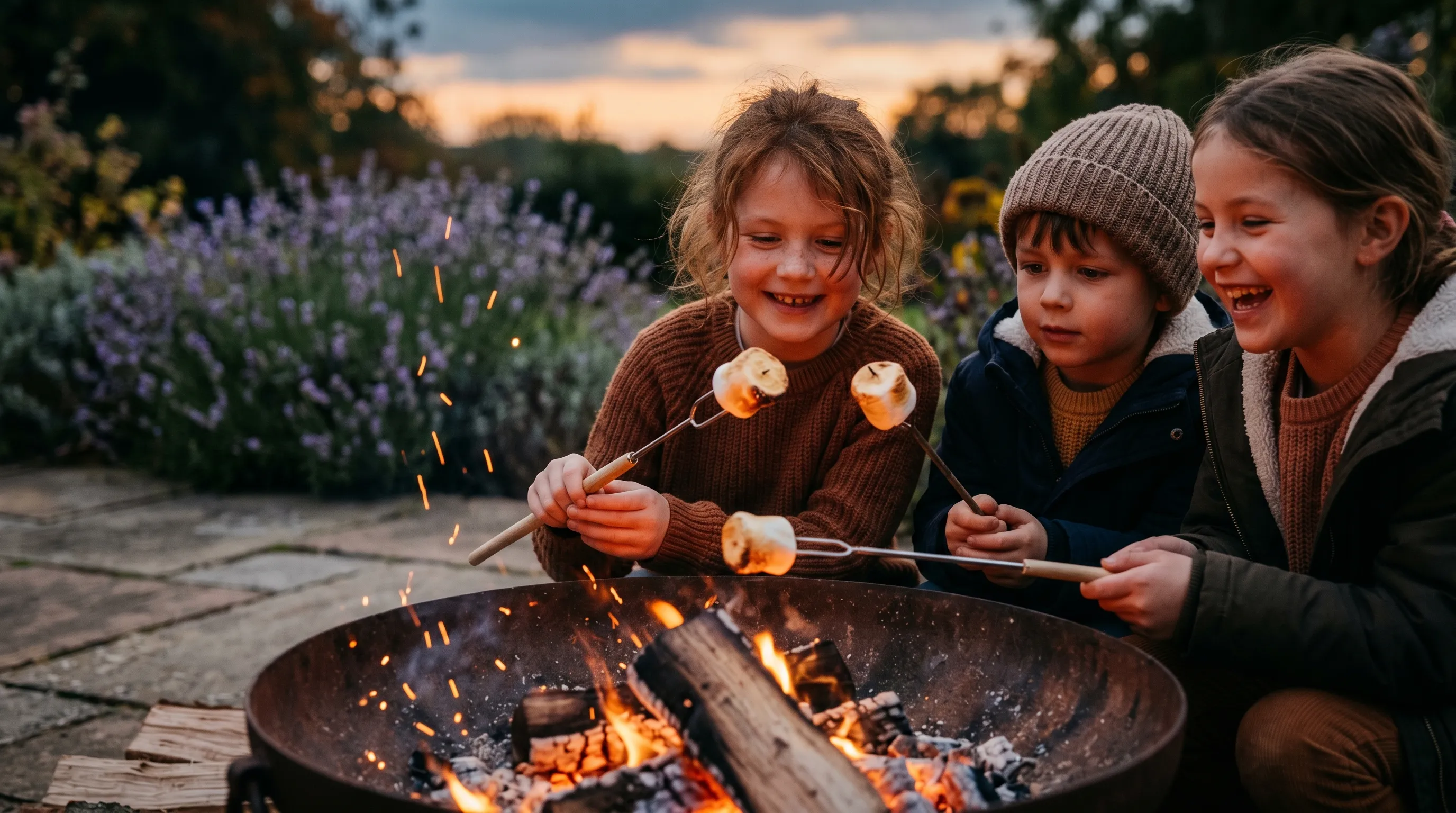 Marshmallows over a contained fire pit, kept at least 3 metres from the tent and never left unattended.
Common mistakes families make garden camping
A few predictable errors turn a magical night into a 2am retreat indoors. Avoid these and the camp usually works.
Skipping the sleeping mat. This is the number one cause of cold, miserable children. A sleeping bag straight on the tent floor leaves nothing between the body and the cold lawn. Always put a roll mat or self-inflating mat underneath.
Trusting the daytime temperature. A 25C afternoon tells you nothing about the night. Clear skies can pull the overnight low down to single figures. Check the actual overnight forecast and pack for it.
Going to bed too late and too cold. Children who get cold and overtired before bed rarely settle. Aim for lights out by 10.30pm and get everyone into dry, warm layers before they cool down, not after.
Pitching in a hollow. The lowest point of the lawn collects cold air and any rain or dew. Pick a slightly raised, flat spot so water drains away and the tent stays dry.
No back-up plan. The first garden camp is a trial run. Leave the back door on the latch and a bed made indoors. A child who knows they can go inside relaxes and is far more likely to last the night.
Garden camping through the UK seasons
Timing decides comfort. The table below shows the realistic UK window, based on typical overnight lows.
| Month | Typical overnight low | Verdict |
|---|---|---|
| April to mid May | 3 to 7C | Too cold for most children |
| Late May | 7 to 10C | Possible with 3 season kit |
| June | 9 to 12C | Good, pack warm layers |
| July | 11 to 14C | Best month, warmest nights |
| August | 11 to 13C | Excellent, warm and settled |
| September | 8 to 11C | Good early, cooling fast late |
| October onward | 5C and below | Pack up for the year |
July and August are the reliable months. They give the warmest, driest and longest-settled nights, and the late sunset means children can still be playing outside at 9pm. Early June and the first half of September work well with an extra layer.
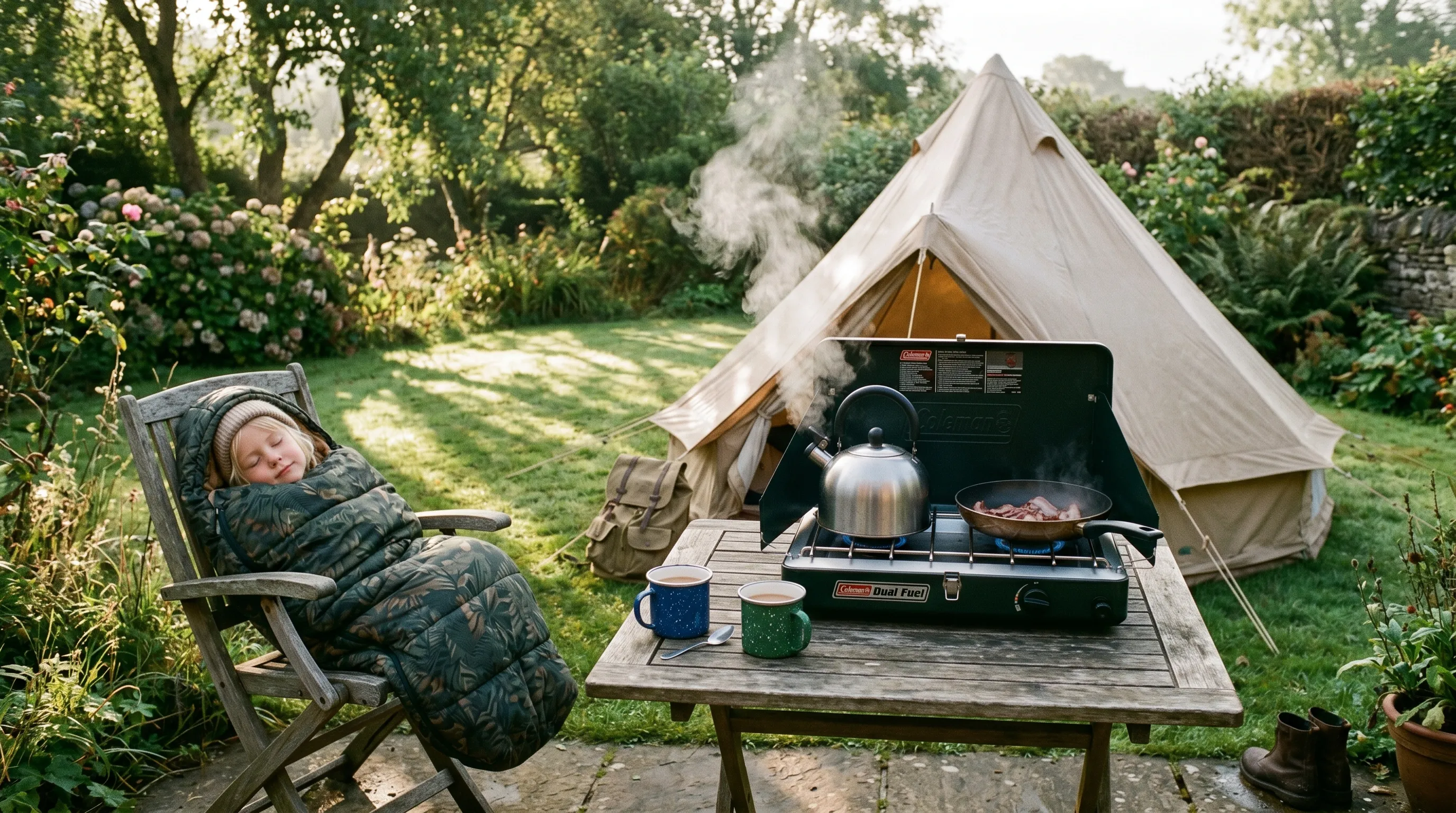 A camp breakfast on the patio is the reward for a night under canvas, and the kettle is on within minutes.
A garden camp-out costs almost nothing once you own a tent, and it gives children the full adventure of sleeping outside with none of the travel or risk. Start small with a single warm summer night, get the ground insulation right, and leave the back door open. Most families find one camp turns into a yearly tradition.
Our team produces practical UK gardening guidance from source research, contributor records and established horticultural practice. Editorial standards are overseen by Matt W.