Key takeaways
- An unshaded small greenhouse can exceed 40C when it is only 25C outside
- Roof vents should total at least 20 per cent of the floor area
- Shade paint costs £12 to £18 a tin and cuts internal temperature by 8 to 12C
- A slab or paved floor costs £180 to £450 and makes non-growing uses viable
- Armoured cable and a proper outdoor socket circuit runs £280 to £600 fitted
- Bubble insulation lifts winter minimums by 3 to 5C for around £30 a season
Greenhouse ideas usually stop at tomatoes and cucumbers. That is a waste of the most useful structure in a British garden. A greenhouse is a warm, bright, weatherproof room that costs a fraction of a garden office, and plenty of UK owners now use theirs for reading, eating, working and drinking rather than growing.
11 ways to use a greenhouse beyond growing plants
Each of these has been done successfully in British gardens. The costs assume you already own a standard 8ft by 6ft aluminium or cedar greenhouse and are converting it.
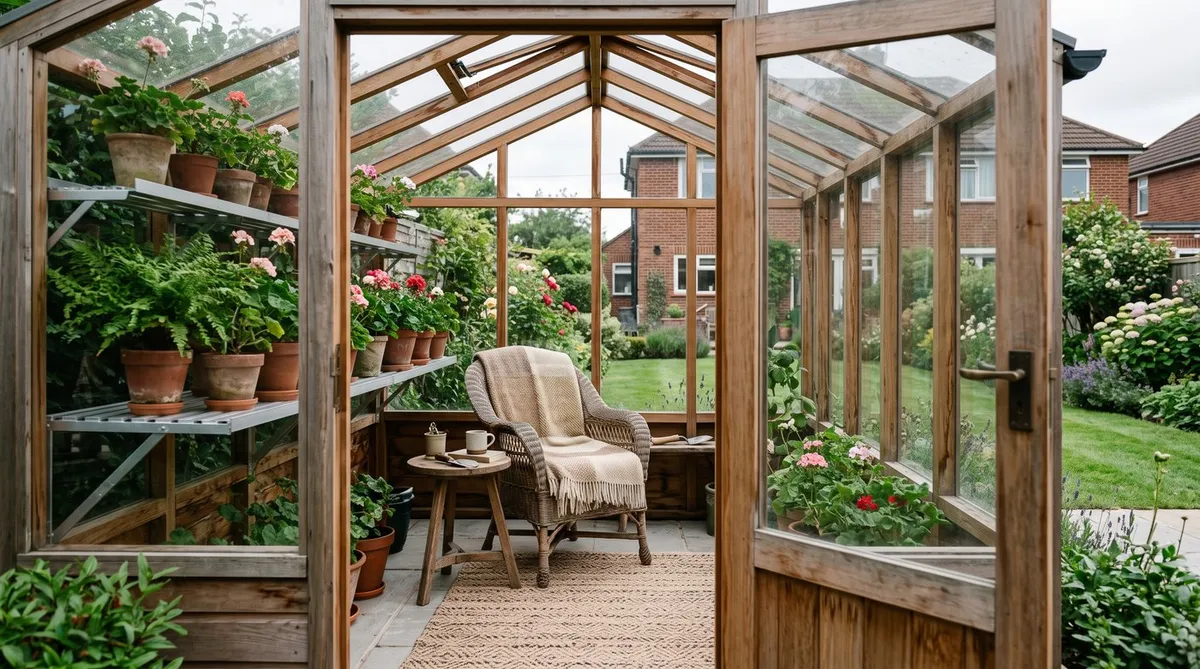
1. Garden room or reading nook. A chair, a rug, a small table and a blind. The cheapest conversion at £250 to £700. The catch is midday July heat, which rules out use between 11am and 4pm without heavy shading.
2. Potting and tool station. Staging along one side, hooks for tools, a bin for compost. Around £150 to £400. The catch is that compost dust and glass are a poor mix, so you will clean the glazing twice as often.
3. Outdoor dining space. A bistro table for two or a bench table for six in a 10ft by 8ft. Budget £300 to £900. The catch is that glass amplifies both heat and cooking smells, so keep the barbecue outside.
4. Winter plant hospital. Somewhere frost-tender pelargoniums, fuchsias and citrus overwinter at 5 to 7C. From £120 with bubble insulation and a small heater. The catch is running cost: an electric tube heater holding 5C draws roughly £45 to £90 across a UK winter.
5. Propagation nursery. Heated bench, misting, module trays. £180 to £550. The catch is that propagation and seating do not mix, because propagation wants humidity and you do not.
6. Winter sun seat. A single chair positioned to catch low February sun. Under £150. On a clear 6C January day our cedar house held 16 to 19C by early afternoon with no heating at all.
7. Home bar. Shelving, a small fridge, stools and lighting. £400 to £1,500. The catch is power, and a proper armoured supply is not optional for a fridge in a damp glass building.
8. Workshop or studio. Bench, vice, good natural light. £300 to £1,000. The catch is dust and condensation on tools, so add silica gel or a dehumidifier for anything with a steel edge.
9. Children’s den. Seating, storage, safe flooring. £150 to £500. The catch is glazing safety, and horticultural glass is the wrong material with children about.
10. Display house for a collection. Alpines, cacti or orchids on tiered staging. £250 to £900. The catch is that each of those three wants completely different humidity, so pick one.
11. Wildlife-friendly overwintering space. A cool, frost-free corner with log piles, a bee hotel and undisturbed pots. Under £80. The catch is that you must leave a low vent open all winter, which conflicts with heated uses.
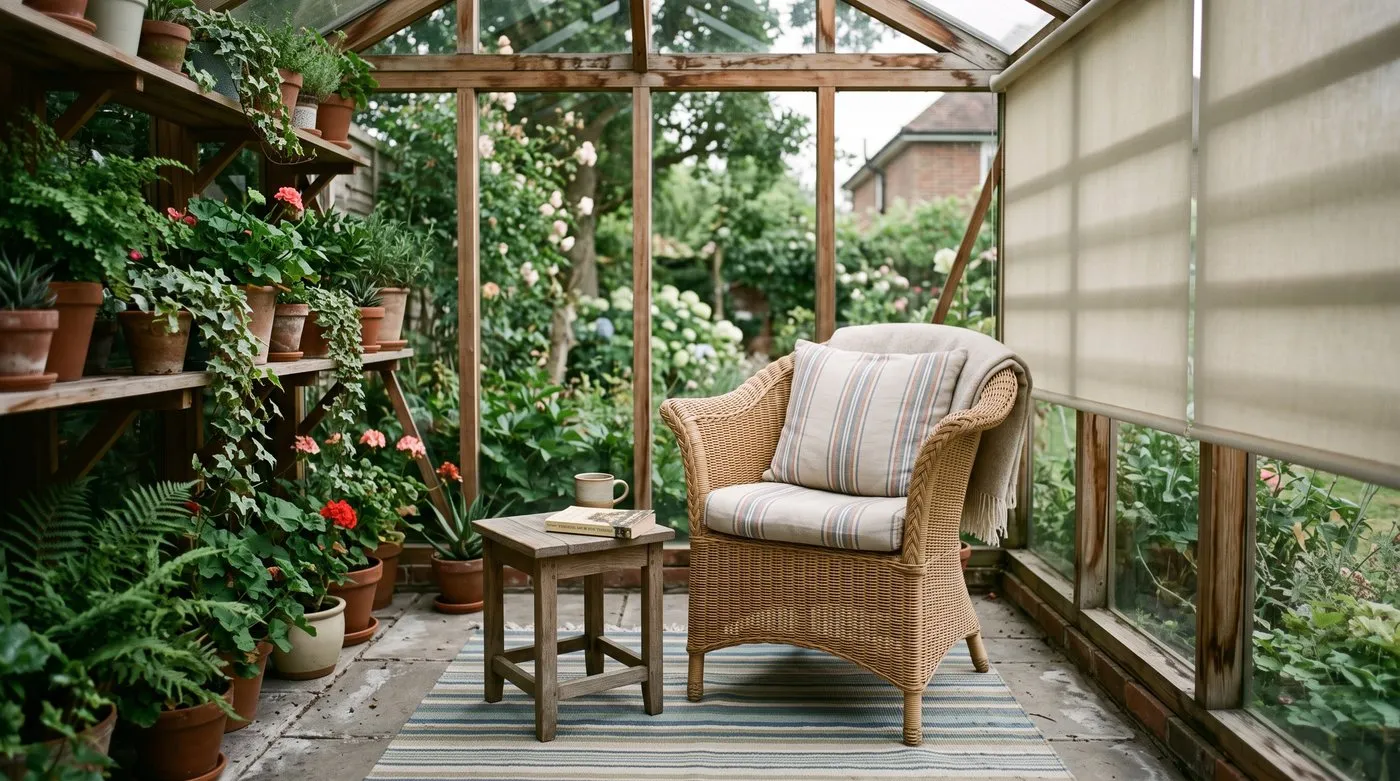 A 10ft by 8ft cedar house working as a three-season reading room in a Kent suburban garden. External blinds on the south glass make the difference between usable and unbearable.
Which greenhouse conversion suits your garden
Not every idea suits every plot. Ranked by how reliably they work through a British year, the picture is clear.
| Use | Cost to convert | Usable months | Main obstacle | Role |
|---|---|---|---|---|
| Potting and tool station | £150 to £400 | 12 | Dust on glazing | Gold standard, works year round |
| Winter plant hospital | £120 to £350 | 10 | Heating cost | Primary, high value per pound |
| Propagation nursery | £180 to £550 | 9 | Humidity control | Primary for growers |
| Display house | £250 to £900 | 12 | Species-specific climate | Specialist, high reward |
| Winter sun seat | Under £150 | 6 | Useless June to August | Seasonal, cheapest win |
| Garden room | £250 to £700 | 7 | Summer overheating | Popular, needs shading |
| Workshop or studio | £300 to £1,000 | 8 | Condensation on tools | Good with a dehumidifier |
| Wildlife shelter | Under £80 | 12 | Conflicts with heating | Supplementary, near free |
| Dining space | £300 to £900 | 5 | Heat and smells | Occasional use |
| Children’s den | £150 to £500 | 6 | Glazing safety | Only with polycarbonate |
| Home bar | £400 to £1,500 | 5 | Needs mains power | Highest cost, most fun |
The potting and tool station is the gold standard conversion. It costs the least, works in every month of the year, needs no power or heating, and it does not fight the building’s natural climate. Everything else asks the greenhouse to be something it was not designed to be, which is why the obstacles column matters more than the cost column.
Why greenhouses overheat, and what actually fixes it
Glass and polycarbonate pass short-wave solar radiation inward and block the long-wave heat radiating back out. That is the greenhouse effect working exactly as intended, and in July it is the problem rather than the point. The process runs in four stages through a summer day.
The critical mistake is relying on one intervention. Shading alone reduces the gain but traps what does get in. Ventilation alone moves air that is already hot. You need both, working in opposite corners.
Vent area is the number people never check. Roof vents should total at least 20 per cent of the floor area, so a 6ft by 8ft house at 4.5 square metres needs 0.9 square metres of roof vent. Most mass-market greenhouses ship with one 0.3 square metre vent, which is a third of what is needed. Adding a second roof vent costs £45 to £80, and a low louvre vent on the opposite side at £35 to £60 creates the cross-flow that does the real work.
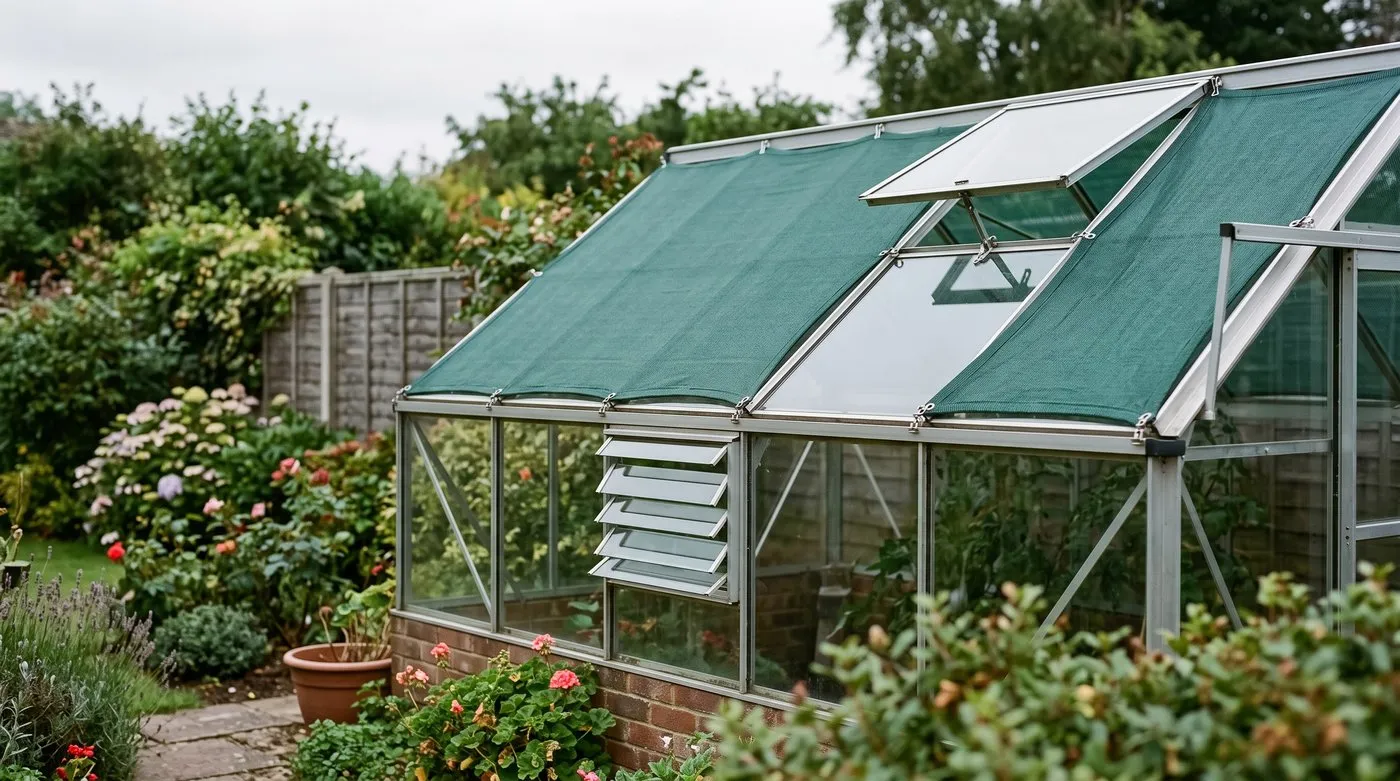 Roof vent, louvre vent and external mesh working together. Shading cuts the gain, cross-ventilation removes what gets through, and neither is sufficient on its own.
Shading choices compared for UK conditions
Three shading methods dominate in British gardens, and they perform very differently.
Shade paint is a white clay-based wash brushed or sprayed onto the outside of the glass in late May and washed off in September. A tin costs £12 to £18 and covers a typical 8ft by 6ft house twice. In our logging it cut peak internal temperature by 8 to 12C. It is the cheapest effective option and the least attractive.
External mesh netting at 40 to 50 per cent shade factor costs £25 to £60 for a small house. Fitted outside the glass it stops radiation before it enters, which is why external always beats internal. It cut our peaks by 9 to 13C and can be rolled back on dull days.
Internal blinds cost £80 to £250 and look far better, which matters for a garden room or bar. They are the weakest thermally, cutting peaks by only 4 to 7C, because the heat has already passed the glass before the blind intercepts it. Use them for looks and pair them with mesh or paint if the room needs to be genuinely cool.
Gardener’s tip: Damp the floor down at 11am on a hot day. Evaporating water from a wetted slab floor pulls latent heat out of the air and dropped our internal readings by a further 2 to 3C for around 90 minutes. It costs nothing and works best on porous concrete or unglazed tile.
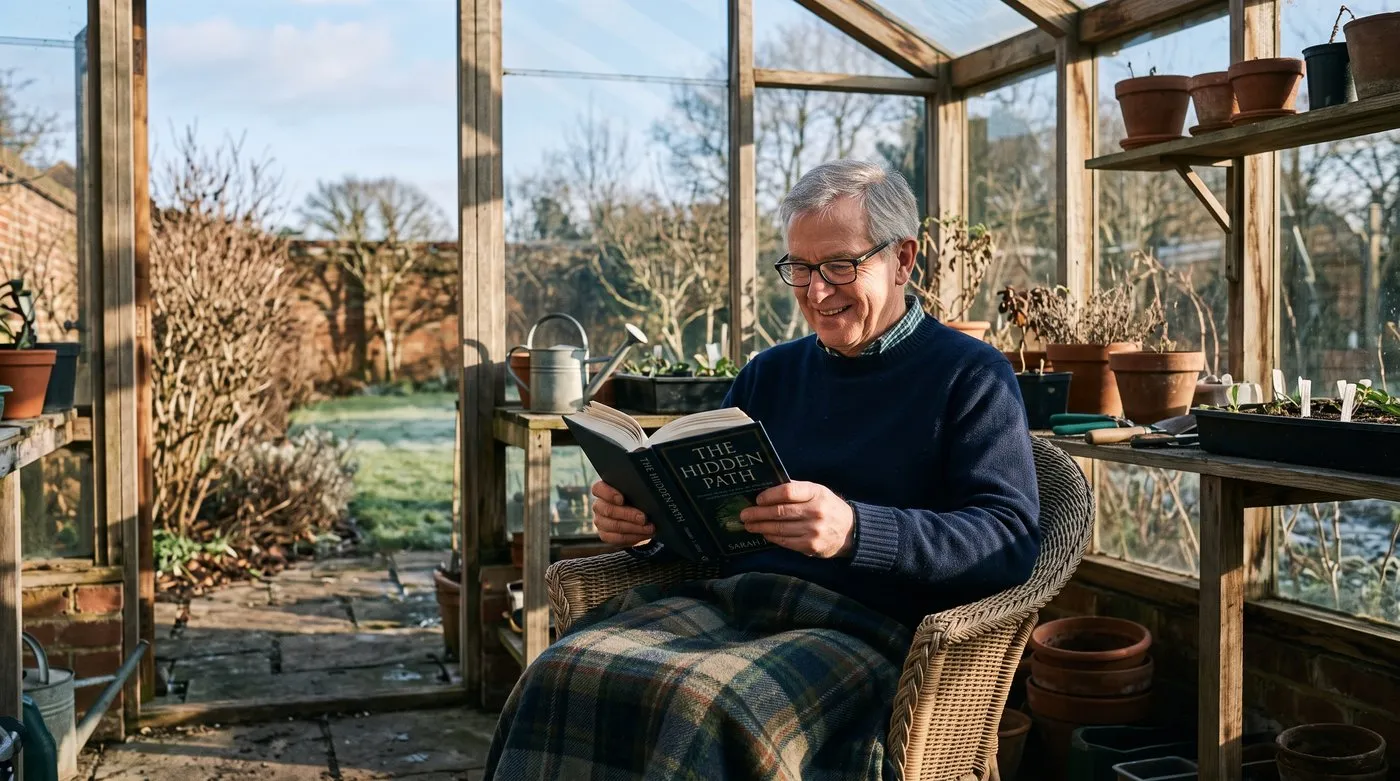 The winter sun seat is the cheapest conversion of all. On a clear 6C January day our cedar house held 16 to 19C by early afternoon with no heating running.
Flooring, power and staging: the three practical decisions
These three choices separate a greenhouse that gets used from one that fills up with empty pots.
Flooring comes first. Bare soil is fine for growing and useless for sitting. Paving slabs on 100mm of compacted hardcore and 50mm of sharp sand cost £180 to £450 for a 6ft by 8ft floor. Porcelain outdoor tiles run £450 to £900 and look far better under furniture. Both store heat, which extends autumn evenings by an hour or two.
Power is the decision people cut corners on and should not. An extension lead trailed across a lawn to a damp glass building is a genuine hazard. A buried SWA armoured cable from the house consumer unit to an outdoor-rated unit with two IP66 sockets costs £280 to £600 fitted by a qualified electrician, including the trench. That supports lighting, a fridge, a heated propagator or a small heater. LED strip lighting adds £30 to £70.
Staging should match the use. Fixed aluminium staging at £70 to £160 suits potting and propagation. Folding or removable staging at £90 to £200 lets a growing house become a dining room for an evening. For a display house, tiered staging at £120 to £280 puts a collection at eye level. Our greenhouse buyer’s guide covers frame and glazing choices before you get to fitting out.
 A potting and tool station in a Kent suburban garden. It is the cheapest conversion, the only one usable in all twelve months, and the one that never fights the building.
Insulating a greenhouse for winter use
Winter use is where a greenhouse earns its keep as a plant hospital or a low-light workshop, and insulation is what makes the running cost bearable.
Bubble insulation is horticultural polythene with large bubbles, clipped to the inside of the frame. A roll for an 8ft by 6ft house costs £25 to £35 and lifts overnight minimums by 3 to 5C. It cuts light transmission by roughly 15 per cent, which matters for growing and not at all for a workshop. Fit it in late October and strip it in March.
Heating choices follow. A 2kW electric fan heater with a thermostat costs £45 to £90 to buy and is the cheapest to install. Holding 5C minimum through a Staffordshire winter cost us £68 in 2024 to 2025 electricity in a bubble-lined 8ft by 6ft house. The same target in an uninsulated house cost £121, so the £30 of bubble wrap paid for itself in one season and then some. Paraffin heaters are cheaper to run but produce roughly one litre of water vapour per litre of fuel burnt, which causes condensation and botrytis. Our detailed greenhouse heating guide compares the running costs in full, and the winter insulation guide covers fitting bubble wrap properly.
Warning: Never use a bottled gas or paraffin heater in a greenhouse you sit in without permanent ventilation. Both consume oxygen and produce carbon monoxide when burning imperfectly. If the building is a room rather than a growing space, use electric heating only, on a proper armoured circuit.
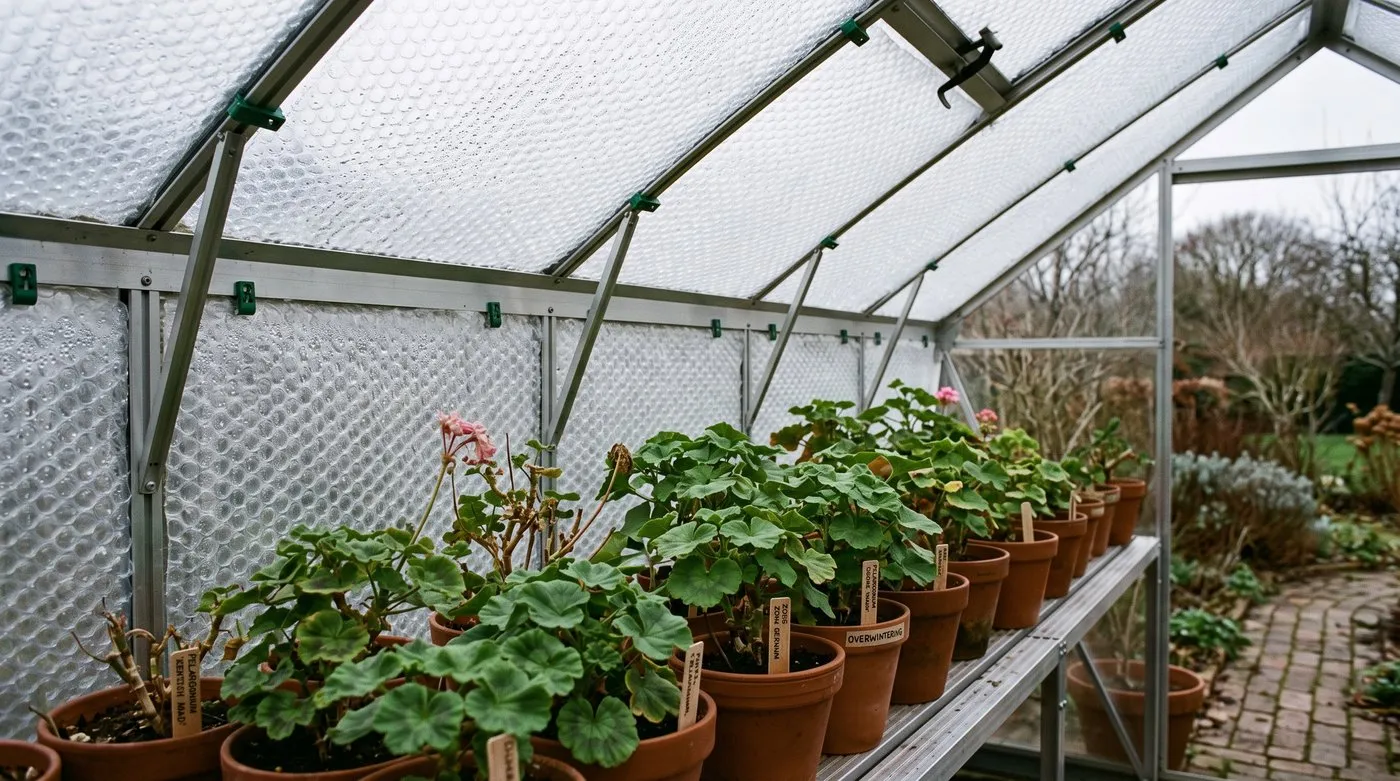 Bubble insulation fitted in late October. It costs about £30, lifts overnight minimums by 3 to 5C, and cut our winter heating bill from £121 to £68.
The real reason greenhouse conversions get abandoned
Most abandoned greenhouse rooms fail for one underlying reason: air volume. It is not shading, or furniture, or motivation. A standard 6ft by 8ft house contains only about 9 cubic metres of air. Small volumes change temperature fast, because there is very little thermal mass to buffer the swing.
That is why the same shading package feels transformative in a 10ft by 12ft house and merely adequate in a 6ft by 8ft. Doubling the footprint roughly doubles the air volume and halves the rate of temperature change. It also gives room for a solid floor, furniture and circulation space at the same time.
Month-by-month calendar for a converted greenhouse
| Month | What the space is doing |
|---|---|
| January | Plant hospital and winter sun seat. Holds 16 to 19C on a clear 6C day by 2pm. |
| February | Seed sowing on a heated bench. Check bubble insulation for gaps and tears. |
| March | Strip bubble insulation once night minimums stay above 4C. Deep clean the glass. |
| April | Peak propagation month. Vents open on any day above 15C outside. |
| May | Apply shade paint or fit external mesh by late May, before the first hot spell. |
| June | Dining and seating use best in evenings from 6pm as the space releases heat. |
| July | Midday use impossible without full shading. Damp the floor down at 11am. |
| August | Holiday watering matters. Automatic vent openers earn their £25 to £40 now. |
| September | Best month overall. Warm, bright, and shade paint comes off mid-month. |
| October | Move tender plants in. Fit bubble insulation late in the month. |
| November | Workshop and storage season. Add a dehumidifier for anything with a steel edge. |
| December | Wildlife shelter and frost protection. Keep one low vent open for air movement. |
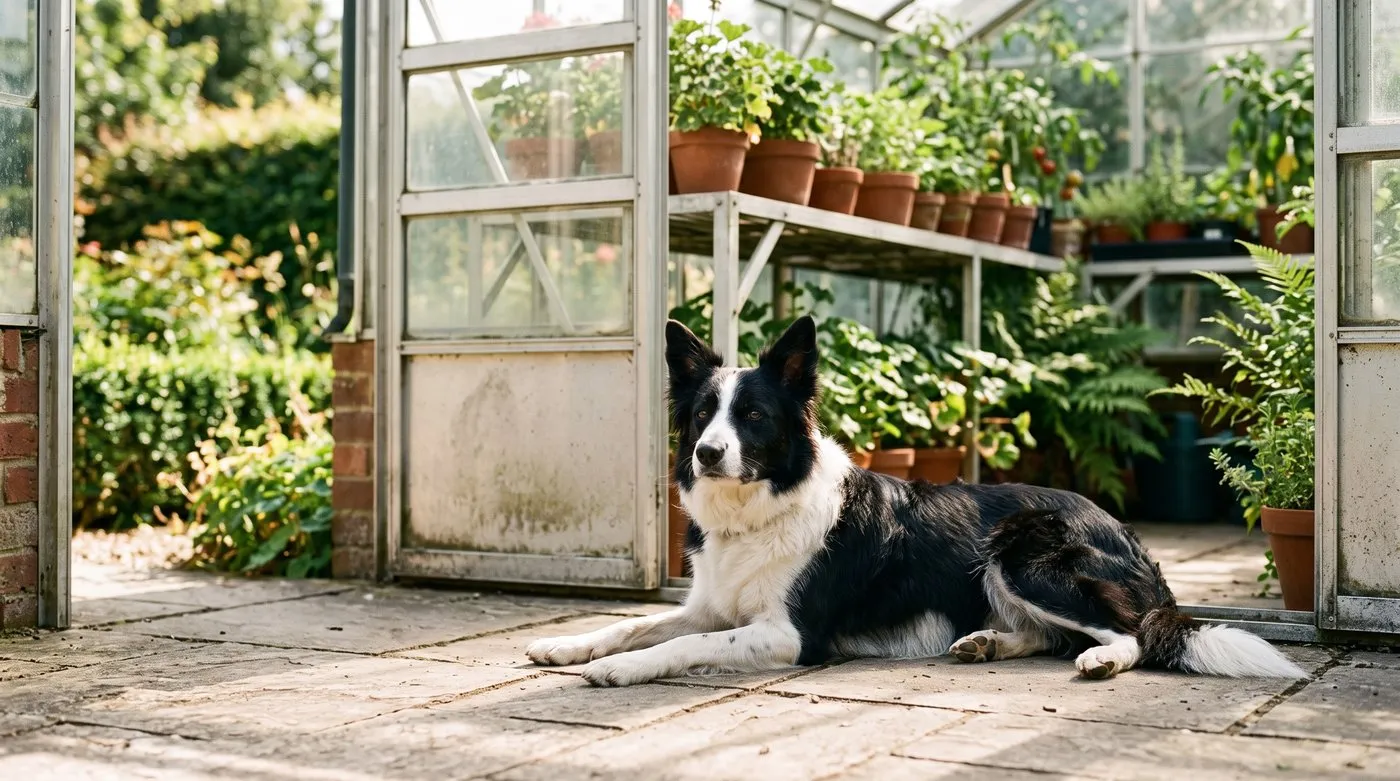 A slab floor is what makes non-growing uses viable. It stores heat into the evening, stays clean underfoot, and takes the weight of furniture.
Common mistakes when converting a greenhouse
- Furnishing before shading. People buy the chair, the rug and the bistro set, then discover the room is 40C in July. Solve heat first for about £142, then furnish. The order costs nothing to get right and everything to get wrong.
- Undersizing the vents. Almost every mass-market greenhouse ships with roughly a third of the vent area it needs. Check the 20 per cent of floor area rule and add a second roof vent plus a low louvre before anything else.
- Trailing an extension lead from the house. A damp glass building with a permanent domestic extension lead is a real electrical risk. Pay the £280 to £600 for armoured cable and outdoor sockets, once, properly.
- Keeping horticultural glass with children around. Standard horticultural glass breaks into long shards. If children will use the space, retrofit twin-wall polycarbonate or toughened safety glass. Reglazing a 6ft by 8ft house in polycarbonate costs £120 to £250.
- Mixing incompatible uses. Propagation wants 80 per cent humidity and a seating room wants 50 per cent. Cacti want dry air and orchids want damp. Pick one climate per building and stick to it, or partition with a polythene curtain.
For background on the wider benefits of glass in a British garden, both the RHS and the Wildlife Trusts publish sound guidance, the latter on how sheltered garden structures support overwintering insects.
Frequently asked questions
What can you use a greenhouse for other than growing plants?
A greenhouse works as a garden room, potting station, dining space or workshop. Other proven uses include a home bar, a children’s den, a display house for alpines or cacti, and a winter shelter for tender plants. Each needs shading and ventilation before it is comfortable in summer.
How hot does a greenhouse get in the UK summer?
Can you turn a greenhouse into a garden room?
Yes, with shading, ventilation, a solid floor and some insulation. Budget £700 to £2,000 for a usable seating room including flooring, blinds and lighting. It will be too hot for midday use in July and too cold for January without heating, so treat it as a three-season room.
Do you need planning permission for a greenhouse in the UK?
Most domestic greenhouses fall under permitted development and need no permission. Limits apply: under 2.5m tall within 2m of a boundary, and not forward of the principal elevation. Listed buildings, conservation areas and greenhouses used as habitable rooms are treated differently, so check with your council.
What flooring is best for a greenhouse used as a room?
Paving slabs or porcelain tiles on a compacted sub-base work best. They give a level, clean, weight-bearing surface and store heat through the evening. Expect £180 to £450 for a 6ft by 8ft floor including hardcore, sand and slabs, or more for porcelain.
Can you put electricity in a greenhouse?
Yes, but it must be armoured cable installed by a qualified electrician. A buried SWA cable feeding an outdoor-rated consumer unit and IP66 sockets costs £280 to £600 for a typical garden run. Never run an extension lead permanently from the house to a damp glass building.
How do you stop a greenhouse overheating in summer?
Combine shading with cross-ventilation, because neither works alone. Fit roof vents totalling 20 per cent of floor area, add a louvre vent low on the opposite side, and apply shade paint or external mesh from late May. Damping the floor down adds a further 2 to 3C of cooling.
Our team produces practical UK gardening guidance from source research, contributor records and established horticultural practice. Editorial standards are overseen by Matt W.