Key takeaways
- A pocket garden is under 5 square metres: balcony, courtyard, side return or light-well
- Vertical planting adds 3 to 4 growing levels, turning 4m2 of floor into 12m2 of surface
- Balcony point loads must stay under 60kg per square metre unless an engineer confirms more
- Two facing mirrors add an apparent 30 to 50 per cent depth to a 2m wide courtyard
- Realistic build budgets run £120 entry, £400 mid, £900 full for a 4 square metre plot
- One repeated specimen across 5 pots reads calmer than 18 different plants in a 4m2 space
What separates a pocket garden from a small garden
The four common pocket-garden types in UK housing are the balcony (typically 1.5 to 4 square metres), the courtyard or side return (2 to 5 square metres), the basement light-well (1 to 3 square metres), and the tiny front plot by a terraced door. Each has its own light, weight, and drainage rules.
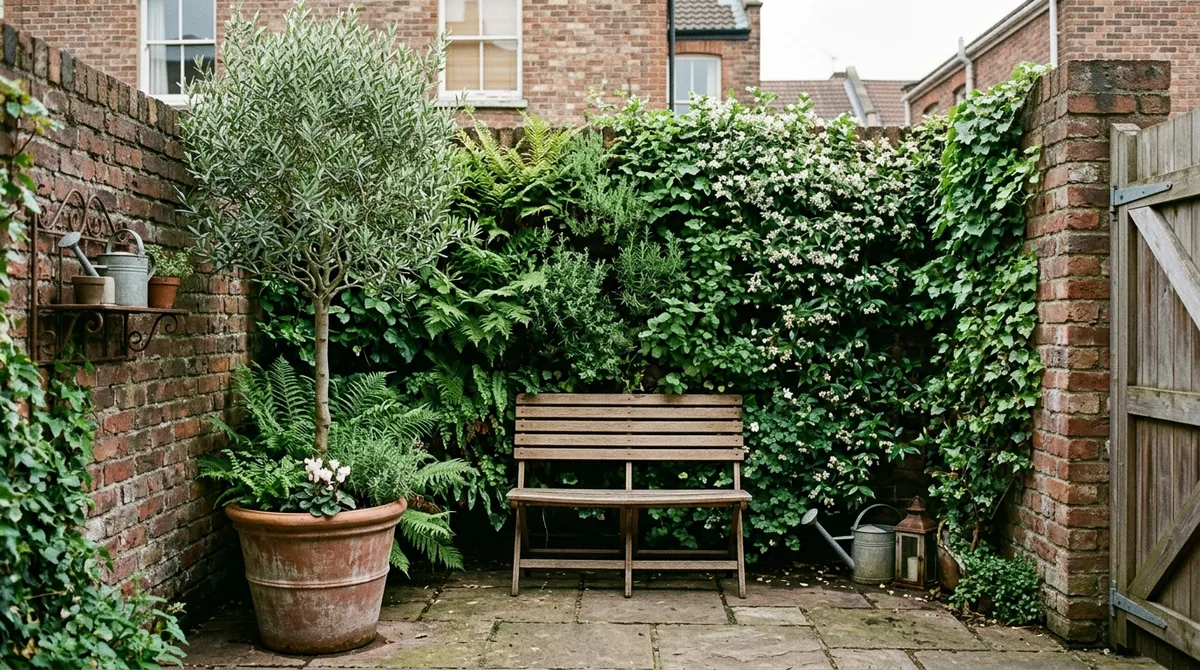
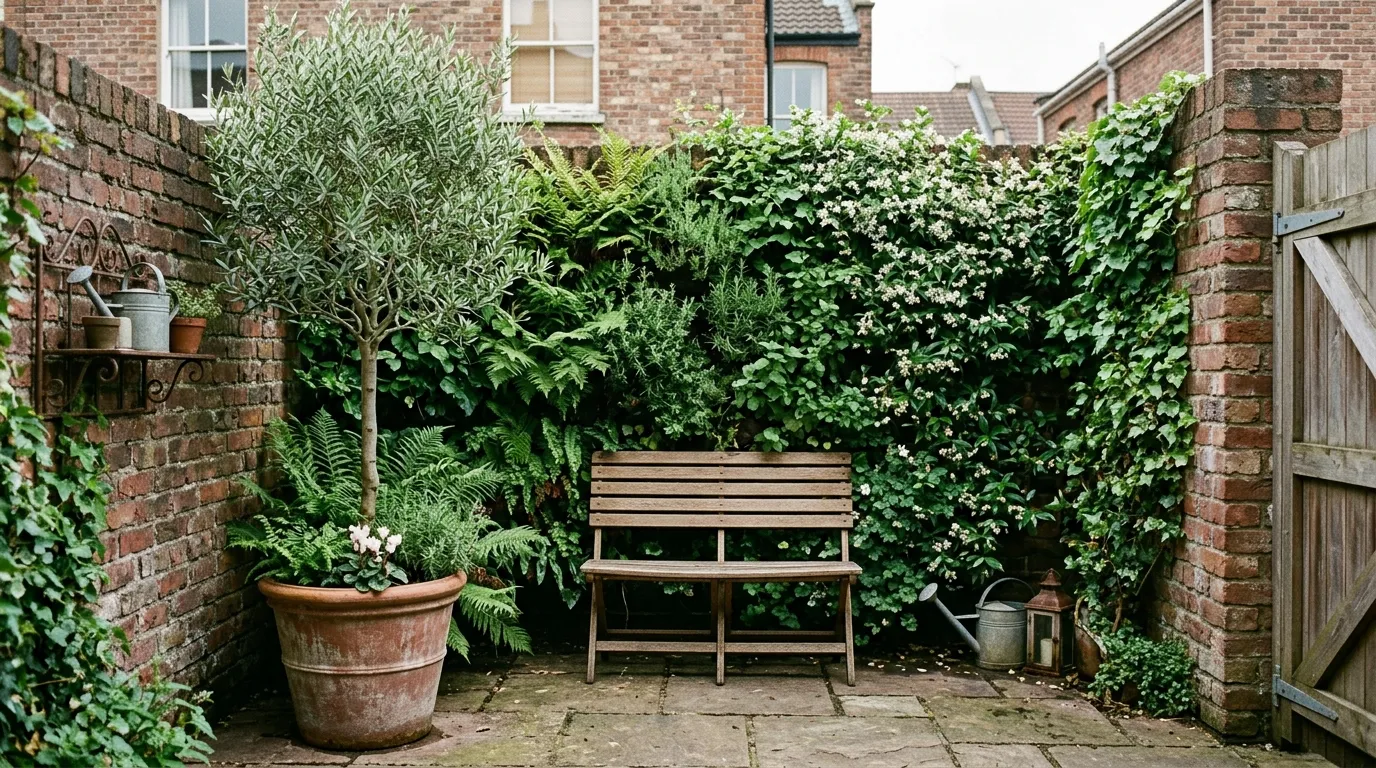 A 4 square metre Bristol courtyard. The planting climbs three walls, leaving the floor clear for a single fold-down bench.
Building upward to multiply your growing space
The single rule that defines pocket gardens is to build in layers, not across the floor. A flat 4 square metre courtyard offers 4 square metres of growing space. Add three vertical tiers and that same footprint offers 12 square metres of surface for plants.
Three practical layers work in almost any tiny UK space:
- Floor level, 0 to 400mm. One or two larger pots with structural plants, a clipped bay or a dwarf Pittosporum. Keep this layer sparse so the floor still reads as open.
- Mid level, 400mm to 1.5m. Wall-mounted troughs, a tiered plant stand, or stacked crates. This is the working layer for herbs and salad you reach without bending.
- High level, 1.5m upward. Climbers on wires, hanging planters, and a living-wall panel. This draws the eye up and makes the space feel taller.
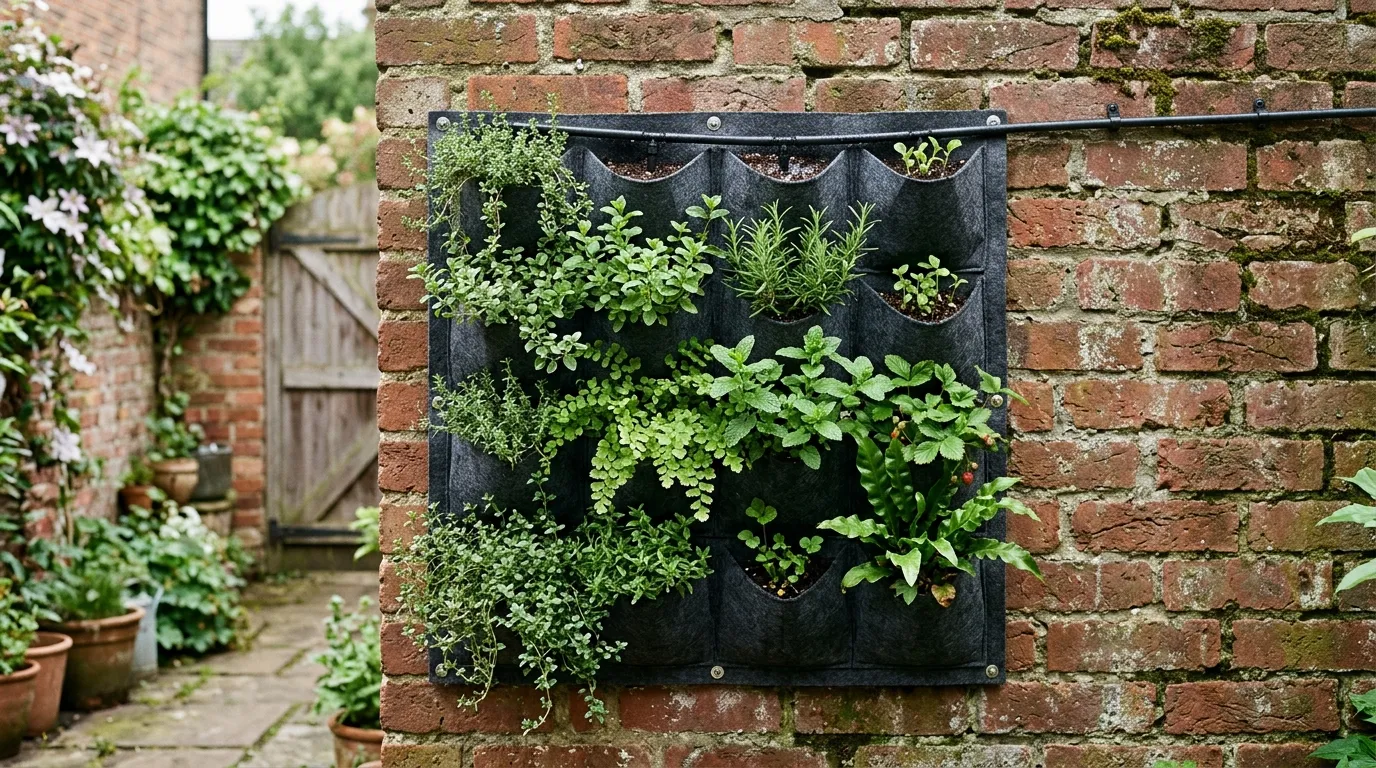 A 1m by 1m living-wall panel holds 24 plants on a single square metre of wall. Drip irrigation runs along the top edge.
How much weight a balcony can actually carry
Weight is the constraint most balcony gardeners miss until something cracks. Most UK balconies are designed to a load of 1.5 to 4 kilonewtons per square metre under building regulations. That converts to roughly 150 to 400kg per square metre total. The catch is that this figure must cover people, furniture, snow, and your pots all at once.
As a safe working rule, keep planted container loads under 60kg per square metre. That leaves headroom for two people and a chair on the same slab. If you want more, get a structural engineer to confirm your specific balcony before you load it.
The lesson is clear. A single 40cm terracotta pot eats two thirds of your safe load before you place a second one. Swap to fibre-clay and you cut that pot from 38kg to 22kg, a 42 per cent saving. Place heavy pots against the wall or over a supporting beam, never out at the unsupported edge. Spread the load and weigh every pot wet before it goes on a balcony.
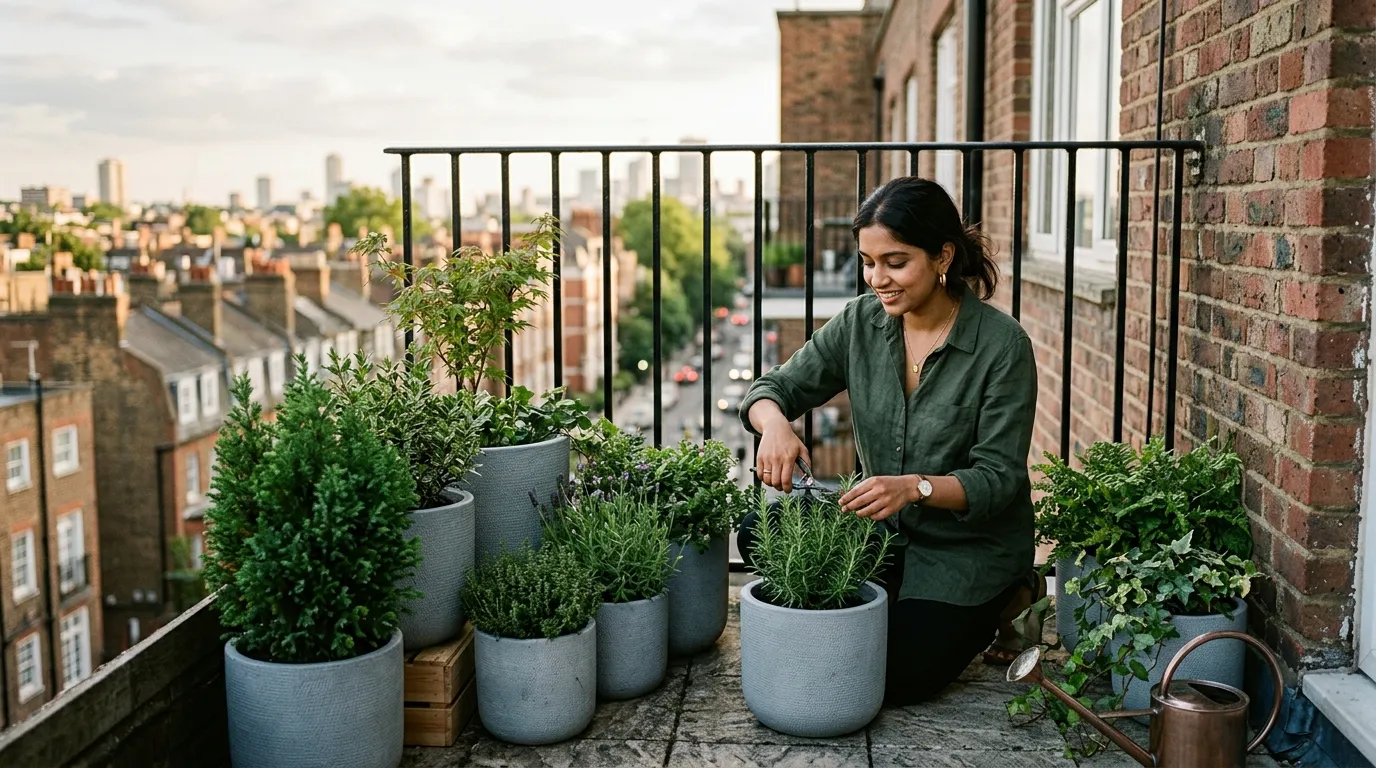 Heavy pots sit against the load-bearing wall, not the unsupported edge. Fibre-clay keeps the saturated weight near half that of terracotta.
Using mirrors and light to fake more depth
Three rules make mirrors work rather than look like a trick:
- Angle it slightly off square. A dead-flat mirror reflects you walking toward yourself. A 10 to 15 degree tilt reflects planting instead.
- Partly screen the frame with a climber. Trachelospermum or ivy softening one edge stops the eye registering a sheet of glass.
- Use exterior-grade mirror. Standard mirror backing fails outdoors within a year. Acrylic or marine-grade glass mirror lasts.
Gardener’s tip: Never hang a garden mirror where it reflects the sun into a doorway or onto dry planting. Focused reflected sun can scorch leaves and, rarely, start a fire. Face it toward planting or shaded wall, never toward a south-facing window in summer.
Pale wall colours multiply light in a dim courtyard or light-well. A basement light-well painted in a warm off-white reflects 70 to 80 per cent of incoming light, against 10 to 20 per cent for dark brick. In low-light pockets this swing alone decides which plants will grow.
Fold-down and stackable furniture for zero footprint
In a pocket garden, furniture must disappear when not in use. A fixed table in 4 square metres steals a quarter of the space permanently. A fold-down wall-mounted bench or table gives you a seat or a surface, then folds flat to 80mm against the wall.
The options ranked by space efficiency:
- Wall-mounted fold-down table, 600mm by 400mm. Folds to 80mm. Best for a balcony where you eat occasionally. Takes 40kg.
- Fold-down bench, seats two. Folds flat, frees 0.8 square metres when stowed.
- Stackable bistro chairs, two chairs stack to the footprint of one. Move them indoors in winter to free the whole floor.
- Bench with storage, doubles as a seat and a place for compost, tools, and pots. Saves a separate store.
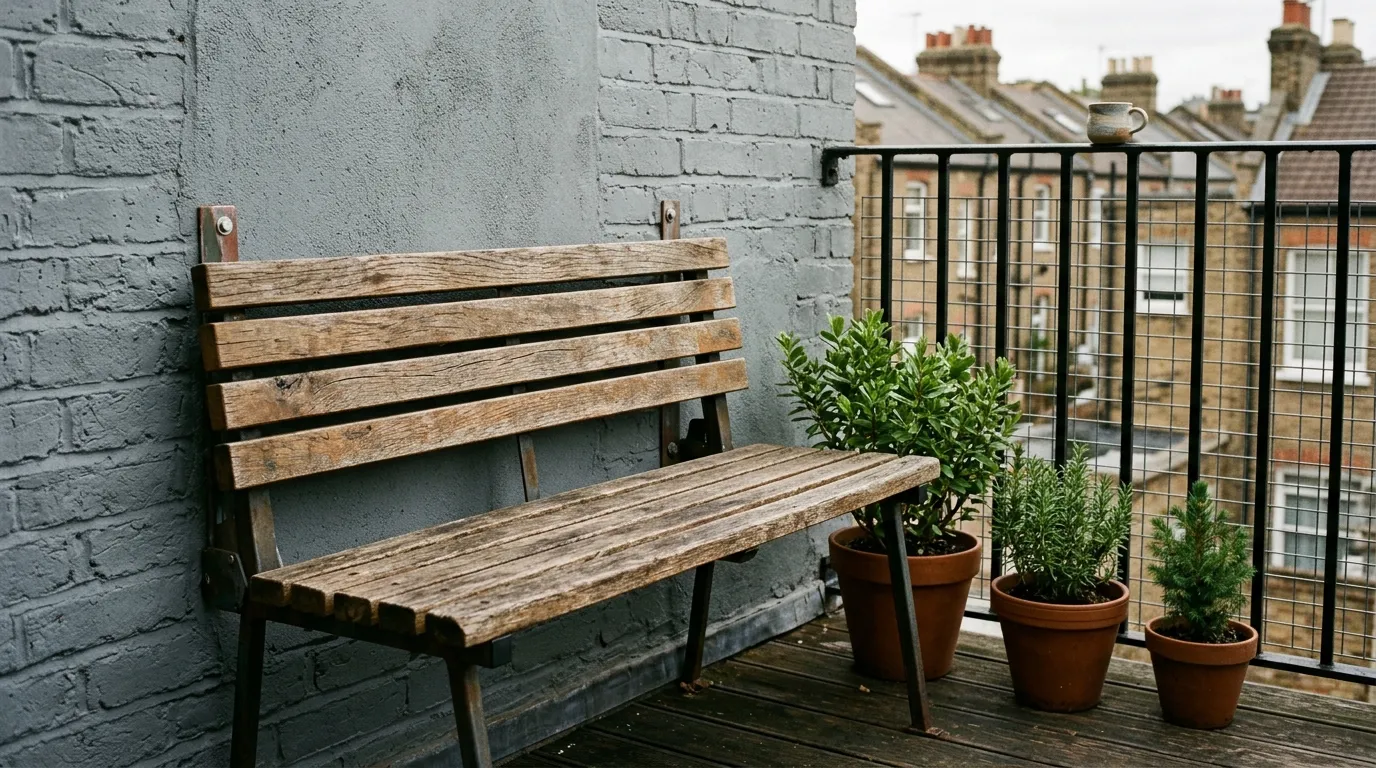 A fold-down bench seats two, then folds to 80mm against the wall. The floor returns to clear standing space in seconds.
Choosing plants that earn their place by aspect
In a pocket garden every plant must justify its footprint. There is no room for a shrub that looks good for two weeks. Choose plants by aspect first, then by year-round value. The table below ranks reliable performers for tiny UK spaces.
| Plant | Best aspect | Mature spread | Role | Why it earns its place |
|---|---|---|---|---|
| Trachelospermum jasminoides | South, west | Climber, 4m | Primary vertical | Evergreen, scented, hardy to minus 10C |
| Hakonechloa macra | North, east | 40cm | Soft texture | Glows in shade, needs no staking |
| Dwarf Pittosporum ‘Tom Thumb’ | Any | 60cm | Structural | Evergreen, slow, holds shape |
| Bay (clipped) | South, west | 50cm in pot | Structural, edible | Year-round form plus kitchen use |
| Trailing thyme | South | 30cm | Edge softener | Edible, drought-tolerant, scented |
| Ferns (Polystichum) | North, light-well | 50cm | Shade filler | Thrives where nothing else will |
A pocket garden needs roughly one structural plant, one climber, and three to five smaller fillers. That is enough. Resist the urge to buy 15 different plants. For a fuller container list our best plants for pots guide covers year-round combinations, and container gardening ideas covers compost mixes and feeding.
Repeating one plant beats collecting many
The most common pocket-garden mistake is treating it like a plant collection. A single repeated specimen reads calmer and larger than a mix. Five identical pots of clipped box or bay create rhythm. The eye reads order, and order makes a small space feel intentional rather than crammed.
This is root cause design. The reason most tiny gardens feel cluttered is not too many plants by number. It is too much variety. Fifteen different leaf shapes, colours, and heights in 4 square metres give the eye nowhere to rest. Reduce to three or four species, repeat them, and the same plant count suddenly feels spacious.
The fix is permanent, not cosmetic. Pick a structural plant and buy three to five of it. Pick one climber. Pick one or two fillers. Repeat across the containers. A friend’s London balcony went from chaotic to calm in 2023 simply by removing nine oddment plants and standing five matching olive-in-pot specimens in a line. Nothing was added. The space felt twice the size.
Drainage and the rules you must not skip on a balcony
Drainage on a balcony is a legal and neighbourly issue, not just a plant-health one. Water must never pool on the slab or drip onto the balcony below. Most leases contain a clause on this, and ignoring it causes genuine disputes.
- Pot feet, 15mm minimum, under every container. They let water escape and the slab dry, which prevents staining and frost damage.
- Drip trays under each pot to catch runoff. Empty them after heavy watering so they do not breed mosquito larvae in summer.
- Self-watering reservoir pots for thirsty plants. They cut watering frequency and reduce overspill on hot days.
- No gravel trays left standing full. Standing water on a slab in a UK winter freezes, expands, and lifts tiles.
Check the drainage on a basement light-well too. These pockets sit below ground and can flood in heavy rain. A 1 square metre light-well needs a clear gully and ideally a small grid drain. The RHS guidance on container gardening covers compost and watering for confined roots in useful depth.
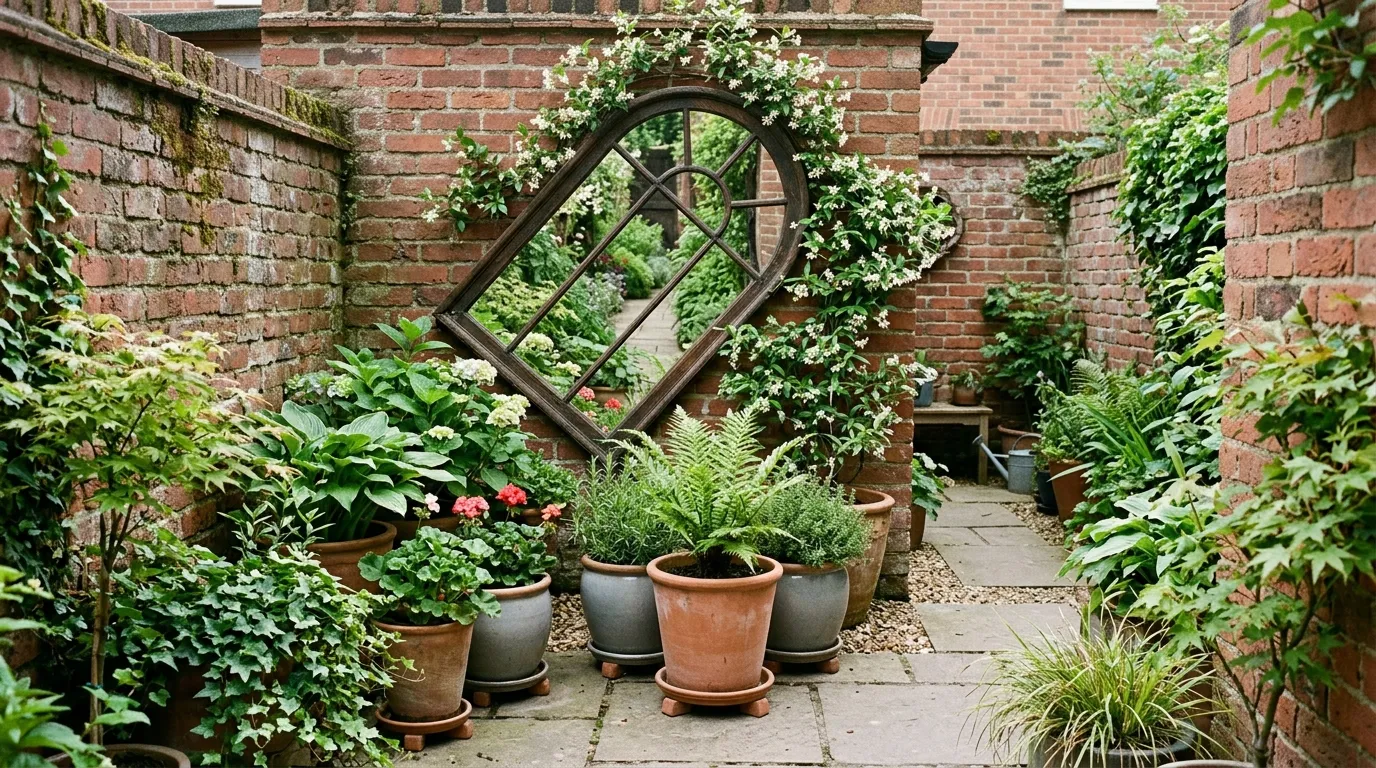 An angled garden mirror behind the planting doubles the apparent depth, while pot feet and trays keep the slab dry and the lease happy.
What a pocket garden actually costs to build
£120 entry build
Recycled or budget pots (£0 to £30), one timber trellis panel (£18), a roll of plant wire and vine eyes (£12), supermarket and end-of-season plants (£40), and a bag of peat-free compost (£8). Add a £12 secondhand bistro chair. This gets a planted, usable pocket garden with a climber and herbs. It will not win awards but it works.
£400 mid build
Four fibre-clay pots (£120), a 1m living-wall panel kit (£90), a fold-down wall bench (£70), better nursery plants including one specimen (£90), and quality peat-free compost and feed (£30). This is the sweet spot. It looks designed, the furniture folds away, and the living wall does the vertical work.
£900 full build
Quality matched containers (£220), a specimen evergreen such as a clipped bay or olive (£120), an exterior garden mirror (£90), low-voltage LED string and spot lighting (£110), a fold-down table plus stackable chairs (£160), a living-wall panel with drip irrigation (£140), and plants plus compost (£60). Fitted over a weekend, this delivers a magazine-grade tiny garden.
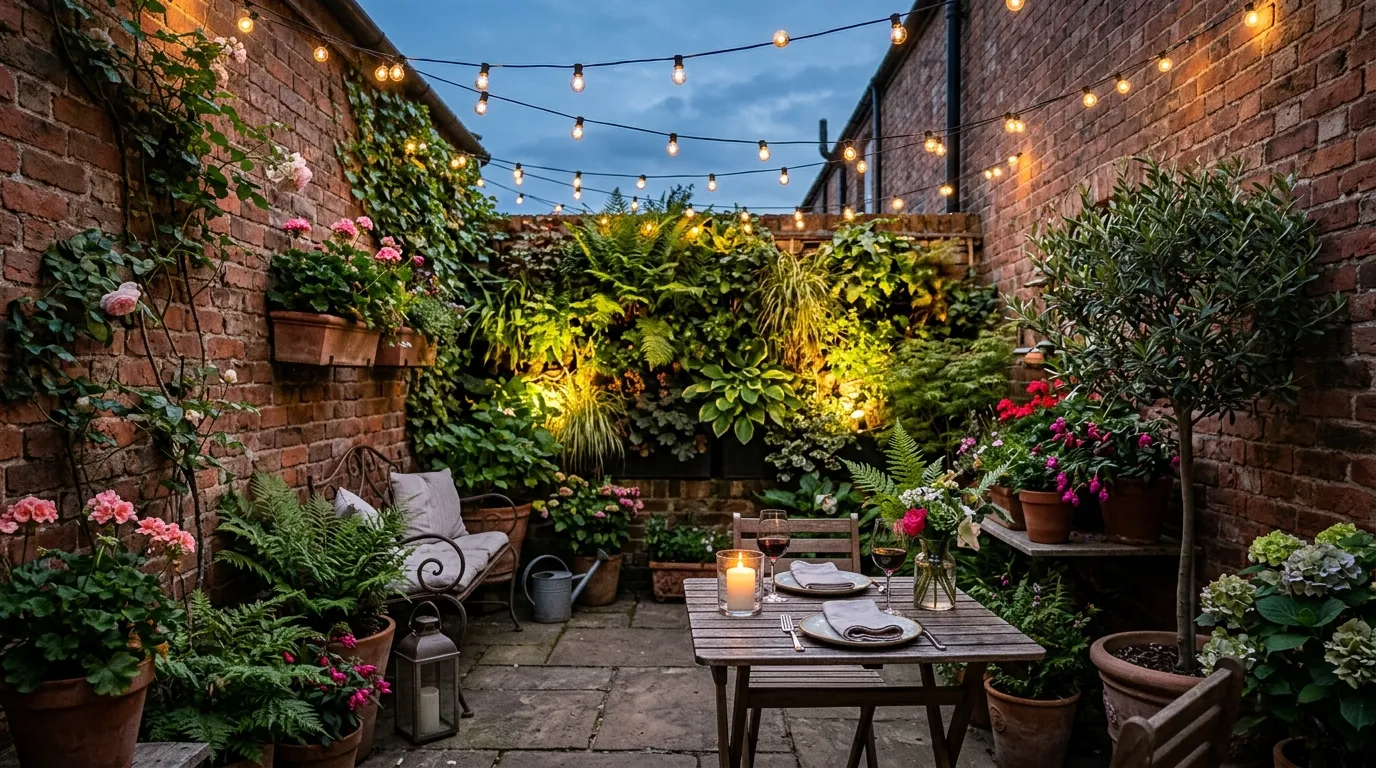 Low-voltage string lights extend a pocket garden into the evening. The full £900 build adds lighting, a mirror, and matched containers.
Common mistakes in tiny garden design
Overloading the floor. Filling 4 square metres of floor with pots leaves nowhere to stand. Keep the floor sparse and push planting up the walls. The floor is for people, not pots.
Ignoring saturated weight on a balcony. A 40cm terracotta pot weighs 38kg wet. Three of them at the unsupported edge can exceed a safe balcony load. Always weigh pots wet and use lightweight fibre-clay near the edge.
Too many different plants. Fifteen species in a tiny space reads as clutter and makes the garden feel smaller. Repeat three to five plants instead of collecting one of everything.
Forgetting drainage. Standing water stains slabs, drips on neighbours, and freezes in winter. Pot feet and drip trays are not optional on a balcony.
Choosing the wrong climber. Vigorous climbers like honeysuckle or Russian vine swallow a pocket garden in two seasons. Pick a restrained evergreen and keep it tied to its wires.
Month-by-month pocket garden calendar
| Month | Main task |
|---|---|
| January | Check pot feet and clear frozen drip trays |
| February | Prune and tie in the evergreen climber |
| March | Repot crowded containers, top-dress with fresh compost |
| April | Plant up the living wall, sow salad in wall troughs |
| May | Move stackable furniture out, start liquid feeding |
| June | Train climber, deadhead, water daily in heat |
| July | Empty drip trays, check balcony load if adding pots |
| August | Holiday watering plan, fit self-watering reservoirs |
| September | Harvest herbs, take cuttings of tender plants |
| October | Clear annuals, move tender pots to shelter |
| November | Group pots together against the wall for warmth |
| December | Fold furniture flat, check mirror fixings for frost lift |
Frequently asked questions
What counts as a pocket garden?
A pocket garden is any planted outdoor space under 5 square metres. That covers a balcony, a side return, a basement light-well, or a tiny front plot. The constraint defines the design. You cannot expand sideways, so you build upward instead.
How do I make my balcony feel like a real garden?
Do pocket gardens need much maintenance?
Less than a lawned garden, but watering is more frequent. Confined roots in small pots dry out fast, so summer watering can be daily. A living wall with drip irrigation and self-watering pots cuts this to twice a week. There is no mowing, no edging, and no large border to weed.
Can I grow food in under 5 square metres?
Yes, herbs, salad, tomatoes and beans all crop in tiny spaces. A single 40cm pot of tomatoes yields 2 to 4kg. Beans climb a wall net and use no floor. Salad in a wall trough crops from April to October across 0.3 square metres of vertical surface.
What is the best plant for a shady light-well?
Ferns and Hakonechloa macra both thrive in deep shade. Polystichum setiferum holds evergreen structure where nothing else grows. Paint the light-well walls pale to bounce 70 to 80 per cent of the limited light onto the planting.
How heavy can my balcony pots be?
Keep total planted load under 60kg per square metre as a safe rule. UK balconies carry 1.5 to 4 kilonewtons per square metre, but that must also hold people and furniture. Weigh every pot saturated and place heavy ones against the load-bearing wall.
Are mirrors safe to use outdoors in a garden?
Yes, if you use exterior-grade mirror and angle it away from direct sun. Standard mirror backing fails outdoors within a year. Never face a mirror at the midday sun, as focused reflection can scorch leaves or, rarely, start a fire.
Next step
Our team produces practical UK gardening guidance from source research, contributor records and established horticultural practice. Editorial standards are overseen by Matt W.