Key takeaways
- Beauregard is the most reliable UK sweet potato variety, producing 1-2kg per plant in raised beds over 100-120 days
- Start slips indoors from January by suspending a tuber in water. Shoots root in 4-6 weeks and are ready to plant out by June
- Sweet potatoes need soil temperatures above 15C. Black plastic mulch raises soil temperature by 3-5C and doubles yield
- Harvest before the first frost in September or October. Cure tubers at 25-30C for 10 days to develop sweetness
- Containers and grow bags work well for sweet potatoes. A 40-litre container produces 1-1.5kg per plant
Growing sweet potatoes in the UK is now a realistic goal for any gardener with a sunny spot and 100 frost-free days. Warmer UK summers and short-season varieties bred for northern climates mean reliable harvests from raised beds, containers, and grow bags across southern and central England.
Why sweet potatoes work in UK gardens
Sweet potatoes (Ipomoea batatas) are tropical plants that need warmth, not heat. The minimum soil temperature for tuber development is 15C, which UK gardens routinely reach from June to September. Met Office data shows average UK summer temperatures have risen 1.2C since 1990. That shift opened a growing window that did not exist 30 years ago.
Short-season varieties like Beauregard mature in 90-100 days. The UK growing season from mid-June to late September provides 100-110 days in most regions. Southern England gets 120+ days in warm years. Central England and sheltered gardens in the Midlands, Yorkshire, and East Anglia all produce viable harvests.
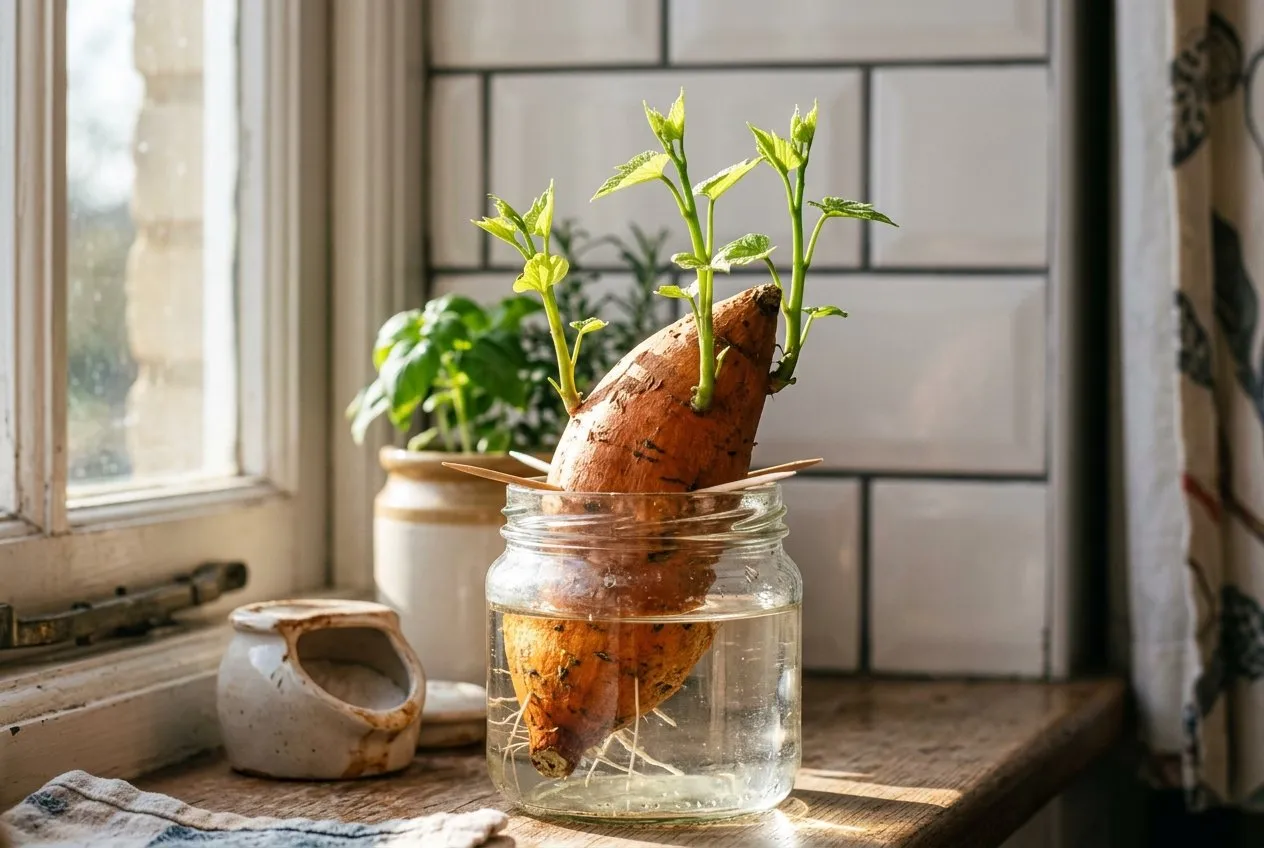
Sweet potato slips sprouting from a tuber suspended in water. Start this process indoors between January and March.
How to start sweet potato slips from tubers
Slips are the rooted shoots that grow from a mature sweet potato tuber. You cannot plant a tuber directly like a seed potato. The slipping process takes 6-8 weeks indoors before planting out.
Step-by-step slipping method
- Choose your tuber (January-February). Buy an organic sweet potato from a supermarket or order a named variety from a seed supplier. Non-organic tubers are often treated with sprout inhibitor, which prevents shoot growth.
- Suspend in water. Push three toothpicks into the tuber’s middle and rest it on the rim of a glass jar, submerging the bottom third. Use tepid water. Place on a warm, bright windowsill (18-25C ideal).
- Wait for shoots (2-4 weeks). Green shoots emerge from the top. Change the water every 3-4 days to prevent bacterial growth.
- Harvest slips (4-6 weeks). When shoots reach 15-20cm, twist them off the tuber. Each tuber produces 6-10 usable slips. Place slips in a fresh jar of water to root, or push directly into modules of moist multipurpose compost.
- Grow on (2-3 weeks). Rooted slips need a warm windowsill or heated propagator until planting out. Harden off for one week before transplanting by placing outdoors during the day and bringing in at night.
One tuber produces enough slips for a 2m x 1m raised bed. For container vegetable gardening, three slips fill three 40-litre pots and produce 3-4.5kg total.
Best sweet potato varieties for UK growing
UK variety comparison table
| Variety | Skin colour | Flesh colour | Days to harvest | Yield (kg/plant) | Flavour | UK reliability |
|---|---|---|---|---|---|---|
| Beauregard | Copper-orange | Deep orange | 90-100 | 1.5-2.0 | Sweet, creamy | Excellent |
| Georgia Jet | Red-orange | Orange | 85-95 | 1.0-1.5 | Sweet, moist | Very good |
| T65 | Purple-brown | White | 100-110 | 1.0-1.5 | Mild, nutty | Good |
| Murasaki | Purple-red | White-purple | 110-120 | 0.8-1.2 | Dry, chestnut-like | Moderate |
Georgia Jet matures 5-10 days faster than Beauregard, making it the best choice for northern gardens or late starts. Tubers are smaller but the flavour is excellent.
T65 is a Japanese variety with white flesh and a nutty, less sweet flavour. It suits stir-fries and tempura better than roasting. Yields are moderate but consistent.
Planting out sweet potatoes
Timing is critical. Sweet potatoes cannot tolerate any frost, and cold soil below 12C stalls root development entirely.
When to plant
Plant out after the last frost, typically mid-June in most of England. Do not rush. A slip planted into warm soil on 15th June will outperform one planted into cool soil on 25th May. Check your soil temperature with a thermometer at 10cm depth. You need a consistent 15C or above.
Soil preparation
Sweet potatoes prefer light, well-drained, slightly acidic soil (pH 5.5-6.5). Heavy clay needs improvement with compost and sharp sand. If your soil is heavy, improving clay soil before planting makes a significant difference. Raised beds are the best option for clay gardens because you control the growing medium entirely.
Work in a general-purpose fertiliser at planting time. Avoid high-nitrogen feeds, which push vine growth at the expense of tubers. A balanced NPK of 5-10-10 is ideal.
Planting method
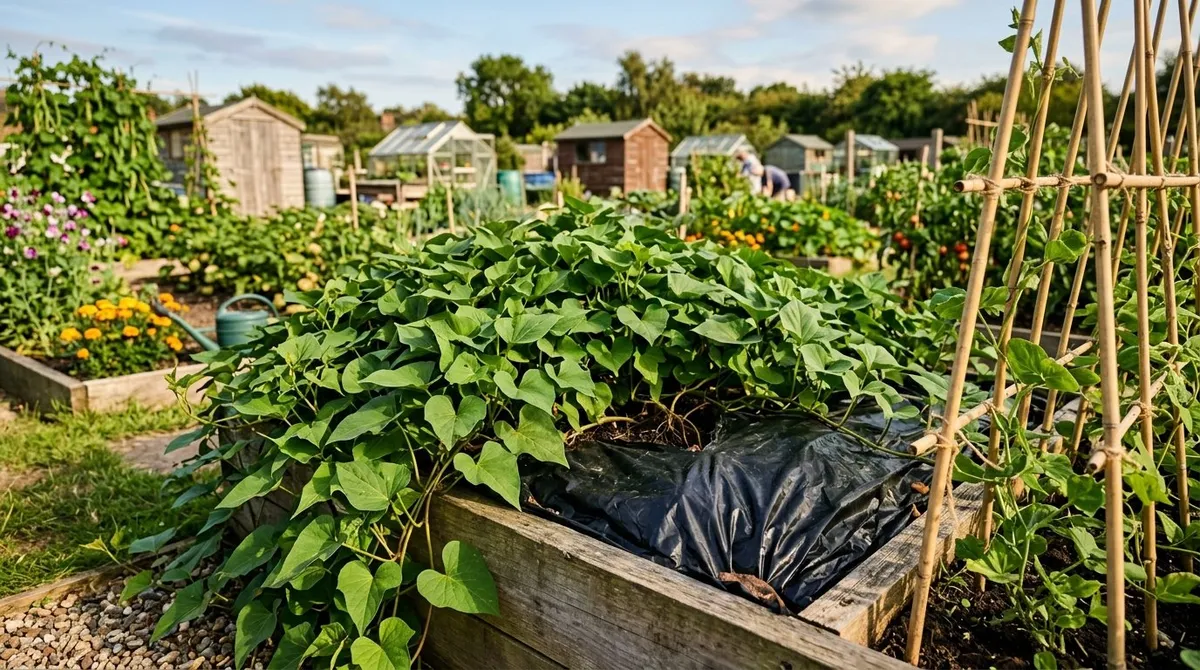
- Cover the bed with black plastic mulch 2-3 weeks before planting to pre-warm the soil.
- Cut X-shaped slits in the plastic at 30cm spacing.
- Plant slips through the slits, burying the stem to the first pair of leaves.
- Water well and firm the soil around each slip.
- If temperatures drop below 10C at night during the first two weeks, cover with fleece.
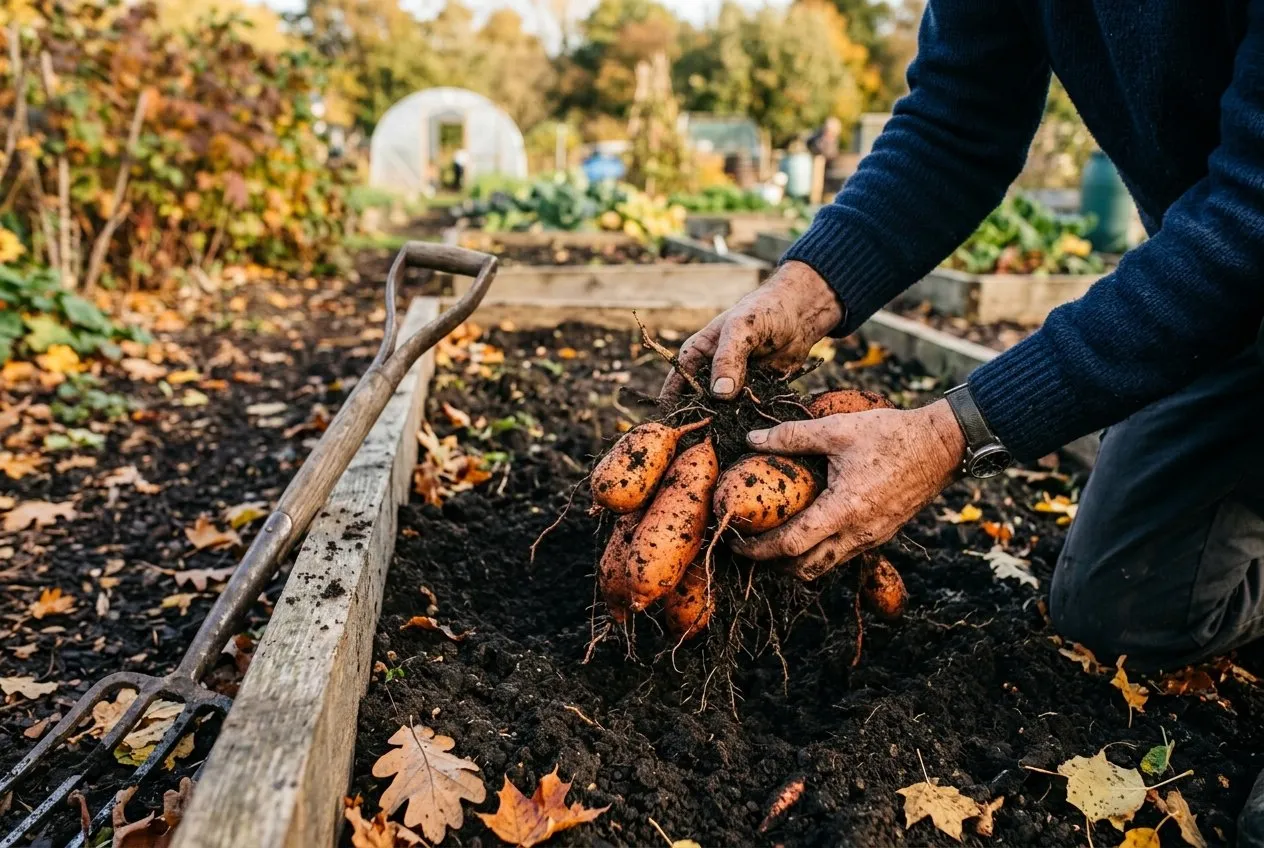
Beauregard sweet potatoes being lifted from a raised bed in early October. Harvest before the first frost to avoid cold damage.
Growing methods compared
Sweet potatoes adapt to several growing methods. Each has trade-offs for yield, convenience, and cost.
Raised beds
Raised beds are the best method for UK sweet potato growing. They warm faster than ground-level soil, drain freely, and allow you to fill with an ideal compost and soil mix. A 1.2m x 2.4m bed holds 8-10 plants and produces 10-15kg in a good season. Our raised bed gardening guide covers bed construction and filling.
Containers
A 40-litre container or large bucket produces 1-1.5kg per plant. Use multipurpose compost mixed with 20% perlite for drainage. Place containers against a south-facing wall for reflected warmth. Water daily in summer. Containers dry out fast in July and August, and dry soil stops tuber development. A single plant per container gives the best results.
Grow bags
Standard tomato grow bags work for sweet potatoes, though yields are lower than raised beds or large containers. Plant two slips per bag, spaced 25cm apart. Growing in grow bags suits gardeners with limited space or paved areas. Expect 0.8-1.2kg per plant from grow bags.
Black plastic mulch (all methods)
Watering and feeding sweet potatoes
Sweet potatoes need consistent moisture but not waterlogging. The trailing vines are drought-tolerant once established, but dry soil during the tuber-swelling period (August-September) reduces yields sharply.
Watering schedule:
- June (establishment): Water every 2-3 days until slips show new growth.
- July (vine growth): Water once or twice weekly. The vines grow rapidly, covering 1-2m of ground per plant.
- August-September (tuber swelling): This is the critical period. Water deeply twice weekly if rain is scarce. Each plant needs 5-8 litres per watering.
- Two weeks before harvest: Reduce watering to toughen the skin and improve storage quality.
Harvesting and curing sweet potatoes
Knowing when and how to harvest determines whether your sweet potatoes taste sweet or starchy, and whether they store for weeks or months.
When to harvest
Harvest 100-120 days after planting, or before the first autumn frost, whichever comes first. In most of England, this means late September to mid-October. Frost kills the vines immediately and damages tubers near the surface. Watch weather forecasts from late September.
Signs of readiness include yellowing lower leaves and vines that stop growing actively. Gently dig around one plant to check tuber size before harvesting the full bed. If tubers are still finger-sized, cover with fleece and wait another 2-3 weeks if frost is not imminent.
How to harvest
Use a garden fork inserted 30cm from the plant stem to avoid spearing tubers. Lift carefully. Sweet potato skin is thin and damages easily at harvest. Handle tubers like eggs. Do not wash them. Brush off loose soil and lay on newspaper in a dry, shaded spot.
Curing for sweetness and storage
Freshly harvested sweet potatoes taste starchy, not sweet. Curing converts starches to sugars and heals harvest wounds in the skin. This step is essential for flavour and storage life.
Curing method:
- Place unwashed tubers in a warm spot (25-30C) with high humidity. An airing cupboard, warm conservatory, or room near a radiator works well.
- Cover loosely with newspaper or a damp towel to hold moisture around the tubers.
- Cure for 10-14 days. The skin darkens slightly and becomes firmer.
- After curing, move to long-term storage at 12-15C in a dark, ventilated spot.
Properly cured sweet potatoes store for 4-6 months. A garage shelf, unheated spare room, or cool pantry works well. Never refrigerate sweet potatoes. Temperatures below 10C cause chilling injury, turning the flesh hard and discoloured.
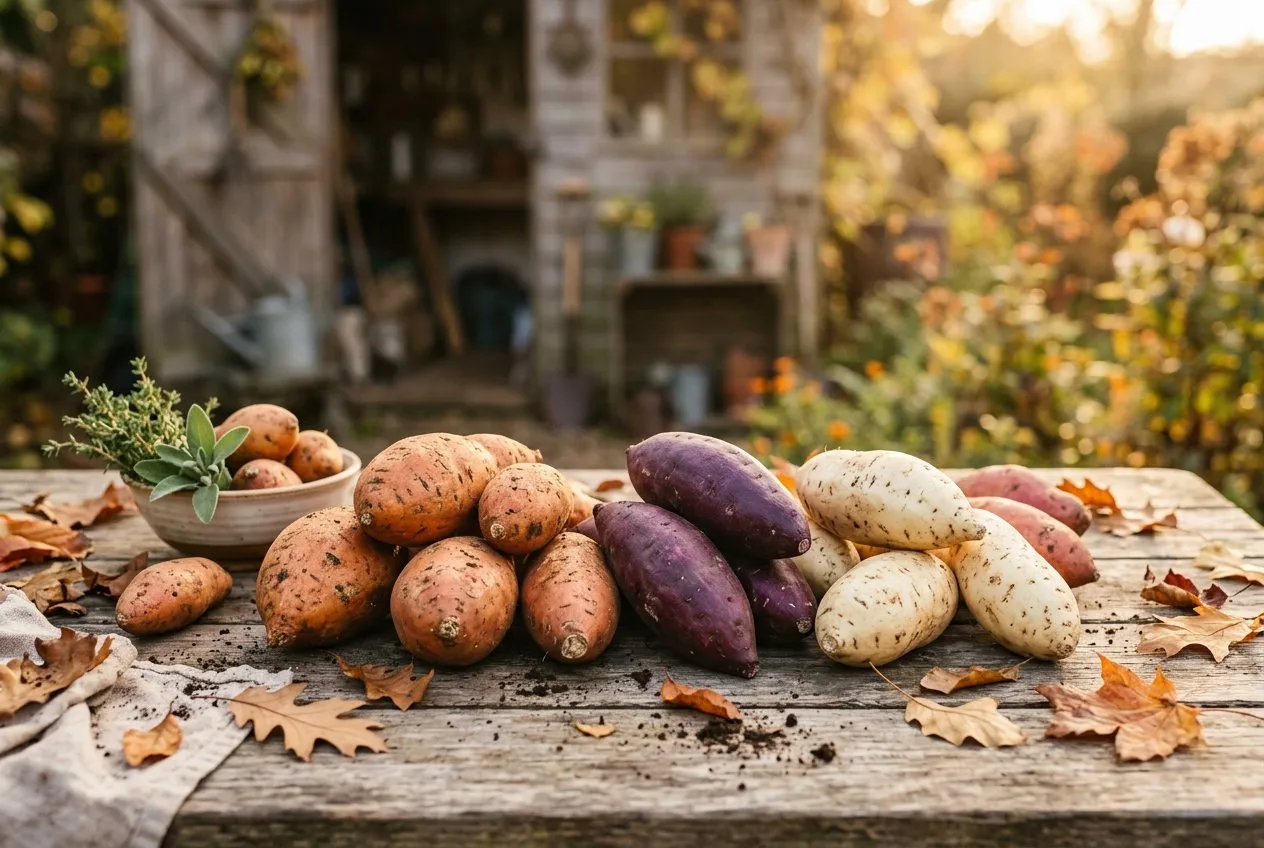
Four varieties compared: orange Beauregard (left), red Georgia Jet, white T65, and purple Murasaki (right). Each has a distinct flavour and texture.
Common problems and solutions
Sweet potatoes are relatively trouble-free in UK gardens, but a few issues appear regularly.
Slugs and snails are the biggest UK pest for sweet potatoes. They tunnel into tubers underground, leaving holes that invite rot. Use nematode biological controls (Nemaslug) applied in August, or set beer traps around the bed. Raised beds with copper tape around the edges reduce slug damage significantly.
Cold damage from planting too early or harvesting too late causes most crop failures. If overnight temperatures drop below 5C after planting, cover with fleece. Never leave tubers in the ground past the first frost.
Poor yields almost always trace back to cold soil. Use black plastic mulch, raised beds, and patient timing. Planting into soil below 15C wastes the first 3-4 weeks of the growing season because roots cannot develop.
Vine weevil occasionally attacks container-grown sweet potatoes. Symptoms include wilting vines despite adequate water. Apply vine weevil nematodes (Steinernema kraussei) in September as a preventive drench for containers.
Whitefly sometimes colonise the undersides of sweet potato leaves in hot summers. They rarely cause serious damage outdoors. A strong jet of water from a hose dislodges them. In enclosed growing spaces, use yellow sticky traps.
If you are growing other vegetables alongside sweet potatoes, our guide to the best vegetables to grow at home covers companion planting and spacing for mixed beds.
Frequently asked questions
Can you grow sweet potatoes in the UK?
Yes, sweet potatoes grow successfully in UK gardens. Modern short-season varieties like Beauregard mature in 100-120 days. UK summers now regularly provide enough warmth, particularly in southern and central England. Raised beds with black plastic mulch boost soil temperatures by 3-5C, which makes sweet potato growing viable even in cooler regions. The RHS sweet potato growing guide confirms that UK growers can expect good results with the right varieties and preparation.
When should I start sweet potato slips UK?
Start sweet potato slips indoors between January and March. Suspend a shop-bought organic sweet potato in a jar of water on a warm windowsill. Shoots appear within 2-4 weeks. Once shoots reach 15-20cm, twist them off and root them in water or moist compost. Slips need 4-6 weeks to develop strong roots before planting out in June.
What is the best sweet potato variety for the UK?
Beauregard is the most reliable sweet potato variety for UK growing. It matures in 90-100 days, tolerates cooler summers, and produces consistent yields of 1-2kg per plant. The orange flesh has a sweet, creamy flavour. Georgia Jet is a faster alternative at 90 days but produces smaller tubers. For purple flesh, Murasaki is the best UK option.
Do sweet potatoes need a greenhouse in the UK?
Sweet potatoes do not need a greenhouse in most of the UK. They grow well outdoors in raised beds, containers, and grow bags. Black plastic mulch over the soil surface provides enough warmth. A greenhouse or polytunnel extends the season by 2-4 weeks and increases yields by 20-30%, but it is not essential. Southern and central England have enough outdoor warmth for a full harvest.
How many sweet potatoes do you get from one plant?
One sweet potato plant typically produces 1-2kg of tubers in UK conditions. That equals 4-8 medium-sized sweet potatoes per plant. Yields depend on soil warmth, growing season length, and variety. Beauregard in a raised bed with black mulch averages 1.5kg. Container-grown plants produce slightly less at 1-1.5kg. In a good summer, exceptional plants reach 2.5kg.
Why are my sweet potatoes so small?
Small sweet potatoes usually result from cold soil or too short a growing season. Sweet potatoes need soil temperatures above 15C and at least 100 frost-free days. Planting too early into cold soil stunts root development. Other causes include overcrowding (plant 30cm apart), too much nitrogen fertiliser (which promotes leaves over tubers), and poor drainage. Black plastic mulch and raised beds solve most sizing problems.
How do you cure sweet potatoes after harvesting?
Cure sweet potatoes at 25-30C with high humidity for 10 days after harvesting. Place unwashed tubers in a warm room, airing cupboard, or near a radiator. Cover loosely with newspaper to hold moisture. Curing converts starches to sugars, heals skin wounds, and extends storage life to 4-6 months. Without curing, sweet potatoes taste starchy and rot within weeks. After curing, store at 12-15C in a dark, ventilated space. Garden Organic provides additional guidance on organic sweet potato cultivation and storage.
Our team produces practical UK gardening guidance from source research, contributor records and established horticultural practice. Editorial standards are overseen by Matt W.