Key takeaways
- Real wasabi needs 8-21C, 80%+ shade and constant moisture across 18-24 months to harvest a rhizome
- Two methods work in the UK: oka (damp soil with leaf mould) and sawa (shallow flowing water)
- The Wasabi Company in Dorset is the only UK commercial grower selling plug plants from £8-£14
- Mature rhizomes reach 15-20cm long and 50-150g, grated fresh on a sharkskin oroshigane
- Leaves and stems are edible from 6 months and taste of mild wasabi heat
- Most UK attempts fail to summer heat above 25C and to root rot in stagnant water
Real wasabi is one of the slowest and most particular edible crops you can grow in the UK. Wasabia japonica needs cool temperatures, deep shade, and a constant supply of moving water or wet leaf mould. The reward is a 15 to 20cm rhizome that grates into a clean green paste with a flash of nasal heat that fades in under a minute. Almost nothing sold as wasabi in UK supermarkets is the real plant.
Can you grow real wasabi in the UK
Yes, real wasabi grows in UK gardens given the right microclimate. The plant comes from cool mountain streams on Japan’s Honshu and Kyushu islands. Mean annual temperature 12 to 14C, summer maximum rarely above 22C, water temperature 8 to 18C, deep dappled shade under deciduous trees. Large parts of upland Britain match those numbers more closely than most of Japan does at sea level.
The single UK commercial wasabi farm sits in chalk streams in Dorset. The Wasabi Company has grown Wasabia japonica there since 2010 at water temperature 11 to 14C year round. They harvest 8 tonnes of rhizome a year for restaurants and supply 12,000 plug plants annually to home growers. The Dorset chalk stream model proves the climate works. Replicating it at home is the project.
Three confounding factors trip up almost every UK first-timer. Summer soil heat above 25C kills the plant in a week. Stagnant water at the crown causes black rot within 14 days. Anything labelled “wasabi” from a supermarket or garden centre plant rack is almost certainly European horseradish (Armoracia rusticana) sold under the wrong name. Get the species right, keep the root zone cool, keep the water moving, and the plant grows.
Wasabia japonica vs European horseradish
Real wasabi and horseradish belong to the same family (Brassicaceae) and share the active compound 6-methylsulfinyl-hexyl-isothiocyanate. They taste similar at first hit but behave very differently. Knowing the difference saves you from buying the wrong plant.
| Feature | Wasabia japonica (real wasabi) | Armoracia rusticana (horseradish) |
|---|---|---|
| Native range | Mountain streams of Japan | Eastern Europe and western Asia |
| Soil preference | Constantly moist leaf mould or flowing water | Free-draining heavy clay |
| Temperature range | 8 to 21C, fails above 25C | -20 to 30C, fully hardy |
| Plant size | 30 to 45cm | 90 to 120cm |
| Leaf shape | Heart-shaped, glossy, 12 to 20cm | Long, paddle-shaped, 30 to 60cm |
| Heat profile | Clean nasal heat, fades in 60s | Sustained sinus burn |
| Time to harvest | 18 to 24 months | 12 months from root cutting |
| UK availability | One commercial source (Dorset) | Garden centres, allotments |
| UK plug price | £8 to £14 | £3 to £6 root cutting |
Real wasabi is a precision crop. Horseradish is bombproof. If you want a low-maintenance condiment plant for an allotment bed, our how to grow horseradish UK guide covers that route. If you want the real thing on your sushi, keep reading.
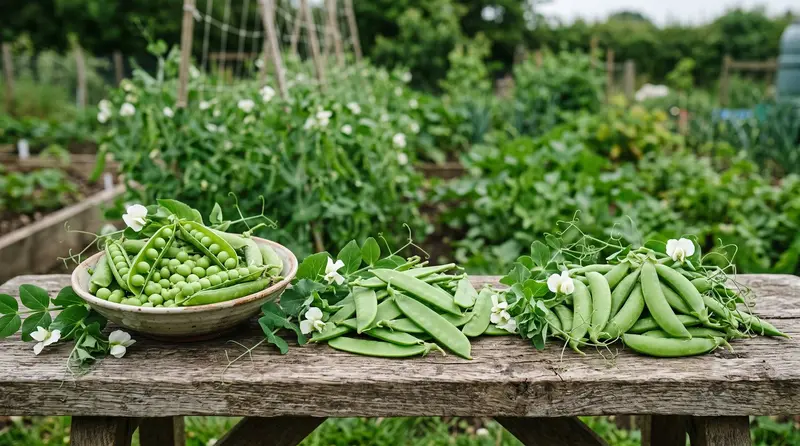
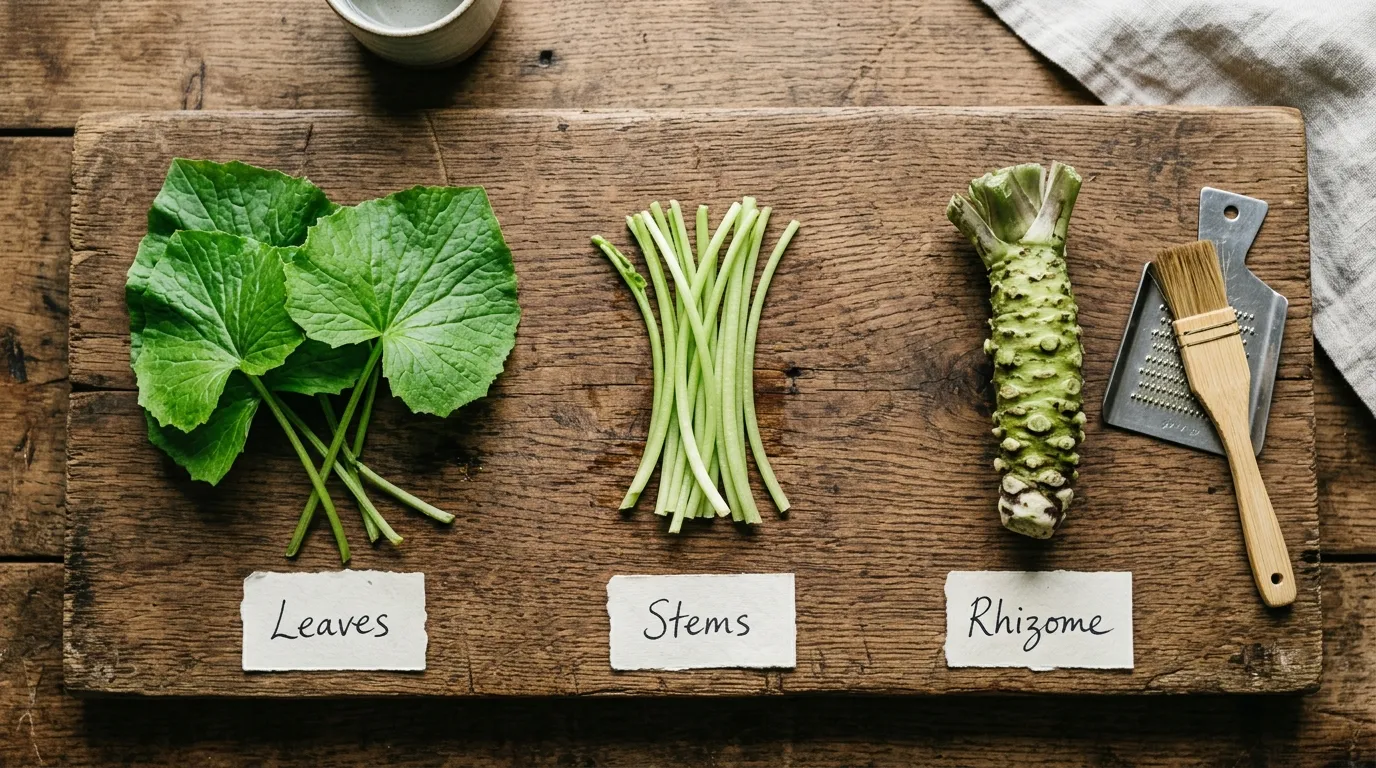 Three edible parts of Wasabia japonica laid out separately. Leaves taste of mild wasabi heat and work in salads or as sushi wraps. Stems pickle well. The rhizome at the right is the prized harvest, grated fresh on a sharkskin oroshigane.
Wasabi growing conditions UK gardens need
Wasabi has narrow tolerances. The four variables that matter are temperature, shade, water, and substrate. Get any one wrong for more than a fortnight and you lose the plant.
Temperature window
Shade requirement
Wasabi needs 80% shade or better. In Japan, commercial farms use 70 to 90% shade cloth above natural tree canopy. In UK gardens, plant under deciduous trees that leaf out by mid-April. North-facing walls work. Dense polytunnel netting at 70% shade plus a second layer of 50% gives 85% combined. Direct summer sun above 4 hours a day kills the plant.
Water needs
Sawa method (water grown) requires shallow flowing water at 3 to 5 litres per hour per plant, depth 20 to 40mm, temperature 8 to 16C. Oka method (soil grown) needs constant soil moisture, never below field capacity, irrigated daily in dry weather. Calcium in the water matters: 30 to 80ppm calcium is ideal, which is why Dorset chalk streams work so well.
Substrate
Soil-grown wasabi (oka method) UK guide
The oka method (oka means “hill” or “land” in Japanese) grows wasabi in damp soil instead of flowing water. Rhizomes come out smaller (50 to 80g typically) but the setup costs and maintenance are far lower than sawa. This is the realistic route for most UK home gardens.
Site selection for oka
Soil preparation
Excavate the bed to 40cm depth. Refill with:
- 50% three-year-old leaf mould
- 30% coarse sharp sand
- 20% original topsoil
- 20g bonemeal per litre of mix
- 50g sulphate of potash per square metre
Lay 25mm bark mulch on top after planting. Keep moisture above field capacity by daily watering in dry weather. A 50mm soaker hose on a timer running 10 minutes at 7am works.
Planting plug plants
Ongoing oka care
Top up leaf mould mulch every March and October. Hand-weed only (no hoeing, which damages shallow roots). Feed with fortnightly liquid seaweed at half strength from April to September. Watch soil temperature with a thermometer between June and August.
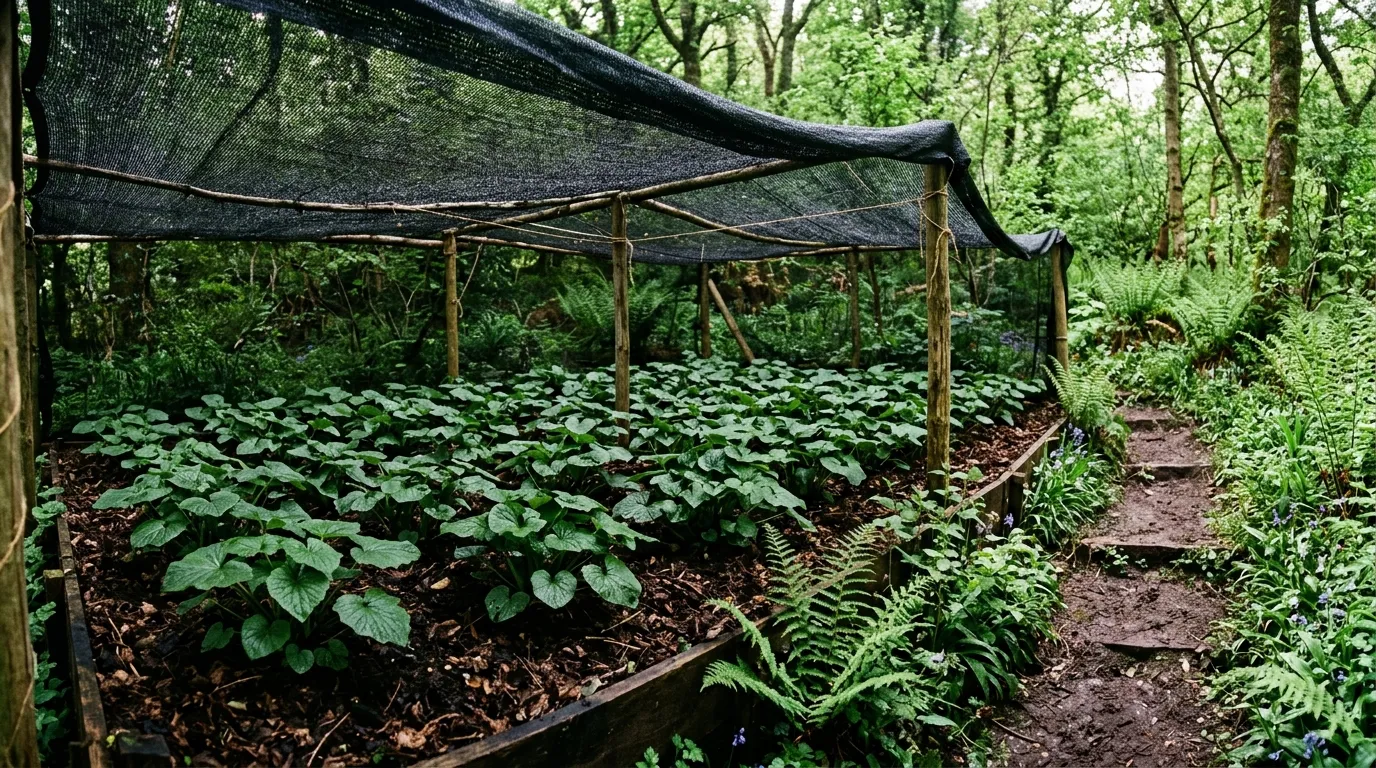 Oka method bed under 85% shade in a Devon woodland setting. Leaf-mould mulch holds soil moisture above field capacity through summer. Rhizomes typically 50 to 80g at 18 to 24 months.
Water-grown wasabi (sawa method) UK setup
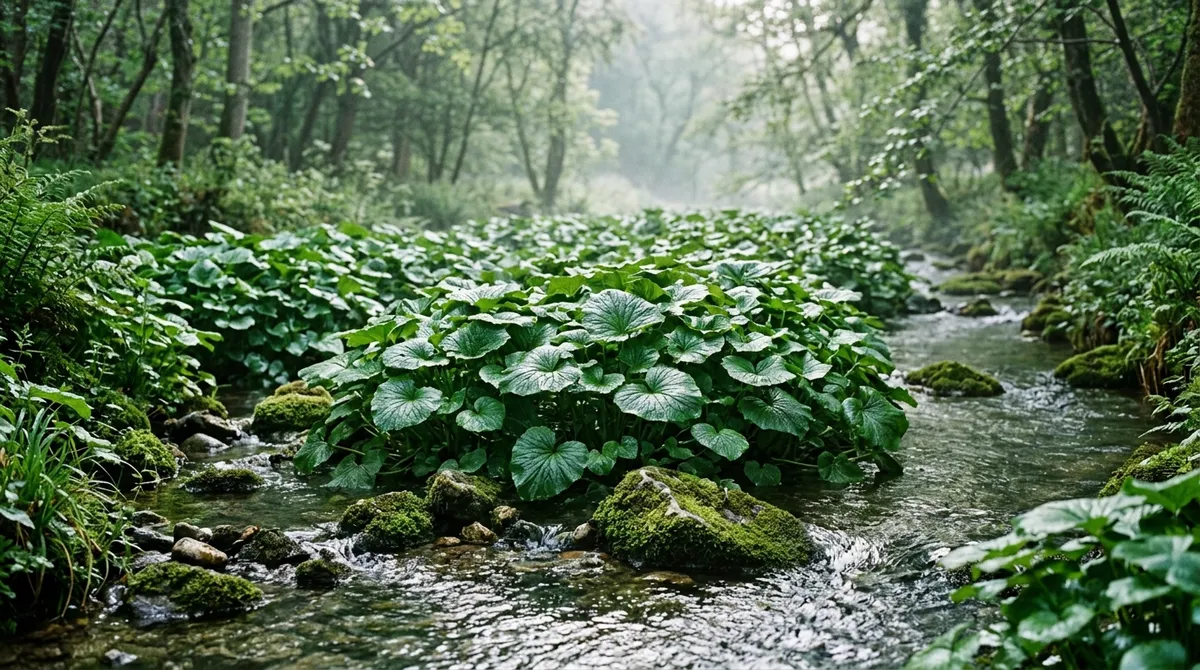
The sawa method (sawa means “swamp” or “stream”) replicates the Japanese mountain stream model. Wasabi plants sit in shallow flowing water over washed gravel. Rhizomes grow faster and larger (100 to 150g common, 200g possible). Setup costs and water needs are higher.
Building a sawa tray
Use a galvanised steel trough or food-grade plastic tank, minimum dimensions 1m x 0.5m x 0.2m deep. Drill a 25mm outlet 30mm below the rim. Line the base with 100mm washed pea gravel 5 to 10mm grade. Set a slow inlet at the far end (a 4mm drip line at 4 litres per hour per plant works). Water flows in, percolates through gravel, exits at the outlet. Aim for water depth 20 to 40mm above the gravel surface.
Water source and recirculation
Water temperature management
The most important sawa variable. In summer, polytunnel air temperature can hit 35C, which warms the water within 6 hours. Three fixes work:
- Site the header tank in deep shade outside the polytunnel (water enters cool)
- Insulate the tray with 50mm foam wrapped in damp hessian (evaporative cooling drops water 3 to 5C below air)
- Switch to night-only flow in heatwaves (water sits cool between 10pm and 6am)
Planting and spacing in sawa
Plug plants go into the gravel with the crown level with the gravel surface. Spacing 25 to 30cm. Roots find their own way through gravel within 14 days. No fertiliser needed in the first year (gravel is inert and clean water provides minimal nitrogen, exactly as wasabi prefers).
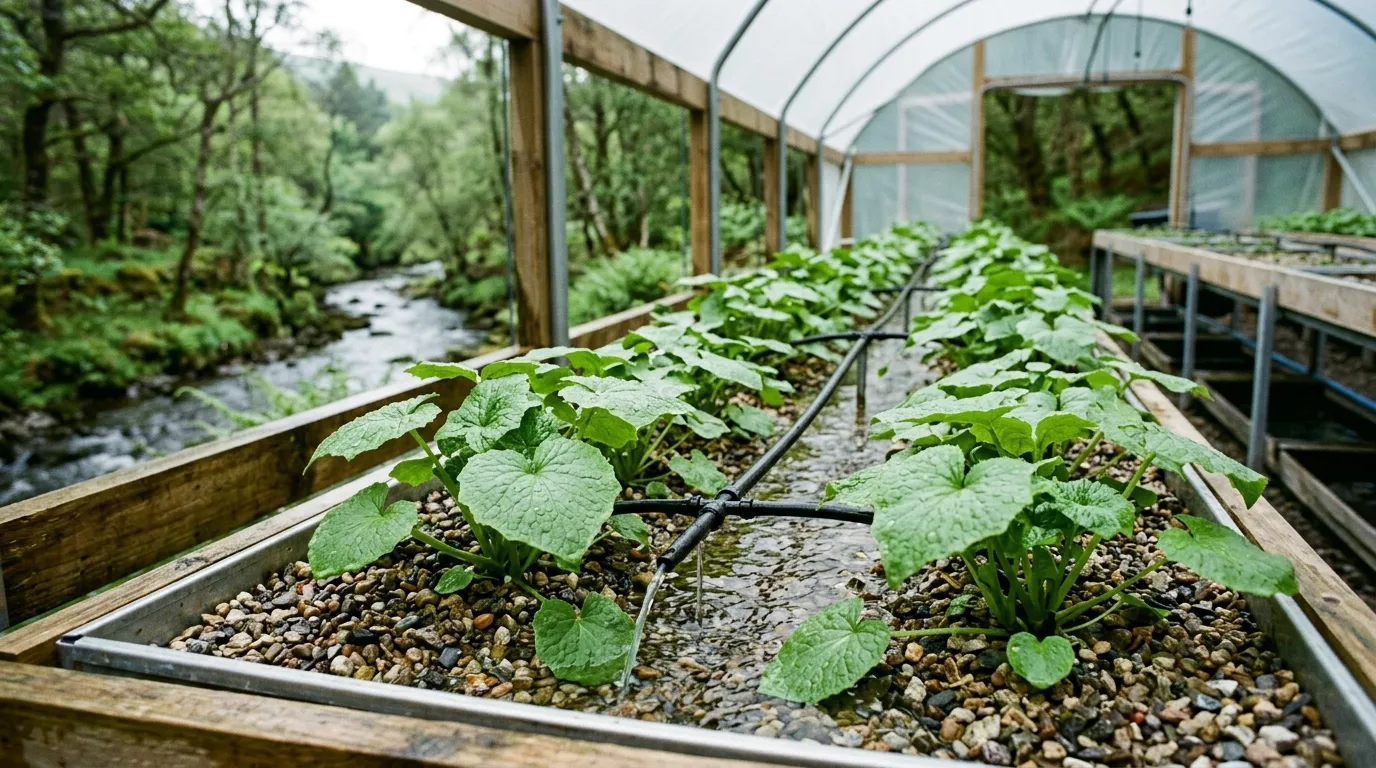 Sawa method tray under polytunnel cover. Drip line at 4 litres per hour per plant, water 30mm deep over washed pea gravel. Rhizomes typically 100 to 150g at 18 to 24 months.
Oka vs sawa comparison for UK growers
Pick oka if you have a shaded woodland bed and want a low-fuss experiment. Pick sawa if you have polytunnel space, mains water access, and want a larger harvest. Beginners are better off with oka for the first 12 months while learning what dormancy and stress signs look like on the plant.
Where to buy wasabi plants UK
The UK has exactly one commercial wasabi supplier. There are no second sources.
- The Wasabi Company (Dorset). Founded 2010 in chalk streams on a former watercress farm. Plug plants £8 to £14 each, fresh rhizome £60 to £120 per kg, seed by special order. They ship between March and October. Order at thewasabicompany.co.uk.
For background on the plant in cultivation, Kew Gardens’ edible plants reference covers Wasabia japonica taxonomy and growing requirements.
Avoid anything labelled “wasabi” from a generalist garden centre, an allotment swap, or eBay unless the seller can name the source nursery and produce a Wasabia japonica species ID. Almost every cheap “wasabi plant” sold in the UK is European horseradish rebadged.
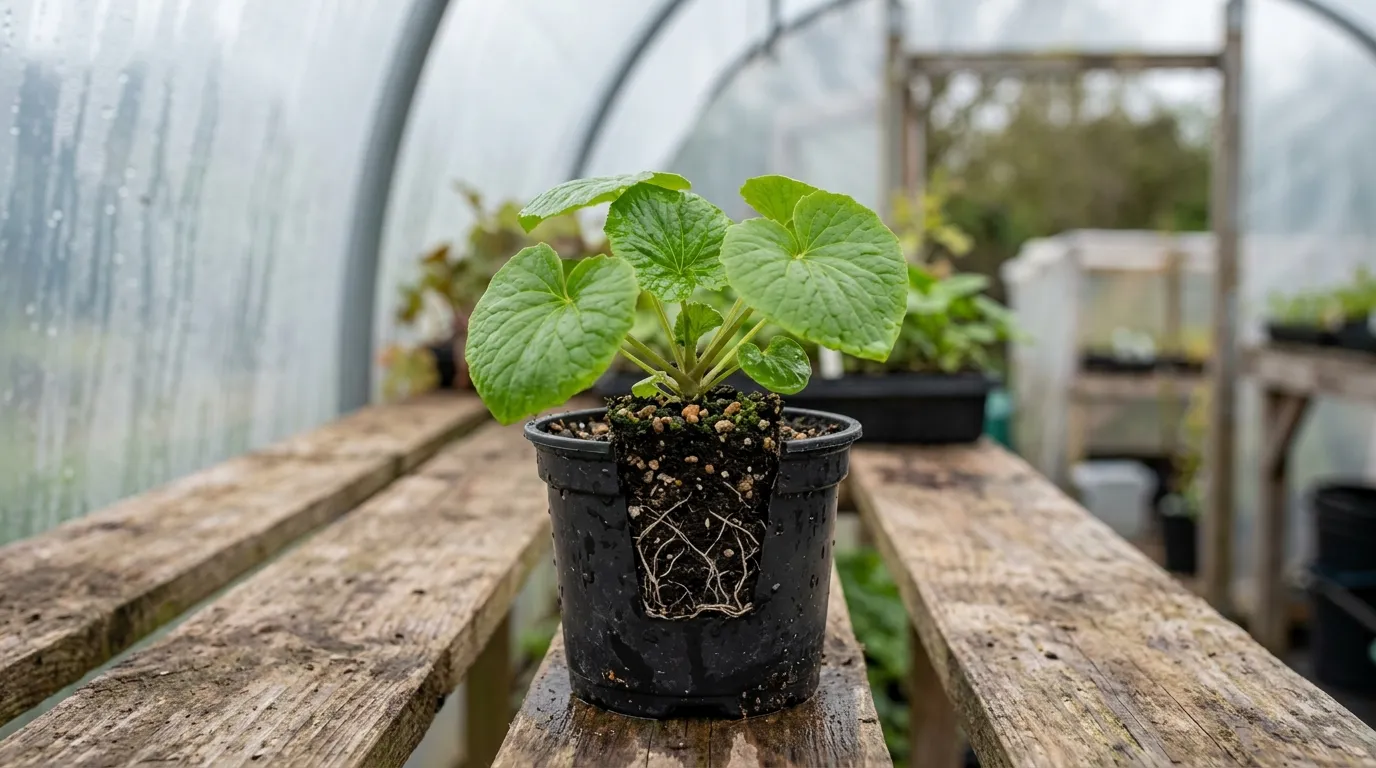 A Wasabi Company plug plant on arrival. Plant within seven days of delivery. Crown level with soil, eyes visible, spacing 25 to 30cm. This is the correct starting point for both oka and sawa methods.
How long does wasabi take to grow UK
Real wasabi is a slow crop. The 18 to 24 month timeline assumes correct conditions throughout. Stress events (heat above 25C, drought, frost on uncovered crown) extend the timeline by 3 to 6 months each.
Month-by-month growth calendar
The crop is not linear. Most of the rhizome bulk forms between months 14 and 22 once the plant has two full summers behind it. Harvesting at month 12 gives a 30 to 50g rhizome (worth doing in an emergency but not the target).
Why most UK wasabi attempts fail
Summer heat above 25C
The fix: soil thermometer at 100mm depth from June to August. If readings exceed 22C for three consecutive days, add 30% extra shade cloth, water with 8C tap water at 6am and 6pm, or move plants to a cooler aspect.
Stagnant water and crown rot
The second commonest cause. Wasabi tolerates wet roots only when water moves. A garden pond margin or boggy bed with no flow grows black mould on the crown within 14 days. Look for the visible sign: brown-black mush on the bud-tips of the crown.
The fix: in sawa setups, keep water moving at 3 to 5 litres per hour per plant. In oka setups, never let the bed waterlog. Drain channels at the bed edge prevent winter standing water.
Wrong species (horseradish instead of wasabi)
A surprisingly common scenario among growers who buy from non-specialist sources. The plant grows happily for 6 months, then produces 60cm paddle-shaped leaves instead of 15cm heart-shaped ones and a long thin white root instead of a knobbly green rhizome.
The fix: source from The Wasabi Company only, or verify species by checking that the leaf base is heart-shaped (not arrow-shaped) and the petiole has a faint pink-purple flush near the soil.
Frost on uncovered crown
UK winters are mild for wasabi roots but brutal for unmulched crowns. Frost at the bud-tip damages the next year’s growth permanently. Plants survive but produce no rhizome bulk in the following season.
The fix: 50mm leaf-mould mulch over the crown by 1 November, leaving the immediate centre point exposed for air. Remove the mulch by 1 March.
Drought stress in spring
Wasabi has shallow surface roots. A dry March or April (more frequent in recent UK weather) stresses plants right when growth should be accelerating. Stressed plants stay small all season.
The fix: rainwater butt feeding a 4-litre-per-hour drip line on a timer through March and April. 10 minutes at 7am every morning prevents drought stress at the critical window.
Warning: Never grow wasabi in full sun “to maximise growth”. Direct summer sun at UK latitudes drives leaf temperature to 35C and crown rot follows within a fortnight. Wasabi is a shade plant. Treat it like a fern.
Harvesting wasabi UK methods
The rhizome is the main prize but the leaves and stems are usable from month 6. Knowing when and how to crop each part keeps the plant productive.
Harvesting leaves and stems
From month 6 onwards, pick up to one third of outer leaves at a time. Cut at the base of the petiole. Young leaves go straight into salads. Mature leaves work as a sushi wrap or shredded into rice. Stems pickle in rice vinegar with a pinch of salt over 48 hours. Cropping leaves does not harm the rhizome provided you leave the central crown and at least four leaves on the plant.
Harvesting the rhizome
Wait until month 18 minimum. Ideally month 22 to 24. Lift the whole plant in autumn (October ideal) or early spring (March). Wash off soil or gravel under cold running water. Trim the roots and lower leaves. The rhizome is the knobbly green-white central section, 15 to 20cm long and 1.5 to 3cm thick.
Storing fresh rhizome
Wrap in a damp cloth, store at 4 to 6C (fridge salad drawer). Fresh wasabi keeps 2 to 3 weeks before it loses heat. For longer storage, freeze whole. Grate from frozen with no loss of heat or flavour.
Grating with an oroshigane
Real wasabi heat develops on contact with air. Grate fresh on a traditional Japanese sharkskin grater (oroshigane), £20 to £60 from specialist suppliers. The fine teeth break cells more efficiently than a metal microplane. Grate in a circular motion for 30 seconds. Eat within 15 minutes for peak heat.
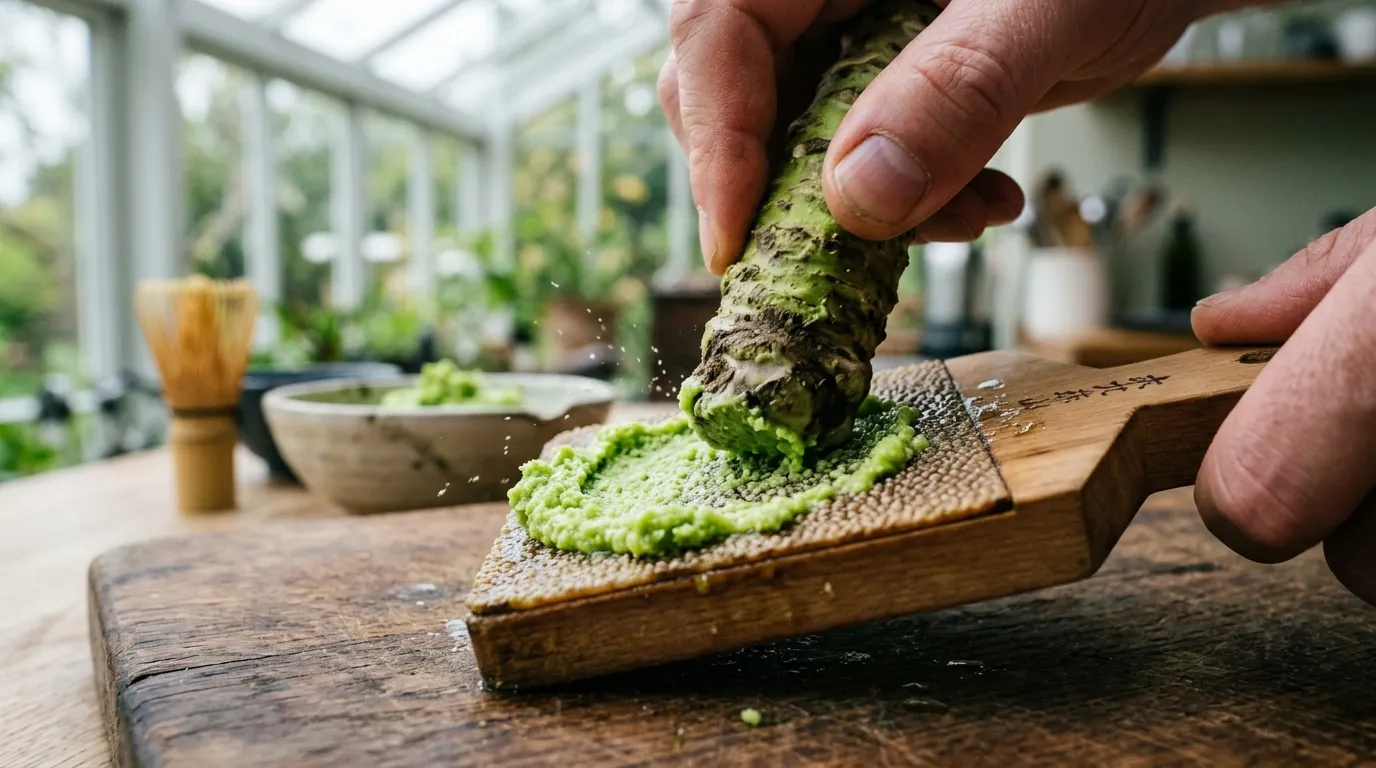 Grating fresh wasabi on a sharkskin oroshigane. Circular motion, 30 seconds, eat within 15 minutes. The bright green paste loses heat within an hour of grating, which is why supermarket “wasabi” cannot replicate the real thing.
Common wasabi growing mistakes UK growers make
Five mistakes appear over and over in the failure logs. Avoiding them gives you a major head start.
Mistake 1: trying to grow in full sun
Wasabi is a deep-shade species. Anything above 4 hours direct sun cooks the leaves. Plant under deciduous tree canopy, on a north-facing wall, or under 80% shade cloth.
Mistake 2: planting too deep
The crown should sit level with the soil or gravel surface. Deeper planting buries the bud-tip and the new leaves rot before they reach light. Re-lift and re-set if you spot a buried crown within the first two weeks.
Mistake 3: using ordinary tap water in sawa setups
Soft water from many UK regions (Manchester, parts of Wales, Lake District) has low calcium and trace minerals. Wasabi rhizomes from soft water are smaller and slower. Use chalk-stream-equivalent hard water (Severn Trent, Anglian, Thames Water at 90 to 250ppm calcium) or add 1g calcium carbonate per litre to soft water.
Mistake 4: harvesting too early
A 12-month rhizome is small and watery. The heat compound develops in the final 6 months as the rhizome matures. Patience pays. Wait until at least month 18 for the first harvest.
Mistake 5: composting the offsets
When you lift the main rhizome, the plant produces 3 to 6 small offsets at the crown. These are the next generation. Pot them up in the same substrate, water them in, and they will produce harvestable rhizomes 12 to 18 months later (faster than starting from new plugs).
Wasabi in a UK shade garden
Wasabi pairs well with other deep-shade UK edibles and ornamentals. Plant alongside ferns, hostas, brunnera, and woodland-edge perennials. The broad leaves give structural contrast to fine-leaved ferns through the growing season. For other shade-tolerant edibles for the same bed, our best vegetables to grow in shade UK guide covers crops that share the wasabi microclimate.
If you have a kitchen garden focused on long-lived crops, wasabi belongs in the same planting plan as other long-lasting edibles. Our perennial vegetables UK guide covers the species that earn their place for ten years or more. For Asian vegetables that grow in similar shade conditions, our how to grow pak choi and Asian greens guide covers the faster-cropping companions that fill bench space while the wasabi matures.
Frequently asked questions
Can you grow real wasabi in the UK?
Yes, real wasabi grows in the UK with the right conditions. You need 8 to 21C, dense shade, and either constantly damp leaf-mould soil or shallow flowing water. The Wasabi Company in Dorset has grown commercial wasabi in chalk streams since 2010 and supplies plug plants for home growers.
How long does wasabi take to grow UK?
Real wasabi takes 18 to 24 months from plug plant to a harvestable rhizome. Leaves and stems are usable from month 6. The rhizome reaches 15 to 20cm and 50 to 150g at maturity. In cooler conditions and the sawa water method, growth is faster than in dry soil.
Where can I buy real wasabi plants in the UK?
The Wasabi Company in Dorset is the only UK commercial source. Plug plants cost £8 to £14 from thewasabicompany.co.uk and ship between March and October. Garden centres rarely stock real wasabi. Anything labelled as wasabi from a supermarket plant aisle is almost always European horseradish.
What is the difference between real wasabi and horseradish?
Real wasabi (Wasabia japonica) is a different species to European horseradish (Armoracia rusticana). Wasabi gives a clean nasal heat that fades in 60 seconds. Horseradish gives a sustained sinus burn. Most green paste sold as wasabi outside Japan is horseradish, mustard, and green food colouring.
Why did my wasabi plant die in summer?
Wasabi rots above 25C soil temperature. Most UK garden attempts fail in July when shaded beds still warm to 26-28C. The fix is extra shade, deeper mulch, or moving plants to a polytunnel with cool recirculating water. Keep soil temperature below 22C in summer.
Can you eat wasabi leaves and stems?
Yes, wasabi leaves and stems are edible and taste of mild wasabi heat. Pick from month 6 onwards. Use young leaves whole in salads, mature leaves as a wrap for sushi rice, or chop stems into pickles. Cropping leaves does not harm the rhizome if you leave the central crown intact.
Now grow your first wasabi
Order three plug plants from The Wasabi Company in March. Set up a shaded oka bed with deep leaf mould or a small sawa tray in a polytunnel. Check soil temperature weekly through summer. Eat the first leaves at month 6. Lift the first rhizome at month 18 to 22. Replant the offsets and the cycle continues for as long as you want fresh wasabi on the table.
Now you’ve planned your wasabi crop, read our perennial vegetables UK guide for the other long-lived edibles that earn permanent space in your kitchen garden.
Our team produces practical UK gardening guidance from source research, contributor records and established horticultural practice. Editorial standards are overseen by Matt W.