Key takeaways
- Supermarket herb pots contain 30-50 seedlings competing for one rootball - they cannot survive long
- Divide into 3-4 individual pots within 24 hours of buying for best results
- Repot in 12cm pots minimum with peat-free compost and good drainage
- Water from below (saucer) not above (over the leaves) to prevent fungal stem rot
- South or south-east facing windowsill gives 4-6 hours of direct light - enough for most herbs
- Feed weekly from week 4 with half-strength liquid feed; supermarket compost runs out fast
Supermarket herb pots are one of the great UK kitchen mysteries. You buy a £2 pot of basil that looks lush and full, you take it home, you water it like the label says, and 7 days later it is yellow, leggy, and collapsing. The supermarkets have built a £180 million-a-year category around plants designed to die fast enough that you have to buy more.
But the supermarket herb is excellent value if you treat it as a pot of starter plants rather than a ready-to-eat product. Divide it into 3-4 plants, repot in proper containers, water from below, give it sun, and the £2 supermarket basil becomes 4 vigorous plants that produce for 4 months. This guide covers exactly how.
Why supermarket herbs die
The supermarket herb pot has three structural problems built in:
-
30-50 seedlings in one tiny pot. Look closely at a supermarket basil. There are 30+ individual plants packed in. Each is competing for the same 100ml of compost, the same 30 square cm of root space, the same nutrients. They were never going to survive long-term as a single plant.
-
Peat compost calibrated for 7-day transit. The compost is designed to deliver nutrients for the supply chain (grower → supermarket → consumer’s home, about 7 days), not for ongoing life. By the time you get the pot home, the nutrients are mostly used up.
-
Watering from above triggers fungal rot. The label says “water sparingly” - what it should say is “water from below”. Watering from above wets the densely packed stems, triggers botrytis (grey mould) within 48 hours, and the central seedlings collapse. The outer ring survives slightly longer, but the pot is essentially dying from the inside out within a week.
Add the move from a humid commercial polytunnel to a dry centrally-heated UK kitchen and the supermarket herb is in shock from day one. Most pots are dead within 7-14 days as the system intends.
The fix in 4 steps
Rescue the supermarket herb by treating it as a pot of starter plants, not a ready meal.
Step 1: Divide within 24 hours of buying
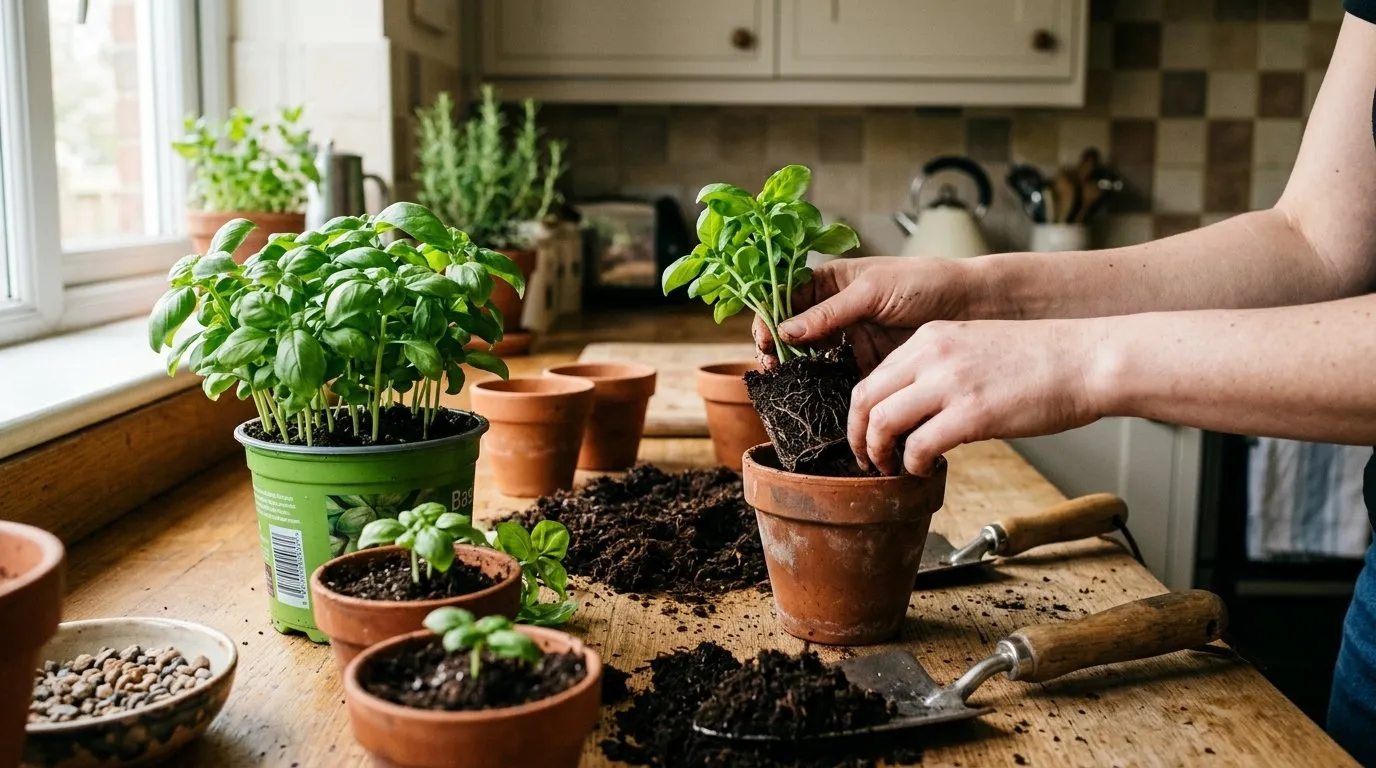 Dividing a supermarket basil into 4 individual plants. Each clump has 5-8 stems and a healthy independent rootball.
Tip the entire rootball out of the supermarket pot. Look at the root mass - you will see distinct clumps where the seedlings have grown closer together. Use your fingers to separate the rootball into 3-4 clumps, each with 5-8 stems and its own piece of root.
Do not be gentle. The roots need to be separated, not just teased. Some root damage is fine; basil and parsley regrow lost roots within a week.
Step 2: Repot in proper pots
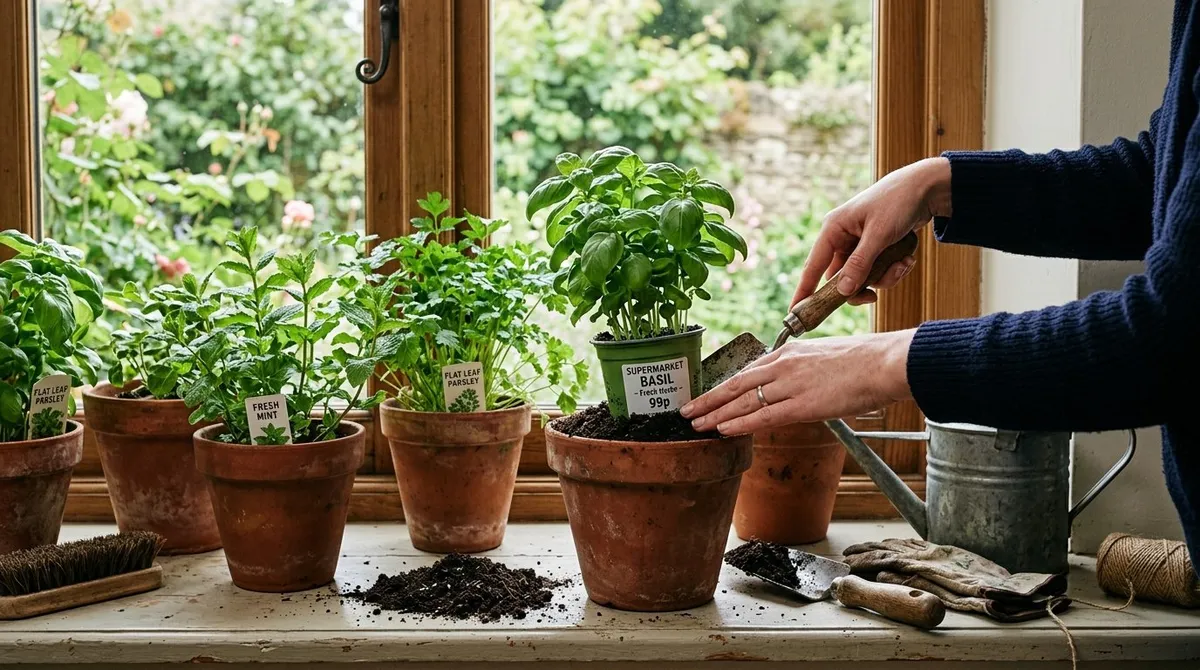
Use 12cm terracotta or recycled-plastic pots minimum (smaller pots dry out too fast on a centrally-heated windowsill). Fill with peat-free multipurpose compost. Plant each clump in its own pot, firm down gently, top up if needed.
Stand each pot in a saucer or shallow tray. The saucer is essential for the watering method.
Step 3: Water from below, not above
Pour 2cm of water into the saucer. The pot draws water up through the drainage holes by capillary action over 20-30 minutes. After 30 minutes, drain any remaining water from the saucer (do not let pots stand in water permanently).
Repeat twice a week for actively growing herbs in summer, once a week in winter when growth slows.
The finger test: stick a finger 3cm into the compost. If dry, water. If damp, wait 24 hours.
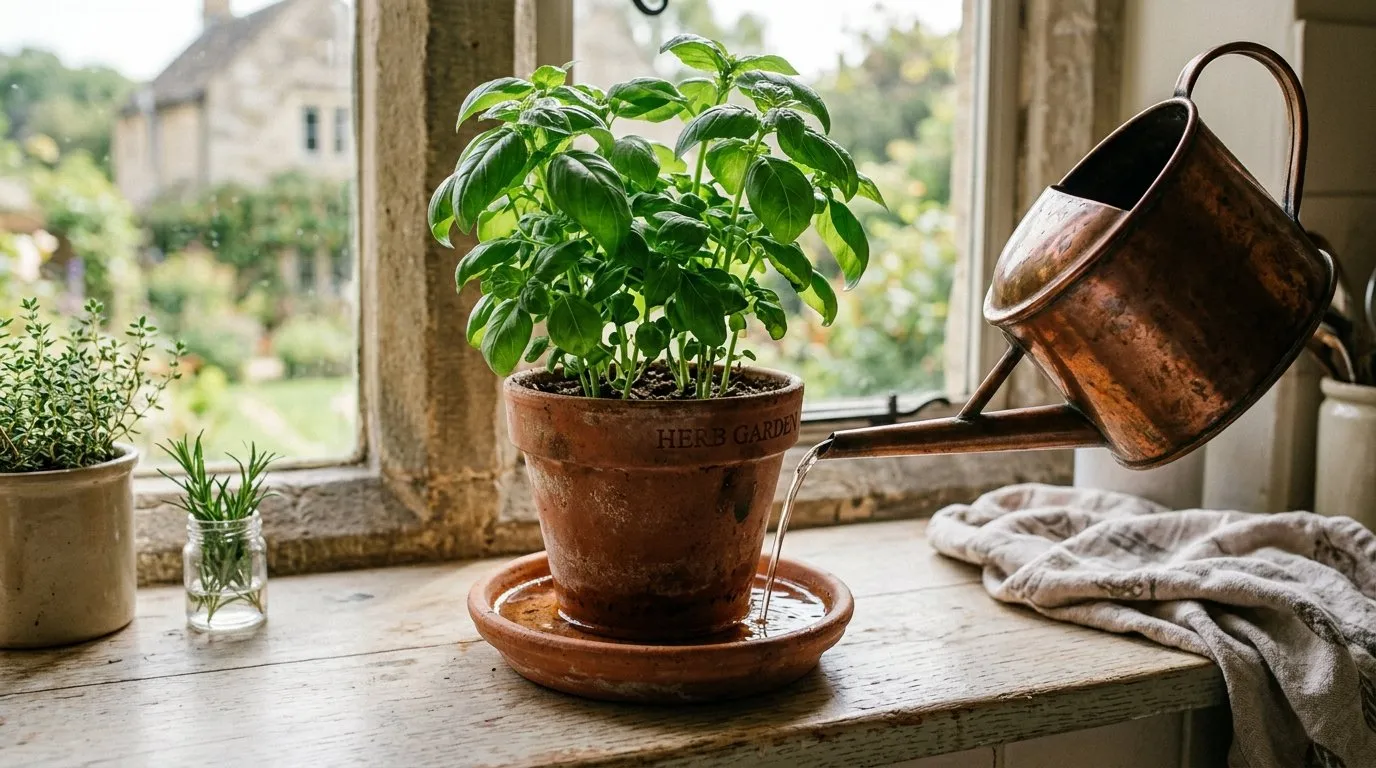 Bottom-watering a repotted basil. The water sits in the saucer and is drawn up through the drainage hole. The leaves stay dry which prevents fungal rot.
Step 4: Place on a sunny windowsill
South or south-east facing kitchen windowsills are best. Most culinary herbs need 4-6 hours of direct sun per day to stay vigorous.
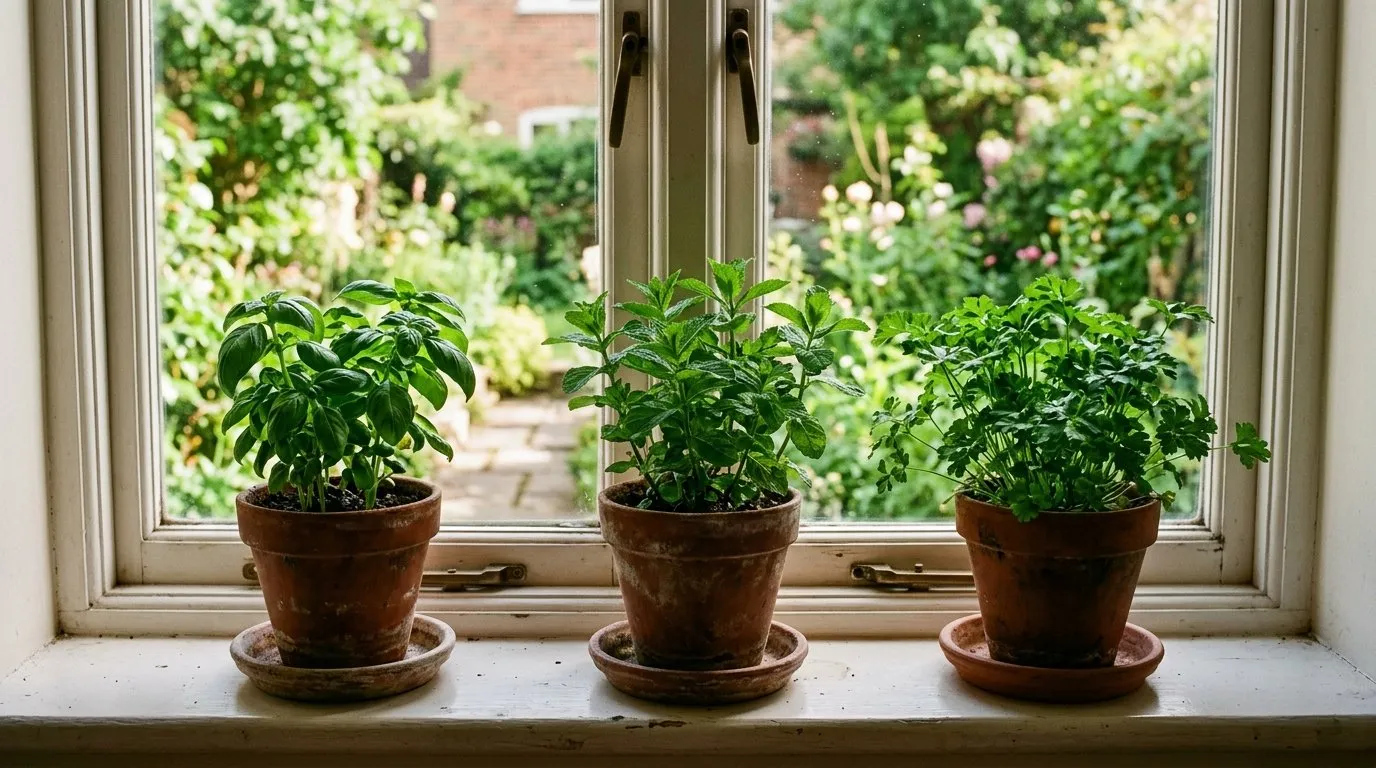 Repotted basil, mint and parsley grouped on a south-facing kitchen windowsill. Each in its own 12cm terracotta pot, each with a saucer for bottom-watering.
If your only kitchen window is north-facing, herbs will sulk. Two options: grow shade-tolerant herbs only (parsley, mint, chives) or supplement with a small grow-light (£15-£30 from Amazon, on a 12-hour timer).
Herb-by-herb survival rates
Coriander and rosemary are the two herbs where the indoor route is genuinely difficult. Better to grow coriander from seed every 3 weeks (succession sowing) and grow rosemary in a pot outside, bringing in only a few sprigs at a time.
Feeding rules
The supermarket compost has 5-7 days of nutrients. Even fresh peat-free has 4-6 weeks. After that, herbs that look pale, slow-growing or yellow at the leaf veins are nutrient-starved.
Feed weekly from week 4 with a half-strength liquid feed. Tomorite (the tomato feed) works well for basil and parsley. Maxicrop seaweed feed works for everything. Half-strength is important - full-strength feed indoors leads to leggy soft growth that pests love.
Stop feeding from late October to early March when growth slows naturally.
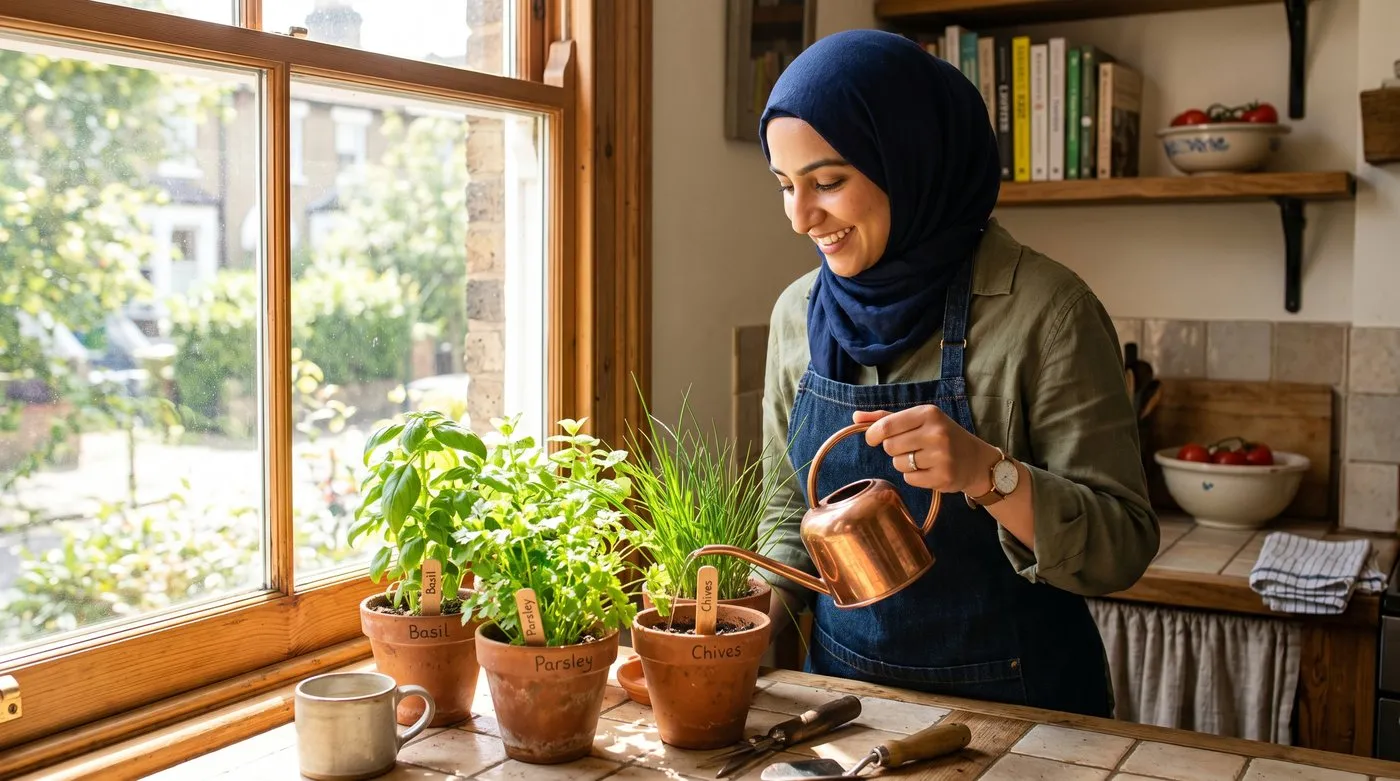 Weekly half-strength feeding from week four onwards. Tomorite at half-strength keeps basil and parsley producing for 4-6 months instead of dying back at week three
Pest prevention
Indoor herbs face four common pests in UK kitchens:
- Fungus gnats (small flies around the compost) - let the surface dry between waterings; cover compost with a 1cm layer of horticultural sand
- Aphids - wash off with cold water spray; in severe cases, a soap-water spray
- Whitefly (mostly summer) - yellow sticky traps; isolate affected plant
- Spider mites - very dry indoor air encourages them; mist plants twice weekly in winter
Check for pests every time you water. Catching them early is the difference between a 5-minute wash-off and a thrown-out plant.
When to give up and grow from seed
Three signs that the supermarket route is not working for you:
- Coriander keeps bolting within 3-4 weeks. Grow from seed instead - sow a small pot every 3 weeks for continuous supply.
- Basil keeps wilting overnight despite proper care. Often a draught issue from the window. Try a different windowsill or grow from seed in the warm months.
- You want quantity rather than quality. A £2 packet of basil seed grows 50+ plants. A £2 supermarket pot rescued gives you 4 plants. The maths favours seed if you have the time and a propagator.
For full guides on growing the major herbs from seed see how to grow basil UK, how to grow parsley UK, how to grow chives UK, how to grow mint UK, how to grow coriander UK, how to grow rosemary UK and how to grow thyme UK.
A thriving repotted basil
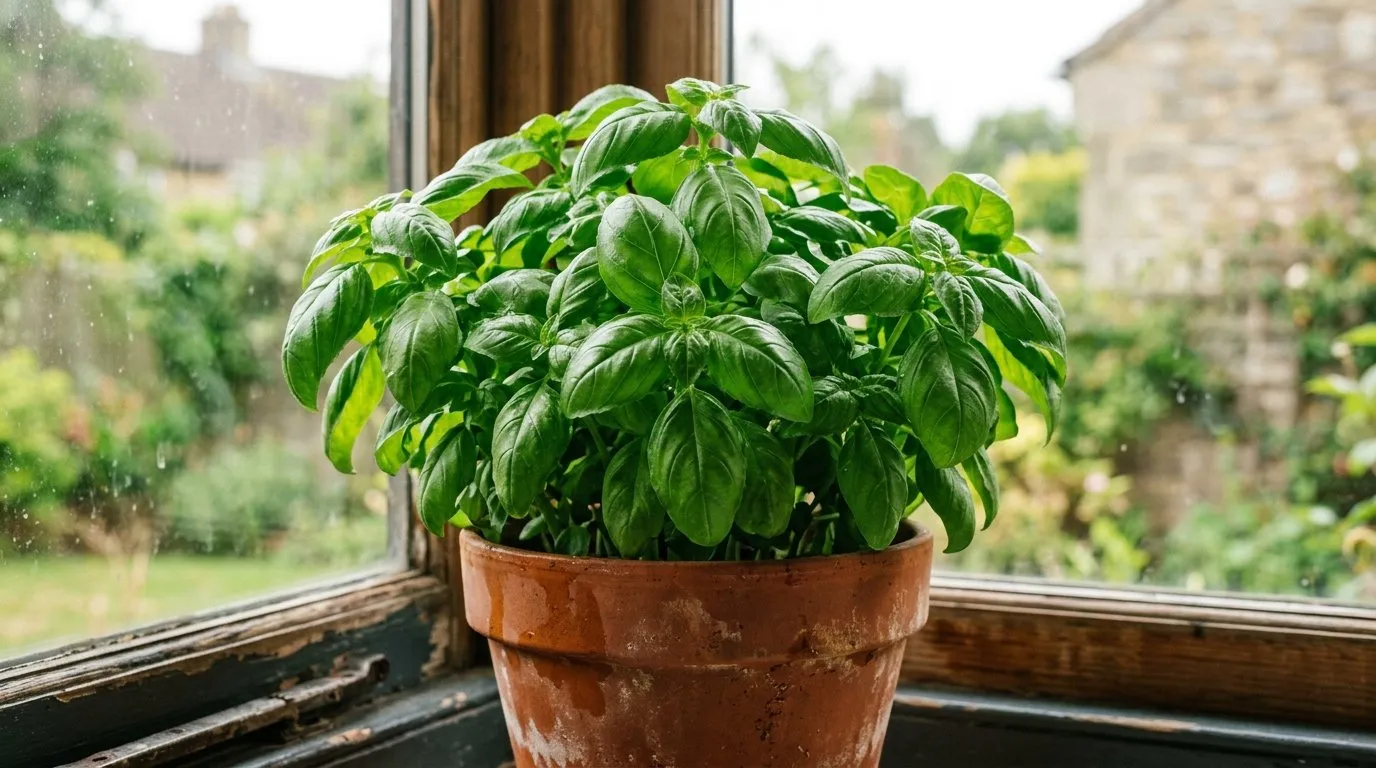 A repotted supermarket basil at week 6. From a £2 pot of 30 stressed seedlings to four healthy plants producing leaves for cooking. The same money buys two ready-meal pasta sauces.
Our team produces practical UK gardening guidance from source research, contributor records and established horticultural practice. Editorial standards are overseen by Matt W.