Bird's Nest Fern
Asplenium nidus
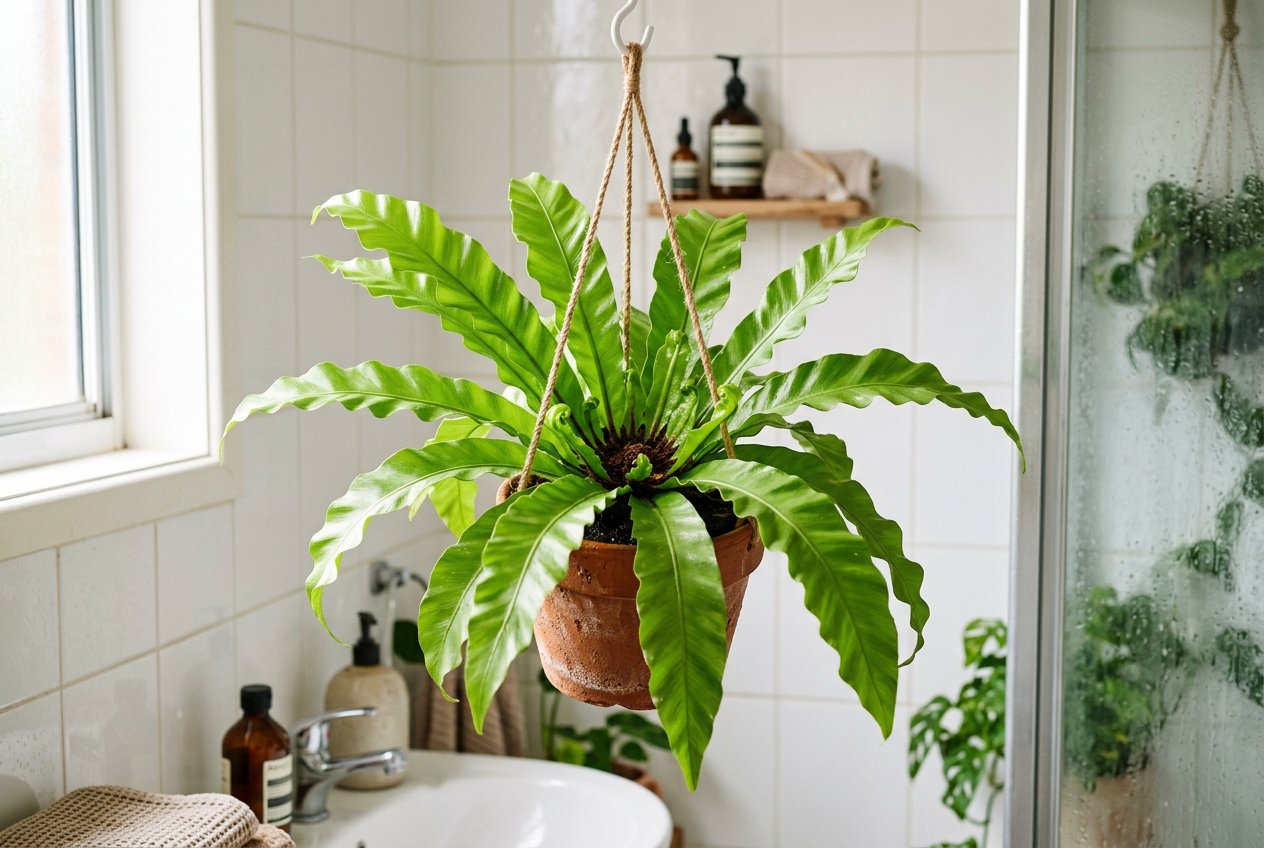
Elegant rosette of broad, wavy bright-green fronds unfurling from a central crown that resembles a bird's nest. Less fussy about humidity than many ferns. A natural epiphyte that grows on trees in the wild.
Best rooms for bird's nest fern
Light requirements
Tolerates shade and north-facing windows with limited natural light.
Best near a window with filtered light — avoid harsh direct rays.
How to care for bird's nest fern
Keep out of direct sunlight which scorches the fronds. Water into the compost, not the central rosette, to prevent rot. Keep compost evenly moist but not soggy. Loves bathroom humidity. Feed monthly spring-summer with a diluted liquid feed. Minimum 10°C.
Watering
Water when the top 2–3cm of compost feels dry. Roughly weekly.
Propagation
- Spores (advanced)
- Cannot be divided
Toxicity
This plant is not known to be toxic to cats or dogs.
Common problems
- Brown frond tips from dry air
- Crown rot from water sitting in the rosette
- Scale insects on frond undersides
Similar houseplants
Related guides
Air-Purifying Houseplants: What They Really Do
Do air-purifying houseplants work? The honest answer, the ten easiest plants to grow anyway, which are pet-safe, and what actually freshens indoor air.
Aminopyralid: The Weedkiller in Your Manure
Aminopyralid in manure or compost makes tomatoes, beans and potatoes grow ferny and twisted. How to spot it, test for it and fix the bed.
Asparagus Beetle: Spot It and Save Your Bed
Asparagus beetle stripping your fern? Learn to spot the beetles, eggs and grey grubs, pick them off the easy way and protect next year's spears.