Venus Fly Trap
Dionaea muscipula
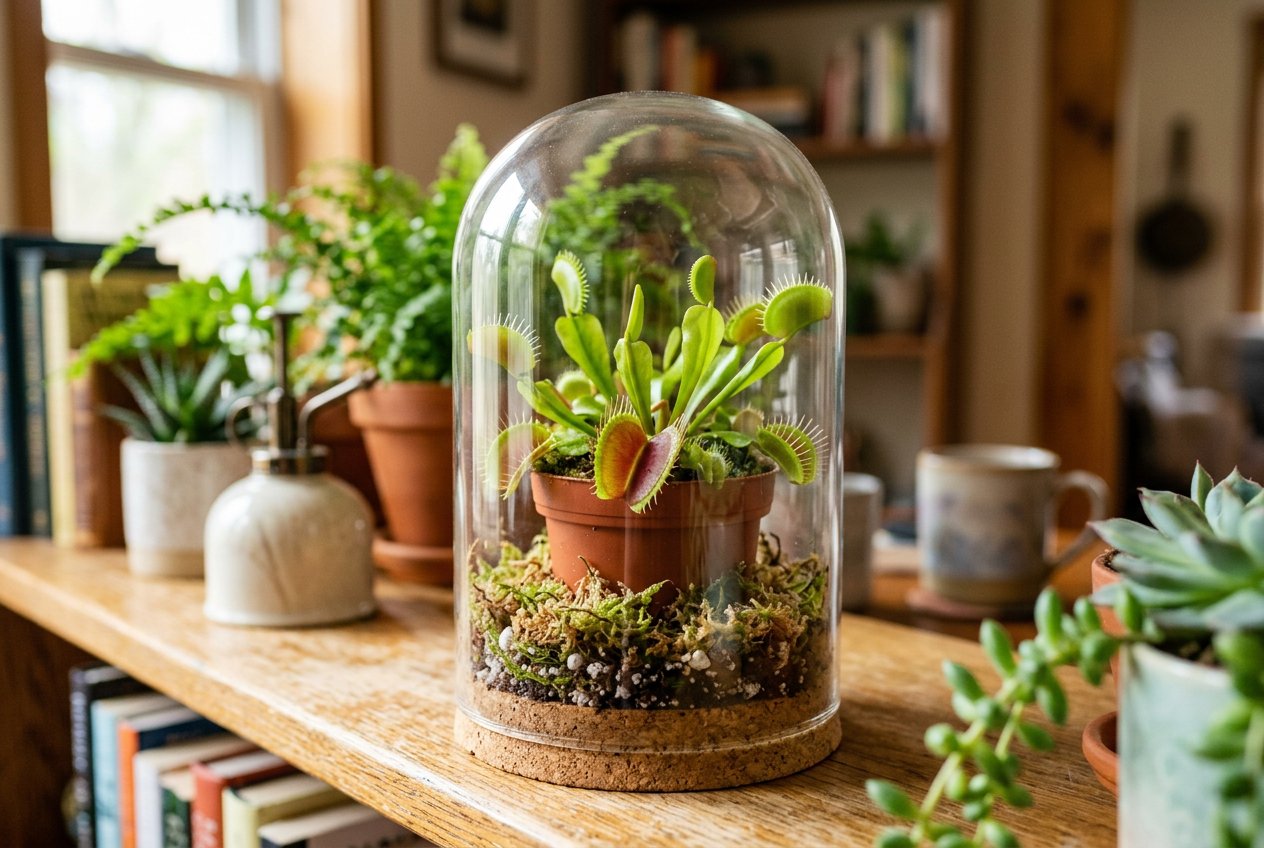
The world's most famous carnivorous plant, with hinged snap-trap leaves that close in a fraction of a second when trigger hairs are touched by an insect. Native to a tiny area of the US Carolinas. Requires very specific care.
Best rooms for venus fly trap
Light requirements
Thrives on a sunny windowsill with several hours of direct sunlight.
How to care for venus fly trap
Full direct sunlight is absolutely essential — a south-facing windowsill at minimum. Stand in a tray of rainwater or distilled water at all times; never use tap water. Grow in pure sphagnum moss or a peat/perlite mix — never standard compost. Never fertilise. Needs a cold winter dormancy (2-10°C) for 3-4 months. Don't trigger traps for fun — each trap only closes ~5 times before dying.
Watering
Keep the compost consistently moist but not waterlogged. Check every few days.
Propagation
- Leaf pullings in spring
- Division of mature clumps
- Seed (slow)
Toxicity
This plant is not known to be toxic to cats or dogs.
Common problems
- Death from tap water (minerals kill it)
- No traps forming without enough direct light
- Rot from lack of winter dormancy
Similar houseplants
Related guides
Air-Purifying Houseplants UK
What the science really says about air-purifying houseplants, plus 10 best low-care UK varieties, pet-safe picks, and how to truly clean indoor air.
Best Hanging Houseplants UK
The best hanging houseplants for UK homes ranked by trail length, light needs, and care. Covers 10 trailing species with room-by-room placement advice.
Best Indoor Plants for UK Homes
The best indoor plants for UK homes ranked by light needs, care difficulty, and pet safety. Includes lux data for every room orientation.