Key takeaways
- Spring seed potatoes cost £1-£3 per pack compared to £5+ online
- Autumn is the cheapest time to buy trees, shrubs, and hedging
- Summer perennials in flower let you check exact colour before buying
- January sales offer 30-50% off tools, pots, and garden furniture
- Avoid impulse-buying tender plants before your last frost date
- Bare-root roses in winter cost £8-£12 versus £15-£25 for potted versions
A garden centre visit at the right time of year saves money and gets you healthier plants. Garden centres work on seasonal cycles. Stock arrives months ahead of planting time, peaks mid-season, then gets discounted as the next season’s deliveries come in. Understanding this rhythm means you buy the right things at the right price.
This guide covers every season, month by month. It tells you exactly what to pick up, what to avoid, and when the bargains appear. Whether you are stocking a new allotment or filling gaps in an established border, timing your purchases makes a real difference to your garden and your wallet.
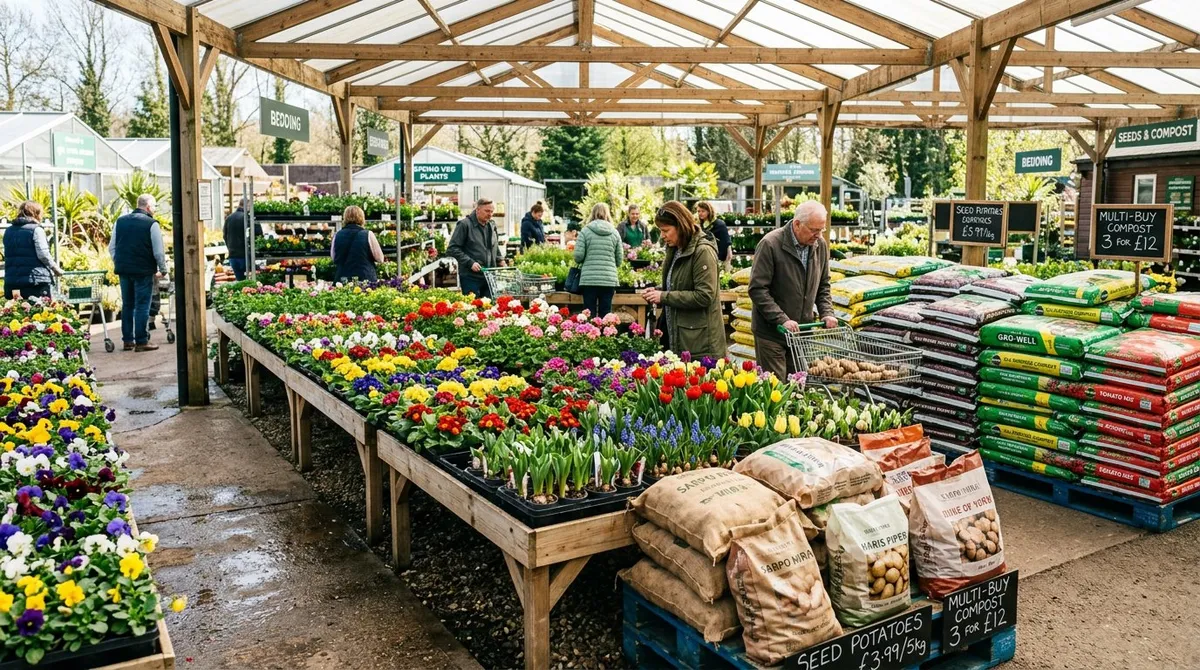
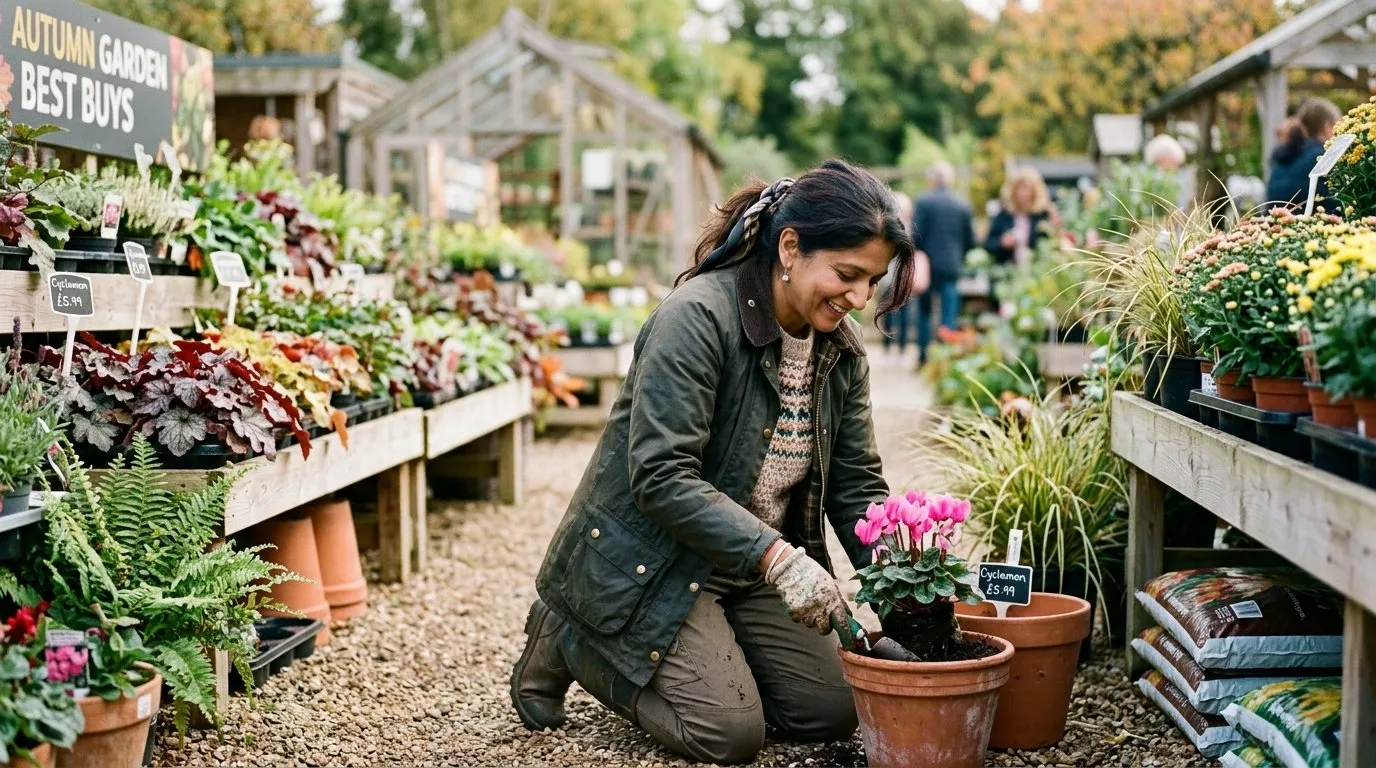 Spring is peak season at garden centres with bedding plants, seeds, and compost
Best things to buy at a garden centre in spring
Spring is the busiest season at every garden centre in the country. Stock levels are at their highest, displays are packed, and the widest range of plants, seeds, and sundries fills every shelf. Here is what to prioritise.
Seed potatoes
Seed potatoes arrive in garden centres from late January and sell through until March. A pack of five tubers costs £1-£3, which is far cheaper than ordering online where postage alone adds £4-£5. First earlies like ‘Swift’ and ‘Rocket’ go in from mid-March. Second earlies follow in April. Maincrop varieties plant out by mid-April. Buy early in the season for the widest choice of varieties. Once a popular variety sells out, it rarely gets restocked.
Bedding plants
Garden centres start stocking bedding from late March, but resist buying too soon. Bedding plants are frost-tender. A late frost in April or May kills them overnight. Wait until after your area’s last frost date before planting out. In southern England, that is typically late April. In northern England and Scotland, wait until late May. If you buy early, keep plants in a frost-free greenhouse or porch until conditions are safe.
The best value bedding comes in plug trays or strip packs. A strip of six marigolds costs around £2. Individual 9cm pots of the same plant cost £1-£2 each. Plugs need potting on and growing for a few weeks, but the savings are significant if you need large quantities. See our plug plants guide for the potting-on steps.
Compost and growing media
Spring is when garden centres stock the widest range of peat-free compost. Multi-buy deals are common: three bags of 50-litre multipurpose for £12-£15 is typical. Own-brand composts vary wildly in quality. Stick to reputable brands like Melcourt, Dalefoot, or SylvaGrow for reliable results. For more on choosing the right mix, read our peat-free compost guide. If you make your own, our guide on how to make compost covers everything from bin setup to finished product.
Tools and sundries
New season tools arrive from February. Spades, forks, trowels, and secateurs are fully stocked by March. This is the time to replace worn-out tools before the rush depletes sizes. Good quality tools from Burgon & Ball, Spear & Jackson, or Wilkinson Sword last for decades and are worth the extra cost. Budget tools bend, blunt, and snap within a season. For a full list of spring tasks, see our spring gardening jobs guide.
Gardener’s tip: Take a list to the garden centre and stick to it. Spring displays are designed to tempt you into impulse purchases. Decide what you need before you arrive, and only add extras if they are genuinely useful.
Best things to buy at a garden centre in summer
Summer is peak growing season, and garden centres shift their focus to colour, outdoor living, and keeping established gardens going. Here is what is worth buying.
Perennials in flower
This is the single best reason to visit a garden centre in summer. Perennials in flower let you see the exact colour, height, and habit before you buy. A 2-litre pot of a hardy geranium, astrantia, or salvia costs £6-£12. Online nurseries sell the same plants slightly cheaper, but you cannot check the colour matches your border.
Buy perennials that are just coming into flower rather than those in full bloom. They establish better and give you a longer display in their first year. Look for bushy plants with multiple stems rather than single leggy ones.
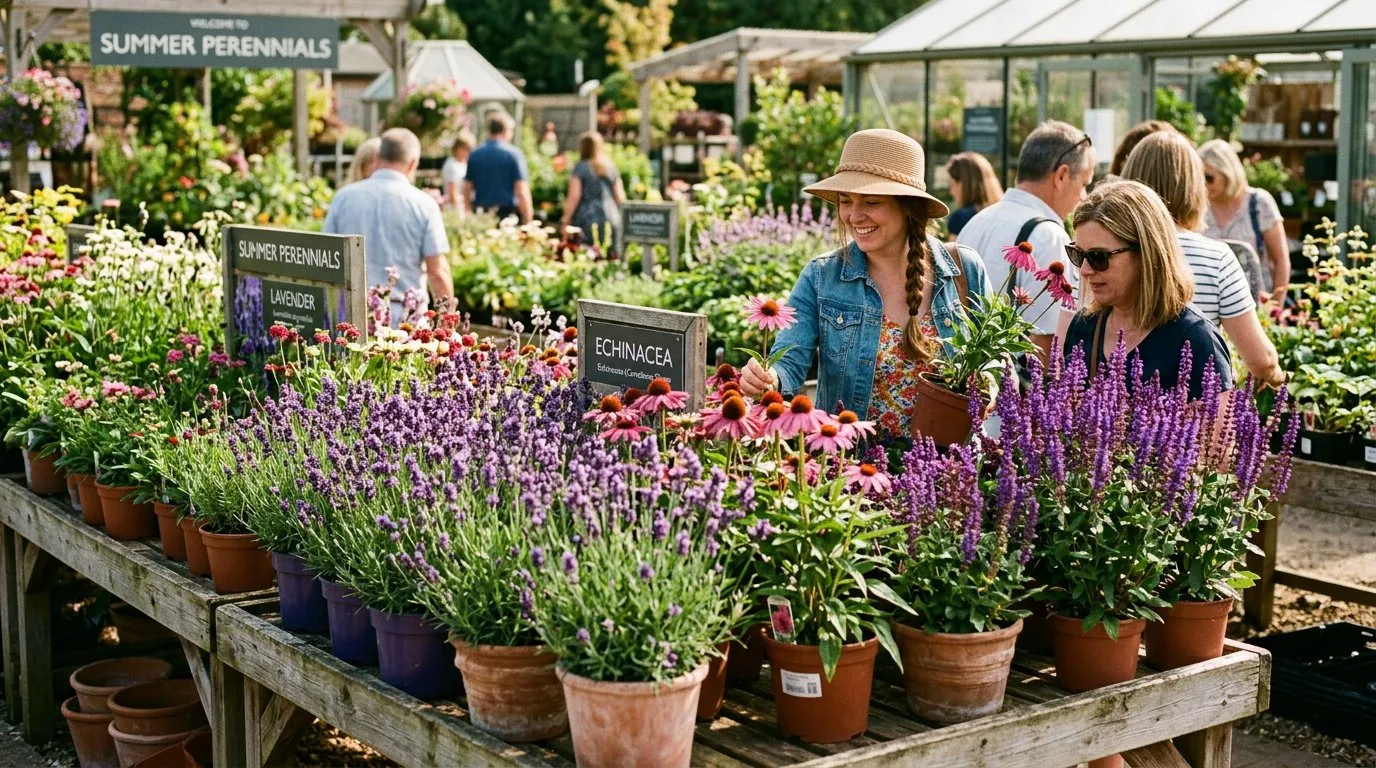 Buying perennials in flower during summer lets you check exact colours
Patio plants and containers
Summer is when garden centres stock the best range of planted containers and patio displays. Large pre-planted pots cost £20-£40 but save time and effort. If you prefer to plant your own, buy individual plants and a good peat-free container compost with added slow-release fertiliser. A self-watering pot keeps containers alive during hot spells without daily watering. For ideas on what to tackle, our summer gardening jobs guide has a full task list.
Herbs
Fresh herb plants are at their best in May and June. A single pot of basil, coriander, or parsley costs £1.50-£2.50 at a garden centre. Supermarket herb pots are cheaper but contain dozens of overcrowded seedlings that die within a week. Garden centre herbs are properly grown in individual pots and last for months. Hardy herbs like rosemary, thyme, sage, and oregano are perennial and come back every year once planted in a sunny, well-drained spot.
Summer bulbs and tubers
Dahlias, gladioli, and lilies arrive from March and sell through until May. Dahlia tubers cost £3-£6 each. Named varieties from specialist growers cost more, but garden centres stock reliable performers. Plant dahlias out after the last frost, or start them in pots under cover from April for earlier flowers.
Best things to buy at a garden centre in autumn
Autumn is the savviest time to shop at a garden centre. End-of-season clearance delivers the best prices of the year. Plants establish brilliantly in warm, moist autumn soil.
Trees and shrubs at clearance prices
Garden centres discount trees and shrubs from September onwards. Reductions of 30-50% are common on container-grown stock. These plants are slightly pot-bound after a summer on the display bench, but they establish perfectly well once planted. Cut back any circling roots before planting.
Bare-root trees become available from November and are even cheaper. A bare-root tree costs roughly half the price of the same tree in a container. They must be planted while dormant, between November and March.
Spring bulbs
Spring-flowering bulbs are autumn’s best value purchase. Daffodils, crocus, alliums, and hyacinths go in from September. Tulips plant in November. One hundred daffodil bulbs cost around £10 and flower every year for a decade. Buy bulbs as early as possible for the widest choice. Late in the season, you can pick up reduced bulbs at half price. These plant perfectly well, though some varieties may sell out. For timing details, see our guide on when to plant spring bulbs.
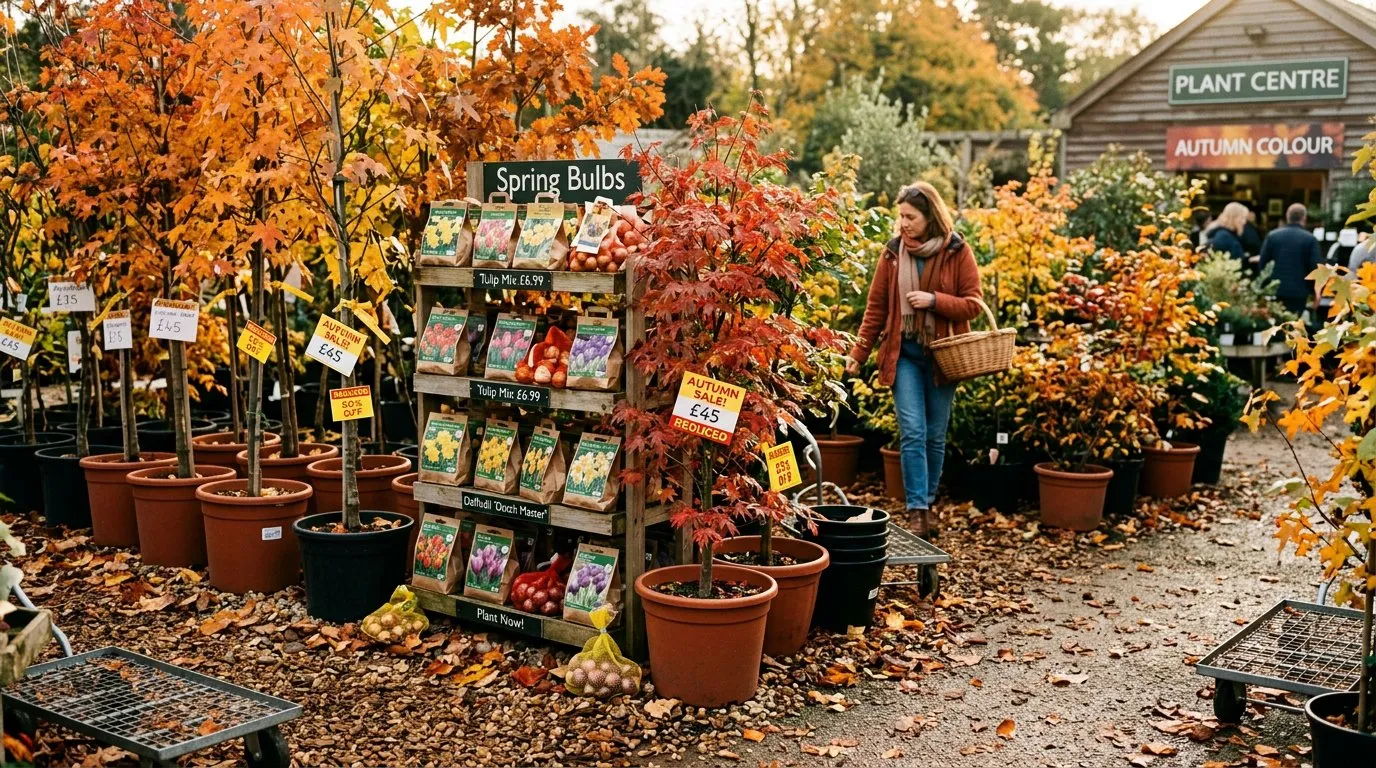 Autumn clearance sales offer the best value for trees, shrubs, and hedging
Hedging plants
Bare-root hedging arrives from November and costs £1-£3 per plant. A ten-metre native hedge costs as little as £30 using bare-root whips planted at three per metre. Container-grown hedging costs five to ten times more. Hawthorn, blackthorn, beech, hornbeam, and privet are all available bare-root. Plant on a mild day when the soil is moist but not waterlogged.
Bargain perennials
Perennials that looked tired by late August get reduced through September. They have died back or look scruffy, but the root system is fully intact. Plant them in autumn and they will grow away strongly in spring. A £10 perennial reduced to £3-£5 gives exactly the same results once established. Check our autumn gardening jobs guide for the full planting timetable.
Best things to buy at a garden centre in winter
Winter feels quiet at garden centres, but several categories offer outstanding value at this time of year.
Bare-root roses
Bare-root roses are available from November to March and cost £8-£12 each. The same rose sold in a container during summer costs £15-£25. Bare-root plants establish faster because the roots grow directly into the surrounding soil without circling inside a pot. David Austin, Harkness, and Peter Beales varieties are widely stocked. Plant immediately on arrival, or heel into a temporary trench if the ground is frozen.
Bare-root roses usually offer a wider choice at a lower price than container-grown plants. Plant from late autumn to early spring whenever the soil is workable, keeping the roots damp before planting and watering well afterwards.
Seeds
Seed catalogues and seed racks fill the shelves from January. This is the best time to plan your growing year. A packet of seeds costs £1-£3 and produces dozens or hundreds of plants. Start tender seeds like tomatoes, peppers, and chillies on a warm windowsill from February. Hardy seeds like broad beans and sweet peas sow directly outdoors from late February.
Tools on sale
The January sales are the best time to buy tools, pots, and garden furniture. Discounts of 30-50% are standard across most garden centres. Power tools, mowers, and larger equipment often see the biggest reductions as retailers clear old-season stock ahead of new models. A quality pair of secateurs reduced from £30 to £15 is a genuine bargain.
Composts and mulches
Compost deliveries for the new growing season start arriving from January. Multi-buy deals return. Stock up on multipurpose compost, seed compost, and bark mulch while prices are lowest and stocks are highest. Store bags off the ground on a pallet or shelf to prevent waterlogging. For the full list of winter tasks, see our winter gardening jobs guide.
What to avoid buying at garden centres
Not everything at a garden centre is a good deal. Here are the common traps.
Tender plants too early in the season
Garden centres stock tender bedding, tomato plants, and half-hardy annuals from March. Frosts can occur until late May in many parts of the UK. Buying tender plants six weeks before you can safely plant them out is a waste of money unless you have a heated greenhouse or warm conservatory to keep them growing.
Overpriced compost and topsoil
Large bags of topsoil and decorative aggregates are heavily marked up at garden centres. A 25-litre bag of topsoil costs £4-£6, while a bulk bag (800 litres) from a setting supplier costs £30-£50 delivered. For large quantities, always buy in bulk. Garden centre prices make sense only for small top-ups.
Impulse plant purchases
A plant that catches your eye may not suit your soil, aspect, or climate. Check the label for sun or shade requirements, hardiness, and eventual size. An acid-loving camellia planted in alkaline soil struggles and dies. A shade-loving fern planted in full sun scorches. The RHS plant finder is a free tool for checking plant requirements before you buy.
Pre-planted hanging baskets too early
Hanging baskets appear from April but cannot go outside until after the last frost. A pre-planted basket bought in April and hung outside will be killed by a late frost. Wait until late May in southern England, or early June further north.
How to choose healthy plants at a garden centre
A few simple checks prevent you from bringing home a problem plant.
Check the foliage
Look for bright green leaves without yellowing, brown edges, or black spots. Yellowing lower leaves suggest overwatering, root problems, or nutrient deficiency. Black spots may indicate fungal disease. Avoid plants with wilting foliage unless you are certain they just need water.
Inspect the roots
Tip the plant gently out of its pot. Healthy roots are white or cream and spread evenly through the compost. Brown, mushy roots indicate rot. Tightly circling roots around the outside of the rootball mean the plant is pot-bound and has been sitting on the bench too long. A slightly pot-bound plant can be rescued by teasing out the roots before planting, but severely pot-bound plants rarely recover well.
Look for pests
Check under leaves and along stems for aphids, vine weevil, whitefly, and scale insects. Aphid colonies cluster on new growth tips. Vine weevil larvae hide in the compost and eat roots. Notched leaf edges are a telltale sign of adult vine weevil damage. Reject any plant with visible pest damage. You do not want to introduce pests to your garden.
Check the graft
On grafted plants like roses, fruit trees, and Japanese maples, check that the graft union is clean and healed. A swollen, cracked, or oozing graft point suggests a failed union. The plant may snap at this point under stress.
Garden centre vs online nursery
Both have advantages. This comparison helps you decide where to spend your money.
| Factor | Garden centre | Online nursery |
|---|---|---|
| Plant inspection | You see the exact plant you are buying | You get whatever they pick and post |
| Variety range | Limited to popular sellers | Huge range, including rare and specialist varieties |
| Price | Mid-range to premium | Often cheaper, especially in bulk |
| Postage cost | None. Drive home with your plants | £5-£10 per order, sometimes free over £50 |
| Plant condition | Pick the best specimen on the bench | Risk of transit damage, dried-out rootballs |
| Expert advice | Ask staff directly. Quality varies by branch | Email or phone support only |
| Impulse buying | High risk. Displays are designed to tempt | Lower risk. You search for what you need |
| Seasonal timing | Stock appears at the right planting time | Available year-round but may arrive at wrong time |
| Returns | Easy. Drive back with the plant | Complex. Packaging and postage required |
| Bulk buying | Expensive for large quantities | Better prices for hedge packs, wildflower plugs |
The best approach is to combine both. Buy trees, roses, and border perennials from a garden centre where you can inspect them. Order bulbs, seeds, hedging packs, and specialist varieties from online nurseries where bulk pricing and variety choice are superior.
Monthly garden centre shopping calendar
This table summarises the best buys at a garden centre for each month of the year.
| Month | Best buys | Avoid |
|---|---|---|
| January | Seeds, bare-root roses, sale tools, compost deals | Tender plants, anything frost-sensitive |
| February | Seed potatoes, onion sets, early seeds, bare-root trees | Bedding plants, hanging baskets |
| March | Seed potatoes, herb plants, compost multi-buys, new tools | Tender bedding (still too early) |
| April | Bedding plugs (to grow on indoors), patio pots, growbags | Tender plants for outdoors (check frost date) |
| May | Bedding plants (after last frost), herbs, tomato plants | Nothing. Peak buying season |
| June | Perennials in flower, summer bulbs, patio furniture | Full-price roses (wait for autumn bare-root) |
| July | Autumn-flowering bulbs, late perennials, watering equipment | Large trees (too hot to establish) |
| August | Late summer perennials, end-of-season bedding reductions | Spring bulbs (not stocked yet) |
| September | Spring bulbs, reduced trees and shrubs, hedging plants | Tender annuals (season is ending) |
| October | Reduced perennials, spring bulbs, bare-root hedging | Plants with no label (could be anything) |
| November | Bare-root roses, bare-root trees, tulip bulbs, garlic | Container-grown trees at full price |
| December | Gifts, houseplants, winter-flowering pansies, amaryllis | Outdoor plants in frozen ground |
Now you’ve mastered seasonal garden centre shopping, read our guide on when to plant spring bulbs for the next step.
Frequently asked questions
What is the cheapest time to buy plants at a garden centre?
Autumn is the cheapest season for plants. Garden centres discount trees, shrubs, and perennials by 30-50% from September onwards to clear summer stock before winter. Bare-root plants from November to March are even cheaper. A bare-root tree costs roughly half the price of the same tree in a container.
When should I buy bedding plants from a garden centre?
Buy bedding plants from late April to early May. Buying too early risks frost damage. Wait until after your area’s last frost date before planting out. In southern England that is typically late April. In northern areas, hold off until late May or early June.
Are garden centre plants better than online plants?
Garden centres let you inspect plants before buying. You can check for healthy roots, pests, and true flower colour. Online nurseries often offer rarer varieties and better bulk prices. The best strategy is to combine both: inspect specimen plants in person and buy bulbs, seeds, and hedging in bulk online.
What should I look for when buying plants?
Check for healthy green foliage and firm stems. Avoid plants with yellowing leaves, black spots, or visible pests. Tip the pot out slightly to check for white, healthy roots. Brown or mushy roots indicate rot. Tightly circling roots mean the plant has sat on the bench too long.
Is it worth buying garden centre own-brand compost?
Own-brand peat-free composts vary hugely in quality. Stick to named brands like Melcourt, Dalefoot, or SylvaGrow. Ask staff which peat-free compost sells best at their branch. The popular option is usually the most reliable. Avoid the cheapest bags, as they often contain poorly composted bark that robs nitrogen from the soil.
When do garden centres have sales?
January is the main sale period with 30-50% off. End-of-season clearance runs in September and October. Bank holiday weekends often have promotions on furniture and pots. Some garden centres run loyalty card schemes that build up discounts through the year.
Our team produces practical UK gardening guidance from source research, contributor records and established horticultural practice. Editorial standards are overseen by Matt W.