Key takeaways
- Deadheading redirects energy from seed production into new flower buds
- Most repeat-flowering plants produce 30-50% more blooms when deadheaded
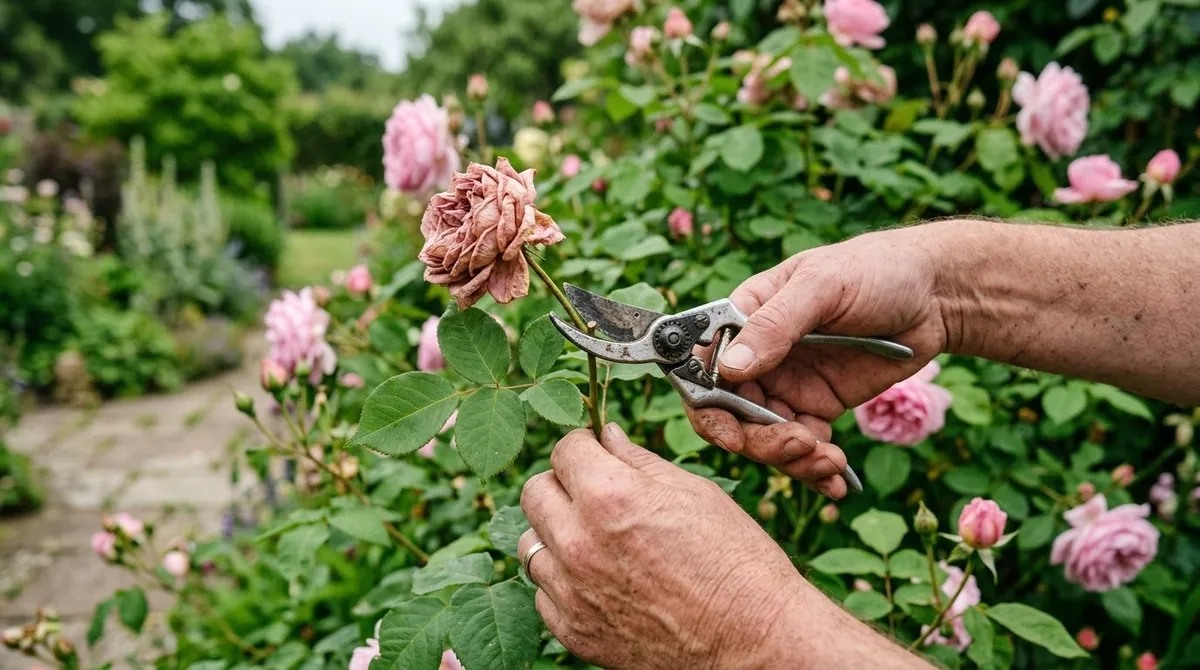
- Roses are cut to an outward-facing bud above a leaf with five leaflets
- Sweet peas must be picked or deadheaded every two days or they stop flowering
- Some plants like honesty, alliums, and teasels should be left for ornamental seed heads
- Stop deadheading most plants by mid-September to allow natural dormancy
Deadheading is the single most effective thing a gardener can do for more flowers. It takes five minutes a day in summer and the results are dramatic. Plants that are deadheaded regularly produce 30-50% more blooms than those left to set seed. The reason is simple biology. A flowering plant’s goal is to produce seed. Once it succeeds, it stops making flowers. Removing spent blooms before seeds form forces the plant to try again.
Why does deadheading produce more flowers?
Flower production is driven by hormones. When a flower is pollinated and begins forming seeds, the plant produces hormones that suppress new bud development. The plant has achieved its reproductive goal and shifts resources to ripening seeds.
Removing the spent flower before seeds form interrupts this signal. The plant responds by pushing new buds into growth. In annuals like cosmos, zinnias, and sweet peas, this response is particularly strong because the plant’s entire life strategy is to set seed before dying. Stopping seed formation keeps the plant in flowering mode for months.
Repeat-flowering perennials respond similarly. Roses, geraniums, salvias, and nepeta all produce fresh flushes after deadheading. Single-flowering perennials like delphiniums can sometimes be persuaded into a second, smaller flush if cut back hard after the first flowering.
The RHS deadheading guidance confirms that regular removal of faded blooms is one of the most productive garden tasks.
How do you deadhead roses?
Roses are the plant most people ask about, and the technique varies by type.
Hybrid tea roses: Cut the stem back 15-20cm below the spent flower. Make the cut 5mm above an outward-facing bud, just above a leaf with five leaflets. Leaves lower on the stem with only three leaflets produce weaker shoots. Angle the cut away from the bud so water runs off.
Floribunda and shrub roses: These produce clusters. Wait until most flowers in the cluster have faded, then cut the entire cluster back to the first strong outward-facing bud below. Do not deadhead individual flowers within a cluster as it looks untidy and wastes time.
Climbing and rambler roses: Once-flowering ramblers should not be deadheaded as they need the hips for winter interest. Repeat-flowering climbers benefit from deadheading through summer. Cut back to a strong side shoot or a five-leaflet leaf.
David Austin English roses: Treat as shrub roses. Remove the entire spent cluster to a strong bud. These respond well to deadheading and will often produce three complete flushes between June and October.
Feed roses with a potash-rich fertiliser after each deadheading round to fuel the new growth. Read our full guide to growing roses and pruning roses for seasonal care.
How do you deadhead dahlias?
Dahlias are prolific flowerers that respond strongly to deadheading. The challenge is telling spent flowers from fat buds because they look similar.
The test: A spent dahlia flower head is round and soft when squeezed. An unopened bud is pointed and firm like a cone. Once you know this, you will never accidentally remove a bud.
The technique: Trace the stem of the spent flower back to the next junction with another stem or leaf. Cut or snap it off there. Do not just remove the flower head and leave a bare stalk. If the stem has no junction nearby, cut it back to the main stem.
Deadhead dahlias every two to three days from August onwards. In warm spells, they produce and shed flowers rapidly. A dahlia plant deadheaded every other day will produce significantly more blooms than one deadheaded weekly.
Leave the last flowers on the plant in autumn. When the first frost blackens the foliage, cut the stems back to 15cm and lift the tubers for winter storage. See our guide to growing dahlias for the full growing and storage method.
How do you deadhead sweet peas?
Sweet peas are the most demanding plants for deadheading, and the most rewarding. They must be picked or deadheaded every two days. Even a single seed pod forming triggers the plant to stop flowering.
The technique: Pick every open flower for the house. Sweet peas are a cutting flower by nature. Remove any flower that is starting to fade or curl at the edges. Snap off any developing seed pods immediately. The pods are small, green, and flat when young and easy to miss.
The golden rule: The more you cut, the more you get. A sweet pea plant that is picked heavily will flower from June to September. One left unpicked for a week may stop flowering permanently.
Check the backs of plants as well as the fronts. Sweet peas are climbers and flowers often hide behind the foliage. A missed pod on the back of the plant sends the same stop-flowering signal as one on the front.
Our guide to growing sweet peas covers sowing, training, and feeding for maximum production.
What is the correct technique for perennials?
Different perennials need different approaches. Here is the method for the most common types.
Spike-flowering plants (delphiniums, lupins, foxgloves): Cut the entire flower spike back to the base once 70% of the flowers have faded. Delphiniums often produce a smaller second spike from the base. Feed and water after cutting back to encourage this.
Daisy-type flowers (echinacea, rudbeckia, helenium): Snip individual flower heads as they fade, cutting back to a side bud or branching point. These plants branch and each branch tip produces a new flower. Removing spent heads encourages the side buds to develop.
Geraniums (cranesbills): The Chelsea Chop method works well. After the first flush fades, usually in early July, cut the entire plant back to 10cm with shears. Water and feed. A fresh mound of foliage and flowers appears within three weeks. Geranium ‘Rozanne’ can be cut back twice in a season.
Nepeta and salvias: Cut back flower spikes to where fresh leaves are growing. Both will produce a second and sometimes third flush. Feed after each cutback.
Penstemons: Deadhead individual flowers as they fade and cut the spike back when 80% is spent. Penstemons flower from June to October with regular attention.
Which plants should you NOT deadhead?
Not every plant benefits from deadheading. Some have seed heads more beautiful than their flowers. Others self-seed usefully to fill gaps.
Plants with ornamental seed heads
| Plant | Seed head description | Best season | Wildlife value |
|---|---|---|---|
| Honesty (Lunaria annua) | Papery silver translucent discs | Autumn-winter | Minimal |
| Allium | Dried globes on tall stems | Summer-winter | Architectural structure |
| Nigella (Love-in-a-mist) | Inflated striped balloon pods | Summer-autumn | Self-seeds freely |
| Teasel (Dipsacus fullonum) | Spiky oval heads | Autumn-winter | Goldfinch food |
| Echinops (Globe thistle) | Steel-blue spheres | Summer-autumn | Bee and finch food |
| Echinacea | Dark spiky cones | Autumn-winter | Seed for finches |
| Sedum (Hylotelephium) | Flat pink turning russet brown | Autumn-winter | Winter structure |
| Hydrangea paniculata | Papery dried flower heads | Winter | Frost interest |
| Clematis tangutica | Silky silver seed heads | Autumn-winter | Striking in low light |
| Phlomis | Whorled dried seed tiers | Autumn-winter | Architectural |
Plants that self-seed usefully
Aquilegia, foxgloves, verbena bonariensis, Welsh poppies, and forget-me-nots all self-seed to fill gaps naturally. If you want them to spread, leave the seed heads on. If they are becoming a nuisance, deadhead before the seeds ripen and scatter.
What tools do I need for deadheading?
The right tool depends on the plant.
Fingers: Soft-stemmed annuals like petunias, marigolds, cosmos, and pelargoniums. Pinch the stem cleanly below the flower head. No tool needed.
Sharp secateurs: Roses, dahlias, woody perennials, and anything with a stem thicker than a pencil. Bypass secateurs (not anvil type) give the cleanest cut. Keep the blade sharp and clean. Wipe between plants with methylated spirit if you suspect disease.
Garden shears: For mass deadheading. After the first flush of lavender, nepeta, or geraniums, run over the entire plant with shears to remove all spent flowers at once. Faster than individual cutting and equally effective.
Snips or scissors: For sweet peas and delicate stems. Floral snips are light and easy to carry in a pocket for daily picking. Read our best secateurs guide for tool recommendations.
How to deadhead common garden plants
Here is a quick-reference table for the 15 most popular garden plants.
| Plant | Method | Frequency | Cut to | Notes |
|---|---|---|---|---|
| Rose (hybrid tea) | Secateurs | Weekly | 5-leaflet leaf, outward bud | Feed after each round |
| Rose (shrub/floribunda) | Secateurs | Weekly | Below spent cluster | Wait for cluster to fade |
| Dahlia | Snap or secateurs | Every 2-3 days | Next stem junction | Round=spent, pointed=bud |
| Sweet pea | Pick or snap | Every 2 days | Below flower | Remove all pods |
| Lavender | Shears | Once after flowering | Above green foliage | Never cut into old wood |
| Delphinium | Secateurs | After first spike fades | Base of spike | Feed for second flush |
| Geranium (cranesbill) | Shears | After first flush | 10cm from ground | Full regrowth in 3 weeks |
| Cosmos | Fingers | Every 3-4 days | Below spent flower | Remove seed pods too |
| Lupin | Secateurs | After spike fades | Below spent spike | Side spikes may follow |
| Penstemon | Secateurs | Weekly | Below spent spike | Flowers June-October |
| Salvia | Secateurs | After each flush | Fresh leaf growth | Two or three flushes |
| Buddleja | Secateurs | Weekly in summer | Next pair of buds | Also attracts butterflies |
| Petunia | Fingers | Every 3-4 days | Below flower and seed pod | Pinch the whole seed case |
| Marigold | Fingers | Weekly | Below flower head | Easy for children to do |
| Pelargonium | Fingers | Weekly | Snap whole stem off | Pull sideways for clean break |
When should I stop deadheading in autumn?
Stop deadheading most plants by mid-September. Late flowers triggered by deadheading after this point will not have time to mature fully before autumn frosts.
Leaving seed heads from September onwards serves several purposes:
The exception is dahlias. Continue deadheading dahlias until the first frost kills the foliage. Then cut back and lift the tubers.
Annual bedding plants in pots and baskets can also be deadheaded until they are finished, as they will be composted at the end of the season regardless.
Frequently asked questions
Does deadheading actually produce more flowers?
Yes, deadheading increases flower production by 30-50% in most species. When a flower is pollinated and starts making seed, the plant diverts energy away from producing new buds. Removing spent flowers before seeds form forces the plant to try again. Annuals respond most dramatically because their entire purpose is to set seed before dying.
How do you deadhead roses correctly?
Cut the stem back to an outward-facing bud above a leaf with five leaflets. Use sharp secateurs and angle the cut away from the bud. On hybrid tea roses, cut 15-20cm below the spent flower for a stronger new stem. On shrub and floribunda roses, remove the entire spent flower cluster once most blooms have faded. Feed with a rose fertiliser after deadheading to fuel new growth.
Should I deadhead lavender flowers?
Remove spent lavender flower stems with shears after blooming finishes. Cut back to just above the green foliage. Do not cut into old woody stems as lavender rarely regrows from bare wood. Deadheading lavender tidies the plant and may produce a light second flush in September, but the main purpose is keeping the bush compact. See our lavender pruning guide for the full annual trim.
When should I stop deadheading in autumn?
Stop deadheading most plants by mid-September. Late flowers will not have time to mature before frost. Leaving seed heads provides food for birds through winter and adds structural interest to the garden. Grasses, sedums, echinaceas, and teasels all look striking with frost on their seed heads. The exception is dahlias, which should be deadheaded until you lift the tubers after the first frost.
What flowers should you not deadhead?
Do not deadhead plants with ornamental seed heads or those that self-seed usefully. Honesty (Lunaria) has papery silver seed pods. Alliums have architectural dried globes. Nigella has inflated striped seed pods. Teasels and echinops feed goldfinches. Aquilegia and foxgloves self-seed to fill gaps. Hydrangea paniculata dried heads provide winter structure.
Can you deadhead with your fingers?
Soft-stemmed plants like petunias, geraniums, and sweet peas can be pinched off by hand. Snap the stem cleanly below the spent flower. Woody-stemmed plants like roses, lavender, and buddleja need sharp secateurs for a clean cut. Tearing rather than cutting damages the stem and invites disease. Keep secateurs sharp and clean between plants to prevent spreading infections.
How often should I deadhead sweet peas?
Deadhead or pick sweet peas every two days without exception. Even one seed pod forming sends a chemical signal to stop flowering. Pick every open bloom for the house and snap off any fading flowers. Sweet peas picked regularly will flower from June until September. Neglected for a week, they can stop entirely. The more you cut, the more they produce.
Our team produces practical UK gardening guidance from source research, contributor records and established horticultural practice. Editorial standards are overseen by Matt W.