Key takeaways
- First cut when grass reaches 60-80mm tall
- Soil temperature must be consistently above 6C
- Ground must be firm enough to walk on without footprints
- Set blade high (50-60mm) for the first cut
- Reduce blade height gradually over 3-4 cuts
- Never mow wet grass; damages soil structure for 6-12 months
The first UK lawn cut after winter is the single most-asked spring gardening question. Get it right and the lawn establishes strongly for the year. Get it wrong (too early, too short, too wet) and damage takes 6-12 months to recover. This guide covers the timing rules, the high-blade technique, and the spring-set routine that builds a strong UK lawn.
After 11 years of UK lawn management at Staffordshire, the patterns are clear. Grass height and soil firmness decide timing more than calendar dates. Blade height decides recovery rate. Never cut wet grass.
When to Make the First Cut
UK first-cut timing varies by region and weather.
| Region | Typical first cut | Driver |
|---|---|---|
| Southern England | Mid-March | Earliest soil warming |
| Midlands | Late March-early April | Standard UK timing |
| Northern England | Early-mid April | Slower soil warming |
| Scotland | Mid-April | Late spring arrival |
| Wales | Late March-April | Variable by altitude |
These dates are guides. The actual signal is the lawn itself.
Three conditions for the first cut:
- Grass height 60-80mm. Below 60mm and there is no growth to mow. Above 80mm and the cut needs to be progressive (multiple light cuts).
- Soil temperature 6C+. Consistent above 6C for 7-14 days. Below this, grass roots are still dormant.
- Ground firm. Walk on a representative patch; if you leave deep footprints, the lawn is too wet.
The Right Blade Height
The first cut sets the year’s lawn health.
Blade height progression:
- First cut: 50-60mm (high)
- Second cut (10-14 days later): 40-50mm
- Third cut: 35-45mm
- Fourth cut: 30-40mm
- Summer cutting: 25-35mm standard
The principle: never remove more than one-third of the grass blade in a single cut. A lawn at 80mm cut to 50mm removes 30mm (37.5%). Cutting the same lawn directly to 25mm removes 55mm (69%): far too much. The high first cut allows the lawn to adjust gradually.
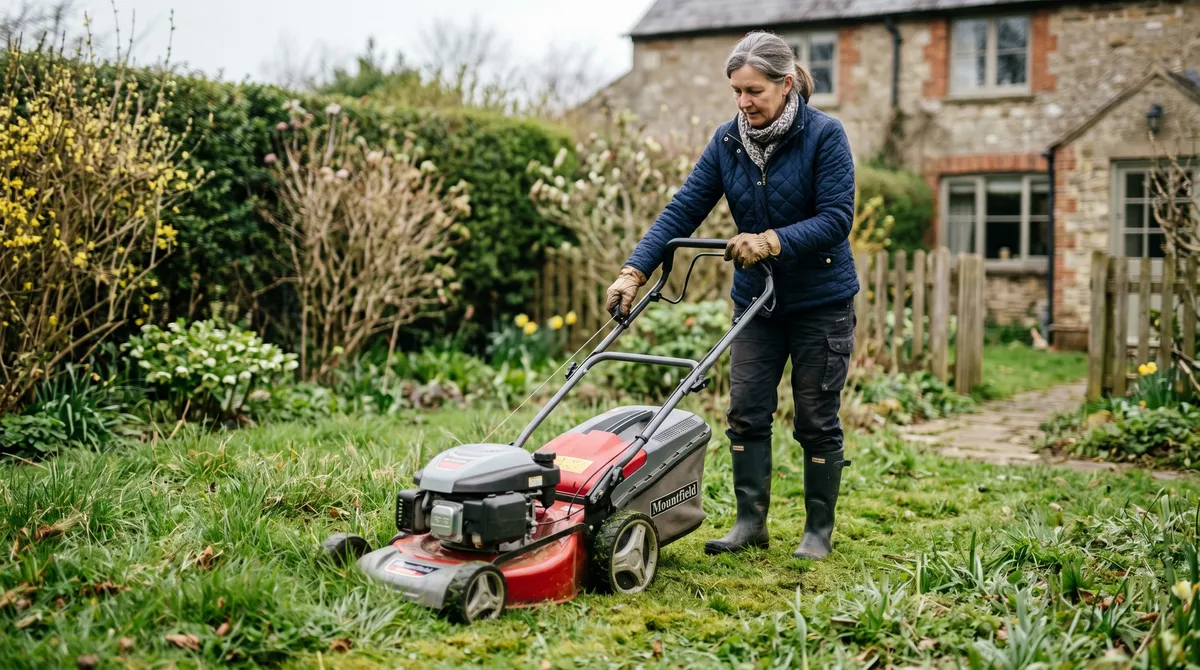
Rotary mowers are best for the high first cut. Cylinder mowers don’t cope with long spring grass; switch to rotary then back to cylinder once grass is consistently under 50mm.
For the wider UK lawn care plan, our lawn feeding guide covers the spring feeding that follows the first cut.
Wet Grass: Why You Cannot Mow
UK spring lawns are often wet for weeks. Mowing wet grass causes long-term damage.
Problems with wet mowing:
- Ragged cuts: Wet grass tears rather than cuts. Ragged edges invite leaf-spot disease.
- Soil compaction: Mower wheels create lasting compaction tracks. Repairs take 6-12 months.
- Clogged blades: Wet clippings stick to the blade and discharge unevenly, causing scalped patches.
- Disease spread: Wet conditions spread fungal diseases (red thread, snow mould) between cuts.
- Mower damage: Wet grass strains the motor and shortens mower life.
The test: walk on the lawn. If your shoes leave damp marks, it’s too wet. If grass blades stand back up after walking, it’s dry enough.
If you must mow wet:
- Wait for the surface dew to dry (typically by 11:00-12:00)
- Use a rotary mower (cylinder mowers cannot handle wet)
- Raise blade by 10-15mm above your target height
- Reduce mower speed
- Discharge to side, not bag
- Empty grass-collection more frequently
Even with these precautions, wet mowing produces inferior results. Wait for dry weather where possible.
Pre-First-Cut Lawn Prep
Three jobs in early March set up the cutting season.
1. Light raking. Use a lawn rake (not a leaf rake) to lift dead winter material and surface moss. Removes 200-500g/m² of debris.
2. Patch repair. Sow seed onto bare patches and small dead areas. Top-dress with 5-10mm of peat-free compost. Water in. Pre-mowed repair allows the new grass to grow with the lawn.
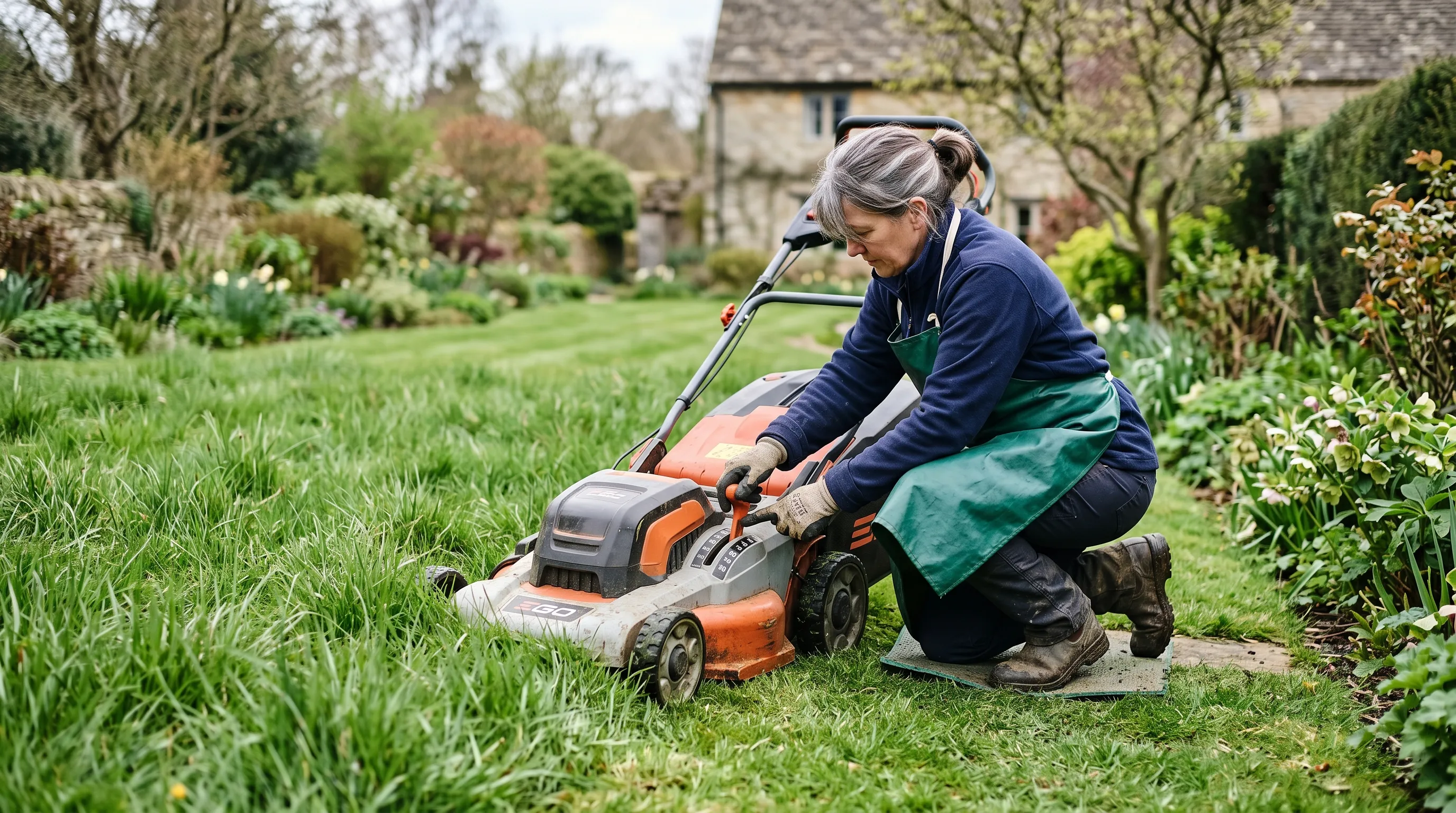
3. Mower service. Sharpen blades, check oil, lubricate moving parts, inflate tyres. A blunt blade tears grass; a sharp blade cuts cleanly. Time: 30 minutes. Cost: £15-£25 for sharpening kit.
For the wider UK lawn feeding programme, our lawn feeding guide covers the spring nitrogen application that follows the first cut.
 Pre-season blade sharpening on the Staffordshire workbench. Blade removed from mower, sharpened at factory bevel angle with a flat file. Sharp blades cut cleanly; blunt blades tear grass and invite disease.
The Spring Cutting Routine
After the first cut, the routine builds the year’s growth.
Weekly cutting (April-June):
- Cut every 7-10 days
- Reduce blade height 5-10mm per cut over 3-4 cuts
- Standard summer height: 25-35mm
- Bag clippings for compost or leave on lawn (mulch mowing)
Mulch mowing vs collection:
- Mulch mowing returns 30-50% of lawn nitrogen needs to the lawn
- Collection produces neater appearance
- Most UK gardeners do both (mulch in summer, collect in spring/autumn)
Watering after first cut:
- Usually unnecessary in spring (UK rainfall sufficient)
- Only water if soil is dry to 50mm depth and forecast is dry
- Apply 15-20 litres per m² as a single deep watering, not daily light watering
Common Mistakes With UK First Lawn Cut
Mistake 1: cutting too early. Damages dormant roots, slows year’s establishment by 4-6 weeks.
Mistake 2: cutting too short. Removing more than one-third of blade height shocks grass. Set blade high.
Mistake 3: mowing wet grass. Compacts soil for 6-12 months, tears blades, spreads disease. Wait for dry.
Mistake 4: skipping the blade sharpen. Blunt blades tear grass. Sharpen before first cut.
Mistake 5: scarifying too early. Wait until May-June when grass is actively growing.
For the wider UK lawn care, our lawn feeding guide covers spring feed timing. For bird protection during seed/repair work, our grass seed guide covers the protection methods. For the broader spring garden tasks, our seasonal jobs guide covers wider work.
First Cut Calendar UK Month-by-Month
| Month | Lawn task |
|---|---|
| January | Mower winter service if not done |
| February | Light raking on dry days |
| March | First cut in southern UK; sharpen blade |
| April | First cut midlands/north; weekly routine begins |
| May | Reduce blade height; consider feeding |
| June | Standard summer cutting begins |
| July | Weekly cutting at 25-35mm |
| August | Continued summer routine |
| September | Slow reduction; final autumn feed |
| October | Last cuts of the year |
| November | Final cut around mid-month |
| December | Mower stored; winter rest |
Frequently asked questions
When should I first cut my lawn in the UK?
Mid-March in southern UK, late March to early April in the midlands, mid-April in Scotland. The grass needs to reach 60-80mm tall, soil temperature consistently above 6C, and ground firm enough to walk on without leaving footprints. Cool springs delay the first cut by 2-4 weeks.
How high should I set the mower for the first cut?
50-60mm blade height for the first cut. Standard summer cutting is 25-35mm. The high first cut removes only the top third of the grass blade, reducing stress on roots that are still establishing after winter dormancy. Reduce blade height in 5-10mm steps over the next 3-4 cuts.
Why shouldn’t I cut wet grass?
Wet grass tears rather than cuts cleanly, leaving ragged edges that invite disease. Wet soil compacts under mower wheels, damaging soil structure for 6-12 months. Mower clippings clog the blade and discharge unevenly. Wait for the lawn to dry through morning sun before mowing.
Should I scarify before the first cut?
No. Scarification is too aggressive for early-season lawns still emerging from winter dormancy. Save scarification for May-June when grass is actively growing. Light raking with a lawn rake is acceptable to remove dead winter material before the first cut.
What lawn jobs come before the first cut?
Light raking with a lawn rake to remove dead winter debris. Brush off any moss patches. Repair small bare patches with seed and top-dressing. Sharpen mower blades. Check mower for winter rust and oil any moving parts. These prep jobs in early March set up the cutting season.
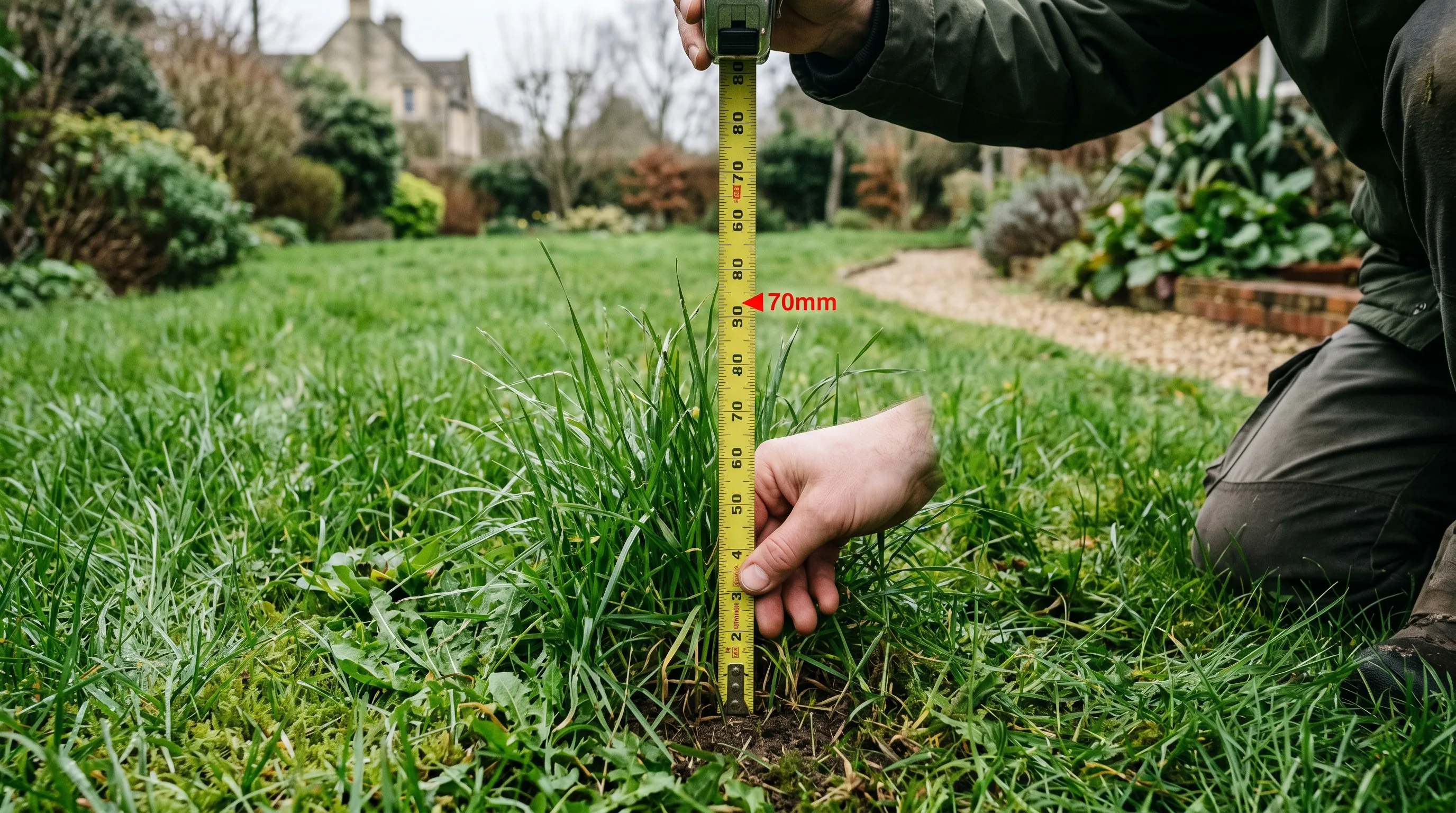 The grass-height check on a Staffordshire lawn in mid March. 70mm tall, well within the 60-80mm first-cut window. Combined with 7C soil temperature and firm ground, the lawn is ready for its first cut.
 Pre-first-cut light raking on the Staffordshire lawn. Lawn rake (not leaf rake) lifts dead winter material and surface moss without damaging the underlying grass. 200-500g/m² of debris removed.
Now plan the wider lawn year
The first cut is the start of UK lawn season. For the wider feeding programme, our lawn feeding guide covers the spring nitrogen application. For protecting grass seed during patch repair, our seed guide covers bird protection. For sowing new lawn from seed, our seeding guide covers full lawn-from-seed projects. And for the wider spring garden tasks, our autumn gardening jobs guide covers the wider seasonal maintenance schedule.
Our team produces practical UK gardening guidance from source research, contributor records and established horticultural practice. Editorial standards are overseen by Matt W.