Key takeaways
- Remove last year's dried flower heads now (not earlier)
- Apply 50mm leafmould or bark chip mulch
- Feed with rose food or general fertiliser
- Water deeply in dry weeks (20-30L per established plant)
- Check for aphids on tender new shoots
- Acid feed for blue mophead flowers; alkaline for pink
May is the make-or-break UK hydrangea month. Bud development is underway, last year’s dried flower heads need removing, the mulch and feed go down for the year, and slug pressure on new shoots peaks. This guide covers the May checklist for UK hydrangeas to flower strongly July-September.
The May Checklist
Six May jobs in priority order.
1. Remove last year’s dried flower heads. Mid-to-late May, after frost risk. Cut at first pair of strong new buds.
2. Apply mulch. 50mm of leafmould, bark chip or peat-free compost around the drip line.
3. Feed. 70g per m² of rose feed or general fertiliser. Lightly rake into soil surface around the plant.
4. Water deeply if dry. 20-30 litres per established plant during dry weeks.
5. Inspect for aphids. Check tender new shoots; soap spray if cluster found.
6. Adjust soil for colour (mophead only). Acid for blue; alkaline for pink.
For the wider hydrangea care across the year, our hydrangea guide covers the broader planting and seasonal approach. For how to prune hydrangeas correctly in March, our pruning guide covers the earlier-season cuts that set up May growth.
Removing Last Year’s Flower Heads
The dried mophead and lacecap flower heads from last summer provide winter frost protection for the buds below. Leave them until mid-to-late May when frost risk passes, then remove.
Method:
- Use sharp secateurs
- Identify the first pair of strong new buds below each dried head
- Cut just above the bud pair (5-10mm above)
- Compost the dried heads
- Do not cut into the live stem below the buds
For ClimbingHydrangea (Hydrangea anomala petiolaris), Hydrangea paniculata (cone-shaped) and Hydrangea arborescens (Annabelle), the timing and method differ slightly. Check variety-specific care in the hydrangea variety guide.
 The mid-May dead-head removal on a Staffordshire mophead hydrangea. Cut just above the first pair of strong new buds. The plant redirects energy into bud development once old heads are removed.
Mulch and Feed
Apply both at the same May session.
Mulch:
- 50mm depth
- Around the drip line (the outer edge of the foliage spread)
- Stay 50-75mm clear of the main stem
- Materials: leafmould (best), peat-free compost, bark chip
- Annual application; hydrangeas thrive on consistent mulch programme
Feed:
- Rose feed (Vitax Q4, Toprose) or general slow-release fertiliser
- 70g per square metre around the drip line
- Rake lightly into the soil surface (do not bury deep)
- Water in after application
- Single annual feed is enough for most UK hydrangeas
Watering Through May
May is often the first dry month of the UK growing season. Watering decisions affect flowering.
Watering rules:
- Water if 14+ days dry weather forecast continues
- Apply 20-30 litres per established plant per week
- Apply at the soil surface; avoid splashing leaves
- Early morning is best
- Mulch helps retain moisture (reduces watering frequency)
Container hydrangeas:
- Water twice weekly through May
- Daily watering in any heatwave above 25C
- Check soil daily; container plants dry fast
For growing hydrangeas in pots, our container guide covers the specific watering and feeding needs.
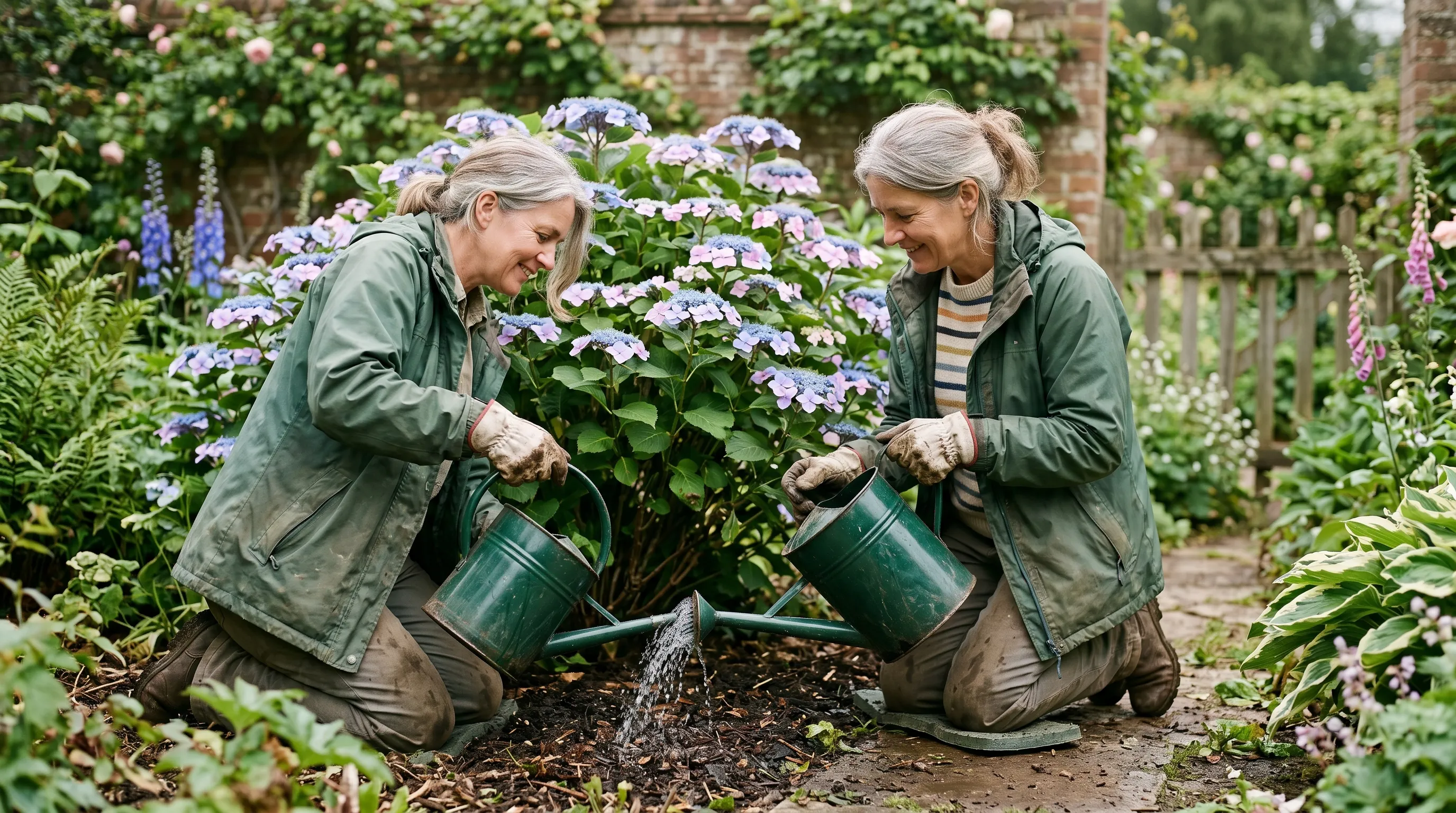 Correct watering technique on a Staffordshire mophead. Water applied at soil level around the drip line. 20-30 litres per established plant per week during dry May spells.
Colour Management (Mophead Only)
Mophead hydrangeas change colour by soil pH. May is the right time to adjust if you want a colour change for July flowering.
Blue flowers (acid soil, pH 4.5-5.5):
- Apply aluminium sulphate at 30g per m² in May
- Or apply specialist hydrangea blue colourant (Vitax Hydrangea Colourant)
- Mulch with pine needles or composted bark
- Avoid lime entirely
- Repeat application annually
Pink flowers (alkaline soil, pH 6.5-7.5):
- Apply garden lime at 100-150g per m² in May
- Avoid acidic fertilisers
- Aluminium-free fertiliser only
- Repeat application every 2 years
White flowers (any pH):
- Pure white varieties (Annabelle, paniculata varieties) stay white regardless of soil pH
- No adjustment possible or needed
For the colour change protocol in detail, our colour guide covers the science and timing.
Aphid Check on New Shoots
Tender new May growth attracts aphids. Walk the plants weekly and check leaf undersides.
Treatment:
- Inspect once per week through May
- For small clusters (under 20 aphids): pinch off with fingers
- For larger clusters: soap spray (5ml washing-up liquid per 1L water)
- Apply at dusk to avoid leaf scorch
- Repeat after 7-10 days if still present
For the wider aphid control across UK gardens, our aphid guide covers the full toolkit including biological controls.
Common Mistakes With UK May Hydrangea Care
Mistake 1: removing dried flower heads too early. Frost can damage the new buds below. Wait until mid-May minimum.
Mistake 2: pruning live stems in May. This year’s flowers are forming on those stems. Don’t cut them.
Mistake 3: high-nitrogen feeding. Produces lush leaves and few flowers. Use rose feed or general balanced fertiliser.
Mistake 4: shallow watering. Light daily watering wets only the top 50mm. Deep weekly watering reaches the roots.
Mistake 5: forgetting the mulch. Annual mulch is the foundation of hydrangea care. Skip a year and the plant suffers.
For the wider hydrangea growing approach, our hydrangea guide covers planting and full-year care. For diagnosing why a hydrangea is not flowering, our troubleshooting guide covers all causes.
May Hydrangea Calendar UK Week-by-Week
| Week | May task |
|---|---|
| Week 1 (early May) | Final pre-care inspection; order feed/mulch |
| Week 2 (mid May) | Begin dead-head removal across plants |
| Week 3 (mid-late May) | Apply mulch and feed |
| Week 4 (late May) | Adjust colour if wanted; aphid check |
Frequently asked questions
When should I remove last year’s hydrangea flower heads?
Mid-to-late May, after the frost risk has passed. The dried flower heads provide winter frost protection for the new buds below. Cut them off at the first pair of strong new buds in mid May to mid June. Use sharp secateurs and cut just above the bud pair.
What feed do hydrangeas need in May?
A rose feed (high potassium for flowering) or general slow-release fertiliser like Vitax Q4. Apply 70g per square metre around the drip line and lightly rake into the soil surface. Avoid high-nitrogen feeds; they produce lush leaves with few flowers.
Should I water hydrangeas in May?
Yes during dry weeks. Established hydrangeas need 20-30 litres per plant per week during dry spells. Container-grown plants need watering twice weekly. May watering supports the bud development that determines summer flowering. Don’t water if soil is wet from rain.
Why are my hydrangea leaves yellow in May?
Most common cause: iron deficiency from over-alkaline soil. Apply iron sulphate (Sequestrene) per pack instructions. Other causes: cold spring nights (waits to resolve naturally), overwatering (drainage check), poor planting depth (lift if planted too deep).
Can I prune hydrangeas in May?
Only light shaping in May. Major pruning was a March job. May is for removing the dried flower heads from last year and cutting back any dead wood. Do not prune live stems in May; this year’s flowers are forming on those stems now.
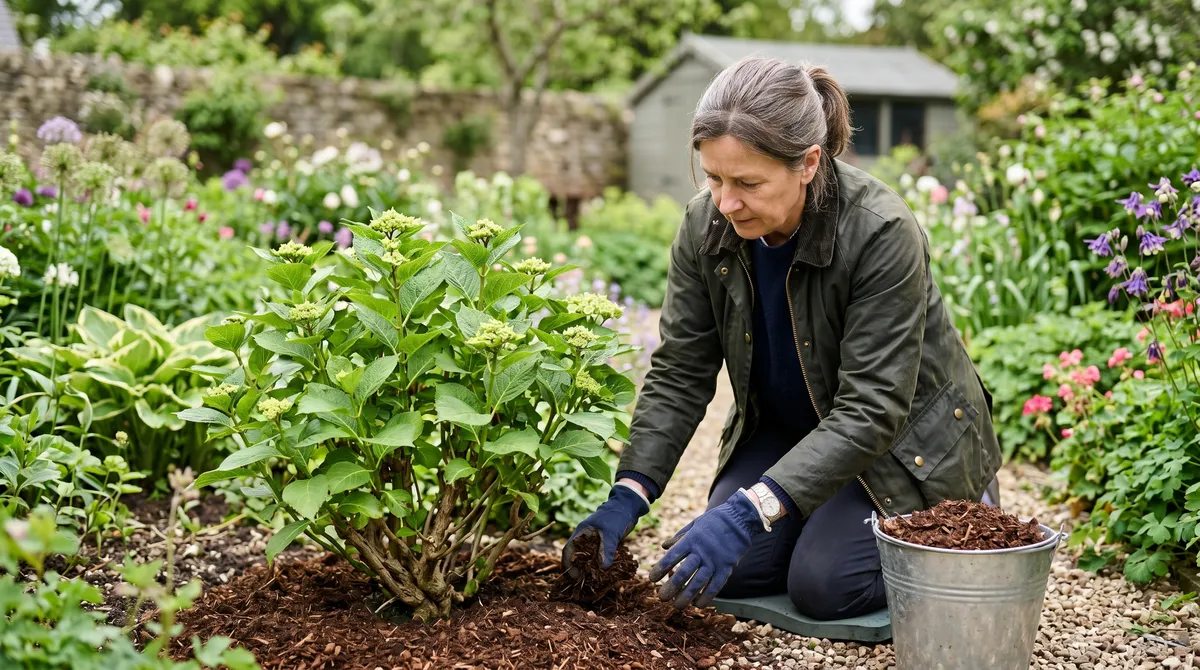
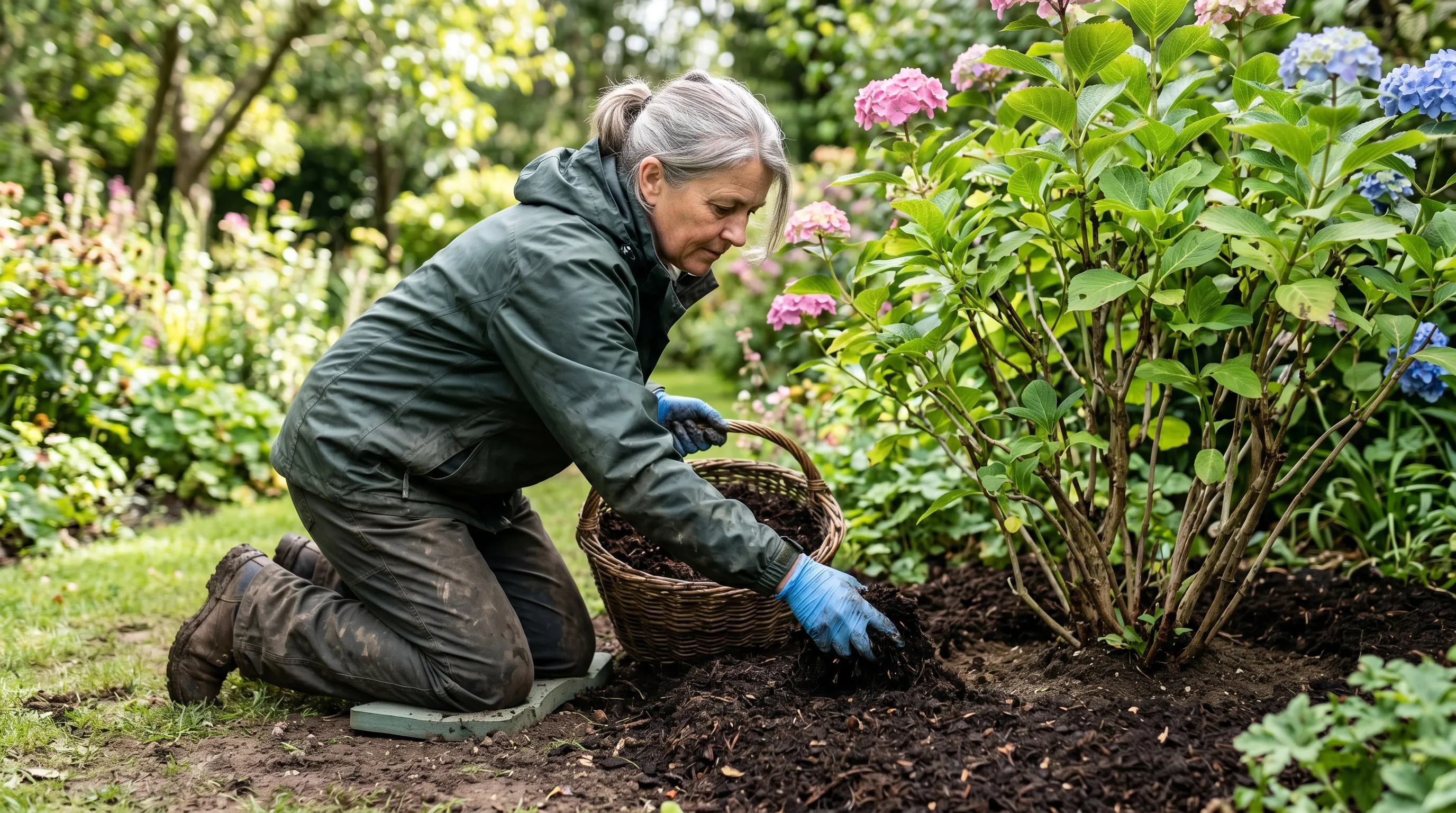 The May mulch application on a Staffordshire hydrangea. 50mm leafmould around the drip line, kept clear of the main stem. The annual mulch is the foundation of UK hydrangea care.
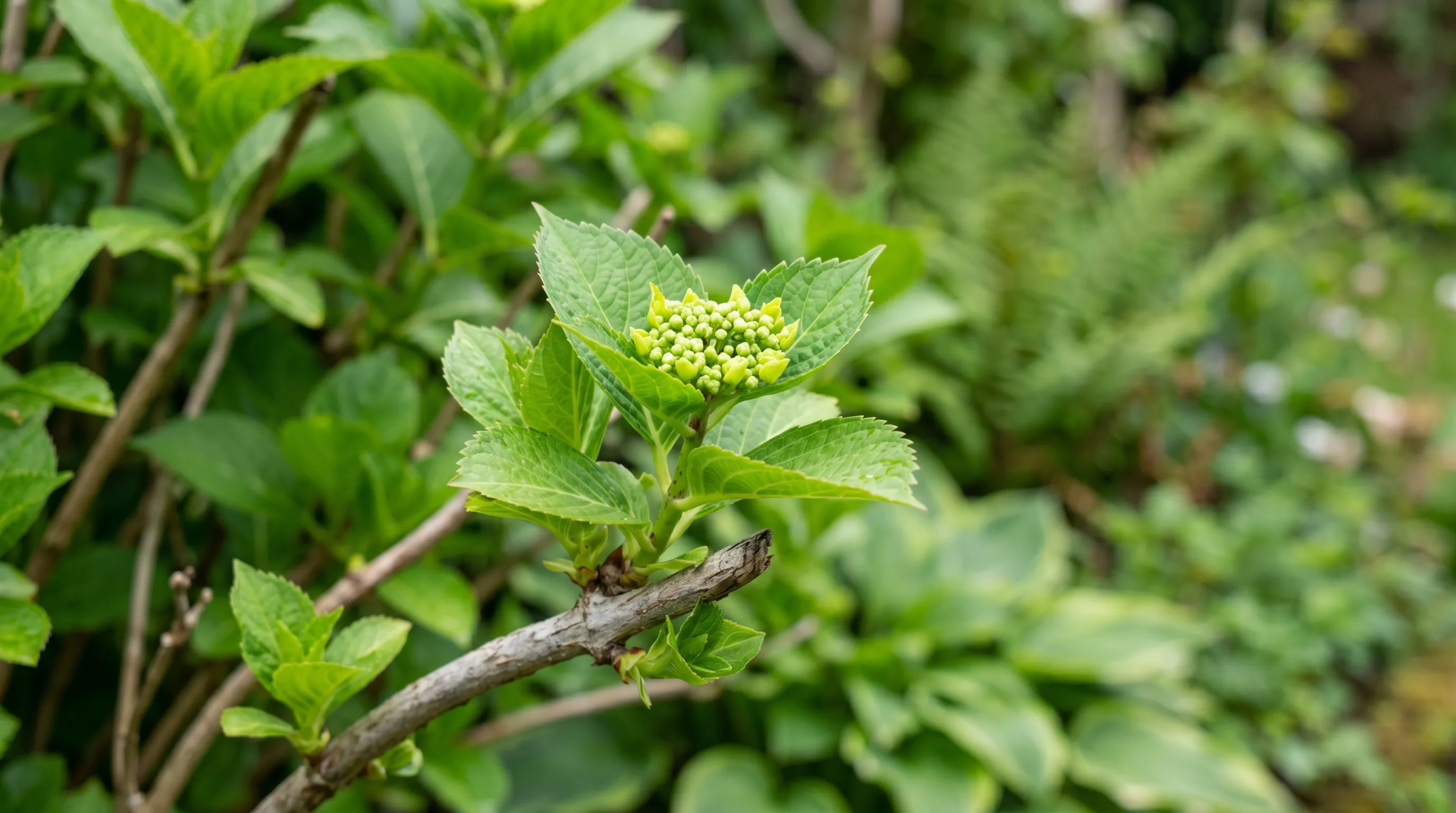 Mid-May bud development on a Staffordshire mophead. Flower buds visible at the tips of last year’s stems. This year’s flowering depends on protecting these buds and providing enough water and feed.
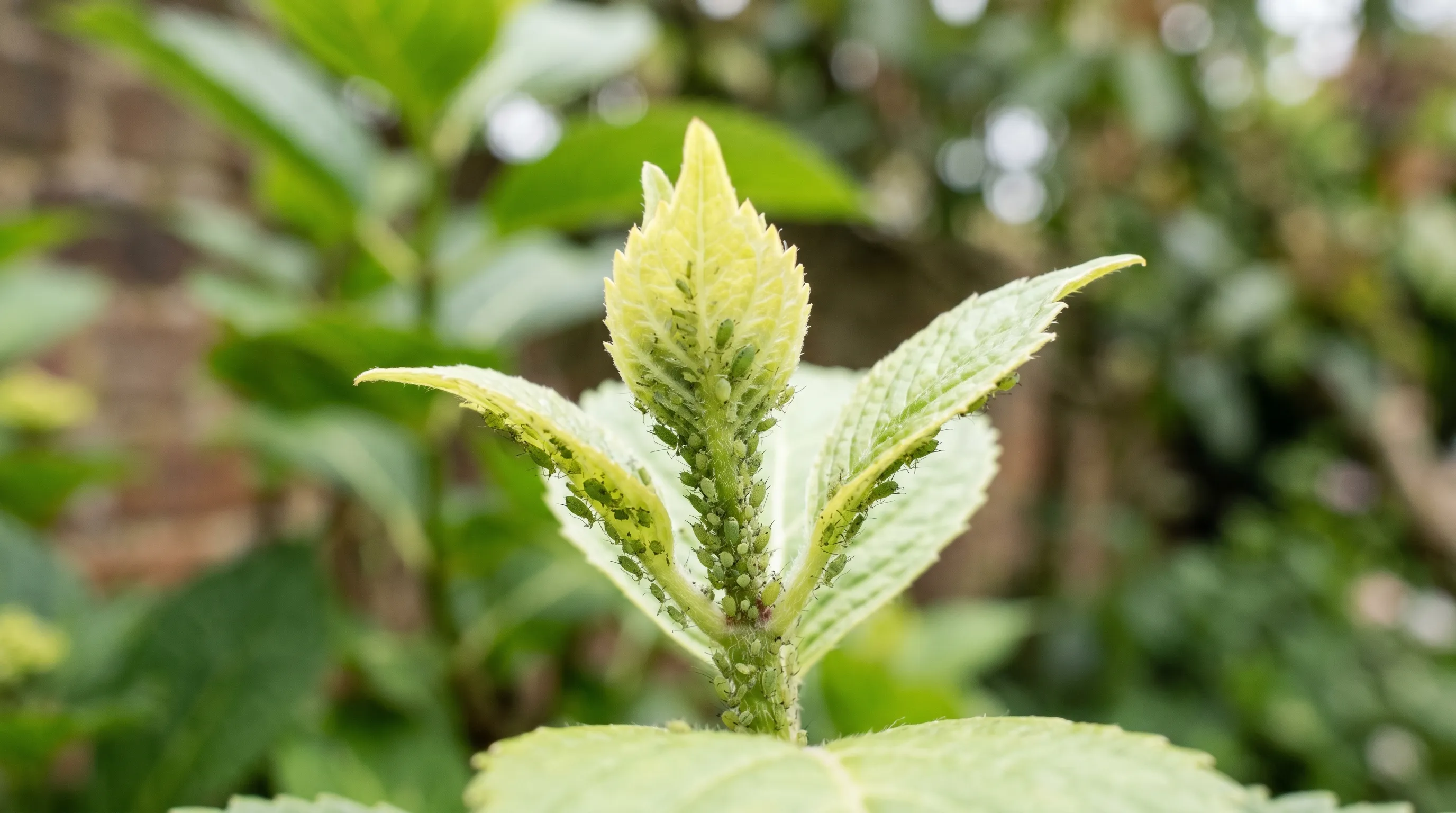 Aphid cluster on a new May shoot tip. Tender new growth attracts UK aphids. Treat early: pinch off small clusters or apply soap spray for larger infestations.
Now plan the wider hydrangea year
May is one part of the UK hydrangea year. For the March pruning that sets up May growth, our pruning guide covers the variety-specific cuts. For the wider hydrangea growing approach, our hydrangea guide covers planting and full-year care. To pick the right variety for your conditions, our types of hydrangeas UK guide covers mophead, lacecap, paniculata and arborescens. And for diagnosing the most common hydrangea problems, our troubleshooting guide covers yellowing leaves and weak flowering.
Our team produces practical UK gardening guidance from source research, contributor records and established horticultural practice. Editorial standards are overseen by Matt W.