Key takeaways
- Ground elder rhizomes spread 2m per season — every fragment left in soil regenerates a new plant
- Smothering with black polythene for 12-18 months is the most reliable organic eradication method
- Digging alone multiplies ground elder by breaking brittle rhizomes into viable fragments
- Glyphosate applied to 20-30cm foliage in June-August achieves the deepest root translocation
- Variegated ground elder (Aegopodium podagraria 'Variegatum') is equally invasive despite being sold as ornamental
Ground elder is the weed that installers and experienced gardeners regard with genuine respect. Aegopodium podagraria arrived in Britain with the Romans, cultivated as a medicinal herb, and has been escaping from gardens ever since. The RHS identifies it, alongside bindweed and horsetail, as one of the three most difficult garden weeds to eradicate in the UK, and with good reason.
The problem is underground. Ground elder spreads via a dense network of white, brittle rhizomes that can extend 1m deep in light soil and push 2m laterally in a single growing season. Every time you disturb those rhizomes with a fork or spade, each fragment becomes a new plant. An infestation that produces 20 stems before digging can produce 200 afterwards.
How to Identify Ground Elder
Accurate identification before treating prevents wasted effort on the wrong plant. Ground elder is frequently confused with elder (Sambucus nigra), cow parsley, and herb Gerard, which is the same plant under a different name.
Key identification features of ground elder:
- Leaves: Bright, mid-green, compound leaves divided into 3 groups of 3 leaflets (triternate). Each leaflet is oval, sharply toothed, and 4-8cm long. The overall leaf shape gives the plant its name, each division resembles the leaflets of elder.
- Stems: Triangular in cross-section when young, becoming hollow as they mature. This is the most reliable identifier.
- Smell: Bruised leaves produce a strong, distinctive aromatic smell, almost parsley-like but sharper. This separates it from most other seedlings at ground level.
- Flowers: Flat-topped white umbels (similar to cow parsley) appearing May-July on stems reaching 40-100cm. Remove flowers immediately to prevent seed spread.
- Rhizomes: White, fleshy, brittle, and spreading in every direction just below the soil surface.
Ground elder thrives in shade and partial shade. It is especially common under deciduous trees, along fence lines, and in established borders where soil disturbance is infrequent. It grows less vigorously in full sun but still persists.
Variegated Ground Elder
Aegopodium podagraria ‘Variegatum’ is sold in garden centres as an ornamental ground cover. Its leaves have cream-white margins that make it look decorative. It is equally invasive as the plain species, spreading by rhizome at the same rate, and commonly reverts to the plain green form, which is more vigorous. If you find variegated ground elder in your garden, treat it with identical urgency.
Why Digging Alone Fails
Understanding the biology is essential before choosing a removal strategy.
Ground elder rhizomes are brittle by design. In nature, this brittleness allows fragments to be carried by water, animals, and cultivation equipment, colonising new ground rapidly. In a garden, it means that every spade strike, every fork turn, and every rotavating pass creates dozens of viable fragments, each capable of producing a new plant from as little as 2cm of rhizome.
The rhizomes also run beneath and through the roots of established border plants. Lifting a perennial from ground elder-infested soil brings up a tangle of white rhizomes intertwined with the plant’s root system. Separating them without breaking every rhizome fragment is essentially impossible in the field.
This is why the standard digging approach, often the first instinct, actively worsens the problem. For gardens with established infestations, smothering must come before any digging.
For comparison, how to get rid of bindweed describes a similarly fragile root system where digging multiplies rather than removes the weed, the same principle applies to ground elder.
Method Comparison
The table below shows each removal method, its organic status, typical timeline, effort level, and suitability for different garden situations.
| Method | Organic? | Timeline | Effort | Best suited to |
|---|---|---|---|---|
| Black polythene smothering | Yes | 12-18 months | Low (set and wait) | Open beds, paths, cleared areas |
| Repeated cutting/pulling | Yes | 2-3 years | Very high | Small patches, mixed borders |
| Lifting + rhizome removal | Yes | 1-2 years (post-smother) | Very high | After smothering, clearing remaining fragments |
| Glyphosate | No | 2 growing seasons | Moderate | Beds without desired plants nearby |
| Raised bed containment | Yes | Immediate | Moderate (one-off build) | Vegetable growing over infested ground |
| Root barrier installation | Yes | Immediate | Moderate | Stopping spread from neighbouring land |
| Cardboard + deep mulch | Yes | 18-24 months | Moderate | Informal areas, new garden beds |
Method 1: Smothering With Black Polythene
This is the most reliable organic method for removing ground elder from open ground and the one most strongly recommended by the RHS for heavily infested areas.
The principle: Ground elder requires light for photosynthesis. Total light exclusion for 12-18 months exhausts root reserves and kills the rhizome network. Unlike digging, it does not create new fragments.
What you need:
- Black polythene sheeting, minimum 200 microns (heavy duty)
- Bricks, timber, or soil to weight the edges
- 12-18 months patience
Step-by-step:
- Cut all visible ground elder stems to ground level. Remove the top growth but do not dig.
- Lay black polythene over the entire affected area. Cover every square centimetre, ground elder finds gaps and pushes through.
- Overlap sheets by at least 30cm. Tape or pin the joins. A single gap allows rhizomes to redirect towards the light and escape the coverage.
- Weight the edges thoroughly with bricks, timber battens, or heaped soil. Polythene that lifts in wind creates gaps.
- Check the perimeter monthly. Ground elder will find any edge gap and push shoots out from beneath. Cut any emerging shoots immediately.
- Leave for minimum 12 months. For heavy infestations, extend to 18 months before lifting.
After removing the polythene, the rhizomes will be brown, dead, and brittle. You can then dig out the dead material, this time without the risk of multiplying living fragments. Some deep rhizomes may have survived below the effective exclusion zone; treat any regrowth immediately with glyphosate or replace the polythene for a further season.
Cardboard alternative: Cardboard with 15-20cm of organic mulch on top works on lighter infestations and is aesthetically acceptable in ornamental areas. However, cardboard decomposes, and ground elder can push through as it softens. Top up mulch regularly and check edges monthly. This method is better suited to no-dig gardening approaches where the garden is being transitioned to a permanent mulched system.
Method 2: Repeated Cutting and Weakening
This method works by the same principle as smothering, denying photosynthesis, but requires sustained manual effort across multiple growing seasons.
Every time ground elder produces a shoot, cut it off at soil level. Do not leave the cut stems on the ground; remove them to prevent any possibility of rhizome fragments re-rooting. The plant uses stored root energy to push each new shoot. If the shoot is removed before it produces enough leaf area to replenish that energy, the rhizomes weaken progressively.
Cutting frequency required: Every 7-14 days from March to October, without exception. Missing 3-4 weeks during summer allows the plant to restore significant root reserves through a burst of photosynthesis.
Realistic timeline: 2 full growing seasons to substantially weaken an established patch. 3 seasons to approach eradication of a heavy infestation. This method suits small patches in mixed borders where polythene smothering would damage established plants.
Pull stems gently rather than yanking, ease them upwards to remove as much stem as possible without breaking rhizomes. Cutting with scissors or secateurs at soil level is less likely to disturb rhizomes than pulling.
Method 3: Glyphosate Treatment
Glyphosate (sold as Roundup, Gallup, and own-brand equivalents) is the most effective single-season treatment. It is a systemic herbicide, absorbed through leaves and translocated down into the rhizome network.
How to apply:
- Wait until foliage reaches 20-30cm tall with several fully expanded leaves. This is typically June-August in the UK. Treating smaller growth reduces the leaf area available to absorb the chemical.
- Apply on a dry, calm day with no rain forecast for 6 hours. Glyphosate needs time on the leaf surface before rain washes it off.
- Use glyphosate gel for precision in mixed borders. Paint the gel directly onto ground elder leaves using a small brush or foam applicator. This avoids spray drift onto desirable plants.
- Do not cut treated stems for at least 7-10 days. The chemical needs time to translocate from leaves down into the rhizomes. Cutting too soon breaks the pathway.
- Expect regrowth in 3-4 weeks. Treat regrowth with a second application. Allow 4 weeks between applications.
- Apply 3-4 times per growing season for heavily infested ground.
Realistic expectation: Two seasons of 3-4 applications each achieves near-complete eradication in most cases. Scattered weak regrowth in year 3 can be hand-pulled or spot-treated.
Ground elder growing through established border plants presents a challenge because glyphosate kills any green tissue it contacts. Lift and pot up desirable plants before treating if possible. For organic alternatives to glyphosate, our organic weedkillers UK guide covers pelargonic acid products which give contact-kill on ground elder foliage, though they do not translocate into rhizomes and require more frequent application.
Important: Glyphosate is a non-selective herbicide. Apply on calm, still days. Never spray near ponds, streams, or ditches. Keep pets and children away from treated areas until the foliage is dry.
Method 4: Lifting Perennials and Rhizome Removal
For mixed borders where polythene smothering would kill established plants, this approach removes the weed while preserving what you want to keep.
- Lift each border plant individually in autumn or spring when the soil is workable.
- Wash the entire root ball under running water. This reveals the white ground elder rhizomes intertwined with the plant’s roots.
- Remove every white rhizome fragment by hand. Use a fine-toothed comb or fingers to tease them free. Be methodical, any fragment left regenerates.
- Pot the plant temporarily while you treat the cleared bed with glyphosate or polythene.
- Replant into treated ground after the bed has been treated for at least one full growing season.
This is labour-intensive but effective for valued perennials. Combine it with smothering the cleared beds, treat the cleared soil before replanting. Our guide to improving clay soil is useful reading before replanting, as ground elder typically thrives in compacted, poorly structured soil. Improving drainage and structure after clearance makes the garden less hospitable to recolonisation.
Managing Ground Elder in Borders vs Lawns
In Borders
Ground elder in borders is the hardest situation because:
- Polythene smothering kills the border plants alongside the weed
- Glyphosate spray cannot be used without damaging desirable plants
- Digging creates rhizome fragments throughout the root zone
The most effective approach for borders is lifting plants, treating the bare soil, then replanting. For plants too large or established to lift, use the repeated cutting method on the ground elder, combined with glyphosate gel painted precisely onto individual stems.
In Lawns
Ground elder rarely establishes in regularly mown lawns because mowing acts as forced cutting, the same repeated defoliation that weakens the rhizomes. However, it persists at the lawn’s edges, particularly where it is spreading in from a shaded border.
Spot-treat lawn edge invasions with glyphosate gel applied precisely to the ground elder leaves. Cutting the lawn short and regularly along the border edge prevents it from building enough leaf area to sustain active spread.
In Vegetable Gardens and Raised Beds
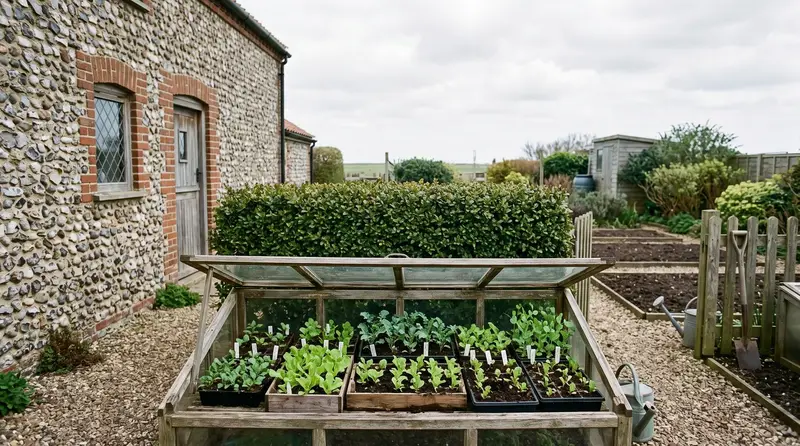
The most practical approach for vegetable growing areas is containment via raised beds. Building raised beds with solid bases (paving slabs, thick polythene liner, or solid timber base with weed-suppressing membrane) prevents ground elder rhizomes from entering the growing medium from below.
For raised bed gardening, position beds on top of ground elder-infested ground, laid over heavy-duty setting fabric. The ground elder cannot penetrate the barrier, and you grow clean crops above the problem. Treat the surrounding open ground around the beds with glyphosate or polythene to prevent the weed from establishing around the structure.
Stopping Ground Elder From Spreading In
Ground elder frequently arrives from neighbouring gardens via rhizomes pushing under or through boundary fences.
Root barrier installation:
- Dig a trench along the boundary, 40-60cm deep and 15cm wide
- Install heavy-duty HDPE root barrier sheeting vertically in the trench, leaving 5cm above soil level
- Overlap joins by 30cm and seal with waterproof tape
- Backfill and compact soil on both sides
- Cost: approximately £3-6 per linear metre; lifespan 20+ years
The RHS guidance on ground elder confirms root barriers as the most effective boundary control measure and provides additional advice on the plant’s biology and treatment options.
What Not to Do
Do not rotavate. Rotavating ground elder-infested ground creates hundreds of rhizome fragments across the entire plot and introduces them to clean areas. A single pass can take a localised problem and spread it to every corner of the garden.
Do not rely on cardboard alone. A single layer of cardboard suppresses ground elder for 6-8 weeks before decomposing enough for rhizomes to push through. Cardboard is a useful component of a deep mulch system, not a standalone treatment.
Do not leave gaps in polythene. Ground elder will find any gap, any edge lift, any unsealed join. A 5cm gap in coverage is enough for the plant to redirect rhizomes towards light and escape the exclusion zone.
Do not compost the roots. Ground elder rhizomes remain viable in most compost heaps. Bag them for green waste collection or dry completely on a hard surface in direct sun for 4-6 weeks before composting.
Do not assume the variegated form is safer. Garden centres sell Aegopodium podagraria ‘Variegatum’ as a ground cover plant for difficult shaded spots. It is equally invasive and frequently reverts to the plain green form.
For strategies on other difficult perennial weeds with similar underground spread mechanisms, see our article on how to get rid of brambles and our overview of stopping weeds without chemicals.
Timeline Expectations
Ground elder eradication is not a one-season project. Set realistic expectations before starting:
| Timeline | What to expect |
|---|---|
| Month 1-3 | Polythene in place, or glyphosate first applications. Top growth suppressed. No visible change underground. |
| Month 4-6 | With polythene: rhizomes beginning to exhaust energy reserves. With glyphosate: regrowth noticeably weaker. |
| Month 6-12 | Polythene: 70-80% rhizome death in well-covered areas. Glyphosate (second season begun): sparse, weak regrowth. |
| Month 12-18 | Polythene lifted: rhizomes brown and dead, ready to remove. Glyphosate: near-complete control, spot treatment only. |
| Year 2-3 | Monitor closely. Treat any regrowth immediately. Rebuild soil health with mulching and composting. |
| Year 3+ | Light maintenance, occasional spot treatment. Reinforce boundary barriers annually. |
Using mulch in the post-clearance phase significantly reduces the chance of reinfestation. A 5-8cm layer of wood chip or bark mulch suppresses any scattered seedlings from the soil seed bank and improves soil structure for replanting. The Garden Organic website provides additional organic management advice for ground elder in certified organic growing situations.
the contributor’s Top Tip
Related reading: Smothering works on another spring spreader too, see our guide to lesser celandine identification and control.
Frequently asked questions
What is ground elder and why is it so hard to remove?
Ground elder (Aegopodium podagraria) is a perennial weed with a brittle, spreading rhizome network. The rhizomes can extend 1m deep and spread 2m laterally per season. Every 2cm fragment left in the soil regenerates a new plant, which is why digging multiplies rather than removes it. The RHS lists it alongside bindweed and horsetail as one of Britain’s three most difficult garden weeds to eradicate.
How long does it take to get rid of ground elder?
Eradication typically takes 2-3 years of consistent treatment. Smothering with black polythene for 14-18 months is the fastest reliable organic method, achieving near-complete kill in most cases. Glyphosate requires 3-4 applications per season over 2 consecutive seasons. Both methods are faster when applied consistently than intermittently, skipping a cutting window or leaving a gap in polythene adds a full season to the timeline.
Does digging out ground elder work?
Digging alone does not work and usually worsens the infestation. Ground elder rhizomes are brittle and snap at every spade strike, leaving dozens of viable 2cm fragments in the soil. Each fragment regenerates. If you must dig, smother the area with black polythene for a full growing season first, then excavate the dead material. Never rotavate ground elder-infested ground.
Will glyphosate kill ground elder permanently?
Glyphosate is the most effective treatment but rarely achieves permanent control from a single application. The chemical translocates from leaves down into rhizomes, but extensive networks have isolated sections that survive. Plan for 3-4 applications per growing season over 2 seasons for heavily infested ground. Apply when foliage reaches 20-30cm in June-August for maximum translocation into the root system.
Is variegated ground elder less invasive than the green form?
No, variegated ground elder (Aegopodium podagraria ‘Variegatum’) spreads by rhizome at the same rate as the plain species. It is sold in nurseries as a ground cover plant for shaded areas, but it escapes into borders and neighbouring gardens just as readily. The variegated form also reverts to plain green, producing more vigorous growth. Treat it with identical urgency and the same removal methods.
Can I compost ground elder?
Do not compost ground elder roots or rhizomes. Rhizomes survive most home compost heaps and regenerate when the compost is spread. Bag them for green waste collection, or dry rhizomes thoroughly on a hard surface in full direct sun for 4-6 weeks before adding to the compost bin. Ground elder leaves without roots can be composted safely if the heap reaches 60°C.
How do I stop ground elder coming from my neighbour’s garden?
Install a vertical root barrier along the boundary, buried 40-60cm deep. Use heavy-duty HDPE or polypropylene sheeting, overlapping joins by 30cm with waterproof tape, and leave 5cm above soil level. This blocks lateral rhizome spread across the boundary line. Any ground elder that appears on your side should be spot-treated with glyphosate gel immediately before the rhizomes establish further into your garden. Barriers cost approximately £3-6 per linear metre and last 20+ years.
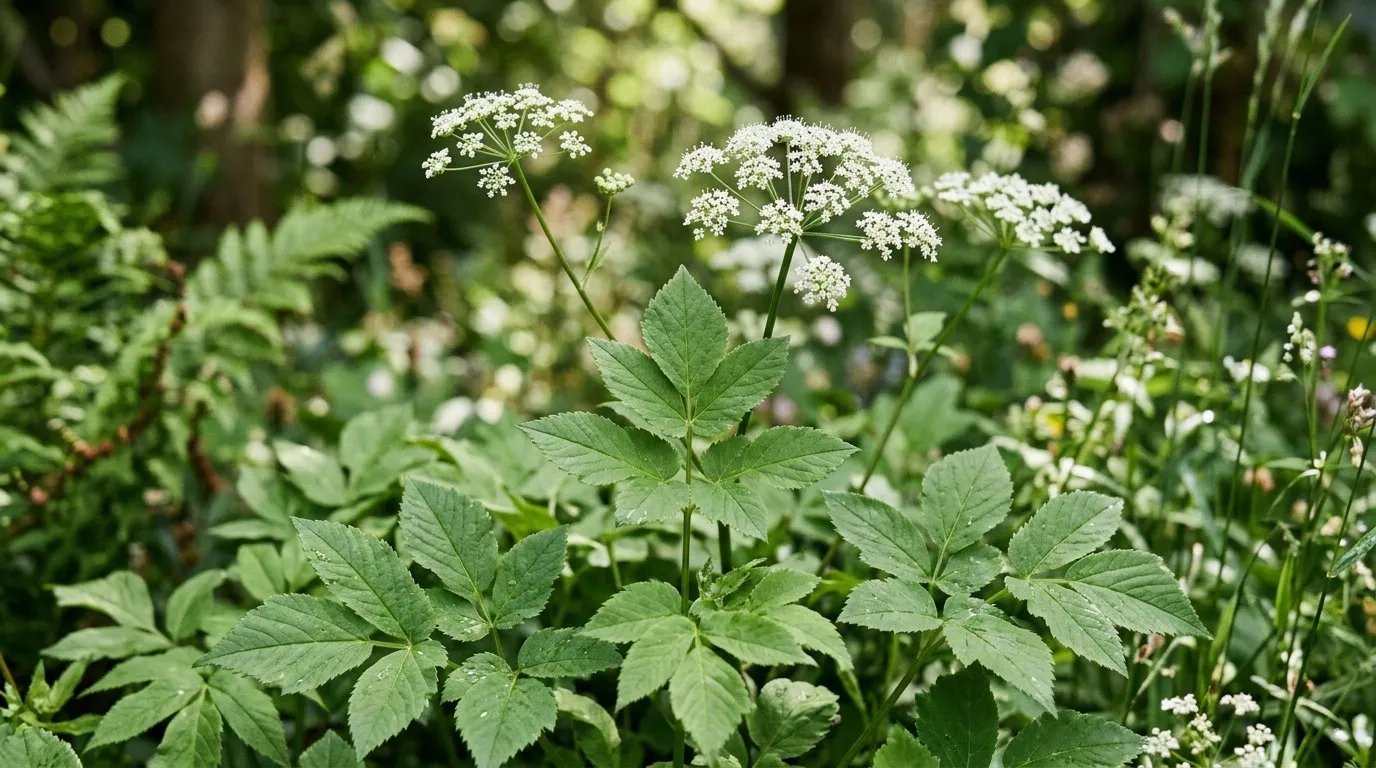
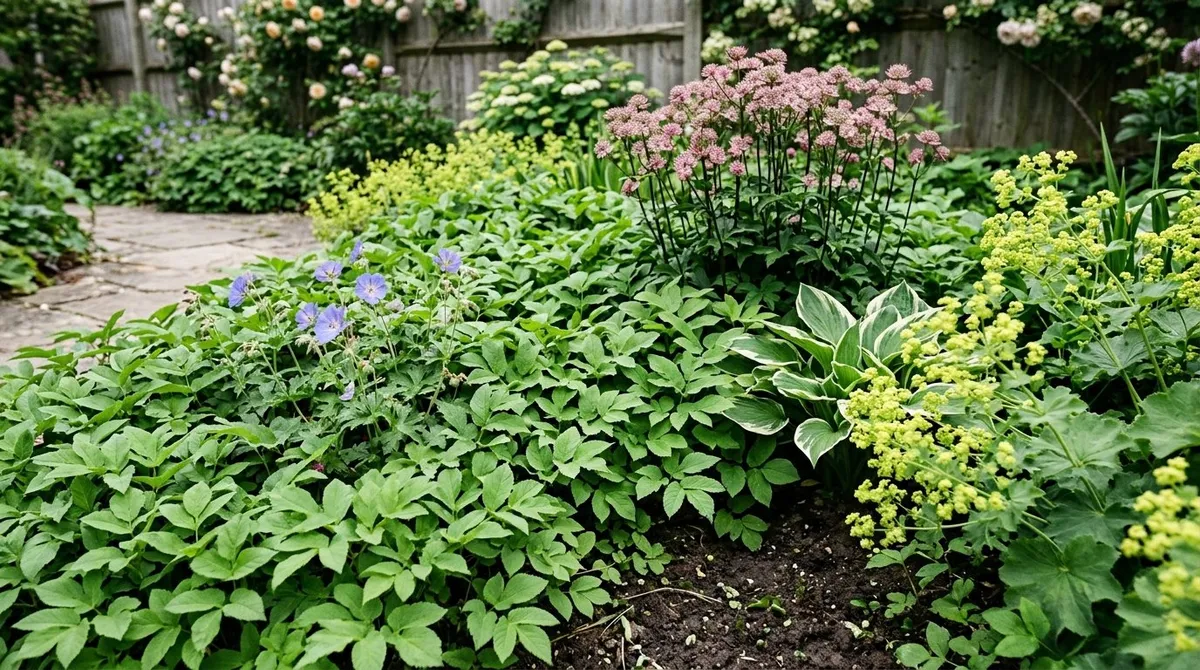
Ground elder has distinctive three-lobed leaves on long stems. It spreads by underground rhizomes that can extend 2 metres per year.
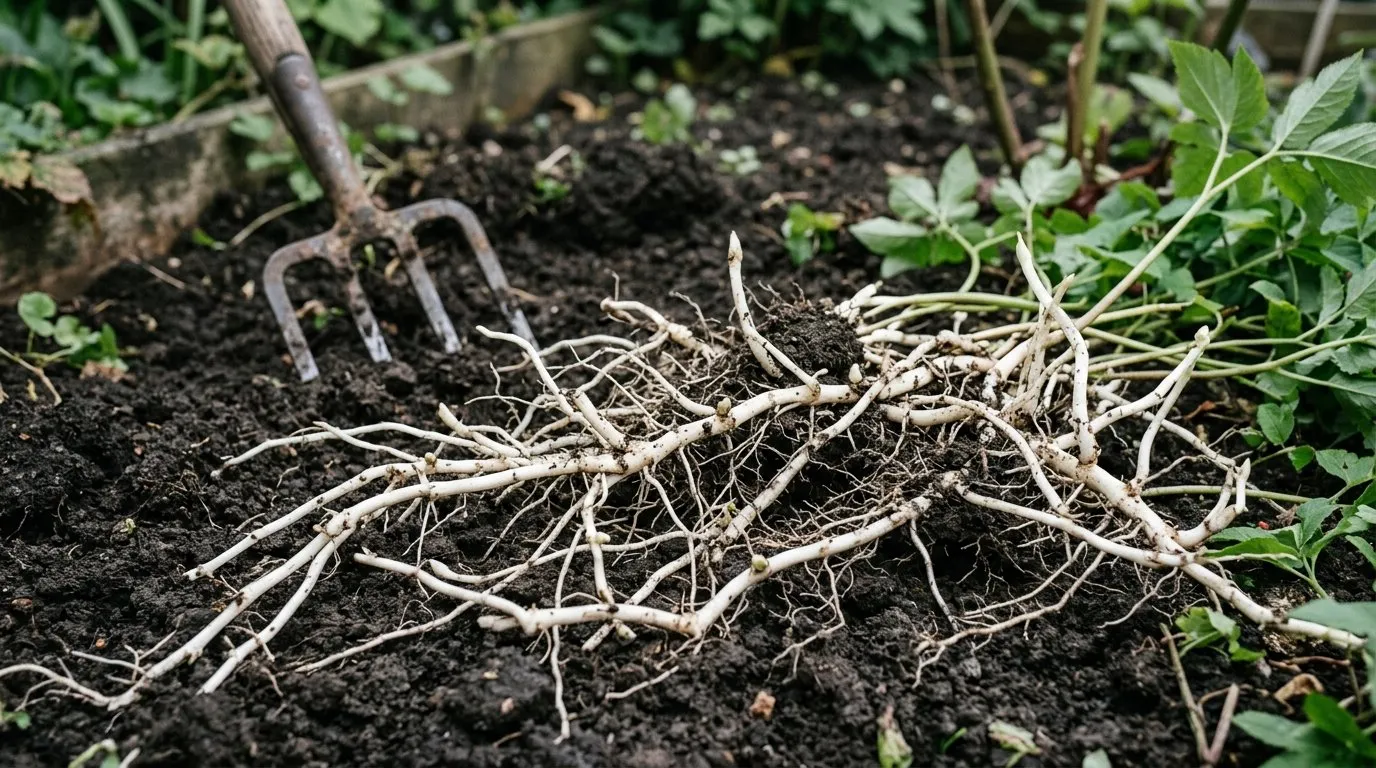
The rhizome network of ground elder. Every fragment left in the soil regrows, which is why digging alone rarely works.
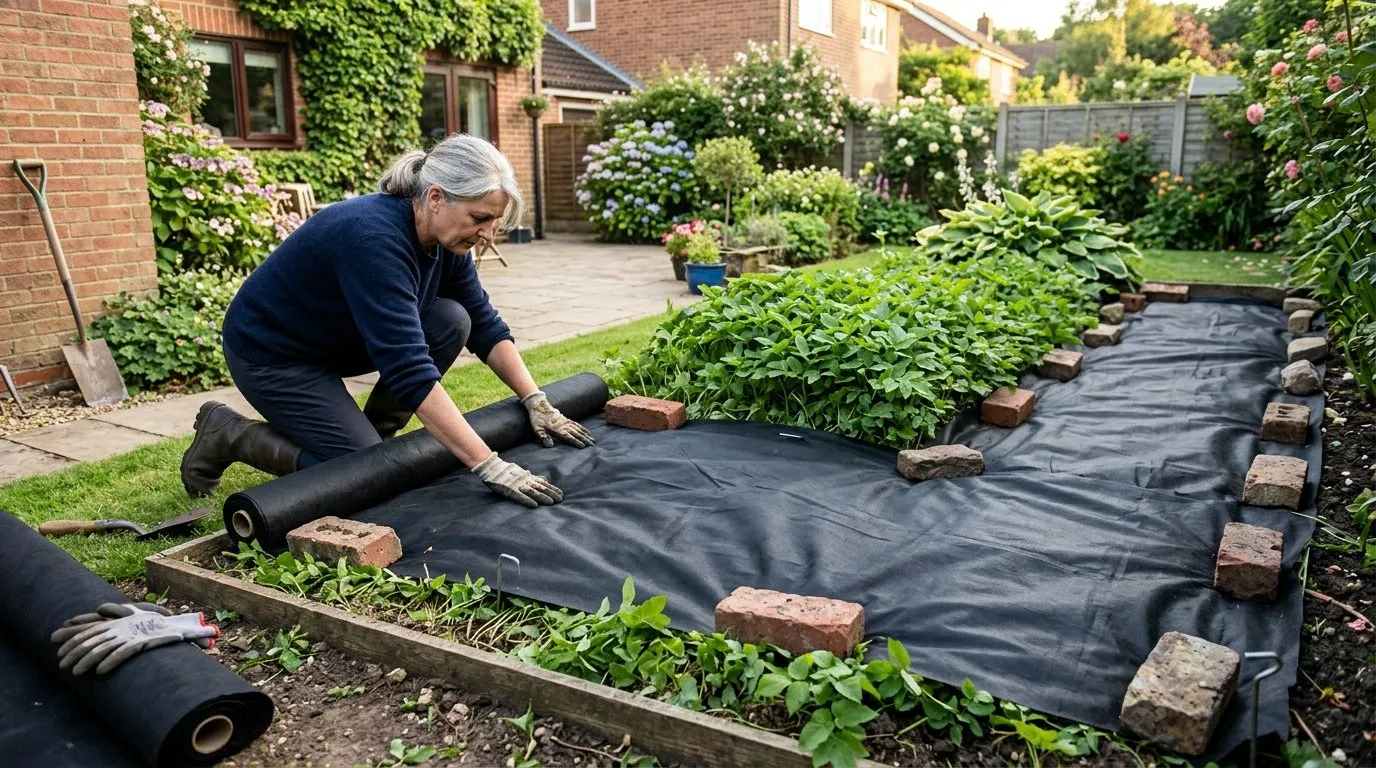
Light deprivation using black membrane or thick cardboard is the most reliable organic method. Leave in place for 12-18 months.
Related reading
- Common Garden Weeds UK: Visual ID Guide, identification table for 20+ weeds including ground elder, horsetail, and bindweed
- How to Get Rid of Bindweed, similar rhizome-based biology, same principle: fragment suppression before removal
- How to Get Rid of Brambles, woody perennial removal guide with root crown excavation detail
- Organic Weedkillers UK, pelargonic acid and vinegar alternatives to glyphosate for contact kill on ground elder foliage
- What Is Mulch and How to Use It, post-clearance mulching to suppress reinfestation and rebuild soil structure
Our team produces practical UK gardening guidance from source research, contributor records and established horticultural practice. Editorial standards are overseen by Matt W.