Key takeaways
- A 6x3 metre polytunnel produces 150-300kg of food per year with a monthly schedule
- Year-round cropping: salads October-April, fruiting crops May-October, propagation Feb-April
- Ventilation discipline matters: vents open daily April-September, closed October-March
- Crop rotation inside the polytunnel prevents soil-borne disease build-up
- Cover lasts 5-10 years with annual washing; tears need patches within 48 hours
- Two crops per square metre per year is realistic with succession sowing
A polytunnel is the single best investment for a UK allotment or productive garden. The cover extends the growing season by 6-10 weeks at each end, raises yields 3-5x compared with outdoor plots of the same size, and supports crops UK outdoor conditions cannot grow. The catch is that the polytunnel rewards regular attention rather than passive growing. A monthly schedule is the difference between a tunnel that pays its keep and one that disappoints.
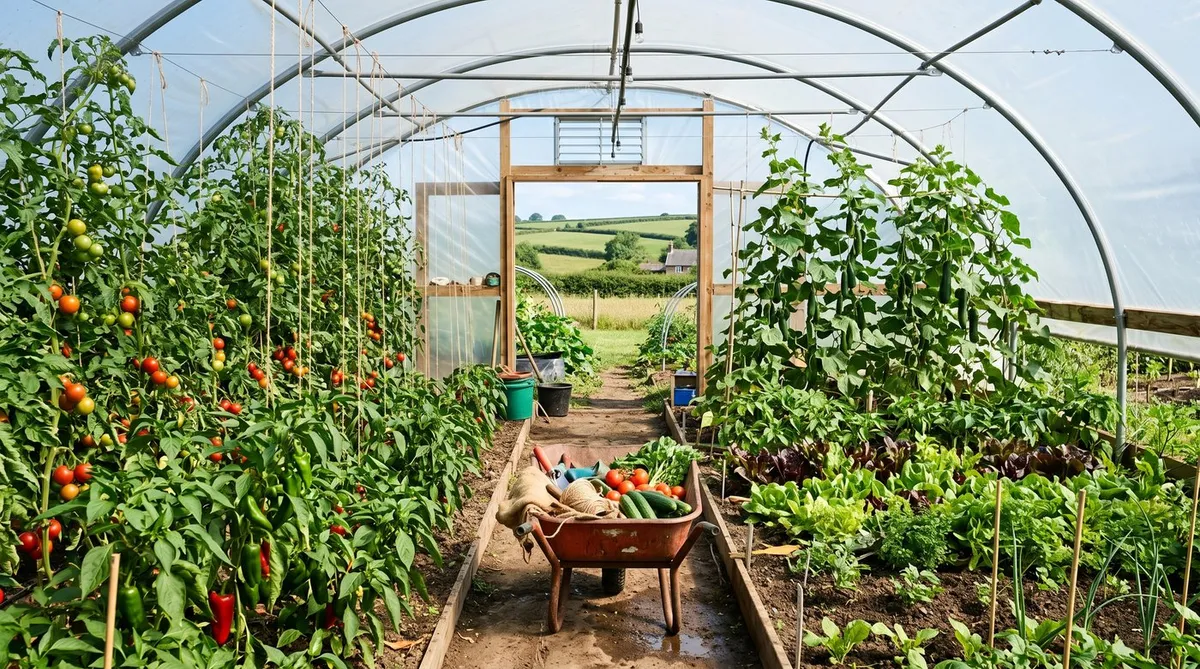
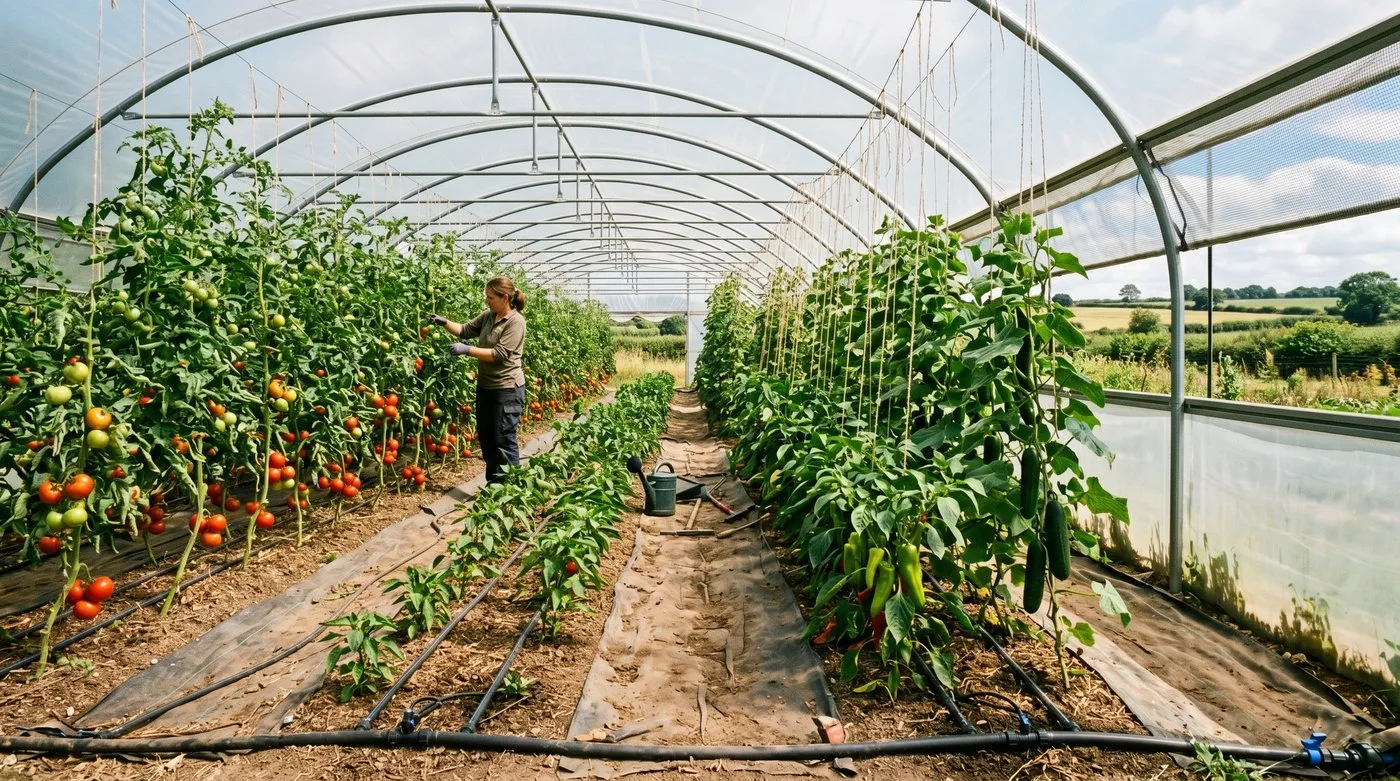 A 6x3m polytunnel in late July at peak production. Drip irrigation along the rows, side vents wide open, the fruiting crops carrying 80% of the year’s yield from these 3 months
How the calendar works
The polytunnel calendar has four pillars: sowing, harvesting, ventilation, and maintenance. Each month has a different mix of these tasks. The month-by-month list below covers each pillar.
Sowing dates inside a polytunnel run 4-6 weeks ahead of outdoor dates. Spring sowings start in late January; outdoor sowings start in March-April. This time-shift is the main yield advantage.
Harvest windows extend 4-6 weeks beyond outdoor windows at both ends. Tomatoes finish in late October under cover (outdoor September). Winter salads start in October under cover (outdoor finishes earlier or stops in cold weather).
Ventilation discipline is daily April to September. Without it the polytunnel reaches 38-42C and scorches crops. With it the polytunnel holds 25-32C, the ideal range. October to March, vents stay closed unless temperatures rise above 18C.
Maintenance follows annual patterns. Cover wash in late August. Soil refresh in October. Tools and pots organised in November. Vent and door hardware checked in March before peak ventilation season.
Rotation inside the tunnel matters as much as outside. Three sections rotated annually prevents soil-borne disease build-up. Tomatoes-then-tomatoes for 3+ years almost guarantees fusarium wilt.
Polytunnel size and yield expectation
Yield scales roughly linearly with floor area, with a small efficiency gain on larger tunnels. A 3x2m hobby tunnel produces 50-90kg per year; a 12x5m allotment tunnel produces 400-700kg per year with similar management intensity.
| Tunnel size | Floor area | Annual yield | Main use |
|---|---|---|---|
| 3x2m | 6m2 | 50-90kg | Salads, tomatoes, propagation |
| 4x2m | 8m2 | 70-120kg | Add cucumbers, peppers |
| 6x3m | 18m2 | 150-300kg | Full year-round household |
| 8x4m | 32m2 | 250-450kg | Generous household plus extras |
| 12x5m | 60m2 | 400-700kg | Allotment commercial level |
January
The quietest month in the tunnel. Plants under cover are dormant or growing slowly. The grower’s job is mostly observation and planning.
Sowing: Hardy salads (lambs lettuce, mizuna, mustards) in module trays if not already growing. Broad beans direct in October-sown beds for spring crops.
Harvesting: Winter salads sown in September-October (lambs lettuce, mizuna, rocket, mustards, mibuna). Spinach. Hardy lettuce.
Ventilation: Closed unless internal temperature exceeds 18C on a sunny day. Check at midday on bright days.
Maintenance: Order seeds. Check cover for tears or weak spots. Clean and sterilise pots and modules for the spring sowing burst.
Pest control: Check for aphids and slugs on winter salads weekly. Hand-pick slugs at dusk; squash aphid colonies.
Soil work: None. The ground is too cold and damp for cultivation.
February
The first sowing month. Indoor seed-starting begins for crops that will move into the tunnel in April-May.
Sowing: Tomatoes, peppers, aubergines, chilli peppers indoors in heated propagator at 20-22C. Plan: first sowing late January or early February for tomatoes; mid-February for peppers; late February for aubergines.
Harvesting: Winter salads continuing. Hardy spring greens (mibuna, perpetual spinach) starting to produce more.
Ventilation: Open vents briefly at midday on bright sunny days when internal temperature exceeds 18C. Close before 3pm.
Maintenance: Patch any winter cover tears. Check door fastenings; spring wind can rip doors off.
Pest control: Slugs become active. Set beer traps or copper rings around precious seedlings.
Soil work: Top-dress beds with 3-5cm compost in mid-February ready for March sowing. Test pH on sections that will grow tomatoes; aim for 6.5-7.0.
March
The growing season begins. Indoor seedlings move to the tunnel for hardening; direct sowing starts inside.
Sowing: Early lettuce, radish, beetroot, carrots, peas direct into tunnel beds. Tomato seedlings to 9cm pots. Pepper seedlings continuing in propagator.
Harvesting: Last winter salads finishing. First spring greens. Spring onions sown September.
Ventilation: Open doors and side vents from late morning on warm days. Close at dusk. Daily check from mid-March.
Maintenance: Check vent hardware works smoothly; lubricate hinges. Clean side vent meshes.
Pest control: Aphids increase rapidly. Spot-treat with soap-water spray. Watch for whitefly on overwintered crops.
Soil work: First weeding of winter cover crops if grown. Mulch new sowings with fine compost.
April
Peak transplant month. Seedlings raised indoors move to tunnel beds. The tunnel fills up fast.
Sowing: Direct sow cucumbers, courgettes, French beans (some growers), basil in pots. Direct sow next batch of salads.
Transplanting: Tomatoes to final positions in mid to late April (3-4 plants per square metre). Peppers and aubergines in late April or early May. Lettuce, brassicas, oriental greens.
Harvesting: Spring radishes, early lettuce, first cucumbers from very early sowings.
Ventilation: Daily, full vents and doors open by 9am from mid-April. Close by 7pm.
Maintenance: Check the cover for tears that appeared over winter. Patch with polytunnel repair tape immediately.
Pest control: Aphids and red spider mite begin in earnest. Increase humidity if red spider mite appears; introduce predatory mites for severe outbreaks.
Soil work: Stake and string tomatoes as they grow. Begin training cucumbers to vertical supports.
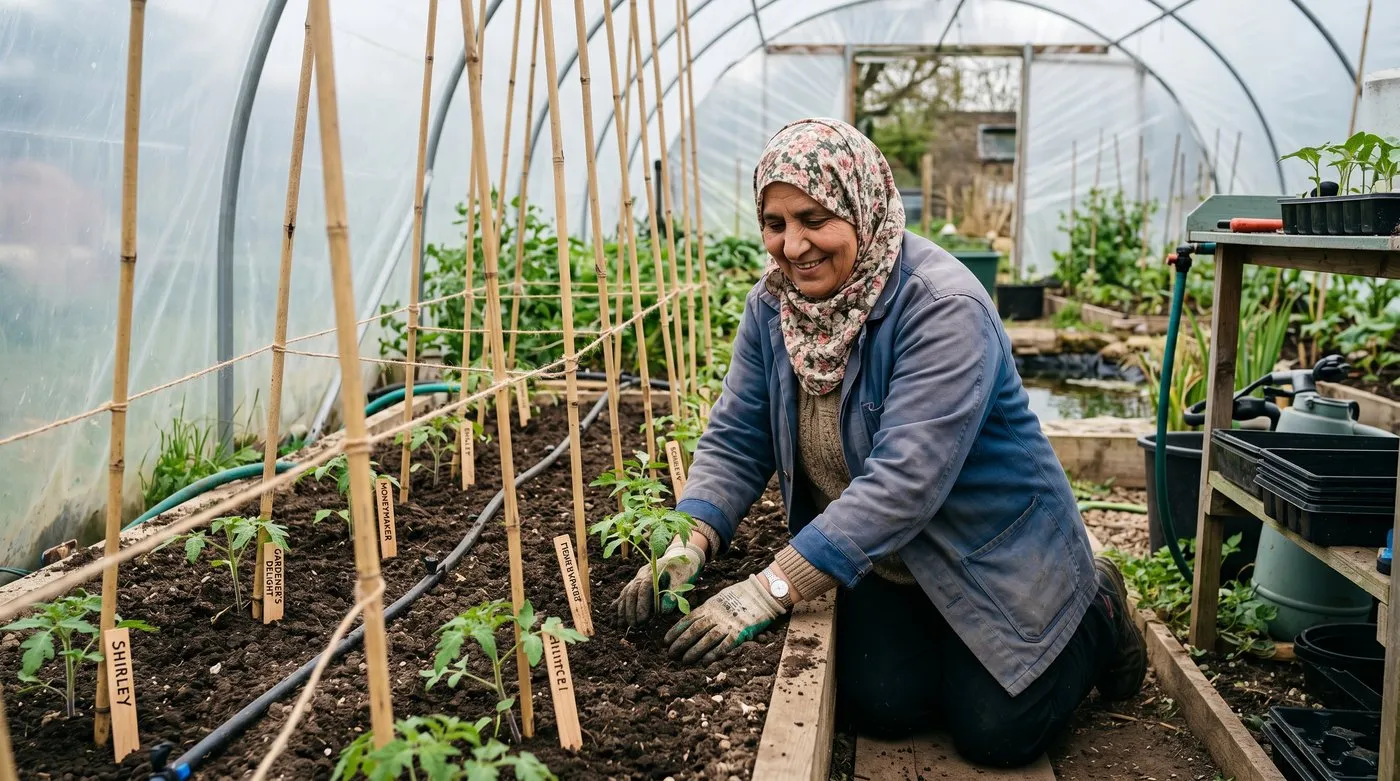 Late April transplanting of tomatoes into final tunnel positions. Three to four plants per square metre with bamboo or string supports installed at planting time
May
Final transplants and early summer harvests begin. The tunnel is fully planted by month end.
Sowing: Last cucumber and courgette sowings if not already done. Basil in pots. French beans direct.
Transplanting: Peppers and aubergines if not yet in. Late tomatoes for autumn cropping.
Harvesting: Lettuce, rocket, radish, spring onions, first early cucumbers from indoor sowings.
Ventilation: All vents and doors open by 8am. May warm-weather days can hit 35C inside without ventilation.
Maintenance: Install drip irrigation or seep hose if not in place. The next 4 months need 5-15 litres per square metre per day.
Pest control: Aphid populations explode. Encourage ladybirds and lacewings; spray heavy infestations with soap-water.
Soil work: Side-dress tomatoes with potash-rich tomato fertiliser as first flowers appear. Mulch beds with compost or straw.
June
Fruiting crops establish; daily watering begins. This is the busiest month for tomato training.
Sowing: Successional lettuce and rocket every 3-4 weeks. Coriander and dill direct. Last basil if not already done.
Harvesting: First tomatoes from indoor-sown plants. Cucumbers in earnest. Courgettes. Lettuce, rocket, salads in volume.
Ventilation: Maximum throughout daylight. Open earlier (7am) and close later (7pm) as days lengthen.
Maintenance: Pinch out tomato side shoots weekly. String tie indeterminate tomatoes.
Pest control: Whitefly on tomatoes and cucumbers. Sticky traps detect early; soap-water sprays control. Encolacia formosa parasitoid wasps work biologically.
Soil work: Feed all fruiting crops weekly with tomato fertiliser. Water 1.5-2 litres per tomato plant per day.
July
Peak harvest month. Tomatoes, cucumbers, peppers, aubergines, beans, courgettes all in production.
Sowing: Begin winter crop sowing: brassicas (kale, winter cabbage, Brussels sprouts) into modules for transplant later. Direct sow oriental greens (mizuna, mustard) for autumn harvest.
Harvesting: Daily on cucumbers and courgettes; every 2-3 days on tomatoes and peppers; weekly on aubergines.
Ventilation: Critical. Even 1-2 hours of closed conditions in July sun causes plant stress and dropped flowers.
Maintenance: Check polythene cover for sagging or movement; tighten guy ropes. Strip lower leaves from tomatoes for airflow.
Pest control: Whitefly and red spider mite at peak. Daily inspection. Increase humidity for red spider mite control.
Soil work: Continue weekly tomato feed. Mulch as needed to retain moisture. Water 2-3 litres per tomato plant per day in heatwaves.
August
Late summer harvests; first autumn sowings; cover wash month.
Sowing: Winter crops: spring cabbage, oriental greens, winter lettuce, lambs lettuce, mibuna, mustards. Sow in modules for transplant September.
Harvesting: Continuing tomatoes, cucumbers, peppers, aubergines. First grapes from tunnel-grown vines.
Ventilation: Continue daily. By mid-August the days shorten and night temperatures drop; some growers begin closing vents earlier (4-5pm).
Maintenance: Wash the cover on a still cloudy day in late August. Soft brush with mild detergent and water. Removes algae and dust that block 15-25% of light. Adds 2-3 weeks to autumn cropping window.
Pest control: Sciarid fly (fungus gnat) appears in damp compost. Reduce surface watering; use a 1cm layer of horticultural sand on pots to deter egg-laying.
Soil work: Tomatoes start to slow. Stop side-shooting and remove growing tips so plants put energy into ripening rather than new growth.
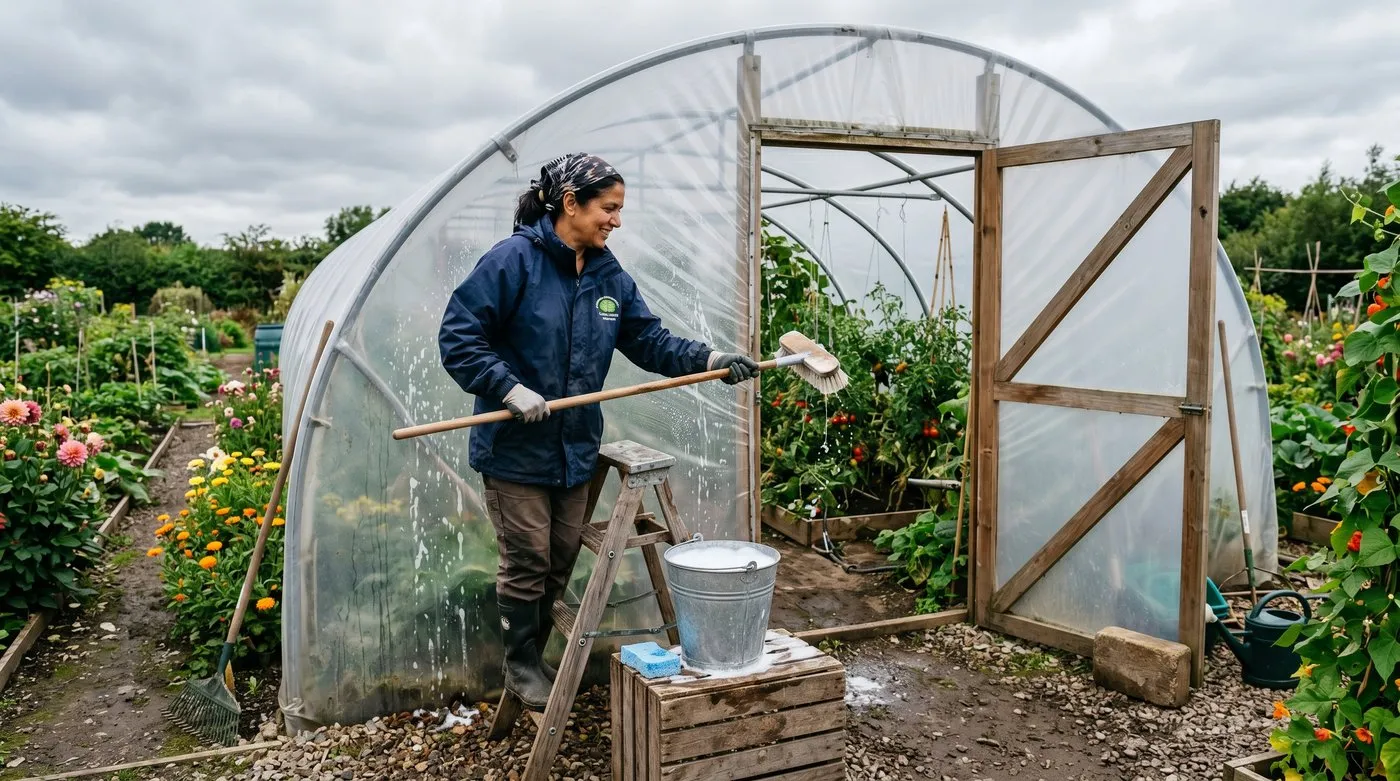 Late-August cover wash. Removes algae and dust that block 15-25% of light, extending the autumn growing window by 2-3 weeks
September
Transition month: summer crops finishing, winter crops planted.
Sowing: Last sowings of winter salads direct (lambs lettuce, mizuna, mustards). Last broad beans for overwintering.
Transplanting: Brassicas, oriental greens, winter lettuce from August modules.
Harvesting: Last tomatoes, cucumbers, peppers. Lift any ripe before night temperatures drop below 12C.
Ventilation: Reducing. Open midday only on warm days. Close by 5pm.
Maintenance: Inspect cover for damage before winter storms. Repair tears promptly.
Pest control: Aphid populations decline. Slugs become more active as moisture returns.
Soil work: Clear finished crops. Remove all plant debris (compost healthy material; bin diseased).
October
Cleardown and winter crop establishment.
Sowing: Garlic outdoors and in tunnel beds. Spring cabbage if not in.
Transplanting: Last winter salads from late September sowings.
Harvesting: Lift remaining summer crops. Harvest first winter salads (mizuna, mustards, rocket).
Ventilation: Open only on warm days above 18C internally. Most days closed.
Maintenance: Refresh tunnel soil with compost or rotted manure. Rotate sections so this year’s tomato bed grows brassicas next year.
Pest control: Mouse damage to winter crops; set traps or use deterrents.
Soil work: Top-dress beds with 5-7cm of compost or composted manure. This is the main soil refresh of the year.
November
Winter crops established; major maintenance month.
Sowing: Broad beans for spring crops. Onion sets in some regions.
Harvesting: Winter salads, kale, chard, parsley, perpetual spinach.
Ventilation: Closed except on rare warm days.
Maintenance: Tighten guy ropes for winter storms. Check door hardware. Clean tools and pots for the off-season.
Pest control: Slugs active in damp conditions. Beer traps or copper rings around precious crops.
Soil work: Lightly fork over any empty beds. Avoid heavy cultivation in wet conditions.
December
Plot-quiet month; planning and ordering.
Sowing: None this month.
Harvesting: Winter salads continuing. Brussels sprouts, leeks (often outdoors but tunnel-grown gives cleaner heads).
Ventilation: Closed unless rare warm spell.
Maintenance: Annual cover inspection. Check guy ropes, door fastenings, internal frame.
Pest control: Quiet month. Occasional slug damage on winter salads.
Soil work: Plan next year’s rotation. Order seeds for the February-March burst.
Annual yield expectations
A well-managed 6x3m UK polytunnel produces 150-300kg of food per year. Lower end for new tunnels in poor soil; higher end for established tunnels with refined rotation and feed regimes.
Per-crop yield expectations:
- Tomatoes: 4-6kg per plant, 12-18 plants per tunnel = 60-100kg
- Cucumbers: 15-25 fruits per plant, 4-6 plants = 30-50kg
- Peppers: 2-4kg per plant, 6-10 plants = 15-35kg
- Aubergines: 1-2kg per plant, 4-6 plants = 6-12kg
- Salads (year-round): 15-30kg cut leaves
- Winter brassicas: 20-40kg
- Herbs: 5-10kg
The peak yield month is July-August with 30-50% of the annual harvest in those 8 weeks.
Daily harvesting June-September versus weekly October-May. Plan kitchen and storage capacity around this seasonal swing.
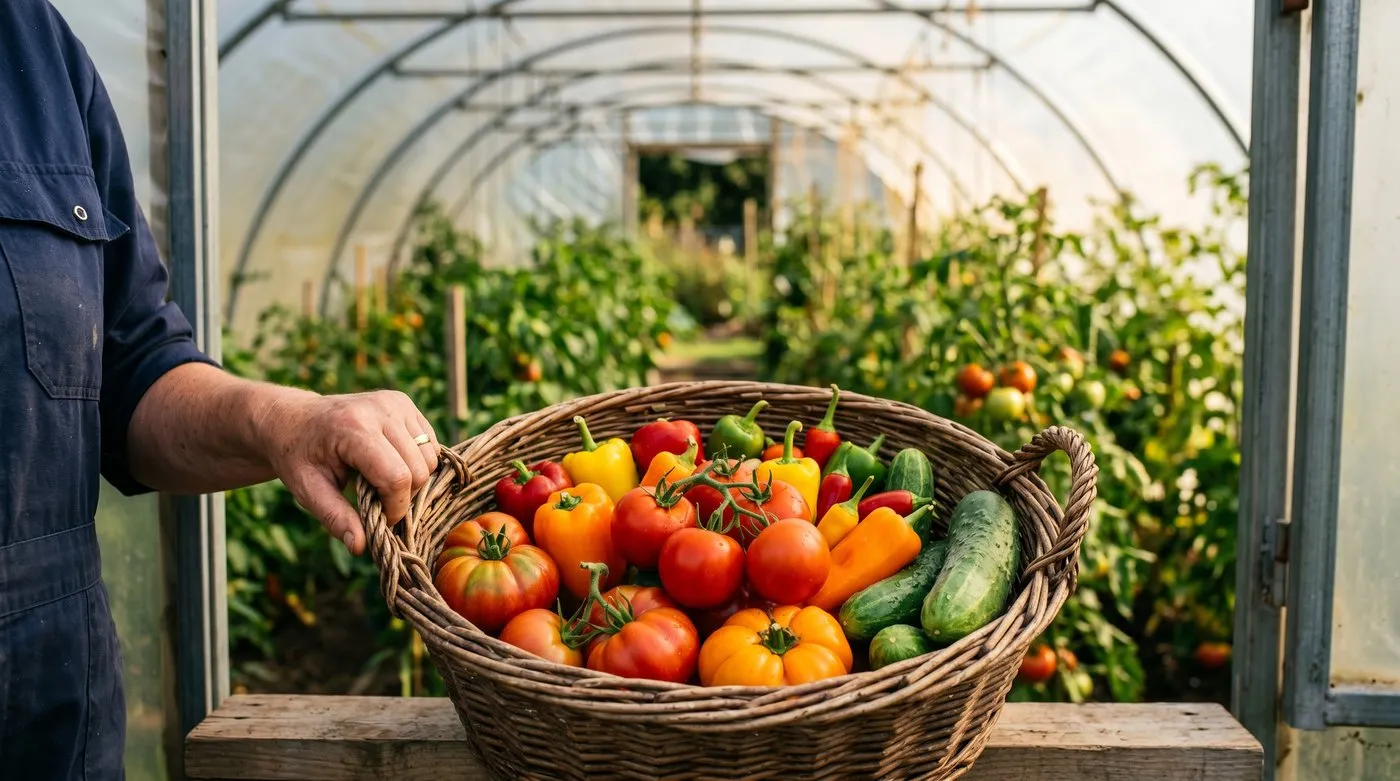 Mid-summer harvest from a 6x3m polytunnel. 30-50% of the annual yield comes in July-August across tomatoes, peppers, cucumbers, and aubergines
Common mistakes to avoid
Skipping daily ventilation in summer. Internal temperature reaches 38-42C and scorches crops. Open by 9am, close by 7pm.
No rotation inside the tunnel. Same crops year after year build soil pathogens. Rotate at least 3 sections.
Tomatoes-then-tomatoes for years. Almost guarantees fusarium wilt. Rotate or grow grafted varieties on resistant rootstock.
Cover wash skipped. August washing recovers 15-25% of light transmission. Without it, autumn crops finish 2-3 weeks early.
Insufficient watering in summer. Cover means no rain. Tomato plants need 1.5-2 litres per day in peak summer.
Letting tears in the cover go unrepaired. A small tear grows in wind. Patch within 48 hours with polytunnel repair tape.
Step-by-step: month-end checklist
Each month, run through this list to keep on top of the calendar.
Step 1: review last month’s planned sowings. Did they happen? Did they germinate?
Step 2: prepare this month’s sowings. Modules filled, seed packets ready.
Step 3: check ventilation schedule. Adjust for the season.
Step 4: walk the tunnel and inspect each crop. Pests, water needs, support adjustments.
Step 5: harvest anything ready. Daily in summer; weekly in winter.
Step 6: check cover for damage. Patch tears immediately.
Step 7: review rotation plan. Are the right crops in the right sections?
Step 8: top up irrigation reservoir or check water supply.
Step 9: tidy paths and remove crop debris.
Step 10: note the next month’s priority job. Write it on a wall calendar or in a notebook.
Frequently asked questions
What can you grow in a polytunnel year-round?
A UK polytunnel produces salads October to April (lettuce, rocket, mizuna, mustards, spinach), fruiting crops May to October (tomatoes, peppers, cucumbers, aubergines), and brassicas/winter veg September to March. The cover extends the season by 6-10 weeks at each end. Year-round cropping needs deliberate succession sowing and a rotation plan inside the tunnel.
When should I sow in a polytunnel?
Polytunnel sowing starts in late January with hardy salads (lambs lettuce, mizuna). Tomatoes and peppers sow indoors in February-March. Direct sowing of summer crops begins April. Late summer (July-August) is the peak window for sowing winter crops. Avoid sowing in deep midsummer heat (July) for cool-season crops; use modules in cooler positions instead.
How hot does a polytunnel get in summer?
Unventilated polytunnels reach 38-42C in UK summer sun. This scorches young plants and stresses fruiting crops. Daily ventilation through the door and side vents keeps internal temperature at 25-32C, the ideal range. Open all vents and doors by 8am from May to September; close at dusk. Auto-vent openers are available for growers who cannot visit daily.
How long does a polytunnel cover last?
A standard polythene polytunnel cover lasts 5-10 years with annual washing and prompt tear repair. UV degradation thins the cover over time; weak spots tear in winter wind. Replace covers when tears multiply or when light transmission drops below 80%. Wash in late August each year to remove algae and dust. Single-layer covers cost £100-£300; reflective interior covers last longer but cost double.
Do polytunnel crops need watering?
Yes, polytunnel crops need regular watering because rain does not reach them. In summer water heavily every 2-3 days. In winter water lightly every 7-14 days. Drip irrigation or seep hose saves time on a 6x3m or larger tunnel. Tomatoes need 1.5-2 litres per plant per day in peak summer growth. Mulching with straw or compost reduces watering frequency by 30-50%.
Now you have the monthly schedule, see our polytunnel vs greenhouse guide for the choice between the two structures and our crop rotation planner for the rotation system inside the tunnel. For getting more out of your existing tunnel, the polytunnel productivity UK guide covers multi-cropping and 22.9 kg/m² yield protocols. The Royal Horticultural Society polytunnel guide covers the broader UK protected-cropping context.
Our team produces practical UK gardening guidance from source research, contributor records and established horticultural practice. Editorial standards are overseen by Matt W.