Key takeaways
- Soil pH measures hydrogen ion concentration on a logarithmic 0-14 scale
- Most UK garden soils sit between pH 5.5 and pH 8.0 - the 6.0-7.0 band suits most plants
- Below pH 5.5 phosphorus locks up; above pH 7.5 iron locks up
- Ericaceous plants need pH 4.5-5.5 - blueberry, rhododendron, azalea, camellia
- Adjusting pH takes 6-18 months and needs annual retesting
- Test 3-5 spots per bed - garden pH varies more across short distances than people expect
Soil pH is the single biggest variable that decides whether a plant can absorb the nutrients in your soil. A garden with a perfectly fertilised plot but the wrong pH will produce sickly plants because the plants simply cannot reach the nutrients locked up in the wrong chemistry. This guide explains what pH means, how it affects UK garden plants, how to test it accurately, and how to adjust it when you must.
For the practical testing and adjustment workflow with specific UK products and rates, see our soil testing and pH adjustment guide. This article goes deeper on the science and plant tolerance, so you understand what your test results mean and which plants will succeed without any adjustment at all.
What pH actually measures
Soil pH measures the hydrogen ion concentration in the water held by soil particles. The scale runs from 0 (highest acidity, most H⁺ ions) to 14 (highest alkalinity, fewest H⁺ ions). pH 7 is neutral - the H⁺ concentration matches the OH⁻ (hydroxide) concentration.
The scale is logarithmic, not linear. Each whole-number step is a 10x change:
- pH 5 is 10 times more acidic than pH 6
- pH 4 is 100 times more acidic than pH 6
- pH 8 is 10 times more alkaline than pH 7
This matters because it tells you how big a real change a small pH movement is. Adjusting soil from pH 7.0 to pH 6.5 sounds like a small change but it is a doubling of the hydrogen ion concentration. Most UK garden pH adjustments are 0.5 to 1.0 pH units - which feels small but is a 5-10x change in chemistry.
Why pH controls nutrient availability
The relationship between soil pH and plant nutrient uptake is the most important practical reason gardeners need to understand pH. Plants can only absorb nutrients that are water-soluble and chemically available. Different nutrients are available at different pH ranges:
| Nutrient | Most available at | What happens outside the range |
|---|---|---|
| Nitrogen | pH 6.0-8.0 | Locked into organic matter below 5.5 |
| Phosphorus | pH 6.5-7.5 | Locked with iron below 6.0, with calcium above 7.5 |
| Potassium | pH 6.0-8.5 | Generally available across UK range |
| Calcium | pH 6.5-8.5 | Limited at low pH |
| Magnesium | pH 6.0-8.0 | Locked at extreme ends |
| Sulphur | pH 5.5-8.0 | Limited below 5.0 |
| Iron | pH 4.5-6.5 | Locks up above 7.0 (chlorosis in alkaline soils) |
| Manganese | pH 5.0-6.5 | Locks up above 7.0 |
| Zinc | pH 5.0-7.0 | Locks up above 7.5 |
| Copper | pH 5.0-7.0 | Locks up at both extremes |
| Boron | pH 5.0-7.0 | Limited extremes |
| Molybdenum | pH 5.5-8.5 | Locked below 5.0 |
The pH 6.0-7.0 band is the universal sweet spot because it gives reasonable availability of every major nutrient. This is why most general-purpose vegetables grow best there.
For the matching fertiliser side of soil nutrition, our best fertilisers UK gardens guide pairs with this article.
Testing soil pH
Three test methods work for UK gardens, ranked by accuracy:
Method 1: Professional laboratory analysis (most accurate)
Send a soil sample to a UK soil testing laboratory. Cost: £35-£65. Results in 2-4 weeks. The lab measures pH plus available NPK plus organic matter content plus micronutrients. Accuracy: ±0.1 pH units.
Worth doing once when you take on a new garden or every 5 years on intensively-cultivated beds.
Method 2: Chemical colour-change kit (very accurate)
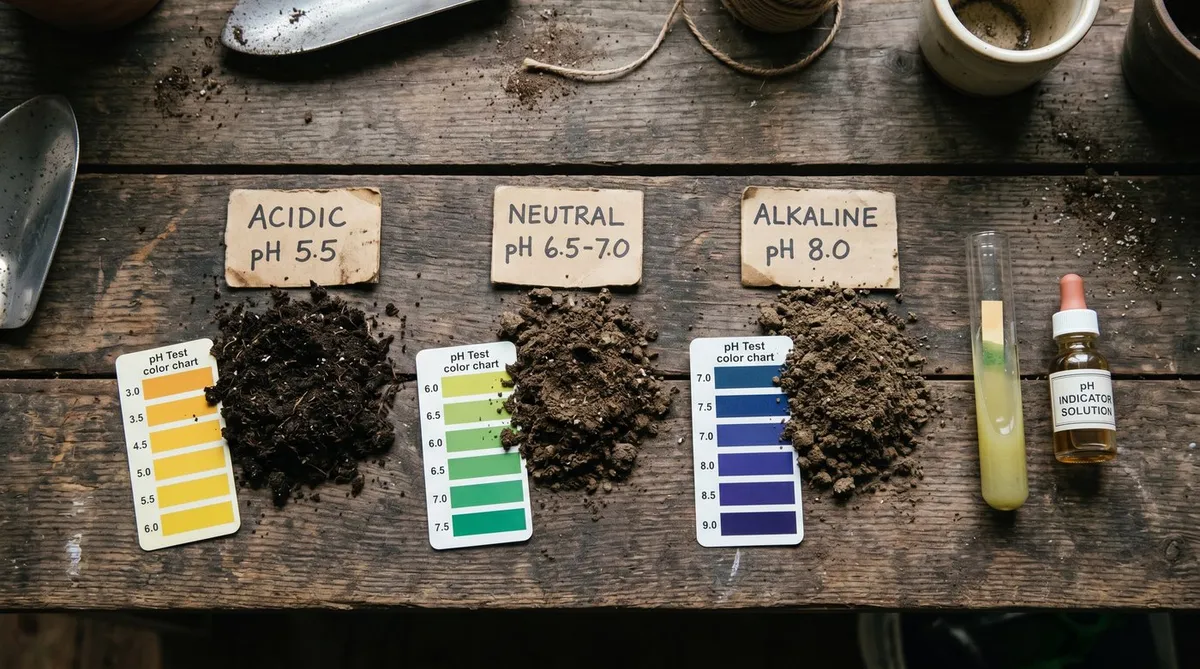
Boots, RHS shop, garden centres sell kits at £8-£15 for 6-10 tests. Mix a soil sample with the supplied reagent, wait for the colour to develop, match against the colour chart. Accuracy: ±0.3 pH units.
The best choice for most UK gardeners. Accurate enough for any practical decision.
Method 3: Digital probe meter (least accurate)
Push the probe 10-15cm into moist soil, wait 30-60 seconds, read the digital display. Cost: £15-£40. Accuracy: ±0.5 pH units, often worse on dry or compacted soil.
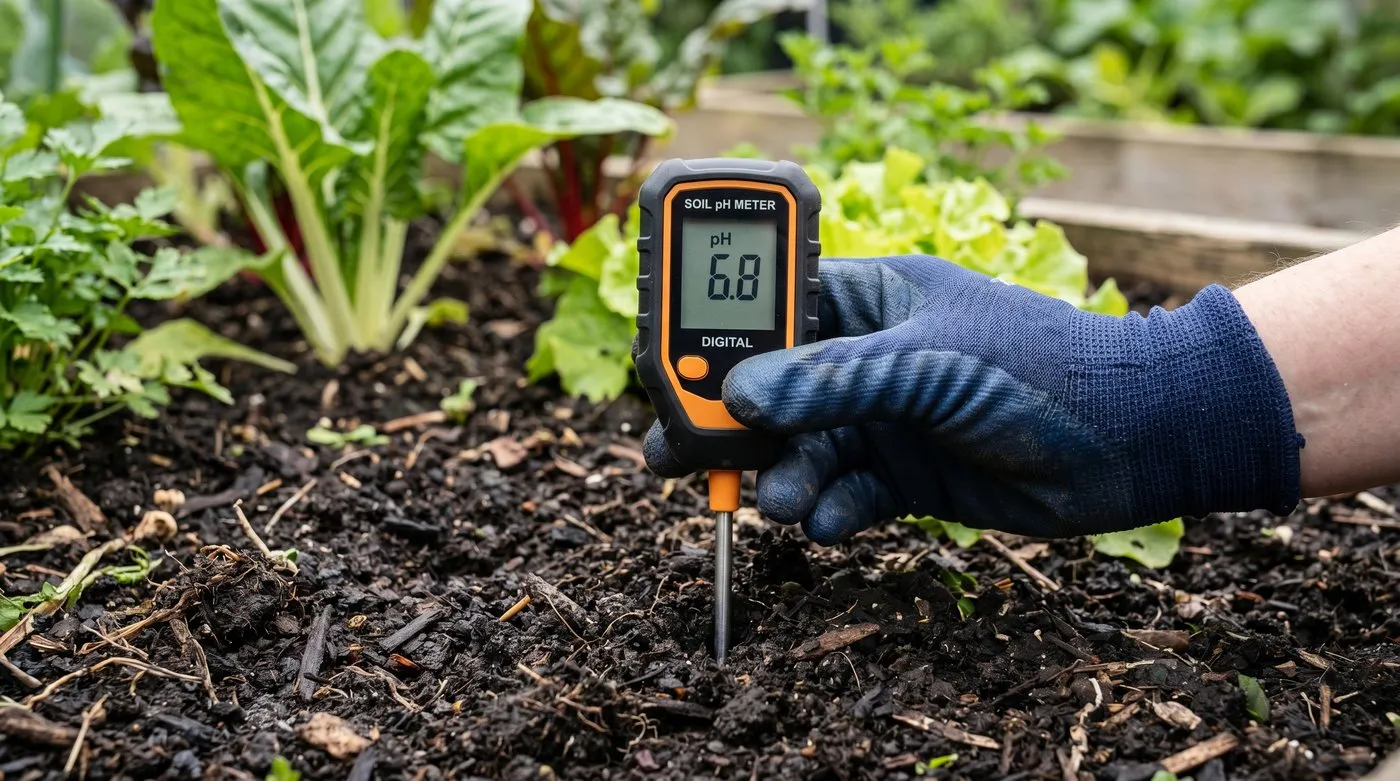 Digital meters are quick but less accurate than chemical kits. Always wet the soil first and wait the full reading time before recording.
The probe meters are convenient for quick spot-checks across multiple beds but should not be trusted for fine adjustments. Cross-check against a chemical kit at least once.
Sampling technique
The single most important variable in pH testing is sample mixing. UK garden pH varies more across short distances than most gardeners expect. To get a representative reading:
- Take 3-5 sub-samples per bed. Use a trowel and dig 10-15cm down. Take a tablespoon of soil from each spot.
- Mix the sub-samples in a clean container.
- Remove stones, roots and obvious organic matter.
- Test the mixed sample following the kit instructions.
- Repeat for each distinct bed - different beds will read different pH.
A single-spot reading is not a reading - it is a guess based on one location that may or may not represent the bed.
UK soil pH ranges by region
Climate, geology and cultivation history determine the underlying pH of your garden. UK gardens generally fall into one of three groups:
Acidic gardens (pH 4.5-6.0)
- Sandy heathland soils across Surrey, parts of Hampshire, the Lake District
- Areas with peat or organic matter dominance
- Conifer plantation sites
- Gardens with high rainfall (north-west)
Neutral gardens (pH 6.0-7.0)
- Loam soils across the Midlands
- Most suburban gardens after decades of mixed mulching and feeding
- The largest single group in the UK
Alkaline gardens (pH 7.0-8.5)
- Chalk and limestone gardens across the South Downs, Chilterns, Cotswolds, Yorkshire Wolds
- Lime-mortared old walls leaching into adjacent beds
- Areas with hard tap water and regular hosing
Your geological survey region (free at the British Geological Survey website) gives you a starting expectation, but always test before adjusting.
Plant tolerance bands
Different plants have different pH preferences. Here are the bands every UK gardener should know:
Ericaceous (acid-loving) plants - pH 4.5-5.5
These plants cannot grow outside their acid range because they need to absorb iron at concentrations only available below pH 6.0.
- Blueberries (Vaccinium)
- Cranberries (Vaccinium oxycoccos)
- Rhododendron and azalea
- Camellia
- Heather (Calluna, Erica)
- Magnolia
- Pieris
- Skimmia
- Kalmia (mountain laurel)
- Gaultheria (wintergreen)
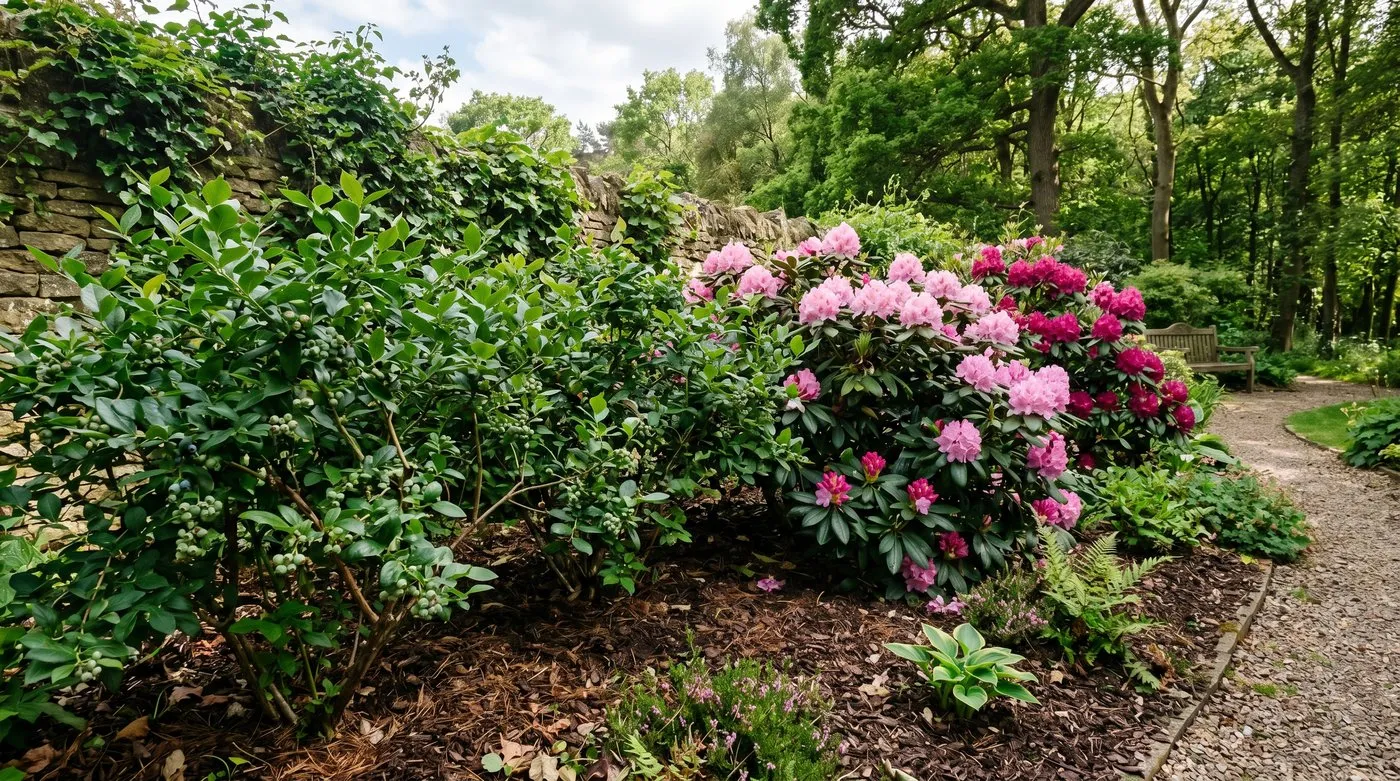 Blueberries and rhododendrons in a properly acidic bed. The dark glossy foliage signals iron uptake working properly at pH 5.0-5.5.
Slightly acid preference - pH 5.5-6.5
- Potatoes (also reduces scab disease)
- Strawberries
- Raspberries
- Currants (black, red, white)
- Gooseberries
- Apple and pear trees (tolerant range)
- Hydrangea (the pH affects flower colour - acid = blue, alkaline = pink)
- Roses (tolerant but prefer slightly acid)
Neutral preference - pH 6.0-7.0 (the universal vegetable band)
- Tomatoes, peppers, aubergines
- Beans (broad, runner, French)
- Peas
- Carrots, parsnips, beetroot
- Onions, garlic, leeks
- Squash, courgettes, pumpkins
- Sweetcorn
- Cucumbers
- Most herbaceous perennials
- Most flowering shrubs
Slight alkaline preference - pH 7.0-7.5
- Brassicas (cabbage, broccoli, cauliflower, sprouts, kale) - alkaline pH reduces club-root disease pressure
- Asparagus
- Beetroot (tolerates wide range, prefers slightly alkaline)
- Cherry, plum and damson trees
- Lavender
- Most Mediterranean herbs (rosemary, thyme, sage, oregano)
- Clematis
- Lilac
Strong alkaline tolerance - pH 7.5+
- Buddleja (butterfly bush)
- Ceanothus
- Cistus (rock rose)
- Lonicera (honeysuckle)
- Pinks (Dianthus)
- Yew (Taxus baccata)
- Box (Buxus)
- Most chalk-garden specialists
For chalk-specific planting, see our best plants for chalky alkaline soil.
Adjusting acidic soil (raising pH)
If your soil is too acidic for the crops you want to grow, the standard UK adjustment uses garden lime (calcium carbonate) or dolomite lime (calcium magnesium carbonate).
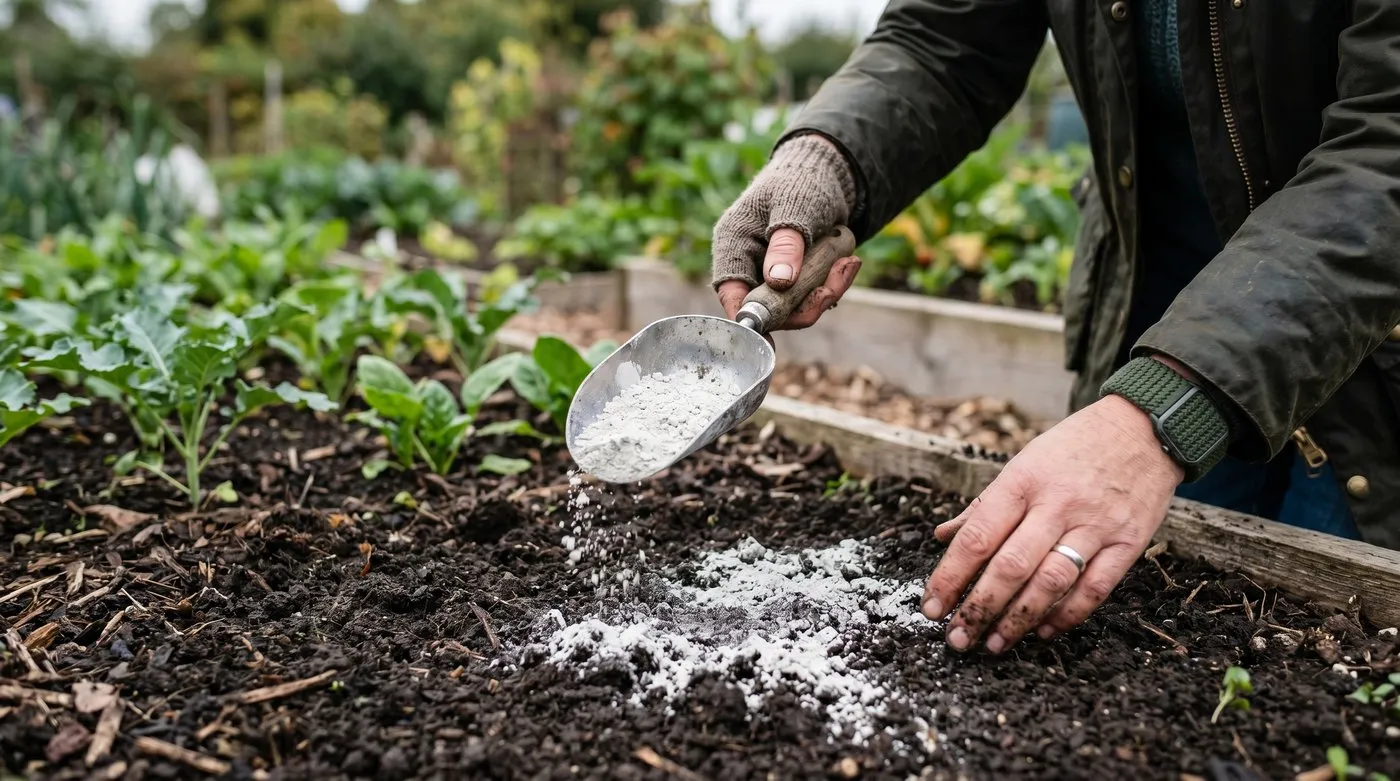 Garden lime applied at 100g per square metre. The white-grey powder works into the soil over 6-12 months and raises pH gradually.
Application rates (per 100g per square metre):
| Current pH | Target pH | Lime amount | Soil type |
|---|---|---|---|
| 4.5 | 6.5 | 400g | Sandy |
| 4.5 | 6.5 | 600g | Loam |
| 4.5 | 6.5 | 800g | Clay |
| 5.0 | 6.5 | 250g | Sandy |
| 5.0 | 6.5 | 400g | Loam |
| 5.0 | 6.5 | 550g | Clay |
| 5.5 | 6.5 | 150g | Sandy |
| 5.5 | 6.5 | 250g | Loam |
| 5.5 | 6.5 | 350g | Clay |
Rules for liming:
- Apply in autumn or early spring before planting
- Work into the top 15cm of soil with a rake
- Water in well or apply just before rain
- Wait at least 6 weeks before adding fertilisers - lime and ammonia-based fertilisers react and release ammonia gas
- Do not lime beds containing ericaceous plants - blueberries, rhododendrons and azaleas will die at pH 6+
- Retest the following spring and reapply if needed
Adjusting alkaline soil (lowering pH)
Lowering pH is harder than raising it because soil chemistry resists the change. The two UK options are elemental sulphur (slow, reliable) or organic acidifying mulches (slower, gentler).
Elemental sulphur application rates:
| Current pH | Target pH | Sulphur amount per square metre | Soil type |
|---|---|---|---|
| 8.0 | 6.5 | 150g | Sandy |
| 8.0 | 6.5 | 200g | Loam |
| 8.0 | 6.5 | 300g | Clay |
| 7.5 | 6.5 | 100g | Sandy |
| 7.5 | 6.5 | 130g | Loam |
| 7.5 | 6.5 | 200g | Clay |
| 7.0 | 6.5 | 50g | Sandy |
| 7.0 | 6.5 | 70g | Loam |
| 7.0 | 6.5 | 100g | Clay |
Sulphur takes 6-12 months to react. Apply in spring or autumn and retest 6 months later.
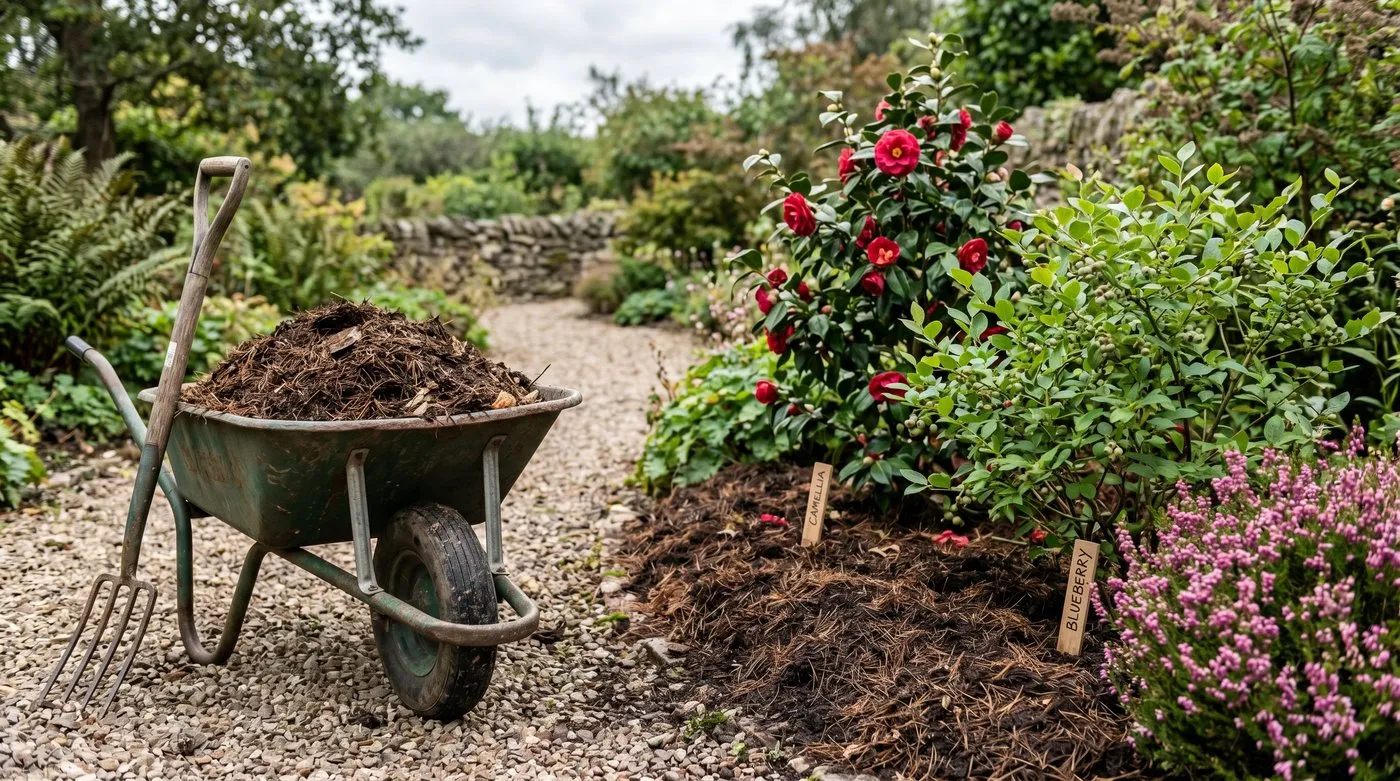 Pine needle mulch as a gentle long-term acidifier. Slower than sulphur but improves soil structure at the same time.
Organic acidifying mulches (gentler alternative):
- Pine needles - mulch 50mm deep, reapply annually
- Ericaceous compost - work 100mm into the top 200mm
- Pine bark - decomposes acidic, slow release
- Composted oak leaves - slightly acidic over time
These methods produce small pH changes (0.2-0.5 units over 2-3 years) but improve soil structure simultaneously. Best for permanent ericaceous beds.
What does NOT work:
- Coffee grounds - long-running myth. The pH drops slightly but the effect is too small to matter. Coffee grounds at typical garden volumes add 0.05-0.1 pH units, which is below the test accuracy threshold.
- Vinegar drench - temporary, kills soil microbes, washes out within days.
- Citric acid - same problem.
Common UK pH problems and fixes
Hydrangea flowers wrong colour. Soil pH determines flower colour on Hydrangea macrophylla varieties. Acidic soil (pH 5.0-5.5) gives blue flowers; alkaline (pH 6.5+) gives pink. Adjust pH with aluminium sulphate (for blue) or garden lime (for pink) but expect a full season for the colour change.
Blueberries yellow leaves, weak growth. Iron lock-up at high pH. Quick fix: weekly drench with chelated iron (sequestered iron) at the manufacturer’s rate. Long fix: replant into pure ericaceous compost in raised beds, or relocate to a more acidic bed.
Brassicas with swollen, deformed roots. Almost certainly club-root, more severe in acidic soil. Raise pH to 7.0-7.2 with garden lime in autumn before next spring’s planting. The disease persists in soil for 10+ years - rotation alone will not fix it.
Tomatoes with brown sunken patches on fruit. Blossom end rot - calcium uptake failure usually caused by erratic watering on slightly acid soil. Fix watering first; if persistent, add a calcium supplement (calcium nitrate) at fortnightly liquid feeds.
Lawn full of moss. Acid pH (often pH 5.0-5.5 from years of moss-friendly conditions). Apply garden lime at 100g per square metre in autumn to raise pH towards 6.5-7.0. The grass outcompetes the moss once the chemistry favours grass.
Roses with yellow leaves, green veins. Iron deficiency at high pH (chalky soil). Treat with chelated iron and add ericaceous compost mulch to gradually lower pH over 2-3 years.
For chalk garden adaptation rather than fighting the pH, see our best plants for chalky alkaline soil guide.
When to adjust vs when to plant for the conditions
The right answer in most UK gardens is not to fight the soil pH but to plant species that thrive in your existing chemistry. Three rules:
- Below pH 5.5 - plant ericaceous specialists (blueberries, rhododendrons, camellias) and accept that brassicas will struggle without major liming.
- pH 6.0-7.0 - plant anything. This is the sweet spot. No adjustment needed.
- Above pH 7.5 - plant alkaline specialists (lavender, ceanothus, dianthus, brassicas) and accept that ericaceous plants need containers with ericaceous compost.
Adjusting pH costs money, takes time and reverses every few years as rainfall returns the soil to its natural state. Matching plants to existing pH is the lower-effort, longer-lasting strategy for most gardens.
Field note: The RHS holds the standard UK reference data on plant pH preferences. Their plant finder lets you filter by soil pH preference if you want to plant strictly to your soil chemistry.
How pH changes naturally over time
Soil pH is not static. Several factors shift it slowly:
- Rainfall acidifies - UK rain is mildly acidic (pH 5-6). High-rainfall areas (north-west, Wales, Scotland) drift slowly towards acid.
- Hard tap water alkalises - long-term watering with hard mains water raises pH 0.2-0.5 units over a decade.
- Wood ash alkalises - regular bonfire ash applications raise pH significantly.
- Pine needle mulch acidifies - gradual drop of 0.3-0.5 units over 3-5 years of continuous mulching.
- Decomposing organic matter mildly acidifies - well-rotted manure and compost release organic acids slowly.
- Calcium-rich subsoils alkalise - chalk gardens drift upward as roots cycle calcium to the surface.
Retest soil pH every 2-3 years even on established beds. The drift is slow but compound, and a bed that started at pH 7.0 can be at pH 6.0 after a decade of pine-needle mulching.
Practical decision framework
For any UK garden bed, work through these questions in order:
- What is the existing pH? Test 3-5 spots per bed and average.
- What do you want to grow? Identify the pH range of the planned crops.
- Does the existing pH match? If yes - plant. If no - decide whether to adjust or change crops.
- If adjusting: how big is the change needed? Small (0.5 units) = single dose. Large (1.5+ units) = multi-year project.
- Choose product: garden lime for raising, sulphur for lowering, organic mulches for gentle long-term shift.
- Apply at the manufacturer’s rate, water in, retest in 6 months.
Now you’ve understood pH
To act on your test results, read our soil testing and pH adjustment guide for the practical workflow of taking samples, choosing UK products, and dosing rates by crop.
Our team produces practical UK gardening guidance from source research, contributor records and established horticultural practice. Editorial standards are overseen by Matt W.