Key takeaways
- Best UK sowing windows: mid-March to late May or early September to mid-October
- Sow 35-50g per square metre for new lawns; 25-35g for overseeding
- Soil temperature matters more than calendar date - aim for 8C+ at 5cm depth
- Two right-angle passes give even coverage; one pass leaves bald patches
- Water daily for the first 14-21 days; missing watering is the main cause of patchy establishment
- First mow at 70mm when grass reaches 100mm; never cut new lawn under 50mm
Sowing grass seed is the cheapest way to make a UK lawn - a 1kg box covers 25 square metres for around £15 and produces a properly mixed seed lawn that beats turf rolls on flexibility and price. The process is straightforward but unforgiving of corner-cutting. Get the timing wrong, the prep wrong or the watering wrong and you end up with bald patches and dandelions filling the gaps.
This guide covers the two reliable UK sowing windows, the soil prep that determines whether seed germinates evenly, the sowing rate by lawn type, and the aftercare that gets you from sown seed to a usable lawn in 8-10 weeks.
The advice draws on 25+ lawn establishment projects across Staffordshire and the West Midlands since 2014. The starting point for any UK lawn project should be the Lawn Association which carries practical UK-specific lawn guidance free of the marketing slant of the major fertiliser brands.
When to sow: timing matters more than anything
The two reliable UK windows for sowing grass seed:
- Mid-March to late May (spring): Soil warming after winter, rainfall typically reliable, weed competition manageable.
- Early September to mid-October (autumn): Soil still warm from summer, autumn rains reliable, minimal weed competition.
Avoid:
- June to August (summer): Drought risk, seedling death within hours of dry surface.
- November to February (winter): Soil too cold for reliable germination.
The single best window in most UK locations is the first three weeks of September. Soil at 12-14C, weed seeds dormant, rainfall taking over watering duties. A lawn sown 1-15 September is established by mid-October and through its first winter without trauma.
The second-best window is mid-April to mid-May, when soil temperature climbs above 10C and weeds are not yet seed-bombing the new lawn.
Soil prep: the unforgiving stage
Bad prep produces patchy lawn no matter how good the seed. The three rules:
1. Clear weeds completely
Existing weeds will out-compete grass seedlings. Two options:
- Manual: Dig out perennial weeds (dandelion, dock, thistle) with a fork. Hoe or skim annual weeds. Allow 4-6 weeks for any disturbed weed seeds to germinate, then hoe again before sowing.
- Chemical: Glyphosate (Roundup) kills annual and perennial weeds without residue. Apply 2-3 weeks before sowing on a dry calm day. The lawn area is clear by sowing day.
2. Cultivate to fine tilth
The seed bed needs to be:
- 100-150mm deep cultivated soil
- Free from large stones (anything >20mm)
- Free from grass clumps and old roots
- Raked to a fine crumb structure in the top 20mm
A rotavator handles the cultivation; a fan rake breaks down the surface.
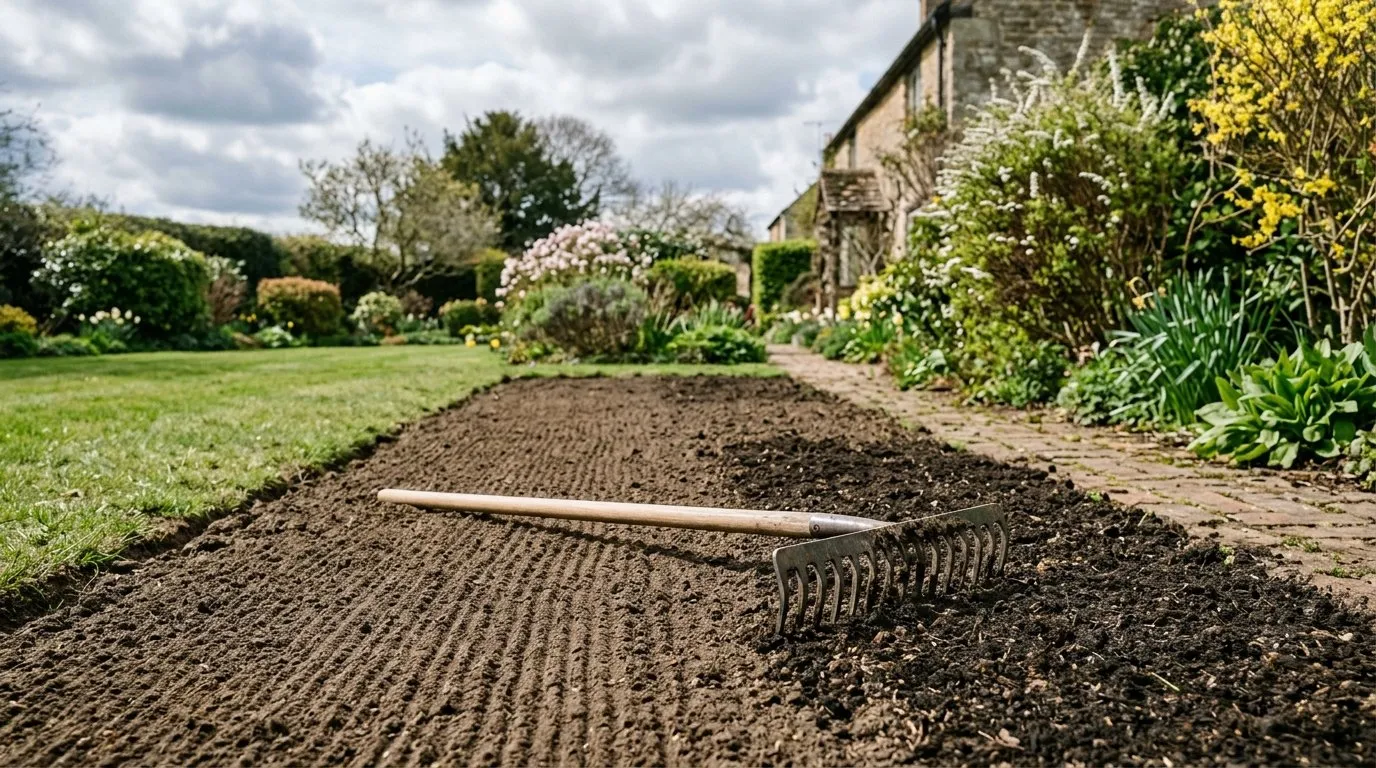 Final prep with a fan rake making a fine tilth on cultivated soil. The surface should be crumbly with no clods larger than 10mm.
3. Level and firm
After cultivating, level the area with a rake working in two directions. Then firm by walking over the area in close-spaced steps - heel-down, weight transferred forward. The aim is firm enough to walk on without sinking, soft enough that grass seedlings can root easily.
A garden roller (light) gives a more even firm but most domestic gardens are fine with the heel-walk method.
Sowing rate by lawn type
Match the sowing rate to the lawn use:
| Lawn type | Sowing rate (new lawn) | Overseeding rate |
|---|---|---|
| Hard-wearing family lawn | 45-50g per sq m | 35g per sq m |
| Ornamental fine lawn | 30-35g per sq m | 25g per sq m |
| Shade-tolerant mix | 40-50g per sq m | 30-35g per sq m |
| Fast-establishment | 35-45g per sq m | 25-30g per sq m |
For a 50 sq m back lawn (typical UK suburban), a hard-wearing mix needs 2-2.5kg of seed total. A 1kg box at £15 retail covers 20-30 sq m of new lawn.
How to sow
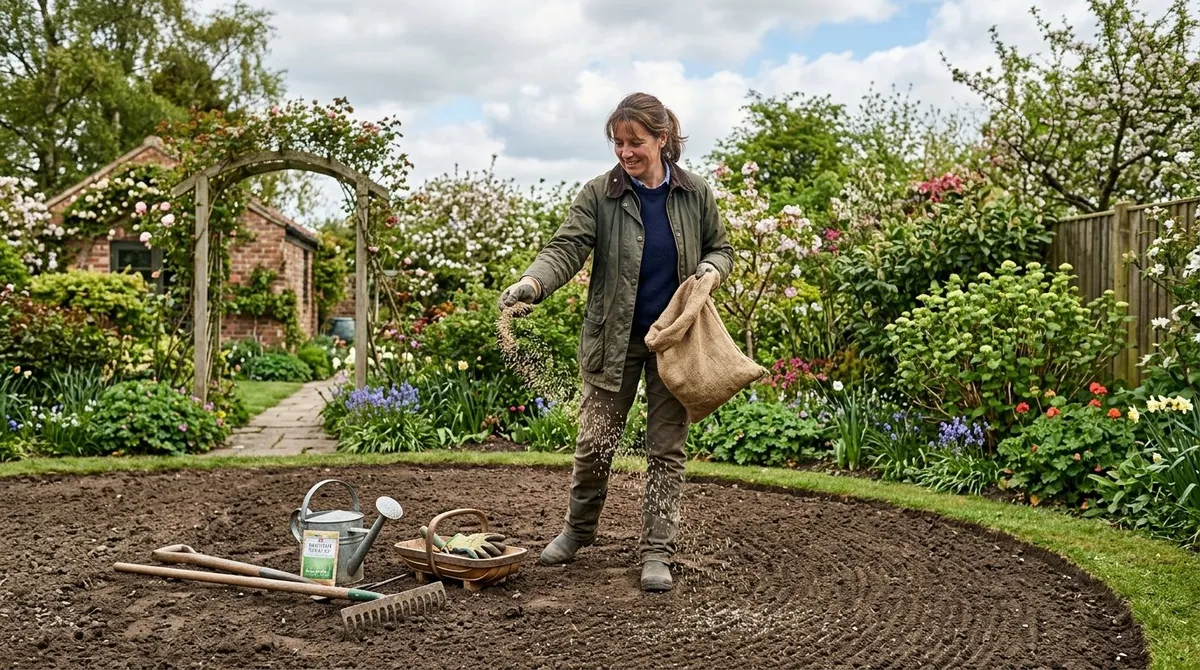
Two passes at right angles give the most even coverage:
- Weigh the seed for the area. A 50sq m lawn at 45g/sq m = 2.25kg total seed. Split the seed in half (1.125kg per pass).
- First pass: Walk in straight lines across the lawn, broadcasting seed by hand or with a spreader. Aim for even distribution.
- Second pass: Walk at right angles to the first pass with the second half of the seed. This pass fills any thin lines from the first pass.
- Light raking: Gently rake the surface to mix seed into the top 5mm of soil. Do not bury too deep; seed needs light to germinate.
 Hand-broadcasting grass seed in even arcs. The right-angle two-pass method gives more even coverage than any spreader on small lawns.
For larger lawns over 100 sq m, a wheeled spreader (£25-£60) gives faster and more accurate distribution. Calibrate the spreader on a small test patch first - the recommended setting on the bag is usually about right but varies by spreader.
The watering schedule
Water is the single most important factor in lawn establishment. The schedule:
| Phase | Days | Watering |
|---|---|---|
| Pre-germination | Days 1-7 | Light watering daily; surface must stay damp not wet |
| Early germination | Days 7-21 | Light watering daily; reduce frequency if rain is sufficient |
| Establishment | Days 21-42 | Water every 2-3 days unless rain provides 15mm+/week |
| Maturation | Day 42+ | Water only during dry spells - encourage deep root growth |
Use a fine rose on a watering can or a sprinkler set to fine mist. Heavy spray displaces seed and creates bald patches. Two passes per session at 5 minutes each beats one 10-minute soaking.
The cardinal rule: never let the seedbed surface dry out during germination. A surface that goes from damp to dry to damp kills emerging seedlings within hours.
Germination and early growth
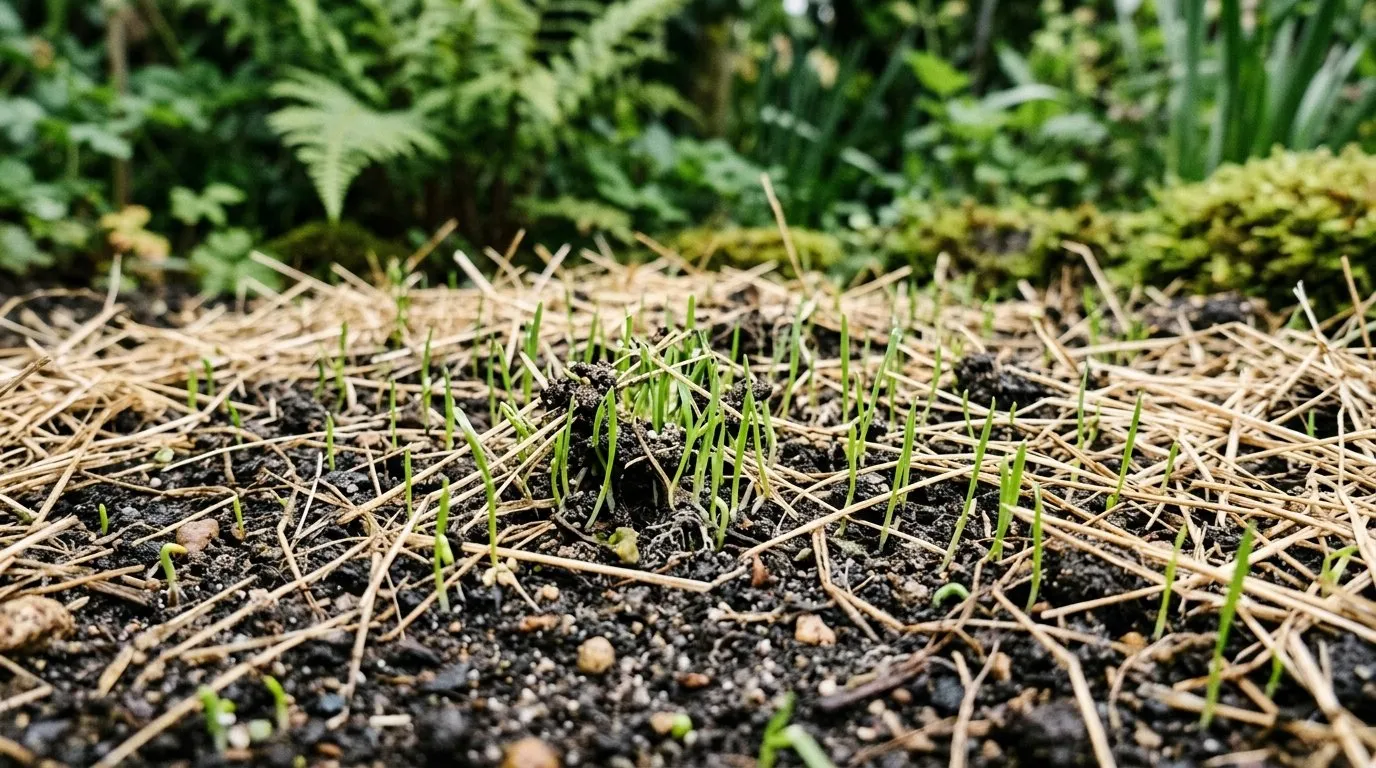 Grass seedlings emerging through a fine tilth at day 9. Even germination across the area is the sign that watering and prep both worked.
What to expect at each stage:
- Days 7-10: First seedlings emerging - small green spikes
- Days 10-14: Most seedlings up; the lawn looks faintly green
- Days 14-21: Seedlings filling out; bald patches still visible at this stage are normal
- Days 21-30: Lawn looks consistently green; first mow approaching
- Days 30-42: First mow done; lawn starts looking like a real lawn
- Days 42-56: Second and third mow; ready for light foot traffic
- Day 56+: Established lawn; normal use
If you have bald patches at day 21, overseed those patches at the same rate. Do not panic; uneven germination is common and corrects itself by week 8.
First mow rules
The first mow is the moment many DIY lawns go wrong. Three rules:
- Mow when grass reaches 100mm. Mowing earlier pulls seedlings out of soft ground.
- Set the mower to 70mm (highest setting). Never cut more than a third of the leaf in one mow.
- Use a sharp blade. Blunt blades shred the seedling tips and stress the plant. Sharpen or replace before the first mow.
The first 4-6 mows should all be at 70mm. After 8 weeks of establishment you can lower gradually to your target lawn height (50-60mm for hard-wearing, 25-40mm for ornamental).
Aftercare in the first year
A new lawn needs different care than an established one:
- No heavy traffic for 8 weeks. Light foot traffic is fine after week 6; football and dog use wait until week 8.
- No fertiliser for 6 weeks. Seed mixes contain enough starter nutrients for the first 6 weeks. After that, a light spring or autumn feed is appropriate.
- No selective weed killers for 6 months. New grass is too sensitive to most weed sprays. Hand-pull weeds for the first six months.
- Water through dry spells in year 1. Roots are still shallow; missed watering causes burn-out.
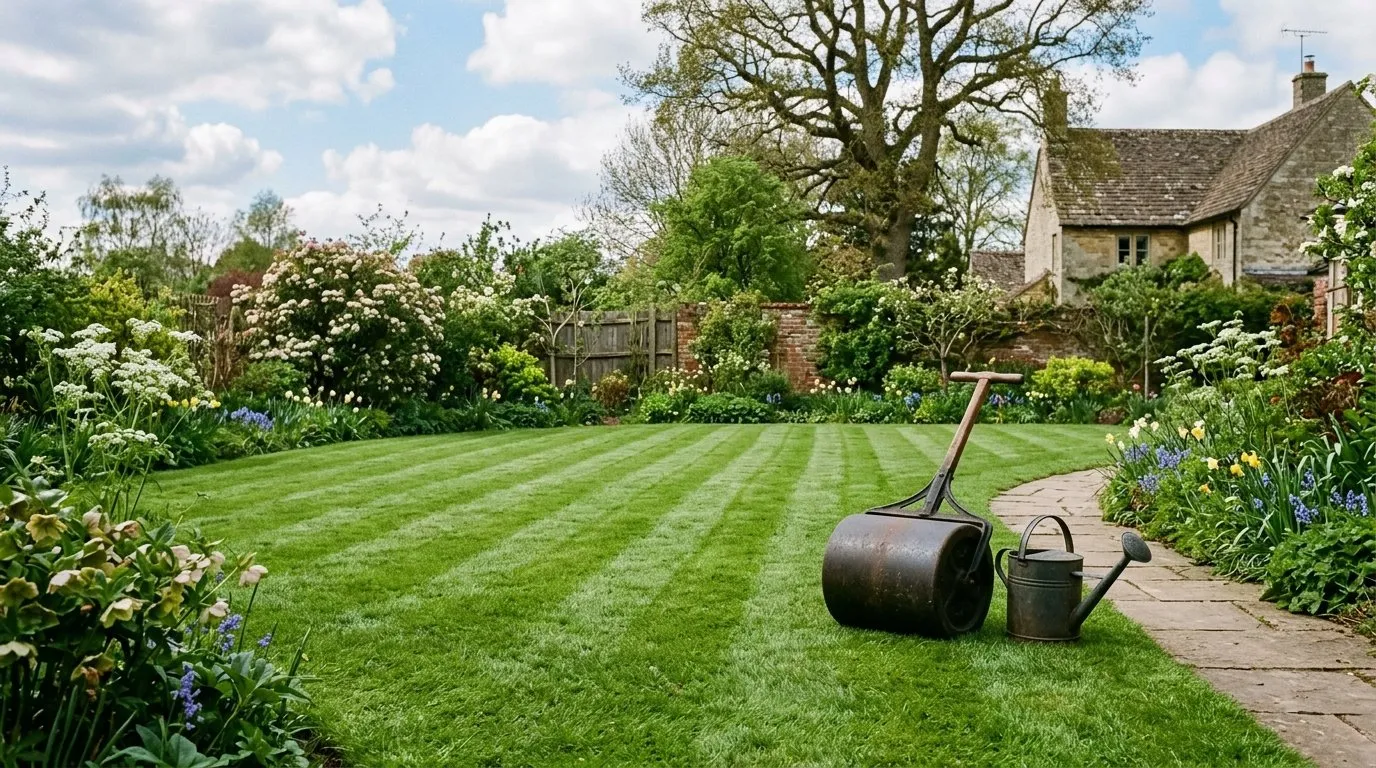 A new lawn after its first mow at week 5. Cut at 70mm with a sharp rotary blade. Garden roller used lightly to firm any loose patches.
Overseeding existing lawns
Same principles, lower seeding rate. Overseeding fills thin lawns without starting from scratch:
- Mow short to 25mm before sowing
- Scarify to remove thatch and expose soil
- Aerate with a hollow-tine fork on heavy clay
- Top-dress with a 5-10mm layer of sandy loam if soil is compacted
- Sow at 25-35g per sq m
- Water as for new lawn for first 14 days
Overseeding works in spring or autumn following the same windows. Late September is the single best time for overseeding worn UK lawns.
For more on UK lawn care across the year see our guides on lawn care calendar UK, how to feed lawn UK, when to mow lawn UK, how to scarify and aerate lawn and how to fix a patchy lawn.
Common sowing mistakes
- Sowing in cold soil. Below 8C and germination is patchy. Use a soil thermometer; £8 from any garden centre.
- Sowing too thick. Wastes seed and produces overcrowded weak grass. Stick to the bag rate.
- Letting the seedbed dry. The single biggest cause of patchy establishment. Daily watering for 21 days is non-negotiable.
- Mowing too early or too short. Pulls seedlings out of soft ground. Wait for 100mm height; cut at 70mm.
- Walking on the lawn before week 6. Compacts the soft soil and damages young roots. Stay off until week 6.
Our team produces practical UK gardening guidance from source research, contributor records and established horticultural practice. Editorial standards are overseen by Matt W.