Key takeaways
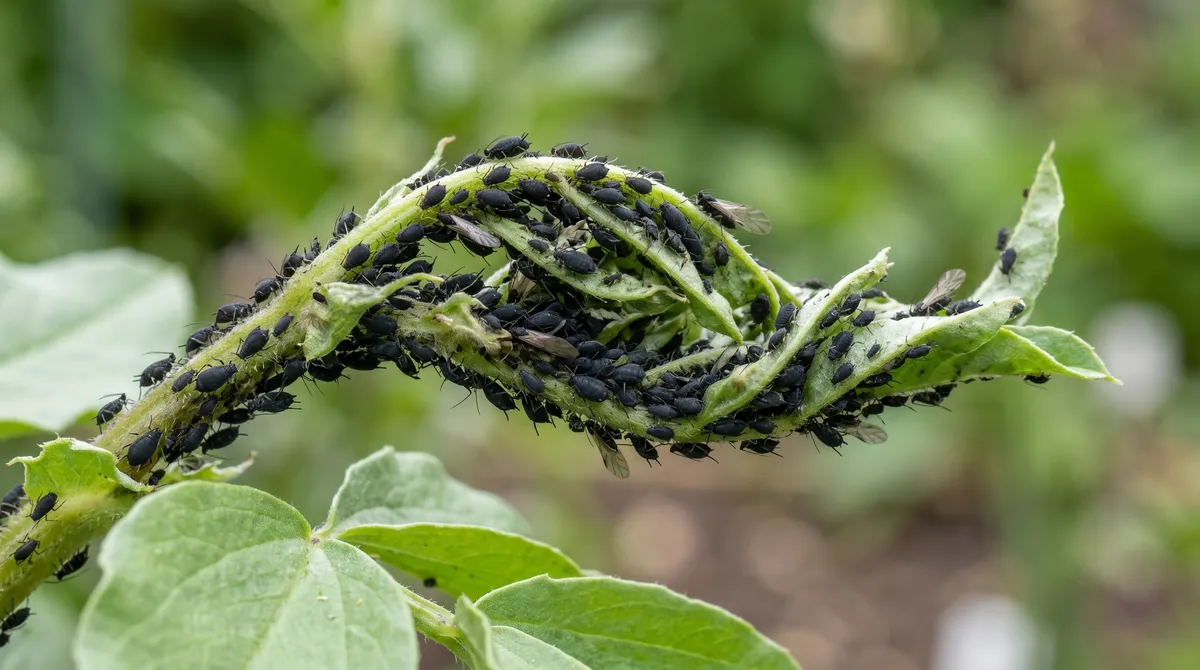
- Black bean aphid (Aphis fabae) is 2mm long, matte black, and clusters on the soft growing tips of broad beans, runner beans, dahlias, beetroot and nasturtium
- Pinch out the top 10cm of broad beans as soon as the first five flower trusses have set: this single action removes most of the colony
- Soft soap (potassium fatty acid) at 2 percent solution clears stubborn clusters in 24 to 48 hours and is approved for organic UK gardens
- A 7-spot ladybird larva eats 50 to 100 aphids per day; numbers usually build to useful levels by mid-June if no broad-spectrum spray is used
- Resistant cultivars like 'Witkiem Manita' and early-sown 'Aquadulce Claudia' finish flowering before peak aphid pressure in late May to mid-June
- Honeydew from the aphids causes sooty mould and they spread bean common mosaic virus and bean yellow mosaic virus, so early action protects yield
For broader pest pressure across the kitchen garden see vegetable pests and diseases UK guide. For the wider aphid family across UK plants the same principles apply with small variations by species. On brassicas, the mealy cabbage aphid is the equivalent grey-green pest, coating cabbage and kale leaves in a waxy bloom.
How to identify black bean aphid
Aphis fabae is one of the easier UK aphids to confirm by eye. The adult is 1.5 to 2.2mm long, matte black or very dark olive, soft-bodied, with two short cornicles (siphunculi) protruding from the back end. The legs and antennae are pale at the joints which gives a slightly two-tone look in a good light. The wingless (apterous) form makes up the bulk of any colony, and the winged (alate) form has a black thorax and translucent wings, used for moving between host plants.
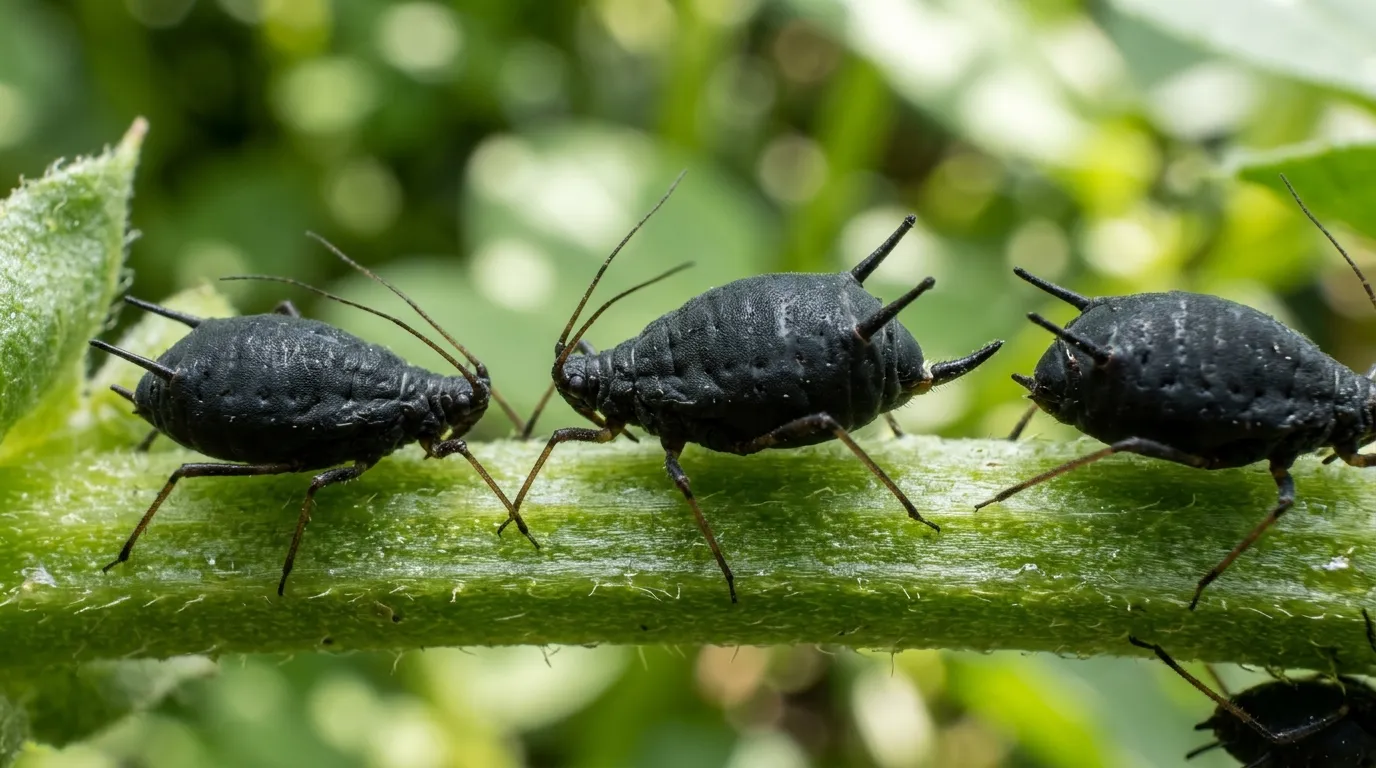
The species is easy to confuse with one or two other dark aphids. The cherry blackfly (Myzus cerasi) and the bean leaf roll aphid look similar to a casual eye but live on different hosts. If the colony is on broad beans, runner beans, dahlias, beetroot, spinach, poppies, nasturtium or Viburnum opulus it is almost certainly Aphis fabae. The other tell is colony behaviour: black bean aphid packs tightly on the youngest 5 to 10cm of growing tip, with ants often present farming the honeydew.
Lifecycle and why peak pressure hits in late May
Black bean aphid has two distinct phases in the UK, and understanding them is the difference between a managed crop and a written-off one.
Overwinter (October to March): eggs are laid on the woody primary host, mainly spindle (Euonymus europaeus) and Viburnum opulus. The eggs are tiny, shiny black, glued to bark and bud scales. They hatch in early spring.
Spring on the primary host (March to April): the hatched aphids feed on spindle and Viburnum, build through 2 to 3 generations of wingless females, then produce winged migrants.
Migration (late April to mid-May): the alate (winged) females fly to herbaceous secondary hosts, including every broad bean and runner bean row in the UK. A single alate female founds a colony of clones within a fortnight.
Summer on the secondary host (mid-May to August): wingless females reproduce parthenogenetically (without mating), producing up to 5 nymphs per day. A colony of 10 founders becomes a colony of 5,000 in three to four weeks if nothing eats them.
Return migration (September): winged females and the year’s only sexual males fly back to spindle and Viburnum, mate, and the cycle restarts with overwintering eggs.
The brutal arithmetic in the summer phase is why peak UK pressure hits in late May and early June, exactly when broad beans are flowering and runner beans are climbing their canes. The window to act is short.
Damage symptoms on UK vegetables
The damage falls into four buckets:
- Direct feeding damage. The aphids pierce the phloem and suck sap. Growing tips wilt, curl downward, and stop extending. New leaves emerge distorted, often yellow at the base and dark green at the tip.
- Honeydew and sooty mould. Aphids excrete sugary honeydew. Within a week the leaves below the colony are sticky, and a black sooty mould (Cladosporium and Alternaria fungi) grows on the honeydew. Sooty mould blocks light and slows photosynthesis.
- Virus transmission. Aphis fabae carries bean common mosaic virus (BCMV) and bean yellow mosaic virus (BYMV). Virus-infected plants show mottled, twisted leaves and fail to set a full pod load. Once a plant is infected there is no cure.
- Indirect ant damage. Ants farm the colonies for honeydew and aggressively defend them from predators. Black garden ants (Lasius niger) are the worst offenders. Cutting the ant trail (a strip of grease band around the bean stem) reverses the predator suppression within 24 hours.
For runner beans the damage often shows on the bottom 30 to 60cm of cane: stunted growth, deformed flowers, fewer set pods. For broad beans it concentrates on the top 10 to 20cm where flowering happens.
Cultural control: the pinching method
The single most effective cultural control in UK gardens is pinching out the growing tips of broad beans. Done correctly it removes 80 to 90 percent of an established colony in 30 seconds per plant and forces the plant to redirect energy from vertical growth into pod fill.
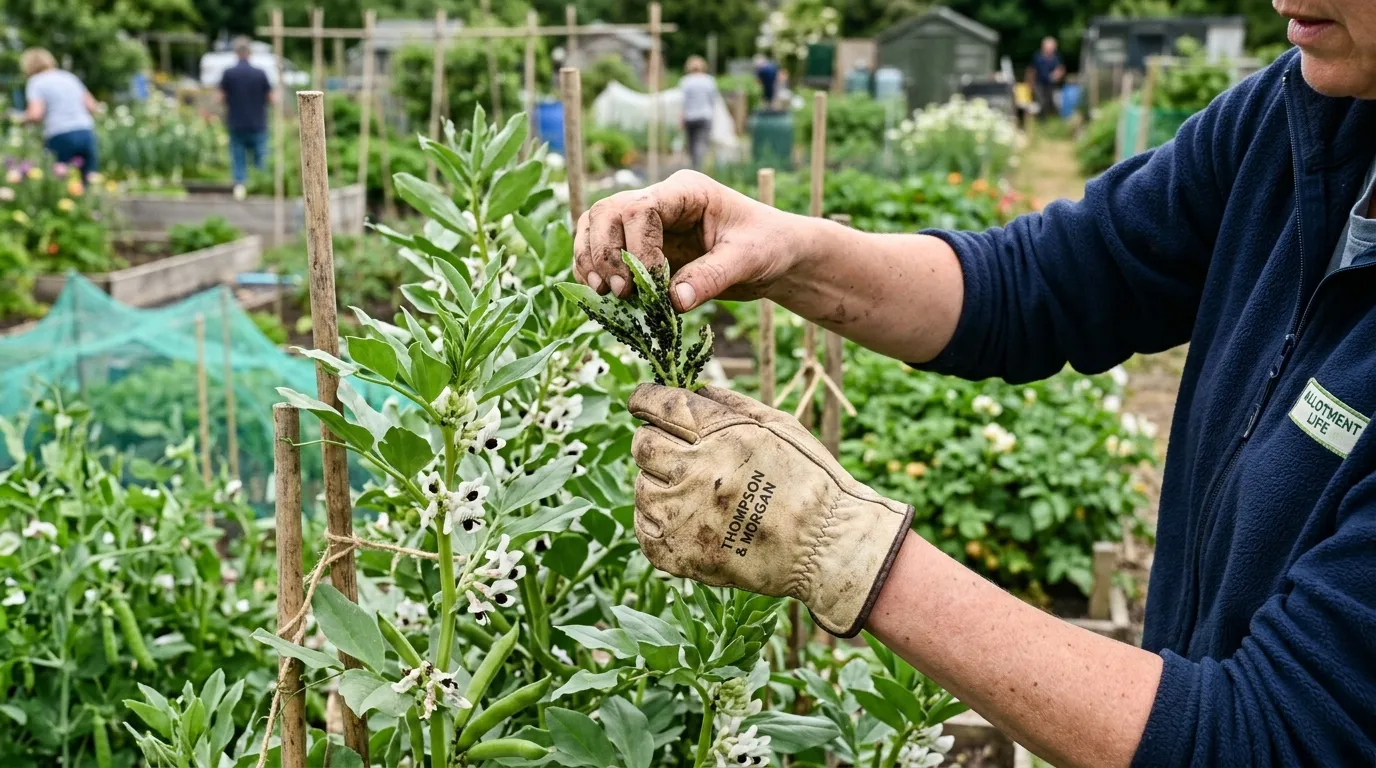
The timing and method:
- Wait until five flower trusses have set per stem. The lowest pod will be forming when this stage hits. Earlier pinching costs you a truss; later pinching gives the aphids longer to build.
- Pinch the top 7 to 10cm off the leading shoot. Use clean fingers or scissors. A clean snap is fine.
- Bag and bin the tips. Do not drop them on the soil and do not compost. Aphids will crawl back up onto plants from the soil within hours.
- Repeat on side shoots if they extend. Sometimes side shoots develop their own colonies and need the same treatment a week later.
The other cultural moves that lift the result:
Biological control: who eats the colony
The UK has a substantial predator and parasitoid community for Aphis fabae. Once a colony establishes, predator numbers usually build to useful levels within 10 to 14 days, provided no broad-spectrum spray has been applied.
The five most useful natural enemies in UK gardens:
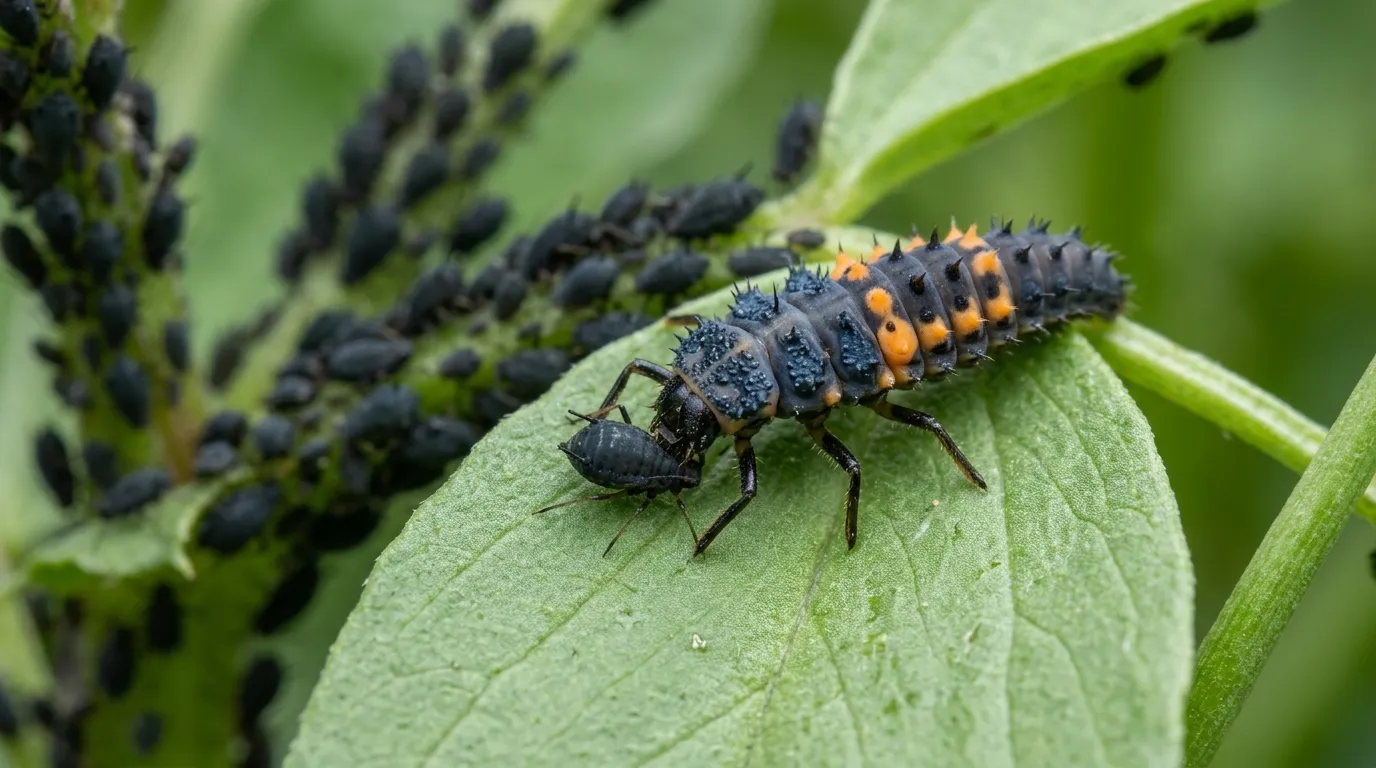
- Ladybird larvae (7-spot, 2-spot, harlequin). The dark blue-grey alligator-shaped larva is the workhorse. A single larva eats 50 to 100 aphids per day, and a healthy colony of 10 to 20 larvae per metre row clears the bean crop within a week.
- Lacewing larvae. Green and brown lacewing larvae eat 30 to 50 aphids per day and stay active in cooler weather than ladybirds.
- Hoverfly larvae. Maggot-like, translucent, glued to leaves near aphid colonies. Each larva eats 200 to 400 aphids over a 7 to 10 day larval phase.
- Parasitoid wasps (Aphidius, Praon). Tiny wasps that lay eggs inside aphids. The aphid becomes a brown mummy after about 10 days, then a new wasp emerges and parasitises more aphids. A small population builds exponentially across a season.
- Ground beetles (Carabidae). Eat aphids that fall to the soil. Permanent ground cover and a few flat stones at the row end encourage them.
For a wider rotation of biological methods see the biological pest control with nematodes UK guide, which covers companion natural enemies for the kitchen garden.
Chemical control approved for UK gardens
Two amateur-approved products do most of the heavy lifting on Aphis fabae in UK gardens. Both are gentle on predators when applied correctly.
| Product | Active ingredient | UK status (2026) | Mode of action | Spray timing |
|---|---|---|---|---|
| Soft soap | Potassium fatty acids | Approved organic + amateur | Strips waxy cuticle, contact kill | Dusk, dry day, repeat 7d |
| Neem oil | Azadirachtin | Approved amateur | Antifeedant + growth disruptor | Dusk, dry day, repeat 7-10d |
| Pyrethrum | Pyrethrins | Approved amateur, broad-spectrum | Nerve poison | Avoid except spot treatment |
| Strong water jet | Water | Free, no residue | Physical dislodgement | Morning, dry day |
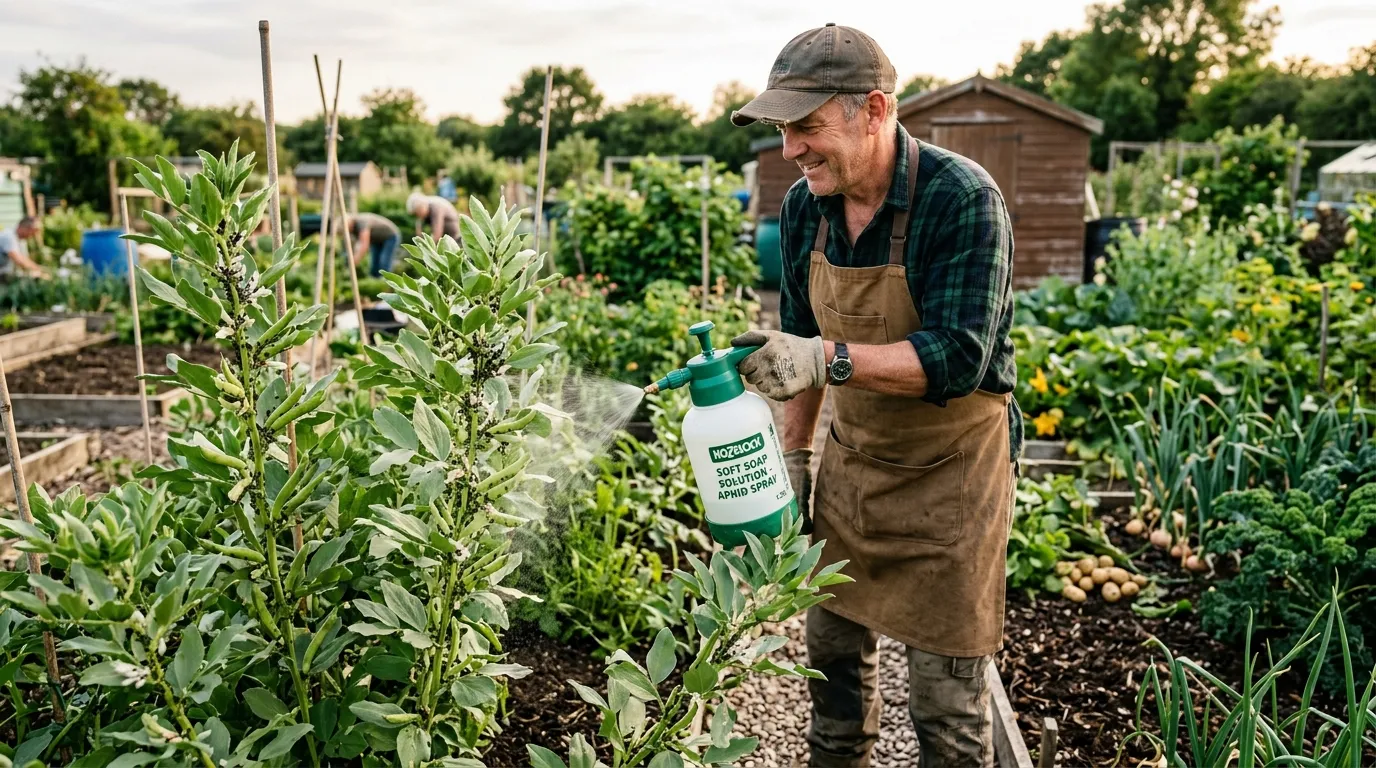
The default first-line spray is soft soap at 2 percent solution (20ml soft soap per litre of water). Apply at dusk so leaves dry overnight and bees are not on the flowers. Coverage matters: get the underside of the leaf and into the growing tip where the aphids hide. A 5 litre pump sprayer covers a 6m bean row.
Avoid pyrethrum unless you are spot-treating a heavily infested single plant. It kills the ladybirds, lacewings and parasitoid wasps that hold the rest of the row, and a pyrethrum-sprayed plot usually rebounds within 10 to 14 days with no predator brake on the second wave.
A strong water jet (from a hose with a thumb-pressed nozzle, not a pressure washer) knocks 60 to 70 percent of the colony onto the soil where ground beetles eat them overnight. Useful as a holding action while soft-soap arrives, and on plants too small to pinch.
Resistant cultivars and sowing dates
No UK broad bean is fully resistant to black bean aphid, but variety choice and sowing date together swing pod yield by 20 to 30 percent under aphid pressure. From four seasons of trial:
The pattern is clear: get the beans flowering before mid-May and most varieties handle aphid pressure. Sow late and even ‘Witkiem Manita’ struggles.
For how to grow broad beans the full sowing and care detail is covered separately, and the how to grow runner beans guide handles the climbing relatives.
Quick action plan when you spot a colony
The first 48 hours after a black bean aphid colony appears decide the next month. The same routine works on broad beans, runner beans, dahlias and beetroot:
- Inspect every plant. Walk the row morning and evening. Look at the top 10cm of every shoot, the underside of young leaves, and the soft new growth at the base of dahlias and runner beans.
- Pinch the growing tips. On broad beans where five trusses have set, pinch the top 10cm. Bag the tips. Bin them.
- Knock with a water jet. On runner beans, dahlias and beetroot where pinching is not appropriate, hit the colonies with a strong thumb-pressed hose. Knocks 60 to 70 percent to the soil.
- Soft-soap spray at dusk. Mix 20ml soft soap per litre of water. Spray growing tips and undersides of leaves. Repeat after 7 days if a second wave appears.
- Cut ant trails. A 30mm grease band around the lower stem of each bean plant stops ants farming the aphids and removes the predator suppression.
- Leave the predators alone. Once ladybirds, lacewings or hoverflies are visible, stop spraying. They finish the job within a week.
- Note the cultivar and sowing date. A quick line in the garden notebook lets you adjust next year. Most growers find that a two-week shift in sowing date does more than any spray.
For the wider organic pest control approach across the UK kitchen garden, the same predator-first thinking applies to nearly every soft-bodied pest. The woolly aphid identification and treatment guide covers the cottony white relative that attacks apple and ornamental shrubs.
For confirmed identification or further reading the RHS black bean aphid page is the standard UK reference and worth bookmarking alongside this guide.
Related guides
Our team produces practical UK gardening guidance from source research, contributor records and established horticultural practice. Editorial standards are overseen by Matt W.