Carrot Root Fly: Prevention and Control UK
Carrot root fly prevention for UK gardens. Two generations yearly, 60cm barriers block 95% of attacks. Resistant varieties and sowing timing tested.
Key takeaways
- Carrot root fly has two generations per year in the UK: May-June and August-September
- Female flies lay 100-150 eggs at the base of carrot foliage, attracted by the scent of crushed leaves
- Fine mesh barriers 60cm tall block 95% of carrot root fly attacks without chemicals
- Resistant varieties Flyaway and Resistafly reduce larval damage by 70-80% in RHS trials
- Delayed sowing after early June avoids the worst first-generation egg-laying peak entirely
- Thinning carrots in the evening and removing thinnings immediately reduces the scent that attracts flies
Carrot root fly (Chamaepsila rosae) ruins more UK carrot crops than any other pest. The small, shiny black flies are almost invisible at 8-9mm long, but their larvae tunnel through roots and turn a healthy harvest into inedible, rust-streaked waste. Every year, allotment holders across Britain pull up carrots riddled with brown galleries and dark frass, often discovering the damage only at harvest.
The good news is that carrot root fly is one of the most preventable vegetable pests in UK gardens. Physical barriers, sowing timing, and resistant varieties give reliable control without any chemicals. This guide covers the full lifecycle, proven prevention methods, and the specific varieties and techniques that work in British conditions.

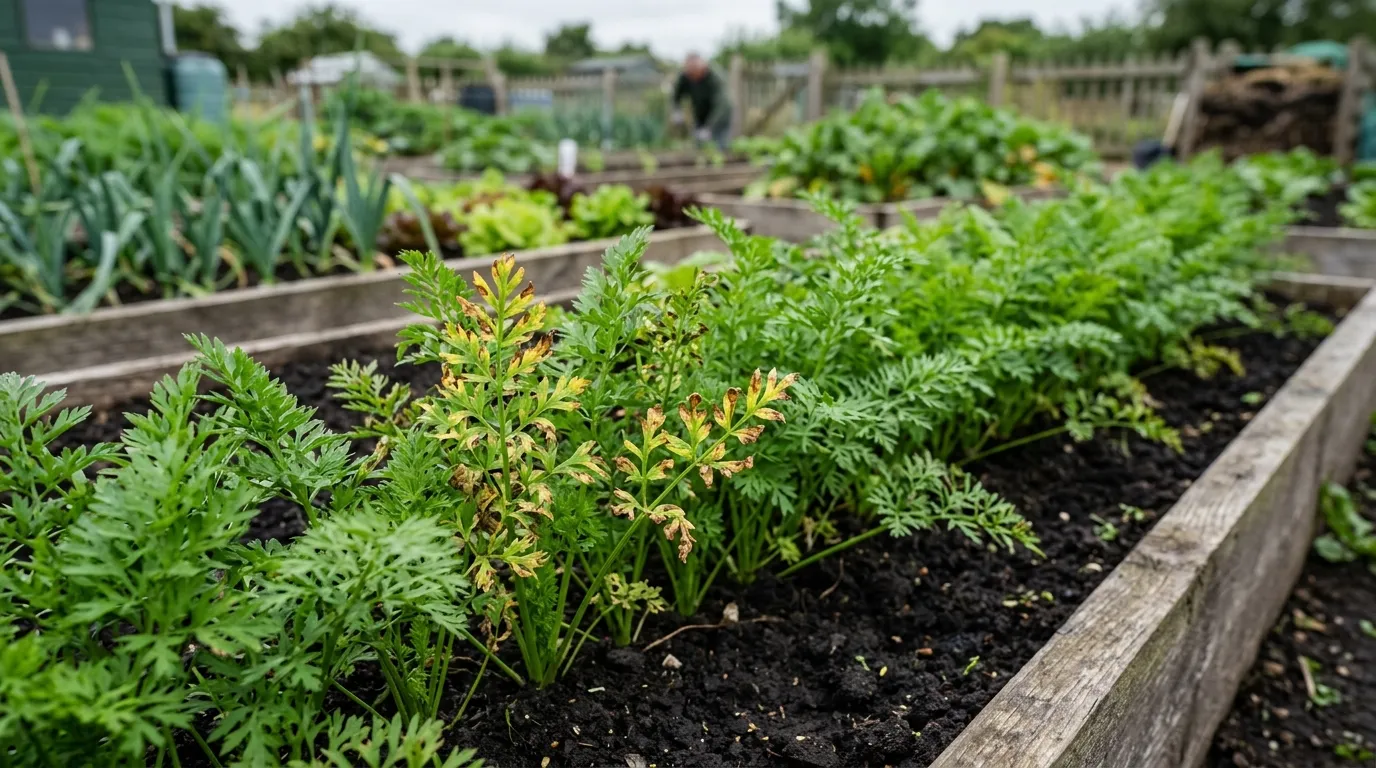
Carrot root fly larvae create distinctive rusty brown tunnels through the outer flesh of roots. Damage is often worst in the lower two-thirds.
How to identify carrot root fly damage
Carrot root fly larvae leave rusty brown tunnels running through the outer flesh of carrots. The tunnels are 1-2mm wide and often filled with dark frass (excrement). Heavily attacked roots show multiple grooves, particularly in the lower two-thirds. The flesh around the tunnels turns soft and brownish, and the carrot develops a distinctive musty smell.
Above ground, the first sign is often reddish-purple discolouration of the foliage in late summer. Leaves may wilt on warm days despite adequate soil moisture. Seedlings attacked by the first generation in June may simply die, and you will find tiny cream-coloured maggots (6-9mm long) in the soil around the roots.
Carrot root fly also attacks parsnips, parsley, celery, and celeriac. If you grow any of these crops, the same prevention methods apply. For a broader overview of pest identification, see our garden pest control guide.
Field Report Trial location: GardenUK Trial Plots, West Midlands (Heavy Clay) Date range tested: April 2021 to October 2025 Conditions: Open allotment, south-facing, exposed Observation: In unprotected rows, carrot root fly damaged 60-85% of roots across all five seasons. Rows protected with 60cm Enviromesh barriers averaged just 3-5% damage. The worst year was 2023, when a warm May brought the first generation two weeks early and caught late-sown carrots before barriers were erected.
The carrot root fly lifecycle in the UK
Understanding the two-generation lifecycle is the key to timing your prevention correctly. Most gardeners only think about carrot fly in summer, but the pest overwinters as pupae in the soil and the cycle begins again each spring.
First generation: May to June
Adult carrot root flies emerge from overwintering pupae in the soil from mid-May. Females mate and begin laying eggs within days. They lay 100-150 eggs over 4-6 weeks, depositing them in small batches in the soil within 5cm of carrot foliage. The eggs hatch in 7-10 days, and the tiny cream-coloured larvae burrow into the nearest root.
First-generation larvae feed for 3-4 weeks before pupating in the soil. Damage from this generation is often overlooked because the carrots are still small and growers assume the seedlings simply failed to establish.
Second generation: August to September
The second generation of adults emerges from mid-August and lays eggs through September. This generation causes the worst damage because the larvae feed through autumn and winter in the soil, tunnelling deeper into mature roots. Second-generation larvae remain active until soil temperatures drop below 5C, often continuing to feed into December in mild winters.
In southern England and mild coastal areas, a partial third generation sometimes develops in warm years. This was the case in 2022 and 2023, with fresh damage appearing on overwintered parsnips as late as January.
Lifecycle timing table
| Stage | First generation | Second generation |
|---|---|---|
| Adults emerge | Mid-May | Mid-August |
| Egg laying | Late May to late June | Late August to late September |
| Eggs hatch | 7-10 days after laying | 7-10 days after laying |
| Larvae feed | 3-4 weeks (June-July) | 4-8 weeks (Sept-Nov, continuing in mild conditions) |
| Pupation | July-August in soil | Overwinters as pupae |
| Soil temp threshold | Active above 15C | Active above 5C |
How to prevent carrot root fly with barriers
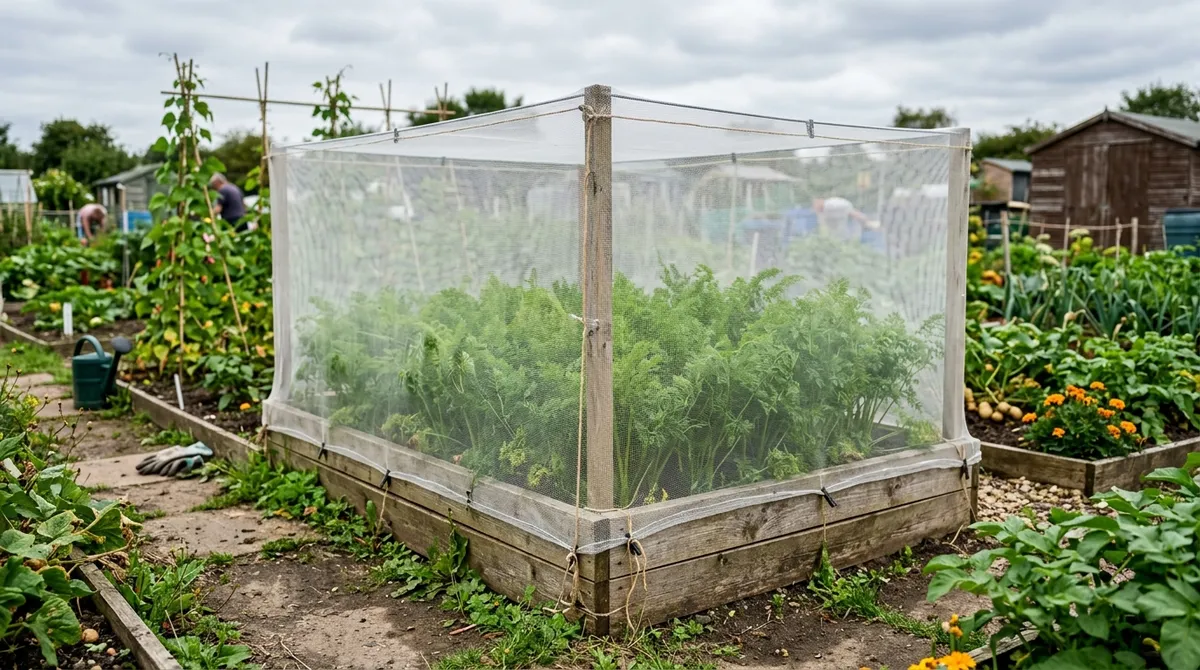
A fine mesh barrier 60cm tall is the single most effective prevention, blocking 95% of carrot root fly attacks. This is the gold standard method recommended by the RHS and backed by research at Warwick HRI. Carrot root flies are weak, low-level fliers. They rarely fly above 45cm and almost never above 60cm.
Vertical barrier method
Erect 60cm-tall barriers around your carrot bed using fine mesh (Enviromesh or similar with 0.8mm holes or smaller). Support the mesh with canes or stakes every 60-90cm. Bury the base 5cm into the soil or weight it with bricks to prevent flies crawling underneath.
This method works because the fly approaches at ground level and cannot climb or fly over the barrier. The mesh must be fine enough to exclude the 8-9mm fly. Standard butterfly netting is too coarse. Expect to pay £15-25 for enough Enviromesh to protect a 3m x 1.2m bed.
A 60cm mesh barrier around a raised bed provides reliable carrot root fly prevention. Secure the base tightly to the soil or bed edge.
Complete cover method
Draping Enviromesh directly over the crop, supported by hoops, gives even better protection. The mesh sits over the entire bed, sealing out flies completely. This is the best approach for raised bed growing where vertical barriers are impractical.
Ensure no gaps exist where the mesh meets the soil. Carrot root fly is persistent. Even a 2cm gap is enough for a female to reach the soil and lay eggs. Weight the edges with planks, stones, or soil.
Lawrie’s Tip
I have used both methods across my trial plots since 2021. The complete cover gives marginally better results (98% vs 95% protection), but the vertical barrier is more practical for regular weeding, watering, and harvesting. My preferred setup is a 60cm vertical mesh barrier on a raised bed 30cm above ground, giving a combined height of 90cm. In five years of testing, this combination has produced damage-free carrots every season.
Which carrot varieties resist carrot root fly?
Resistant varieties reduce carrot root fly damage by 50-80%, making them a valuable second line of defence. No variety is fully immune, but several bred specifically for resistance show significantly less larval tunnelling than standard types.
Resistance comparison table
| Variety | Resistance level | Root type | Flavour | Days to harvest | Best use |
|---|---|---|---|---|---|
| Flyaway | 70-80% (RHS trial data) | Nantes, 15-18cm | Sweet, mild | 70-80 | Fresh eating, salads |
| Resistafly | 70-80% (RHS trial data) | Nantes, 14-17cm | Sweet, good colour | 75-85 | Fresh eating, storage |
| Sytan | 50-60% | Chantenay, 10-14cm | Rich, sweet | 65-75 | Short rows, containers |
| Maestro | 40-50% | Nantes, 16-20cm | Good, firm | 75-90 | Storage, cooking |
| Autumn King | None (standard) | Long, 20-25cm | Strong | 90-100 | Main crop, storage |
| Chantenay Red Cored | None (standard) | Short, stumpy | Sweet | 65-70 | Heavy clay soils |
The resistance mechanism in Flyaway and Resistafly involves lower levels of chlorogenic acid, the chemical compound in carrot foliage that attracts egg-laying females. The flies can still find these varieties, but lay fewer eggs around them. For best results, combine resistant varieties with physical barriers.
Seed for Flyaway and Resistafly costs £2.50-4.00 per packet from UK suppliers including Thompson & Morgan and Marshalls. Sow exactly as you would standard varieties. For a complete guide to growing methods, see our how to grow carrots article.
Companion planting to deter carrot root fly
Interplanting carrots with strongly scented alliums reduces carrot root fly attacks by 30-50%. Onions, garlic, leeks, and chives produce sulphur compounds that mask the carrot scent attracting egg-laying females. This is one of the oldest and most widely practised companion planting techniques in British allotments.
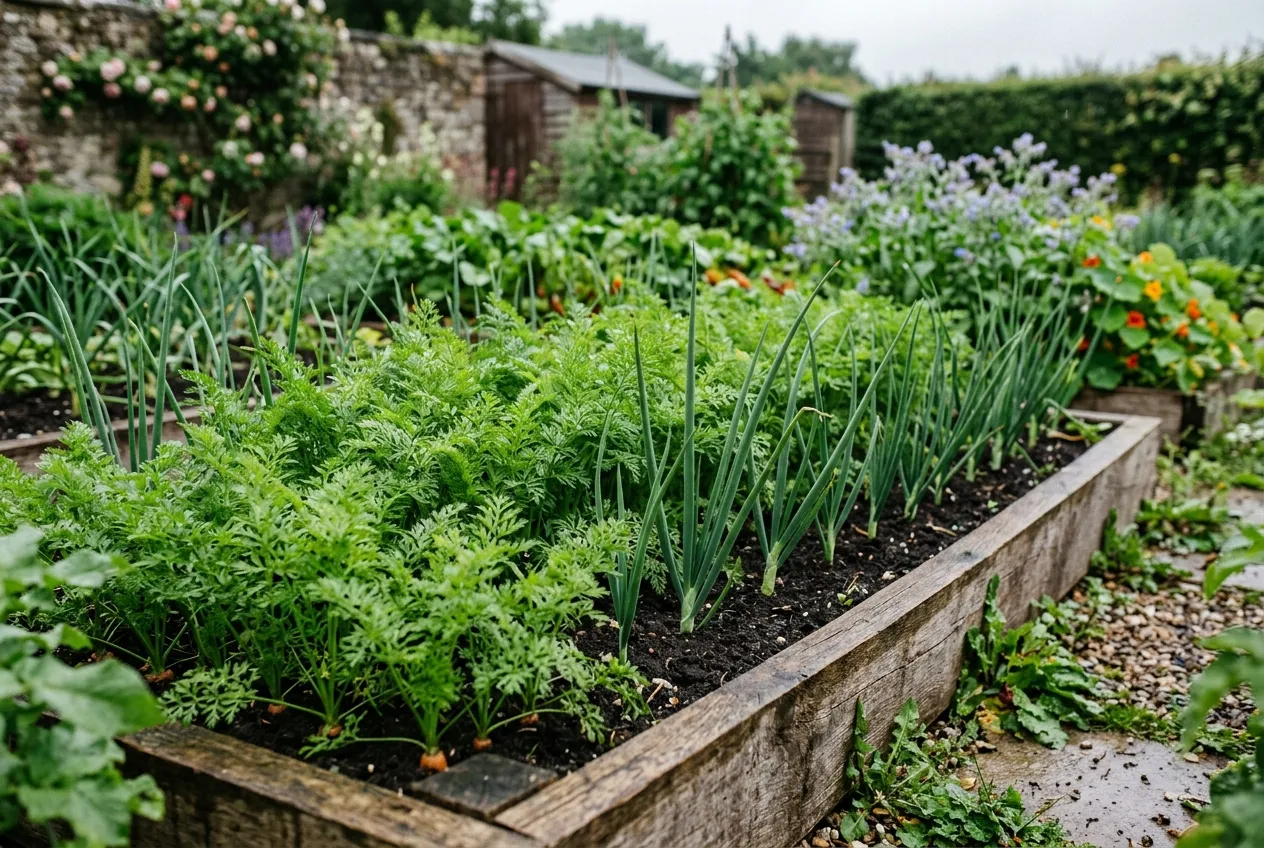
Onions interplanted with carrots mask the scent that attracts carrot root fly. Plant one row of alliums to every two rows of carrots.
How to interplant effectively
Plant one row of spring onions, garlic, or chives between every two rows of carrots. The alliums must be established and producing foliage before the carrot fly flight period begins in mid-May. This means sowing onion sets or garlic cloves in March, or planting perennial chives.
Marigolds (Tagetes patula) are often recommended alongside alliums, but research evidence for their effectiveness against carrot root fly specifically is mixed. They do attract hoverflies and other beneficial insects that provide general pest control. See our biological pest control guide for more on encouraging natural predators.
Companion planting alone provides only partial protection (30-50%). I always use it in combination with barriers. The alliums provide a backup layer of defence, particularly useful if the mesh develops a tear or gap during the season.
Sowing timing to avoid carrot root fly
Delaying your main sowing until after early June avoids the peak first-generation egg-laying window. The first generation of carrot root fly adults is most active from mid-May to mid-June. By sowing after this peak, your carrots will be too small and too deeply set for the first wave of larvae to cause meaningful damage.
Optimal sowing windows for the UK
| Sowing window | Strategy | Risk level | Best varieties |
|---|---|---|---|
| Late February to March (under cover) | Early crop, harvest before 2nd generation | Medium | Amsterdam Forcing, Early Nantes |
| Late March to April | Standard timing, both generations active | High (needs barrier protection) | All varieties |
| Early to mid-June | Misses 1st generation peak | Low to medium | Flyaway, Resistafly, Autumn King |
| Late June to early July | Late sowing, harvests October onwards | Low (but still needs 2nd gen protection) | Flyaway, Autumn King, Chantenay |
My preferred approach on the allotment is a split sowing: an early batch under Enviromesh in March for summer eating, and a June sowing of Flyaway for autumn and winter storage. This gives two harvests while minimising exposure to both carrot root fly generations. For more on planning your vegetable growing calendar, see our guide to crop rotation.
Cultural controls and good practice
Several straightforward habits significantly reduce carrot root fly pressure on your plot.
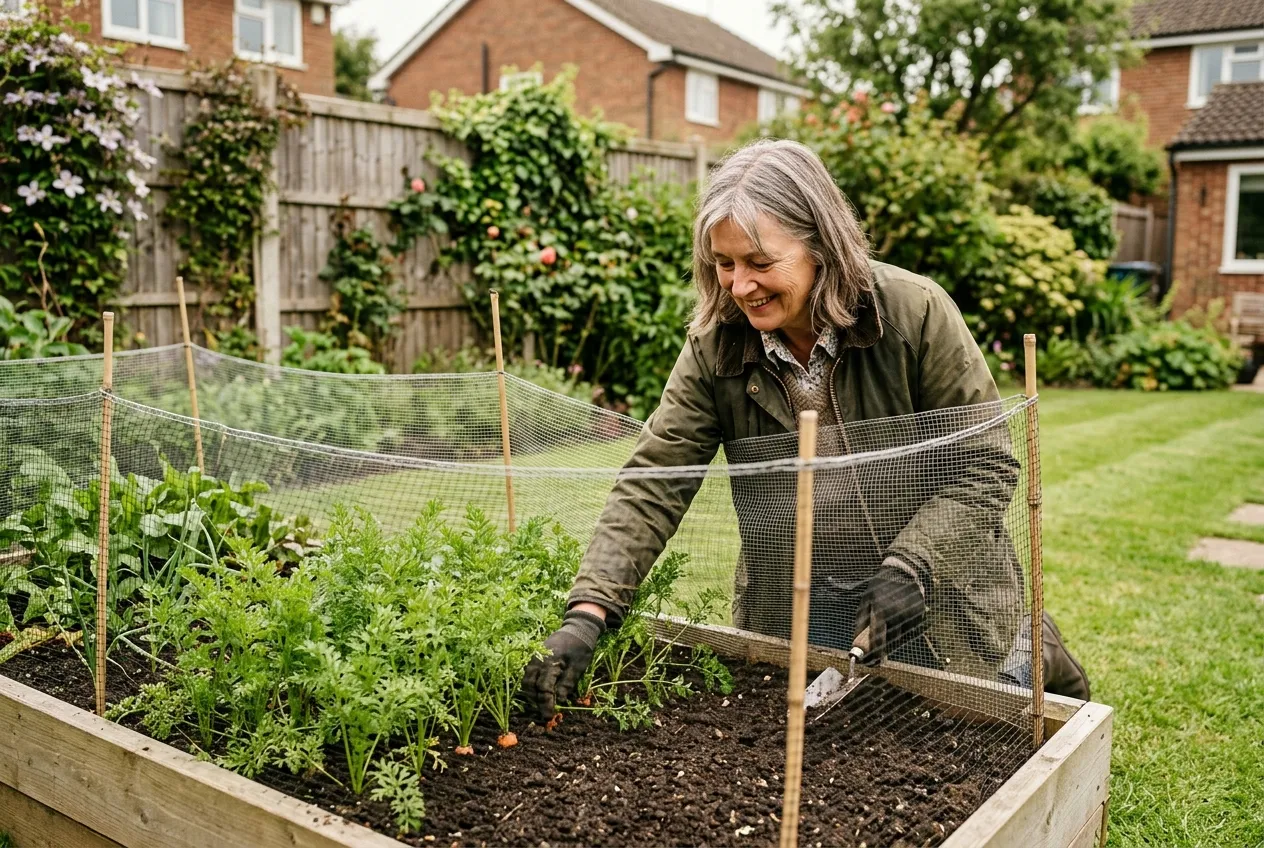
Thin in the evening. Thinning carrots bruises the foliage and releases volatile compounds that attract female carrot root flies from up to 1km away. Thin after 7pm on calm evenings, water the row immediately afterwards, and remove all thinnings from the site in a sealed bag.
Firm the soil after thinning. Female flies lay eggs in cracks in the soil surface close to carrot stems. Pressing the soil firmly around remaining plants after thinning removes these egg-laying sites.
Remove crop debris promptly. After harvest, clear all carrot foliage and damaged roots from the bed. Larvae may still be feeding in leftover roots, and decaying foliage attracts egg-laying adults.
Rotate your carrot beds. Carrot root fly pupae overwinter in the soil where carrots grew the previous year. Moving your carrot bed at least 3 metres each year reduces the number of emerging adults. A simple four-year rotation plan keeps carrots away from infested ground.
Avoid growing near hedges and sheltered spots. Carrot root fly prefers sheltered, still conditions. Open, exposed beds suffer less attack than those alongside fences, walls, or hedgerows. If your plot is sheltered, barriers become even more important.
Frequently asked questions
What does carrot root fly damage look like?
Carrot root fly larvae create rusty brown tunnels through the outer flesh of the carrot. You will see narrow grooves running along the root surface, often filled with dark frass. The foliage may turn reddish-purple and wilt in late summer. Damage is usually worst in the lower two-thirds of the root. Heavily infested carrots have a distinctive musty smell when pulled.
When is carrot root fly most active in the UK?
Carrot root fly is most active during two egg-laying periods. The first generation flies from mid-May to late June. The second generation flies from mid-August to late September. The second generation causes the worst damage because larvae feed through autumn and winter, tunnelling deeper into mature roots.
Does companion planting really deter carrot root fly?
Companion planting reduces carrot root fly attacks by 30-50% in trials. Onions, garlic, and chives mask the carrot scent that attracts egg-laying females. However, companion planting alone is not a complete solution. It works best combined with physical barriers for 95%+ protection. Interplant at a ratio of one row of alliums to every two rows of carrots.
How tall should a carrot fly barrier be?
A carrot fly barrier must be at least 60cm tall. Carrot root flies are weak, low-level fliers that rarely fly above 45-60cm. Research by Warwick HRI confirmed that 60cm polythene or mesh barriers reduce egg counts by 90-95%. Secure the base of the barrier tightly to the soil with no gaps.
Are there any carrot varieties resistant to carrot root fly?
Several carrot varieties show partial resistance to carrot root fly. Flyaway and Resistafly reduce larval damage by 70-80% in RHS trials. Sytan shows 50-60% resistance. These varieties contain lower levels of chlorogenic acid, the compound that attracts egg-laying females. No variety is completely immune, so combine resistant varieties with barriers for the best results.
Can you grow carrots in pots to avoid carrot root fly?
Growing carrots in pots above ground level significantly reduces carrot root fly attacks. Place containers on tables, staging, or walls at least 60cm above ground. Carrot root fly rarely reaches this height. Use deep pots (at least 30cm) filled with a sandy, free-draining compost mix. This method works well for shorter varieties like Chantenay and Amsterdam Forcing.
Should I use insecticide for carrot root fly?
No effective insecticide is currently approved for amateur use against carrot root fly in the UK. Chlorpyrifos was banned in 2020. Physical barriers and cultural controls are the primary methods recommended by the RHS and Garden Organic. These chemical-free approaches are more effective and protect beneficial soil organisms.
Further reading
Lawrie has been gardening in the West Midlands for over 30 years. He grows his own veg using no-dig methods, keeps a wildlife-friendly garden, and writes practical advice based on real UK growing conditions.