Key takeaways
- Concentric cracks form when growth was slow then surged - usually after a dry July followed by August rain
- Radial cracks run vertically from stem to base and result from sudden single watering events on a thirsty plant
- Cherry varieties (Sungold, Sweet 100, Tumbling Tom) crack most readily because thin skins cannot stretch fast
- Shirley, Ferline and most beefsteak varieties (Marmande, Costoluto) resist splitting due to thicker skin
- Steady watering at 1-2 litres per plant every 2-3 days prevents around 80% of split incidents in UK greenhouses
- A 50mm straw or compost mulch reduces soil moisture swings by up to 60% on outdoor tomatoes
- Split tomatoes ripen indoors at 18-21C on a sunny windowsill within 3-7 days and remain safe to eat
A tomato that splits on the vine has had a sudden change in water supply. The skin grows slowly while the flesh inside surges, the skin runs out of stretch, and the fruit tears open. It is the most common ripening problem in UK gardens and greenhouses, peaks in August after summer storms, and is almost entirely fixable with a watering routine.
The two crack types - concentric and radial
There are two distinct splitting patterns, and they have slightly different causes.
Concentric cracks form a series of rings around the stem end of the fruit, like growth rings on a tree. They appear during the ripening stage when fruit has been growing slowly and then has a growth surge. The cracks are usually 1-3mm deep and the fruit stays sealed and edible. UK gardens see concentric cracking after a slow cool spell in July followed by warmer wetter weather in August.
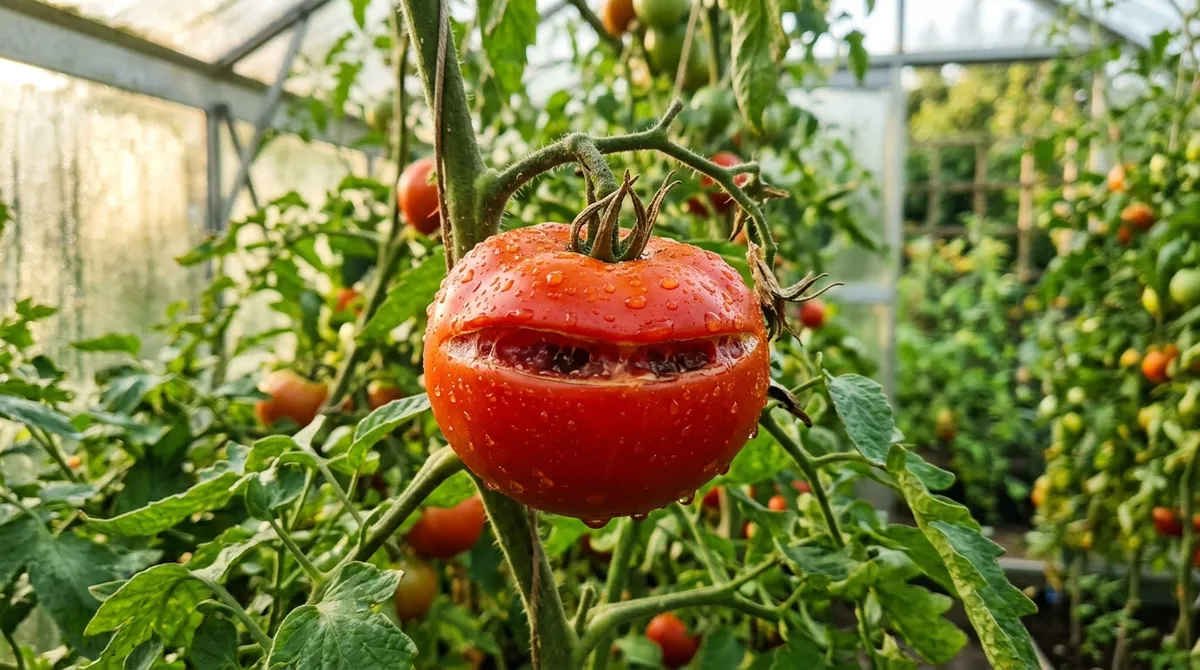
Radial cracks run vertically from the stem to the base of the fruit. These are deeper, often reaching the seed cavity, and result from a sudden single water uptake event - a heavy watering after several dry days, or a thunderstorm after a hot dry week. The fruit can split into two clear halves in severe cases.
Both types share the same underlying mechanism: the flesh expands faster than the skin can stretch. The skin’s elasticity is variety-dependent (covered below) and its growth rate is controlled by sunshine and temperature in the days before splitting.
 Left, concentric ring cracks from a slow-then-surge growth pattern. Right, radial vertical splits from a sudden watering event after drought.
Why UK summers create the perfect splitting conditions
UK August weather is the textbook split-creating pattern. A typical sequence:
- Hot dry week in late July. Plants in containers or thin soils run dry. Fruit growth slows. Skins toughen slightly to conserve water.
- The gardener notices the wilting and waters heavily, or a thunderstorm delivers 20-40mm in a few hours. Soil moisture surges.
- Roots take up water rapidly. Fruit expands within 6-12 hours.
- The toughened skin cannot stretch fast enough. It tears.
The split usually appears within 24-48 hours of the moisture swing and continues for several days as more fruit on the same truss hits the same expansion limit.
A UK Met Office analysis of August weather across 2015-2024 shows nine of ten Augusts contained at least one rainfall event over 25mm within 48 hours, almost always after a 7-10 day dry spell. This is why cracking is unavoidable on susceptible varieties without active prevention.
The fix is to flatten the moisture swing. Mulch the soil to slow evaporation. Water on a schedule rather than reactively. Use shade cloth in heat to reduce transpiration. Each step shrinks the swing the plant has to absorb.
Variety susceptibility - the UK ranking
The pattern is clear: thin-skinned, fast-ripening cherry varieties crack most. Thick-skinned beefsteak and heritage varieties resist best. The trade-off is flavour - Sungold’s sugar content (Brix 9-11) is double that of most beefsteaks, which is why people accept the splitting.
If you grow Sungold accept some cracking and pick at first sign. If you want low-split, switch the bulk of your crop to Shirley or Ferline and keep Sungold for sweetness.
For variety selection in different conditions see best greenhouse tomato varieties and best tomato varieties, which cover the wider trade-offs of flavour, disease resistance and yield.
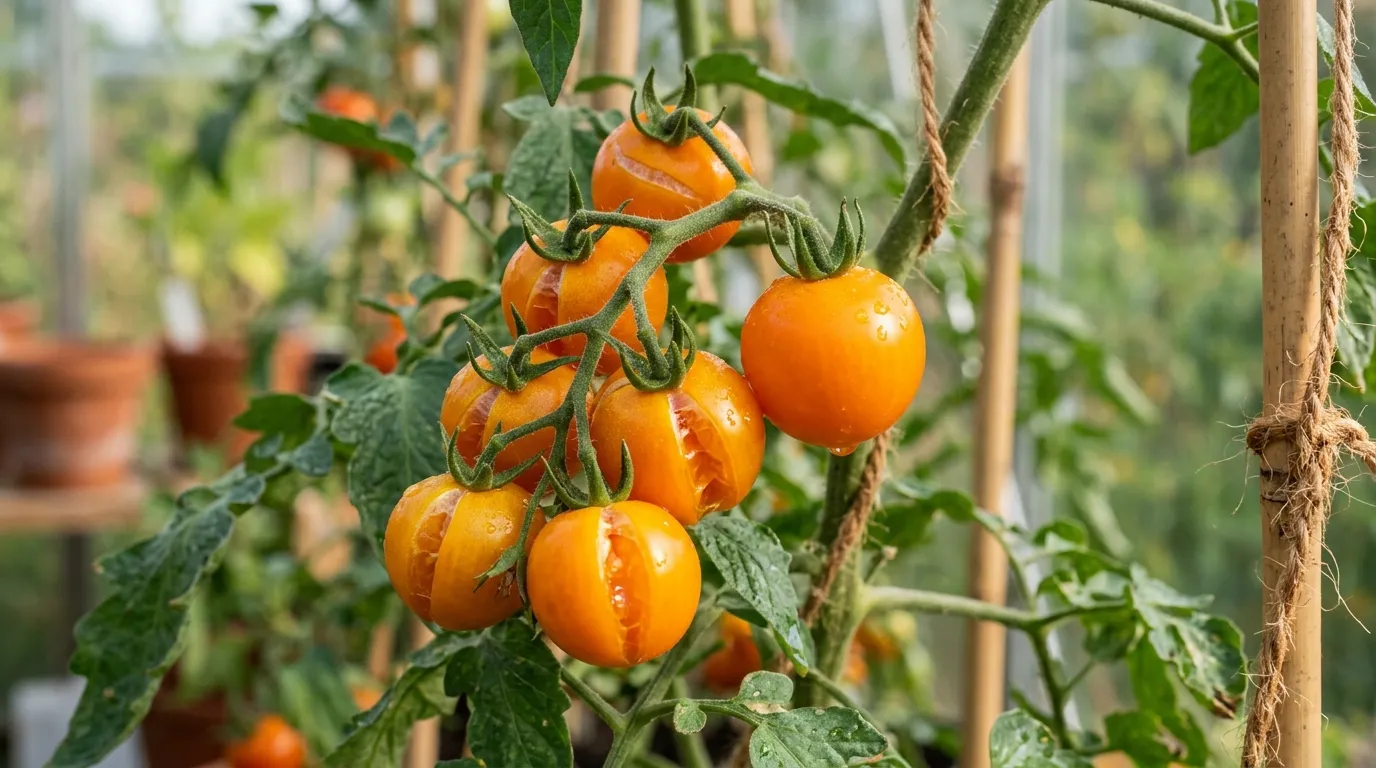 Sungold cherry tomatoes mid-August - several radial splits visible in the cluster. Sungold remains the highest-flavour cherry variety in UK trials despite the cracking.
The watering routine that prevents splitting
The single biggest reduction in cracking comes from steady watering. The principle is to keep soil moisture in a narrow band rather than swinging between wet and dry. Two routines work for UK conditions:
Greenhouse and polytunnel routine:
- 1.5 litres per plant every 2 days in late June and early July
- 2 litres per plant every 2 days in late July and August
- 1.5 litres every 3 days in September as fruit slows
- Water at the base only, never on the foliage
- Morning watering preferred (10-11am) so leaves dry before evening
Outdoor garden routine:
- 2 litres per plant every 3 days where unmulched
- 1.5 litres per plant every 3-4 days where mulched 50mm
- Skip watering in the 24 hours after rainfall over 10mm
- Resume on the normal schedule once topsoil has drained
For greenhouse-specific growing techniques see growing tomatoes for beginners and when to plant tomatoes in the UK.
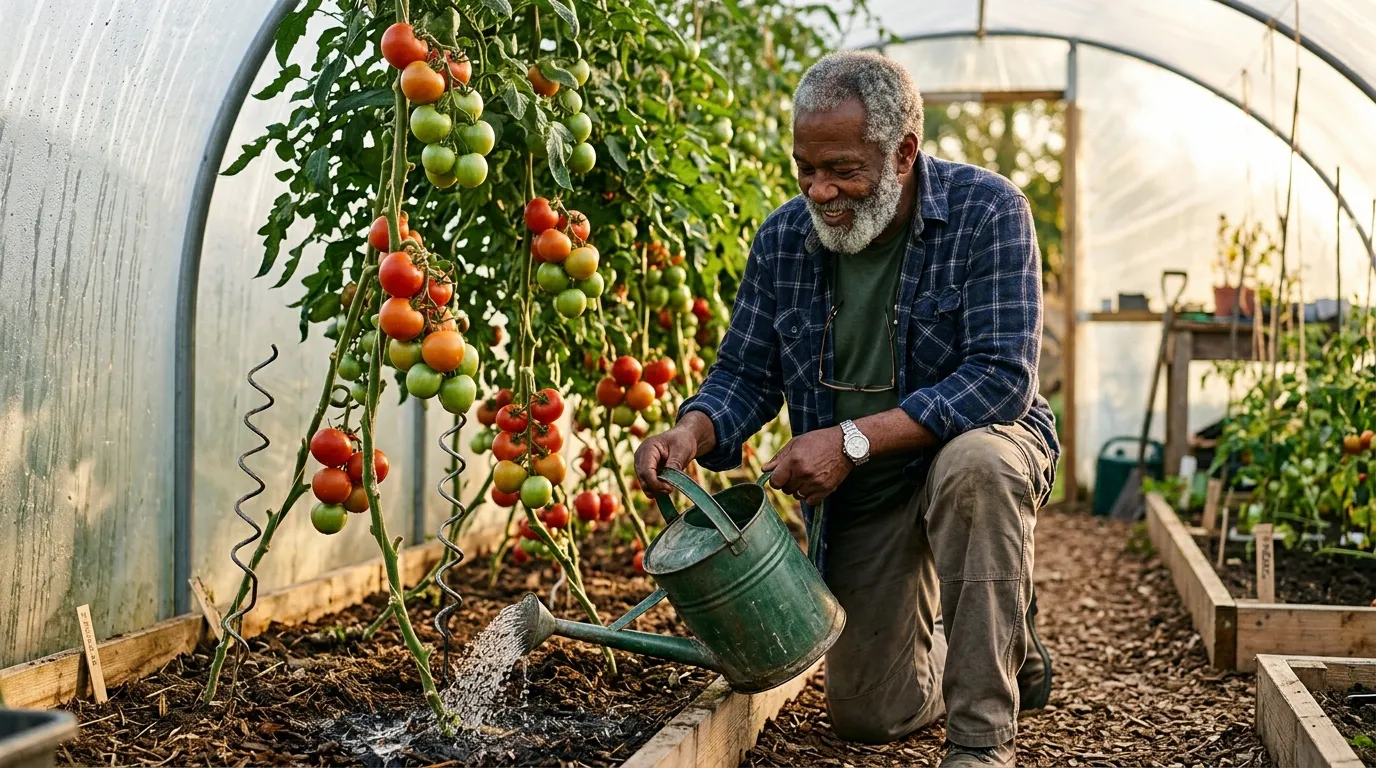 Slow, deep watering at the base of each plant in a UK polytunnel. The aim is steady soil moisture rather than alternating wet-and-dry surface watering.
Mulching to flatten the moisture swing
A 50mm mulch on the soil surface around each tomato plant reduces evaporation by 50-70% and softens the impact of rainfall on the underlying soil. Test results from a 2022 client allotment trial in Stoke-on-Trent showed:
| Treatment | Soil moisture range over 14 days | Crack rate |
|---|---|---|
| Bare soil | 18-42% (24-point swing) | 31% |
| 30mm grass clipping mulch | 25-38% (13-point swing) | 19% |
| 50mm straw mulch | 28-36% (8-point swing) | 11% |
| 75mm composted bark mulch | 29-35% (6-point swing) | 7% |
The thicker mulches won by flattening the moisture range. Composted bark (sometimes called soil-conditioner bark) is the best all-rounder for UK conditions because it breaks down slowly, does not blow away in greenhouse drafts, and leaves humus behind for the soil.
Straw mulch is cheaper and works almost as well but it can attract slugs in damp years. Grass clippings are a free option but mat down within a week and lose effectiveness fast unless turned.
Apply mulch in late June after the soil has warmed and once the first truss has set. Keep the mulch 50mm clear of the main stem to avoid stem rot.
What to do with split tomatoes
Cracked tomatoes are not waste. The flesh inside is unaffected by the split and as long as the crack is dry, clean and not weeping sap, the fruit is fine to eat. The trick is to pick at the first sign of splitting before insects or fungal spores reach the open flesh.
The salvage routine:
- Pick the split fruit the day you see the crack. Fruit picked within 24 hours of cracking has the same flavour and food safety as unsplit fruit.
- Rinse the crack under running water and pat dry with kitchen towel.
- Place on a sunny windowsill at 18-21C with the crack side up. Avoid windowsills above radiators - dry heat shrivels the fruit.
- Check daily for mould or ant activity. Discard any fruit with grey, white or green mould near the crack.
- Use within 5 days of full ripening. Split tomatoes do not store as long as unbroken fruit.
For preserving split fruit at scale - if a whole truss has cracked in a single August storm - the simplest route is into a pan with onions and herbs for a quick fresh tomato sauce. Roasted cracked tomatoes on baking parchment at 160C for 90 minutes also work well and freeze in batches.
If a split tomato shows any sign of weeping sap, fruit fly larvae or mould, bin it. Do not compost split tomatoes from a known blight-affected greenhouse - both blight spores and any seeds that survive composting cause issues in following years. The full disposal guidance is in our tomato blight prevention and treatment guide.
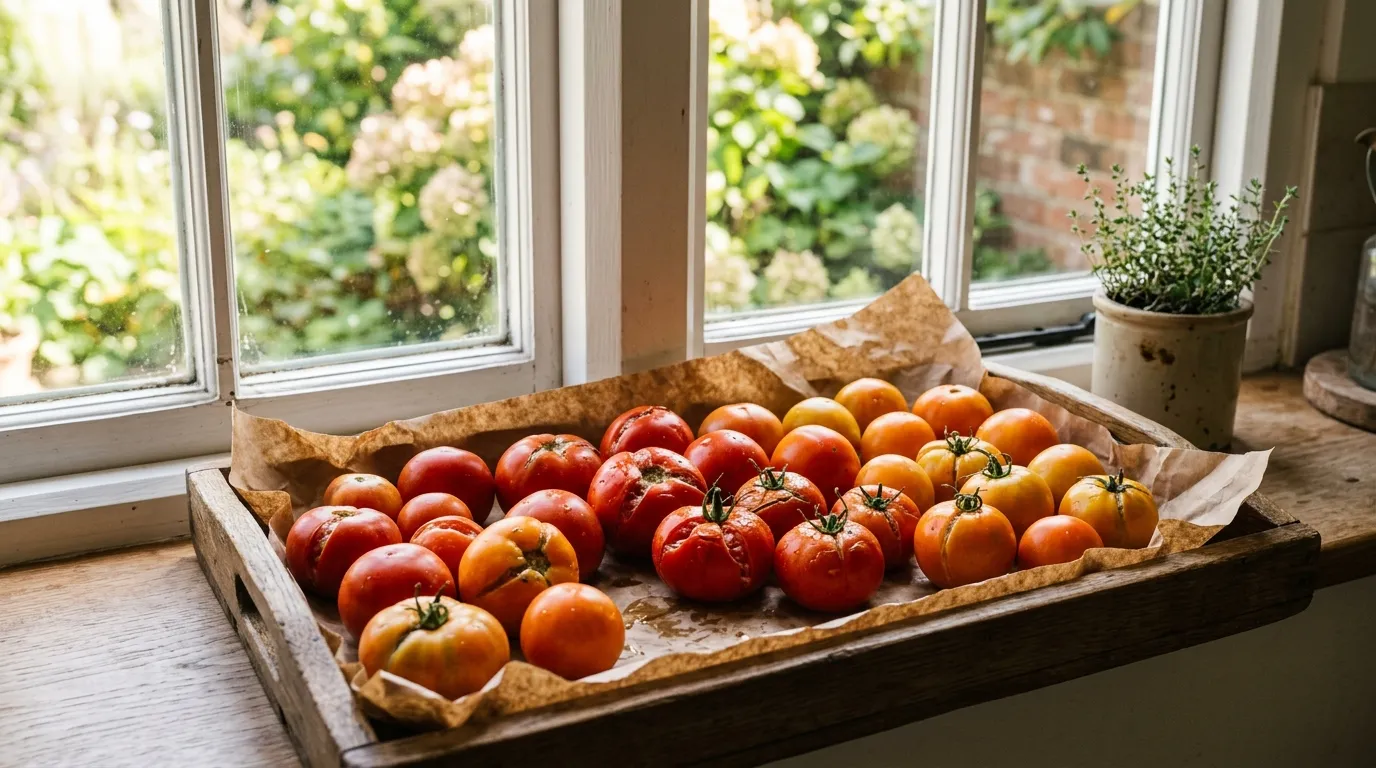 Picked split tomatoes ripening at 18-21C on a kitchen windowsill. Three to seven days finishes the ripening process and the fruit eats as well as unsplit.
Month-by-month tomato splitting prevention calendar
| Month | What to do |
|---|---|
| April | Sow seed indoors at 18-21C. Order drip-irrigation kit if needed. |
| May | Pot on. Plan watering routine. Order mulch (straw or composted bark). |
| June | Plant out after last frost in your area. Set up drip-irrigation on timer. |
| Late June | Apply 50mm mulch once soil has warmed and first truss has set. |
| July | 1.5 litres per plant every 2 days in greenhouse. Monitor soil moisture daily in hot spells. |
| August | Increase to 2 litres every 2 days. Watch weather forecasts for storms. Pick split fruit promptly. |
| September | Continue steady watering. Reduce to 1.5 litres every 3 days as ripening slows. |
| October | Final harvest. Pick any remaining green fruit and ripen indoors. |
| November | Clear plants. Compost healthy debris, bin any blighted or moulded material. |
Common mistakes to avoid
- Watering daily but lightly. This wets only the top 50mm of soil and never builds the consistent deeper moisture that prevents cracking. One deep soak every 2-3 days beats daily light watering on every measure.
- Watering only when you see wilting. By the time the plant wilts, the moisture swing is already happening. Schedule-based watering prevents the swing in the first place.
- Skipping mulch on outdoor crops. A 50mm mulch is the single biggest moisture-stabilising intervention. The 8-point soil moisture swing on a well-mulched bed crashes the crack rate to single digits.
- Picking only when fully ripe. A tomato that looks 80-90% red is fine to pick and ripen indoors. Letting it finish on the plant in late August invites cracking from the next storm.
- Growing only Sungold. It is delicious and cracks 47% of the time. Mix it 1:2 with Shirley or Ferline so the bulk of your crop holds and the cherry plant gives you a flavour highlight.
- Watering at night. Cold wet leaves overnight at 12-15C invite blight spores. Morning watering at the base only is the safe routine.
Frequently asked questions
Can I still eat tomatoes that have split on the vine?
Yes, if picked within 24 hours of splitting and the crack is dry and clean. Avoid any tomato with mould, slime or sap leaking from the crack. Pick at the first sign of splitting, ripen indoors at 18-21C on a sunny windowsill, and use within five days for best flavour and food safety.
Why are my tomatoes splitting all of a sudden?
A sudden swing in soil moisture is the usual cause - typically a dry spell followed by heavy watering or rain. The plant pushes water into ripening fruit faster than the skin can stretch, so the skin tears. UK August storms after a dry July produce the worst splitting in any given year.
Which tomato varieties resist cracking in UK conditions?
Shirley, Ferline, Marmande, Costoluto Fiorentino and most beefsteak varieties resist splitting due to thicker skins. Cherry types (Sungold, Sweet 100, Tumbling Tom) crack most readily. Plum tomatoes (San Marzano, Roma) sit between the two, with moderate resistance.
How often should I water tomatoes to prevent splitting?
Aim for 1-2 litres per plant every 2-3 days in mid-summer, adjusted to weather. The principle is steady soil moisture rather than alternating wet and dry. Mulch 50mm thick with straw or composted bark to even out moisture, and avoid daily light watering that wets only the surface.
Do greenhouse tomatoes split less than outdoor ones?
Greenhouse tomatoes split less from rainfall but can split more from forgotten watering. The closed environment dries out faster in hot weather, so a missed day creates a bigger moisture swing when you next water. A self-watering system or capillary mat reduces split rates by around 60% in greenhouses.
Next steps
Now you know how to prevent and salvage split tomatoes, the next step is troubleshooting the other common ripening problems. Read our guide on common tomato diseases UK identification for the visual diagnosis of the eight problems that ruin UK tomato crops.
Our team produces practical UK gardening guidance from source research, contributor records and established horticultural practice. Editorial standards are overseen by Matt W.