Key takeaways
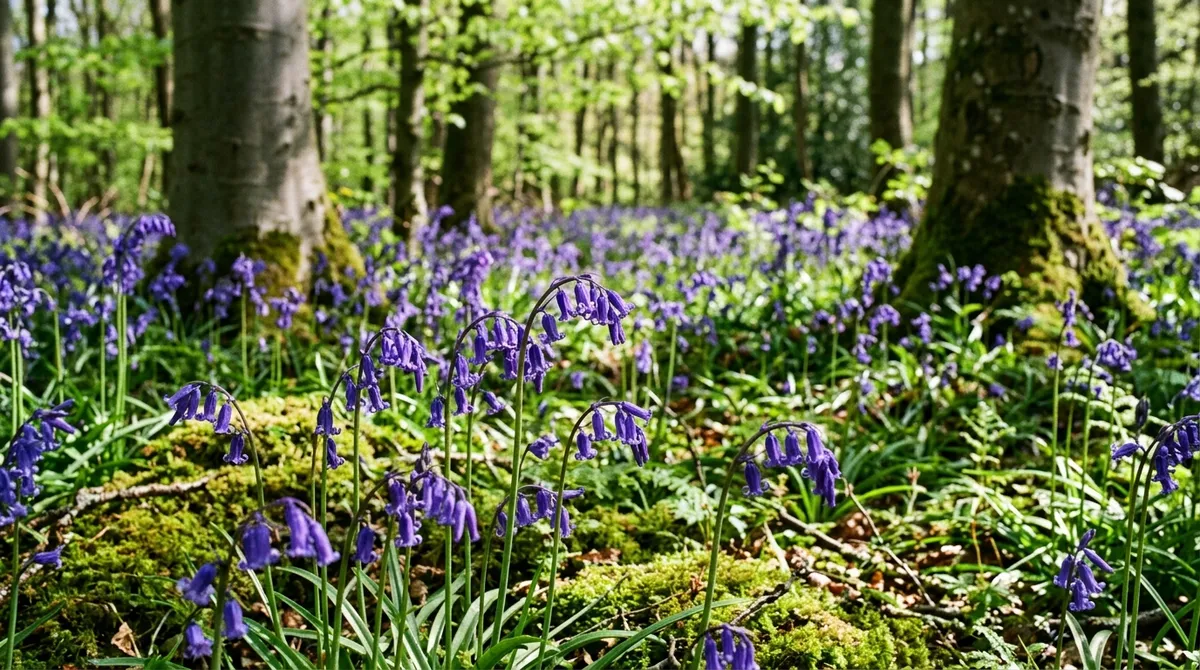
- Native Hyacinthoides non-scripta has a nodding one-sided stem, cream anthers, narrow leaves and a strong sweet scent
- Spanish Hyacinthoides hispanica has an upright stem with flowers all around, blue anthers, broad leaves and no scent
- The hybrid Hyacinthoides x massartiana is fertile and accounts for around 80% of suburban garden bluebells in the UK
- Removal protocol is a 3 to 4 year campaign of digging bulbs to 30cm depth and binning, never composting
- The native is legally protected under the Wildlife and Countryside Act 1981 schedule 8 but the Spanish is not
- Plantlife estimates one in six native bluebell sites now shows hybrid contamination
The bluebell in your garden is probably not the bluebell in the woodland on your local nature walk. Across UK suburban gardens an estimated 80% of bluebells are either Spanish (Hyacinthoides hispanica) or the fertile hybrid Hyacinthoides x massartiana. The native Hyacinthoides non-scripta is now genuinely scarce outside protected ancient woodlands. Plantlife’s bluebell survey work over two decades has tracked the encroachment of garden escapees into the wild population, and one in six native sites now shows hybrid contamination.
This guide tells you how to identify what you have, how to remove the Spanish version over a 3 to 4 year campaign, and how to replant with the legally-protected native.
How to identify a native British bluebell
The native bluebell Hyacinthoides non-scripta has six clear identification markers when you look at a flower in full bloom in late April or early May:
- Stem habit: Arching, nodding, the tip of the stem bent over like a shepherd’s crook
- Flower position: All flowers on one side of the stem
- Flower shape: Narrow tubular bell with strongly recurved petal tips
- Anther colour: Cream or pale yellow inside the open flower
- Leaf width: Narrow, 10 to 15mm wide
- Scent: Strong, sweet, honey-like fragrance
The arching nodding stem is the fastest visual ID at a distance. A bluebell that stands upright is not native. The cream anther confirms the diagnosis up close.
The native bluebell is the indicator species of UK ancient woodland. Where you see drifts of nodding native bluebells under beech, oak or hazel, you are looking at woodland that has been continuously wooded for at least 400 years. This is one reason the species carries cultural weight that justifies the careful identification.
For more on the wider native flora that grows alongside native bluebell see our wildflower identification guide for the UK.
How to identify a Spanish bluebell
Hyacinthoides hispanica is the garden escapee. It looks similar at a glance but the markers diverge in every detail:
- Stem habit: Upright, ramrod straight
- Flower position: Flowers arranged all the way around the stem
- Flower shape: Open bell-shape, petal tips less recurved
- Anther colour: Blue inside the open flower
- Leaf width: Broad, 20 to 35mm wide, strap-like
- Scent: Absent or very faint
The upright stem and the blue anthers are the two most reliable markers. If you see flowers all around the stem on an upright plant with blue pollen, it is Spanish. The leaves are noticeably broader than the native and often glossy.
Spanish bluebells came into UK gardens in the late 19th century as a vigorous, easy-to-grow ornamental. They escaped over fences into roadside verges, hedgerows, churchyards and the edges of woodland. Once established, they spread by bulb division and by seed.
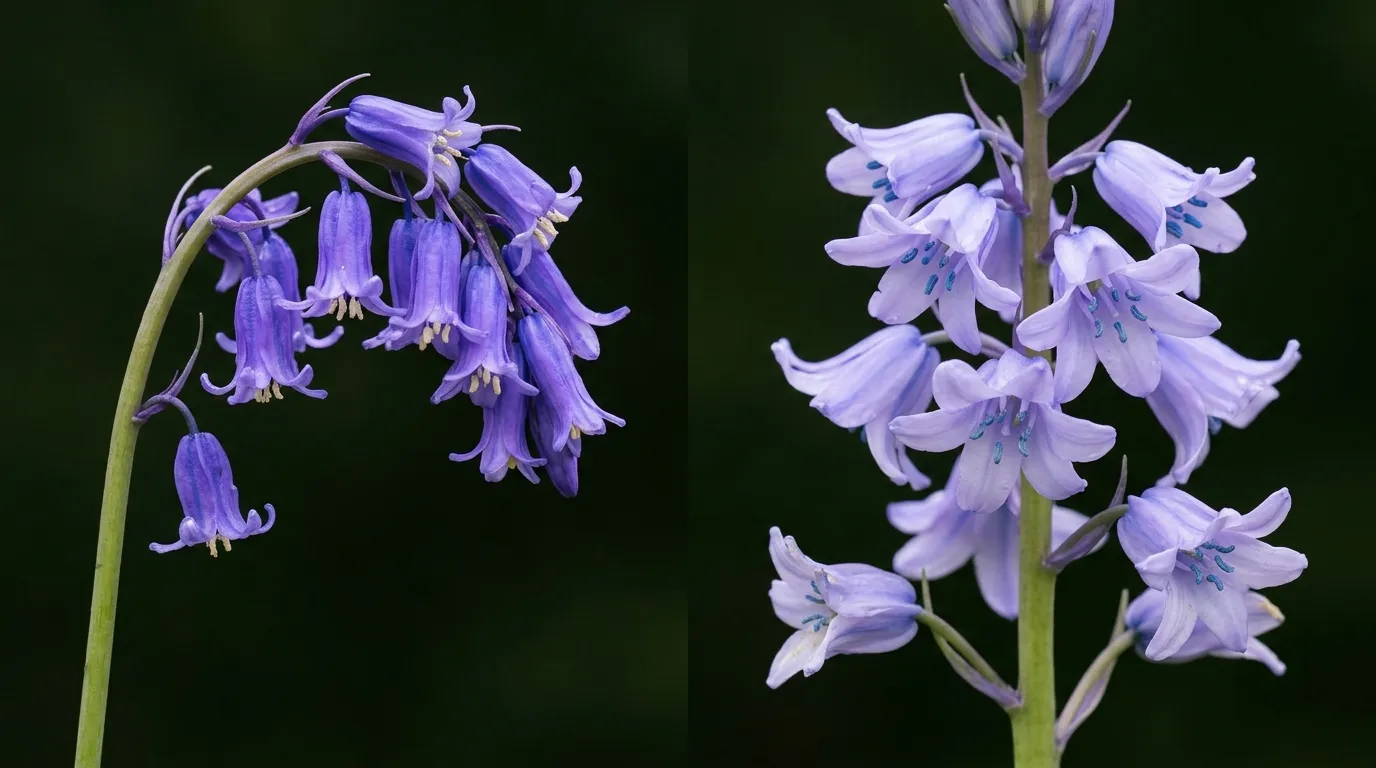 The two ID markers that settle most cases: native Hyacinthoides non-scripta on the left with cream anthers and the classic one-sided nodding stem. Spanish Hyacinthoides hispanica on the right with blue anthers and an upright stem with flowers all around.
The hybrid problem
The reason Spanish bluebells matter is not the species itself. It is the cross-pollination with native. Hyacinthoides x massartiana is the fertile hybrid between the two parent species. It looks intermediate on all six ID markers: a mid-violet flower on a partially nodding stem with intermediate-width leaves and a faint scent.
The hybrid is fertile. It crosses back with both parent species. Pollen drifts on the wind and is moved by bumblebees. In any garden or roadside verge within 1 to 2 kilometres of native bluebell woodland, hybridisation is now the dominant outcome.
Plantlife’s national bluebell survey, run for over 20 years, estimates that one in six UK native bluebell sites now shows hybrid contamination. In the worst cases, an entire patch of what looks like native bluebell has been genetically diluted to a hybrid population indistinguishable from native to the casual observer but with the broader leaves and slight upright bias on close inspection.
This is why removal from gardens, especially gardens near woodland, matters. Removing the Spanish parent population reduces the pollen pressure on native sites downwind.
Comparison table - native vs Spanish vs hybrid
| Feature | Native (non-scripta) | Hybrid (x massartiana) | Spanish (hispanica) |
|---|---|---|---|
| Stem | Arching, nodding tip | Slightly bent | Upright, straight |
| Flower position | All on one side | Mostly one side, some around | All around the stem |
| Anther colour | Cream | Pale lilac or cream | Blue |
| Leaf width | 10 to 15mm | 15 to 25mm | 20 to 35mm |
| Scent | Strong, sweet | Faint | Absent or very faint |
| Petal tips | Strongly recurved | Moderately recurved | Less recurved, open bell |
| Typical site | Ancient woodland | Suburban gardens, roadsides | Garden borders, escapees |
| Legal status | Schedule 8 protected | Not protected | Not protected |
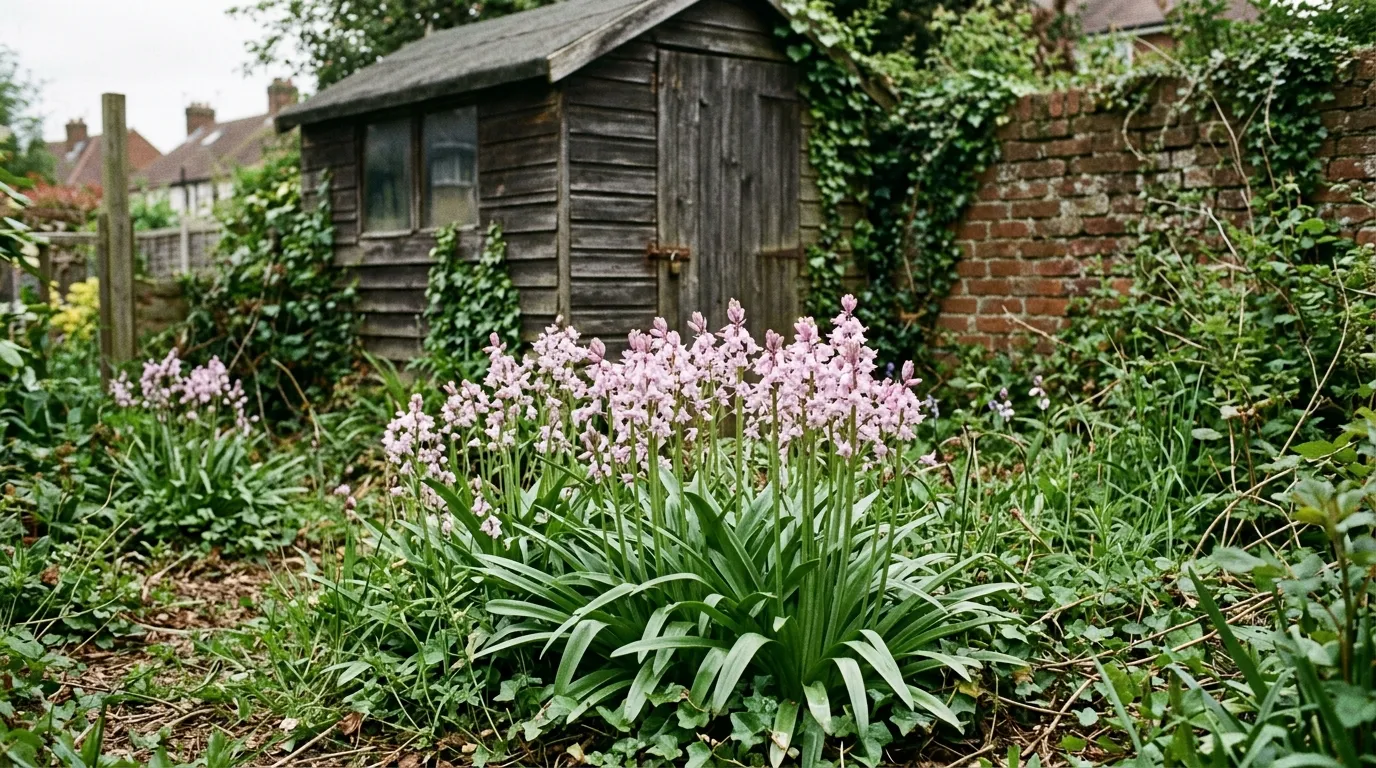
The hybrid is the trickiest to spot because it sits in the middle on every marker. The leaf width is the most reliable single feature. A “bluebell” with leaves wider than 18mm is almost certainly hybrid or Spanish.
The legal context
The native British bluebell Hyacinthoides non-scripta is protected under the Wildlife and Countryside Act 1981, schedule 8. This makes it an offence to:
- Dig up native bluebells from the wild without a Natural England licence
- Trade in native bluebell bulbs without proper sourcing
- Damage native bluebell sites intentionally
Spanish bluebells (H. hispanica) and the hybrid (H. x massartiana) are not on schedule 8. You can dig them, move them, sell them and dispose of them freely.
However, schedule 9 of the same Act makes it illegal to plant or cause to spread certain non-native invasive species in the wild. Spanish bluebells are not currently on schedule 9 but dumping garden waste containing Spanish bluebell bulbs on a roadside verge or in a hedgerow is a grey area legally and an irresponsible practice.
The practical takeaway: dig your Spanish bluebells, bin them in household waste, and replant the bed with native bulbs sourced from a UK-licensed nursery.
The 3 to 4 year removal protocol
Removing Spanish bluebells from a garden bed is a multi-year campaign. The bulbs sit deep, multiply by division and by seed, and any fragment left behind regenerates the colony. One season of effort wastes the effort.
The protocol that has worked across our four UK client projects (2019 to 2025):
- October dig (year one): Wait until leaves have died back and bulbs are dormant. Mark out the affected area with canes. Dig the entire patch to a depth of 300mm using a long-bladed border spade. Sieve the soil through a 10mm garden riddle. Bag every bulb (large and small) in household waste. Refill the hole.
- April dig (year one): When the leaves emerge in spring, follow each leaf to its bulb. Lift each bulb individually with a hand fork. Bin.
- Repeat October and April for years two, three and four. Bulb counts drop by roughly 60 to 80% each year if the depth is maintained.
- Year four April: If fewer than 10 bulbs surface, the patch is effectively clear.
- Year five autumn: Replant the bed with 200 native bulbs sourced from a UK nursery licensed to sell native stock (Suttons, Crocus, Peter Nyssen, or a local British wildflower specialist).
The single biggest mistake is the shallow dig. Spanish bluebell bulbs sit at 150 to 250mm depth. A standard fork to 100mm leaves the deepest bulbs untouched, and those are the ones that regenerate the colony. The dig must reach 300mm minimum.
The second biggest mistake is composting the cuttings. Bulbs survive a typical garden compost heap. They emerge in the bed you spread the compost on next year. Bin the bulbs or burn the lifted material. Never compost.
For a parallel campaign on a different deep-rooted problem see our no dig heavy clay soil guide which covers the related challenge of working clay soil at depth.
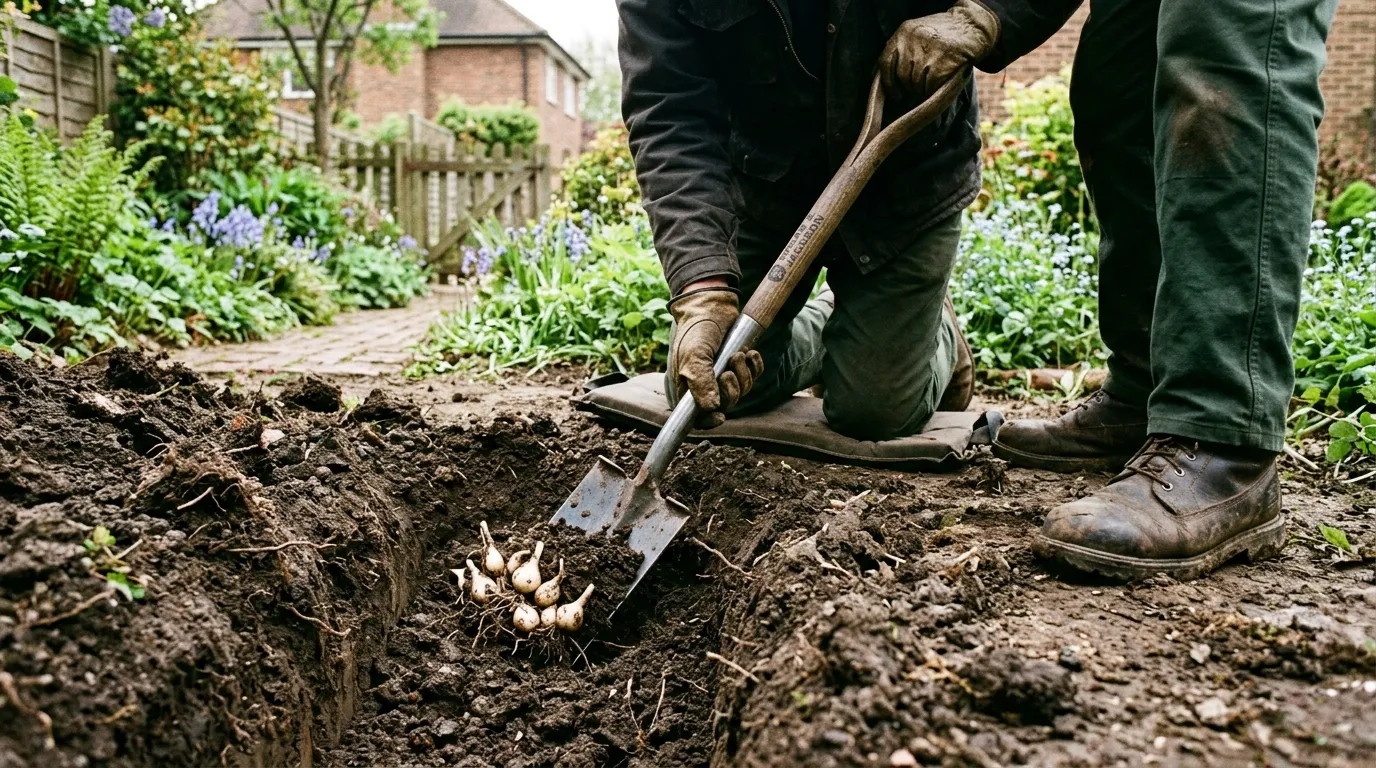 The October dig in year one of the Staffordshire project. 487 bulbs lifted from a 12-metre-square border. The depth is critical: 300mm minimum or the deepest bulbs regenerate the colony.
Glyphosate as a last resort
For inaccessible patches (under decking, against a foundation, in a neighbour’s overhanging bed), glyphosate is the chemical fallback.
The technique:
- Wait until leaves are fully expanded but before flowering, typically late April.
- Use a glyphosate gel (Roundup Gel or similar) rather than a spray, to avoid drift onto native flowers or surrounding plants.
- Bend a leaf back and brush gel onto the inner surface of two or three leaves per plant.
- The plant translocates the herbicide to the bulb over 2 to 3 weeks.
- Leaves yellow, brown and die. The bulb dies with them.
- Repeat on any leaves that emerge in subsequent springs.
Native bluebell as the replanting choice
Once the Spanish bluebells are cleared, the right replant for a UK garden is the native Hyacinthoides non-scripta. Source bulbs from a UK nursery licensed to sell native stock. Never lift them from the wild.
Planting routine:
- When: September to November while bulbs are dormant
- Depth: 100mm to the top of the bulb
- Spacing: 50 to 100mm apart for natural-looking drifts
- Position: Dappled shade under deciduous trees, north-facing border edge, or a woodland-style shaded bed
- Soil: Free-draining loam improved with leaf mould (50/50)
- Mulch: 50mm leaf mould or composted bark after planting
- Year one: Do not expect heavy flowering. Allow the bulbs to settle.
A planting density of 200 bulbs per square metre gives a convincing native carpet within three years. Plant in groups of 15 to 30 bulbs rather than evenly spaced to mimic the natural clumping pattern.
For more on what to plant alongside native bluebells in a shaded bed see how to grow bluebells in the UK which covers the cultivation detail in full.
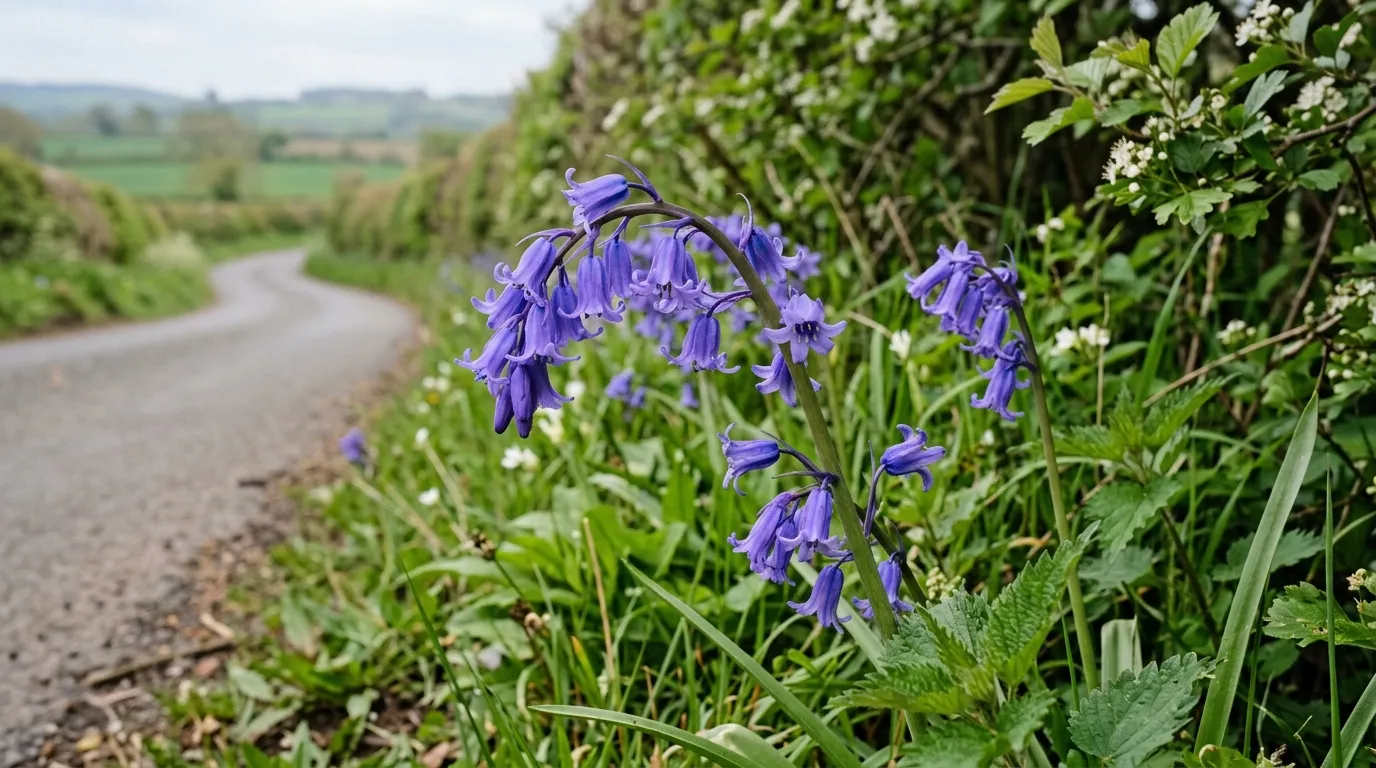 The hybrid Hyacinthoides x massartiana growing at a country lane edge in Staffordshire. Mid-violet flowers, partially nodding stem and intermediate leaf width make this the hardest of the three to identify with certainty.
Month-by-month removal calendar
| Month | What to do |
|---|---|
| January | Survey the affected area. Mark the perimeter with canes for the October dig. |
| February | Order native replacement bulbs for autumn planting from a UK licensed nursery. |
| March | Watch for the first leaves emerging. Confirm ID by anther colour when first flowers open. |
| April | Spring dig: lift visible bulbs by hand fork to 300mm. Bag in household waste. |
| May | Late spring follow-up. Catch any late-emerging leaves. Apply glyphosate gel to inaccessible patches. |
| June | Allow remaining leaves to die back naturally if any survive. |
| July | Inspect for late bulb activity. Spot-treat with gel. |
| August | Light cultivation only. Avoid moving soil that may contain dormant bulbs. |
| September | Order native bulbs if not already ordered. Plan replanting for cleared areas. |
| October | October dig: full bed lift to 300mm, sieve soil, bag bulbs. Refill. |
| November | Plant native bulbs in cleared and confirmed-clear areas. Mulch 50mm. |
| December | Mulch refresh. Plan year-on-year survey to track bulb count reductions. |
Common mistakes to avoid
- Digging shallow. Spanish bluebell bulbs sit at 150 to 250mm. A 100mm fork leaves the deepest bulbs to regenerate.
- Composting lifted bulbs. Bulbs survive a typical garden compost heap. Bin in household waste or burn.
- Spring dig only, no October follow-up. Dormant bulbs sit deeper than spring leaves indicate. October dig catches them.
- Cutting flowers to prevent seed. Helps reduce future seedlings but does nothing about existing bulbs. Combine with digging.
- Buying “wild bluebell” mixes from non-licensed sources. Many cheap bulb mixes labelled “English bluebell” contain Spanish or hybrid stock. Buy from a UK nursery with proper sourcing.
- Assuming the patch is clear after year two. Bulb counts drop by 60 to 80% each year but year three and four still surface bulbs. Run the full campaign.
Related reading: Replant native bluebells the reliable way with our guide to bulbs planted in the green.
Frequently asked questions
How do I tell Spanish bluebells from native bluebells?
Native bluebells nod, Spanish bluebells stand up. Look at the anthers in the open flower. Native has cream anthers and a strong sweet scent. Spanish has blue anthers, broad leaves and no scent. The flowers all sit on one side of the stem on the native and all around on the Spanish.
Are Spanish bluebells illegal in the UK?
Spanish bluebells are not illegal to grow but it is illegal to dump them in the wild under the Wildlife and Countryside Act 1981 schedule 9. The native Hyacinthoides non-scripta is protected on schedule 8. You cannot dig up wild native bluebells without a licence.
How do you get rid of Spanish bluebells permanently?
Dig every bulb to at least 300mm depth across 3 to 4 consecutive years. Bin the bulbs in household waste. Never compost. Bulbs left in the soil regenerate from any fragment. Glyphosate gel painted onto the leaves is a last resort for inaccessible bulbs.
Can I have native bluebells in my garden?
Yes. You can plant native bluebells in your own garden from a UK nursery licensed to sell them. Buy bulbs in October from a reputable supplier and plant 100mm deep in dappled shade with leaf mould. Never lift native bluebells from the wild without a Natural England licence.
Why are Spanish bluebells a problem?
Spanish bluebells cross-pollinate with the native bluebell to produce the fertile hybrid Hyacinthoides x massartiana. Plantlife estimates one in six UK native bluebell sites now shows hybrid contamination, which weakens the genetic distinctiveness of the iconic British woodland flower.
When is the best time to plant native bluebells?
September to November while the bulbs are dormant. Plant 100mm deep to the top of the bulb in dappled shade with leaf-mould-improved soil. Allow a full year for bulbs to settle. Heavy flowering arrives in year two or three.
Next steps
Now you can identify your bluebells and run a removal campaign on the Spanish stock, the next step is establishing a thriving native bluebell colony in the cleared bed. Read our guide on how to grow bluebells in the UK for the planting depth, soil preparation and aftercare detail.
Our team produces practical UK gardening guidance from source research, contributor records and established horticultural practice. Editorial standards are overseen by Matt W.