Prep
30 minutes
Cook
3 hours
Total
3 hours 30 minutes
Serves
8
Key takeaways
- Authentic bolognese uses 50/50 minced beef and pork, plus soffritto of onion, carrot, celery
- Add 250ml whole milk before the wine; this is the critical Italian step most UK recipes skip
- Slow-cook for 3 hours minimum; 4-6 hours gives even deeper flavour
- Use garden tomatoes when you have them, otherwise tinned San Marzano are the only acceptable swap
- Bolognese is for tagliatelle, lasagne, or pappardelle; never traditionally served with spaghetti
- Doubles or triples easily for batch cooking, freezes for 6 months in 4-portion bags
From the Garden
Grow these for the recipe: Tomatoes (San Marzano types preferred), Onion, Carrots, Celery, Garlic, Bay leaf, Parsley.
Ingredients
Soffritto
- • 1 medium onion, finely diced (about 150g)
- • 1 medium carrot, finely diced (about 100g)
- • 1 celery stick, finely diced (about 80g)
- • 3 tbsp olive oil
- • 30g unsalted butter
Meat
- • 250g minced beef (15-20% fat)
- • 250g minced pork
- • 1 tsp fine sea salt
- • 1/2 tsp freshly ground black pepper
Liquids and tomatoes
- • 250ml whole milk
- • 200ml dry white wine
- • 400g fresh tomatoes (skinned and chopped) OR 1 x 400g tin San Marzano tomatoes
- • 2 tbsp tomato puree
- • 300ml beef stock
Aromatics
- • 2 garlic cloves, finely chopped
- • 2 bay leaves
- • 1 tbsp finely chopped fresh parsley
- • Pinch of freshly grated nutmeg
Equipment
- Heavy cast-iron casserole or Dutch oven (4 litre minimum)
- Sharp knife and chopping board
- Wooden spoon
Method
- 1
Heat the olive oil and butter in the casserole over medium-low heat. Add the soffritto (onion, carrot, celery). Cook gently for 10-12 minutes, stirring often, until soft and lightly golden but not browned. Add the chopped garlic for the final 2 minutes.
- 2
Increase heat to medium-high. Add both minced meats. Break up with a wooden spoon and cook for 8-10 minutes until the meat is browned and any liquid has evaporated. Season with the salt and pepper.
- 3
Pour in the milk and stir well. Reduce heat to medium and simmer for 10-15 minutes until the milk has been mostly absorbed. Add the nutmeg. This step is the Italian secret; the milk tenderises the meat proteins and rounds the flavour.
- 4
Pour in the white wine. Simmer for 5-8 minutes until the alcohol has evaporated and the wine has reduced by half.
- 5
Add the chopped tomatoes, tomato puree, beef stock, and bay leaves. Stir well. Bring to a gentle simmer.
- 6
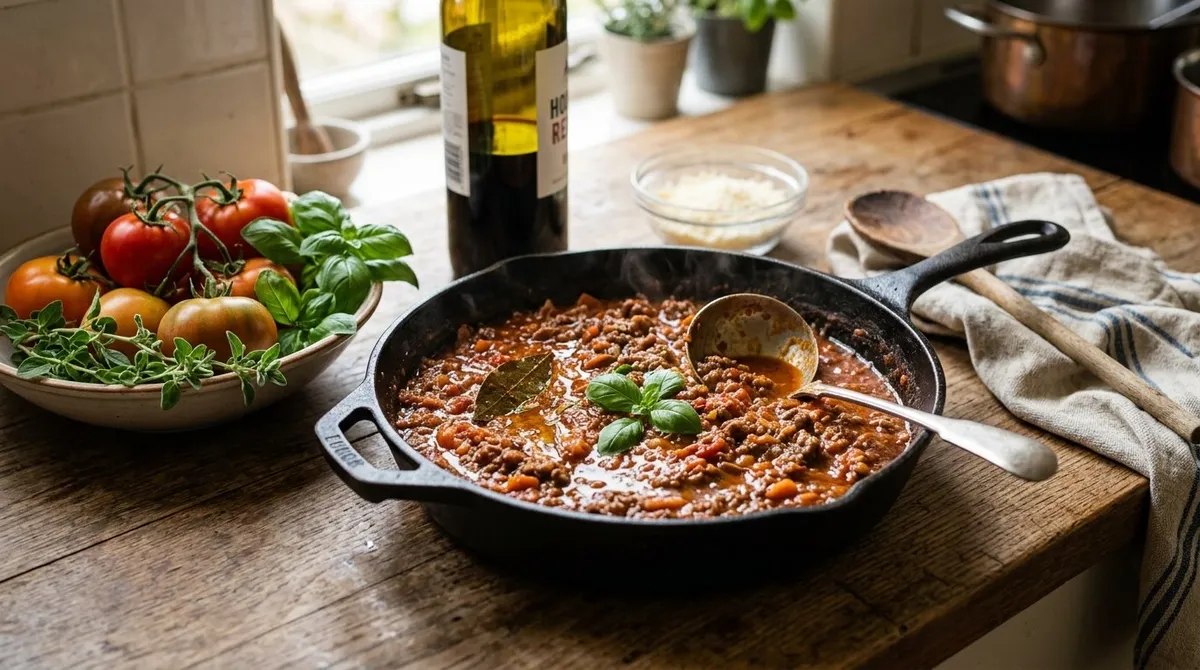
Reduce heat to the lowest setting. Cover with the lid slightly ajar. Cook for 3 hours, stirring every 30 minutes. Top up with a splash of stock or water if it dries out. After 3 hours the ragu should be thick, glossy, and a deep brown-red.
- 7
Remove the bay leaves. Stir in the chopped parsley. Taste and adjust salt and pepper. Rest off the heat for 10 minutes before serving.
Storage
Cool completely, then refrigerate in airtight containers for up to 4 days. Freeze in 500ml portions for up to 6 months. Defrost overnight in the fridge and reheat gently with a splash of water or stock to loosen. Do not microwave from frozen; it changes the texture.
Real Italian ragu alla bolognese is what every home cook should learn before they ever touch a jar of pasta sauce. It uses a kilo of vegetables and meat, takes 3 hours of mostly hands-off cooking, and freezes for 6 months. UK gardeners with a tomato glut, an over-grown bed of carrots, or a row of celery have most of the ingredients within reach. This is the official Accademia Italiana della Cucina recipe, registered with Bologna’s Chamber of Commerce in 1982, with notes on UK-grown ingredient swaps.
You will find the soffritto method, the milk-before-wine technique that makes Italian bolognese different from British, and the batch-freezing system that turns a August tomato glut into 8-12 weekday dinners. For best results, use home-grown tomatoes and a good supply of garden onion and carrot.
Why this is different from supermarket bolognese
The British supermarket-style bolognese uses minced beef alone, no milk, no white wine, no soffritto vegetables, and 30 minutes of cooking. The Italian original uses 50/50 beef and pork, includes milk, white wine, slow cook, and finely-diced soffritto. The result is twice as deep in flavour and cooks the meat to soft-shredding tenderness instead of the firm pellets of the British version.
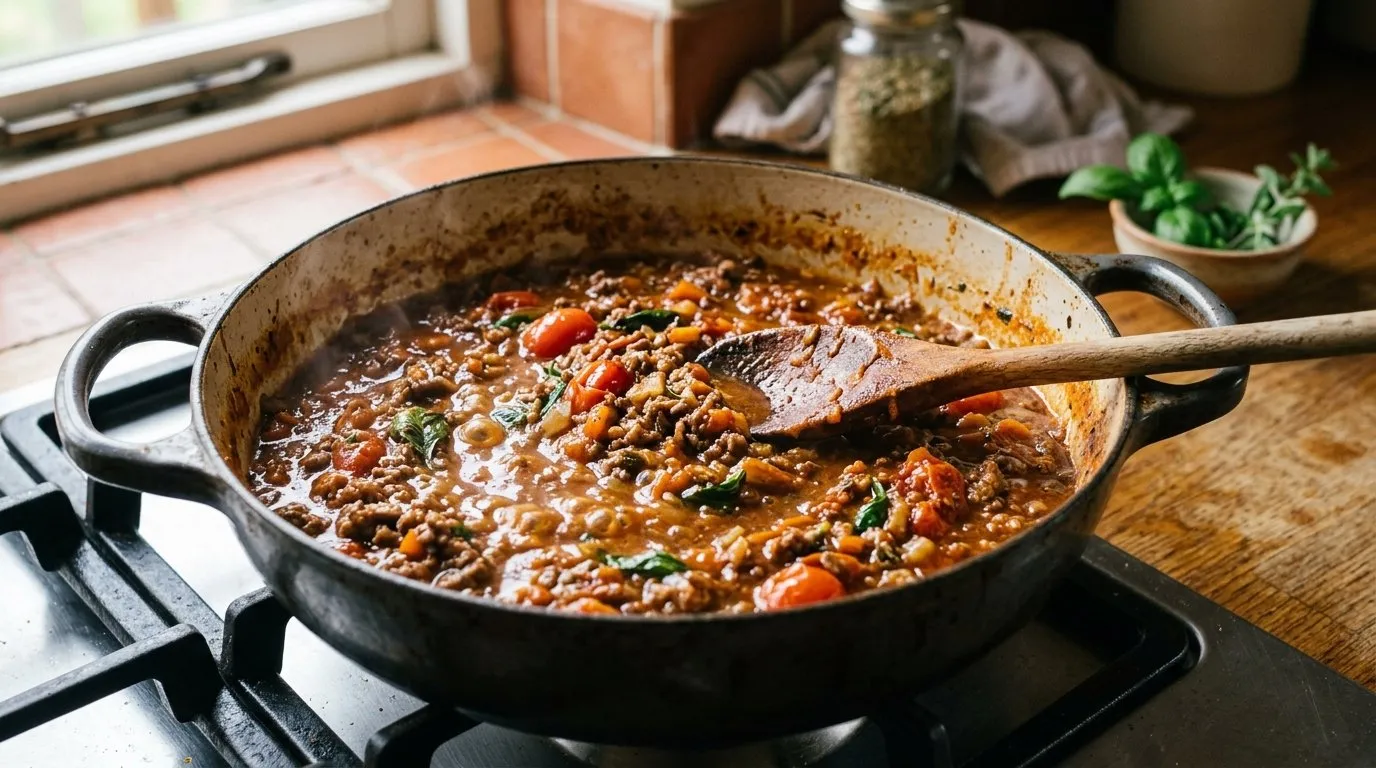
Best ways to serve
Tagliatelle al ragu. The classic. Cook 400g fresh tagliatelle, drain, toss with 750ml of the ragu sauce. Top with grated Parmigiano Reggiano. Serves 4.
Lasagne al forno. Layer with bechamel and lasagne sheets in a 30x20cm dish. Bake at 180C for 35-45 minutes. The 8-portion ragu makes one large lasagne plus 2 portions for the freezer.
Pappardelle. Even wider than tagliatelle, holds the heaviest ragu well. Cook 400g pappardelle and toss as for tagliatelle.
Pasta bake. Mix 500ml ragu with 400g cooked penne or rigatoni, top with mozzarella and Parmigiano, bake at 200C for 20 minutes.
Polenta. A bowl of soft polenta topped with 200ml of bolognese is northern Italian winter comfort food at its best.
Batch cooking and freezing
A double batch makes 16 portions and uses a 6-litre casserole. Cook time goes from 3 hours to 4 hours because the larger volume reduces more slowly. Freeze in 500ml containers (each holds 1-2 portions) labelled with the date and “Bolognese”. A summer batch made with garden tomatoes lasts a family through Christmas.
Common mistakes
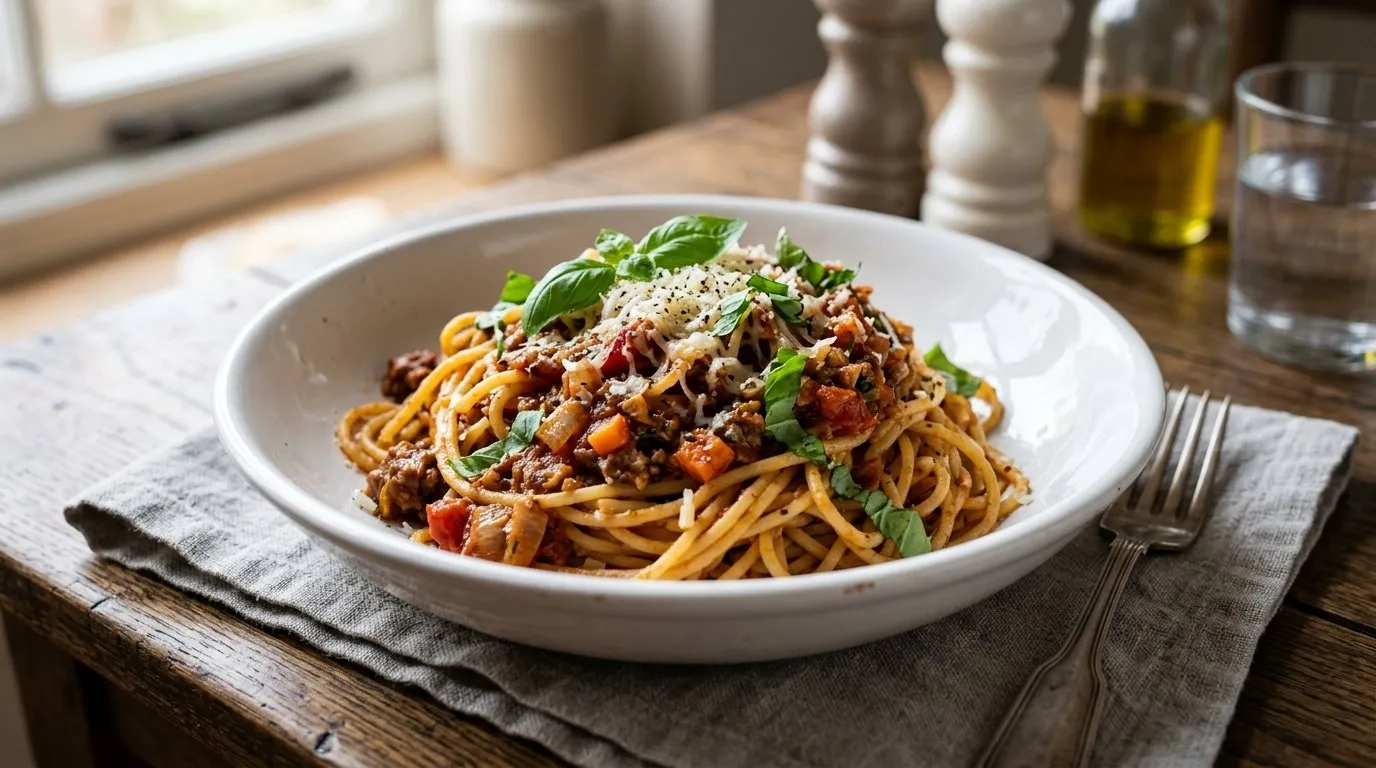
Skipping the milk. The single biggest difference between authentic and home-style bolognese.
- Browning the soffritto too dark. The vegetables should be soft and lightly golden, never browned. Browning makes the sauce bitter.
- Using lean mince. 5% fat mince makes a dry sauce. Use 15-20% fat beef. The fat renders slowly during the 3-hour cook and carries flavour.
- Cooking too short. Anything under 2 hours is not bolognese; it’s a quick meat sauce. The slow cook breaks down collagen, melts fat, and rounds flavours that fast cooking cannot replicate.
- Adding herbs at the start. Bay leaf is fine, but parsley goes in at the end. Cooking parsley for 3 hours destroys the fresh note that finishes the dish.
Frequently asked questions
What is the difference between bolognese and spaghetti bolognese?
Authentic ragu alla bolognese is the Italian original; spaghetti bolognese is the British adaptation. The Italian version uses tagliatelle (flat ribbon pasta) which holds the heavy ragu better than spaghetti. The British version often skips the milk and uses thinner sauce. Both are valid, but the Italian Accademia registered the original recipe with Bologna's Chamber of Commerce in 1982, specifying tagliatelle.
Why does bolognese sauce need milk?
Milk added before the wine breaks down the meat proteins and rounds the acidity of the tomatoes. The lactose in milk caramelises slightly during the long cook, adding depth. Bolognese without milk tastes thin and overly tomato-forward. The technique appears in the official Accademia Italiana recipe and most authentic Italian sources.
Can I make bolognese with garden tomatoes?
Yes, garden tomatoes give the best flavour, especially varieties like San Marzano, Roma, or Italian plum types. Skin them by scoring an X on the bottom and dipping in boiling water for 30 seconds. The skins peel off easily. Use 400g of skinned chopped tomatoes per batch. Out of season, tinned San Marzano are the only acceptable shop swap.
Can I make this in a slow cooker?
Yes. Complete the soffritto, meat browning, milk reduction, and wine reduction on the hob in a frying pan. Transfer to the slow cooker, add the tomatoes, puree, stock, and bay. Cook on low for 6-8 hours or high for 4-5 hours. The flavour is slightly less developed than the hob method but still excellent.
How long does homemade bolognese keep?
Refrigerated in an airtight container, homemade bolognese keeps 4 days. Frozen in portions, it lasts 6 months without flavour loss. Defrost overnight in the fridge and reheat gently with a splash of water. The flavour actually improves on the second day as the meat continues to absorb the sauce.
Our team produces practical UK gardening guidance from source research, contributor records and established horticultural practice. Editorial standards are overseen by Matt W.