Prep
10 minutes
Cook
0 minutes
Total
10 minutes
Serves
250g pesto (8 servings stirred through pasta)
Key takeaways
- 100g wild garlic + 50g Parmesan + 50g pine nuts + 100ml olive oil = 250g pesto in 10 minutes
- Forage Allium ursinum in damp UK woodland March to mid-May before the leaves toughen
- Always identify by the strong garlic smell when leaves are crushed - lily of the valley is the dangerous lookalike
- Add 1 cooking garlic clove to amplify; the wild garlic alone is milder than expected
- Freezes 6 months in ice cube trays - drop straight into pasta sauce or risotto
- Wash leaves quickly in cold water and spin dry; long soaking dilutes the flavour
From the Garden
Grow these for the recipe: Wild garlic (Allium ursinum, foraged from damp woodland or shaded garden).
Ingredients
Main ingredients
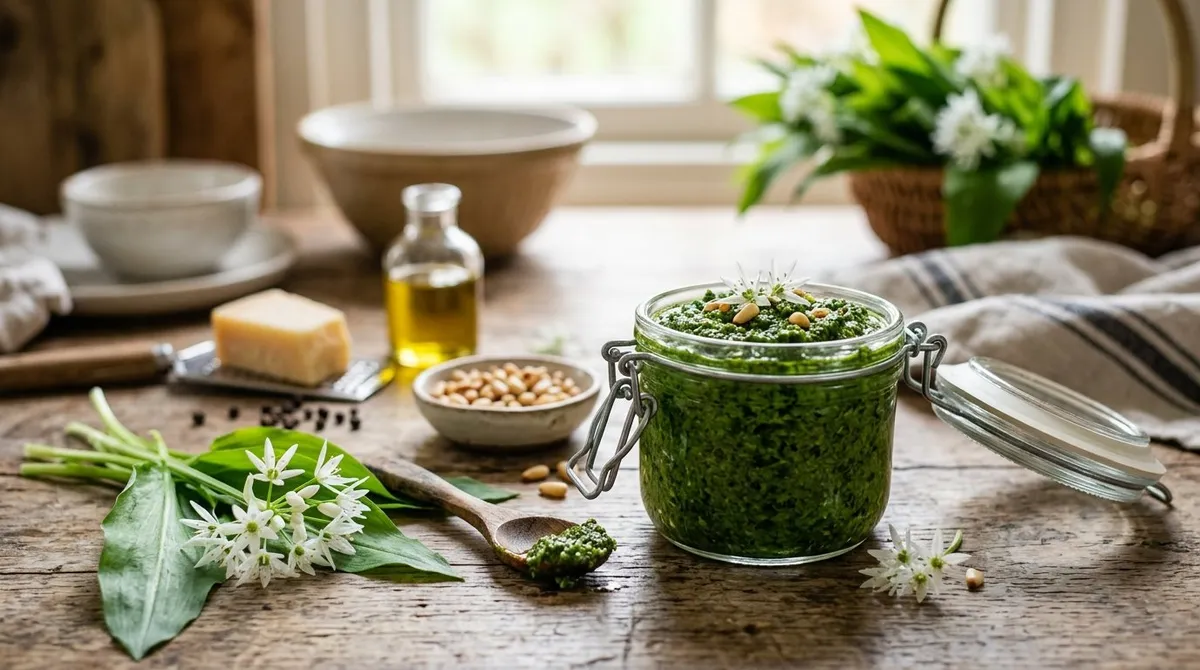
- • 100g fresh wild garlic leaves (Allium ursinum only)
- • 50g Parmesan or Pecorino, finely grated
- • 50g pine nuts (or walnuts as a cheaper alternative)
- • 1 garlic clove, peeled
- • 100ml extra virgin olive oil
- • Juice of half a lemon
- • Pinch of fine sea salt
Equipment
- Small food processor or blender
- Sharp knife
- Salad spinner or clean tea towel
- Sterilised glass jar (250ml)
Method
- 1
Forage wild garlic in dappled shade - ash, oak and beech woodland is ideal. Identify by the strong garlic smell when you crush a leaf. Pick young leaves only, leaving the bulbs in place. Take 25% maximum from any patch.
- 2
Wash the leaves quickly in cold water - 30 seconds is plenty. Long soaking dilutes the flavour. Spin dry in a salad spinner or pat between two clean tea towels. Damp leaves give a watery pesto.
- 3
Roughly chop the leaves and add to a food processor with the Parmesan, pine nuts, garlic clove, olive oil, lemon juice and a pinch of salt.
- 4
Pulse for 10-15 seconds at a time until the pesto reaches the texture you want. Quick pulses keep flecks of green leaf visible (rustic). Longer blitzing makes a smoother sauce. Stop before it becomes baby food.
- 5
Taste and adjust. Add more Parmesan for richness, more lemon for sharpness, more oil if too thick. The wild garlic flavour should be bright, garlicky and grassy.
- 6
Decant into a sterilised glass jar. Press a layer of olive oil on top to seal out air. Refrigerate for up to 7 days.
Storage
Refrigerate sealed under a layer of olive oil for up to 7 days. Freezes 6 months in ice cube trays - one cube serves one portion of pasta. Once defrosted use within 24 hours. Do not heat the pesto directly; stir into hot pasta just off the heat.
You will find the picking rules that protect the patch for next year, the identification check that keeps you safe, and the freezer-friendly format that gets you out of pesto for nine months. The Woodland Trust foraging guide covers the legal and ethical rules for hedgerow harvesting in England and Wales.
Why this works
The flavour of wild garlic comes from sulphur compounds (mostly allicin and methiin) released when the leaves are crushed. Heat destroys these, which is why pesto is the right format - no cooking, fast blitz, immediate use or freeze.
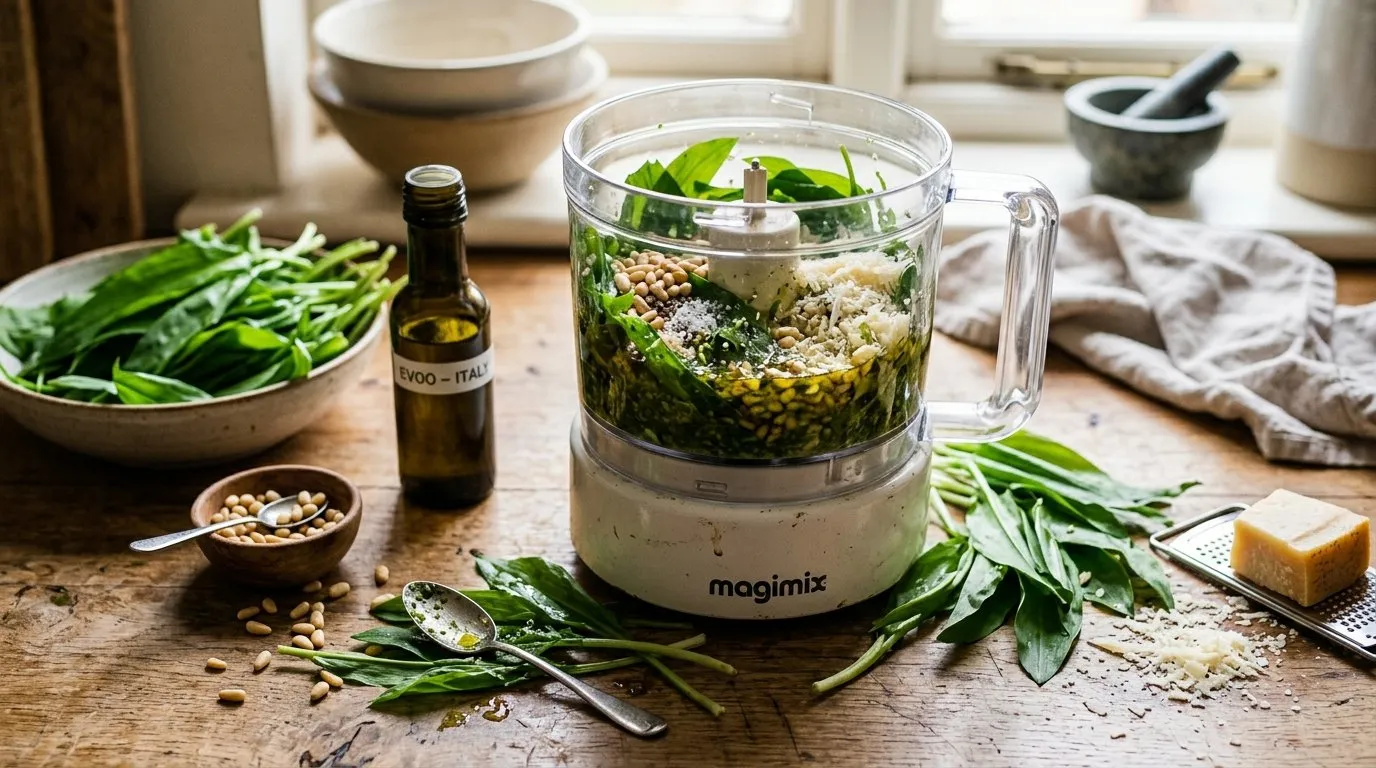
Forage rules
Pick only where you have the legal right - footpaths and bridleways are usually fine, private land needs permission. Take 25% maximum from any patch. Pick young leaves before the flowers open for the cleanest flavour. Once flowers are up the leaves toughen and the pesto turns slightly bitter.
Identification is the rule that matters more than any other. Crush a leaf between your fingers - wild garlic smells of garlic. Lily of the valley does not. Both grow in similar damp woodland and have similar lance-shaped leaves. Never trust visual identification alone.
How to use the pesto
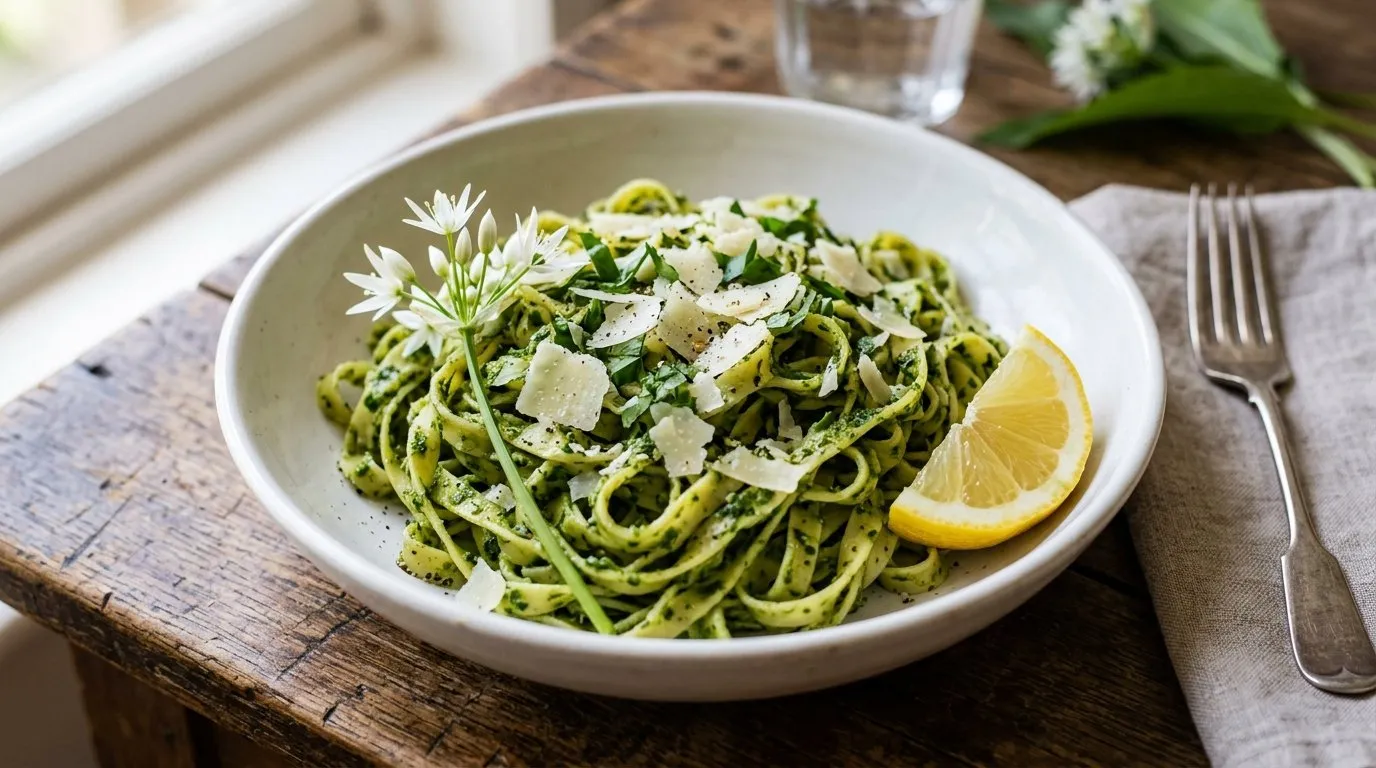
Stir through hot pasta just off the heat - never cook the pesto directly because heat kills the flavour. A 250g jar serves 8 portions of pasta when used at 30g per plate.
Other uses: spread on toasted sourdough with grilled tomatoes, stir into a finished risotto, fold through cooked new potatoes, dot on top of roast lamb. It also makes an excellent dressing for green salads when thinned with extra olive oil and lemon.
Frequently asked questions
(see FAQ block above for the full set)
Frequently asked questions
When is the best time to forage wild garlic in the UK?
Pick wild garlic in March to mid-May across most of the UK, slightly later in Scotland and the north. The window is short, usually 6-8 weeks. Pick young leaves before the white star-shaped flowers open for the cleanest flavour. Once flowers are up, leaves toughen and pesto turns slightly bitter. The flowers themselves are edible and beautiful as a garnish.
How do I identify wild garlic and avoid poisonous lookalikes?
The crushed-leaf smell test is definitive: wild garlic smells unmistakably of garlic. Lily of the valley (the dangerous lookalike) does not. Wild garlic has soft, lance-shaped leaves with a single stem per leaf and white six-petal star flowers in clusters. Never forage with garlic-handled fingers; the smell will trick you. If unsure, do not pick.
Can I make wild garlic pesto without pine nuts?
Yes - walnuts work brilliantly and cost a fraction of pine nuts. Use 50g walnuts in place of pine nuts. Toasted hazelnuts also work. Almonds give a sweeter pesto. Avoid cashews; the texture goes too creamy and loses the pine nut bite. Sunflower seeds work for a nut-free version, though the flavour is duller.
How much wild garlic should I pick from a single patch?
Take a maximum of 25% from any patch. Wild garlic spreads slowly via bulbs and seeds. Stripping a patch destroys it for years. Pick spread across many leaves rather than scything from one corner. Never dig up the bulbs, this is illegal under the Wildlife and Countryside Act 1981 without landowner permission.
Our team produces practical UK gardening guidance from source research, contributor records and established horticultural practice. Editorial standards are overseen by Matt W.