Prep
5 minutes
Cook
0 minutes
Total
5 minutes
Serves
8 (1 small jar, 200ml)
Key takeaways
- 30g mint + 4 tbsp vinegar + 2 tbsp water + 1 tbsp sugar = 1 small jar in 5 minutes
- Garden mint (Mentha spicata) is the right cultivar; mojito and chocolate mints are too sweet
- Pour boiling water over the sugar before adding vinegar; this dissolves the sugar without cooking the mint
- Fresh young leaves before flowering give the cleanest flavour - May to early July is peak in the UK
- Stainless steel or glass bowl only; the vinegar reacts with aluminium and turns metallic
- Refrigerated keeps 4 weeks; the colour darkens but the flavour holds
From the Garden
Grow these for the recipe: Mint (Mentha spicata or Mentha x piperita).
Ingredients
Main ingredients
- • 30g fresh garden mint leaves (Mentha spicata preferred)
- • 4 tbsp white wine vinegar (or malt vinegar for the traditional UK pub style)
- • 2 tbsp boiling water
- • 1 tbsp caster sugar (or 1 tsp honey for a softer version)
- • Pinch of fine sea salt
Equipment
- Sharp chefs knife
- Wooden chopping board
- Small heatproof glass or stainless steel bowl
- Tablespoon
- Sterilised glass jar (200ml)
Method
- 1
Strip the mint leaves from the stems. Discard the stems (they are too fibrous). You should have 30g of pure leaves.
- 2
Stack the leaves and roll tight into a cigar shape. Slice across the cigar with a sharp knife into very fine ribbons (chiffonade). Then rotate 90 degrees and chop again to a fine dice. The finer the chop, the better the flavour release.
- 3
Tip the chopped mint into a small glass or stainless steel bowl. Add the sugar and salt.
- 4
Pour the boiling water over the sugar and mint. Stir for 20 seconds until the sugar dissolves completely. The hot water releases the mint oils without cooking the leaves to mush.
- 5
Add the vinegar and stir well. Taste and adjust - more sugar for sweetness, more vinegar for sharpness. Traditional UK mint sauce is sharp; the lamb fat balances it on the plate.
- 6
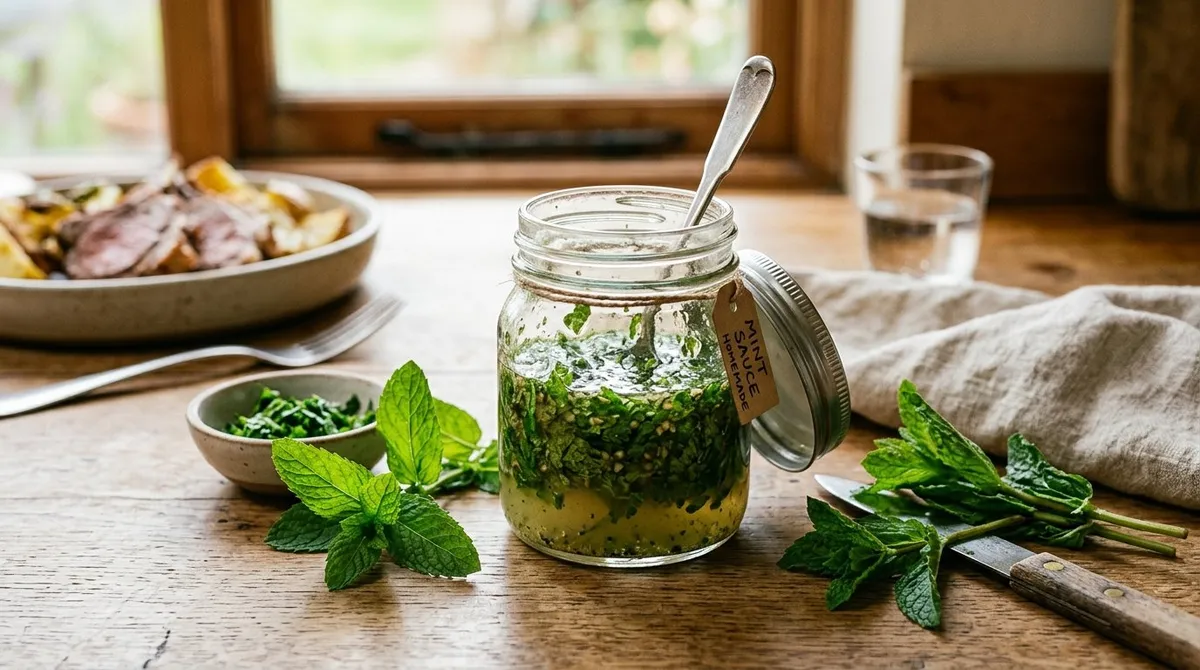
Decant into a sterilised glass jar with a tight-fitting lid. Refrigerate for 30 minutes minimum before serving to let the flavour develop.
Storage
Refrigerate for up to 4 weeks in a sealed jar. The colour darkens within 24 hours from bright to olive green; this is normal. If colour matters for serving, make fresh on the day. The mint solids settle at the bottom; stir before pouring.
You will find the boiling-water-first trick that protects the vinegar flavour, the chiffonade chop that releases more oil, and the cultivar guidance that explains why the mint sauce in your last pub lunch was probably better than the one you make at home. The Royal Horticultural Society classifies most UK garden mint as Mentha spicata - the right cultivar for traditional mint sauce.
Why this works
The flavour of mint comes from menthol and carvone in the leaves. Both are released when the leaf is bruised or cut. The chiffonade chop maximises bruised surface area without turning the leaves to mush.
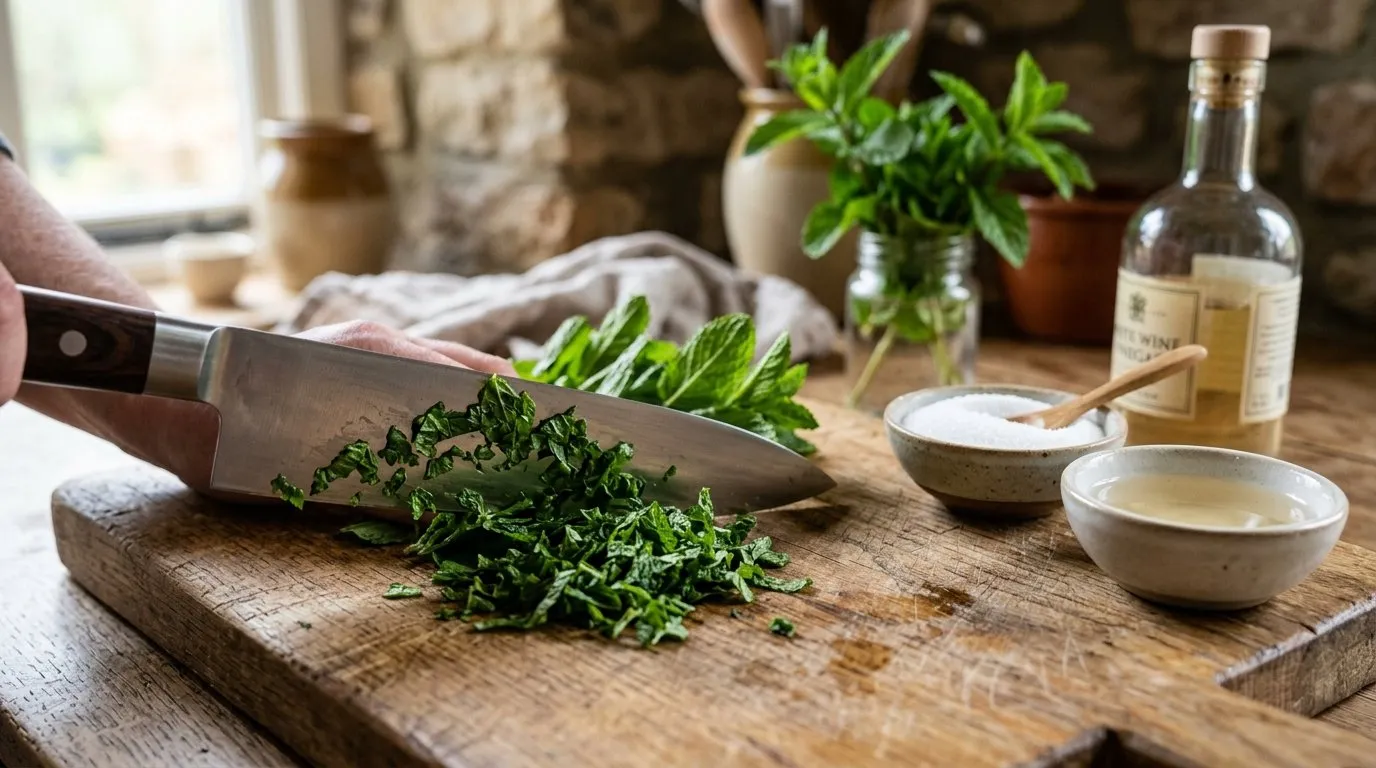
The sugar dissolves in boiling water before the vinegar goes in. This matters because dissolving sugar in cold vinegar takes 20-30 minutes and the mint discolours during the wait. Hot water dissolves the sugar in 20 seconds; the vinegar then mixes in cold and keeps its bright sharpness.
Cultivars: which mint to plant
Garden mint (Mentha spicata) is the variety bred specifically for British mint sauce. The leaves are smooth, the flavour is clean, and the plant spreads aggressively in any damp corner.
Avoid these for mint sauce despite their popularity in other contexts:
- Mojito mint (Mentha x villosa) - too sweet, made for rum
- Chocolate mint - the cocoa note clashes with lamb
- Apple mint - too soft, too gentle, gets lost
- Peppermint - the menthol is too aggressive
If you only have one mint plant, make it Mentha spicata. Plant in a sunken bottomless container to stop it taking over the whole garden.
Serving with the Sunday roast
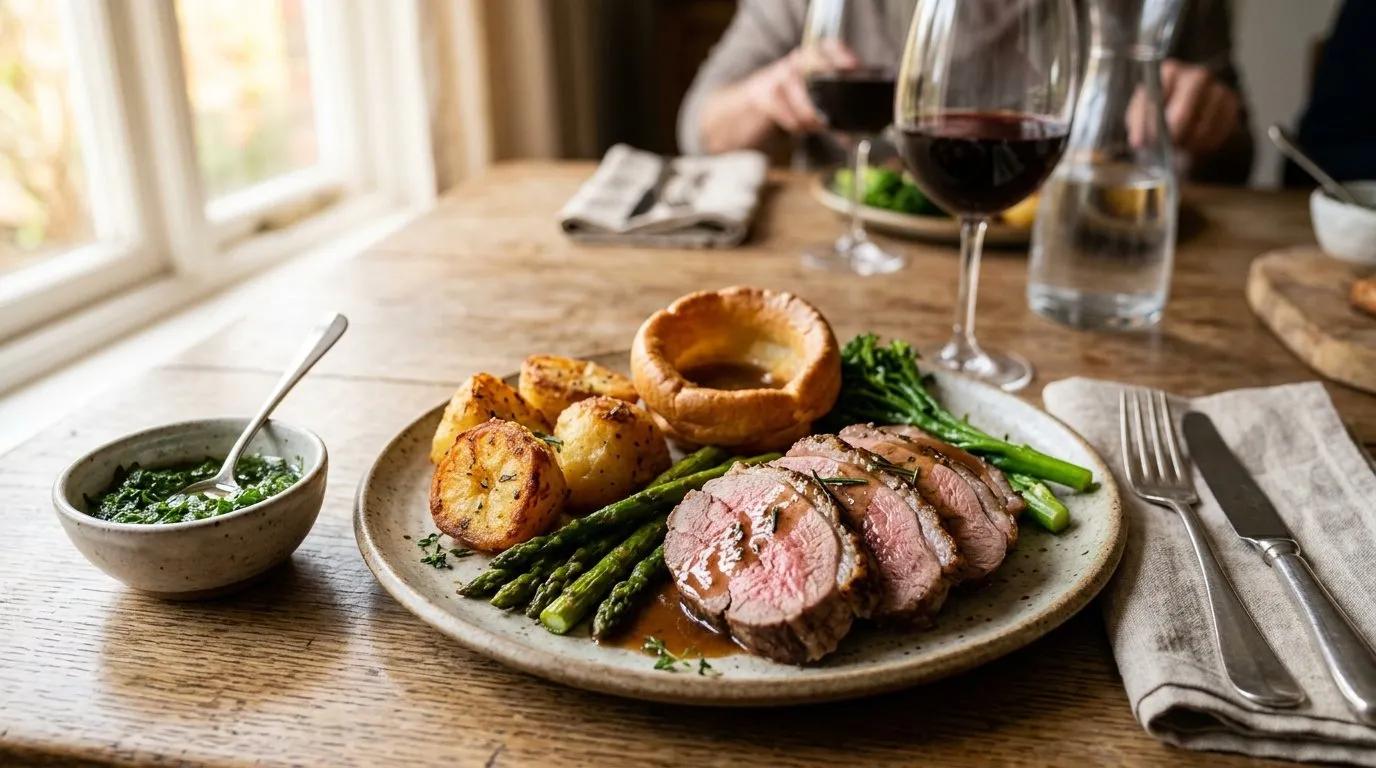
Serve in a small jug or ramekin alongside the lamb. The traditional UK approach is to spoon the sauce over the lamb at the table; vinegar-shy diners can take the sauce or leave it. About 1 tablespoon of sauce per portion is right.
Mint sauce also works beyond the Sunday roast - drizzle over new potatoes, stir into pea soup just off the heat, dress a tomato and feta salad, or pour over grilled aubergine. The sharpness cuts through anything with rich fat or sweetness.
Frequently asked questions
What is the difference between mint sauce and mint jelly?
Mint sauce is a vinegar-based liquid pour made in 5 minutes; mint jelly is a sweet apple-pectin set jelly made over 90 minutes. Mint sauce is the traditional British accompaniment to roast lamb. Mint jelly is more popular in North America and is closer to a chutney. They are not interchangeable; mint sauce is sharp and pourable, mint jelly is sweet and spreadable.
Which type of mint is best for mint sauce?
Garden mint (Mentha spicata, also called spearmint) is the traditional choice for British mint sauce. It has the cleanest, most cooling flavour. Peppermint (Mentha x piperita) has a stronger menthol note that some find harsh. Avoid chocolate mint, mojito mint and apple mint - they are bred for cocktails and dessert, not for cutting through lamb fat.
How do I store fresh mint from the garden?
Cut whole stems with a sharp knife. Stand stems in a glass of water on the kitchen counter for up to 4 days like a bouquet. Refrigerated stems wrapped in damp kitchen paper keep 7-10 days. Frozen chopped mint (in ice cube trays with water) keeps 6 months for cooking, though the texture is too soft for raw mint sauce.
Can I make mint sauce without sugar?
Yes, but the balance is harder. Vinegar alone is too sharp without something to soften it. Try 1 teaspoon of honey or maple syrup instead of sugar for a softer, more complex sauce. Or omit the sweetener entirely and add 2 tablespoons of finely grated fresh apple for natural sweetness. Diabetic-friendly versions can use stevia at 1/4 the volume of sugar.
Our team produces practical UK gardening guidance from source research, contributor records and established horticultural practice. Editorial standards are overseen by Matt W.