Key takeaways
- No planning permission needed for under 50 birds in most UK councils, but check deeds for covenants
- Since October 2024 flocks of 6+ birds must register with APHA within one month
- 4 hens need minimum 4 square metre run, 30cm coop perch space per bird
- Warren, Buff Orpington, Light Sussex, and bantams are the best beginner breeds
- Fox-proof runs need wire mesh buried 30cm deep and a secure roof
- Feed costs £15-£25/month for 4 hens giving 20-25 eggs/week in summer
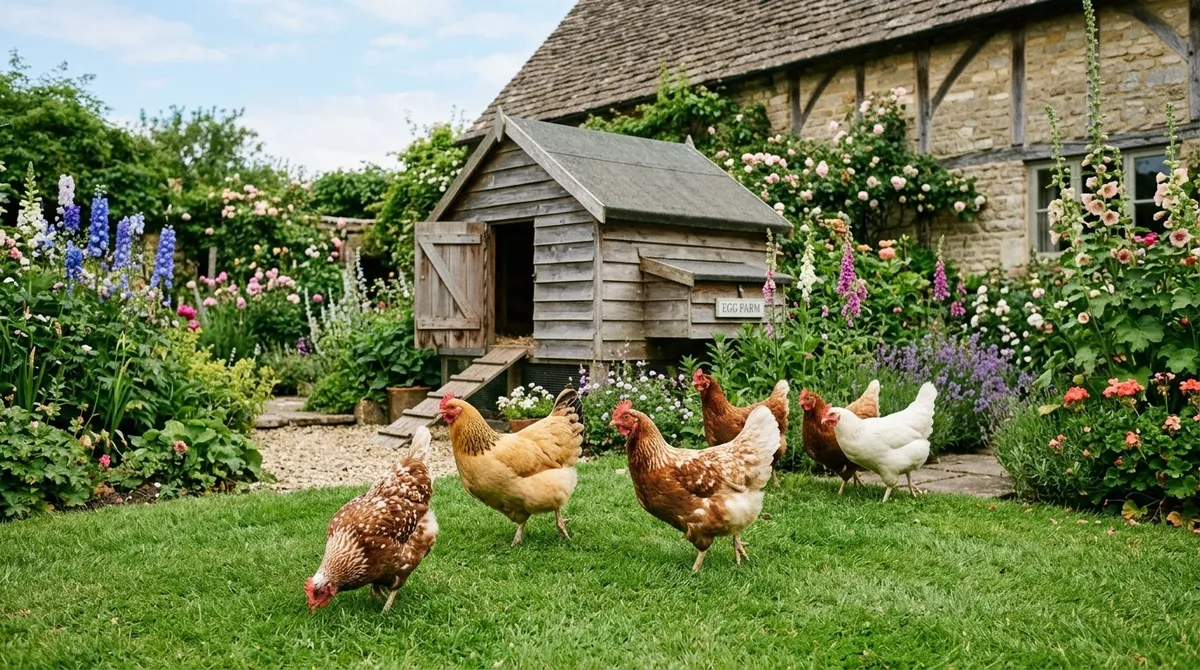
Keeping chickens in a UK garden has grown massively since 2020. The eggs taste better than anything you can buy, the birds eat kitchen scraps, and the droppings make excellent compost. But there are real rules to follow, real costs to budget for, and real predator threats to plan around. This guide covers everything you need before buying your first flock.
Is it legal to keep chickens in a UK garden?
Yes, most UK councils allow up to 50 chickens without planning permission. That is far more than any garden needs. The real constraints come from property deeds and the new APHA registration rule introduced in October 2024.
Check your property deeds first. Some housing estates have restrictive covenants banning livestock including poultry. These cover private houses built after 1980 in particular. Ask your solicitor or check the Land Registry entry.
Next, register with APHA if you will have six or more birds. The APHA poultry register is a free online form. Registration became mandatory in October 2024. Failure to register is a criminal offence with fines up to £5,000.
What are the best chicken breeds for UK beginners?
Here is how the main beginner breeds compare:
| Breed | Eggs/year | Size | Temperament | Best for |
|---|---|---|---|---|
| Warren (ISA Brown) | 280-320 | Medium | Calm, friendly | Egg production |
| Buff Orpington | 150-180 | Large | Very docile | Families with children |
| Light Sussex | 200-240 | Large | Confident | Dual purpose (eggs + meat) |
| Rhode Island Red | 250-280 | Medium | Active | Hardy all-rounder |
| Pekin Bantam | 100-140 | Small | Gentle | Tiny gardens |
| Silkie | 80-120 | Small | Very friendly | Broody mothers, pets |
Warren (ISA Brown)
Buff Orpington
The friendliest breed. Large golden-brown birds, very docile, happy to be handled. Lays 150-180 pale brown eggs per year. Goes broody often. Too heavy for predator-proofing with weak fences. Costs £30-£45.
Light Sussex
A classic British dual-purpose breed. Lays 200+ creamy eggs annually and makes a decent table bird if needed. White with black neck and tail markings. Hardy and confident. Around £25-£35 per bird.
Bantams
Small versions of standard breeds. Take up less space and eat less feed. Best for gardens under 50 square metres. Lay smaller eggs (two bantam eggs equal one standard). Pekins and Silkies are the most popular and costs range £25-£40.
How big does a chicken coop and run need to be?
Minimum coop space is 30cm of perch length per bird. Run space should be at least 1 square metre per bird, ideally 4 square metres per bird. Smaller spaces cause feather pecking, stress, and disease.
For four hens that means:
- Coop interior: 120cm x 60cm minimum
- Pop hole: 25cm x 25cm
- Nest boxes: 1 per 3-4 hens, 30cm square
- Run area: 4 square metres minimum, 16 square metres ideal
- Run height: 1.8m if you want to walk in
Walk-in runs are worth the extra cost. You can feed, clean, and collect eggs without crouching. A 2m x 2m walk-in run from Omlet or similar costs £200-£400 new. DIY versions built with timber and welded mesh cost £80-£150 and last 10+ years if painted annually.
How do I fox-proof my chicken run?
Bury welded wire mesh 30cm deep around the entire run perimeter. Use 19-gauge or heavier wire with holes smaller than 25mm. This is the single biggest difference between losing birds and keeping them alive.
The full fox-proofing checklist
- Wire gauge: 19-gauge welded mesh minimum (not chicken wire)
- Mesh size: 25mm holes or smaller
- Buried depth: 30cm straight down OR 30cm L-shape outward
- Roof: Solid or netted, never leave open
- Gate: Two latches at different heights, padlock at night
- Lock the coop every night, no exceptions, even on holiday
- Clear undergrowth around the run so foxes have no cover
What do chickens cost to keep?
Expect £15-£25 per month in feed for 4 hens plus £200-£600 initial setup. Eggs usually cover the feed cost within the first year. Here is a realistic breakdown.
Setup costs (one-off)
| Item | Budget option | Better option |
|---|---|---|
| Coop | £80 (secondhand) | £350 (new plastic) |
| Run | £100 (DIY mesh) | £400 (walk-in) |
| Feeder | £15 | £30 treadle |
| Drinker | £12 | £25 auto-fill |
| First 4 hens | £80 (Warrens) | £150 (rare breed) |
| Bedding start | £15 | £25 |
| Total | £302 | £980 |
Monthly running costs
| Item | Cost |
|---|---|
| Layers pellets (20kg) | £14 |
| Mixed corn | £6 |
| Bedding (shavings) | £4 |
| Grit and oystershell | £2 |
| Monthly total | £26 |
Vet costs are usually near zero if you buy healthy stock and practice good hygiene. Budget £50-£100 per year for worming and occasional mite treatments.
How many eggs will my chickens lay?
Four Warren hens give roughly 20-25 eggs per week in summer and 10-15 in winter. Annual total is around 1,000 eggs from four birds. That is enough to feed a family of four and share some with neighbours.
- April to September: 4-5 eggs per day from 4 hens
- October and November: 2-3 eggs per day
- December to February: 0-2 eggs per day, with full stops for moulting
- March: Production ramps back up
Eggs taste noticeably better than supermarket versions. The yolks are darker because garden hens eat grass, bugs, and vegetable scraps. For kitchen use see our easy recipes using home-grown vegetables which pairs well with fresh eggs.
What do chickens need every day?
Chickens need fresh water, layer pellets, and a clean coop every single day. Miss any of these and health suffers fast. A basic daily routine takes 10-15 minutes.
Daily tasks
- Open the coop pop hole at dawn
- Top up feeder with layers pellets
- Refill water (check for ice in winter)
- Collect eggs (once in morning, once in afternoon)
- Quick visual health check on all birds
- Lock coop at dusk, every night without fail
Weekly tasks
- Clean out the coop (remove droppings, replace bedding)
- Scrub drinker with hot water
- Check for red mites under perches
- Add fresh grit and oystershell
- Inspect run for dig holes along perimeter
Monthly tasks
- Deep clean coop with poultry-safe disinfectant
- Treat against red mite if any signs
- Worm check and treat if needed
- Full body check on each bird
Which plants do chickens destroy and tolerate?
Chickens will destroy almost any tender garden plant they can reach. Free-ranging them is not compatible with a manicured border. Knowing which plants survive changes what you can grow alongside them.
Plants chickens destroy
- Lettuce and all salad leaves
- Hostas, heucheras, and low-growing perennials
- Strawberries (they eat the lot)
- Seedlings of any kind
- Bulb foliage in spring
- Courgette and squash plants
Plants chickens tolerate
- Established lavender (too woody to eat)
- Rosemary and thyme (aromatic)
- Foxgloves (toxic, avoided)
- Daffodils (toxic, avoided)
- Ferns
- Mature shrubs with hard stems
What about avian flu housing orders?
Defra can order all poultry keepers to house birds indoors during avian flu outbreaks. These orders have happened every winter from 2021 onwards, usually November to March. When a housing order is in force, free-ranging becomes illegal across affected areas.
This means your run must have a solid or netted roof that bird droppings cannot fall through. Wild bird droppings are the main disease vector. If your current run is open, plan for a net cover before your first winter.
Sign up to the free APHA alerts email so you know when housing orders start and end. The government also publishes a UK avian flu risk map that updates weekly.
Health problems to watch for
Red mite is the single most common chicken health issue in UK gardens. Tiny bloodsucking mites hide in coop cracks by day and feed on birds at night. Signs include pale combs, lethargy, and red-brown dust under perches.
Treat with diatomaceous earth in every crevice and dust birds monthly. Wooden coops are worse than plastic because cracks give mites hiding places.
Other common issues
- Scaly leg mite: Raised leg scales. Treat with Vaseline or ivermectin
- Worms: Drop quality decreases. Worm quarterly with Flubenvet
- Sour crop: Swollen crop after feeding. Hold upside down and massage
- Impacted crop: Hard lump. Syringe warm water and olive oil
- Egg binding: Stuck egg. Warm bath, calcium boost, vet if worse
Start with four hens from a reputable local breeder, not a rescue. Rescue ex-battery hens are wonderful but fragile and often sickly. Your first flock should teach you the basics without complications.
Buy point-of-lay pullets (16-18 weeks old). They start laying within 2-4 weeks. Avoid day-old chicks unless you have heat lamps and experience. Avoid mixed flocks with cockerels until you know what you are doing, and check local rules first because some councils ban cockerels in residential areas.
Frequently asked questions
Do I need planning permission to keep chickens in my UK garden?
No, most UK councils allow up to 50 birds without planning permission. You must still check your property deeds for restrictive covenants. Some housing estates ban poultry in the deeds. Since October 2024 any flock of 6 or more birds must register with APHA within one month of acquiring them.
How many chickens should a beginner keep?
Four hens is the ideal starting number for a UK garden. Chickens are social and need at least three companions. Four hens give 20-25 eggs per week in summer and fit a 4 square metre run comfortably. Start small and add more only after one full year of experience.
What is the best chicken breed for UK beginners?
Warren hens are the best starter breed for UK gardens. They lay 250+ brown eggs per year, handle UK weather well, and have calm temperaments. Buff Orpingtons are friendlier but lay fewer eggs. Light Sussex are good dual-purpose birds. Bantams suit very small gardens but lay smaller eggs.
How big should a chicken coop be?
Allow 30cm of perch space per bird inside the coop minimum. The run needs at least 1 square metre per bird, ideally 4 square metres per bird for welfare. A coop for 4 hens measures roughly 120cm x 60cm inside. Smaller spaces cause feather pecking and aggression.
How do I stop foxes killing my chickens?
Bury welded wire mesh 30cm deep around the entire run perimeter. Use 19-gauge or heavier mesh with holes under 25mm. Add a secure roof or netting. Shut birds in every night without exception. Foxes attack in daylight too during cub-rearing season from March to June.
How much do chickens cost to keep?
Expect £15-£25 per month feed costs for 4 hens plus £200-£600 setup. A decent coop costs £200-£400 new or £60-£150 secondhand. Feed is £12-£18 per 20kg sack lasting roughly a month. Bedding, grit, and vet costs add £5-£10 per month. Eggs usually cover feed costs within a year.
Do chickens destroy gardens?
Yes, free-ranging chickens will destroy lawns, veg beds, and ornamentals. They scratch, dust bathe, and eat tender shoots. Fence off vegetable patches with 1.2m mesh. Let them into borders only in winter when plants are dormant. A dedicated run keeps the rest of the garden safe.
Our team produces practical UK gardening guidance from source research, contributor records and established horticultural practice. Editorial standards are overseen by Matt W.