Key takeaways
- Trichomonosis has cut UK greenfinch numbers 70% since 2005 (BTO data)
- Clean feeders every 1-2 weeks; weekly in warm weather
- Use 5% washing soda or 1:50 bleach solution
- Rinse thoroughly and air-dry fully before refilling
- Move feeders 2-3m every 2 weeks to break disease cycle
- Take down all feeders 4-6 weeks if sick bird seen
UK bird feeders save garden birds in cold winters but spread disease in warm wet summers. The biggest threat is trichomonosis, a parasitic disease that has cut UK greenfinch populations by 70% since 2005. This guide covers the BTO hygiene protocol, the cleaning routine, location rotation, and how to respond to sick birds at the feeder.
Why UK Bird Feeders Spread Disease
A typical UK bird feeder concentrates 20-50 birds per day at a single point. Each bird leaves droppings, saliva, and shed feathers. In warm wet UK weather, this combination supports:
- Trichomonosis (Trichomonas gallinae): the dominant UK feeder disease since 2005
- Salmonellosis (Salmonella typhimurium): especially in winter
- Avian pox: viral, more common in southern UK
- E. coli: less common but spreadable through water baths
- Mycotoxins: from mouldy seed in damp feeders
The Trichomonas parasite survives on damp surfaces for 2-3 days. In a busy UK feeder with 30+ visits per day, the parasite passes between birds rapidly.
BTO data (British Trust for Ornithology Garden BirdWatch survey, 2005-2024):
- UK greenfinch population: down 70% since 2005
- UK chaffinch population: down 30% since 2010
- Both declines linked directly to trichomonosis at feeders
For the wider UK garden bird identification, our bird ID guide covers the species at risk.
The BTO Cleaning Protocol
The standard UK protocol from the British Trust for Ornithology.
Frequency:
- Weekly cleaning minimum for all feeders
- More frequently in warm wet weather (May-September)
- Daily inspection for droppings, wet seed, or visible illness
- Move feeder location 2-3m every 2 weeks
Equipment needed:
- Stiff bottle brush (£3-£5 from supermarkets)
- Bucket for washing
- Disinfectant: 5% washing soda or 1:50 dilute bleach
- Clean water for rinsing
- Outdoor washing area away from food preparation
Step-by-step cleaning:
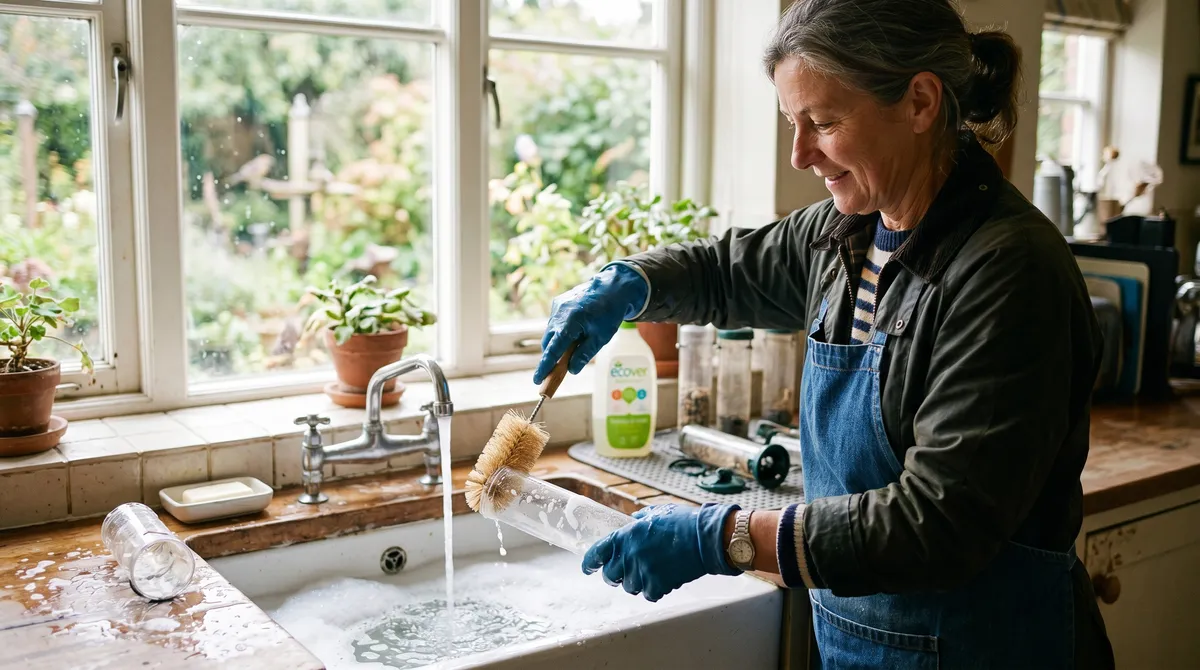
- Take feeder down, empty all remaining seed onto compost (not back into the bag)
- Disassemble all parts (perches, lids, base)
- Soak parts in bucket of warm disinfectant solution for 10-15 minutes
- Scrub all surfaces with bottle brush
- Pay attention to perches, feeding ports, and base where droppings collect
- Rinse thoroughly under running water
- Air-dry fully (24+ hours)
- Refill only when completely dry
- Wash hands thoroughly after handling
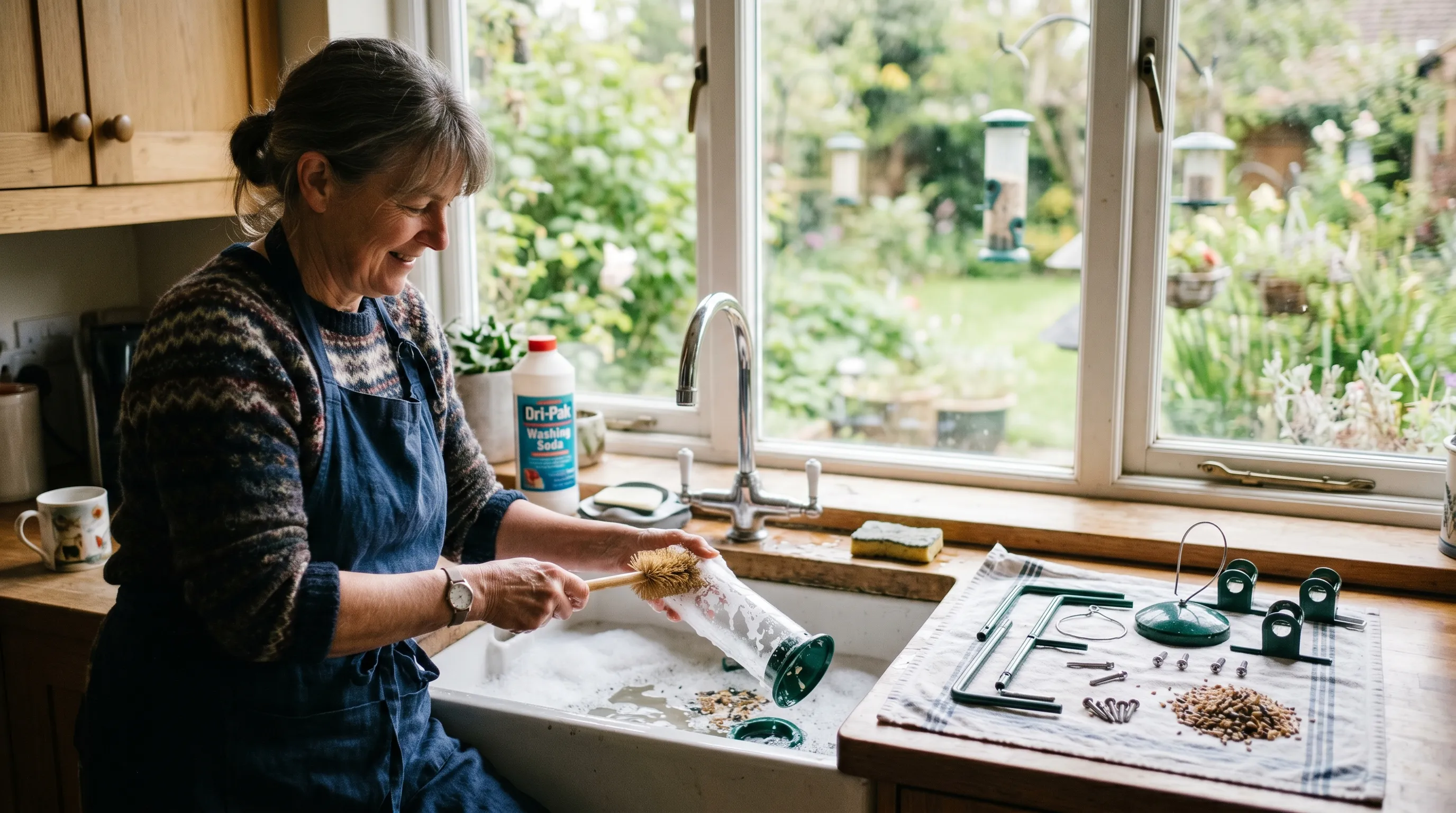 The weekly cleaning routine. Disassembled feeder soaking in 5% washing soda solution. Bottle brush for scrubbing perches and feeding ports. Air-dry 24 hours before refilling.
What to Use: Disinfectants and Their Trade-offs
| Disinfectant | Effectiveness | Bird safety | UK availability | Cost |
|---|---|---|---|---|
| 5% washing soda (sodium carbonate) | Very high | Excellent (rinse well) | Supermarkets, ironmongers | £2-£5 per 1kg |
| 1:50 dilute bleach | Very high | Good (rinse very well) | Supermarkets | £1-£3 per bottle |
| Specialist Ark-Klens disinfectant | Very high | Excellent | Online garden suppliers | £8-£15 per litre |
| Detergent (washing-up liquid) | Moderate | Poor (residues) | Universal | n/a |
| Boiling water alone | Low | Excellent | Universal | n/a |
| Vinegar | Low | Excellent | Universal | n/a |
Washing soda is the BTO-preferred option. Effective, cheap, available everywhere, and safe to birds after thorough rinsing.
Dilute bleach is also effective but requires very thorough rinsing. Bleach residue is toxic to birds.
Avoid washing-up liquid as the only cleaner. Detergent residues can be toxic and the cleaning power is too low for biofilm removal.
Location Rotation
The most underused UK feeder hygiene technique.
Why rotation matters:
- Trichomonas parasites accumulate in soil below feeder
- Wet seed and droppings build up at the feeder location
- Rotating gives soil 2-week recovery between feedings
- Reduces disease pressure at any single location
How to rotate:
- Mark 3-4 feeder positions 2-3m apart in your garden
- Move feeders to new position every 2 weeks
- Rake under the old position to disperse droppings
- Each position rests 6-8 weeks between feedings
Water Baths Need Daily Care
Bird baths spread disease faster than feeders because birds drink directly from the water.
Daily routine:
- Tip out all water in the morning
- Rinse with fresh water (no soap)
- Refill with fresh water
- Brush off any visible droppings
Weekly clean:
- Scrub with washing soda solution
- Rinse thoroughly
- Replace any accumulated mud or moss
Stagnant water in a bird bath supports Trichomonas, E. coli and avian pox transmission. The daily empty-and-refill is the single most important bird bath hygiene action.
Responding to a Sick Bird
A fluffed-up, lethargic bird at the feeder is likely trichomonosis or salmonella.
Trichomonosis signs:
- Fluffed feathers, hunched posture
- Difficulty swallowing
- Drooling from beak
- Wet feathers around face
- Lethargy, sitting still on perch
Immediate response:
- Take down all feeders within 24 hours
- Empty seed onto compost (not back into bag)
- Clean thoroughly with 1:50 bleach solution
- Leave feeders down for 4-6 weeks
- Continue water bath (clean daily)
- Report to BTO Garden Wildlife Health project online
The 4-6 week break breaks the parasite life cycle. Resume feeding only after at least 4 weeks with no sick bird sightings.
For the wider UK wildlife garden approach, our wildlife guide covers habitat that supports birds beyond feeders.
Common Mistakes With UK Bird Feeder Hygiene
Mistake 1: refilling without cleaning. Mixed old and new seed accelerates disease. Always empty and clean.
Mistake 2: using kitchen detergent only. Residues toxic to birds; cleaning power too low. Use washing soda.
Mistake 3: skipping the rinse step. Disinfectant residue harms birds. Rinse thoroughly under running water.
Mistake 4: refilling while wet. Damp feeders breed bacteria immediately. Air-dry fully (24+ hours).
Mistake 5: leaving feeders stationary. Disease accumulates at static positions. Rotate every 2 weeks.
The UK government’s Garden Wildlife Health guidance covers the broader disease surveillance system.
For the wider UK bird feeding plan across the year, our bird feeding guide covers seasonal seed mixes and feeding patterns.
Bird Feeder Calendar UK Month-by-Month
| Month | Bird feeder task |
|---|---|
| January | Weekly clean; high feeder use; peak winter feeding |
| February | Continue weekly clean; watch for first disease in mild weather |
| March | Weekly clean; territory establishment time |
| April | Weekly clean; reduce seed quantity; check for late winter disease |
| May | Increase cleaning frequency; consider reducing feeders |
| June | Peak disease season; reduce feeding; consider water bath only |
| July | Same as June; daily water bath cleaning |
| August | Resume normal feeding; weekly cleaning |
| September | Increase feeding gradually; weekly clean |
| October | Build up to winter feeding levels; weekly clean |
| November | Full winter feeding resumes; weekly clean |
| December | Peak feeding season; weekly clean continues |
Related reading: apply the same hygiene to the water supply with our guide to bird bath placement and cleaning.
Frequently asked questions
How often should I clean bird feeders UK?
Every 1-2 weeks minimum. Weekly during warm wet weather (May-September) when bacteria and parasites multiply fastest. Daily inspection for visible droppings or wet seed. Empty and rinse the seed tray every time you refill. The BTO recommends weekly cleaning as the baseline hygiene standard.
What is trichomonosis in garden birds?
Trichomonosis is a parasitic disease caused by Trichomonas gallinae affecting UK greenfinches, chaffinches and other finch species. Sick birds appear fluffed-up, lethargic, drooling, with difficulty swallowing. BTO data shows UK greenfinch numbers have dropped 70% since 2005 due to this disease. Transmitted at bird feeders and bird baths.
What should I clean bird feeders with?
5% washing soda solution (50g per litre water) or 1:50 dilute bleach (20ml household bleach per litre water). Use a bottle brush to scrub all surfaces. Rinse thoroughly with clean water. Air-dry fully before refilling. Avoid kitchen detergents as residues can harm birds.
Should I stop feeding birds in summer?
Not necessarily, but reduce frequency and use less seed at a time. Summer brings warmer wet weather that accelerates disease transmission. Many UK conservation groups recommend reduced feeding from May-July and increasing again from August onwards. Clean feeders weekly through summer.
I saw a sick bird at my feeder. What should I do?
Take down all feeders immediately. Clean thoroughly with 1:50 bleach. Leave feeders down for 4-6 weeks to break the disease cycle. Report sightings to the BTO Garden Wildlife Health project. Provide fresh water only during the break period.
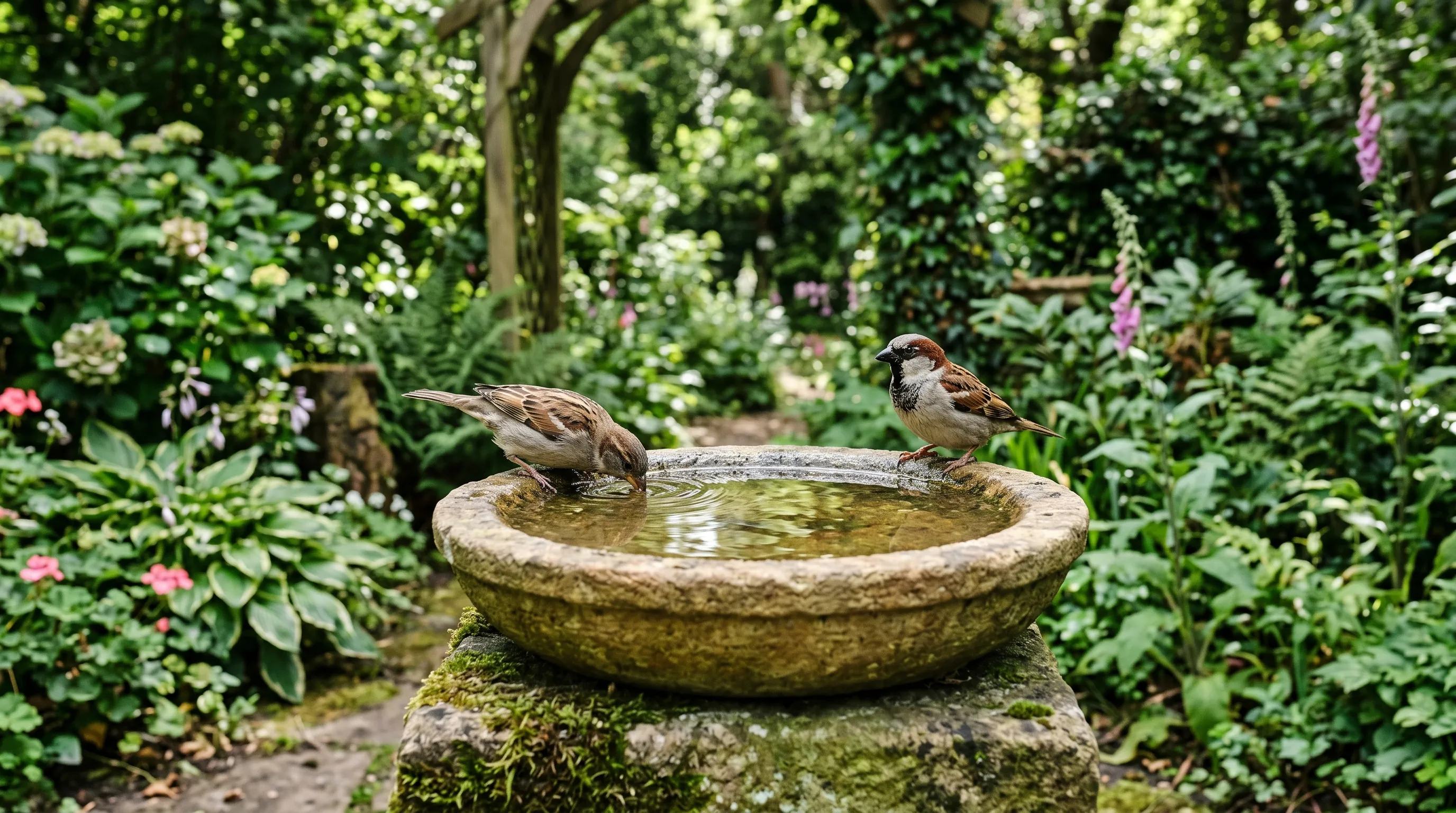 The Staffordshire bird bath setup. Shallow water (20-40mm) on a low stone plinth in dappled shade. Daily empty-and-refill is essential to prevent disease transmission through drinking water.
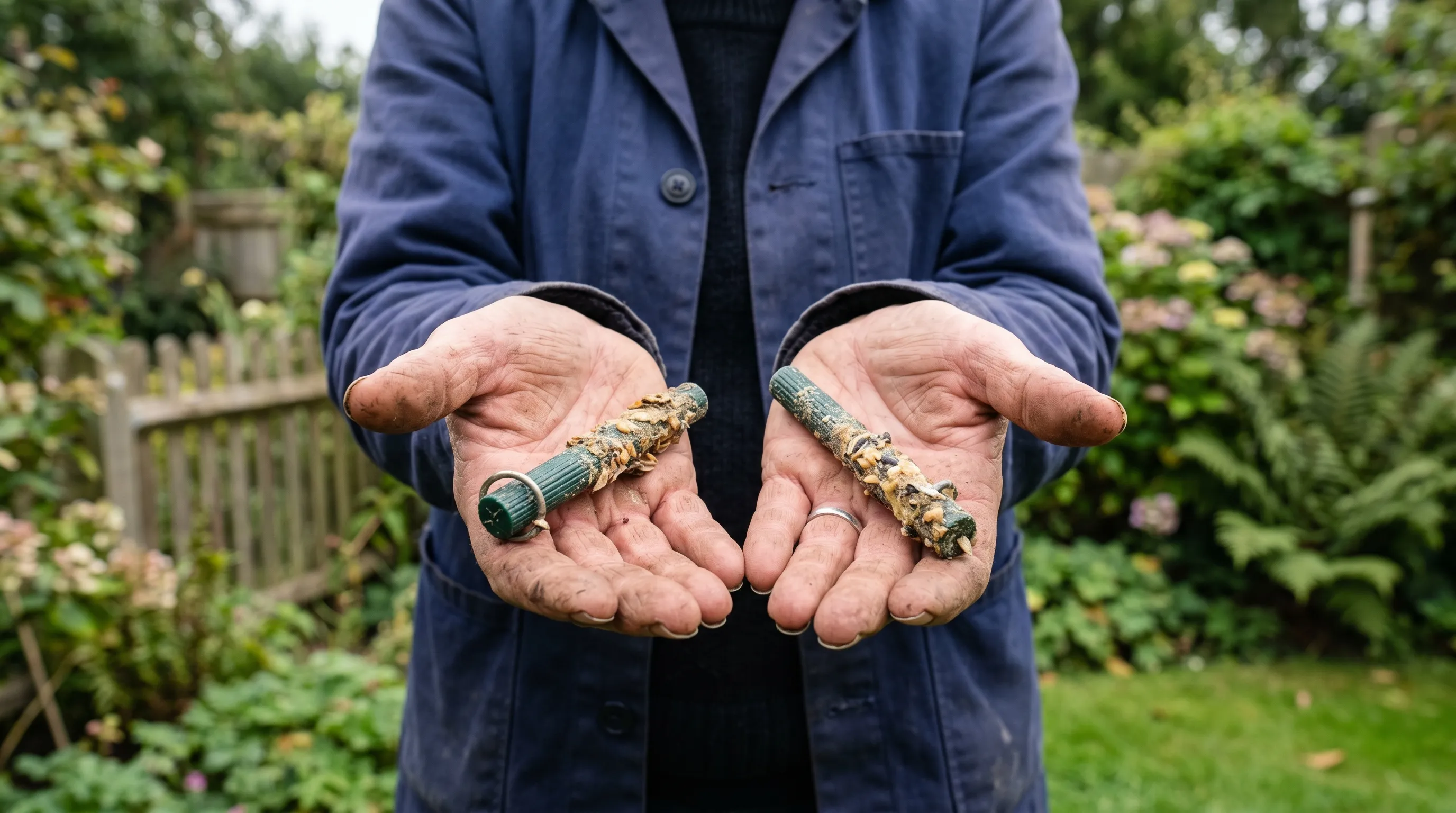 Disease-laden perches before cleaning. Dried biofilm and seed residue at every perch and feeding port. The bottle brush plus washing soda removes this efficiently. Without removal, this becomes the transmission point for trichomonosis.
Now plan the wider bird-friendly garden
Our team produces practical UK gardening guidance from source research, contributor records and established horticultural practice. Editorial standards are overseen by Matt W.