Key takeaways
- Heatwaves above 28C cause real welfare issues for UK garden birds
- Provide multiple shallow water sources; refresh twice daily
- Move feeders into dappled shade
- Switch to high-fat food (suet, sunflower hearts)
- Avoid mealworms in heat (rapid spoilage)
- Met Office amber warnings: act within 24 hours
UK heatwaves stress garden birds more than UK gardeners realise. Above 28C, water demands triple, food spoilage accelerates, and chicks in nest boxes face mortality risk. This guide covers the heatwave bird-welfare protocol: multiple water sources, shaded feeders, food-type switches, and the Met Office amber-warning trigger for action.
After 5 UK heatwaves at Staffordshire since 2020 (the climate-warming trend is real), the patterns are clear. Water access matters more than food in extreme heat. Shade is the second priority. Mealworm withdrawal prevents the wider feeder hygiene problem of spoiled food.
Water: The First Priority
UK garden birds need 1-3 daily drinks under normal conditions and 3-8 daily drinks during heatwaves. Provision matters.
The setup:
- One water dish per 20m² of garden (multiple smaller dishes beat one large)
- Multiple heights: ground level (ground feeders), 600mm (tit/sparrow access), 1.5m (raised baths)
- Shallow depth: 20-30mm maximum to prevent drowning
- Drowning prevention: stick, stone or sloping side allows escape
- Refresh twice daily: morning and evening through hot periods
- Ground dish near hedge (ground feeders: blackbirds, dunnocks)
- Mid-height dish on patio (sparrows, tits)
- Traditional pedestal bath (mid-garden)
- Pond edge with shallow ramp (all species + amphibians)
All four sources refreshed at 07:00 and 19:00 during hot weather.
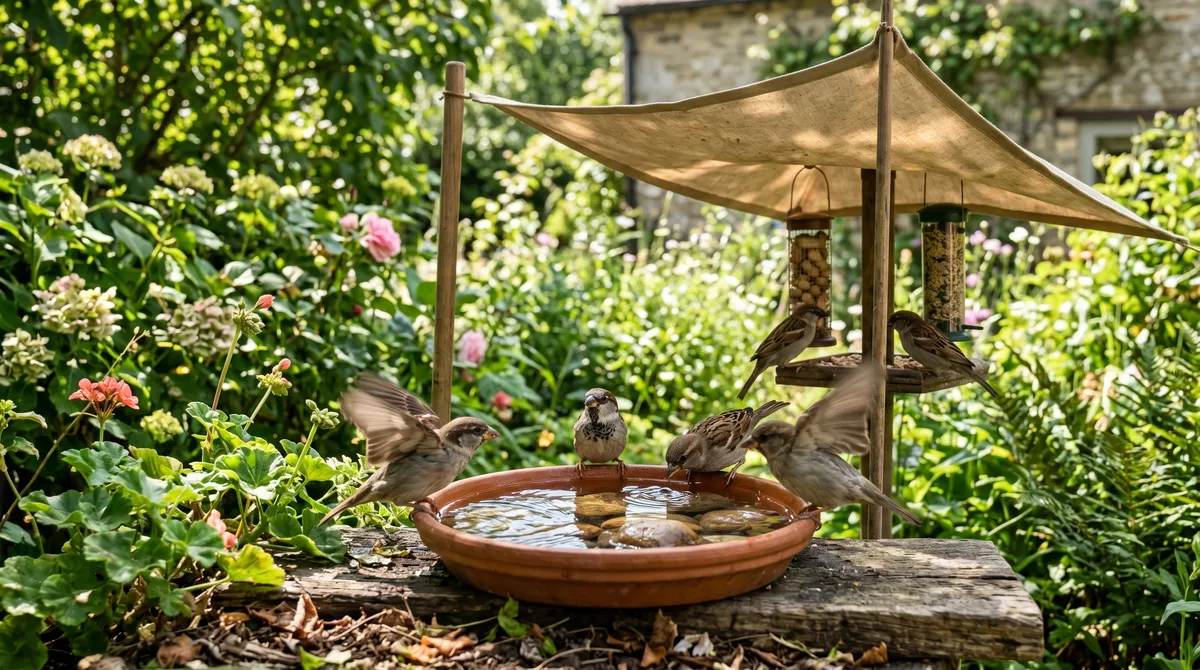
Material matters in a heatwave. Stone holds water cooler than plastic, so traditional bird baths stay usable through the hottest part of the afternoon. Site them in dappled shade and keep the water shallow, with a stone in the centre as a perch.
For the wider UK bird welfare and feeder hygiene approach, our bird feeder cleaning guide covers the year-round routine.
Shade: The Second Priority
Heated feeders and exposed perches reduce bird visit duration and increase stress.
Shade actions:
- Move feeders into dappled shade from late June onwards
- Position water dishes in tree/shrub shade
- Install a temporary shade panel (50% shade mesh) above key feeders if no natural cover
- Avoid wide open lawn positions during heatwaves
- Provide thick shrub cover within 3-5m of feeders for retreat
Shade temperature differences:
- Full sun feeder: peak air temperature reaches outside the ambient
- Dappled shade feeder: stays 4-8C cooler
- Dense shade: 6-10C cooler but birds avoid (predator ambush risk)
Aim for dappled shade with a clear sight-line to safe perches.
Food: The Switch from Mealworms
Mealworms (dried or live) are the UK garden bird favourite under normal conditions but spoil rapidly in heat.
Heat spoilage:
- Live mealworms: die within 2-3 hours above 28C
- Dried mealworms: become rancid and unpalatable within 24-48 hours in heat
- Insect spores and bacteria multiply rapidly on spoiled food
- Birds eating spoiled mealworms suffer digestive disease
Switch to in heat:
- Sunflower hearts (no shell, easy digestion)
- Suet blocks and pellets
- Peanut chunks (whole peanuts in shade only)
- Niger seed for finches
- Fresh fruit (apple slices, soft pears)
- Water-soaked seed mix
The Staffordshire heatwave protocol: stop mealworms entirely above 25C forecast, resume below 20C. Replace with smaller quantities of sunflower hearts and suet, refreshed twice daily.
For the year-round bird feeding plan, our bird feeding guide covers seasonal food choices.
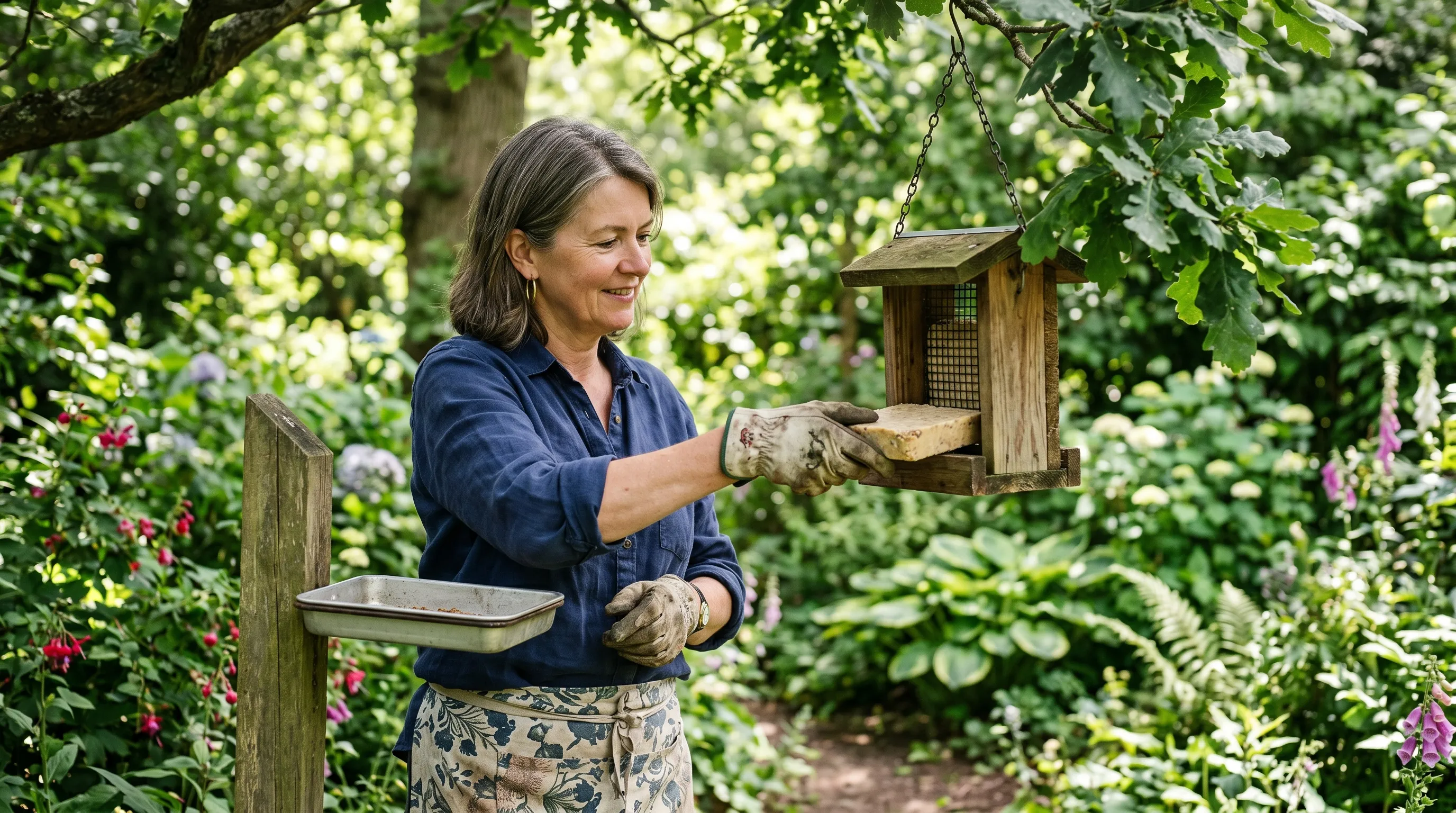 Heatwave food switch on the Staffordshire feeding station. Suet block in dappled shade replaces mealworms (which spoil within 2-3 hours in heat). Smaller quantities refreshed twice daily.
The Met Office Trigger
UK Met Office heat warnings provide the action trigger.
Met Office heat warnings:
| Warning | Temperature range | Bird welfare action |
|---|---|---|
| Green | Normal summer | Standard care |
| Yellow | 28-32C | Refresh water daily; check shade |
| Amber | 32-38C | Multiple water sources; switch foods; stop mealworms |
| Red | 38C+ | All above plus monitor chicks; provide ice cubes in water |
Sign up for free Met Office warnings via their website. The warning provides 1-3 days notice, enough time to set up the welfare measures before peak heat arrives.
For UK gardens with active bird boxes during heatwaves, check chicks daily. Boxes exposed to full sun can reach 40-50C inside during amber warnings. Consider temporary shading the box.
Nest Boxes in Extreme Heat
UK breeding season (April-July) overlaps with heatwave season (June-August).
Risk:
- Boxes in full afternoon sun reach 40-50C interior
- Chicks die within 2-4 hours above 35C
- Parents abandon overheated nests
- Multiple UK studies recorded 2022-2024 heat-related nest losses
Mitigation:
- Move boxes (existing brood) only as last resort; usually causes abandonment
- Provide temporary shade panel above box (loose-tied above for airflow)
- Wet a cloth and drape over the box top for 1-2 hours during peak heat
- For new boxes next season: install on north or east-facing walls
Do NOT:
- Open the box during a brood
- Move the box during a brood
- Cool the box with ice (sudden temperature drop kills chicks)
- Add water to the inside of the box
Common Mistakes With UK Heatwave Bird Care
Mistake 1: continuing mealworms. Spoils within hours. Switch to suet or hearts.
Mistake 2: one large water bath. Single source heats fast and gets dirty. Multiple smaller sources.
Mistake 3: deep water dishes. Drowning risk. 20-30mm max with escape stick.
Mistake 4: feeders in full sun. Birds avoid. Move to dappled shade.
Mistake 5: opening nest boxes to check. Causes abandonment. Visual inspection only from outside.
For the year-round bird feeding guide, our feeding guide covers seasonal food. For feeder hygiene that prevents disease, our cleaning guide covers the BTO protocol. For attracting birds to your garden in the first place, our attraction guide covers habitat planning.
UK Heatwave Bird Care Calendar Month-by-Month
| Month | Heatwave bird task |
|---|---|
| April | Plan summer water sources |
| May | Install secondary water dishes |
| June | First heatwave possible; prepare suet stocks |
| July | Peak heatwave season; daily checks |
| August | Continued summer protocol |
| September | Reduce summer protocol as temperatures drop |
| October | Return to standard feeding |
| November | Winter feeding programme |
| December | Winter bird welfare |
| January-March | Winter feeding; plan next summer’s water |
Related reading: clean water matters most in a heatwave, so see our guide to bird bath placement and cleaning.
Frequently asked questions
How do I help garden birds in a UK heatwave?
Provide multiple shallow water sources at ground level and at feeder height. Refresh water twice daily. Move feeders into dappled shade where possible. Switch to high-energy food (suet, sunflower hearts). Reduce or stop mealworms (they spoil in heat). Met Office amber warnings are the cue to set up these measures.
How much water do UK garden birds need in a heatwave?
One shallow dish per 20m² of garden, refreshed twice daily. Water dishes at multiple heights (ground level for ground feeders, raised for tit and finch species). 20-30mm water depth maximum so small birds can wade safely. Always provide a stick or stones as drowning prevention.
Should I feed birds in a heatwave?
Yes but switch food types. Stop mealworms (spoil within 2-3 hours in heat). Switch to sunflower hearts, peanuts, suet blocks. Smaller quantities more frequently to avoid food sitting in sun. Place feeders in shade. Bird metabolic demand is higher in heat as well as cold.
Where should I put a bird bath in summer?
Dappled shade away from cat ambush points. Under a low tree, in a shrub border, or near a wall with cover nearby. Water heats fast in full sun; even partial shade keeps bird-bath water 8-12C cooler. Multiple smaller baths beat one large bath.
What happens to birds in extreme UK heat?
Dehydration, heat stress and chick deaths in nest boxes. Adult birds pant visibly (open beak, throat fluttering) and find shade. Chicks in nest boxes that overheat can die in 2-4 hours above 35C. Gardens with cool water and shade reduce these losses across the local area.
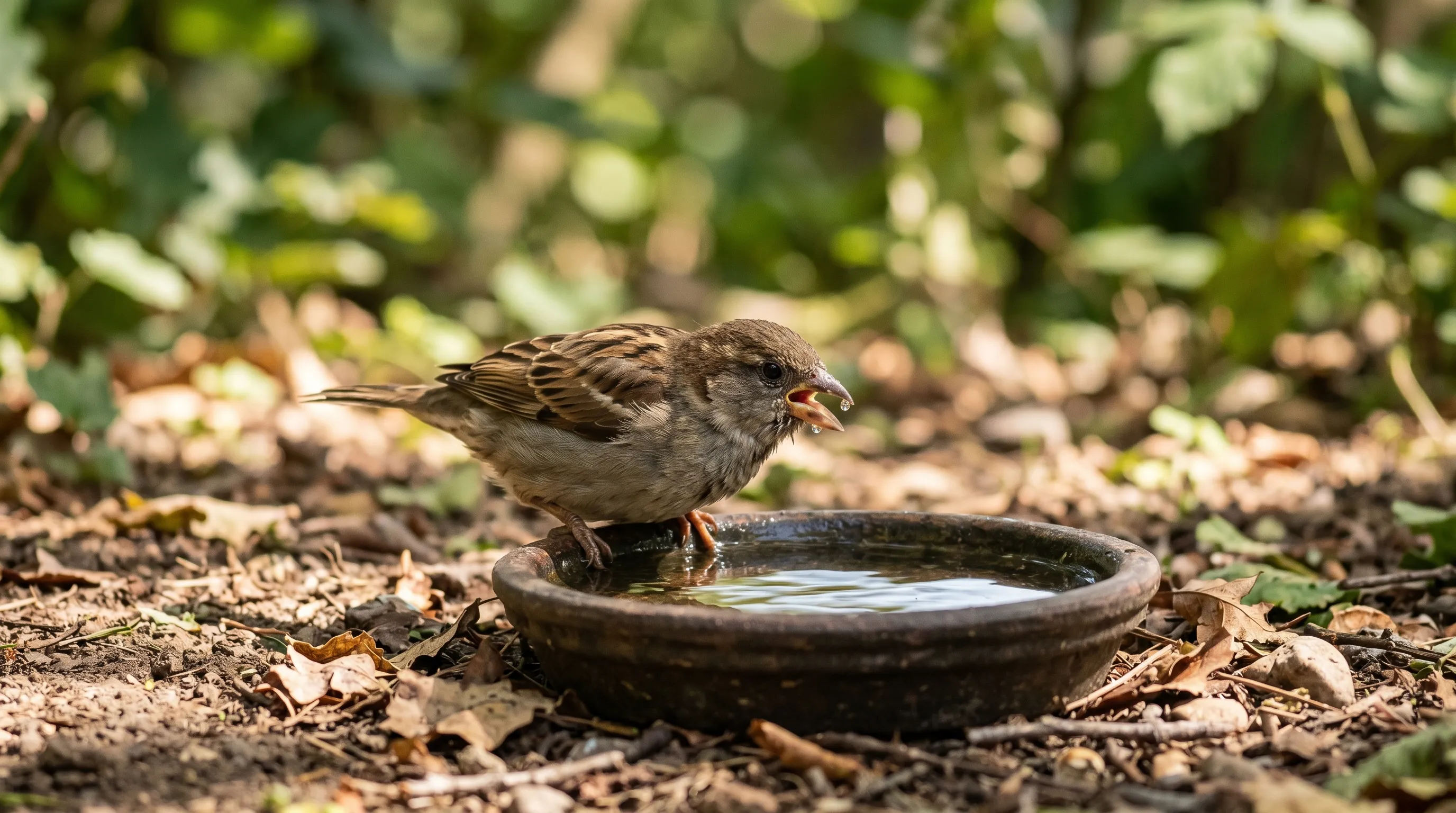 House sparrow at a Staffordshire ground water dish during a 35C amber-warning day. Open beak indicates heat panting. Multiple shallow water sources visible across the garden allow the bird to drink, wet feathers, and cool down.
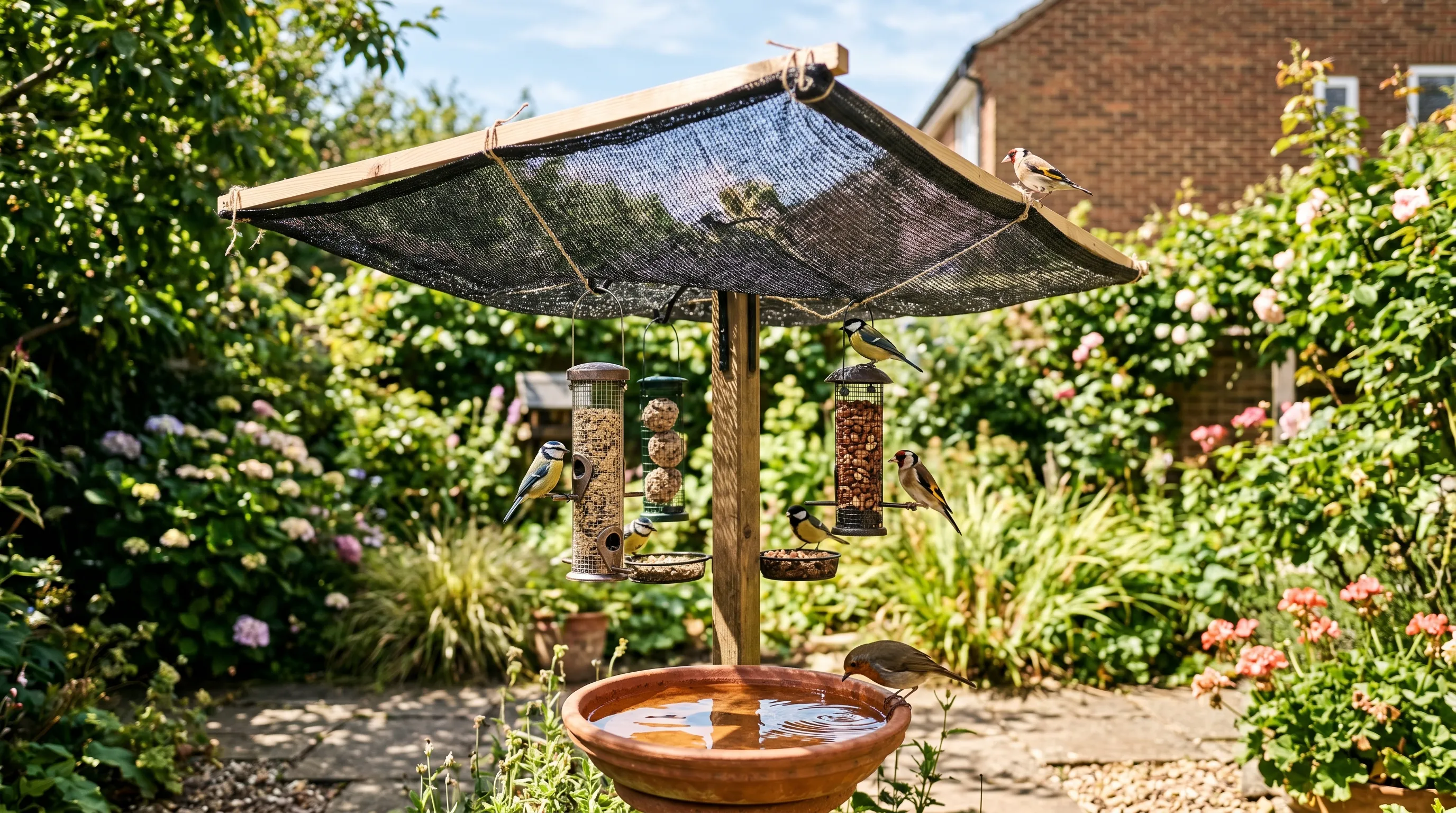 Temporary shade installation during a July amber warning at Staffordshire. 50% shade mesh on bamboo poles provides dappled shadow over the feeding station. 4-8C cooler than full sun; 2-3x more bird visits during peak heat.
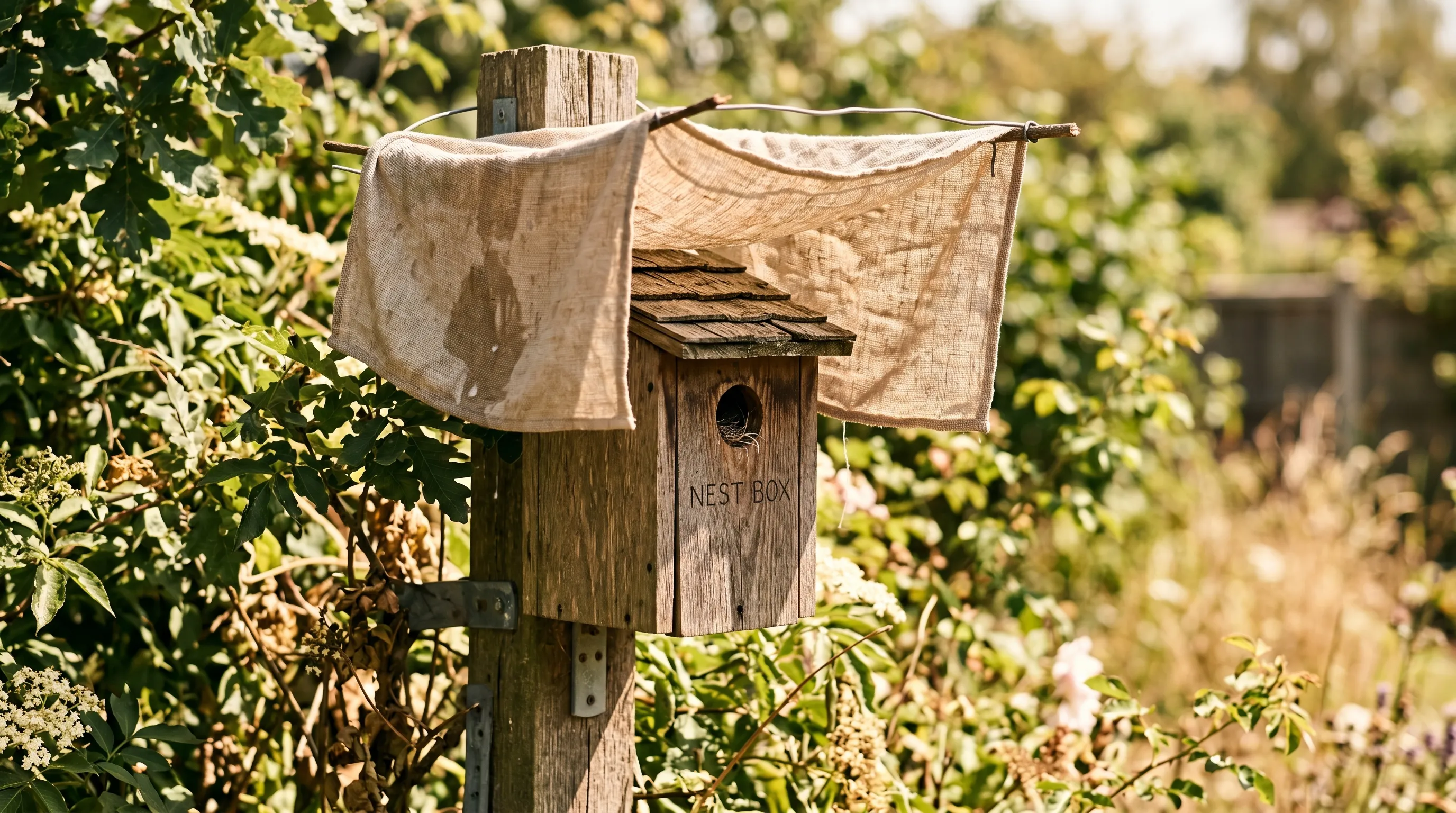 Temporary nest box shading during a 38C amber-warning day at Staffordshire. Wetted cloth hung 200mm above the box provides 6-10C cooling through shade plus evaporation. Reduces nest failure rate during extreme heat.
Now plan the wider bird-friendly garden
Our team produces practical UK gardening guidance from source research, contributor records and established horticultural practice. Editorial standards are overseen by Matt W.