Key takeaways
- Sclerotia of Sclerotium cepivorum survive in soil for 20+ years, making eradication practically impossible
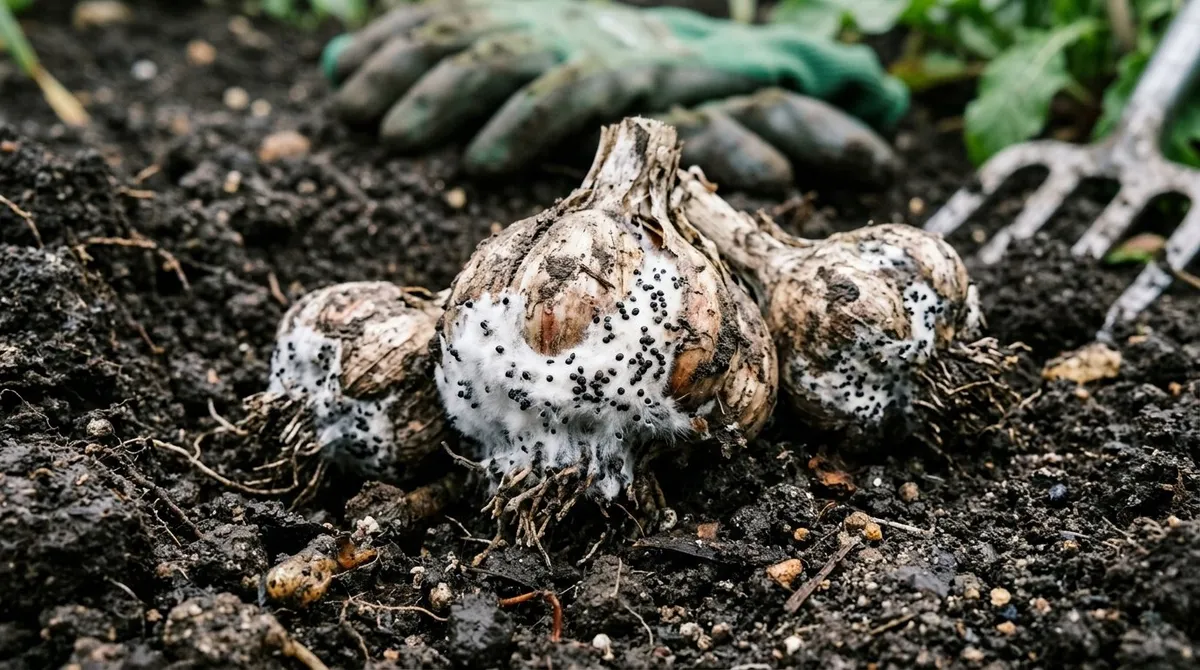
- White fluffy mycelium at the bulb base with tiny black sclerotia the size of poppy seeds confirms the diagnosis
- All alliums are affected: onion, garlic, leek, shallot, chives, and ornamental alliums
- No chemical treatment is available to home gardeners in the UK
- Raised beds filled with clean compost on weed membrane is the most reliable workaround for infected plots
- Decoy planting with crushed garlic can reduce sclerotia populations over several years on fallow ground
Allium white rot is the disease that every UK onion and garlic grower dreads. Once the fungus Sclerotium cepivorum establishes in your soil, it stays for at least 20 years. There is no spray, no soil treatment, and no resistant variety that can beat it. The tiny black sclerotia sit in the soil patiently, waiting for an allium root to grow close enough to trigger germination.
This guide covers everything UK gardeners need to know about identifying white rot, understanding how it spreads, and the practical workarounds that allow you to keep growing alliums even when your soil is contaminated. Prevention and containment are the only strategies. Knowing what you are dealing with is the first step.
What is allium white rot?
Allium white rot is caused by the soil-borne fungus Sclerotium cepivorum. It is specific to the genus Allium, meaning it only infects onions, garlic, leeks, shallots, chives, spring onions, and ornamental alliums. No other plant family is affected.
The fungus produces sclerotia as its survival structures. Each sclerotium is a compact ball of fungal tissue roughly 0.5mm in diameter, similar in size and shape to a poppy seed. These structures are extraordinarily resilient. Research from Warwick University and the former Horticulture Research International demonstrated viability after 20 years in field conditions without a host.
Sclerotia germinate only when they detect specific sulphur compounds released by allium roots. These diallyl disulphide compounds trigger germination when a root grows within a few centimetres of the resting sclerotium. This targeted trigger mechanism is key to the pathogen’s success: it wastes no energy until a host is confirmed nearby.
The disease occurs across all UK regions but is most frequently reported on allotments and vegetable gardens where alliums have been grown in the same beds for many years. Our vegetable pests and diseases guide covers the broader context of soil-borne diseases affecting UK kitchen gardens.
How do I identify allium white rot in the garden?
Field identification follows a clear sequence. The first symptom is premature yellowing and wilting of the foliage, starting with the oldest outer leaves and progressing inward. Plants look drought-stressed but the soil is moist. Growth slows or stops entirely.
Pull an affected plant from the soil and examine the base. Healthy allium roots are white and firm. White rot-infected roots are brown, sparse, and largely destroyed. The base plate and lower stem are covered in dense white fluffy mycelium that looks like cotton wool. This white growth is the actively feeding fungus.
Within the white mycelium, look for the diagnostic black sclerotia. These tiny spherical bodies are about 0.5mm across. They form in clusters on and around the rotted base plate. You may need to look closely because they are small, but they are always present in an active white rot infection. Finding white mould plus black dots confirms the diagnosis beyond doubt.
The disease is most active at soil temperatures between 10C and 20C, peaking at 15C. In UK conditions, this means spring and autumn are the highest-risk periods. Hot summer temperatures above 25C slow the fungus considerably. Winter cold does not kill the sclerotia but slows active mycelial growth.
Symptoms can be confused with other base rots. Fusarium basal rot produces a pinkish mould at the base but lacks the black sclerotia. Onion neck rot is a storage disease affecting the neck, not the base. The white mycelium plus black sclerotia combination is unique to white rot.
How does allium white rot spread between plots?
White rot spreads through one mechanism: the physical movement of contaminated soil containing sclerotia. It does not produce airborne spores. It does not spread through water over long distances. It does not blow in the wind. Every new outbreak traces back to contaminated soil arriving at a clean site.
Contaminated soil on tools and boots is the most common transmission route on allotments. Walking from an infected plot to a clean one with muddy boots carries sclerotia directly. Shared spades, forks, wheelbarrows, and rotavators that are not cleaned between plots spread the problem efficiently. One contaminated wheelbarrow of soil can infect a previously clean bed.
Infected transplants and sets introduce white rot to gardens that have never grown alliums before. Sets or transplants grown in infected soil carry sclerotia on their roots and in attached soil particles. This is why buying certified disease-free stock from reputable suppliers matters. Supermarket garlic intended for eating may carry white rot and should never be planted.
Surface water runoff moves sclerotia downhill on allotment sites with a slope. Plots at the bottom of a slope accumulate contamination from above. Raised beds with solid sides reduce this risk.
Soil movement during construction or landscaping can introduce sclerotia from one area to another. Topsoil deliveries from agricultural land may contain white rot if alliums were grown there previously. Always ask the source of delivered topsoil. The Garden Organic disease prevention page provides further guidance on maintaining clean growing media.
Why is allium white rot so difficult to eliminate?
Three biological features make white rot exceptionally persistent compared to other soil-borne diseases.
Twenty-year dormancy. Sclerotia survive in soil for 20+ years without a host. Most other soil-borne fungi persist for 3-10 years. Standard crop rotation periods of 3-5 years are meaningless against a pathogen that outlasts them four times over.
Targeted germination trigger. Sclerotia only germinate when they detect sulphur compounds from allium roots within a few centimetres. They do not waste energy germinating randomly. This means natural attrition of sclerotia in fallow soil is extremely slow. Without the specific chemical trigger, sclerotia wait.
High sclerotia production. A single infected onion or garlic bulb produces thousands of sclerotia in the surrounding soil as the mycelium matures. Each season of growing alliums in contaminated soil increases the sclerotia density massively. A heavily infested plot may contain over 20 sclerotia per gram of soil, so that every allium root encounters multiple infection sources.
These three factors combine to make eradication impractical. The only proven approaches either bypass the contaminated soil entirely or exploit the germination trigger to waste sclerotia before planting.
Can I still grow garlic and onions on infected land?
Yes, but not directly in the contaminated soil. The most reliable method is raised beds filled with clean compost, physically separated from the ground beneath.
Build or buy raised beds at least 20cm deep. Line the base with woven weed membrane to prevent root contact with contaminated soil below. Fill with fresh multipurpose or peat-free vegetable compost. Do not mix in any soil from the infected plot. Stand the beds on a hard surface if possible, or on membrane-covered ground.
- Membrane prevents sclerotia migration upward through capillary action
- Beds must be deep enough that roots stay within the clean compost zone
- Splashing from rain or watering must not introduce contaminated soil from outside the bed
- Replace or top up compost annually to maintain depth and fertility
- Clean boots and tools before working in the raised beds
Containers and grow bags work equally well for smaller quantities. A 30cm pot filled with clean compost grows 5-6 onion sets or a single garlic bulb. Large trough planters on stands are ideal because they are raised above contaminated ground entirely.
For large-scale production, the economics are less favourable. Buying enough compost to fill raised beds for a full allium crop costs more than the harvest is worth. But for home gardeners who want to keep growing their own garlic and onions, it is a proven and permanent solution. Our raised bed gardening guide covers bed construction and filling in detail.
What is the garlic decoy planting method?
The decoy method exploits the sclerotia germination trigger to reduce the population in soil without growing a crop. It is experimental but based on sound mycological science.
Sclerotia germinate when they detect diallyl disulphide released by allium roots. The decoy method provides this chemical signal artificially, using crushed garlic dissolved in water, applied to fallow soil where no alliums are growing. Sclerotia germinate, the fungal hyphae grow outward searching for a host root, find nothing, and die. Each germination event permanently removes one sclerotium from the soil.
How to apply the decoy method:
- Choose a period when the soil temperature is between 10C and 20C. Autumn is ideal in most UK regions.
- Crush 4-6 garlic cloves per square metre in water. Use a blender or press.
- Strain the liquid and dilute to approximately 10 litres per square metre.
- Water the garlic solution evenly across the surface of the infected bed.
- Do not grow any alliums in this bed during or after treatment that season.
- Repeat annually for 3-5 years.
Research by the former Horticulture Research International showed reductions in sclerotia density of 50-90% after 3-5 years of decoy treatments. Results vary depending on initial sclerotia density, soil type, and temperature during application.
The decoy method does not guarantee elimination. Some sclerotia at depth may not receive sufficient chemical signal to trigger germination. Others may be in a dormancy state that resists triggering. Use it as a complementary strategy alongside raised bed growing, not as a replacement.
Which allium crops does white rot affect most severely?
All allium species are susceptible, but the severity and economic impact varies. Understanding relative risk helps prioritise protection for the most valuable crops.
Garlic is the most vulnerable allium to white rot. Its strong sulphur content triggers more sclerotia germination per root length than any other allium. Garlic also has the longest growing season, spending 8-9 months in the ground from autumn planting to summer harvest. This extended soil contact maximises infection opportunity. Our garlic growing guide covers clean stock selection and planting methods.
Onions grown from sets are at moderate risk. The shorter growing season of 4-5 months reduces exposure time. Sets establish faster than seed-grown onions, giving them a better chance of bulking up before infection overwhelms the root system. Our onion growing guide covers variety selection and timing.
Leeks are moderately susceptible but symptoms often appear late in the growing season. Because leeks are harvested fresh rather than stored, partial infection is more tolerable. Peel away any affected outer layers and use the clean inner stem. Leeks also face the leek moth, whose caterpillars tunnel into the leaves and stems; see our leek moth identification and control guide.
| Allium crop | Vulnerability | Growing season | Impact if infected |
|---|---|---|---|
| Garlic | Very high | 8-9 months | Total crop loss common |
| Onion (sets) | High | 4-5 months | 50-100% loss in bad years |
| Onion (seed) | Very high | 6-7 months | Seedlings destroyed before bulbing |
| Shallot | High | 4-5 months | Clumps rot from the base |
| Leek | Moderate | 6-8 months | Partial harvest often salvageable |
| Chives | Low-moderate | Perennial | Clumps weaken over years |
| Spring onion | Moderate | 8-12 weeks | Fast crop may escape infection |
How do I prevent white rot entering clean soil?
Prevention is far easier than management. If your soil is currently free of white rot, protecting it should be a top priority. Once sclerotia establish, you are committed to decades of workarounds.
Buy certified clean stock. Purchase onion sets, garlic cloves, and shallot sets from garden centres and seed suppliers, not from supermarkets or market stalls. Certified stock is grown in tested, clean soil. Supermarket garlic imported from overseas may carry white rot sclerotia.
Never move soil between plots. On allotments, do not borrow soil, share compost, or accept topsoil from other gardeners without knowing its history. Do not accept manure that has been stored on allium-growing land.
Clean tools and boots. Wash spades, forks, trowels, and boots thoroughly after working on any plot where you are uncertain about white rot status. Sclerotia are tiny and invisible on soil-covered tools.
Quarantine new transplants. If you receive leek or onion transplants from another grower, shake off all soil from the roots before planting. Better still, grow your own transplants from seed in clean compost.
Monitor for early signs. Check allium beds weekly from April to July. Yellowing outer leaves in spring, before normal senescence begins, should trigger investigation. Pull one suspicious plant and check the base. Early detection limits spread because fewer sclerotia have been produced. Our allium leaf miner guide covers the main pest that can be confused with early disease symptoms.
Soil test. If you take on a new allotment or garden and want to know the white rot status before committing to allium growing, ADAS soil testing services can assess sclerotia density from soil samples. Testing before your first season saves years of frustration if the previous tenant left white rot behind.
Frequently asked questions
What does allium white rot look like?
White fluffy fungal growth at the bulb base is the definitive sign. Foliage yellows and wilts despite moist soil. Pull the plant and you will see dense white mycelium covering the roots and lower stem. Within this white mould, tiny black spherical sclerotia form, each about 0.5mm in diameter and resembling poppy seeds. The bulb base feels soft and waterlogged. Roots are largely destroyed. The fungus produces a faint musty smell in warm weather.
How long do white rot sclerotia survive in soil?
Sclerotia of Sclerotium cepivorum survive in soil for 20 years or more. Research at Warwick University recorded viable sclerotia after 20 years in field soil without any allium host. Each sclerotium germinates independently when it detects sulphur compounds released by allium roots within a few centimetres. This chemical triggering mechanism means the fungus only expends energy when a host is present, allowing it to remain dormant almost indefinitely.
Can I treat white rot with fungicide?
No fungicide is approved for amateur gardeners to treat allium white rot in the UK. Professional growers previously used tebuconazole as a seed treatment, but this has limited availability and no guarantee of control. No soil drench or spray eliminates established sclerotia. Management depends entirely on prevention: clean stock, soil avoidance through raised beds, and the experimental decoy planting method to reduce sclerotia populations over time.
Does crop rotation control white rot?
Standard crop rotation does not control white rot because sclerotia survive 20+ years. A 4-year or even 10-year gap between allium crops is meaningless to a pathogen that can wait two decades. Rotation prevents other allium diseases and is still good practice, but it provides zero protection against established white rot. The only soil-based approach is the decoy method, which actively triggers and wastes sclerotia without a host present.
What is the garlic decoy method for white rot?
Crushed garlic watered into fallow soil triggers sclerotia to germinate without a host. The sulphur compounds in garlic juice mimic the root exudates that normally signal a host plant. Sclerotia germinate, expend their energy, and die without infecting anything. Crush 4-6 garlic cloves per square metre into water and apply to the soil surface in autumn. Repeat annually for 3-5 years. Research suggests this reduces sclerotia density by 50-90% over time, though results vary.
Can I grow alliums in containers to avoid white rot?
Yes, growing in containers with fresh compost avoids white rot completely. Use pots, troughs, or raised beds filled with clean multipurpose or vegetable compost. Stand containers on paving, membrane, or gravel rather than bare infected soil. Splashing rain or soil contact through drainage holes can reintroduce sclerotia, so elevation and membrane barriers matter. Replace compost each season for onions and garlic.
Does white rot affect ornamental alliums?
Yes, all plants in the genus Allium are susceptible to white rot. Ornamental alliums including Allium hollandicum, A. giganteum, A. christophii, and A. schubertii can all be infected. They also act as host plants that maintain and increase sclerotia levels in the soil. If your ornamental allium bed is in infected ground, the sclerotia population will grow each year even if you do not grow edible alliums nearby.
Our team produces practical UK gardening guidance from source research, contributor records and established horticultural practice. Editorial standards are overseen by Matt W.