Narcissus 'Jetfire'
Narcissus 'Jetfire'
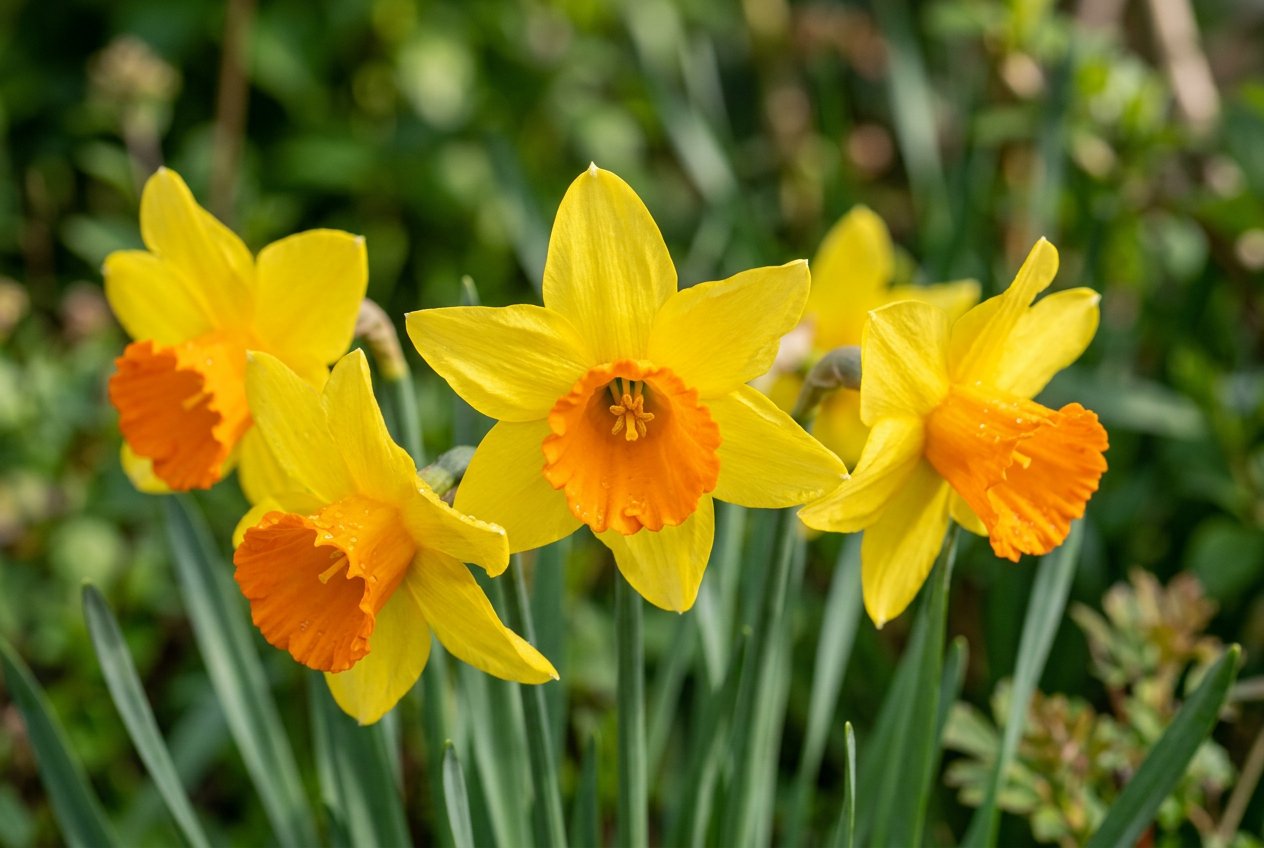
A striking cyclamineus daffodil with swept-back golden petals and a bright orange-red trumpet. Compact sturdy stems withstand wind and rain better than taller varieties. Flowers from late February to March. Excellent for containers and the front of borders. One of the best small daffodils for UK gardens.
Where to plant
Best aspect
Border position
When to plant and expect flowers
Plant
Flowers
How to grow narcissus 'jetfire'
Plant 10-12cm deep in September. Compact and sturdy so resists wind damage. Excellent in pots and windowboxes. The orange trumpet intensifies in cool weather. Naturalises well in short grass.
Soil requirements
Soil type
loam, sand, chalk, clay
Moisture
well drained
pH
neutral, alkaline
Aftercare
Allow foliage to die back naturally after flowering. Remove spent flower heads to prevent self-seeding.
Propagation
- Division of clumps in autumn
- Offsets
Wildlife value
Toxicity
All parts contain lycorine and calcium oxalate crystals causing nausea, vomiting, and skin irritation.
Common problems
- Narcissus bulb fly
- Basal rot
- Blindness (failure to flower)
- Slugs on young shoots
Similar bulbs to grow
Related guides
The 70-30 Rule for Better Garden Borders
The 70-30 planting rule splits a border into 70% structure and foliage and 30% seasonal flowers for year-round interest in UK gardens.
Air-Purifying Houseplants UK
What the science really says about air-purifying houseplants, plus 10 best low-care UK varieties, pet-safe picks, and how to truly clean indoor air.
Allium White Rot: The 20-Year Soil Problem
Allium white rot UK identification and prevention. Sclerotia persist 20+ years. Covers symptoms, spread, decoy planting, and raised bed workarounds.