Iris bucharica
Iris bucharica
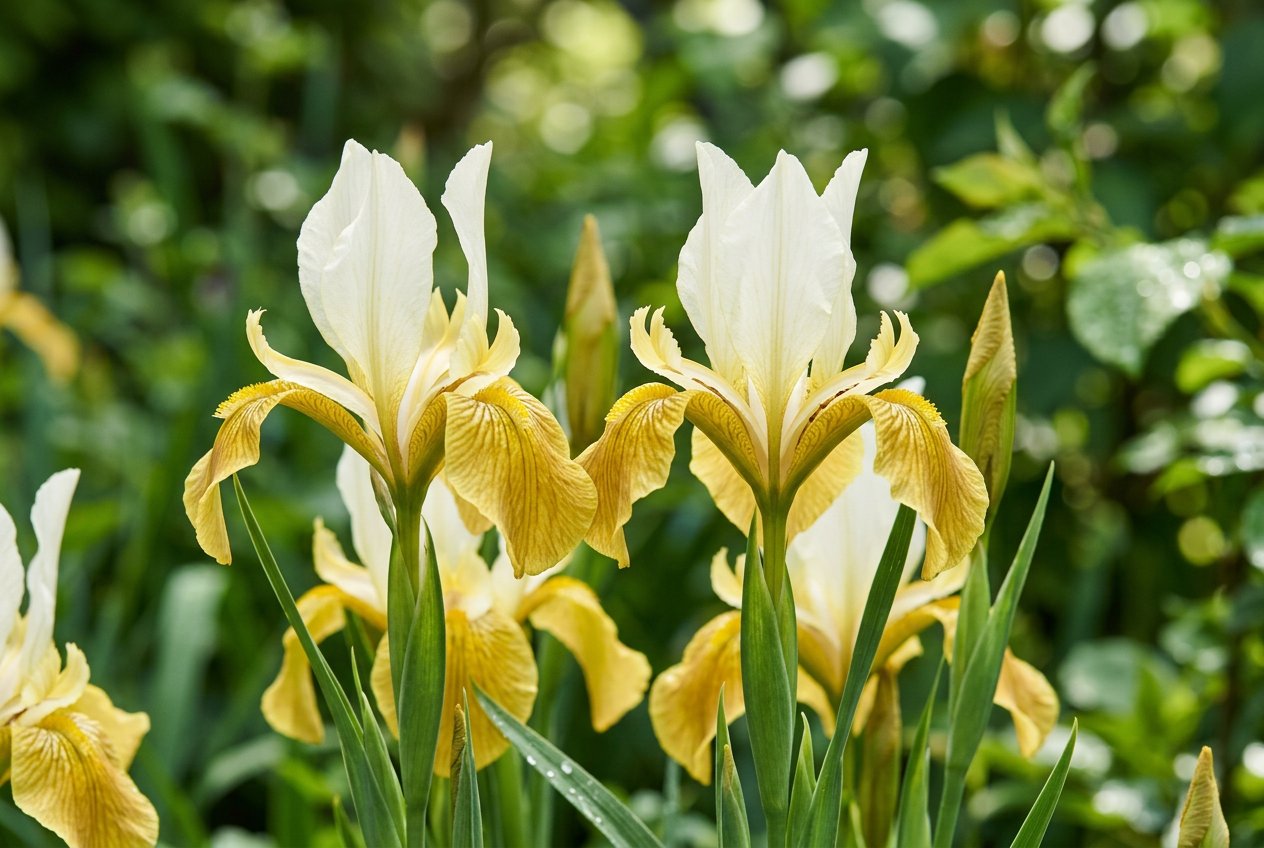
A striking juno iris producing multiple creamy-white and golden-yellow flowers up each stem in April. Glossy green leaves arranged in a fan pattern are ornamental even without flowers. Larger and more substantial than reticulata irises. Needs warm well-drained conditions. An unusual and eye-catching choice for UK gardens.
Where to plant
Best aspect
Border position
When to plant and expect flowers
Plant
Flowers
How to grow iris bucharica
Plant 10cm deep in autumn in a warm sunny position with sharp drainage. Juno irises have fleshy roots attached to the bulb — handle carefully and do not break them off. Benefits from a dry summer dormancy. South-facing borders are ideal.
Soil requirements
Soil type
sand, loam
Moisture
well drained
pH
neutral, alkaline
Aftercare
Allow foliage to die back naturally after flowering. Remove spent flower heads to prevent self-seeding.
Propagation
- Offsets in autumn
- Seed
Wildlife value
Toxicity
Mildly toxic. Contains irisin compounds causing gastrointestinal upset if ingested.
Common problems
- Fleshy roots easily damaged
- Needs dry summer dormancy
- Rot in wet soil
Similar bulbs to grow
Related guides
The 70-30 Rule for Better Garden Borders
The 70-30 planting rule splits a border into 70% structure and foliage and 30% seasonal flowers for year-round interest in UK gardens.
Air-Purifying Houseplants UK
What the science really says about air-purifying houseplants, plus 10 best low-care UK varieties, pet-safe picks, and how to truly clean indoor air.
Allium White Rot: The 20-Year Soil Problem
Allium white rot UK identification and prevention. Sclerotia persist 20+ years. Covers symptoms, spread, decoy planting, and raised bed workarounds.