Iris danfordiae
Iris danfordiae
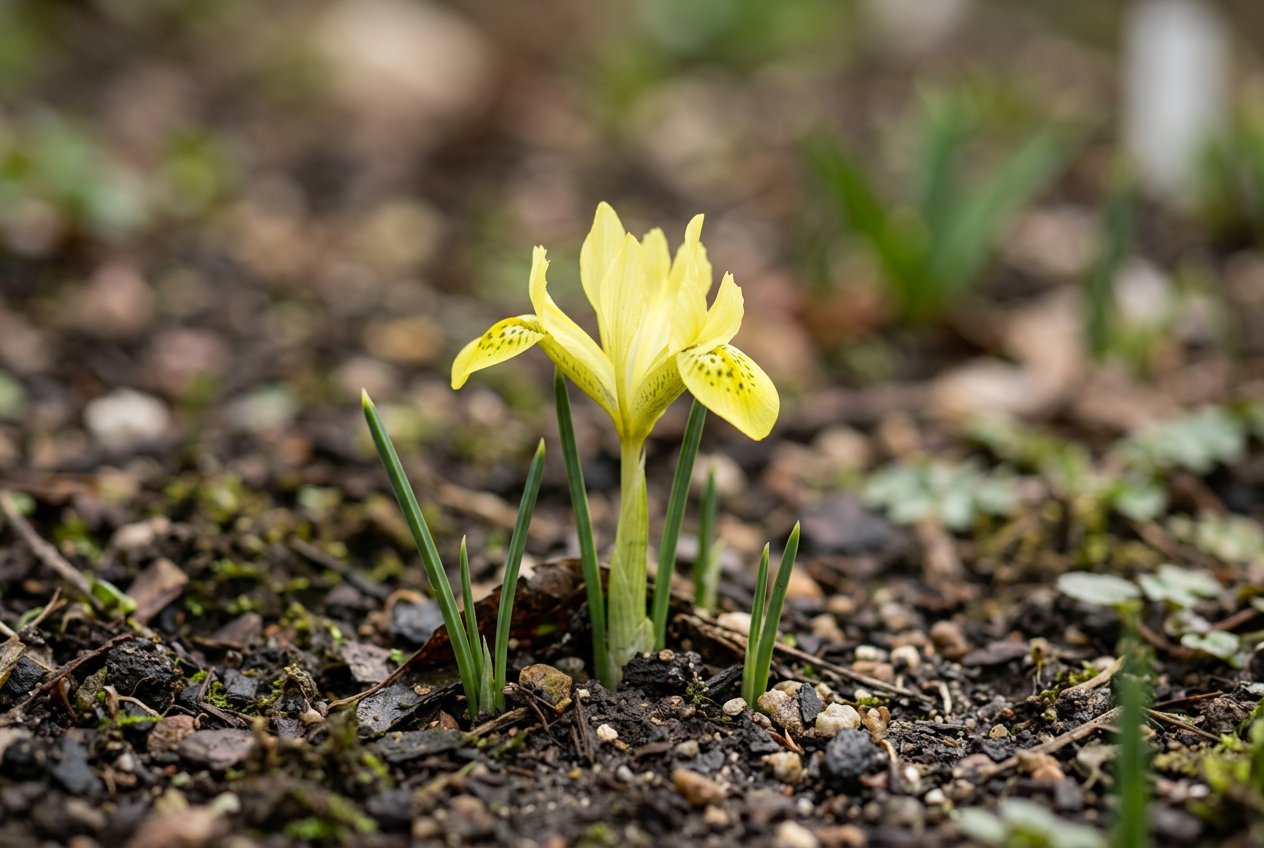
A miniature bulbous iris producing bright yellow flowers with olive-green spotted markings from February. One of the few truly yellow early spring bulbs. Only 10-15cm tall. Tends to split into tiny bulblets after flowering so often treated as annual. Cheerful partner for blue reticulata irises in UK gardens.
Where to plant
Best aspect
Border position
When to plant and expect flowers
Plant
Flowers
How to grow iris danfordiae
Plant 8-10cm deep in autumn. Tends to split into non-flowering bulblets after the first year. Plant deeply (12cm) and feed well to encourage re-flowering. Many gardeners treat it as an annual, replanting fresh bulbs each autumn. The yellow colour is a perfect contrast with blue Iris reticulata.
Soil requirements
Soil type
sand, loam
Moisture
well drained
pH
neutral, alkaline
Aftercare
Allow foliage to die back naturally after flowering. Remove spent flower heads to prevent self-seeding.
Propagation
- Offsets in autumn
- Seed
Wildlife value
Toxicity
Mildly toxic. Contains irisin compounds causing gastrointestinal upset if ingested.
Common problems
- Splits into non-flowering bulblets
- Ink disease
- Short-lived
Similar bulbs to grow
Related guides
The 70-30 Rule for Better Garden Borders
The 70-30 planting rule explained: 70% structure and foliage, 30% seasonal flowers, measured by area, so your UK border looks full in every month.
Air-Purifying Houseplants: What They Really Do
Do air-purifying houseplants work? The honest answer, the ten easiest plants to grow anyway, which are pet-safe, and what actually freshens indoor air.
Allotment Planner: Month-by-Month
A friendly month-by-month allotment planner for the UK: what to sow, plant, pick and tidy each month, plus a handy sowing and harvest chart.