Persian Buttercup
Ranunculus asiaticus
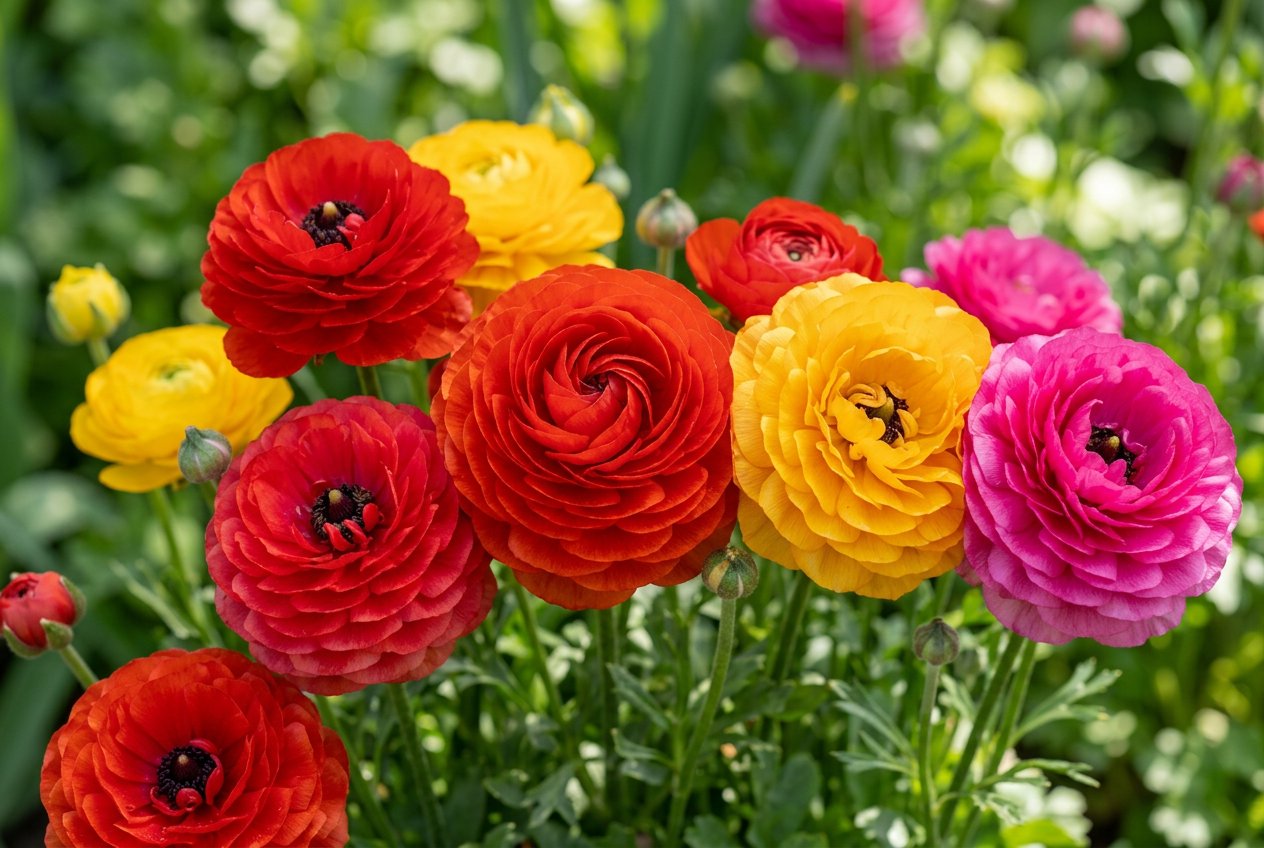
Persian buttercup produces exquisite many-petalled flowers resembling roses in vivid shades of red, orange, yellow, pink, and white from May to July. Popular as a florist flower and increasingly grown in UK gardens. Not fully hardy so treat as annual or lift corms in autumn. Stunning in containers and cutting gardens.
Where to plant
Best aspect
Border position
When to plant and expect flowers
Plant
Flowers
How to grow persian buttercup
Soak claw-like tubers overnight then plant 5cm deep claws-down in February or March. Needs full sun and sharp drainage. Not frost hardy so plant after the last frost or start in pots under cover. Excellent cut flower lasting up to 10 days. Lift and store frost-free or treat as annual.
Soil requirements
Soil type
sand, loam
Moisture
well drained
pH
neutral
Aftercare
Allow foliage to die back naturally after flowering. Remove spent flower heads to prevent self-seeding.
Propagation
- Offsets in autumn
- Seed
Wildlife value
Toxicity
Contains protoanemonin causing skin irritation and gastrointestinal upset.
Common problems
- Not frost hardy
- Tubers rot in cold wet soil
- Powdery mildew
- Aphids
Similar bulbs to grow
Related guides
The 70-30 Rule for Better Garden Borders
The 70-30 planting rule explained: 70% structure and foliage, 30% seasonal flowers, measured by area, so your UK border looks full in every month.
Air-Purifying Houseplants: What They Really Do
Do air-purifying houseplants work? The honest answer, the ten easiest plants to grow anyway, which are pet-safe, and what actually freshens indoor air.
Allotment Planner: Month-by-Month
A friendly month-by-month allotment planner for the UK: what to sow, plant, pick and tidy each month, plus a handy sowing and harvest chart.