Tulipa sylvestris
Tulipa sylvestris
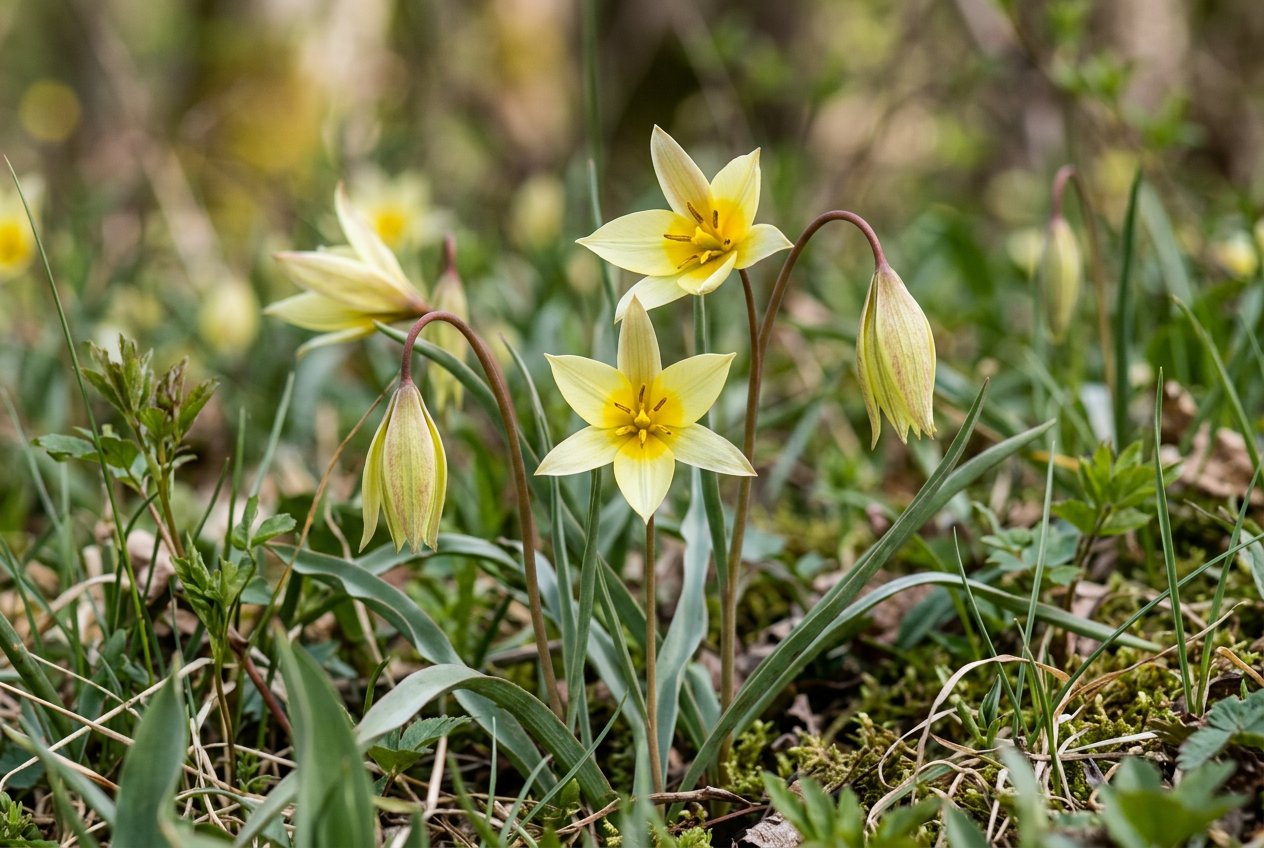
Wild tulip is a graceful species with nodding yellow buds that open to star-shaped golden flowers in April. Naturalised in parts of Britain since the 17th century, often found in old gardens and orchards. One of the few tulips that reliably perennialises and naturalises in UK grass. Sweetly scented.
Where to plant
Best aspect
Border position
When to plant and expect flowers
Plant
Flowers
How to grow tulipa sylvestris
Plant 10-15cm deep in November. One of the very few tulips that truly naturalises in grass. Spreads by underground stolons. Often found in old gardens where it has persisted for centuries. Sweetly scented. Excellent for wildflower areas and orchard grass.
Soil requirements
Soil type
loam, sand, chalk
Moisture
well drained
pH
neutral, alkaline
Aftercare
Allow foliage to die back naturally after flowering. Remove spent flower heads to prevent self-seeding.
Propagation
- Offsets in autumn
- Seed
Wildlife value
Toxicity
All parts toxic, especially bulbs. Contains tulipalin A and B causing skin irritation and gastrointestinal upset.
Common problems
- Tulip fire (Botrytis tulipae)
- Squirrels digging up bulbs
- Slugs on young shoots
- Bulb rot in waterlogged soil
Similar bulbs to grow
Related guides
Air-Purifying Houseplants UK
What the science really says about air-purifying houseplants, plus 10 best low-care UK varieties, pet-safe picks, and how to truly clean indoor air.
Allium White Rot: The 20-Year Soil Problem
Allium white rot UK identification and prevention. Sclerotia persist 20+ years. Covers symptoms, spread, decoy planting, and raised bed workarounds.
Allotment Planner: Month-by-Month
Month-by-month allotment planner for UK growers. Sowing, planting, harvesting and maintenance tasks for every month, tested on heavy clay over 7 seasons.