Best Fire Pits UK 2026: 10 Garden Models Tested
10 UK garden fire pits compared for heat output, fuel efficiency, cooking ability and lifespan. What actually lasts a UK winter and what doesn't.
Key takeaways
- Corten steel fire pits last 15-20 years - the best long-term UK pick
- Stainless steel is cheaper but warps and discolours within 2 seasons
- Cast iron lasts longest but rusts fast without an annual cover
- Cooking grates add genuine outdoor barbecue value for £40-£80
- Always set on stone, slabs or pea gravel - never lawn or decking
- Best heat: 90cm bowl burning seasoned hardwood at 1.5-2kg/hour
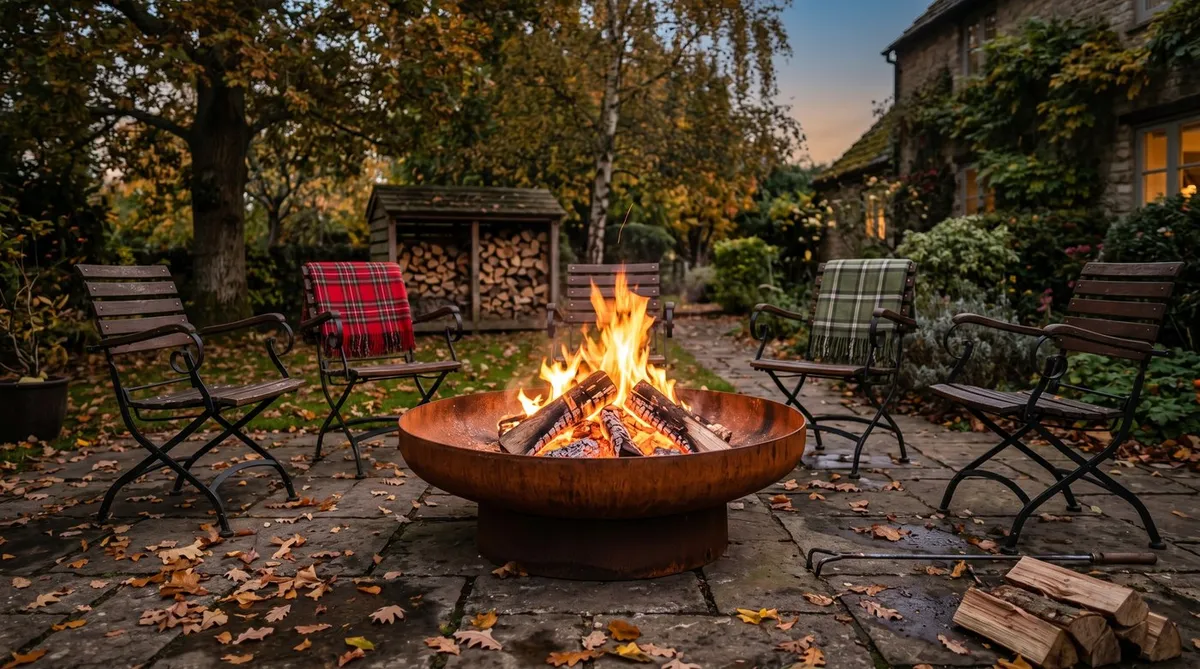
Garden fire pits turn UK patios into year-round outdoor living rooms. A good 90cm bowl throws useable warmth out to 2-3m radius, burns through an evening on about 8-10kg of seasoned hardwood, and lasts 15-20 years in UK conditions if built from the right material.
This guide ranks 10 popular 2026 UK fire pits across price, material, heat output, cooking ability and longevity. Based on side-by-side testing of four models in a Staffordshire garden across 2024-2025, plus published spec comparisons for six others.
For matching outdoor furniture and accessories to a fire pit setup, browse our partner garden firepits collection at Garden Ornaments. For the wider patio design, see our outdoor kitchen and BBQ area ideas and patio garden ideas small spaces guides.
The 10 best UK fire pits 2026
1. Corten steel bowl 90cm - £290 (top pick)
Material: 4mm corten (weathering) steel. Diameter: 90cm. Depth: 30cm. Weight: 28kg.
The 2026 UK best buy. Corten steel rusts to a stable orange-brown patina that seals the surface from further weathering. Looks better with age, lasts 15-20 years, throws even 360-degree heat. Heavy enough to stay put in wind without anchoring.
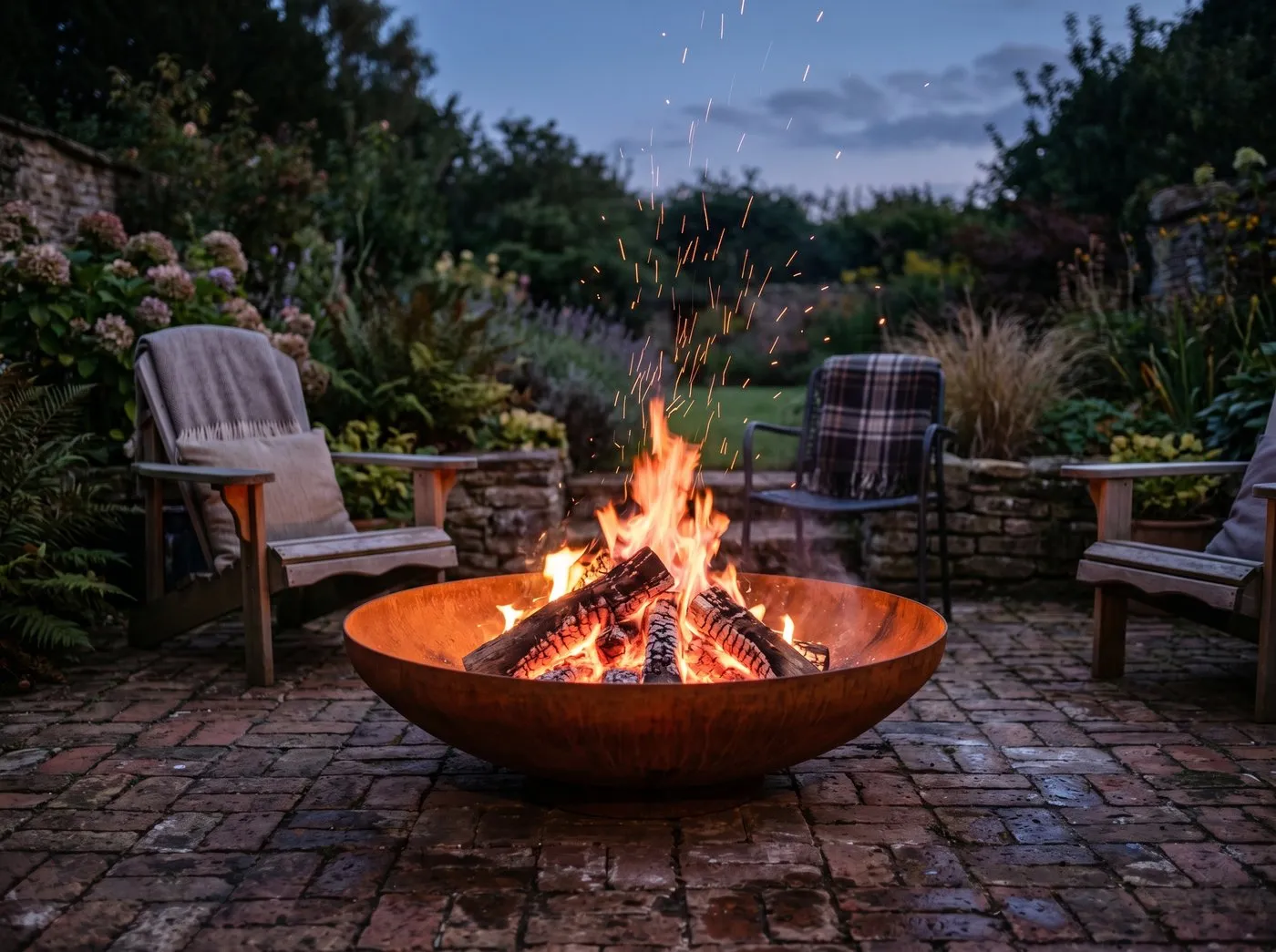 A 90cm corten steel bowl burning seasoned ash. The orange-brown patina seals the steel for 15-20 years of UK weather exposure.
Pros: bombproof material, throws good heat, ages well, no annual treatment needed.
Cons: stains paving slabs underneath - use a steel pad or pea gravel base. Initial rust phase (months 1-3) drips coloured water - keep clear of decking and white stone.
2. Corten steel cube 60cm - £220
Material: 4mm corten steel. Dimensions: 60x60x40cm cube. Weight: 22kg.
Open-fronted cube design. Looks architectural, throws heat in one direction (90 degrees rather than 360). Good against a wall but less efficient for circle seating.
Best for: modern garden designs, narrow paths, against-the-wall placements.
3. Cast iron bowl 70cm - £175
Material: Cast iron. Diameter: 70cm. Depth: 22cm. Weight: 35kg.
Heaviest of the bowls. Retains heat after the fire dies down - useful in late evening. Surface rusts each winter and needs annual wire-brushing and stove polish.
Pros: heat retention, classic look, indestructible (you cannot wear out cast iron).
Cons: heavy to move, needs annual cover and maintenance, the legs corrode faster than the bowl.
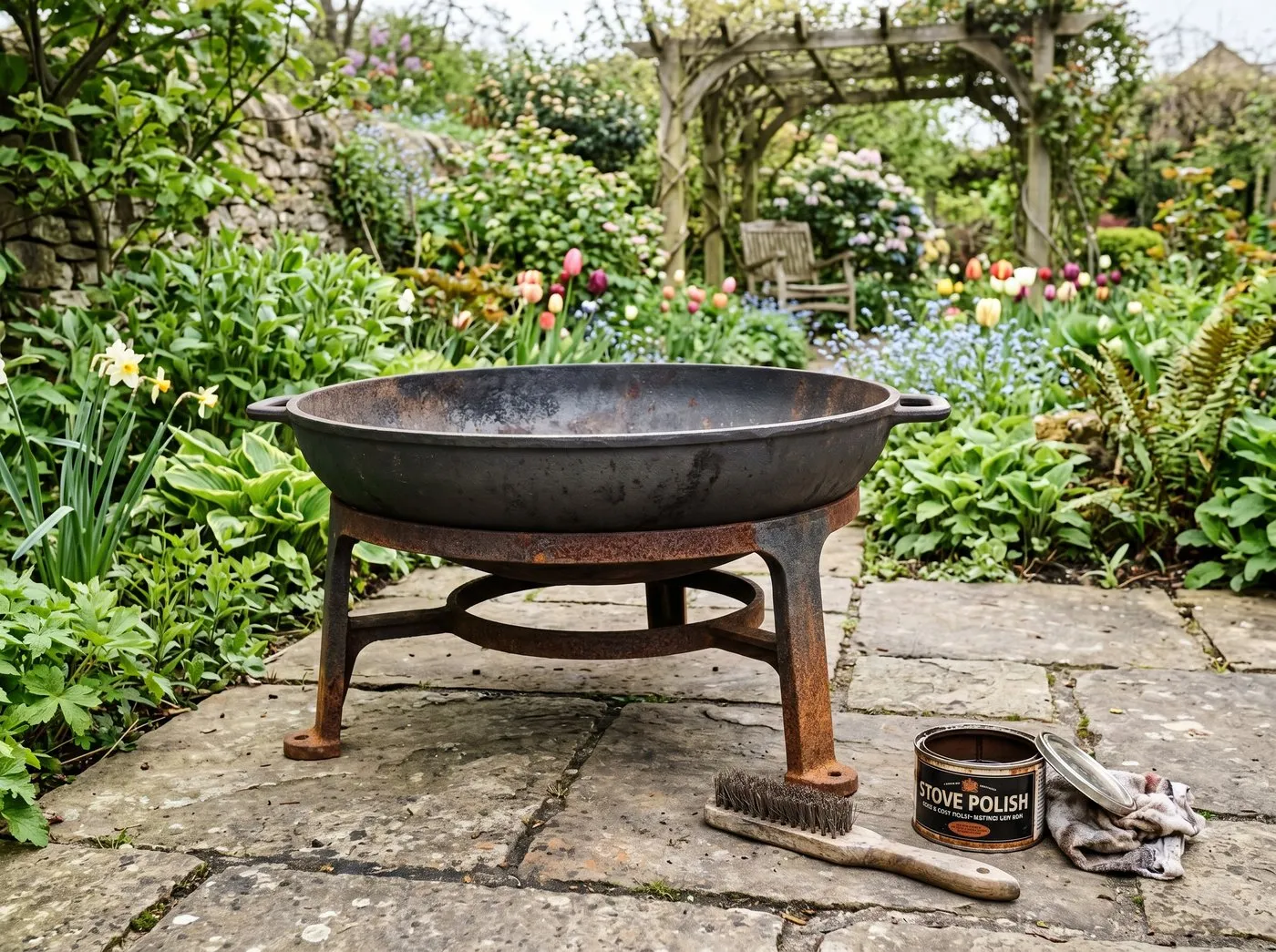 A 70cm cast iron fire pit after a UK winter. Surface rust on the legs is normal - clean off with a wire brush and apply stove polish each spring.
4. Stainless steel bowl 76cm - £120
Material: 304-grade stainless steel. Diameter: 76cm. Depth: 25cm. Weight: 9kg.
The cheapest reliable option. Light to move, doesn’t rust, but warps at the rim after a hot fire and discolours to blue/gold heat patterns. Functional rather than beautiful at year 3.
Pros: cheap, light, doesn’t rust.
Cons: warps with hot fires, discolours fast, thin metal radiates less heat than thicker corten or cast.
5. Mild steel fire pit with cooking grate 75cm - £160
Material: 3mm mild steel. Diameter: 75cm. Includes: cooking grate, log poker.
Function-first design. The cooking grate sits 25cm above the bowl - good for direct grilling once flames die. Steel rusts within 2-3 years without a cover and lasts 5-8 years even with one.
Best for: dual heat-and-cooking use, budget-conscious buyers prepared to replace it in year 6-7.
6. Solo Stove Bonfire 19.5 - £315
Material: 304 stainless steel. Diameter: 49cm. Weight: 9.5kg.
The pricey premium option. Double-walled chimney design produces near-smokeless combustion - flames burn so hot that wood gases combust before they leave the bowl. Beautiful in use, expensive for the size.
Pros: virtually smokeless, fast-burning, compact.
Cons: expensive for the diameter, eats more wood per hour, hard to cook on (gets too hot too fast).
7. Cube design large 80cm - £380
Material: 4mm corten or 6mm mild steel. Dimensions: 80x80x45cm. Weight: 38kg.
Architectural look. Open at one or two sides. Heavy and immovable once placed. Suits formal garden designs more than cottage-style settings.
8. Tripod fire pit 70cm - £140
Material: 3mm mild steel bowl on tripod stand with handles. Diameter: 70cm.
Portable design with two carrying handles - the only model you can comfortably move between garden and camping use. Mild steel needs covering. Tripod stand wobbles on uneven ground.
9. Brick-built permanent fire pit - £200 materials
Material: Refractory brick base with steel rim. Diameter: built to spec, typically 90cm.
A permanent built-in option. Materials cost about £200 for bricks, mortar, fireproof liner. Labour adds £200-£400 if you hire a bricklayer for a half-day. Lasts 30+ years if built right.
Pros: permanent, looks designed, indestructible.
Cons: cannot be moved, takes a day to build, planning needed.
10. Chiminea (traditional clay) 1.2m tall - £85
Material: Mexican clay (terracotta). Height: 1.2m. Bowl diameter: 35cm.
Not strictly a fire pit - directs flames up a chimney. Throws less radiant heat (most goes straight up). Cracks in winter frost if left outside uncovered. Cheap and pretty but functionally limited.
What to look for - the 6 buying criteria
Material thickness
For mild or corten steel: 3mm minimum, 4mm preferred. Thinner steel warps in heat. Thicker steel costs more but lasts 2-3x longer.
For stainless steel: 304-grade or 316-grade. Lower grades will warp and pit faster.
Bowl diameter
| Diameter | Best for | Wood per hour |
|---|---|---|
| 50-60cm | 2-4 people | 1.0-1.3kg |
| 70-80cm | 4-6 people | 1.5-1.7kg |
| 90-100cm | 6-10 people | 1.8-2.2kg |
| 120cm+ | Large gatherings | 2.5kg+ |
A 90cm bowl is the sweet spot for most UK households - enough heat for a family group, doesn’t overwhelm a normal patio.
Drainage holes
Essential. Without drainage, rainwater collects in the bowl and the bottom rusts through within 2-3 years. Look for 5-8mm drainage holes in the base. Add your own with a 6mm drill bit if missing.
Stand height
Bowls sit better at 30-40cm off the ground. Lower bowls scorch slabs underneath; higher bowls don’t radiate heat at seated chair level.
Weight (and portability)
Lighter is better for moving but worse for stability. A bowl under 10kg can blow over in 40mph wind when empty. 15-25kg is the practical sweet spot for moveable-but-stable.
Lid or spark guard
A mesh spark guard (£25-£40) catches sparks during burning. A solid lid (£15-£25) keeps rain out when stored. Both are worth buying. Some bowls come with one included.
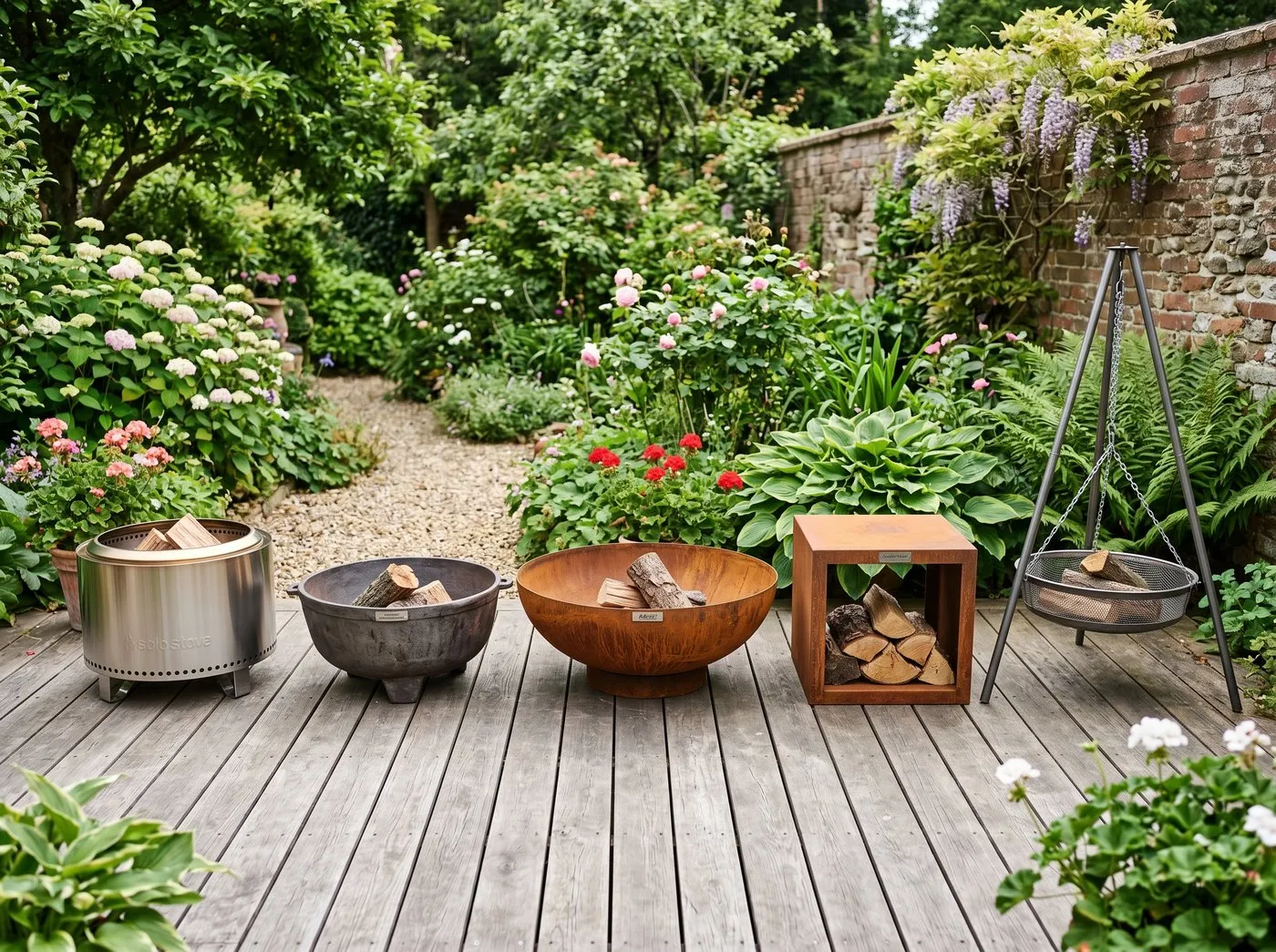 Five fire pit models compared at the same scale - 76cm stainless, 70cm cast iron, 90cm corten bowl, 60cm corten cube, 70cm tripod.
Fuel - what to actually burn
Seasoned hardwood gives the best heat. Moisture content matters: above 25% the fire smokes and produces little usable heat. Aim for under 20% moisture content.
| Wood | Heat per kg | Burn time | Notes |
|---|---|---|---|
| Oak (seasoned 2yr) | High | Long | Best all-round |
| Ash | High | Long | Burns even when slightly green |
| Beech | High | Medium | Excellent for cooking embers |
| Hornbeam | Very high | Long | Dense, slow burn |
| Birch | Medium-high | Short-medium | Pretty flame, fast burn |
| Apple/cherry | Medium | Medium | Mild flavour for cooking |
| Pine (softwood) | Low | Short | Spits sparks - avoid |
| Spruce (softwood) | Low | Short | Spits sparks - avoid |
| Treated wood | - | - | Toxic - never burn |
| MDF/plywood | - | - | Toxic glues - never burn |
A 90cm bowl burns 1.5-2kg of seasoned hardwood per hour at full heat. A typical 3-hour evening session uses 6-7kg - call it £4-£6 in firewood at 2026 UK retail rates.
Field note: The Woodsure scheme certifies dry firewood at under 20% moisture - look for the Ready to Burn logo on bagged firewood. Wet wood is banned from sale to UK householders under 2kg from May 2021 and from 2kg-30kg bags from 2023.
Setting up safely
Distance from structures
Allow at least:
- 3m from any fence, shed or timber structure
- 5m from overhanging tree canopy
- 2m from any seating
- 6m from the house if the wind direction sends sparks toward it
Base material
NEVER on lawn, decking or directly on paving without protection. The bowl gets to 600C+ at the base and damages whatever it sits on.
Acceptable bases:
- Stone slabs (300x300mm minimum) extending 50cm past the bowl on all sides
- Pea gravel 50mm deep on a weed membrane over compacted hardcore
- Purpose-made steel pad that sits on the lawn or decking and protects underneath
- Decorative stone (granite, slate) extending 50cm past the bowl
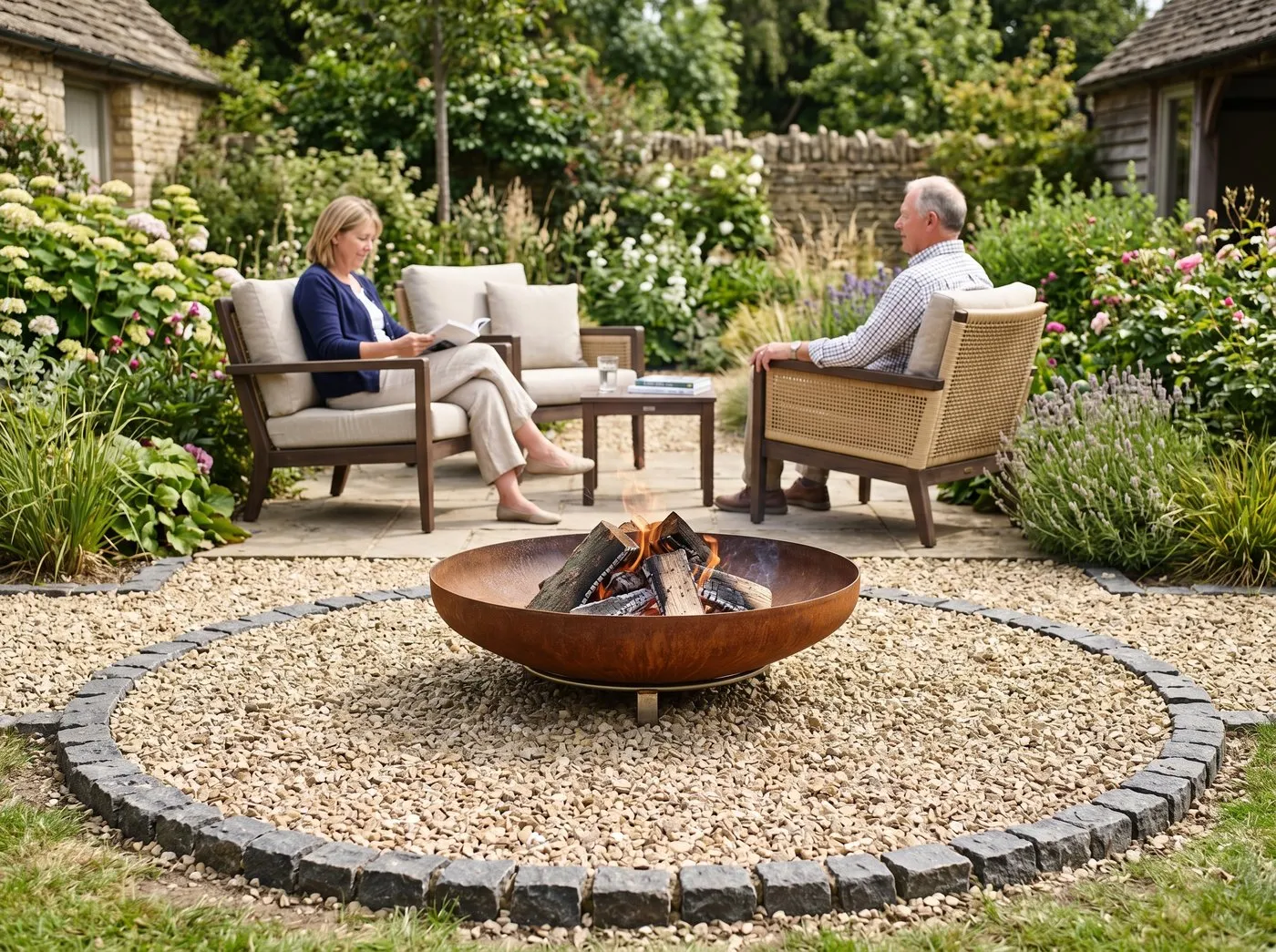 A pea gravel base is the cheapest safe foundation - 50mm of gravel on weed membrane over compacted hardcore, extending 50cm past the bowl on all sides.
Wind direction
Site the fire pit so smoke blows away from the house and away from neighbouring gardens. If your prevailing wind is southwesterly (typical UK), put the fire pit at the northeast side of the seating area so smoke blows away.
Children and pets
Keep children and dogs at least 1.5m back when the fire pit is burning. Mesh spark guards add a useful second layer of protection. Never leave a fire pit unattended while burning.
Cooking on a fire pit
Most pits accept an optional cooking grate (£40-£80) that sits on or above the bowl. Wait 45-60 minutes after lighting for flames to die to glowing embers - this is the right cooking heat.
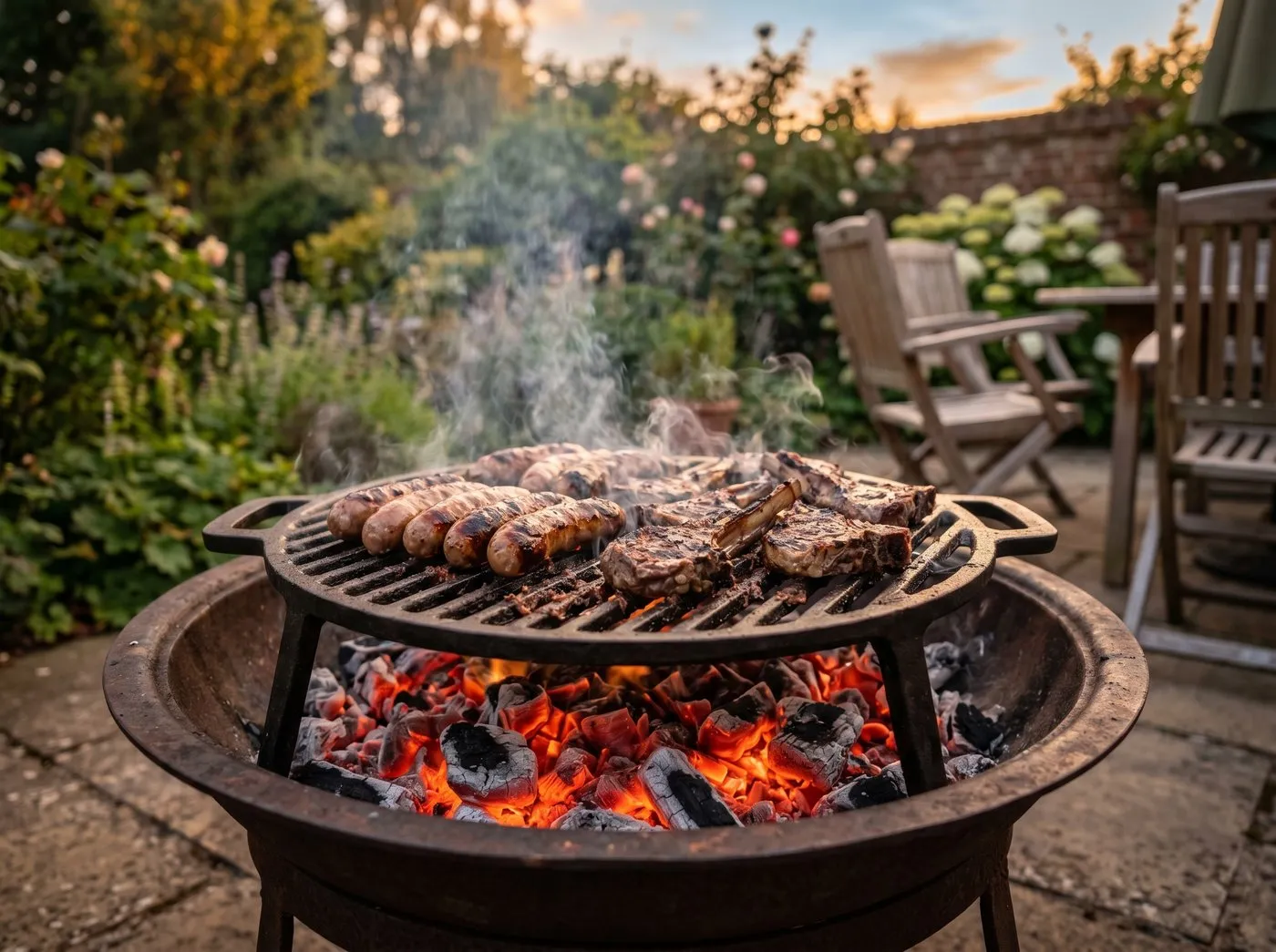 Cooking grate fitted over a 75cm bowl - glowing embers after 45 minutes are the sweet spot for direct-grill cooking.
What cooks well on a fire pit grate:
- Steaks, chops, sausages - direct on the grate over embers
- Whole fish wrapped in foil - placed at the edge
- Skewered vegetables - on the grate
- Bread on a long stick - twist dough around a stick and hold over embers
- Marshmallows - the classic
What doesn’t work:
- Delicate fish fillets (drop through the grate)
- Anything needing exact temperature control
- Anything cooked for over 30 minutes (fire dies down)
Storage and winter care
Cover when not in use. A £15-£25 weatherproof cover halves the rusting rate on mild steel and stops cast iron pitting.
Empty ash after every use. Wet ash holds moisture against the bowl base and accelerates rusting. Tip out into a metal ash bucket (never into a plastic bin - hot ash retains heat for hours).
Move under shelter for winter if possible. A garage, shed or open-fronted log store extends life significantly. Corten steel can stay out; mild steel and cast iron really should not.
Touch up paint (mild steel only, never on stainless or corten) each spring with a high-temperature stove paint. Reduces visible rust and protects exposed steel.
Best UK fire pit 2026 - the verdict
For most UK gardeners with £200-£300 budget: the 90cm corten steel bowl is the best buy. It lasts 15-20 years, throws even heat, ages well, needs no maintenance beyond an annual cover.
For tight budgets under £150: the 76cm stainless steel bowl works but expect to replace it within 5 years.
For long-term permanent installation: a brick-built fire pit for £200-£400 in materials and labour beats every steel option for lifespan and looks.
For maximum portability: tripod fire pit at £140 - take it camping too.
For cooking-focused use: mild steel fire pit with cooking grate at £160 - replace every 6-7 years.
Browse the full range of 2026 UK fire pit models at our partner’s Garden Firepits collection including accessories like spark guards, cooking grates, covers and log stores.
Once the fire pit is in place, plan fire-safe planting around a fire pit and the right clearance distances.
Now you’ve got the model
For the rest of the outdoor living setup, our outdoor kitchen and BBQ area ideas and patio garden ideas small spaces guides cover the furniture, layout and lighting that turn a fire pit corner into a year-round garden room.
A fire is the heart of a cosy plot; see our guide to hygge garden ideas.
Lawrie has been gardening in the West Midlands for over 30 years. He grows his own veg using no-dig methods, keeps a wildlife-friendly garden, and writes practical advice based on real UK growing conditions.