Key takeaways
- Biophilic planting uses our innate pull towards nature to make indoor spaces feel calmer
- Research links indoor plants to lower stress, better focus and improved mood
- Grouping plants together has more impact than scattering single pots
- Match plants to each room's light: low-light types for darker corners, sun-lovers by windows
- Plants by a desk can aid concentration; calming foliage suits bedrooms and living rooms
- A framed view of greenery, indoors or out, is a core biophilic principle
We are drawn to living things. The word for it is biophilia, our instinctive pull towards nature, and it explains why a room full of plants feels calmer than a bare one, and why a desk facing a garden beats a desk facing a wall. Biophilic planting puts that instinct to work indoors, using greenery to make homes and workspaces feel restful and restorative. It is not about cramming in houseplants; it is about placing them with intent. This guide covers the evidence behind it, the best plants for the job, and how to green your home room by room for real wellbeing.
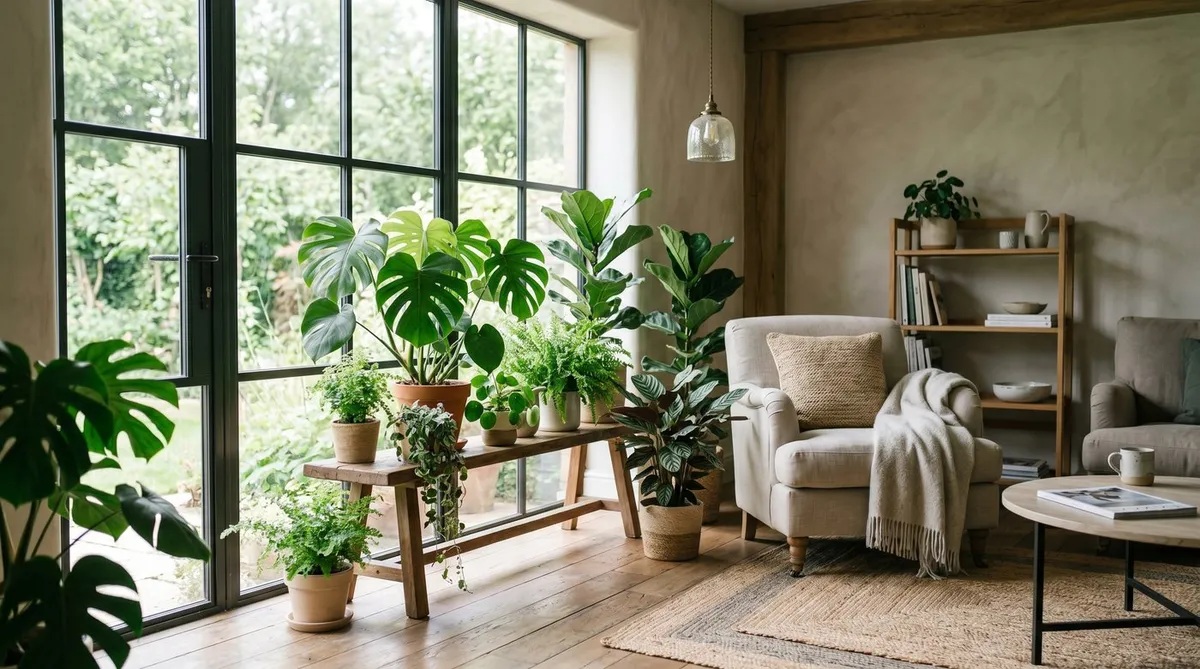
The difference is in the approach. A single sad plant on a shelf does little. A considered group by a window, framing a view of the garden, changes how a whole room feels.
What biophilic planting actually is
The idea sounds abstract but the practice is simple. Biophilic planting uses our natural attraction to living things to make indoor spaces feel calmer, through grouping greenery, framing views of nature, and matching plants to each room. It treats plants as part of the design, not decoration added at the end.
Biophilia is the theory that humans have an innate need to connect with nature, shaped by the millions of years we spent living within it. Biophilic design applies that to buildings, bringing in natural light, materials, and above all plants. Planting is the most accessible part, and the one any home can use.
The key shift is from random pots to deliberate placement. That means grouping plants for impact, positioning them where you rest or work, and creating a view of greenery from your favourite seat. The principle overlaps with outdoor sensory garden design, which uses nature to engage and calm in the same way.
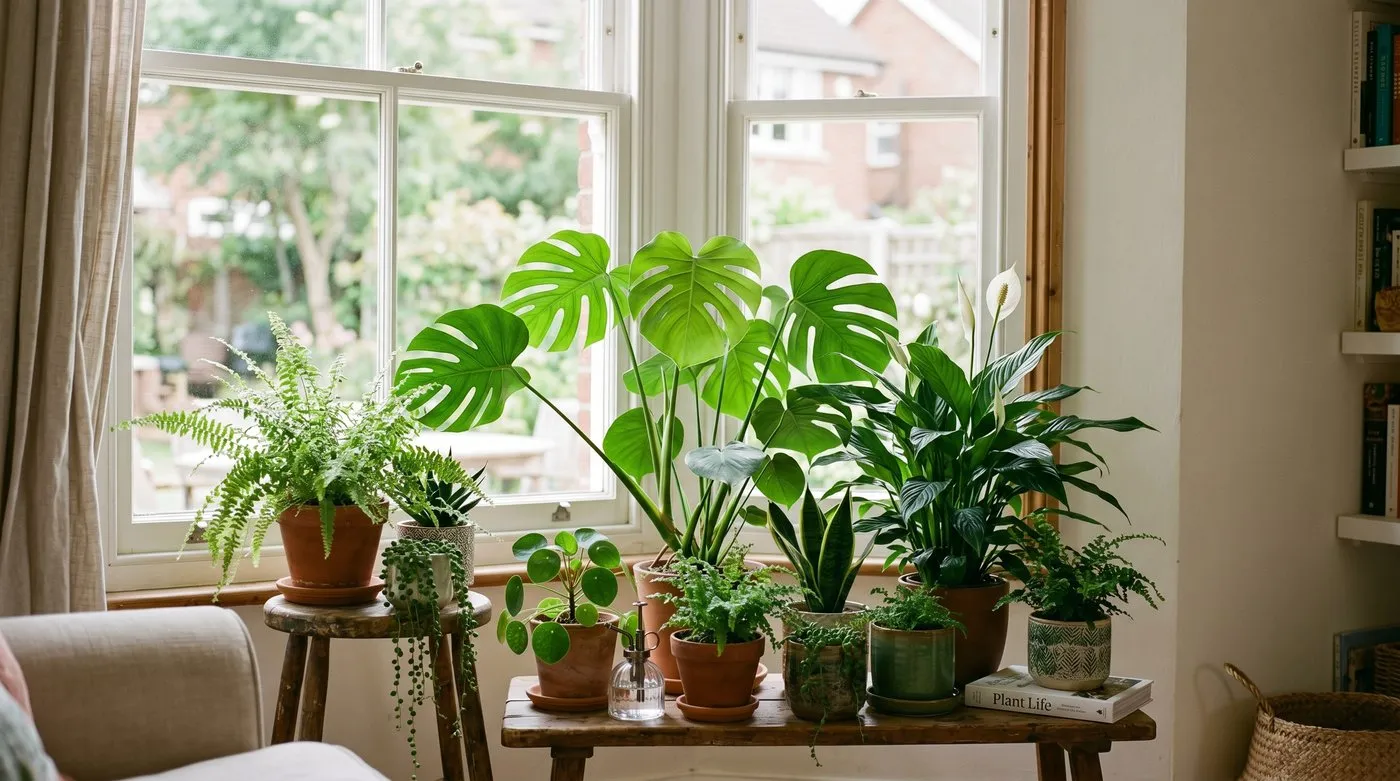 Biophilic planting is about deliberate placement, not scattered pots. A group of plants by a window creates a green focal point that calms the whole room.
The evidence behind plants and wellbeing
This is not just a pleasant idea; there is real research behind it. Studies in homes, offices and hospitals link indoor plants to lower stress, better mood and improved concentration. The effect is measurable, which is why biophilic design has moved into serious architecture.
Research has found that people working near plants report less stress and better focus, that hospital patients with a view of greenery recover faster, and that simply tending a plant can lift mood. The mechanisms are still being teased apart, but the soft visual quality of foliage, the act of care, and our deep connection to nature all play a part.
It is worth being measured. Plants are not a treatment, and they will not fix a fundamentally stressful space or situation. But as a low-cost, low-risk way to make a room feel calmer and more focused, the evidence is strong enough to act on. It sits alongside the wider benefits in our guide to gardening for mental health.
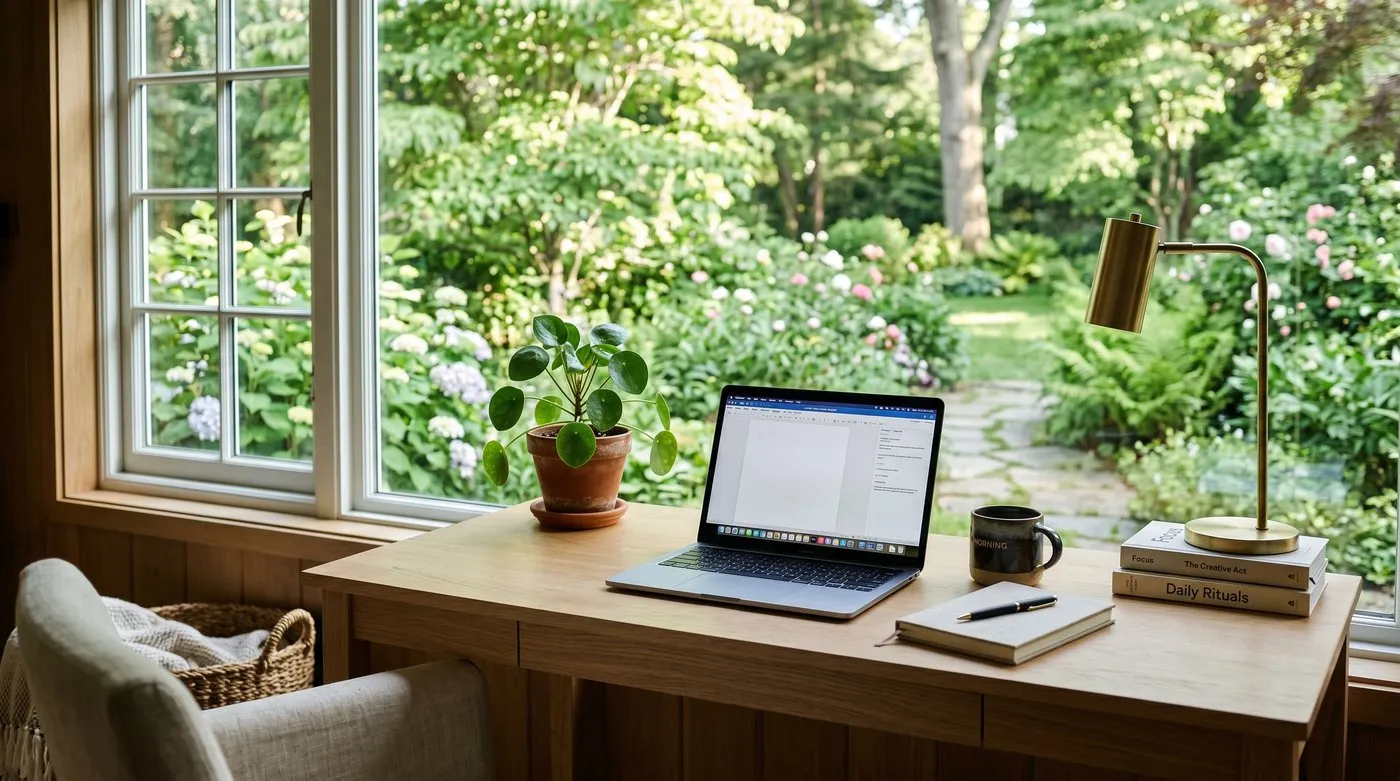 A framed view of greenery is a core biophilic principle. A desk facing the garden, or a group of plants, beats a desk facing a blank wall for focus and calm.
Choosing plants for each room
Success comes from matching the plant to the place, so think room by room. Choose easy foliage plants suited to each room’s light, using low-light types for darker spots and sun-lovers near windows. A plant in the wrong light just struggles and adds stress, not calm.
Start with the light. A bright, sunny windowsill suits succulents, citrus and flowering plants. A room with good indirect light takes most popular foliage: pothos, monstera, peace lily, spider plant. A darker corner needs genuine low-light survivors like aspidistra, ZZ plant or snake plant. Our lists of the best indoor plants and best low-light houseplants help you pick.
Then think about use and care. Busy households want forgiving plants that cope with the odd missed watering. Anyone new to plants should start easy and build confidence. Leafy, soft-textured foliage reads as most restful, which is exactly the biophilic effect you are after, and many of these plants also feature on our air-purifying houseplants list.
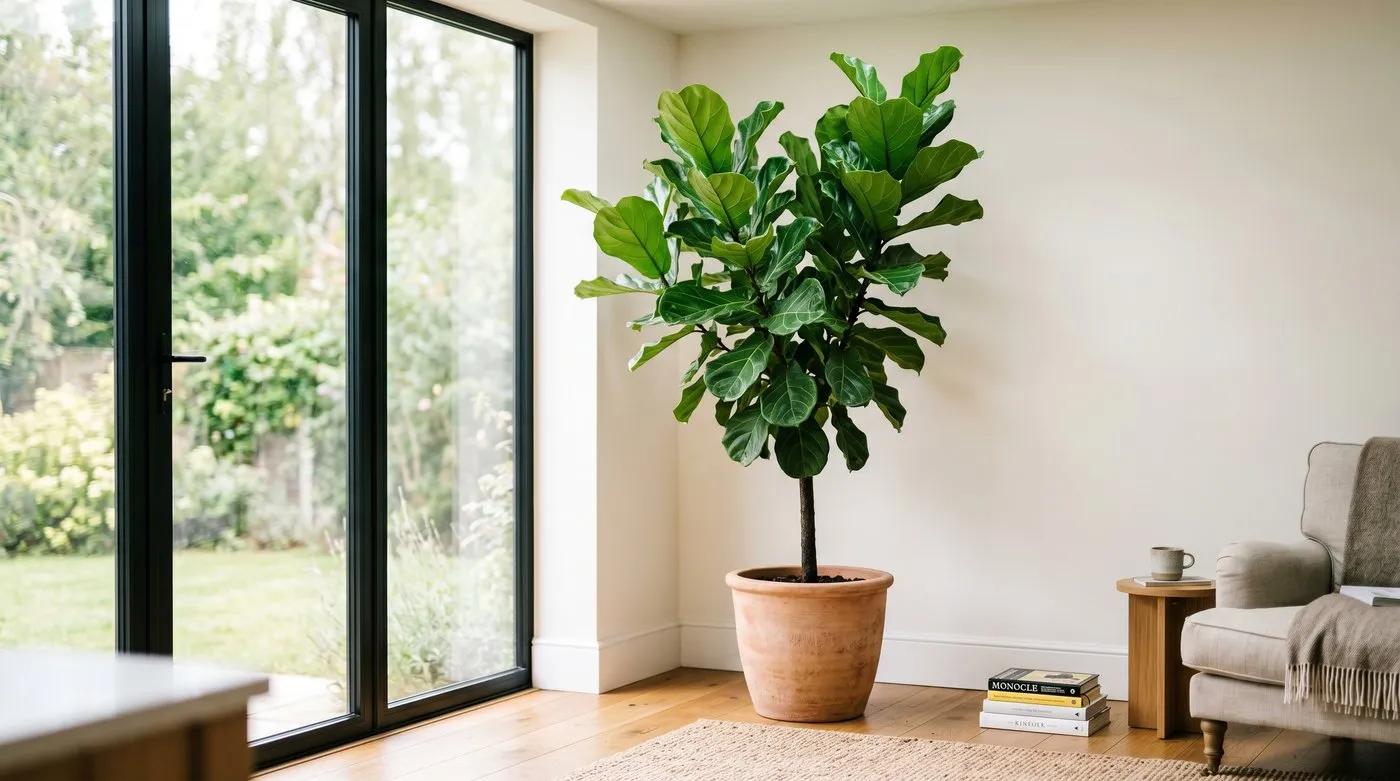 A single large statement plant transforms a dead corner. Match it to the light: most big foliage plants want bright, indirect light, not direct sun.
Biophilic planting room by room
Each room asks for a slightly different approach. This table sets out where to place plants and what to choose for the main rooms of a home.
| Room | Goal | Best placement | Suitable plants |
|---|---|---|---|
| Living room | Calm, a green focal point | Grouped by a window or seat | Monstera, peace lily, ferns |
| Home office | Focus, a restful break for the eyes | On and around the desk, in view | Pothos, snake plant, small ferns |
| Bedroom | Rest, soft calming foliage | Bedside and a shelf or floor group | Snake plant, pothos, calathea |
| Bathroom | Greenery in humidity | Shelf, windowsill, hanging | Ferns, orchids, air plants |
| Kitchen | Useful and green | Windowsill, worktop end | Herbs, spider plant, aloe |
| Hallway | A green welcome | A statement plant or wall group | Aspidistra, ZZ plant |
The pattern is to create one or two green focal points per room rather than dotting single pots about. Group plants where you rest your eyes, position seating to look towards greenery, and let the light guide the plant choice. Our room-specific guides to the best plants for bedrooms and best plants for bathrooms go deeper on the trickier spaces.
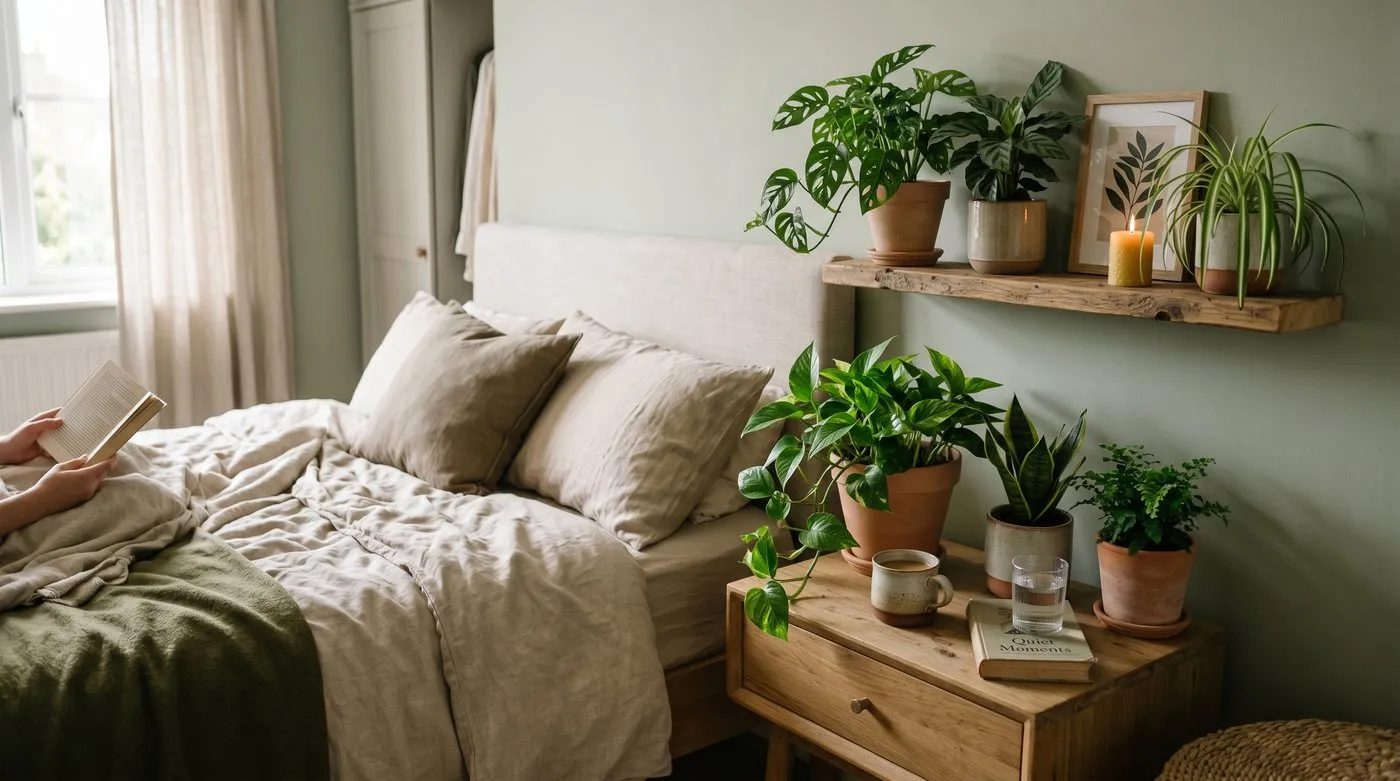 Each room asks for a different approach. Soft, calming foliage suits a bedroom, grouped on a bedside table and shelf where you see it on waking and resting.
Gardener’s tip: Before buying a single plant, sit in your favourite chair and look around. Where does your eye rest? That spot, in view from where you relax, is where a plant group will do the most good. Greening a corner you never look at is wasted effort.
How to group plants for impact
Grouping is the single technique that separates biophilic planting from a few stray pots. Group three or more plants of varied height, leaf shape and pot together for far more impact than the same plants scattered around a room. A cluster reads as a piece of nature; singles read as ornaments.
Build a group like a small border. Use odd numbers, vary the heights with a tall plant at the back and trailing ones at the front, and mix leaf shapes and textures so the eye has interest. Pots in a consistent material or colour pull the group together visually. A plant stand, shelf, or a trio on the floor all work.
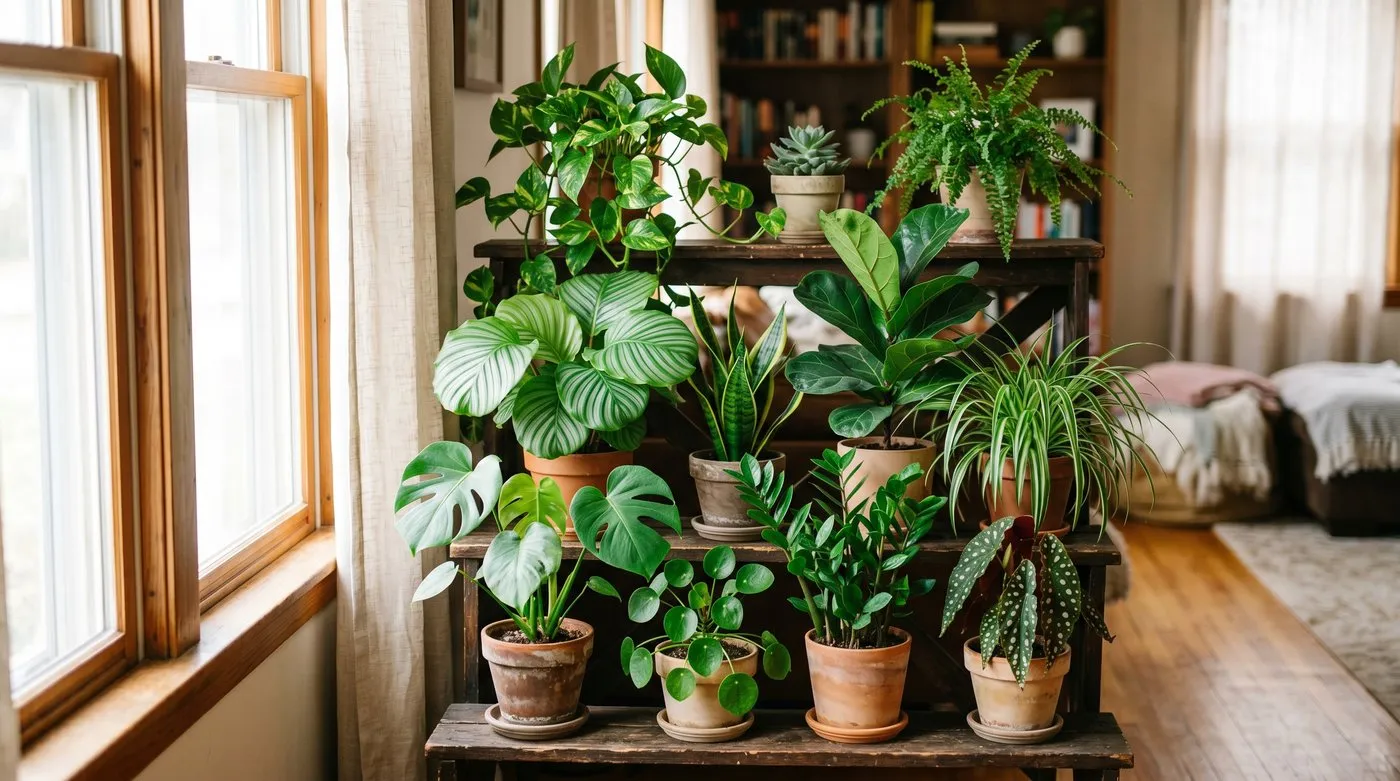 Build a group like a small border: odd numbers, varied heights, mixed leaf shapes. A clustered stand reads as a piece of nature where single pots read as ornaments.
Frequently asked questions
What is biophilic planting?
Biophilic planting is the use of plants and greenery to satisfy our natural attraction to living things, making indoor spaces feel calmer and more restorative. It is part of biophilic design, which brings nature into buildings. In the home it means grouping plants, framing views of greenery, and choosing the right plant for each room rather than placing single pots at random.
Do indoor plants really improve wellbeing?
Yes, research links indoor plants to lower stress, better mood and improved concentration. Studies in homes, offices and hospitals have found people feel calmer and more focused with plants nearby. The effect comes from our innate connection to nature, plus the soft, restful quality of foliage. Plants are not a cure, but they measurably change how a space feels.
Which plants are best for wellbeing at home?
Easy, leafy foliage plants are best for wellbeing, as they look restful and are simple to keep alive. Peace lily, pothos, spider plant and ferns suit most homes. Match the plant to the room’s light, using low-light types for darker corners. The calmest effect comes from grouping several plants together rather than relying on one.
Where should I put plants for the best effect?
Group plants where you spend the most time and can see greenery while at rest or work. A cluster by a living room window, plants on a desk in a home office, and calming foliage in a bedroom all work well. Positioning a chair or desk to look out at the garden, or at a group of plants, follows the core biophilic principle of a nature view.
How many plants do you need for a biophilic effect?
There is no fixed number, but grouping three or more plants together has far more impact than a single pot. Aim to create one or two green focal points in each main room rather than spreading plants thinly. A few generous groupings, matched to the light and viewed from where you sit, deliver a stronger biophilic effect than many scattered plants.
Match plants to the light, group them where you rest your eyes, and frame a view of greenery, and your home will feel calmer for it. Browse our houseplant guides and plant guides to choose the right greenery, and read the RHS on houseplants and wellbeing for more on caring for them.
Our team produces practical UK gardening guidance from source research, contributor records and established horticultural practice. Editorial standards are overseen by Matt W.