Key takeaways
- A full garden cinema setup costs 150 pounds at the budget end and around 600 pounds for a bright, sharp system
- You need 2500 to 4000 ANSI lumens to start a film before full dark, but only 200 to 500 lumens once it is truly black
- In June the UK sky is not dark enough until about 10pm, while in December a film can start by 5pm
- A 100-inch screen needs roughly 2.5 to 3 metres of throw distance from a standard-throw projector
- Keep speakers under 70 decibels at the fence line and finish by 11pm to stay neighbourly
- Always run outdoor power through a 30mA RCD and pack everything away before dew settles around 9 to 10pm
A garden cinema is one of the simplest ways to turn an ordinary evening into an event, and a backyard movie night needs far less kit than most people expect. With a projector, a pale surface and a couple of speakers, any UK garden becomes an outdoor screen for the price of a few takeaways. The catch is timing and brightness. Get those two right and the picture looks superb. Get them wrong and you are squinting at a washed-out grey rectangle while the children lose interest.
This guide covers the technical decisions that actually matter: how many lumens you need, how to size a screen against your throw distance, when UK skies go dark enough by month, and how to run power safely on a damp lawn. The numbers come from running real film nights across two summers, with start times and brightness logged.
How many lumens you need for an outdoor projector
There are two scenarios, and they need very different projectors. To start a film before full dark, while there is still a glow in the western sky, you need 2500 to 4000 lumens. Once the sky is genuinely black, the picture floods with contrast and a modest 200 to 500 lumen unit looks crisp. Budget projectors quoting “ANSI 9000 lumens” almost always mean a much lower real figure, often 200 to 400 ANSI, so treat suspiciously high numbers with caution.
A bright projector buys you time. In our testing a 3000-lumen unit gave a watchable picture 75 minutes earlier on a clear June night than a 200-lumen one. That difference is the gap between a film finishing at a sensible hour and one starting past bedtime.
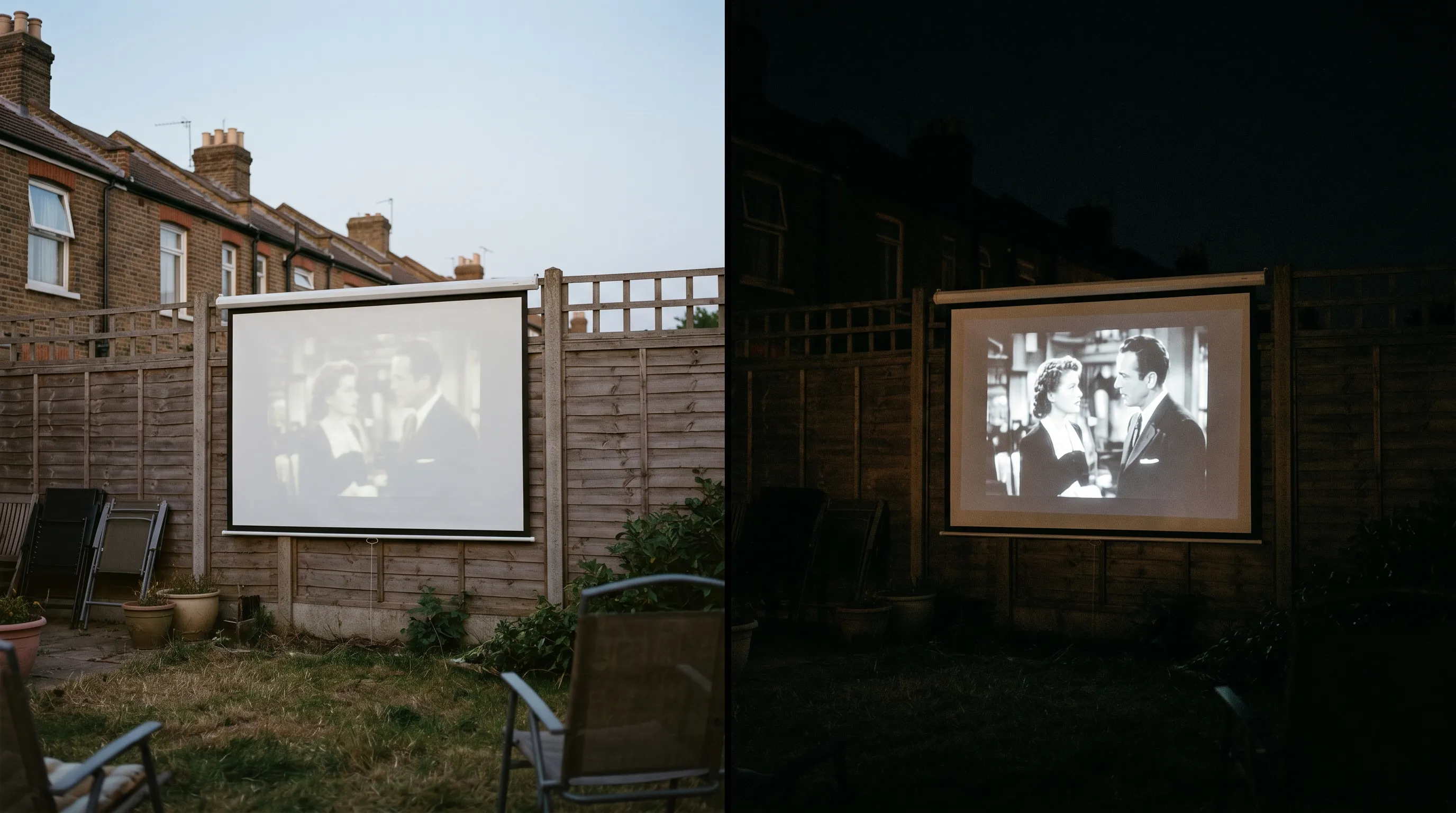 The same screen and projector, twenty minutes apart. Brightness, not screen size, is what makes a garden cinema picture hold up before the sky goes fully dark.
Matching screen size to your throw distance
Screen size depends on how far back your projector sits, a measurement called throw distance. Most affordable projectors are “standard throw”, needing roughly the screen’s diagonal in metres of distance to fill it. A short-throw model fills a big screen from close up, which suits small gardens.
A 100-inch screen is the sweet spot for most UK gardens. It is large enough to feel cinematic and small enough to stay bright. From a standard-throw projector it needs about 2.5 to 3 metres of throw distance. Push to a 120-inch screen and you need 3 to 3.6 metres, plus more lumens to keep it bright across the bigger area.
| Screen size | Standard-throw distance | Short-throw distance | Min lumens (twilight) | Best garden |
|---|---|---|---|---|
| 80 inch | 2.0 to 2.4m | 0.8 to 1.0m | 2000 | Courtyard, terraced |
| 100 inch | 2.5 to 3.0m | 1.0 to 1.3m | 2500 | Most suburban gardens |
| 120 inch | 3.0 to 3.6m | 1.2 to 1.5m | 3500 | Large lawn |
| 150 inch | 3.8 to 4.5m | 1.5 to 1.9m | 4000+ | Big garden, party night |
The screen itself can be a dedicated pull-up frame (40 to 120 pounds), a tensioned blackout cloth pegged to a fence, or a plain pale rendered wall. A white-painted wall gives a flat, even surface with no creases, which beats a wrinkled bedsheet every time.
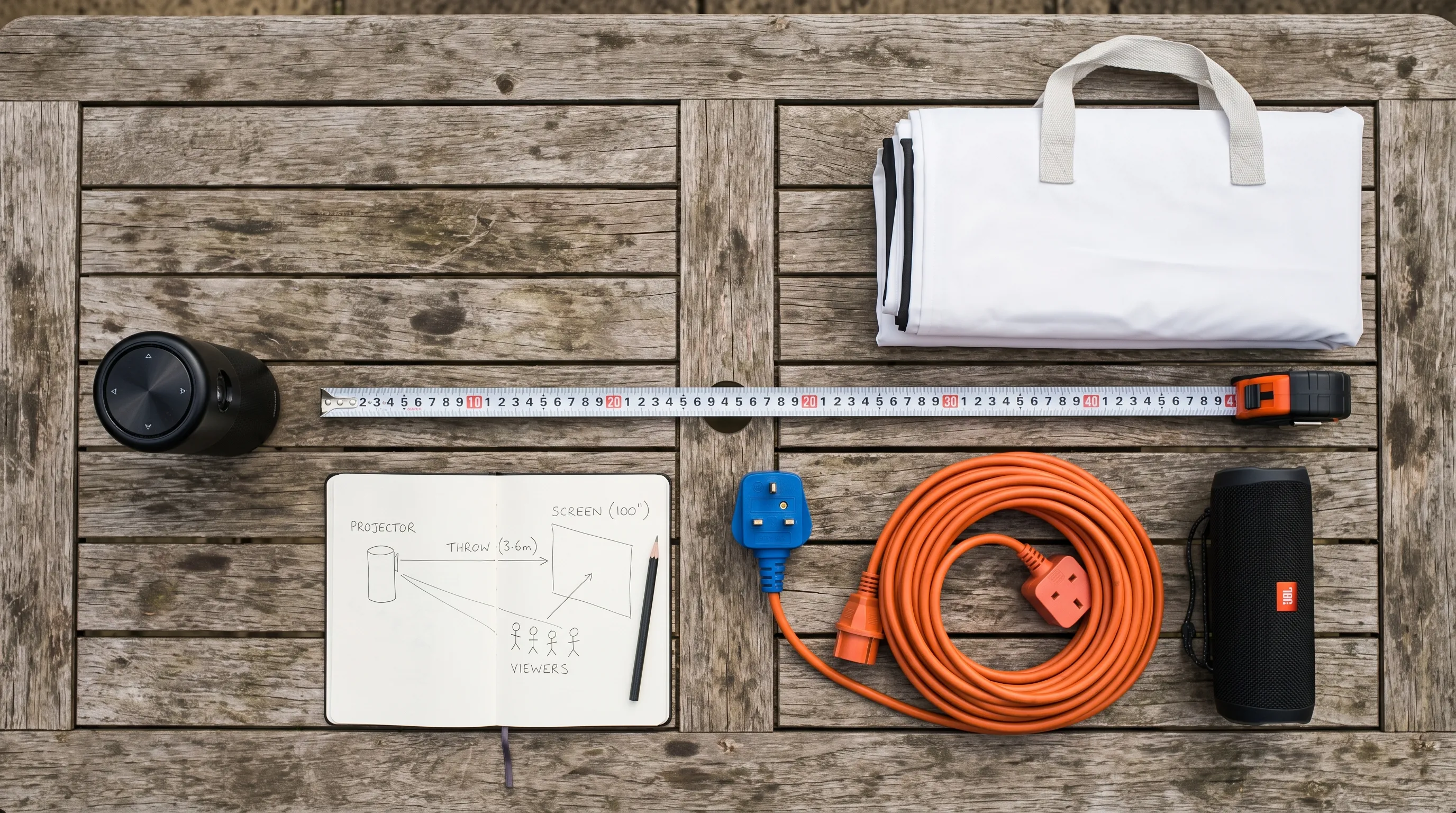 Measure your throw distance before you buy a screen. The gap between projector and screen sets the maximum size you can fill brightly.
When UK skies are dark enough to start a film by month
Timing is the factor most people get wrong. A garden cinema needs the sky to reach the end of civil twilight, roughly 40 minutes after sunset, before the picture looks solid rather than grey. This shifts dramatically across the year. In high summer the wait is brutal, with usable darkness arriving around 10pm. By midwinter you can start at teatime.
The table below shows the rough earliest sensible start time across the UK. Northern gardens run 20 to 40 minutes later than southern ones in summer, because the sun sets later the further north you go. Check the Met Office sunset times for your town, then add about 40 minutes.
| Month | UK sunset (approx) | Film-ready start | Notes |
|---|---|---|---|
| December | 3.55pm | 5.00pm | Dark by teatime, very cold |
| January | 4.20pm | 5.30pm | Early start, dress warm |
| February | 5.10pm | 6.15pm | A 6pm family film works |
| March | 6.10pm | 7.00pm | Good before clocks change |
| April | 7.50pm | 8.45pm | Later after clocks go forward |
| May | 8.45pm | 9.30pm | Pushing past young bedtimes |
| June | 9.20pm | 10.00pm | Latest of the year, hardest |
| July | 9.10pm | 9.50pm | Slightly earlier than June |
| August | 8.20pm | 9.10pm | Warm and getting earlier |
| September | 7.20pm | 8.05pm | Best balance of dark and warmth |
| October | 6.20pm | 7.10pm | Cooling fast, lovely evenings |
| November | 4.20pm | 5.20pm | Early but bring blankets |
September is the standout month. The sky is dark by around 8pm, the air is often still mild, and the night arrives at a child-friendly hour. May and June are the hardest, because warm evenings tempt you out but the sky stays pale until very late.
Audio options and keeping the volume neighbourly
Sound makes or breaks the experience, and a projector’s built-in speaker is rarely loud enough outdoors. Open air swallows sound, so you need a dedicated speaker. Three options cover most setups. A portable Bluetooth speaker (30 to 120 pounds) is the easiest. A pair of small powered speakers gives wider stereo. A soundbar run from the projector’s audio output offers the fullest sound for a fixed setup.
Keeping the volume neighbourly is a legal as well as a social matter. Garden noise after 11pm can count as a statutory nuisance under the Environmental Protection Act 1990, which your council can act on. Aim to keep levels under about 70 decibels at the fence line, roughly the level of normal conversation heard from a couple of metres away. Position the speaker facing your seating, not the boundary, so the sound projects inward.
Gardener’s tip: Hand out a couple of pairs of cheap wireless headphones for the children and run the main speaker low. This drops the boundary noise sharply while keeping the picture immersive for younger viewers. A 9pm start with the volume down keeps the peace far better than a loud 10.30pm screening.
Finish by 11pm as a rule. A film that starts at 9.30pm gives you a comfortable two hours before the cut-off.
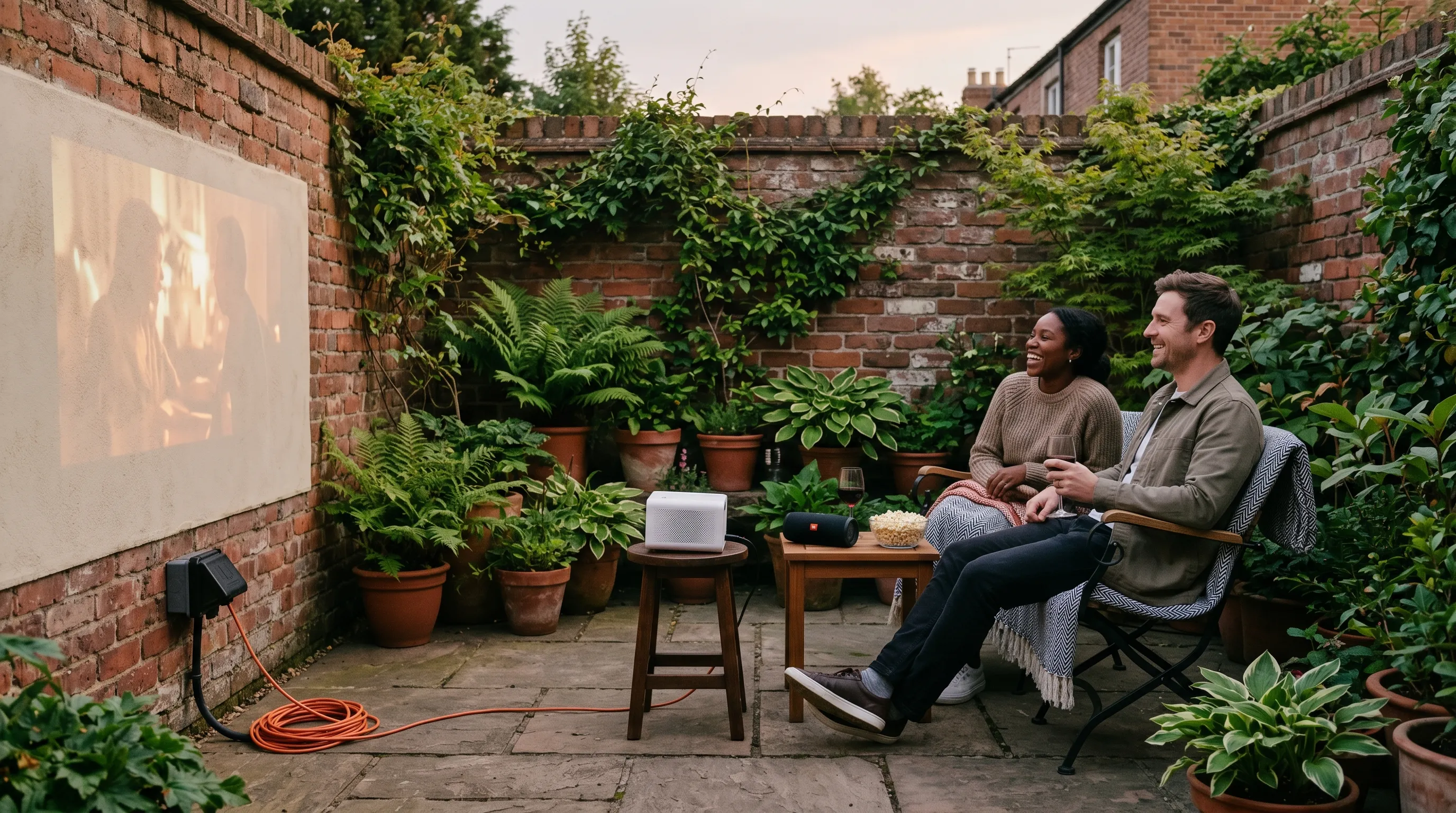 A plain rendered wall makes a flat, crease-free screen, ideal for a small city courtyard where space for a frame is tight.
How to power a garden cinema safely
Outdoor electrics demand respect, because grass holds moisture and a projector, speaker and lights all draw mains power. The golden rule is simple. Everything outdoors runs through a 30mA RCD, a residual current device that cuts the supply in milliseconds if it detects a fault. Many modern consumer units have RCD protection built in, but a plug-in RCD adapter (10 to 20 pounds) guarantees it.
Use an outdoor-rated extension lead, not an indoor one trailing through a window. Keep all plug joints off the wet ground by raising them on a brick or housing them in a weatherproof connector box. Never run a lead across a path where it can be tripped over, and never coil a lead tightly while it carries a heavy load, as a coiled lead can overheat. The Royal Society for the Prevention of Accidents advises against using indoor extension leads outdoors at all.
Warning: Stop and unplug everything at the first spot of rain. Water and mains electricity are a lethal combination, and no film is worth the risk. Pack the projector and speaker indoors immediately, and never leave powered equipment out overnight where dew or a shower can reach live connections.
A battery-powered projector and speaker sidestep mains risk entirely, and several models now run 2 to 3 hours on a charge, enough for one film.
Weatherproofing, dew and the midnight pack-down
Two enemies threaten the kit: dew and damp. UK gardens grow a heavy dew on clear nights, often settling from around 9 to 10pm as the ground cools below the air’s dew point. This is the same physics that makes a tent floor cold. Once dew forms, it coats screens, speaker grilles and projector vents with fine moisture that electronics hate.
The practical answer is to plan the film to finish before the dew arrives on clear nights, then pack everything away promptly. Do not leave equipment out “just for ten minutes” while you fetch a drink. On a clear, still night that is long enough for a screen to bead up. A cheap fitted groundsheet or picnic blanket under the seating keeps the seats of trousers dry and gives the children somewhere clean to sprawl.
Store the projector in a padded bag and let it cool with the fan running before you switch it off fully, as most units run a cool-down cycle to protect the lamp or LED. Bring screens indoors to dry rather than folding them away damp, which causes mildew spots over time.
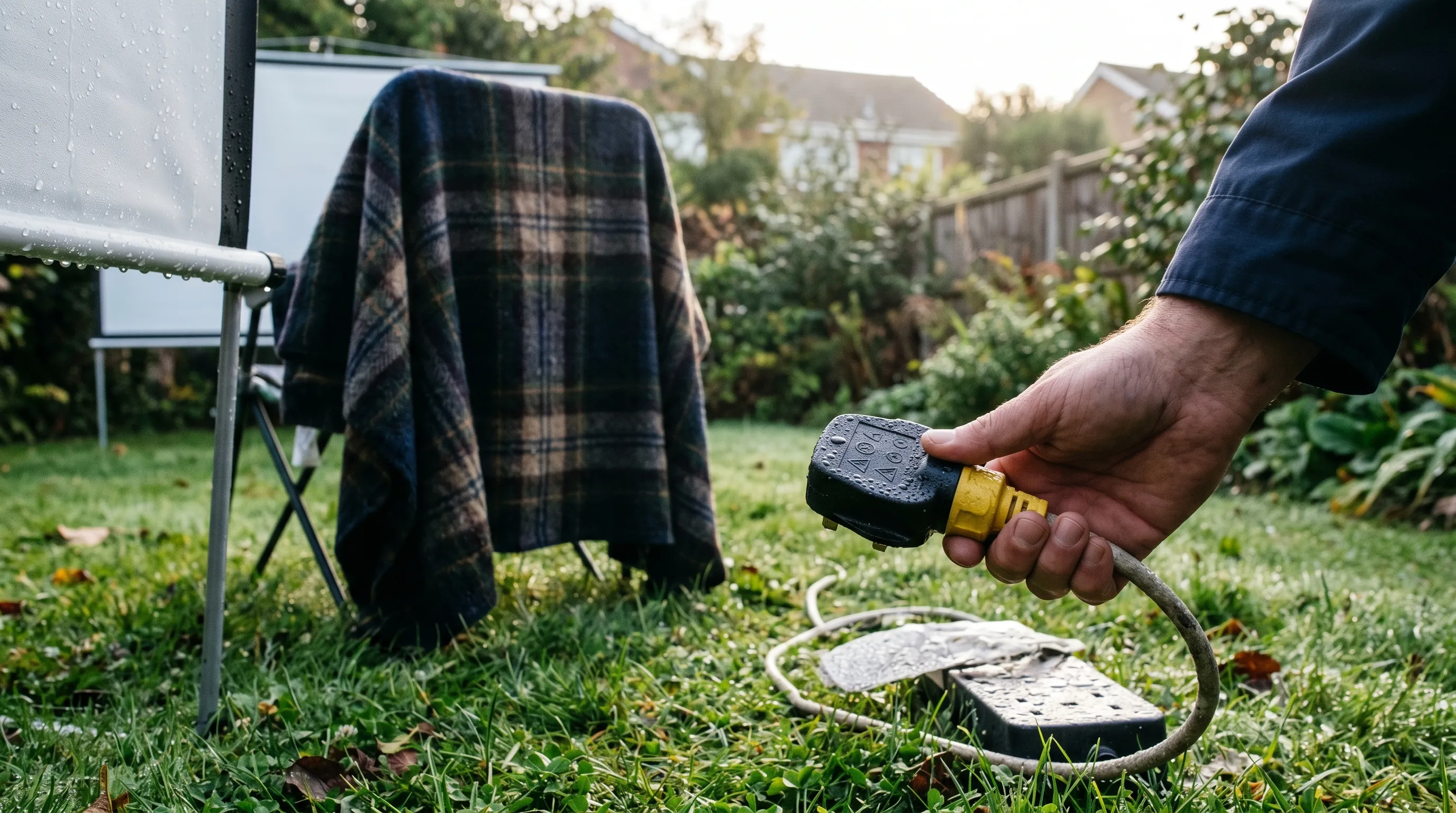 Heavy dew settles fast on clear UK nights. This is why everything electrical comes indoors the moment the film ends, never the morning after.
Cosy seating, blankets and keeping midges away
Comfort keeps people watching to the credits. A garden cinema does not need cinema chairs. Bean bags, low garden sofas, picnic blankets and outdoor floor cushions all work, layered for warmth. Even a July evening cools to 10 to 13C once the sun is gone, so put out more blankets than you think you need. Wool throws hold warmth better than thin fleece.
Build a low, tiered arrangement so nobody blocks the screen. Cushions and bean bags at the front, chairs behind. A flask of hot chocolate and a bowl of popcorn turn a cool night into a treat rather than an endurance test.
Midges and mosquitoes are the other comfort issue, peaking at dusk near water. Standing water is the magnet: ponds, water butts, blocked gutters and long damp grass. Site your seating on an open, slightly breezy part of the lawn, away from any pond. Citronella candles placed upwind help, and a small fan aimed across the seating disrupts the still air midges need to fly. A wildlife pond is wonderful, but on movie night, sit upwind of it.
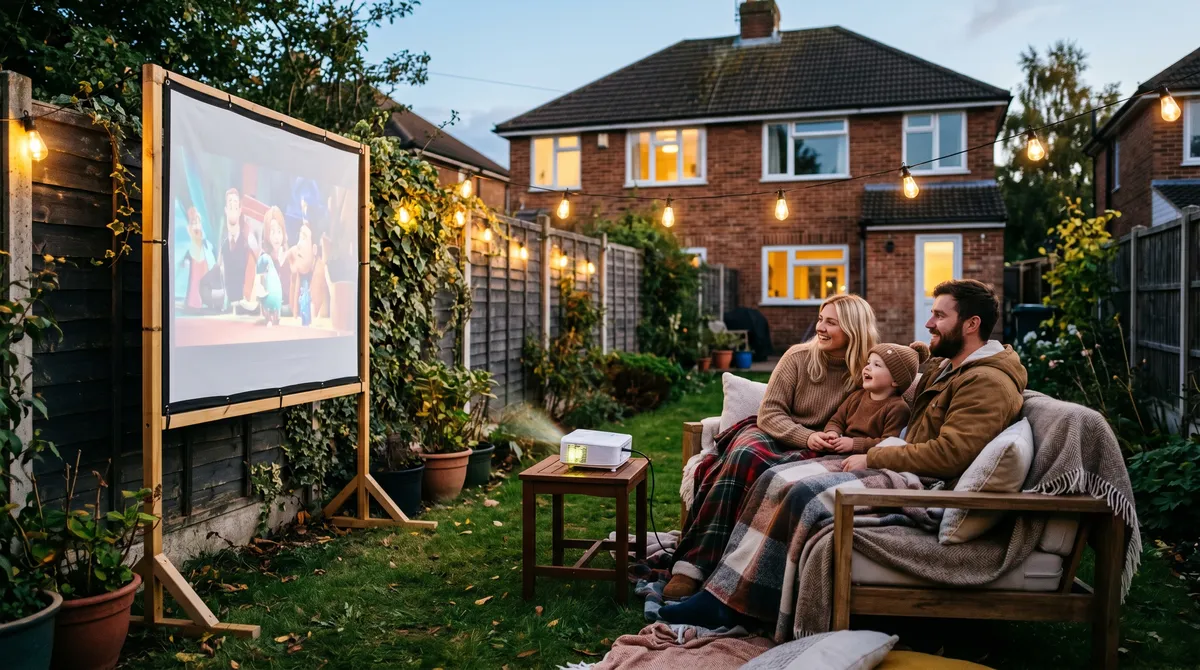
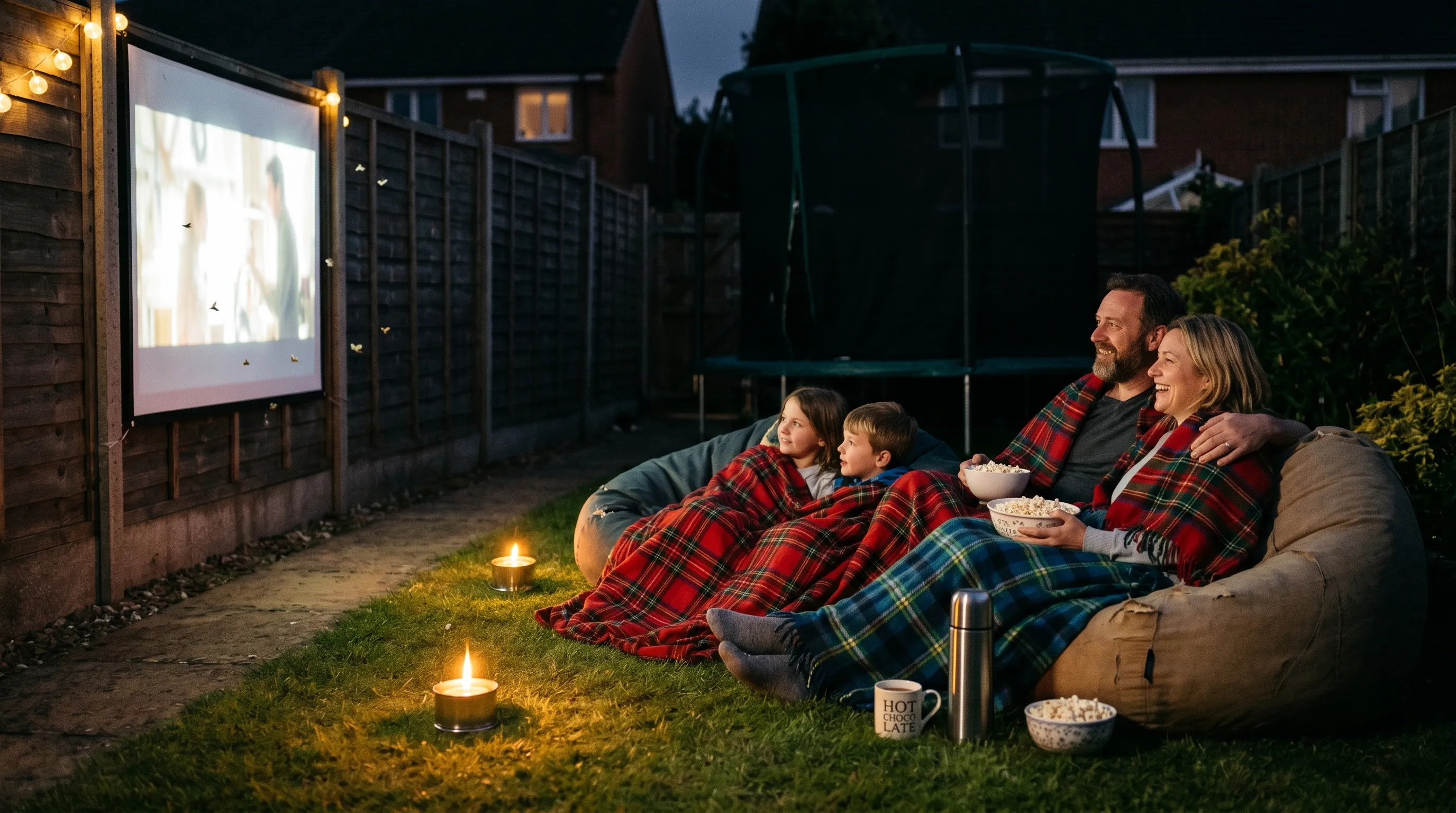 Layered blankets, bean bags and a flask of hot chocolate. Even a warm July evening drops to around 11C once the sun has gone.
What a garden cinema actually costs
A garden cinema scales from a shoestring setup to a proper system. The table below shows two realistic tiers based on UK retail prices. The budget tier gets you watching once it is dark. The brighter tier lets you start earlier and fills a bigger screen.
| Item | Budget setup (~150 pounds) | Bright setup (~600 pounds) | Role |
|---|---|---|---|
| Projector | 80 pound LED, 200 to 500 lumens | 350 pound, 3000 to 4000 lumens | The single biggest decision |
| Screen | Blackout cloth pegged to fence, 20 pounds | 100-inch pull-up frame, 90 pounds | Flat, pale surface for the image |
| Audio | Existing Bluetooth speaker, free | Pair of powered speakers, 90 pounds | Carries sound across the garden |
| Power safety | Plug-in RCD adapter, 15 pounds | RCD plus outdoor lead, 30 pounds | Non-negotiable for mains kit |
| Comfort | Blankets from indoors, free | Bean bags and outdoor cushions, 40 pounds | Keeps people watching to the end |
The hidden costs are batteries, spare extension leads and the odd replacement bulb on cheaper lamp-based units. LED projectors avoid bulb costs and last 20,000-plus hours, so they work out cheaper over time despite a higher entry price.
Common mistakes that ruin an outdoor movie night
A handful of predictable errors turn a magical night into a flat one. Avoid these and the evening usually sings.
Buying on screen size, not lumens. A huge dim picture looks worse than a smaller bright one. Brightness lets you start earlier and survive a bit of ambient glow. Always prioritise the lumen figure.
Starting too early. Eager to begin, people fire up the projector while the sky still glows and the picture looks grey and disappointing. Check the sunset time, add 40 minutes, and resist starting before then.
Using a wrinkled bedsheet. Creases scatter the image and folds cast shadows. A tensioned cloth, a pull-up screen or a flat pale wall gives a far sharper picture for little extra effort.
Ignoring the dew. Leaving kit out after the film, even briefly, lets moisture creep into vents and speaker grilles. Pack down the moment the credits roll on a clear night.
Forgetting boundary noise. A loud soundtrack at 10.30pm is the fastest way to annoy neighbours. Keep levels under 70 decibels at the fence and finish by 11pm.
Frequently asked questions
How many lumens do you need for an outdoor projector?
You need 2500 to 4000 lumens to start before full dark. Once the sky is genuinely black, a 200 to 500 lumen projector gives a watchable picture. Ambient light is the enemy, not screen size. If you want to begin a film while there is still a glow in the sky, buy the brightest projector your budget allows.
What time does it get dark enough for an outdoor cinema in the UK?
It varies from about 10pm in June to 5pm in December. UK skies need to reach the end of civil twilight, roughly 40 minutes after sunset, before a projected picture looks solid. Check the sunset time for your location, then add around 40 minutes for a usable start. September gives the best mix of early darkness and mild air.
What size screen do I need for a garden cinema?
A 100-inch screen suits most gardens and seating up to 4 metres back. Sit viewers no closer than 1.5 times the screen width and no further than about 3 times. For a 100-inch screen that gives a comfortable viewing zone of roughly 3 to 6 metres. Match the screen to your throw distance before you buy.
How do I power a projector safely in the garden?
Run everything through a 30mA RCD and keep connections off wet ground. Use an outdoor-rated extension lead, raise plug joints on a brick or in a weatherproof box, and never trail a lead across a path. Unplug at the first sign of rain. A battery projector avoids mains risk entirely.
How do I stop midges ruining an outdoor movie night?
Position seating away from standing water and use citronella candles upwind. Midges peak at dusk near ponds, water butts and long damp grass. A light breeze keeps them down, so an exposed lawn beats a sheltered corner. A small fan aimed across the seating also deters them on still evenings.
Pair the screen with the wider hygge garden ideas for a snug outdoor room.
Our team produces practical UK gardening guidance from source research, contributor records and established horticultural practice. Editorial standards are overseen by Matt W.