Key takeaways
- Hygge is about feeling snug outdoors, not a particular style or plant list
- Shelter from wind is the first job; a cold draught kills the cosy feeling fastest
- A fire bowl, chiminea or patio heater extends garden evenings deep into autumn
- Soft, warm, low lighting from lanterns and string lights sets the whole mood
- Weatherproof cushions, blankets and a rug make seating somewhere you linger
- A small sheltered corner works better than spreading the cosiness too thin
Hygge is the Danish art of cosy contentment, and the Danes did not invent it indoors by accident. They face long, dark, cold winters and decided to enjoy them anyway. Their gardens follow the same idea: small, sheltered, warmly lit spaces you actually want to sit in when the weather turns. For a UK garden, where so many of us write off the plot from September to May, it is the most practical design idea going. This guide covers the four things that make a garden feel snug, the kit that earns its place, and how to keep using your outdoor space when everyone else has gone in.
The goal is simple. Turn the garden from a summer-only room into a place you reach for on a crisp October evening, mug in hand, blanket over your knees.
What hygge means in a garden
Hygge is a feeling, not a look, and that changes how you design for it. A hygge garden is built around comfort and warmth rather than a planting style, so the seating, lighting and heat matter more than the borders. You cannot buy it in a single object; you assemble it from small, warm details.
Think of the times a garden already feels cosy: a sheltered bench in low evening sun, a fire crackling as the light fades, fairy lights through a window on a dark night. Each shares warmth, soft light, and a sense of enclosure. Hygge design simply makes those moments happen on purpose, and more often.
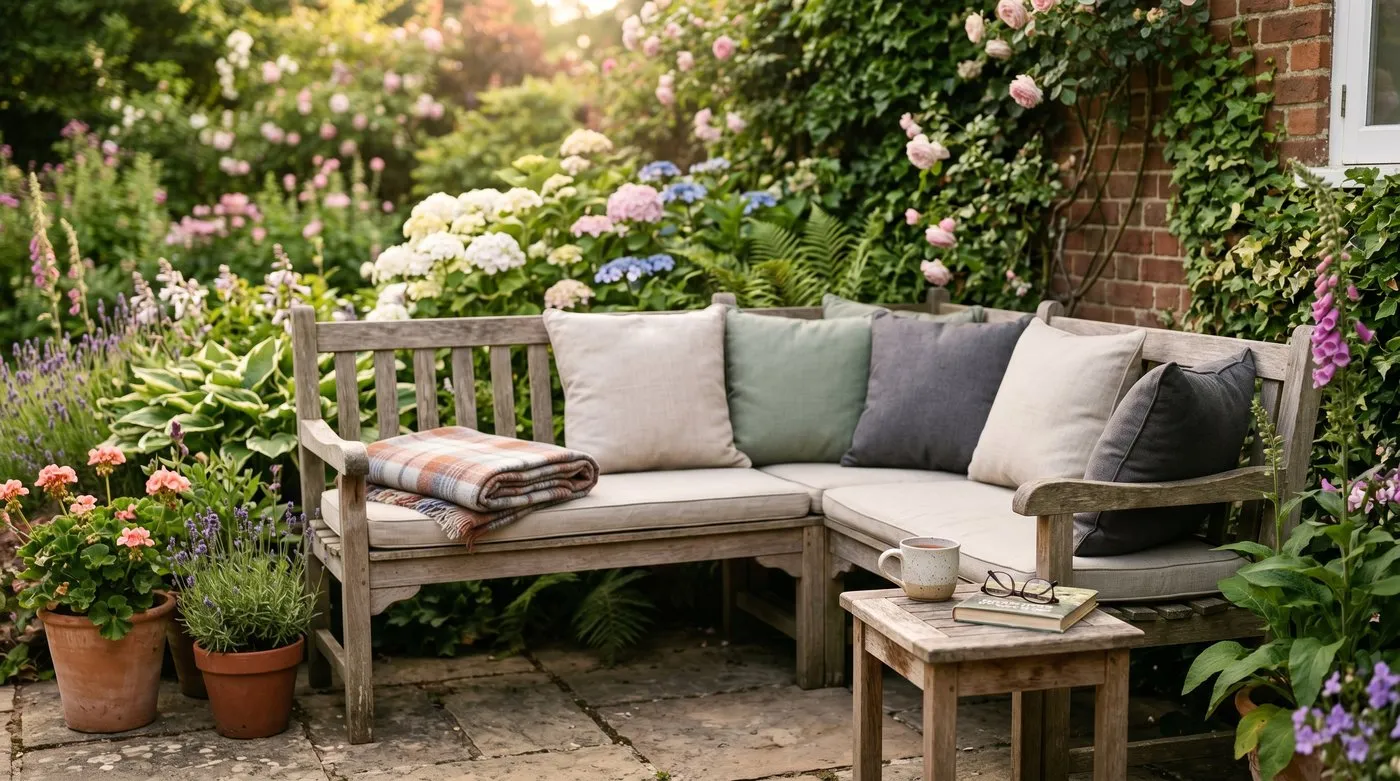 Warmth, soft light and enclosure are the whole recipe. Comfortable seating dressed with cushions and blankets feels snug even on a cold evening.
Start with shelter from the wind
Before anything else, deal with the wind, because nothing destroys the cosy feeling faster than a cold draught. Shelter is the first job in a hygge garden; a sheltered corner stays usable far later into the year than an exposed one. Even a small breeze pulls heat away and makes a fire frustrating to keep lit.
Pick a spot with at least one solid side already, a house wall, fence, or hedge. Then add shelter on a second side with a trellis panel, a slatted screen, or a tall planter group. You want to slow the wind, not build a sealed box, so a screen that filters air works better than a solid wall that creates swirling gusts.
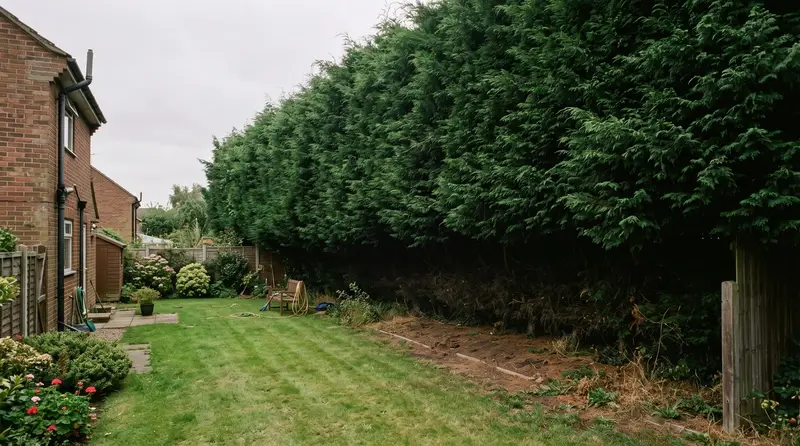
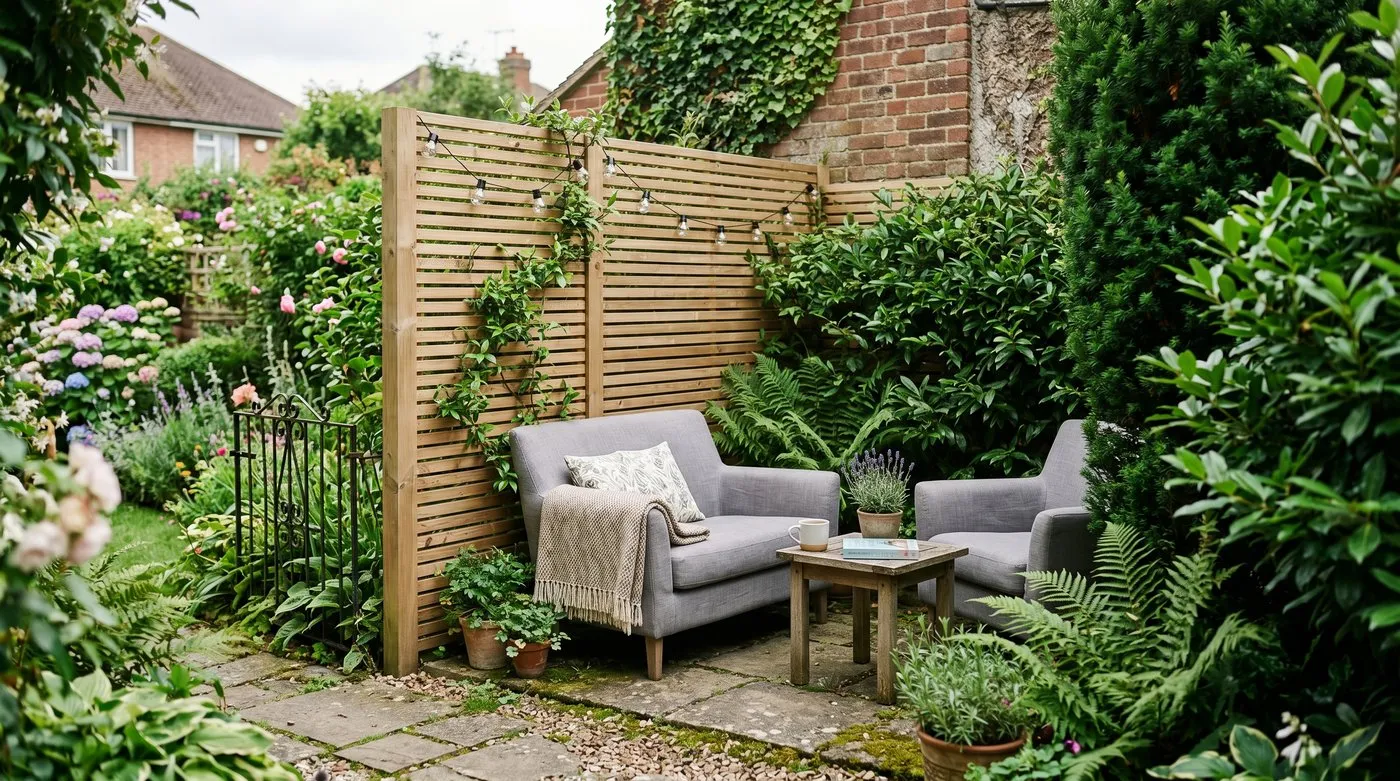 A slatted screen and evergreen planting filter the wind on two sides while a house wall does the rest. Shelter, not a sealed box, is what keeps a corner usable.
Gardener’s tip: Spend an evening noticing where the wind comes from before you site your cosy corner. The most sheltered spot is often not the prettiest one, but comfort beats the view every time once the temperature drops.
Add a heat source
Heat is what turns a fair-weather space into an all-year one, so this is the ingredient that earns its keep. A fire bowl, chiminea or patio heater extends garden evenings well into autumn and winter, and a real fire adds light and focus too. A flame gives people something to gather around, exactly the pull a cosy space needs.
Whatever you choose, site it safely. Keep at least a metre clear of fences, sheds and furniture, never burn under a gazebo or canopy, and keep water or a lid to hand.
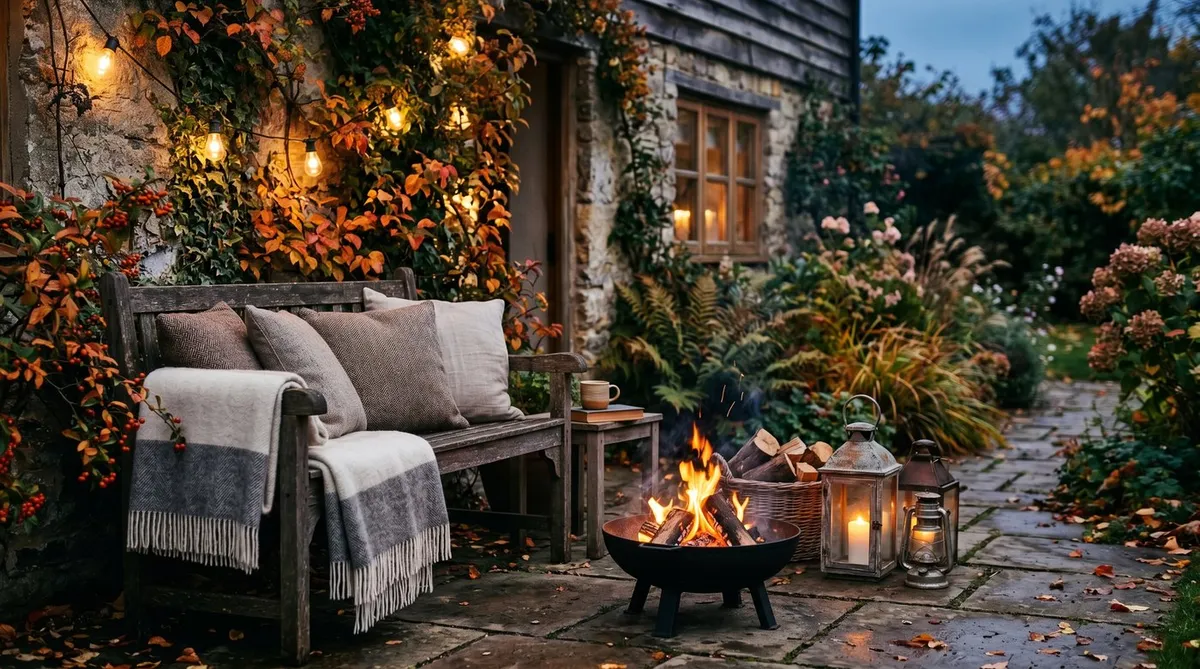
 A fire bowl gives heat, light and a natural place to gather. Keep it a metre clear of fences and furniture, and never light one under a canopy.
Layer in warm, soft lighting
Lighting sets the mood more than any other single thing, and the trick is warmth and restraint. Use soft, warm, low-level lighting from lanterns, candles and string lights, never bright white floods, which feel like a security light, not a snug. Many small pools of gentle light beat one harsh source every time.
Warm-white string lights overhead create an instant ceiling of glow. Lanterns and real or LED candles at table height bring the light down to where you sit. Solar versions need no wiring and are easy to move while you find the right feel. Keep the colour temperature warm, around 2200K to 2700K, so the light feels like firelight rather than an office.
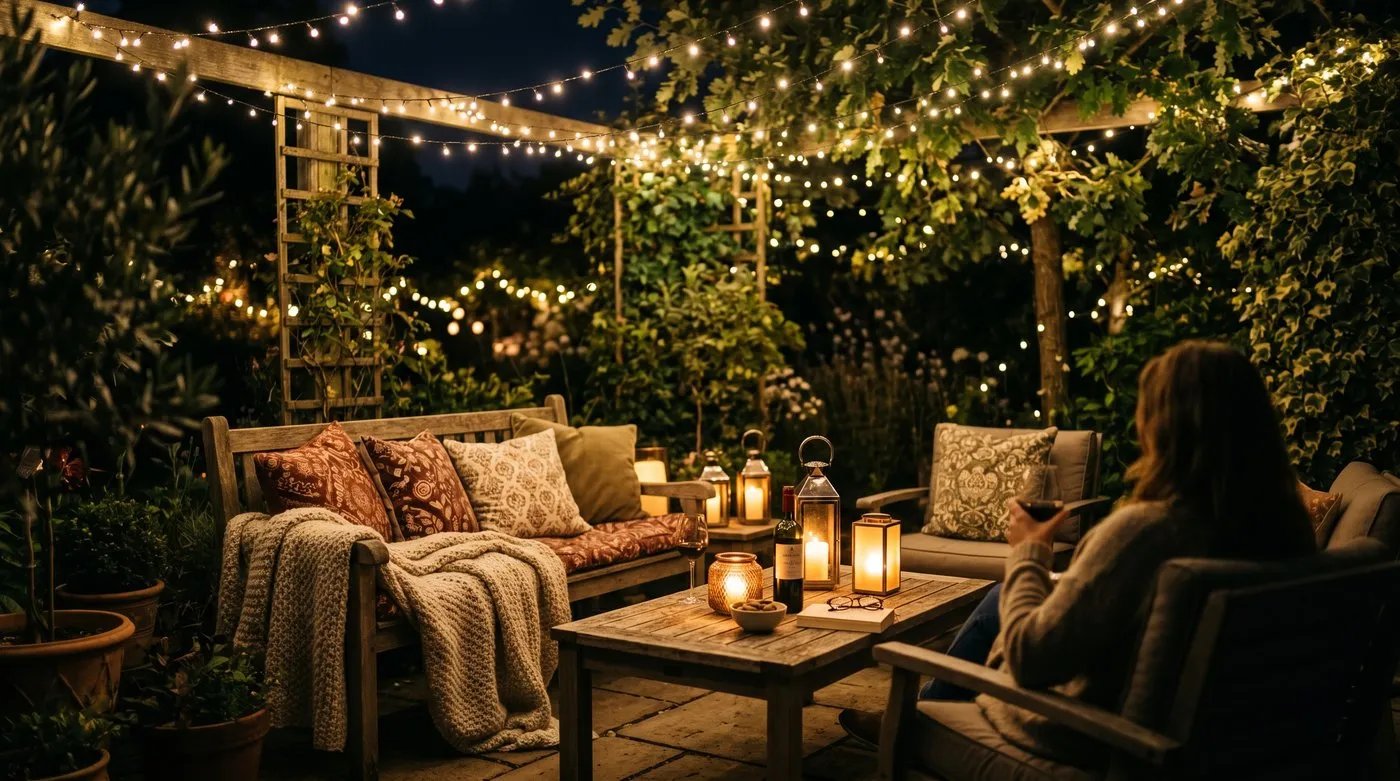 Layer the light: a warm string overhead, lanterns at table height, and nothing harsh. The aim is firelight, not a floodlit patio.
Hygge garden ingredients compared
Not every element pulls the same weight in making a garden cosy. This table ranks the main ingredients by impact, cost, and how quickly they change the feel of a space.
| Ingredient | What it adds | Rough cost | Impact on cosiness |
|---|---|---|---|
| Wind shelter | Comfort, warmth retention | Low to medium | Essential, do first |
| Fire bowl or chiminea | Heat, light, a focal point | Low to medium | Very high |
| Warm string lights | Mood and ambience | Low | Very high |
| Weatherproof cushions and blankets | Comfort, texture | Low to medium | High |
| Comfortable seating | Somewhere to linger | Medium to high | High |
| Evergreen planting | Year-round green frame | Medium | Moderate |
| Outdoor rug | Warmth underfoot, enclosure | Low | Moderate |
Comfort, texture and the finishing touches
The last layer is what makes people settle in and stay, and it is all about touch. Weatherproof cushions, wool blankets and an outdoor rug turn a hard bench into somewhere you linger long after the sun has gone. Texture is to hygge what colour is to a summer border.
Keep a stash of blankets in a waterproof storage box by the seating so they are always to hand and never damp. Choose cushions in tactile, muted fabrics that suit being brushed past and sat on. An outdoor rug defines the space and softens hard paving underfoot. A small side table for a mug or a glass finishes the scene.
Round it off with planting that frames rather than fills. Evergreens give structure through winter, and soft grasses and scented herbs add movement and smell as you pass. Our list of evergreen shrubs for year-round interest suits the green backbone, and since hygge is as much about the mind as the garden, our piece on gardening for mental health is worth a read.
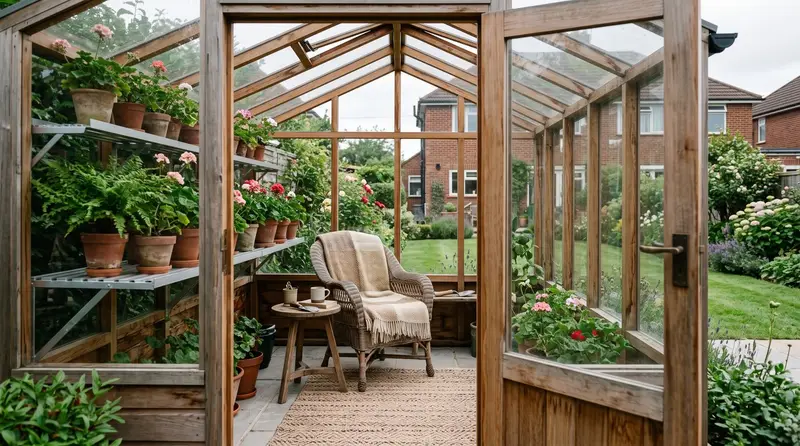
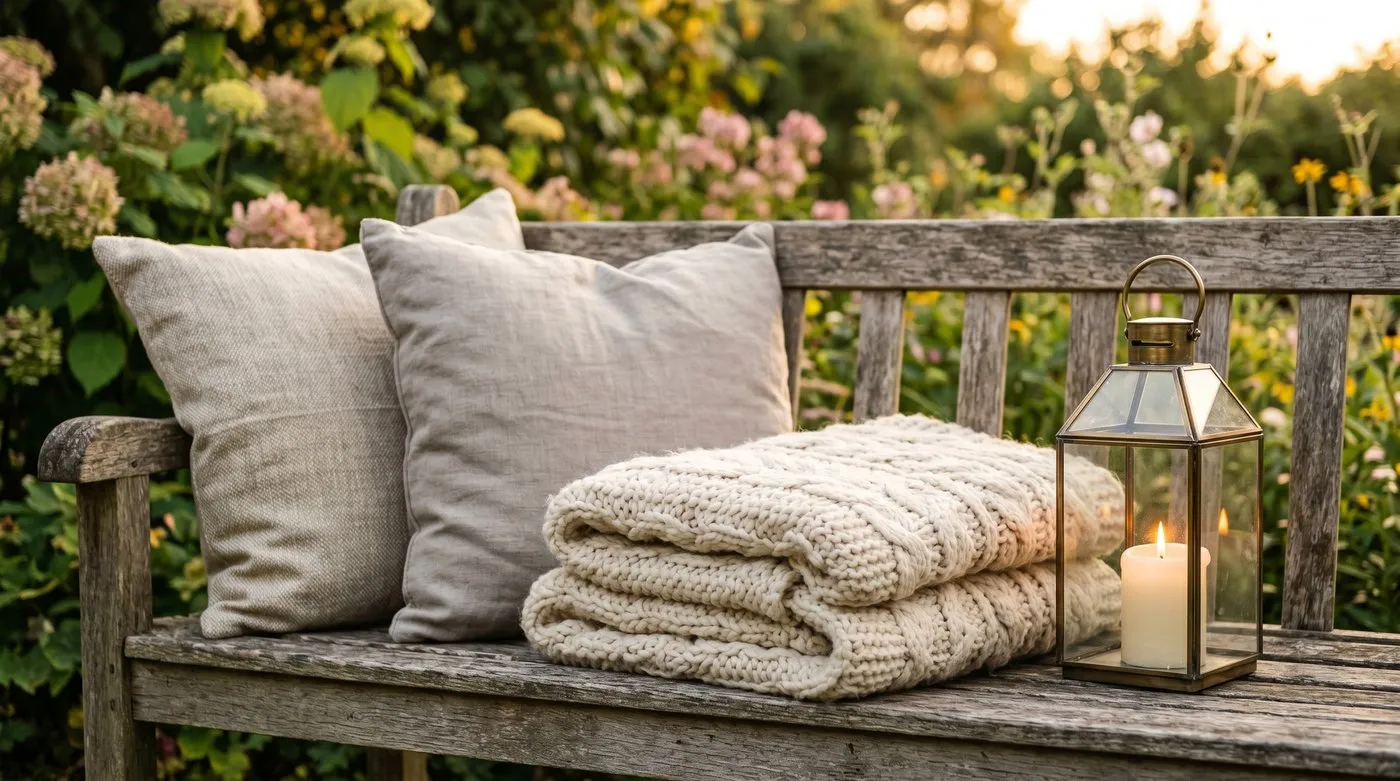 Texture is what makes people stay. Keep blankets in a waterproof box by the seat, ready for the moment the evening turns cool.
Frequently asked questions
What is a hygge garden?
A hygge garden is an outdoor space designed to feel cosy, warm and welcoming so you want to spend time in it. The Danish idea of hygge is about comfort and contentment, and in the garden that means shelter, soft lighting, a heat source and snug seating. It is a feeling you build, not a planting style you buy.
How do you make a garden cosy on a budget?
Start with shelter and light, which cost little. A screen or trellis blocks the wind, and a string of warm lights plus a few lanterns transforms the mood for under fifty pounds. Add charity-shop blankets, cushions in a waterproof box, and a cheap fire bowl. Cosiness comes from warmth and texture, not expensive furniture or plants.
How can I use my garden in winter?
Shelter a corner, add heat and warm light, and dress the seating for cold weather. A fire pit or chiminea, a wind screen, and weatherproof cushions with blankets let you sit out comfortably well into winter. Evergreen planting and a few solar lanterns keep the space looking alive when the borders are bare.
Are fire pits allowed in UK gardens?
Yes, fire pits are legal in private UK gardens, but you must not cause a nuisance with smoke. Burn dry, seasoned wood, keep the fire well away from fences, sheds and overhanging branches, and never leave it unattended. Check for any local restrictions during very dry spells, and have water or a lid to hand to put it out.
What plants suit a hygge garden?
Choose evergreens for year-round structure and soft, textural plants you brush past. Grasses, ferns, lavender and scented herbs add movement and smell, while evergreen shrubs keep the space green in winter. The planting should frame the cosy corner, not dominate it. In hygge, the seating, fire and light matter more than the borders.
Our team produces practical UK gardening guidance from source research, contributor records and established horticultural practice. Editorial standards are overseen by Matt W.