Key takeaways
- Reducing solid, sealed surfaces is the highest-impact eco choice in a garden
- Permeable gravel and paths let rain soak in and cut flooding and runoff
- Harvest rainwater in butts and a rain garden to slash mains water use
- Go peat-free and no-dig to protect carbon-rich peat bogs and build healthy soil
- Reclaimed, local and recycled materials cut carbon and often cost
- Wildlife-friendly planting and a small pond turn the garden into a habitat
An eco-friendly garden is not a compromise. The choices that lower a garden’s environmental cost, soaking up rainwater, building healthy soil, feeding wildlife, almost always make it cheaper to run and nicer to be in too. The myth is that going green means a scruffy, wild plot or expensive eco gadgets. The reality is a series of sound design decisions, most of which save money and reduce work over time. This guide covers the practical choices that matter most, from the surfaces underfoot to the soil, the water, and the planting.
The thread running through all of it is simple. Work with nature rather than against it, and the garden costs less to maintain, copes better with floods and droughts, and teems with more life.
Start by cutting solid surfaces
The single biggest environmental decision in a garden is how much of it you seal over. Reducing solid, sealed surfaces in favour of permeable gravel, planting and porous paths is the highest-impact eco choice you can make. Sealed surfaces cause the runoff and flooding that plague many streets.
When rain hits solid concrete or sealed paving, it cannot soak in. It rushes off into drains, overwhelming them in heavy downpours and contributing to flash flooding, while starving the ground of the water it needs. The more of a garden you pave solidly, the worse this gets, which is why front gardens turned into sealed parking are such a problem.
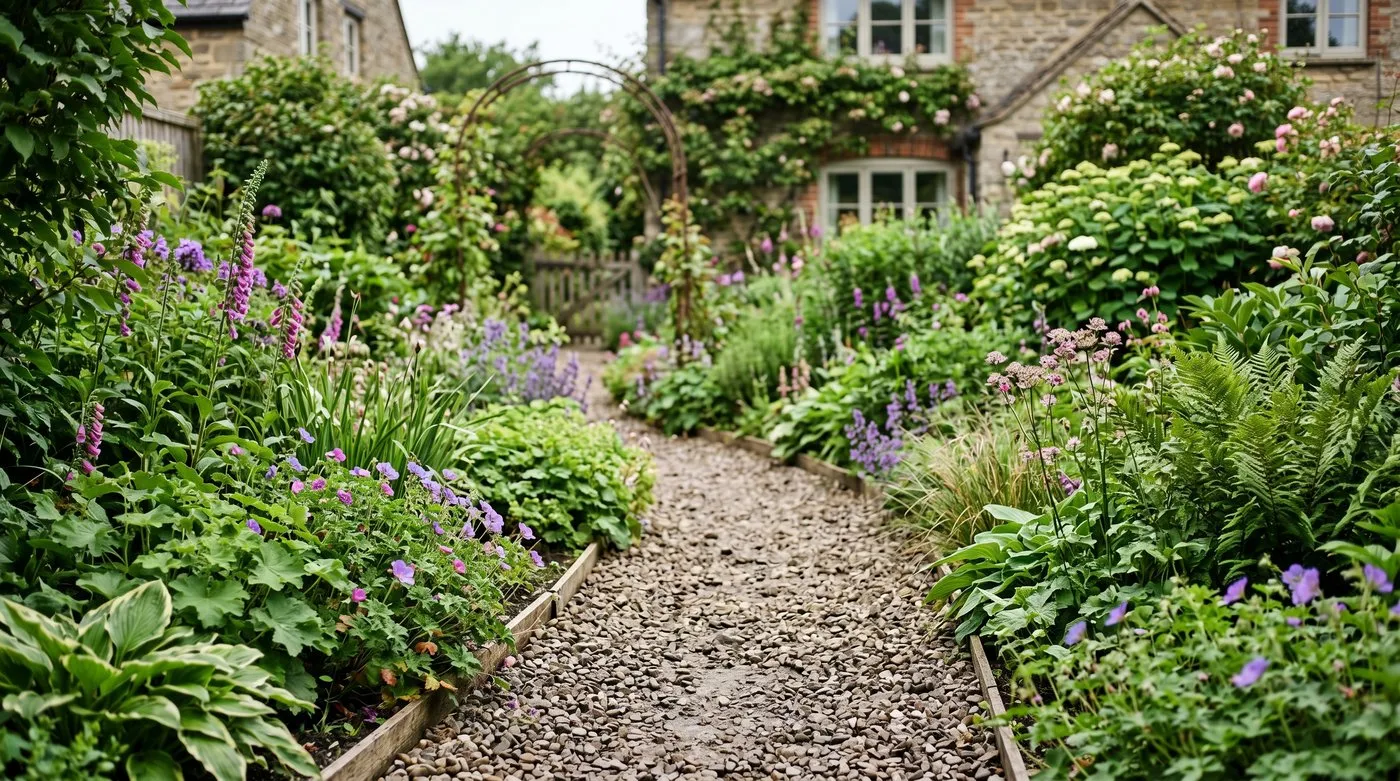 Permeable gravel and planting let rain soak in where solid paving sheds it into drains. Cutting sealed surfaces is the highest-impact eco choice in any garden.
Capture and reuse rainwater
Once water can soak in, the next step is to catch and store it. Harvest rainwater in butts and direct excess to a rain garden, to slash mains water use and ease pressure on drains. Rain is free, soft, and exactly what plants prefer.
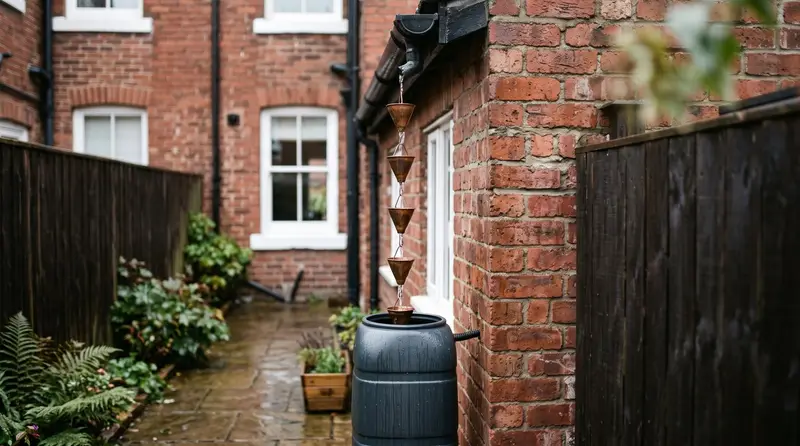
Fit water butts to every downpipe you can, including the shed and greenhouse. A single roof sheds a surprising amount: even a small shed roof fills a butt in one good downpour. Stored rainwater is better for plants than treated tap water, especially for ericaceous types like blueberries, and it costs nothing.
For the overflow and for low spots that puddle, a rain garden is a simple, beautiful solution: a shallow planted hollow that holds runoff and lets it soak away slowly through moisture-loving plants. Our guide to rainwater harvesting covers butts and storage in detail. Reducing mains use this way saves money every summer.
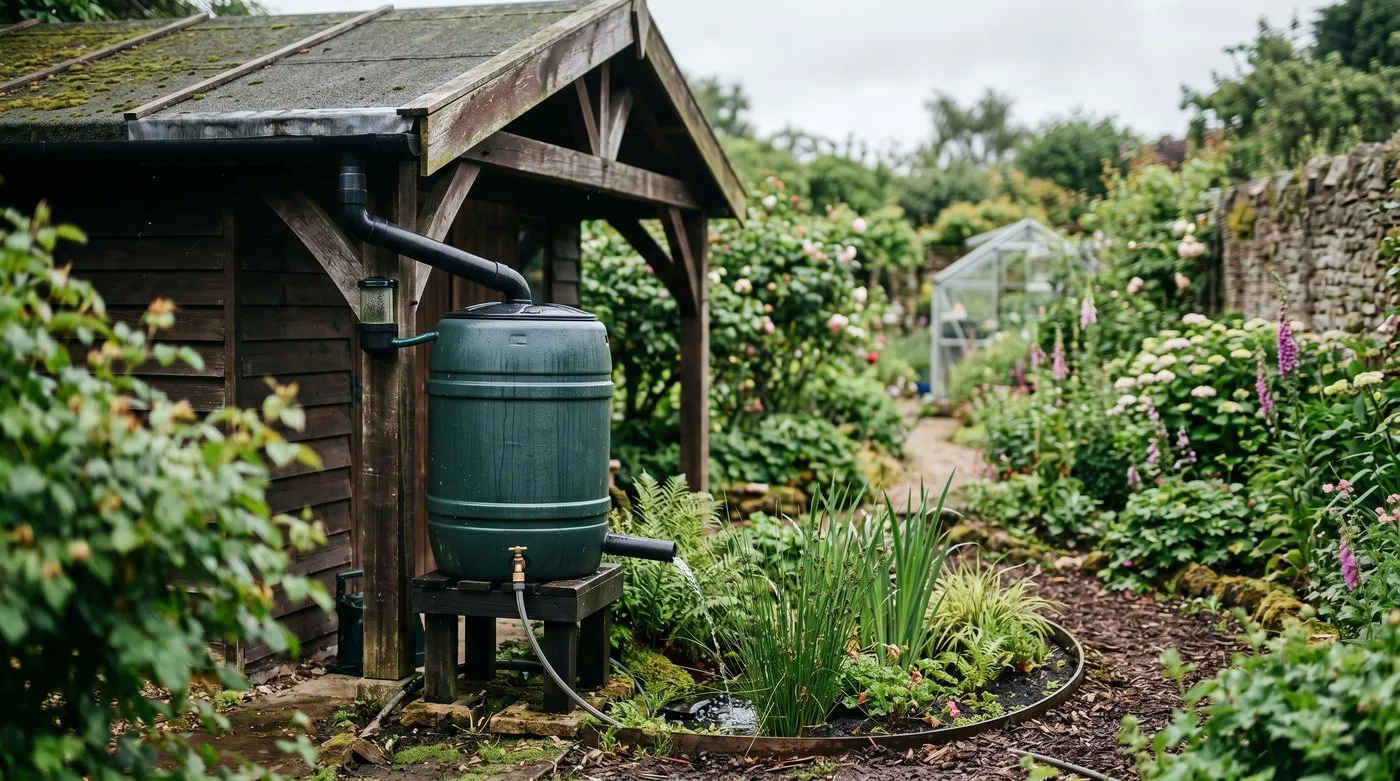 Fit butts to every downpipe and send the overflow to a rain garden. Stored rainwater is free, soft, and exactly what plants prefer over treated tap water.
Build healthy soil without peat
The ground itself is where a garden stores carbon and feeds everything, so treat it well. Go peat-free and no-dig to protect carbon-rich peat bogs and build living, healthy soil. Both choices cut emissions and improve the garden at once.
Peat bogs lock away enormous amounts of carbon and are rare habitats, yet digging peat for compost releases that carbon and wrecks the bog. Peat-free compost avoids the harm, and modern blends work well once you adjust watering and feeding to suit them. The UK is phasing peat out of retail compost anyway, so switching now is simply getting ahead. Our peat-free compost guide covers using it successfully.
No-dig gardening builds soil rather than disturbing it. By mulching with compost on top and leaving the soil structure intact, you protect the soil life, lock in carbon, and suppress weeds, all with less work. Our guides to no-dig gardening and recycled and upcycled projects show how to feed the soil and reuse materials together.
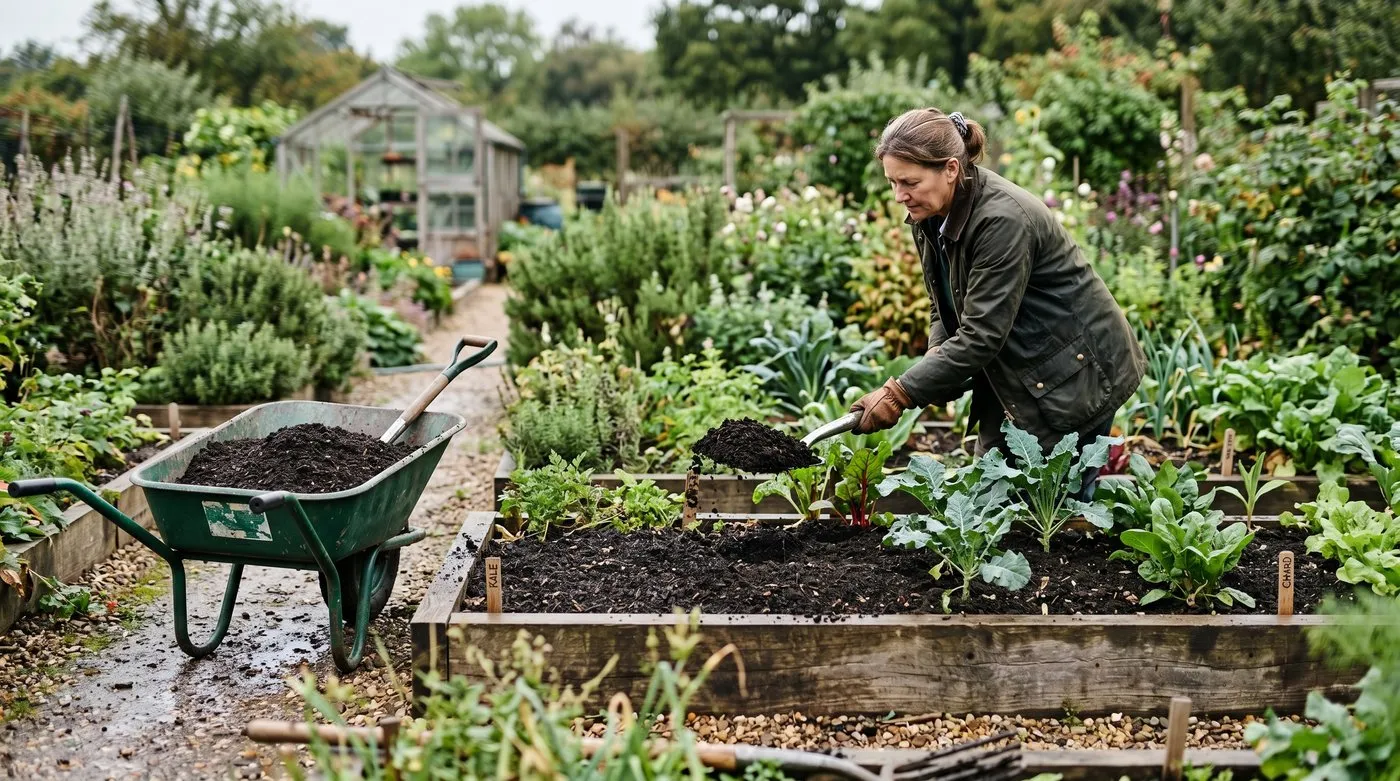 No-dig and peat-free go together: mulch with peat-free compost on top, leave the soil structure intact, and you build living soil while protecting peat bogs.
Eco design choices compared
Some green choices give more back than others. This table ranks the main eco-friendly moves by their impact and what they cost or save.
| Choice | Main benefit | Cost impact | Eco impact |
|---|---|---|---|
| Cut solid surfaces | Stops runoff and flooding | Saves on materials | Very high |
| Rainwater harvesting | Less mains water | Saves on bills | High |
| Peat-free compost | Protects peat bogs | Same as peat | High |
| No-dig soil care | Healthy soil, less work | Low, saves effort | High |
| Reclaimed materials | Less embodied carbon | Often cheaper | Medium to high |
| Pollinator planting | Feeds wildlife | Low | Medium to high |
| Small wildlife pond | Habitat and water | Low | High |
Plant and build for wildlife
A garden that supports wildlife is doing real environmental good, and it is the most rewarding part. Plant for pollinators, add a pond however small, use reclaimed materials, and avoid pesticides to turn the garden into a habitat. Life follows quickly once you provide food, water and shelter.
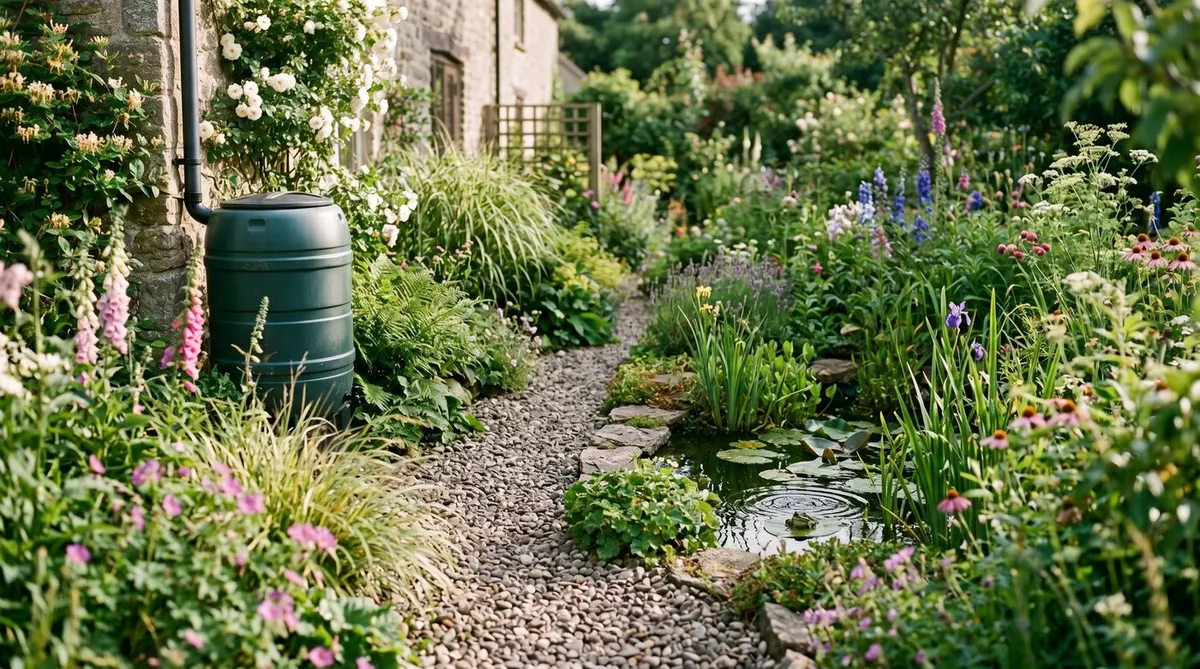
Choose a long season of nectar-rich flowers so something is always in bloom for bees and butterflies, mixing native and garden plants. A pond, even a sunken washing-up bowl, is the single best thing for wildlife, drawing in frogs, insects and birds. Leave a quiet corner a little wild, add a log pile, and skip the pesticides that harm the food chain.
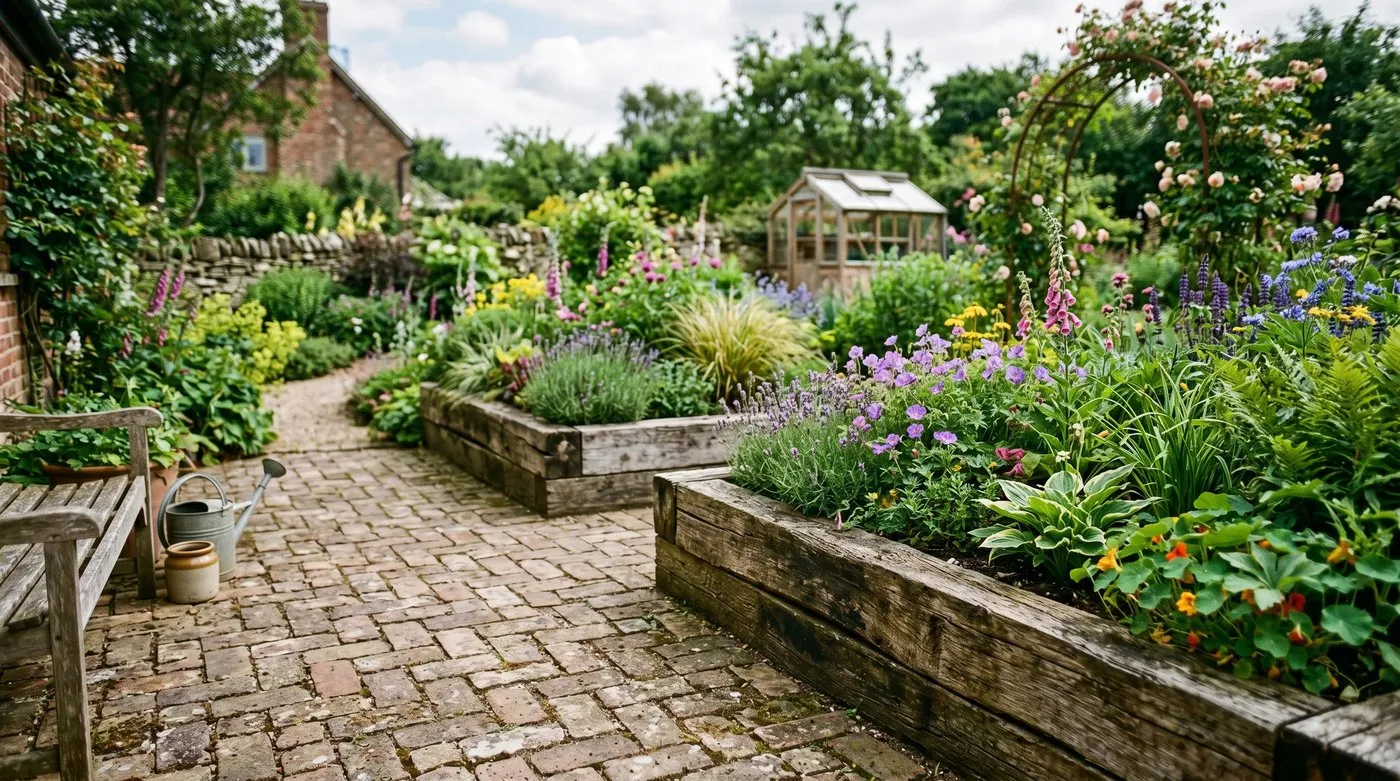 Reclaimed brick, local stone and reused timber cut the carbon locked into new materials and often cost less. The green choice is usually the thrifty one too.
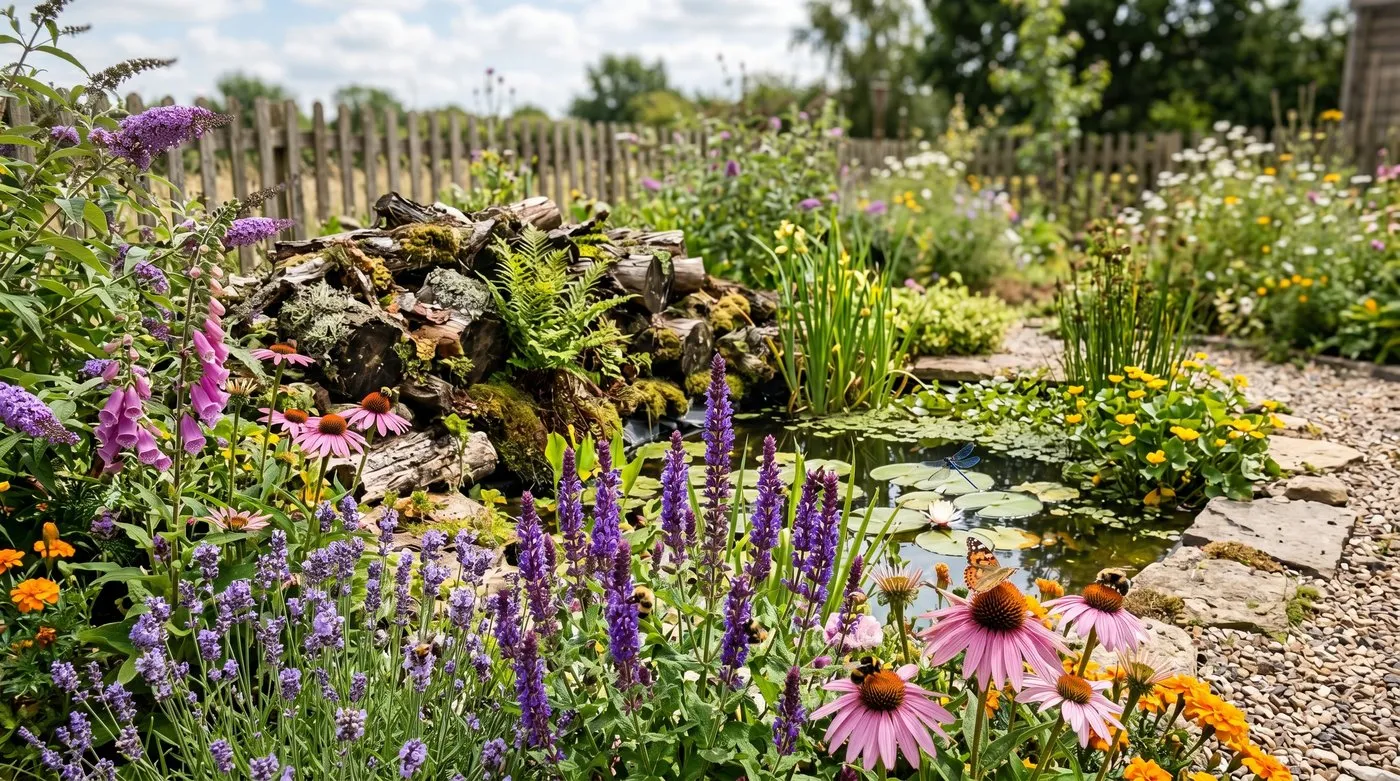 Food, water and shelter are all it takes. A small pond, a log pile and a long season of nectar-rich flowers turn even a tiny garden into a real habitat.
Frequently asked questions
What makes a garden eco-friendly?
An eco-friendly garden minimises its environmental cost and supports wildlife. The main features are permeable surfaces instead of solid paving, rainwater harvesting, peat-free and no-dig soil care, reclaimed or local materials, and planting that feeds pollinators. It uses fewer chemicals and less mains water. Most of these choices also save money and effort over time, so they are practical as well as green.
How do I make my garden more sustainable?
Start by cutting solid paving in favour of gravel, planting and permeable surfaces, which stops runoff. Add water butts, switch to peat-free compost, and try no-dig to build soil. Choose reclaimed or local materials, plant for pollinators, and add a small pond. You do not need to do everything at once; each change reduces the garden’s footprint on its own.
Is permeable paving better for the environment?
Yes, permeable surfaces let rainwater soak into the ground instead of rushing into drains, which reduces flooding and recharges groundwater. Solid, sealed paving causes runoff that overwhelms drains in heavy rain. Gravel, permeable block paving, and planted ground are all far better. Reducing the total area of hard surface matters even more than the type you choose.
Why should gardeners avoid peat?
Peat bogs store huge amounts of carbon and are rare wildlife habitats, but digging peat for compost releases that carbon and destroys the bog. Using peat-free compost protects these places. Modern peat-free composts perform well when you water and feed correctly. The UK is phasing out peat in retail compost, so switching now keeps you ahead of the change.
How can a garden help wildlife?
Plant a range of pollinator-friendly flowers, add a pond however small, leave some areas a little wild, and avoid pesticides. A mix of native and nectar-rich plants, a log pile, and a water source give insects, birds and hedgehogs food and shelter. Even a small garden becomes a useful habitat when it offers food, water and cover across the seasons.
Our team produces practical UK gardening guidance from source research, contributor records and established horticultural practice. Editorial standards are overseen by Matt W.