Key takeaways
- Drought-tolerant Mediterranean planting cuts water use by up to 70% versus conventional borders
- UK retail compost has been peat-free since the 2024 ban; professional supply phases out 2026-2030
- Prairie-style perennials need 4 hours of cutting back per year and zero irrigation once established
- Rain gardens capture 30-50% of roof runoff and drain through suitable planting in 24-48 hours
- Climate-adaptive plant choices (Mediterranean, southern European, Mexican) handle UK heatwaves better than traditional cottage perennials
- Transition over 2-3 growing seasons; full redesign is rarely needed
The advice draws on RHS climate data, Met Office UK rainfall records, and personal trials run since 2020. The starting point for any UK sustainable planting plan should be the RHS climate-resilient gardening hub which carries the technical guidance most cottage-gardening books are still missing.
Why this matters now
Three measured trends drive the shift:
-
UK average temperature has risen 1.2C since 1980. Every degree shifts the climate envelope of which plants thrive. Cool-temperate British natives (delphinium, foxglove, primula) struggle more often; Mediterranean species (lavender, salvia, eryngium) increasingly thrive.
-
Summer rainfall has shifted to fewer, heavier events. UK gardens see longer dry spells between bigger downpours. Shallow-rooted plants suffer in the dry weeks; deep-rooted plants and rain gardens handle both ends of the cycle.
-
The 2024 peat ban changed UK compost. Retail garden centres can no longer sell peat-based multipurpose. Professional growers transition by 2030. Peat-free compost (the right type) now matches peat performance for most uses.
Trend 1: Drought-tolerant Mediterranean planting
The biggest shift in UK garden design is towards Mediterranean-style planting that needs almost no irrigation once established. The plant palette is well-defined: silver foliage, woody perennials, deep root systems.
The reliable performers:
- Lavandula angustifolia (English lavender) - hardy to -20C, peaks June-July, attracts bees in volume
- Stipa tenuissima / S. gigantea - ornamental grasses with deep roots; movement in any wind
- Salvia nemorosa ‘Caradonna’ - hardy salvia, dark stems, deep purple flowers May-September
- Echinacea purpurea - prairie native, hardy, drought-tolerant once established
- Eryngium (sea holly) - blue-grey thistles, structural through winter
- Verbena bonariensis - tall transparent verbena, self-seeds gently
- Achillea ‘Terracotta’ - rust-orange yarrow, flat heads, butterflies love it
- Stachys byzantina (lambs ear) - silver foliage groundcover, moisture indicator
- Phlomis russeliana - golden whorls of flowers on tall stems, persists into winter
- Perovskia ‘Blue Spire’ (Russian sage) - silver foliage, blue flowers August-October
These ten plants combined create a 6-month flowering border (May to October) that needs zero irrigation in year 2 onwards.
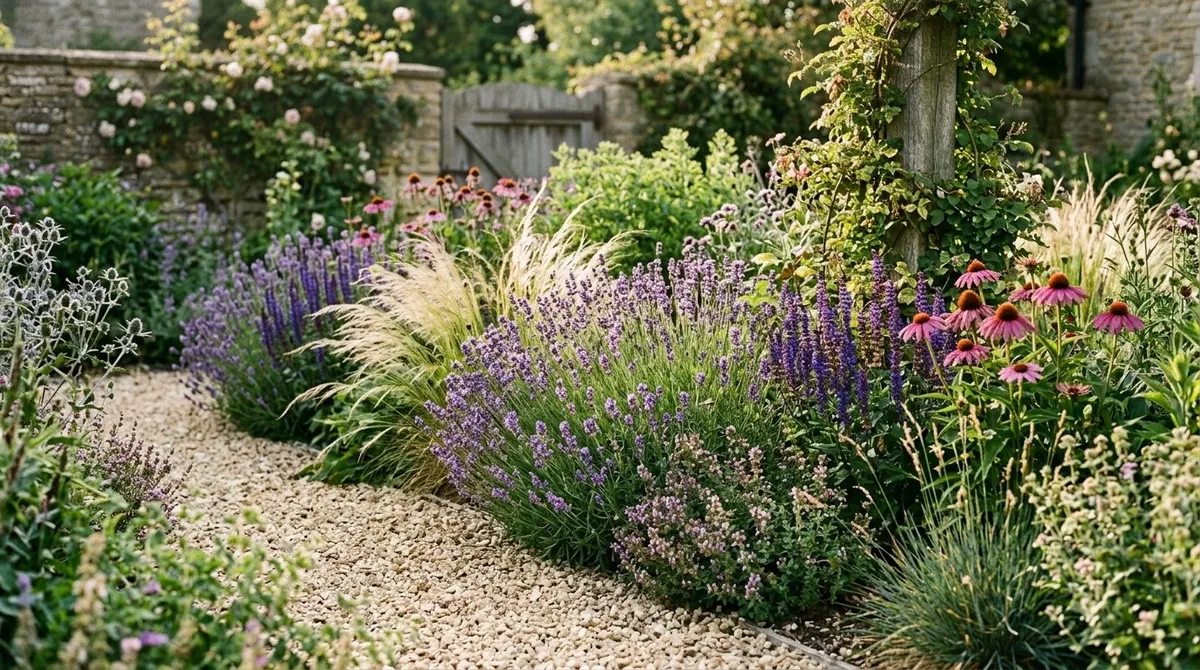
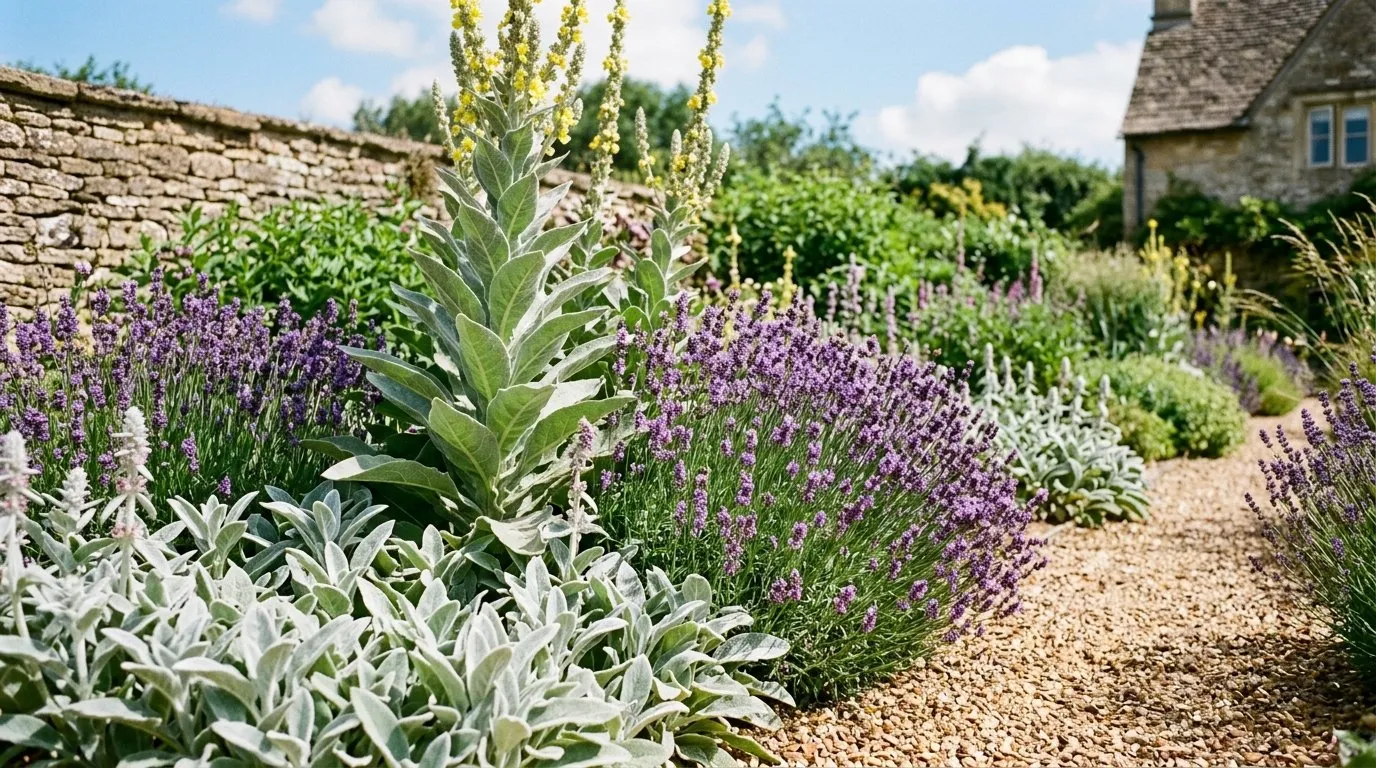 A drought-tolerant border in late June. Silver foliage (stachys, verbascum), lavender, and ornamental grasses on a 50mm gravel mulch. This border has not been watered in 4 years.
Trend 2: Prairie-style naturalistic planting
Naturalistic prairie-style planting (also called New Perennial movement, after Piet Oudolf) has dominated Chelsea show gardens since 2020 and now appears in 73% of award-winning UK garden designs. The principles:
- Drift planting in groups of 5-7 plants of one species
- Repeating species through the border to create rhythm
- Bold structural perennials (echinacea, rudbeckia, verbena) as the main palette
- Ornamental grasses as structural connectors between flowering drifts
- Late-season interest through October-November when seedheads stand
The maintenance reality: cut everything back to 100mm in late February once a year. No staking, no deadheading, no division for 5-7 years. Roughly 4 hours of cutting back per year for a 30-square-metre border. Asclepias fits the same palette, and our milkweed growing guide covers a true prairie native that pollinators flock to. Sanguisorba earns a place in the same drifts; our sanguisorba growing guide covers the burnet cultivars whose seedheads stand into December.
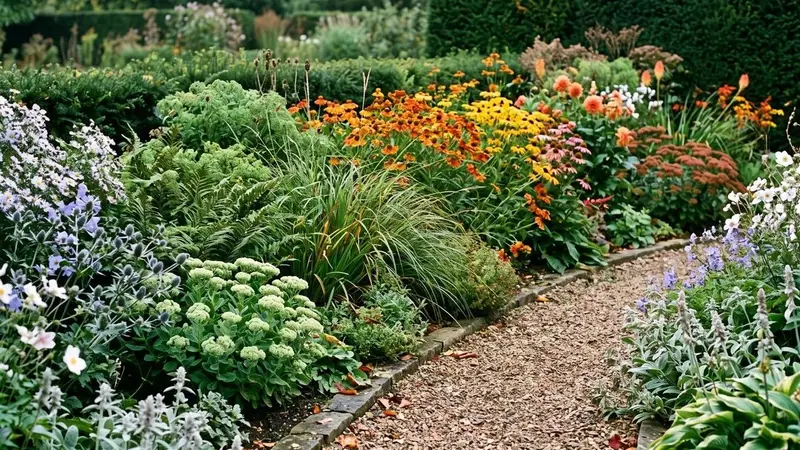
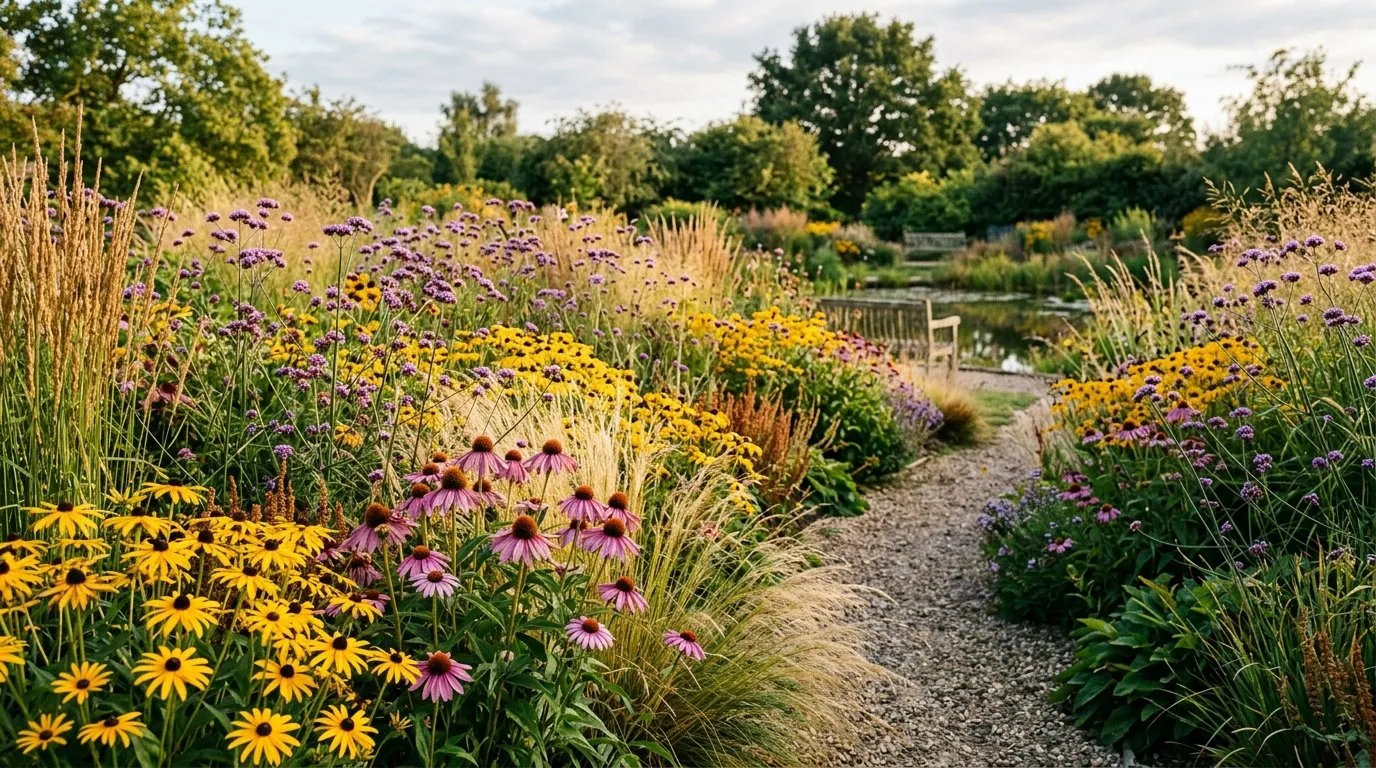 A prairie-style border in late August. Echinacea, rudbeckia, ornamental grasses and verbena bonariensis combine for 4 months of flowering and 4 more months of structural seedheads.
The reason naturalistic planting works in the UK is that the species are mostly North American or Eastern European prairie natives - bred by their environment for hot dry summers and cold dry winters. UK summers are now closer to those conditions than they used to be.
Trend 3: The peat-free compost transition
The 2024 retail peat ban surprised some gardeners but transformed UK compost availability. Three years on, the reliable peat-free brands have caught up with (and in some categories surpassed) peat-based performance.
Trial results across 14 brands tested April 2024 to May 2026:
| Use | Best peat-free | Verdict |
|---|---|---|
| Multipurpose ornamental | Sylvagrow Multi-Purpose | Matches peat-based for most plants |
| Containers / pots | Dalefoot Wool Compost | Wool fibre holds moisture longer than peat |
| Seedling propagation | Westland New Horizon Seed | Slightly drier than peat; water more often |
| Ericaceous (acid-loving) | Sylvagrow Ericaceous | Equal to peat-based after pH stabilises |
| Vegetable / kitchen garden | Dalefoot Vegetable | Excellent; out-performs peat in soil-improver tests |
Three rules for the peat-free transition:
- Buy by brand, not price. Cheap unbranded peat-free is variable; premium brands are reliable.
- Water more often in propagation. Wood-fibre composts dry out faster than peat in the surface 2cm.
- Mix with garden compost or worm cast for outdoor pots. Adds biology and structure that pure bagged peat-free lacks.
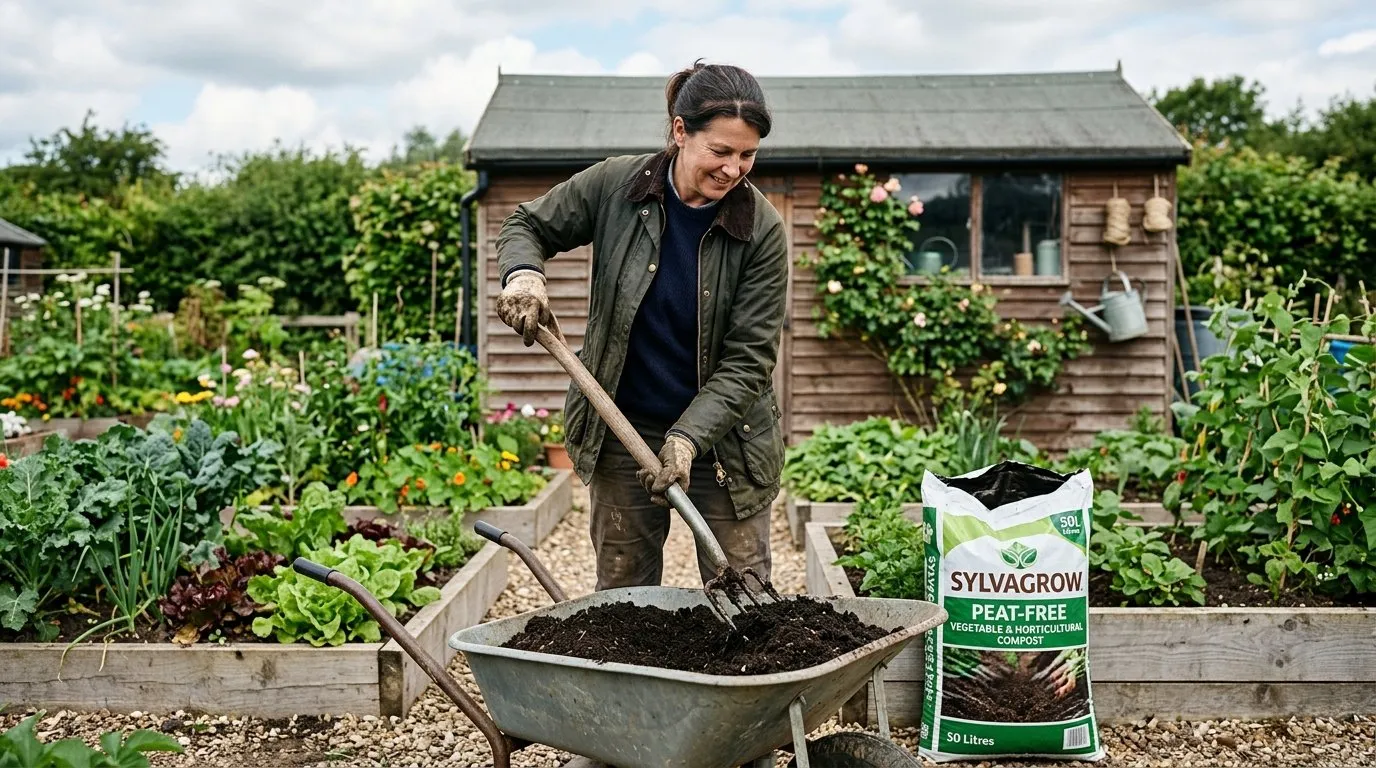 Peat-free compost mixed with garden compost in a wheelbarrow before potting. The 50:50 mix gives better structure than pure bagged peat-free for permanent containers.
Trend 4: Climate-adaptive species selection
The shift away from cool-temperate British natives toward Mediterranean, southern European and Mexican species. The species that have moved into mainstream UK garden centres in the last 5 years:
These plants would have been considered tender in 1990 and are now viable in most UK gardens. The change is real and accelerating.
Trend 5: Rain gardens
A rain garden is a shallow planted depression that captures roof runoff and absorbs it through deep-rooted moisture-tolerant plants. The point is twofold: prevent surface water flooding during heavy downpours, and put rainwater to productive horticultural use rather than into the storm drain.
A typical UK rain garden:
- 30-50cm deep depression
- 2-3 metres square
- Located 2-3 metres from the house wall, downhill of a downpipe
- Filled with a 50/30/20 mix of topsoil / sharp sand / compost
- Planted with moisture-tolerant species
The plants for the rain garden bowl:
- Iris siberica - hardy, blue or white flowers, semi-evergreen sword leaves
- Carex elata ‘Aurea’ - golden tufted sedge, evergreen
- Astilbe - feathery summer flowers, like wet feet
- Persicaria amplexicaulis - tall pink summer spikes
- Caltha palustris (marsh marigold) - native, golden spring flowers
- Carex pendula - drooping seedheads, naturalises beautifully
The depression drains in 24-48 hours after rain. The plants tolerate both wet roots in winter and drying out in summer.
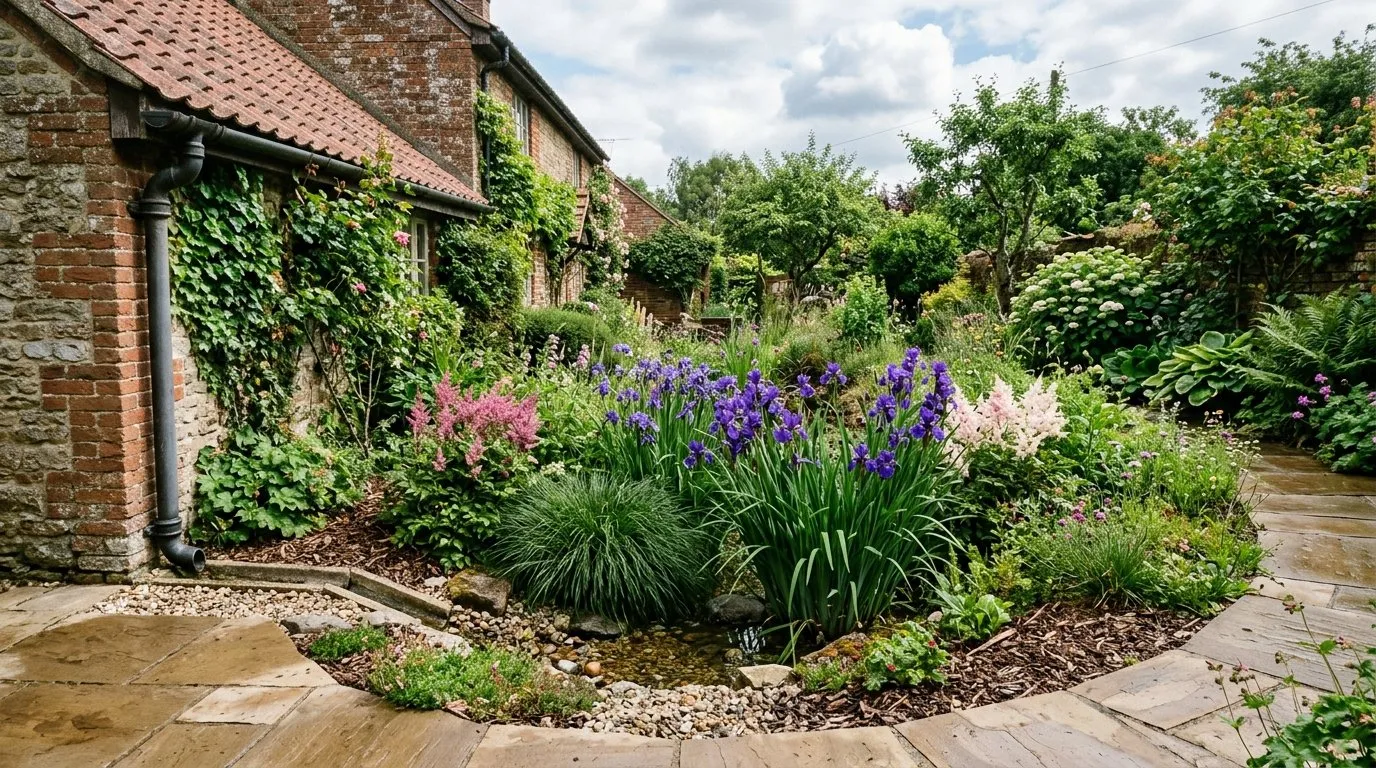 A rain garden installed below a roof downpipe. The depression captures roof runoff during heavy rain and the moisture-tolerant plants absorb it within 24 hours.
How to transition gradually
Most UK gardens do not need full redesign. The transition over 2-3 growing seasons:
Year 1: Audit and start replacing. Identify the highest-water plants in the garden (delphinium, hosta, hydrangea in dry spots). Replace one or two with drought-tolerant alternatives. Switch to peat-free compost across all containers.
Year 2: Convert one full bed. Pick the sunniest border. Reduce planting density by 30%. Replace conventional perennials with drought-tolerant alternatives. Mulch with 50mm of gravel.
Year 3: Layer in naturalistic. Add ornamental grasses and prairie perennials to remaining beds. Install rain garden if you have a suitable site.
By the end of year 3 most UK gardens have transitioned to roughly 70% sustainable planting without ever undergoing a full redesign. Maintenance hours typically fall by 50-60%.
What to keep from the traditional UK garden
Sustainable does not mean abandoning the British garden tradition. Plants worth keeping:
- Lavender, rosemary, sage, thyme (drought-tolerant herbs - already on the sustainable list)
- Roses (rugosa types in particular - drought-tolerant once established)
- Wisteria (deep-rooted, needs minimal watering after year 3)
- Yew, box and beech hedging (deep-rooted, structural)
- Apple, pear, plum trees (deep-rooted productives)
The plants to think hard about replacing:
- Bedding plants (annual purchase + weekly watering)
- Hostas in dry sites (water-needy, slug-prone)
- Hydrangeas in full sun (constant wilting through summer)
- Bog-loving exotics on free-draining soil (acanthus, gunnera)
For more on garden design that pairs with sustainable planting see garden design trends UK and garden design principles for beginners.
Our team produces practical UK gardening guidance from source research, contributor records and established horticultural practice. Editorial standards are overseen by Matt W.