Key takeaways
- Keep a 2-3m clear zone of gravel, paving and low green planting around any fire pit
- Allow 3m clearance above the pit - never site it under overhanging branches
- Keep a fire pit at least 3m from fences, sheds and timber buildings
- Plant succulents (sempervivum, sedum) and bergenia close - they hold 90%+ water
- Avoid pampas grass, conifers, leylandii, eucalyptus and bark mulch near fire
- Use gravel or stone mulch as a firebreak - never wood or bark chips
Fire-resistant planting around a fire pit keeps a UK garden safe without making it look bare. The aim is simple: a clear, non-combustible zone of gravel and low, green, moisture-rich plants close to the flame, with the flammable stuff kept well back. Get the distances right and you remove the real risk, which is drifting embers landing on dry, oily material.
How far should a fire pit be from a fence, shed or building
A fire pit needs at least 3m of clearance from any fence, shed, summerhouse or timber building. Timber and trellis ignite from both radiant heat and drifting embers. The London Fire Brigade logs garden fires every summer from pits sited too close to combustible structures. Three metres is the working minimum on a still night, and more on exposed, windy plots.
Overhead clearance matters just as much as the ground distance. Never site a fire pit under overhanging branches or a pergola. Allow 3m of clear air above the bowl so rising sparks and heat have nowhere to catch. A low canopy traps heat and dries the foliage above the flame, turning a tree into kindling over a single long evening.
Decking deserves special caution. Aged, oiled deck boards are dry timber that catches embers fast. Keep the pit 3m from the deck edge and always set it on a non-combustible base. The clearance rules are stricter than the fire pit choice alone suggests at first glance, because planting and structures add fuel the bowl does not.
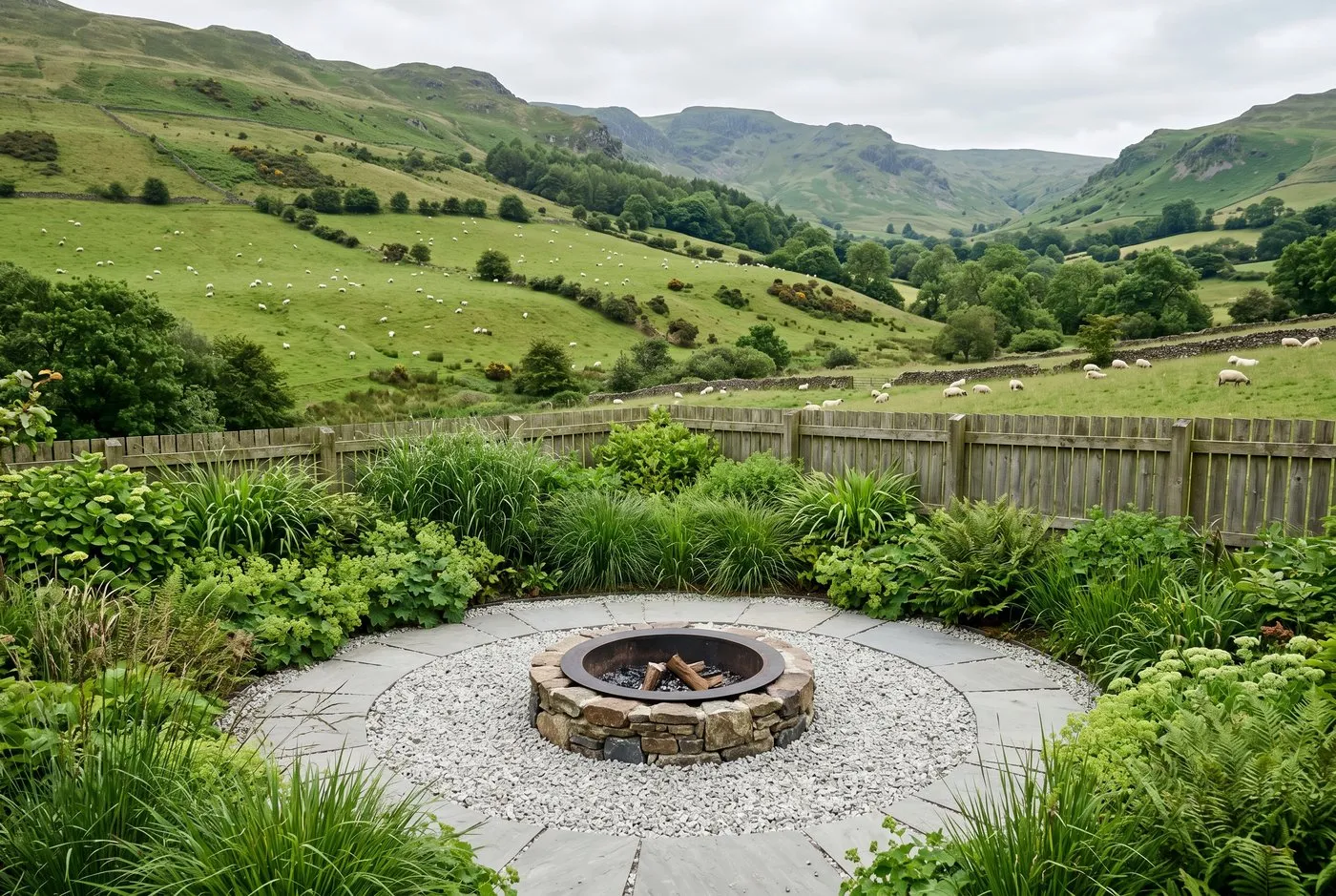 A clear zone of gravel and paving rings the pit, keeping fence, shed and planting beyond the ember-drift distance.
What makes a plant flammable or fire-resistant
Plant flammability comes down to four measurable factors. First, moisture content: a leaf at 90% water resists ignition, while dead material below 20% lights in seconds. Second, volatile oils and resins: eucalyptus and conifers carry flammable oils that vaporise and flare. Third, dead and dry material held within the plant, the fine fuel that pampas and old grasses store. Fourth, fine fuel structure: thin, papery leaves and feathery plumes catch faster than thick, fleshy ones.
Succulents sit at the safe end because they hold huge water reserves. A sempervivum or sedum leaf can be 90-95% water by weight. That moisture must boil off before the tissue ignites, which rarely happens from a stray ember. Their low, dense form also holds little dead material. Bergenia, with its thick, leathery evergreen leaves, behaves the same way.
At the dangerous end sit plants that combine all four risk factors. Conifers and leylandii carry resin, hold years of dead inner needles and present a fine, dense surface. Pampas grass stores vast amounts of dry, fine plume material. These are not slow-burning hazards. They flare. That difference, fleshy and wet versus oily and dry, decides where every plant goes around a fire.
Why pampas grass and conifers are a fire risk
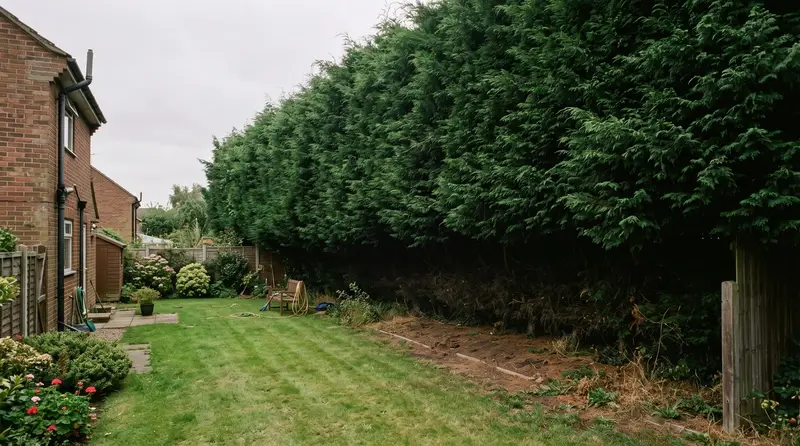
Conifers and leylandii fail for different reasons that add up to the same outcome. Their needles carry volatile resins that vaporise as the plant heats, then ignite ahead of the flame front. A leylandii hedge also stores a brown, dead inner layer of old needles that never rots away. Set that beside a heat source and it behaves like a vertical bonfire waiting for a spark.
The same logic rules out eucalyptus, bamboo and dry ornamental grasses in late summer. Eucalyptus oil is so flammable it is a known wildfire accelerant abroad. Bamboo canes dry to a papery, hollow tinder. Ornamental grasses look soft and safe in June but turn to dry straw by September. If you want fire-thorn hedging value without the resin, pyracantha (firethorn) is a deciduous-friendly, denser-leaved alternative to conifer screening.
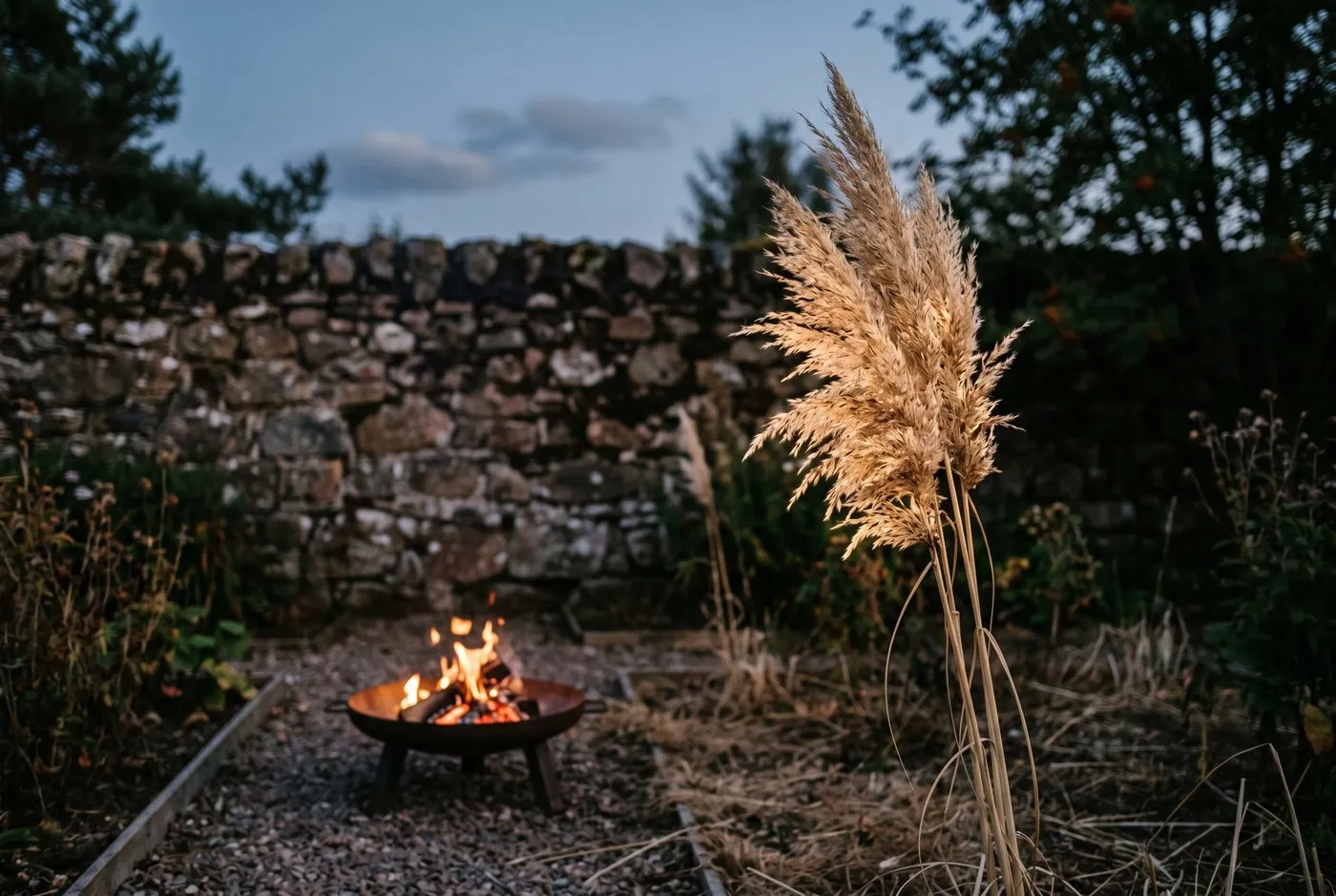 Dry pampas plumes are fine fuel. A single ember can take a mature clump to two metres of flame in seconds.
The fire-wise zones model for a UK garden
Zone 1 runs 0-2m and is non-combustible only. Gravel, paving, slate or stone, plus pots of green succulents. No planting in the ground, no mulch, nothing that burns. This is the ember-landing zone and it must give a spark nowhere to catch. A spark on gravel dies. A spark on bark mulch smoulders.
Zone 2 runs 2-5m and holds low, green, moisture-rich planting. Bergenia, hostas, hardy geraniums, heuchera and well-watered low grasses live here. Everything stays under knee height, hydrated and free of dead material. Keep it green through summer with watering so it never dries to fuel.
Zone 3 is everything beyond 5m, where normal garden planting resumes. Shrubs, borders and trees are fine at this distance, with one exception. Keep pampas, conifers, leylandii and eucalyptus out to 5m at least, further on windy plots. The zones do the heavy lifting. Distance plus moisture beats any single clever plant choice.
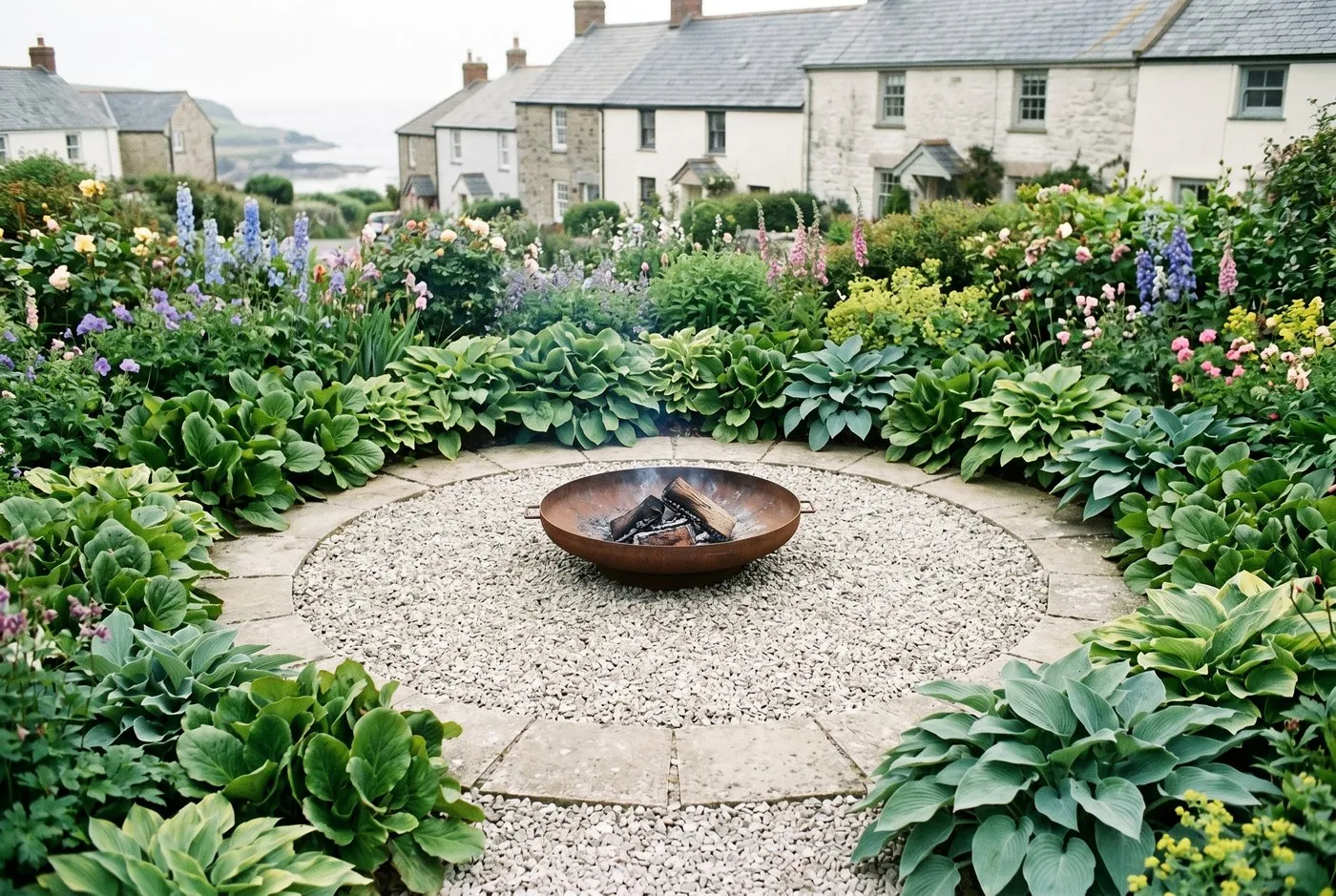 The three-zone model: gravel inner ring, low green planting at 2-5m, normal borders beyond 5m.
Fire-resistant plants versus what to avoid near fire
The table below ranks materials safest-first. The safest choices are potted succulents and bergenia in Zone 1, then low moisture-rich perennials in Zone 2. Everything in the avoid block belongs nowhere near a fire pit, BBQ or chiminea.
| Plant or material | Why | Place near fire? | Role |
|---|---|---|---|
| Sempervivum / Sedum | 90-95% water, low, no resin | Yes, Zone 1 in pots | Safest inner ring |
| Bergenia | Thick leathery evergreen leaves, high moisture | Yes, Zone 1-2 | Safe close planting |
| Hosta | Broad, moist, soft leaves, dies back wet | Yes, Zone 2 | Lush low filler |
| Hardy geranium | Low, green, moisture-rich, no oils | Yes, Zone 2 | Ground cover |
| Heuchera | Evergreen, low, fleshy foliage | Yes, Zone 2 | Colour at edge |
| Low grasses (kept green, watered) | Safe while green, never let dry | Yes, Zone 2 if hydrated | Movement, low risk |
| Leylandii / conifer | Resin, dead inner needles, fine fuel | No - keep 5m+ | Avoid entirely |
| Eucalyptus | Highly flammable volatile oils | No - keep 5m+ | Avoid entirely |
| Pampas grass | Dry fine plumes, ignites in seconds | No - remove within 5m | Worst offender |
| Bamboo | Hollow, papery, dries to tinder | No - keep 5m+ | Avoid near flame |
| Dry ornamental grasses | Become dry straw by late summer | No in summer | Risk Aug-Oct |
| Bark / wood mulch | Fine dry fuel, smoulders from embers | No - use gravel | Replace with stone |
Note the pattern. Every safe choice is low, fleshy and wet. Every avoid is tall, oily, dry or fine. Pots of green succulents give you the safest possible inner ring because you can move them and they never dry out fast.
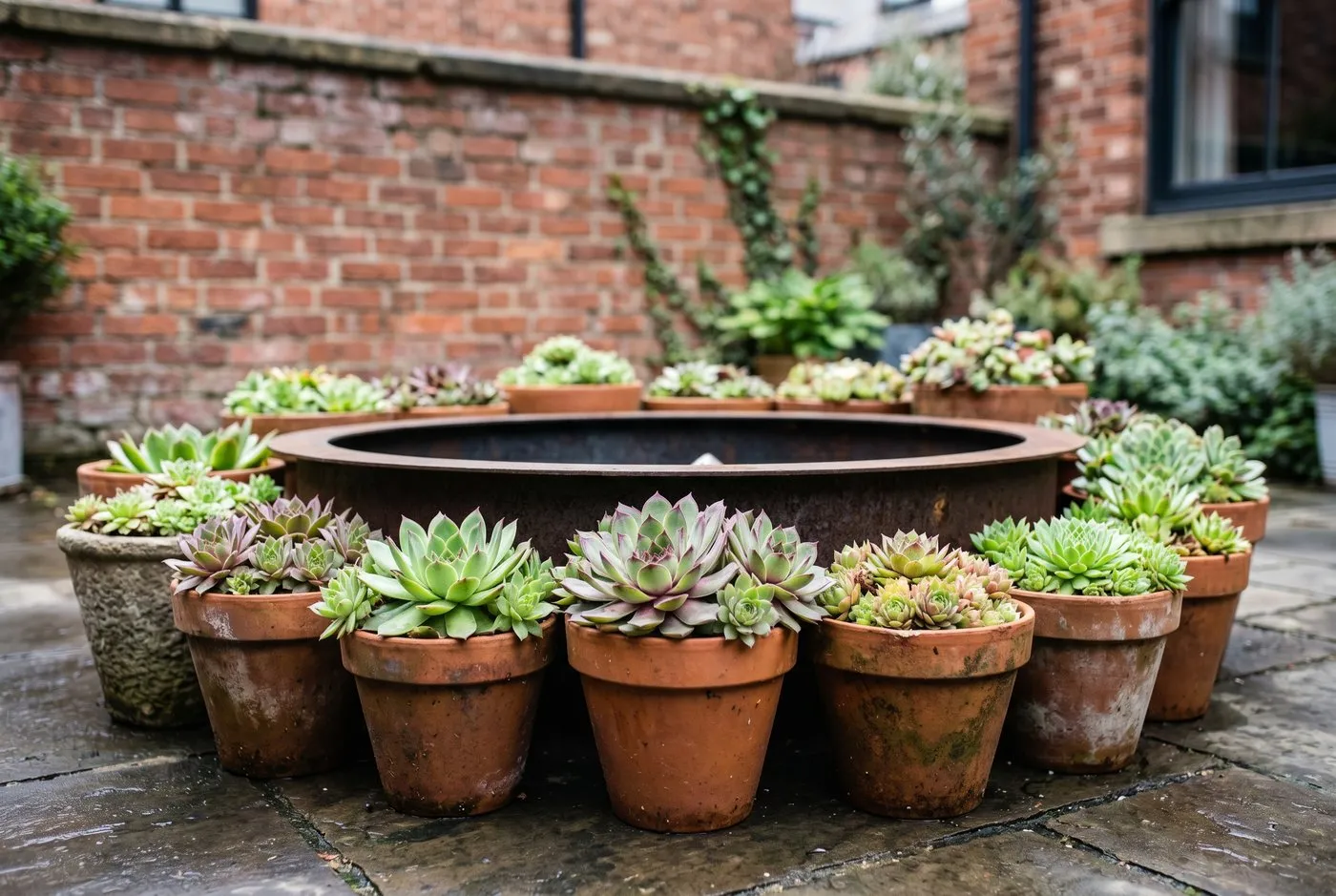 Potted sempervivum and sedum make the safest inner ring. High water content and a low, dense form resist ember strike.
Clearance distances around a fire pit
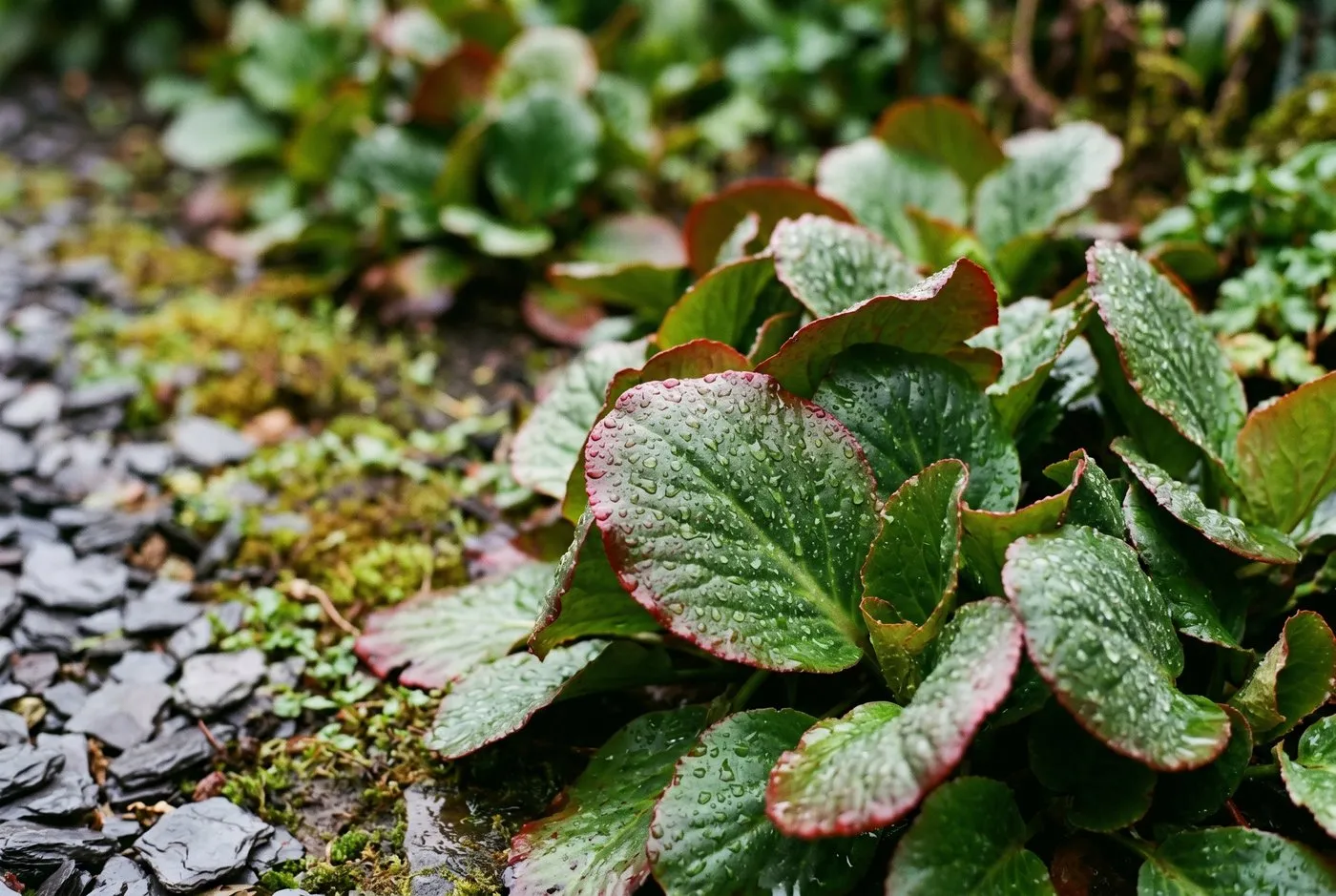 Bergenia holds thick, leathery, high-moisture leaves. It is one of the safest perennials to plant in the 2-5m zone.
Why garden fires start and how to stop them for good
Most garden fires around a fire pit start the same way. An ember drifts on the wind, lands on dry fine fuel, and smoulders until it flares. The fine fuel is almost always one of three things: a pampas or dry grass clump, bark or wood-chip mulch, or a timber fence or shed sited too close. The flame itself rarely starts the fire. The drift does.
The second common cause is straightforward proximity. A pit set 1m from a fence, or under a low branch, transfers enough radiant heat over a long evening to dry and then ignite the timber or foliage above. No spark needed. Sustained heat against dry wood is its own ignition source. This is why the 3m rules are not negotiable.
The permanent fix removes the fuel rather than managing the flame. Clear all fine, dry material from a 5m radius. Replace bark mulch with gravel in the clear zone. Move or remove pampas and conifers. Fit a spark screen so drift cannot start anything in the first place. Do those four things once and you stop chasing the risk every evening. If you need screening where a conifer once stood, our hedge planting guide covers safer, denser-leaved alternatives. Browse more garden design guides for the wider layout.
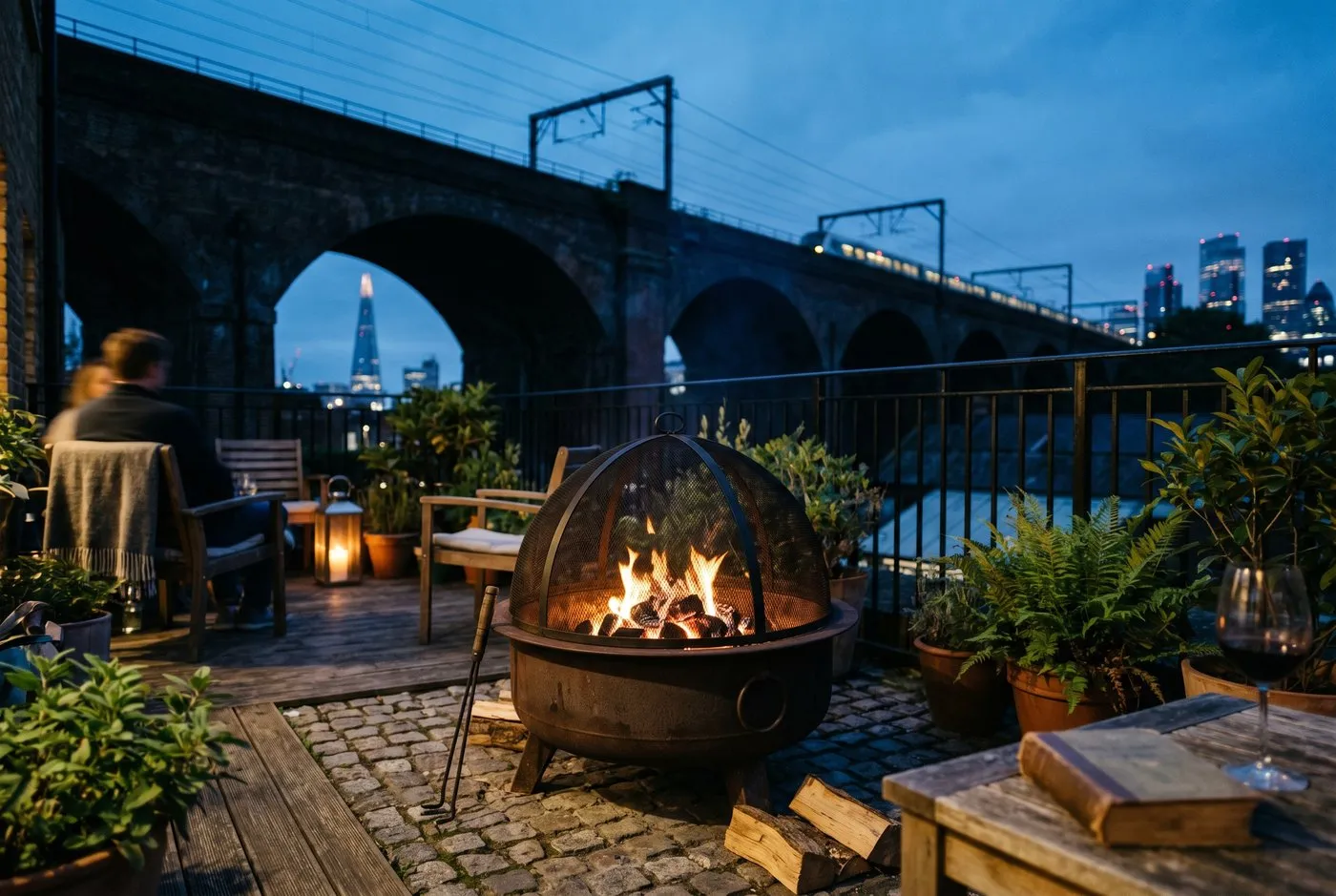 A mesh spark screen catches rising embers. It is the cheapest single defence against drift onto dry planting.
Common mistakes with fire-pit planting
Planting pampas or grasses as a feature near the pit. People love the movement, then forget it dries to tinder by August. Keep all fine grasses out of a 5m radius and keep any you do plant green and watered.
Warning: Never plant or keep pampas grass within 5m of a fire pit, BBQ or chiminea. A mature clump ignites from a single ember and flares to two metres in seconds. Remove existing clumps before you light a fire near them.
Using bark or wood-chip mulch in the clear zone. It looks tidy and natural, then catches a drifting ember and smoulders for hours. Swap it for gravel or slate within 3m of the pit.
Setting a fire pit straight on decking or lawn. Decking is dry oiled timber and lawn scorches and dies. Always use a non-combustible base.
Gardener’s tip: Stand pots of green sempervivum or sedum at the pit edge instead of planting the ground close in. They give living colour, hold 90%+ water, and lift out of the way when you want a bigger fire or need to clear the ring.
Ignoring wind direction. A still-night layout fails on a gusty evening. Check the wind before lighting and never burn when it carries embers toward a fence, shed or dry bed.
How to keep fire-pit planting hydrated and green
Hydration is what keeps your Zone 2 planting safe through a dry UK summer. Green tissue at high moisture resists ignition. The same plant, drought-stressed and crisp, becomes fuel. Water the beds within 5m of the pit deeply once or twice a week in summer, more in a heatwave, so the foliage never dries to straw.
Choose plants that hold water naturally and you reduce the watering load. Bergenia, hosta and heuchera stay turgid with modest care. Succulents need almost none, which is why pots of them make the safest inner ring. Avoid drought-prone fine grasses that crisp up the moment you skip a week.
Time your fires around the weather, too. After a long dry spell with no rain, everything in the garden runs drier and the safety margin shrinks. Give nearby beds a good soak a few hours before you light up. A well-watered green ring is the difference between an ember dying and an ember catching.
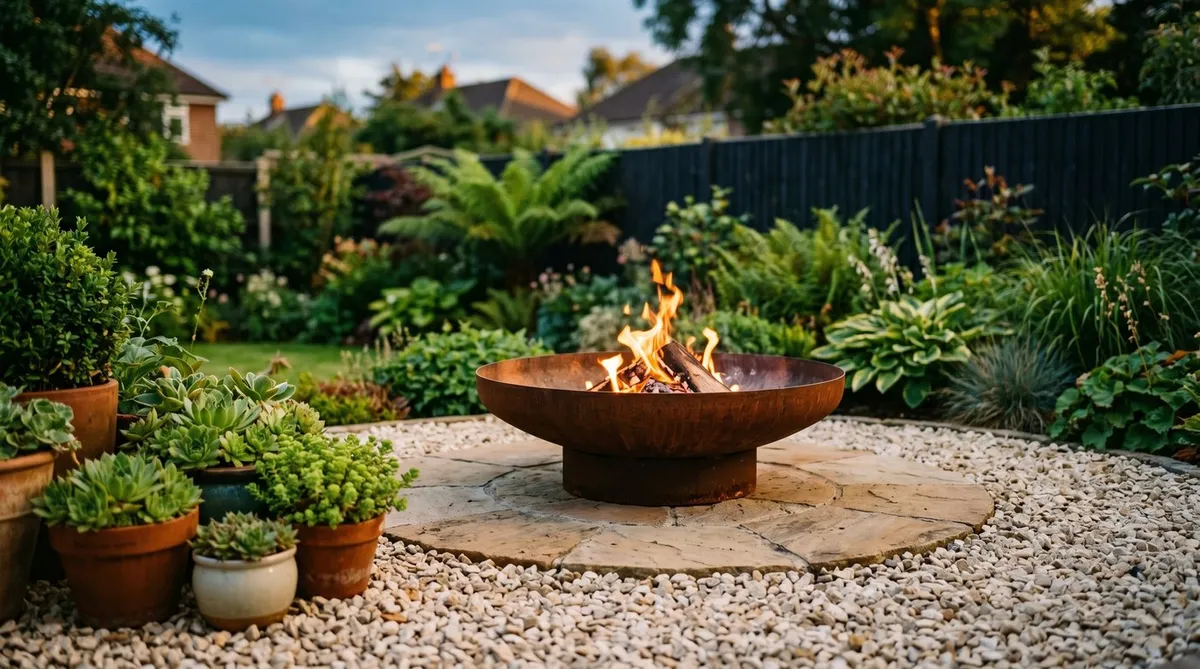
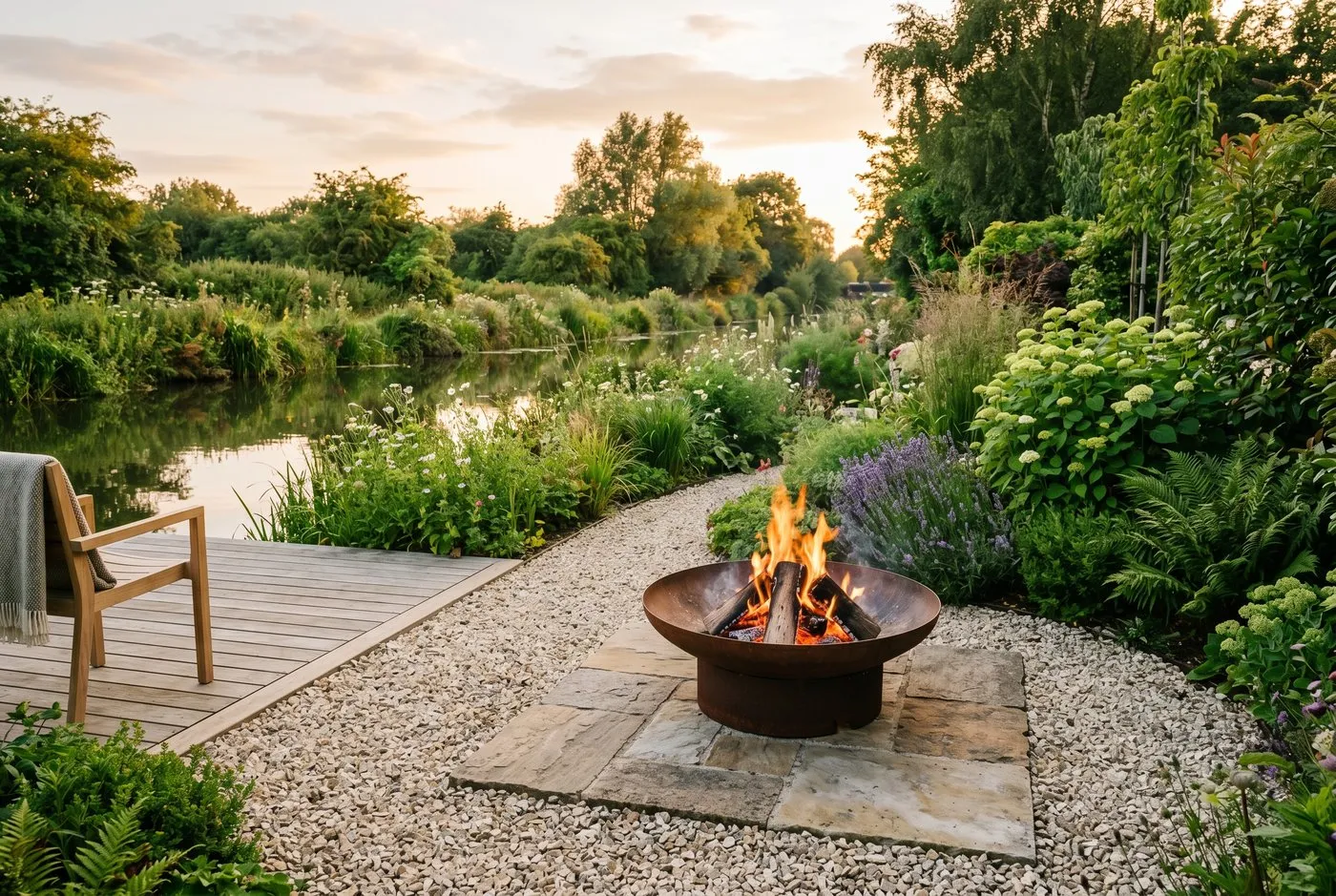 A controlled evening fire on a paved hearth with a gravel surround. The non-combustible base and green planting keep the setup safe.
Frequently asked questions
What plants are fire-resistant around a fire pit UK?
Succulents, bergenia, hostas and hardy geraniums resist fire best. They hold high water content, often above 90%, and contain little resin or oil. Well-watered low grasses, heuchera and deciduous low shrubs also work well. Keep all planting green, hydrated and at least 2m back from the flame edge for genuine safety.
How far should a fire pit be from a fence?
Keep a fire pit at least 3m from any fence. Timber fences and trellis ignite from drifting embers and radiant heat over a long evening. The same 3m minimum applies to sheds, summerhouses and timber buildings. Increase the distance on windy sites and never light a fire pit when wind blows embers toward a fence.
Is pampas grass a fire risk near a fire pit?
Yes, pampas grass is a serious fire risk near any flame. Its dry, fine, feathery plumes ignite instantly and flare upward. Mature clumps hold huge volumes of dead, dry leaf material that burns like tinder. Never plant pampas grass near a fire pit, BBQ or chiminea, and remove existing clumps within 5m of a fire.
Can you put a fire pit near decking?
Only with a non-combustible base and great care. Decking is dry, oiled timber that catches embers and radiant heat easily. Set the pit on a heat-proof mat or paving slabs, keep 3m from the deck edge, and fit a spark screen. A purpose-made fire-pit base or stone hearth is far safer than decking alone.
What mulch is safe near a fire pit?
Gravel, stone chippings and slate are the safe mulches near a fire pit. They do not burn and act as a firebreak ring. Never use bark, wood chip or straw mulch within the clear zone. These fine, dry materials catch drifting embers and smoulder, spreading fire toward planting and fences over time.
Do fire pits damage plants nearby?
Yes, radiant heat scorches and dries plants within 1-2m of a fire pit. Leaves brown, soil dries fast and tender growth wilts. Keep delicate planting beyond 2m and use heat-tolerant succulents in pots for the inner ring. Water nearby beds well before and after use, and move pots back during long, hot fires.
Our team produces practical UK gardening guidance from source research, contributor records and established horticultural practice. Editorial standards are overseen by Matt W.