Key takeaways
- Find your aspect by standing back to the house and reading the compass direction you face
- South-facing gardens get 6 or more hours of summer sun, north-facing often under 2 hours
- North-facing plots run 2 to 3C cooler and lose frost later than south-facing ones
- The UK midday sun reaches about 60 degrees in June but only 15 degrees in December
- A south or west-facing wall stores heat and lets you grow tender plants against it
- Put a patio for evening use on the west side, where the sun lingers until 9pm in June
Every garden has an aspect, and it shapes everything you can grow. Aspect is simply the direction your garden faces, and it decides how much sun, warmth, and shade each part receives. Read it correctly and your planting choices fall into place. Read it wrong and you fight the conditions for years, wondering why the lavender sulks or the patio stays cold at lunchtime.
What aspect actually means
Aspect is the compass direction your garden faces when you look out from the back of the house. It is the single biggest factor in how much light and warmth your space gets. A south-facing garden bathes in sun. A north-facing one sits in the shadow of the building for much of the day.
People often confuse aspect with orientation, but they describe the same idea from different angles. Orientation is how the whole plot sits relative to the points of the compass. Aspect is the direction a specific face looks towards, whether that is the garden as a whole or a single border or wall.
Aspect matters because the UK sits at a northern latitude, roughly 50 to 59 degrees north. The sun always tracks across the southern half of the sky here, never directly overhead. So the side of any structure facing south gets the most light, and the side facing north gets the least. Once you understand that fixed rule, the behaviour of your whole garden starts to make sense.
Gardener’s tip: Aspect is described by the way you look out, not the way the house points. Stand in the garden facing away from the back wall. The direction you are looking is your aspect.
How to find which way your garden faces
Finding your aspect takes two minutes and a compass. You do not need special equipment, and the method works for any plot, balcony, or border.
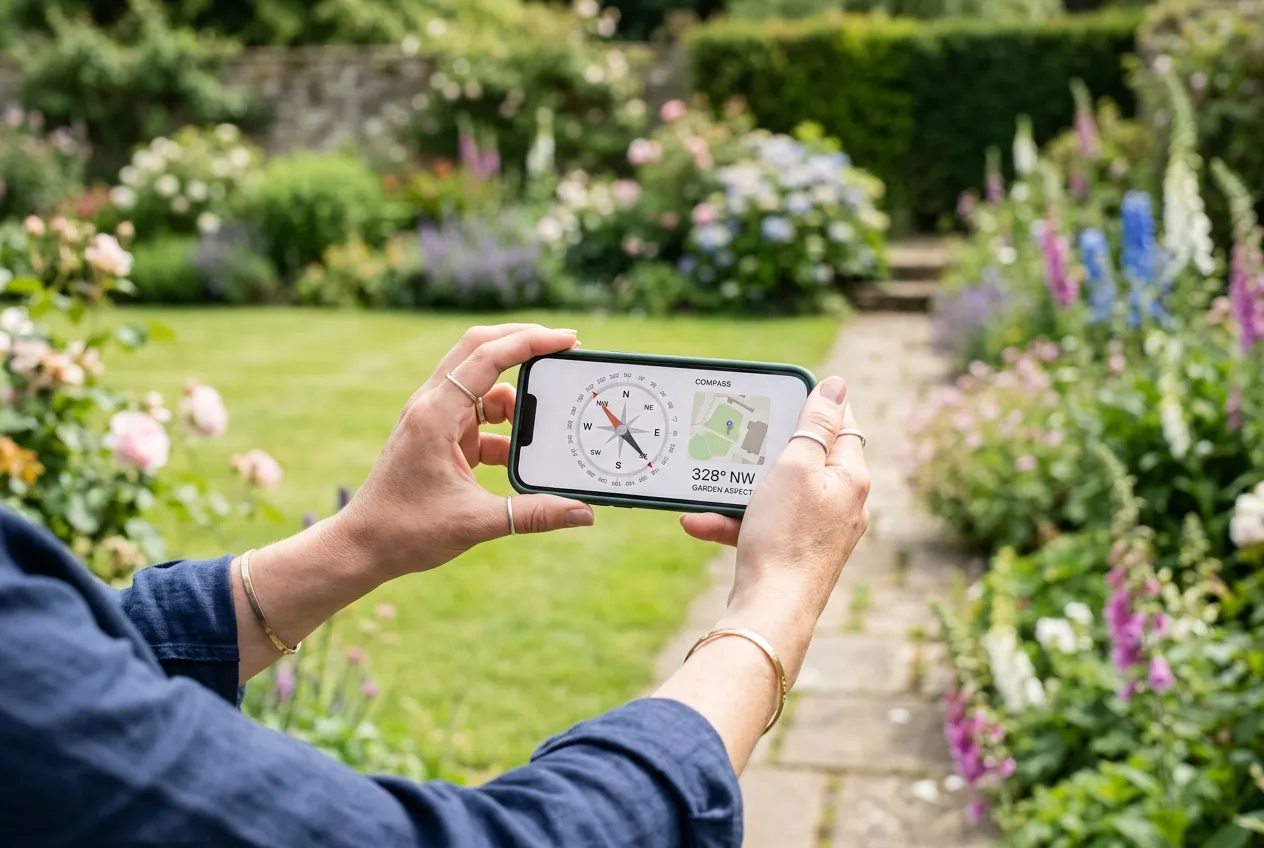 Hold a phone compass flat and away from metal to read your garden’s aspect. Stand with your back to the house first.
- Stand with your back to the back of the house. Face out into the garden, the way you would naturally look at it.
- Hold a compass flat in your palm. Keep it level so the needle swings freely. Let it settle.
- Read the direction you are facing. That bearing is your aspect. Facing 180 degrees means south-facing. Facing 0 or 360 means north-facing. East is 90, west is 270.
- No compass? Use your phone. Both iPhone and Android have a built-in Compass app. Hold the phone flat and away from keys, knives, or steel furniture, which throw the reading off.
- Cross-check with the sun. The sun rises in the east, sits due south at midday, and sets in the west. If your garden gets strong midday sun, it faces somewhere between south-east and south-west.
Most house plots fall neatly into one of the four main aspects. If your bearing sits between two, say 135 degrees, you face south-east and get a useful blend of both.
Warning: Phone compasses drift near metal, underground pipes, and electrical cabling. Take the reading two or three times in different spots and trust the average, not a single glance.
The four aspects and what each means
Each aspect gives the garden a distinct character of light and warmth. Knowing yours tells you which plants will thrive and which will struggle before you spend a penny. The table below sums up the four, and the notes that follow add the detail.
| Aspect | Light through the day | Warmth | Best for | Example plants |
|---|---|---|---|---|
| South-facing | Sun most of the day, 6+ hours in summer | Warmest, dries fast | Sun-lovers, patios, vegetables | Lavender, salvia, verbena, tomatoes |
| North-facing | Low light, often under 2 hours direct sun | Coolest, 2 to 3C colder, stays moist | Shade plants, lush foliage | Ferns, hostas, hellebores, hydrangea |
| East-facing | Morning sun, afternoon shade | Cool, gentle, frost risk on tender buds | Morning seating, spring plants | Camellia, geranium, astrantia |
| West-facing | Afternoon and evening sun | Warm by evening, holds heat late | Evening patios, relaxed borders | Roses, clematis, penstemon, jasmine |
A south-facing garden is the most prized in the UK. It catches sun from mid-morning to evening and warms early in spring. A north-facing garden sits in the building’s shadow, stays cooler and damper, and suits woodland and shade planting. An east-facing garden wakes early with bright morning sun, then falls into shade by early afternoon, so it stays cool and gentle. A west-facing garden is slow to wake but holds the afternoon and evening sun, making it the prime choice for anyone who relaxes outdoors after work.
South and west facing gardens
South-facing and west-facing gardens are the sun-traps, and they suit the widest range of garden plants. South-facing plots get the longest hours of direct sun, often six or more in summer, and warm up first in spring. West-facing plots come into their own in the afternoon, holding warmth right into the evening.
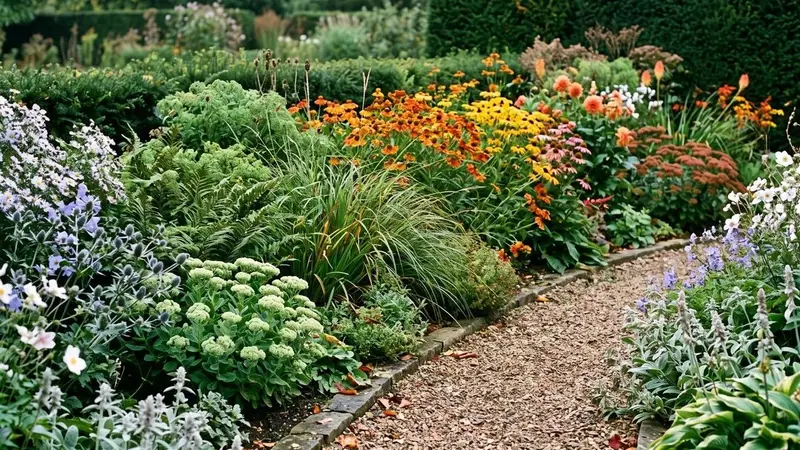
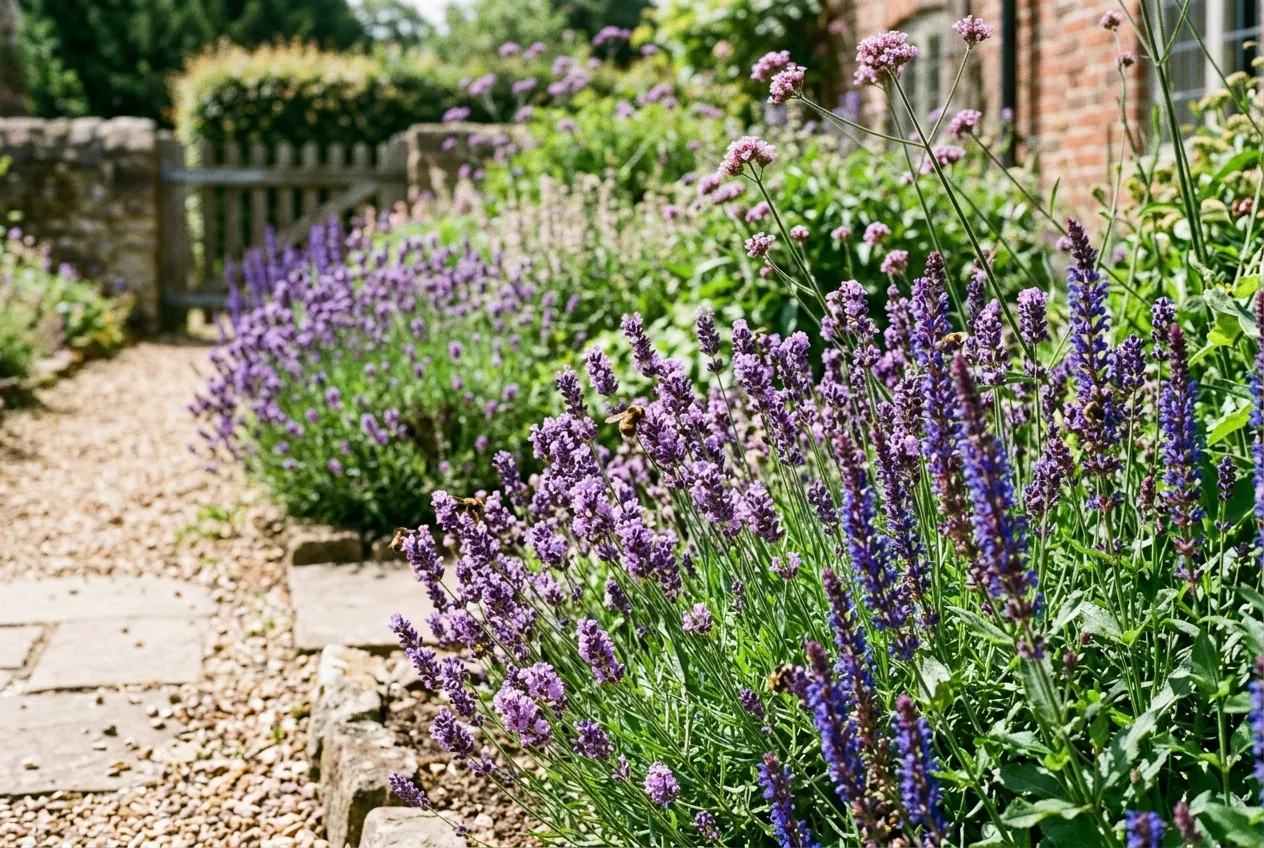 A south-facing border packed with sun-lovers. Lavender, salvia, and verbena need full sun to flower well and stay compact.
These aspects are ideal for Mediterranean and drought-tolerant planting. Lavender, rosemary, salvia, verbena, and sedum all want full sun and free-draining soil. They flower harder and grow more compact in bright light. Put your vegetable beds here too, as tomatoes, courgettes, and beans crave warmth and sun.
A west-facing wall is gold for tender climbers. It stores the afternoon heat and releases it slowly overnight, so jasmine, figs, and grapevines do well trained against it.
North and east facing gardens
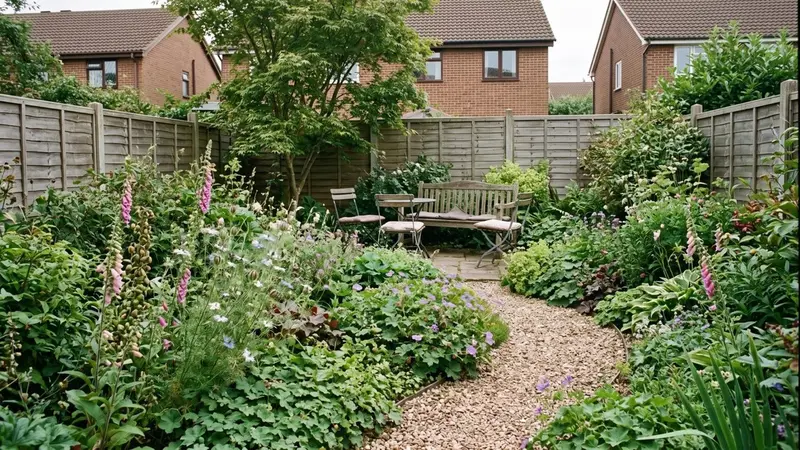
North-facing and east-facing gardens get less direct sun, but they are far from lost causes. They stay cooler, hold moisture better, and grow some of the most beautiful foliage plants. The trick is to stop fighting the shade and plant for it instead.
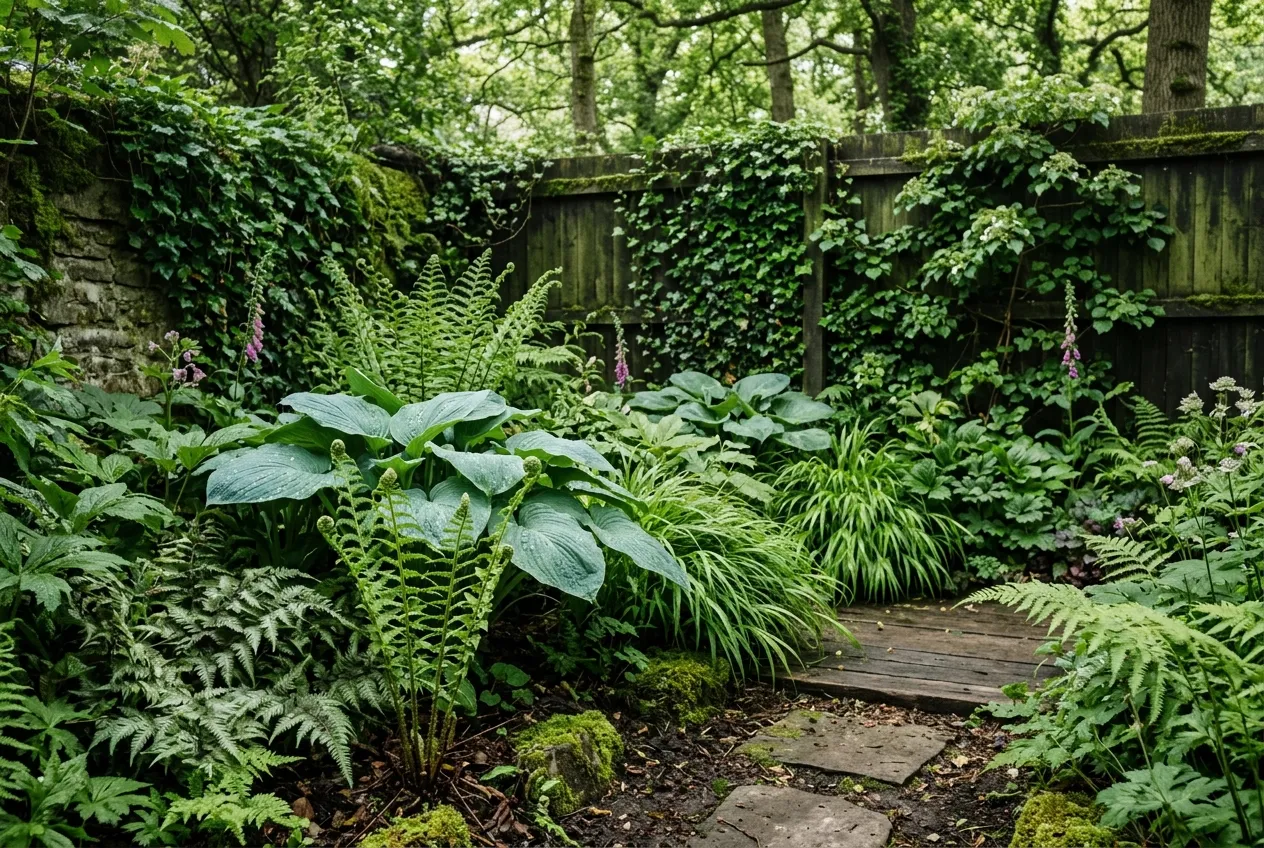 A north-facing corner planted with ferns and hostas. Shade-lovers give lush, weed-smothering foliage where sun-plants would fail.
A north-facing garden sits in the house’s shadow and may get under two hours of direct sun in winter. Borders along the side fences still catch summer sun, so the plot is rarely shaded everywhere. Grow ferns, hostas, hellebores, astilbe, and hydrangeas, which thrive in cool, moist, low light. Our full list of the best plants for shade covers dozens of reliable performers.
An east-facing garden gets bright morning sun, then slips into shade by early afternoon. It is cool and gentle, good for camellias, hardy geraniums, and astrantia. The one risk is frost on tender spring buds. Early morning sun thaws frozen flowers too fast and damages them, so avoid camellias and magnolias on a hard east-facing wall.
Both aspects need less watering than a baking south border. The cooler, damper soil suits leafy, lush planting that would scorch in full sun.
Mapping sun and shade through the day
Aspect gives you the headline, but the real picture comes from watching the sun move. Light shifts hour by hour, and parts of a south-facing garden can sit in shade while a north-facing border catches an evening glow.
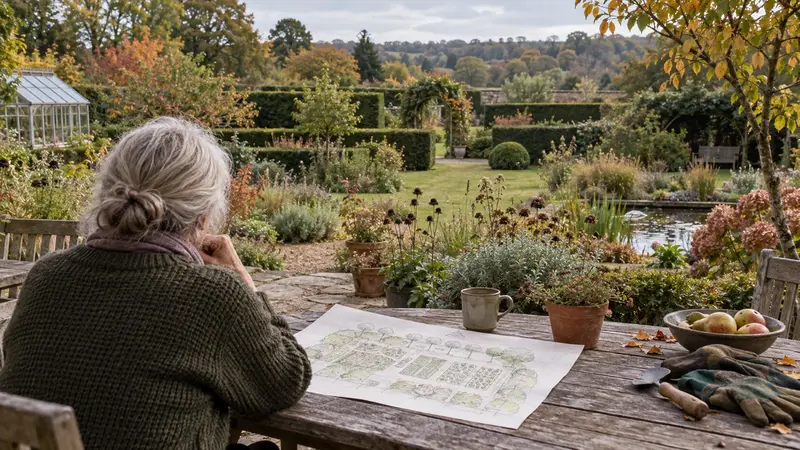
Spend one bright day tracking it. Every two hours, from morning to dusk, note which areas are in sun and which are in shade. Sketch a rough plan of the garden and shade in the dark patches. By evening you have a sun map, the most useful planning document you can make.
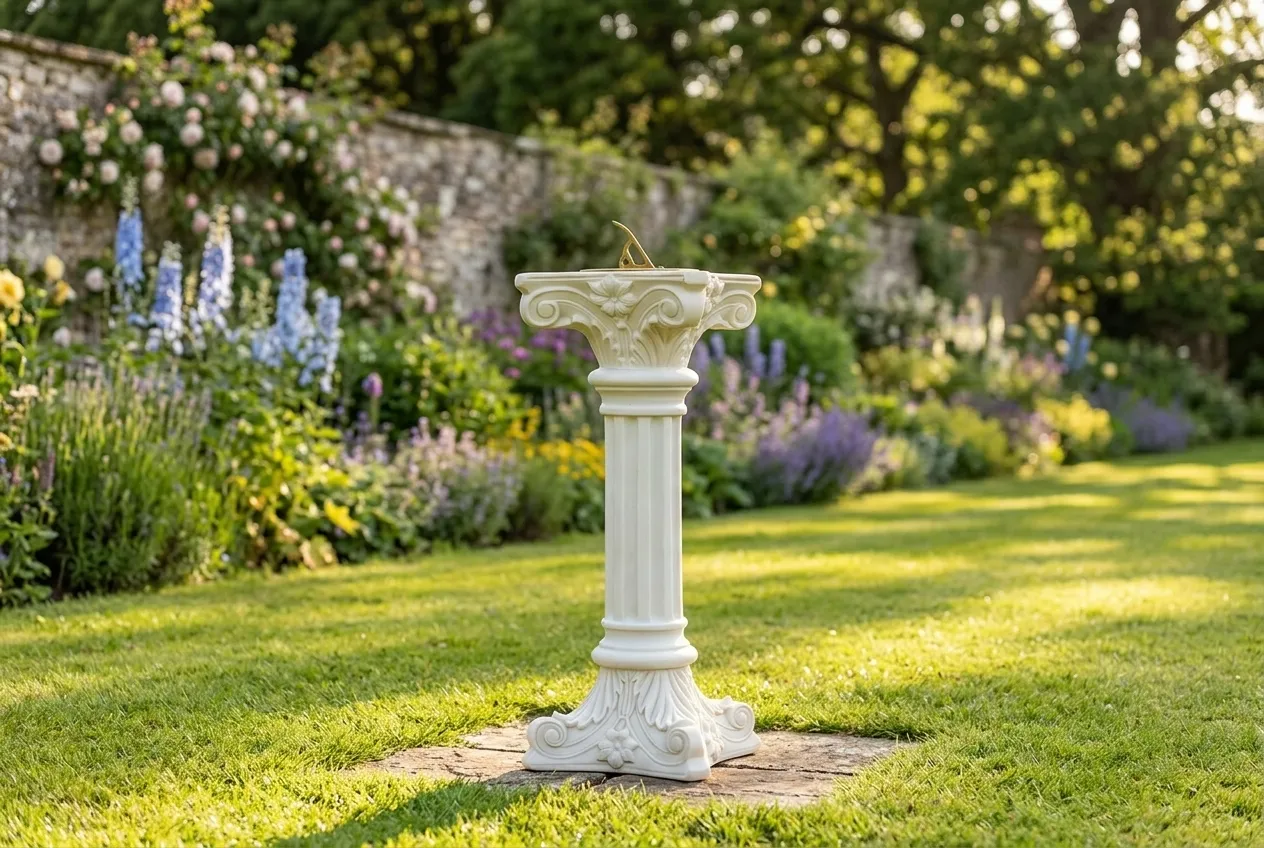 An Aged Brass Sundial on a Classical Stone Garden Pedestal tracks the sun across the day. A sunny, open spot suits one best.
Pay attention to what casts the shadows. The house throws the longest shade, but so do fences, sheds, large shrubs, and a neighbour’s trees. Tall boundaries cast deeper shade in winter when the sun sits low. A 2m fence that barely shades in June can shadow a whole border in December.
Mark out the spots that get full sun (6+ hours), partial shade (3 to 6 hours), and deep shade (under 3 hours). These three zones map directly onto plant labels, which use the same terms. Match the plant to the zone and it settles in with no fuss. For seasonal planting jobs, our guide to what to plant in March helps you act on your map.
How the sun changes through the seasons
The sun does not just move across the sky each day. Its height changes dramatically through the year, and this shifts where light and shadow fall season by season.
In the UK the midsummer sun climbs high, reaching about 60 degrees above the horizon at midday in late June. Shadows are short and most of the garden gets light. At midwinter the noon sun barely lifts to 15 degrees, skimming low across the south. Shadows stretch three or four times longer, and structures that never shade in summer block the sun for months.
This is why a spot can be sunny in July and sunless from October to March. A south border under a 2m fence stays bright all summer, then loses direct sun entirely once the low winter sun drops behind the fence. Evergreen hedges and buildings to the south of a plot have the biggest seasonal effect.
| Season | Midday sun height | Effect on the garden |
|---|---|---|
| Midsummer (June) | About 60 degrees | Short shadows, most of the garden in sun |
| Spring and autumn | About 38 degrees | Medium shadows, sun reaches mid-depth |
| Midwinter (December) | About 15 degrees | Long shadows, much of the plot shaded |
When you make your sun map, note the date. A map drawn in June flatters the garden. Sketch a second one in winter, or imagine the shadows three times longer, to see the true picture for evergreen and structural planting.
Frost pockets and cold spots
Cold air behaves like water. It is heavier than warm air, so it sinks and flows downhill, pooling in the lowest spots it can reach. Where it collects and cannot drain away, you get a frost pocket, a patch that frosts harder and holds frost longer than its surroundings.
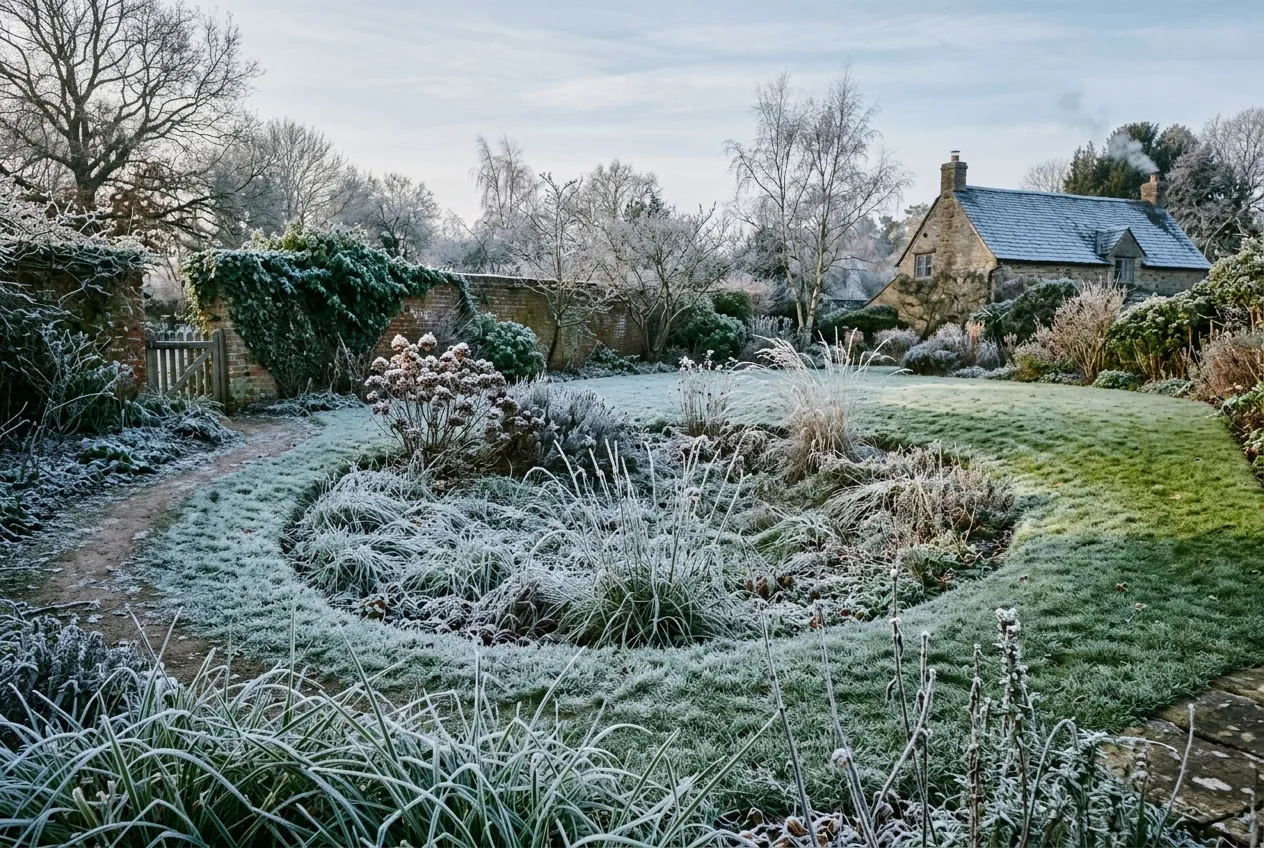 Frost settling in a low garden dip on a cold morning. Cold air pools in hollows and against solid barriers, creating frost pockets.
Frost pockets form at the bottom of slopes, in dips and hollows, and against any solid barrier that dams the downhill flow of cold air. A close-boarded fence or a dense hedge across a slope traps cold air behind it, like a wall holding back water. The ground just uphill of that barrier frosts worst.
To find yours, go out early on a cold, clear morning and see where frost lingers longest after sunrise. Those are your cold spots. Avoid planting tender plants, early blossom, and frost-sensitive fruit there. A peach or apricot in a frost pocket loses its blossom to late frosts most years.
You can ease a frost pocket. Create a gap at the lowest point of a hedge or fence so cold air drains away downhill rather than pooling. Even a small opening at ground level lets the cold flow on through.
Warning: Never plant early-flowering fruit like apricots, peaches, or early plums in a known frost pocket. Late April and May frosts kill the blossom and you lose the crop year after year.
Microclimates that change the rules
A microclimate is a small area where the conditions differ from the garden around it. Aspect sets the broad pattern, but walls, paving, and shelter create pockets that are warmer, colder, wetter, or drier than the average. Learn to read them and you can grow plants that should not really cope with your climate.
The most useful microclimate is a warm wall. A south or west-facing wall of brick or stone soaks up sun all day and radiates that heat back at night. The air beside it can be 2 to 3C warmer than the open garden. This is where to risk tender treasures: figs, grapevines, climbing roses, and wall-trained fruit. A sheltered, sunny corner can be a degree or two warmer again.
Paving and gravel work the same way on the ground, storing heat and keeping the soil above freezing longer. This is partly why town gardens run warmer than rural ones.
The flip side of a wall is the rain shadow. The strip of ground at the base of a wall or fence, especially on the sheltered side, stays bone dry because the structure blocks the rain. Soil here can stay dust-dry even after a downpour. Plant drought-tolerant species in a rain shadow, or water and mulch it well. Climbers planted against a house wall almost always sit in a rain shadow and need watering through their first few years.
Choosing plants and seating to suit
Once you have read the aspect and mapped the light, the design choices follow naturally. The principle is simple: put each plant where the light suits it, and put each seat where you want to sit at the time you use the garden.
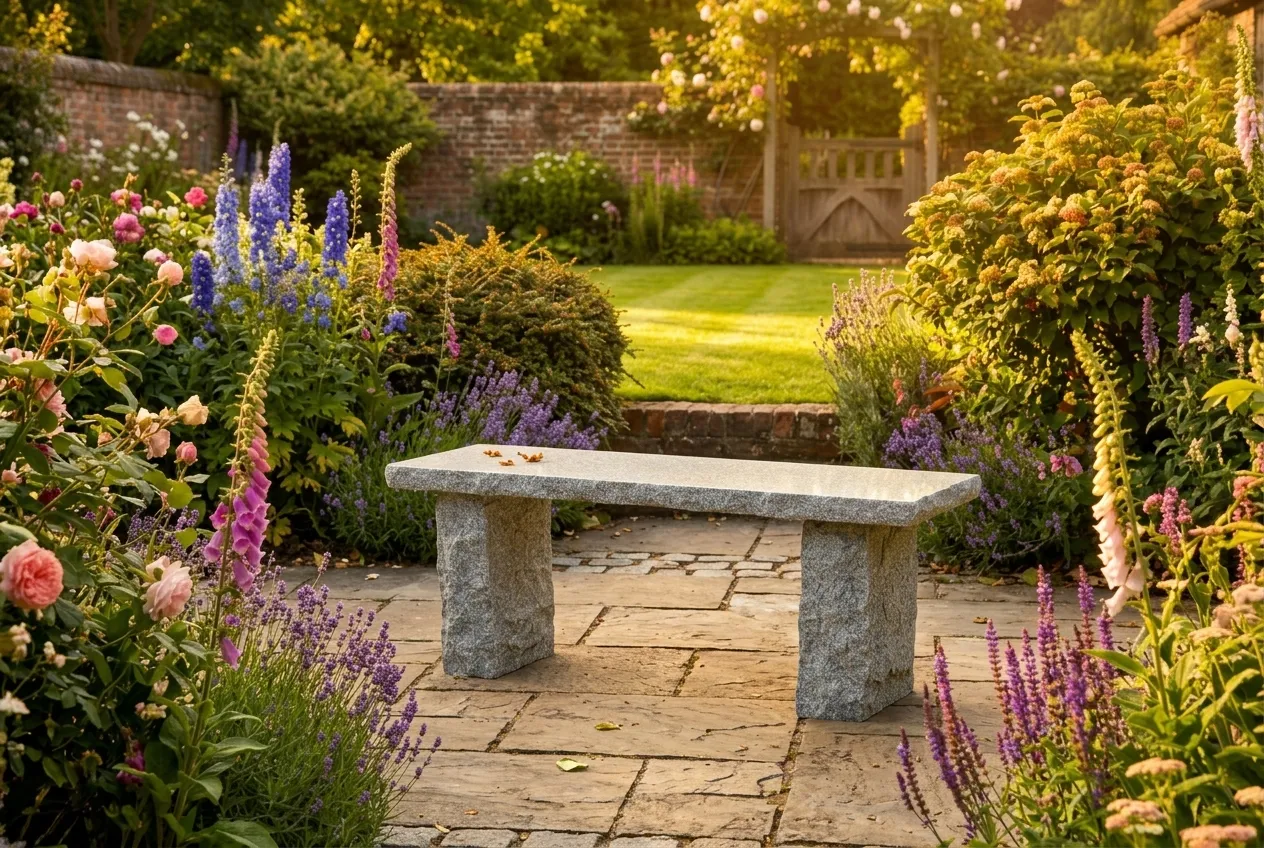 A Rustic Straight Grey Granite Garden Bench set on the west side to catch the last of the evening sun.
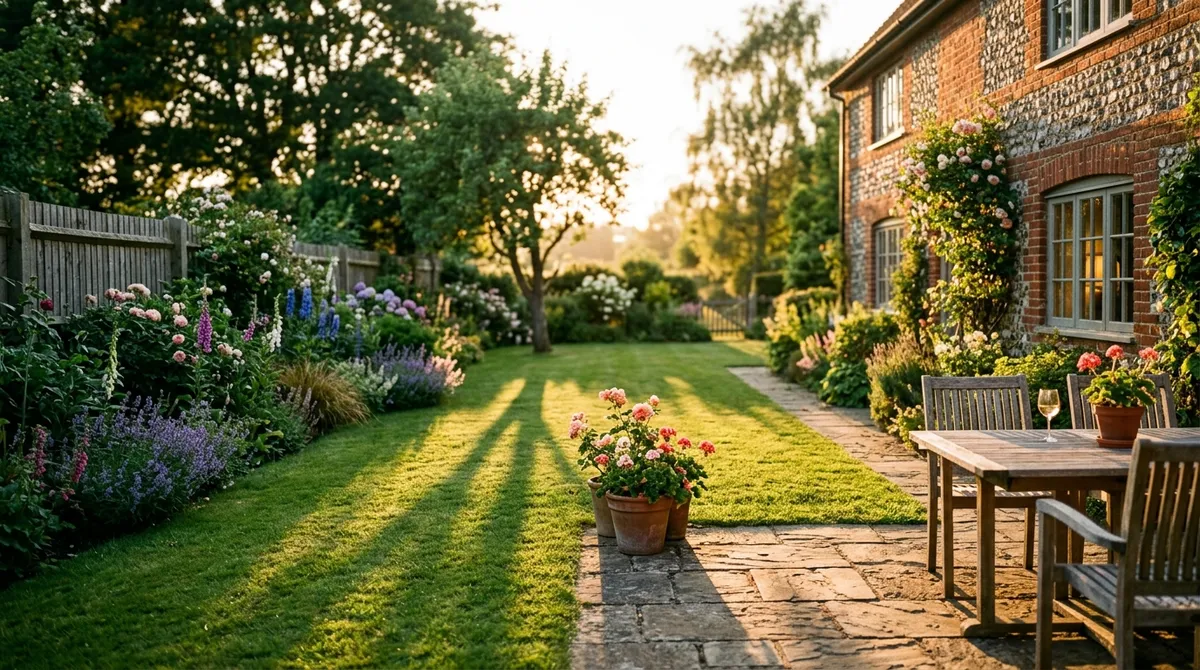
For seating and patios, match the spot to when you use it. A west or south-west corner catches the evening sun and stays warm late, ideal for after-work relaxing and dining. In June the UK sun does not set until past 9pm, so a west-facing seat earns its keep. An east-facing spot suits morning coffee, bright and fresh before the day heats up. A south-facing patio bakes at midday, lovely in spring and autumn but fierce in a July heatwave, so plan some shade.
Common mistakes
Judging the garden in summer only
A garden mapped in June looks far sunnier than it is in winter. The high summer sun reaches everywhere, hiding the long shadows that take over from October. Always picture the winter sun at 15 degrees, casting shadows three times longer, before you place a sun-loving plant or a winter seat.
Confusing the house aspect with the garden aspect
People read the front of the house and assume the garden matches. The back garden faces the opposite way. A south-facing front means a north-facing back garden. Always take the reading standing in the garden with your back to the house, not from the street.
Planting sun-lovers in shade and hoping
Lavender, salvia, and Mediterranean herbs need full sun. Put them in shade and they grow leggy, flop, flower poorly, and rot in damp soil. No amount of feeding fixes too little light. Match the plant to the zone instead of forcing it.
Ignoring the rain shadow at the base of walls
The strip beside a wall or fence stays dry even in wet weather. Gardeners plant climbers there, then wonder why they wilt. Water and mulch the base of walls well, especially for the first few years while roots establish.
Forgetting that boundaries cast winter shade
A 2m fence or hedge barely shades in summer but blocks the low winter sun for months. Before adding a tall boundary or evergreen hedge on the south side, picture the shadow it throws in December. It may shade a whole border you wanted for sun plants.
A family garden that works with its aspect
The best gardens flow with their aspect rather than against it. They put the seating where the sun lands when the family is home, the play space in the bright open centre, and the shade planting where the house already casts shadow.
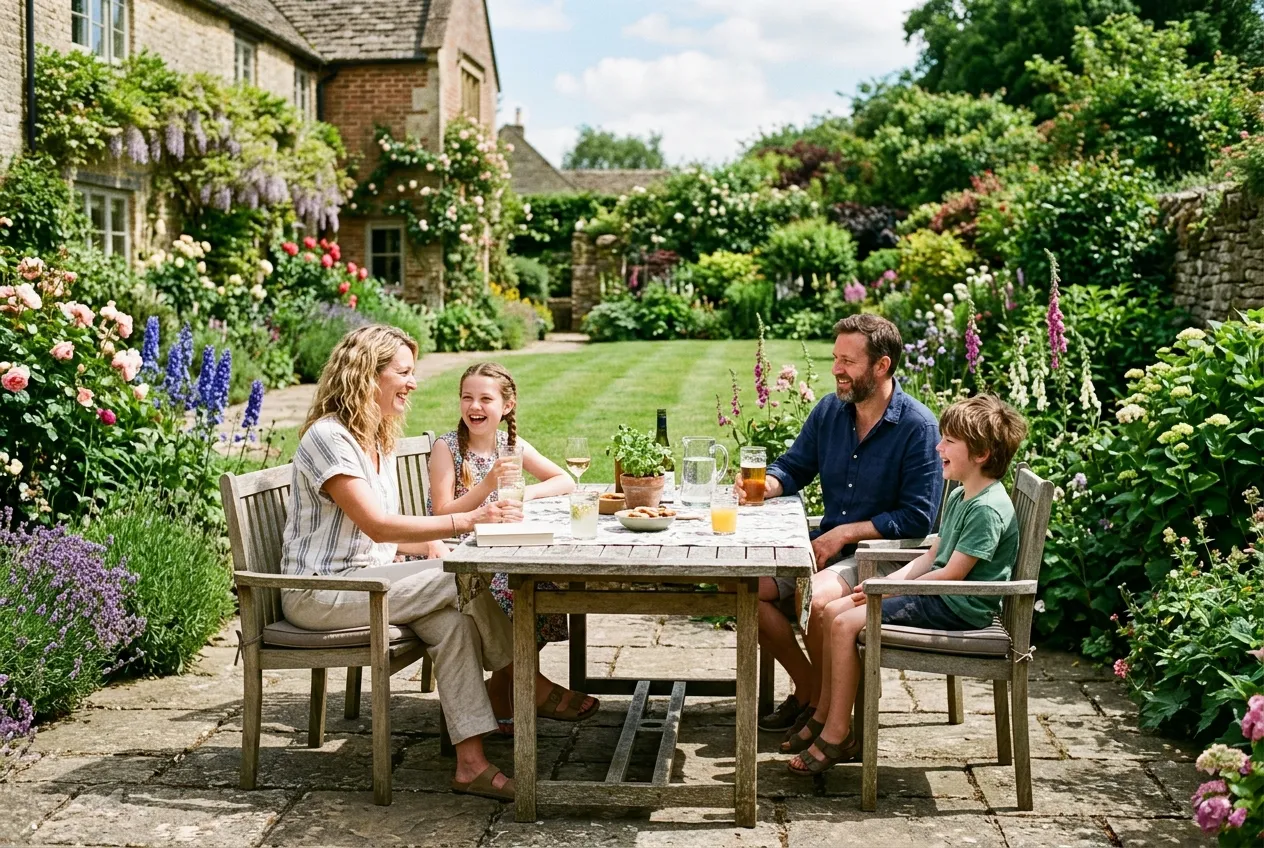 A family patio sited in the warmest, sunniest part of the garden. Reading the aspect first puts seating where the sun actually falls.
Watch how your household uses the space. If you are out at work all day, the morning sun on an east border is wasted on you, so build the patio in the west for evening light. If young children play after school, keep the open lawn in the afternoon sun and tuck the sandpit into afternoon shade so it does not bake.
Frequently asked questions
How do I find out which way my garden faces?
Stand with your back to the house and check a compass. The direction you face is your garden’s aspect. A south-facing garden looks due south from the back of the house. Use a phone compass app if you have no compass, holding it flat and well away from metal objects that skew the reading.
Which garden aspect is best?
South-facing is the sunniest and most sought-after. It gets sun for most of the day, warms early in spring, and grows the widest range of plants. West-facing comes a close second and is best for evening sun. East and north-facing plots still grow plenty once you match the planting to the available light.
Is a north-facing garden really that bad?
No, a north-facing garden is cooler and shadier but far from useless. It stays green and lush, needs less watering, and suits ferns, hostas, and woodland plants beautifully. The house shades much of it, but the borders along the side fences still catch good summer sun for part of the day.
What can I grow in a north-facing garden?
Grow shade-lovers like ferns, hostas, hellebores, astilbe, and hydrangeas. These thrive in cool, moist, low-light conditions. Japanese anemones and foxgloves flower well in part shade too. Avoid Mediterranean herbs and sun-lovers like lavender, which grow leggy and flop without strong, direct light.
Where should I put a patio for evening sun?
Put it on the west or south-west side of the garden. The evening sun sits low in the west, so a west-facing seat catches warmth until late. In June the UK sun does not set until after 9pm. East-facing spots are better kept for morning coffee in fresh, bright light.
What is a frost pocket and how do I spot one?
A frost pocket is a low spot where cold air collects and frost lingers. Cold air is heavy and flows downhill, pooling against walls, hedges, and at the bottom of slopes. Watch where frost sits longest on cold, clear mornings. Avoid planting tender or early-flowering plants in those spots.
Does a fence or wall change my garden’s microclimate?
Yes, walls and fences create distinct warm and cold zones. A south or west-facing wall stores sun and releases heat at night, warming the air nearby by 2 to 3C. The shaded side stays cool. Walls also cast a dry rain shadow at their base, where the soil needs extra watering.
Our team produces practical UK gardening guidance from source research, contributor records and established horticultural practice. Editorial standards are overseen by Matt W.