Key takeaways
- Lock the side gate first: it is the commonest route into a back garden
- Keep front boundaries under 1m for visibility, rear up to 2m for privacy
- Plant prickly defensive hedges under windows and along boundaries
- Gravel paths reveal footsteps; motion-sensor lights expose movement
- Lock the shed: it stores the very tools and ladders burglars use
- Layer the defences: boundary, deterrence, and detection together
A garden is the first line of defence for your home, yet it is the part people secure last. Most break-ins begin with an easy walk through an open side gate, a flimsy fence, or a garden that offers cover and a free ladder from the shed. The good news is that effective garden security is mostly cheap, simple, and good-looking: the right boundary, some well-placed thorny planting, sensible lighting, and a locked shed. This guide sets out how to protect your home using the garden itself, working through the three layers that stop an intruder.
The principle behind all of it is layered defence: no single measure is enough, but several together make a garden far more trouble than it is worth.
The three layers of garden security
Effective security works in three overlapping layers, and a good garden uses all of them. The first is the boundary: fences, gates, walls, and hedges that physically keep people out. The second is deterrence: making the garden look like hard work, through thorny planting, gravel, lighting, and visible cameras, so an intruder moves on to an easier target. The third is detection: revealing anyone who does get in, through motion-sensor lights, noisy surfaces, and cameras.
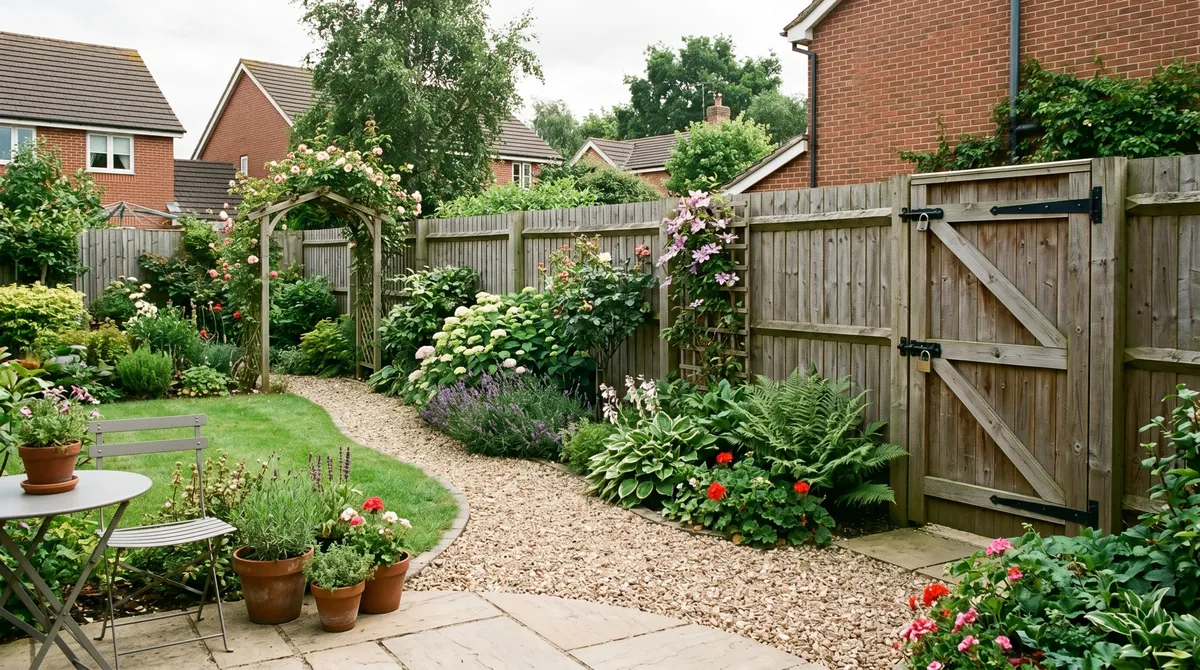
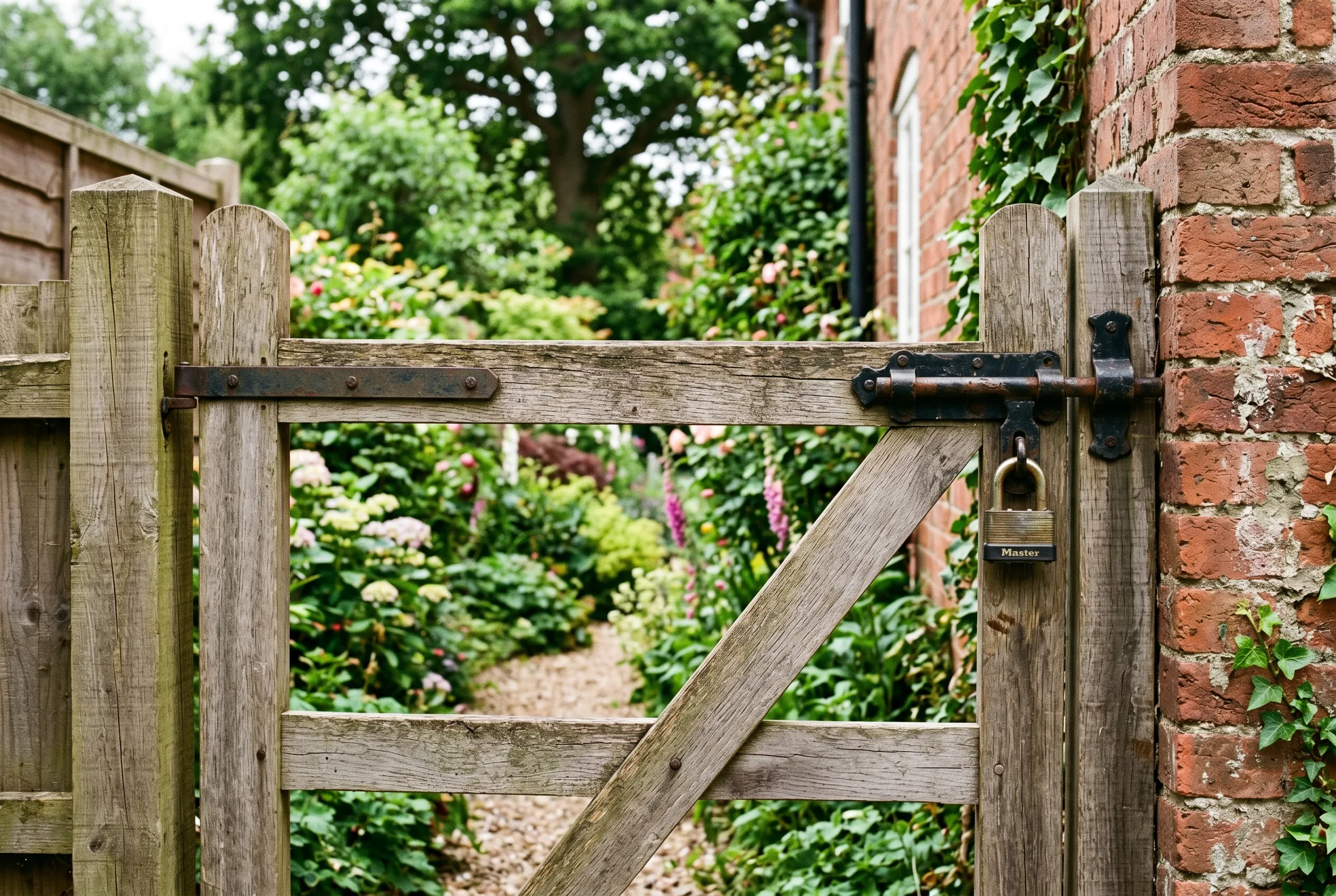 The side gate is the weak point in most gardens. A strong bolt and padlock here is the single best security improvement.
Secure the boundary, starting with the side gate
The side gate is where most back-garden intrusions begin, so secure it first. Fit a strong bolt and padlock, hang the gate to open inwards, and make it as tall as the fence so it cannot be climbed easily. This one cheap job removes the commonest route in.
Get the boundary heights right. Keep the front boundary under 1m so the front of the house stays visible to neighbours and the street, since a high front hedge or wall simply gives an intruder cover to work unseen. Make the rear and side boundaries higher, up to the 2m limit allowed without planning permission, to form a genuine barrier. Add trellis on top of fences: it is flimsy enough to break noisily under a climber’s weight and extends the height without looking fortress-like. Make sure fence panels are fixed in, not just dropped into slotted posts that lift straight out.
Defensive planting that does the work for you
Plants are the most attractive security measure, and a good thorny barrier deters climbers better than any fence. Defensive planting uses dense, prickly species along boundaries and, most importantly, under ground-floor windows, where nobody wants to push through thorns to reach the glass.
| Plant | Why it works | Best position |
|---|---|---|
| Pyracantha (firethorn) | Vicious thorns, evergreen, dense | Walls, fences, under windows |
| Berberis | Spiny, dense, colourful | Boundaries, low barriers |
| Holly | Prickly evergreen, tall hedge | Boundary hedging |
| Hawthorn | Thorny, fast native hedge | Rural boundaries |
| Climbing and rambling roses | Thorny, cover walls and trellis | Walls, arches, fences |
A thorny hedge also looks far better than a bare fence and supports wildlife. Train pyracantha or a climbing rose along the fence beside the side gate, and plant berberis under windows. Our roundups of the best flowering shrubs and evergreen shrubs for year-round interest include many that double as barriers, and our rose growing guide covers the thorniest climbers.
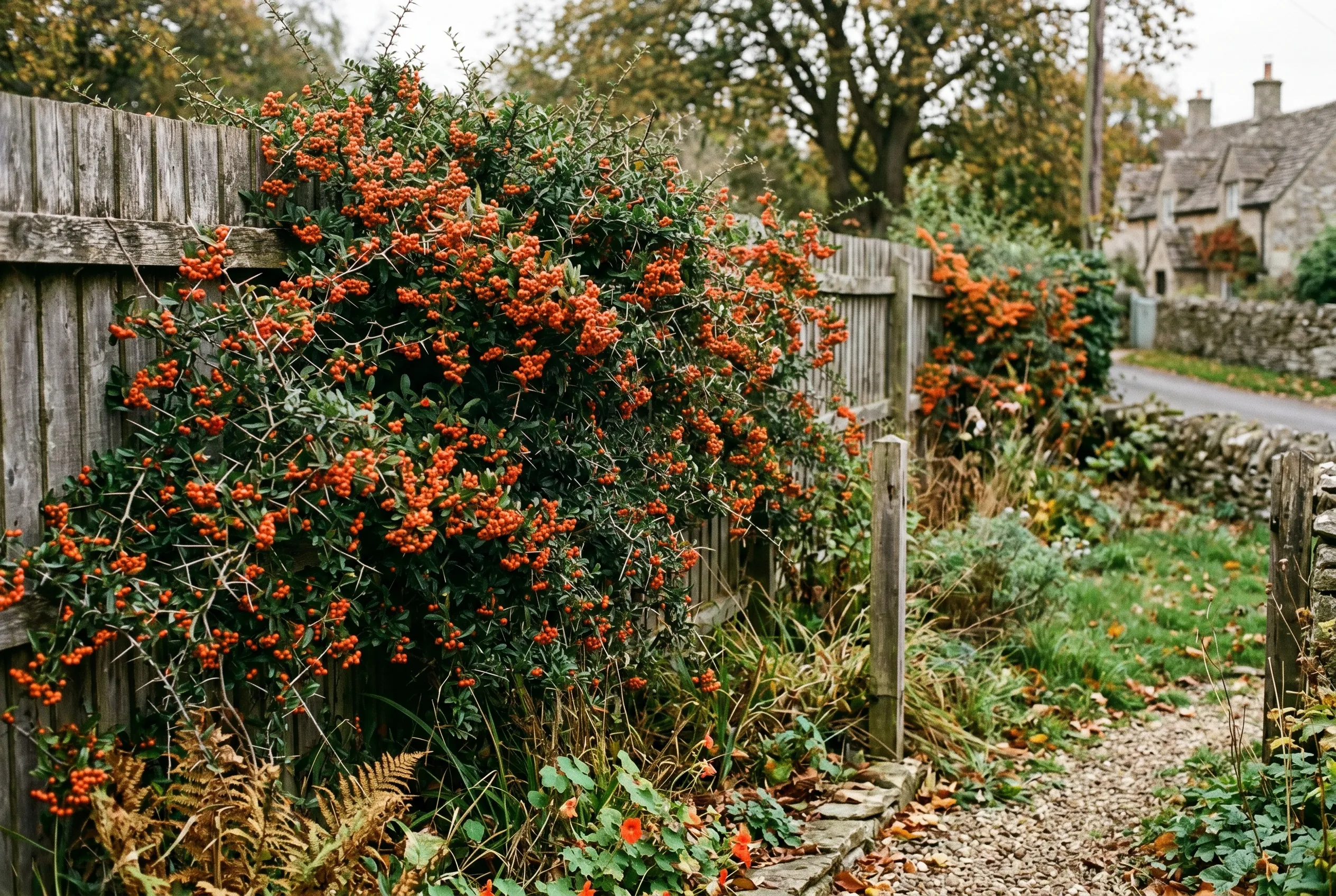 Pyracantha makes a beautiful, wildlife-friendly barrier that few intruders will push through. Plant it along fences and under windows.
Lighting and detection
Light is a deterrent only when it signals movement. Fit motion-sensor lights at gates, along paths, and over dark corners, rather than lights left on all night, which become part of the scene and are ignored. A light that suddenly snaps on draws the eye and unnerves an intruder. Angle sensors to cover the approaches without dazzling neighbours or flooding the night sky, since excessive light is both antisocial and counterproductive.
Add noisy surfaces to the detection layer. A gravel path below windows and along the route to the back of the house cannot be crossed quietly, and the crunch of footsteps is an effective early warning. Cameras and video doorbells add both detection and deterrence; even a visible dummy unit makes an intruder think twice, though a working one is far better. Position cameras to cover the gate, the shed, and the rear approach, the places intruders must pass.
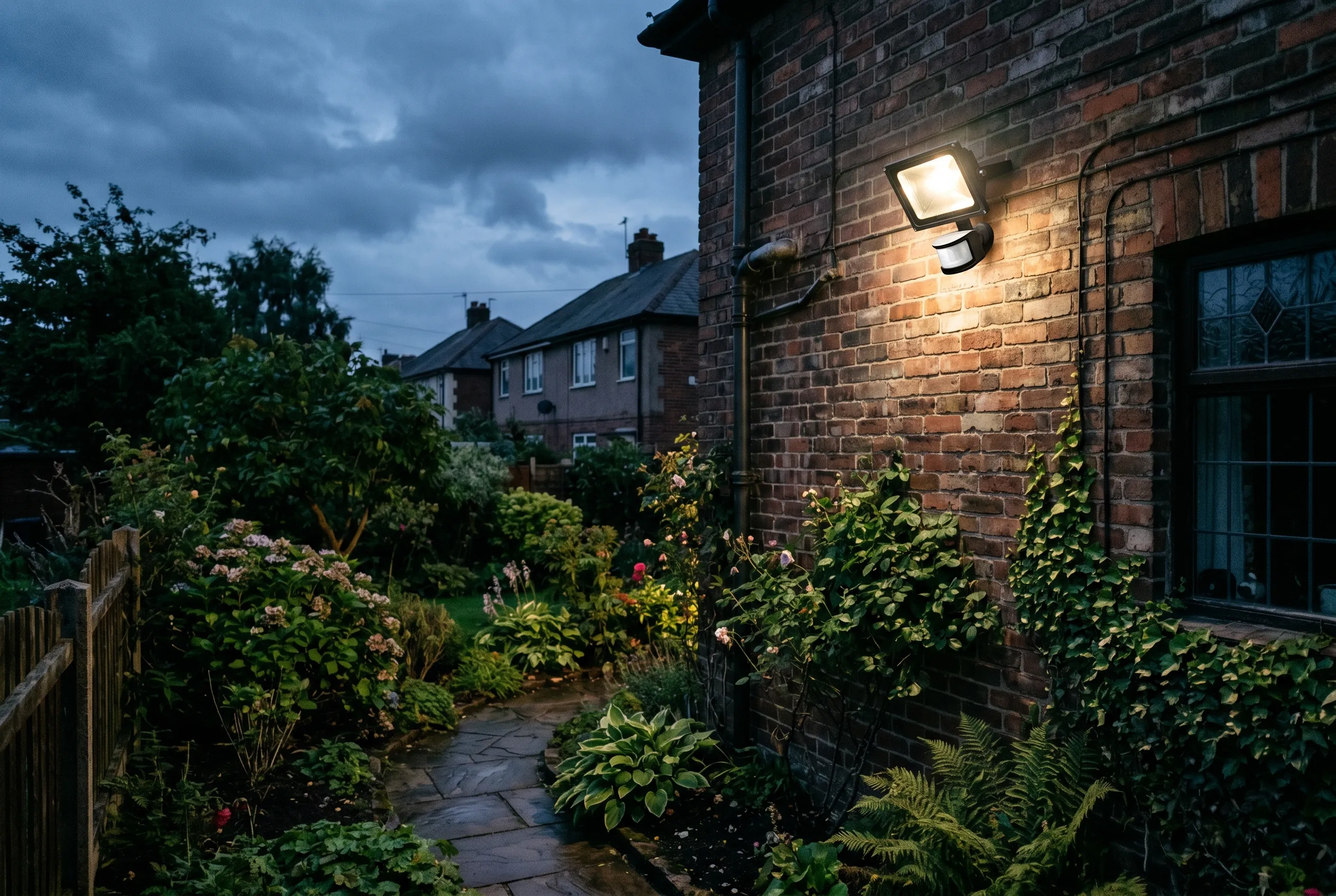 Motion-sensor lights expose movement at gates and dark corners. A sudden light unnerves an intruder far more than a constant one.
Lock the shed and deny the tools
A garden shed is a burglar’s toolbox. It holds spades, crowbars, and ladders, the very things used to force a door or reach an upstairs window, so an open shed actively helps an intruder break into the house. Securing it is one of the most overlooked steps in home security.
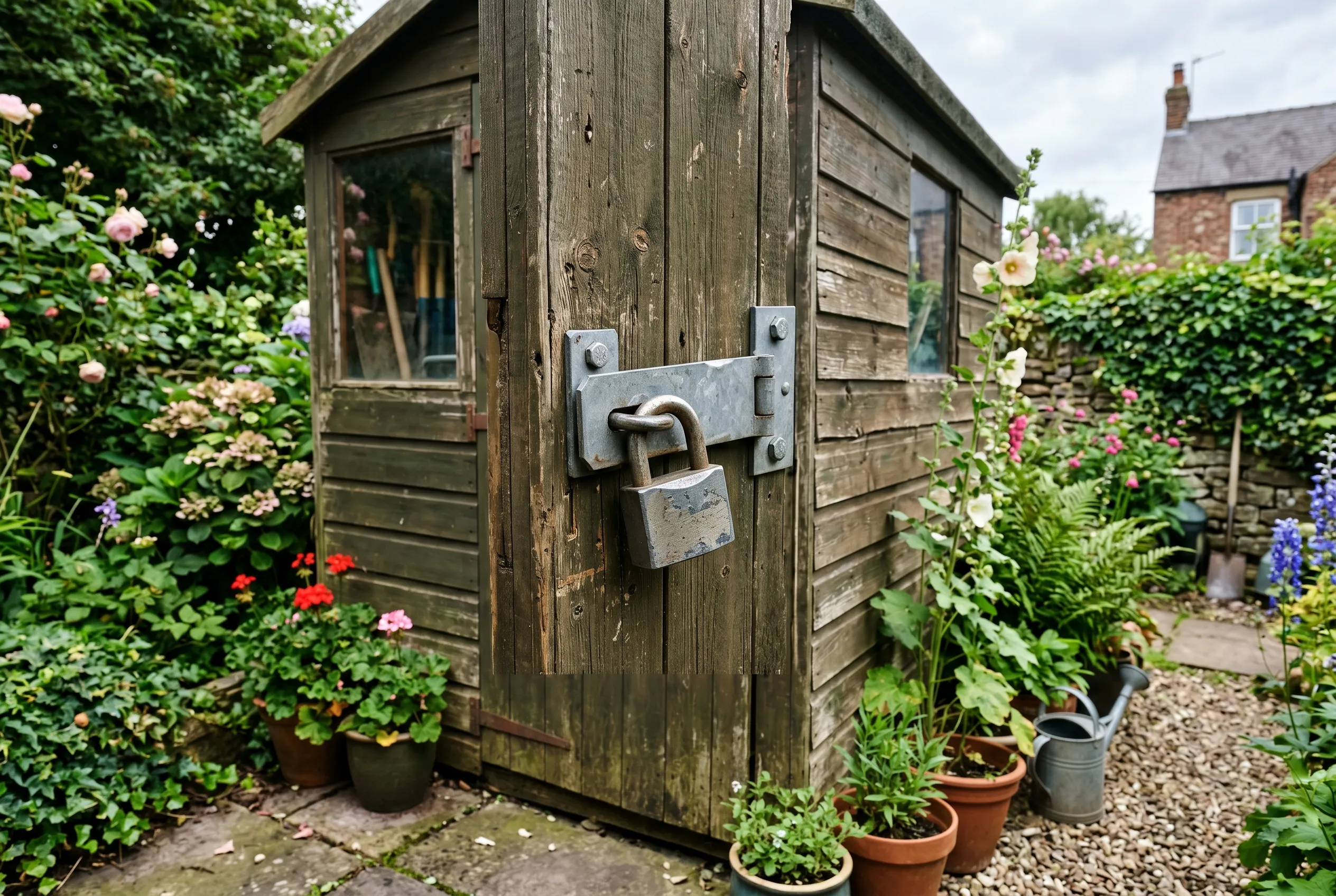 Lock the shed with a strong hasp and padlock. It stores the very ladders and tools a burglar would otherwise use on the house.
Fit a strong hasp and a heavy padlock, ideally with coach bolts that cannot be undone from outside, and consider a shed alarm for valuable contents. Lock away ladders flat and chained, never left leaning where they offer instant height. Secure bikes and mowers to a ground anchor inside, and lock garden gates between shed and house. Mark your tools and equipment with your postcode and photograph valuable items, which aids recovery and deters resale. Do not leave tools, furniture, or ornaments out overnight where they can be stolen or used as climbing aids or to break glass.
Warning: Never leave a ladder out in the garden or against the shed. It is the single most useful thing you can hand a burglar, offering instant access to first-floor windows that are often left open. Store every ladder locked and flat.
Keeping the garden secure when you are away
A garden that looks lived in is far less of a target, and most holiday break-ins exploit the obvious signs of an empty house. Before you go away, clear the garden of anything that signals absence or aids entry. Put away tools, bring in the ladder, lock the shed, and move bins back from the boundary, since a wheelie bin against a fence is an instant step up.
Ask a neighbour to move things around while you are gone: park on the drive, take in any post or deliveries, and put the bins out and back on collection day. An overflowing bin left out or a parcel on the step tells an intruder the house is empty. Keep boundary planting trimmed before you leave so cameras and sightlines stay clear, and set any security lights and cameras to working order. A few minutes of tidying removes the cues burglars look for. The same lived-in principle that helps sell a house, covered in our companion advice on kerb appeal, also keeps it safe.
Common garden security mistakes
These oversights undo otherwise good security.
- A high front hedge or wall. It hides the house from view and gives an intruder cover. Keep the front under 1m.
- Leaving the side gate open. The commonest way in. Bolt and padlock it.
- An open, unsecured shed. Hands over tools and ladders. Lock it with a proper hasp.
- Lights left on all night. Become invisible through familiarity. Use motion sensors instead.
- Loose fence panels. Slotted panels lift straight out. Fix them in place.
Combine defensive planting with the practical locks and lighting above and you cover all three layers. Our guide on the legal dates for cutting hedges helps you maintain a security hedge without disturbing nesting birds.
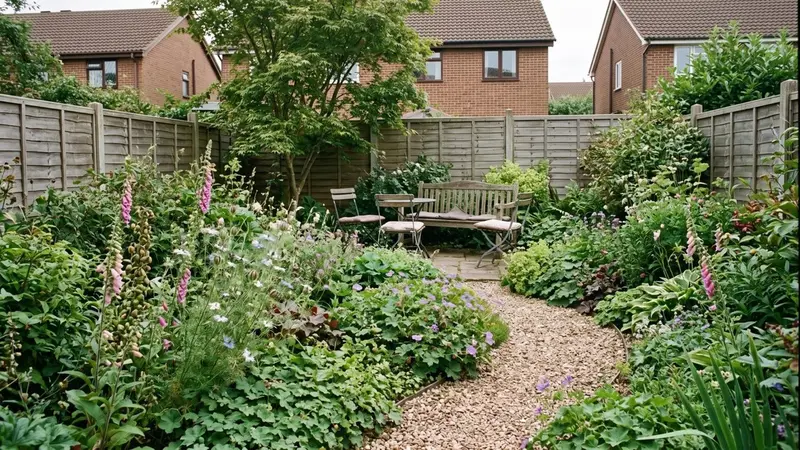
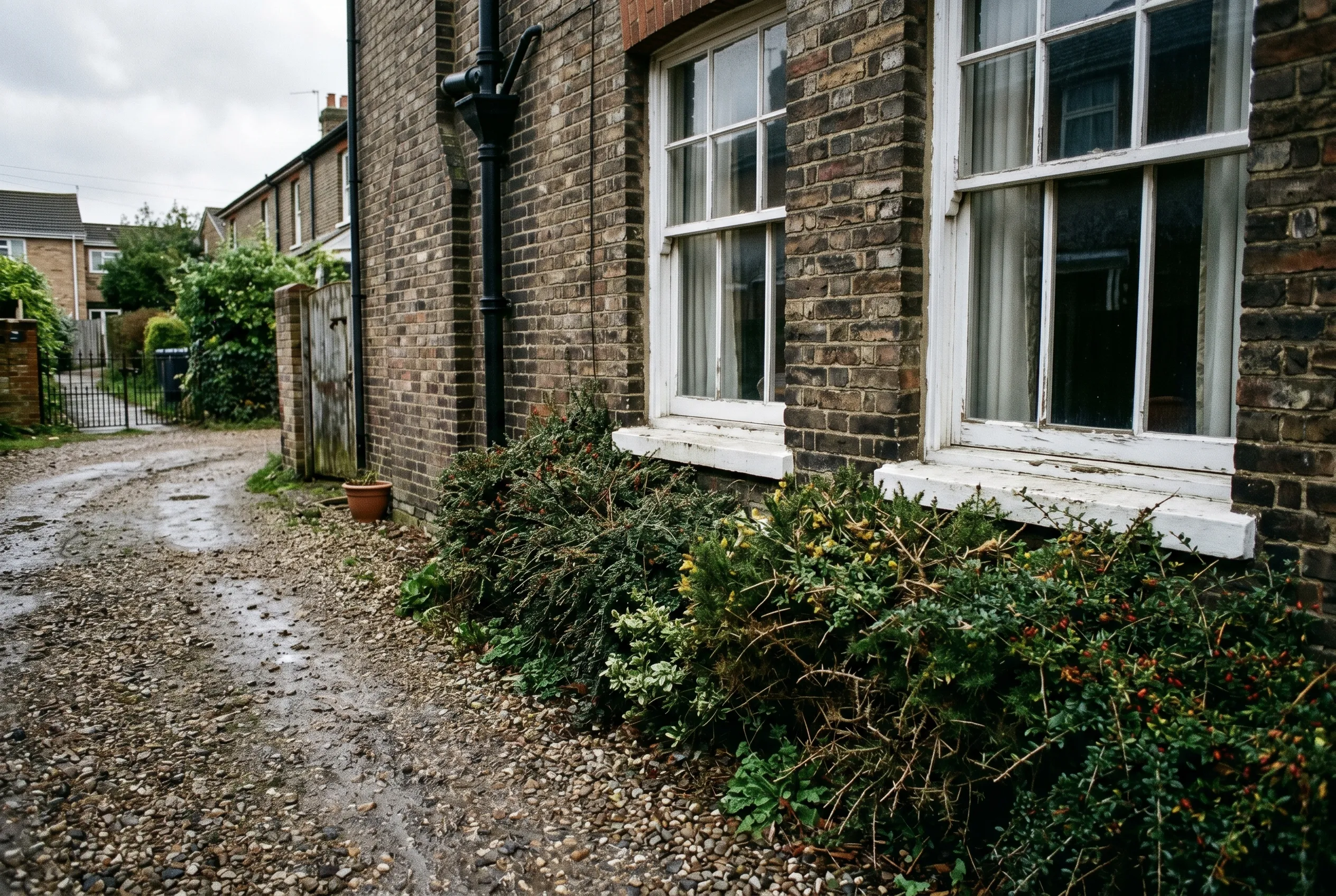 Gravel under the windows reveals footsteps, and low prickly planting makes the glass an uninviting target. Two layers in one bed.
Frequently asked questions
How can I make my garden more secure?
Work in three layers: secure the boundary, add deterrents, and provide detection. Lock the side gate, plant prickly hedges, fit motion-sensor lights, lay gravel paths, and lock the shed. No single measure is enough, but together they make a garden far harder to enter unseen.
What is the most common way burglars enter a garden?
An open or flimsy side gate is the most common route into a back garden. Most intruders walk in rather than climb. A strong bolt and padlock on the side gate is the single cheapest and most effective security improvement you can make.
What plants deter burglars?
Prickly, dense plants deter climbers and intruders. Pyracantha, berberis, holly, hawthorn, and climbing roses all form thorny barriers. Plant them along boundaries and under ground-floor windows, where their thorns make an unwelcoming and effective deterrent.
Should garden security lights be on all the time?
No, use motion-sensor lights rather than permanent ones. A light that suddenly comes on draws attention to movement, while a light left on all night becomes part of the scene and is ignored. Position sensors to cover gates, paths, and dark corners.
How high should my garden fence be for security?
Keep front boundaries below 1m so the house stays visible to neighbours and passers-by. Rear and side boundaries can be up to 2m, the limit without planning permission, to form a real barrier. Add trellis on top to make climbing harder and more visible.
Why should I lock my garden shed?
Sheds store the tools and ladders burglars use to break into the house itself. An open shed hands them spades, crowbars, and ladders to reach upstairs windows. Fit a strong hasp and padlock, and never leave ladders or tools out in the garden.
Our team produces practical UK gardening guidance from source research, contributor records and established horticultural practice. Editorial standards are overseen by Matt W.