Key takeaways
- Main paths need 1,200mm width for two people; 900mm is the bare minimum for one
- Borders shallower than 600mm cannot layer plants; aim for 1,200 to 1,500mm for depth
- Keep lawn under 60 per cent of the plot; 50:50 lawn to planting reads as designed
- 40 per cent evergreen planting holds the structure through winter
- Plant in odd numbers and space at two-thirds of the mature spread
The number one fault: paths too narrow to walk two abreast
People make this mistake because paths are usually drawn last, after the borders and lawn are set. Whatever space is left over becomes the path, and it is rarely enough.
The fix is a fixed rule. A primary path that people walk together needs 1,200mm of clear width. A secondary path for one person needs 900mm minimum. A service route to a shed or bin store can drop to 750mm. Measure with a wheelbarrow loaded: if it scrapes the planting, the path is too narrow. Widening a 600mm path to 1,200mm across a 6 metre run adds about 3.6 square metres of paving, roughly £180 in porcelain or £90 in gravel.
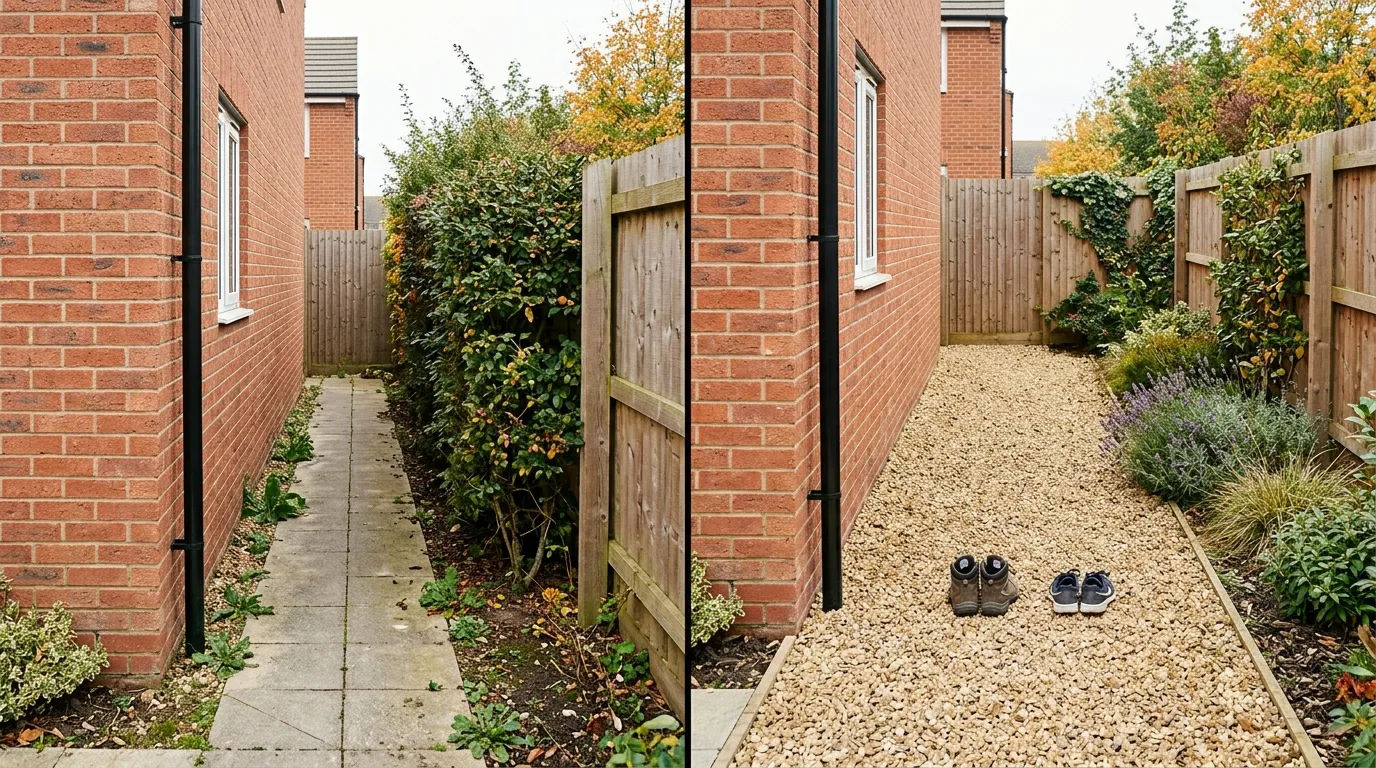 Left, a 700mm path forces single file. Right, the same route at 1,200mm lets two people walk together.
Borders too shallow to layer planting
Why it happens: people protect the lawn. They give the grass as much room as possible and squeeze the planting into a 300 to 450mm strip against the fence.
A 600mm border is the absolute minimum for any real planting. To layer plants front to back you need 1,200 to 1,500mm. That depth lets you stage three tiers: low ground cover at the front, mid-height perennials in the middle, and tall structure or shrubs at the back. Below 600mm you get one tier and a fence behind it. In our assessments, 33 of 60 gardens had at least one border under 600mm. Curving a border outward to 1,200mm at its deepest point gives instant depth and costs nothing but topsoil and a few hours of work.
Designer’s tip: Make the deepest part of a border face the main viewpoint, usually the patio or kitchen window. The eye reads depth from where you sit most, not from the far corner.
No focal point to anchor the view
A garden with no focal point feels restless. In 41 of the 60 plots assessed, there was nowhere for the eye to settle, and every one of those gardens felt busy or empty depending on the season.
People skip the focal point because it feels decorative rather than structural. It is the opposite. A focal point gives the layout a destination and makes a small garden feel intentional.
Lawn covering too much of the plot
This happens by default. New-build gardens are handed over as turf and a fence, and most owners keep that ratio because reducing the lawn feels like extra work.
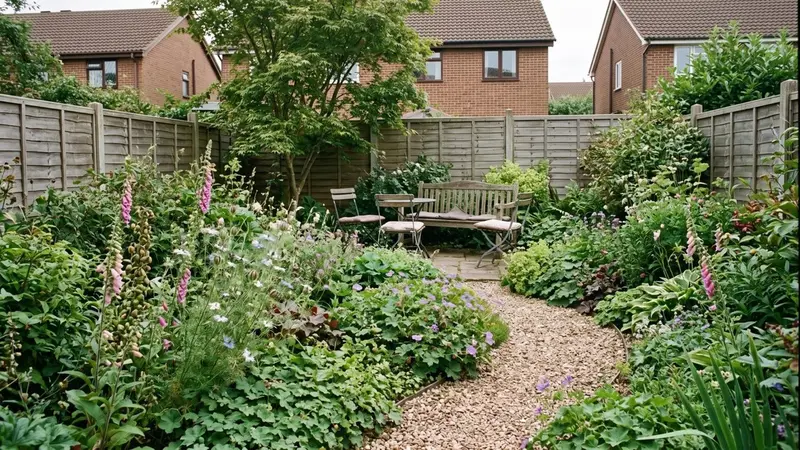
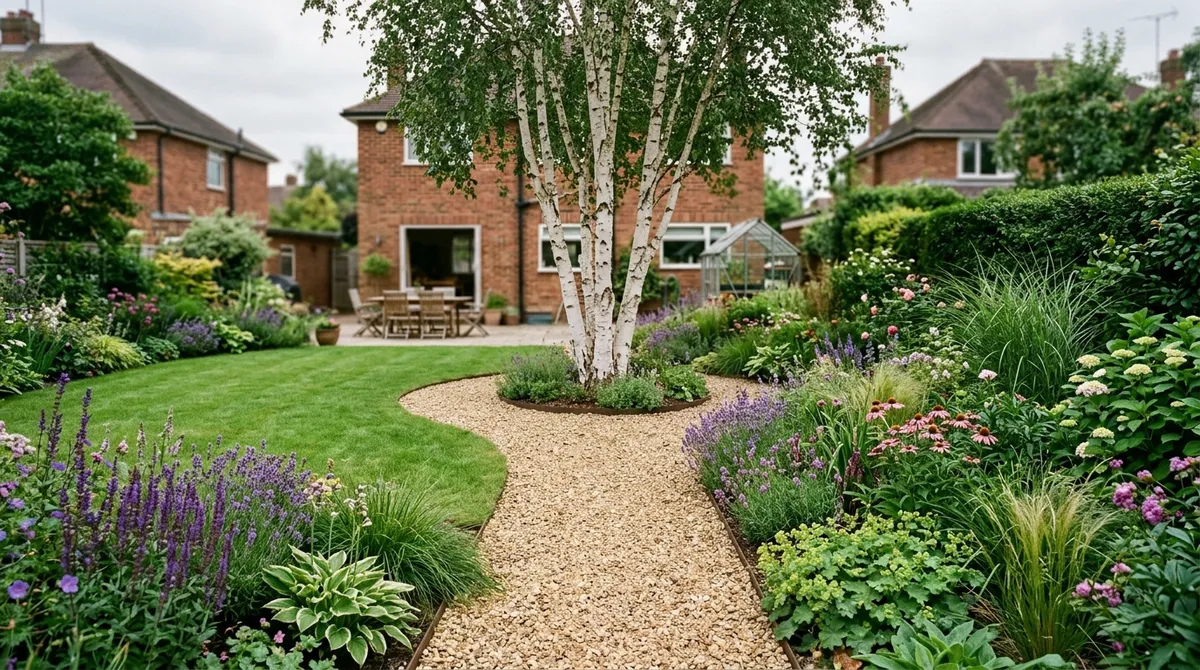
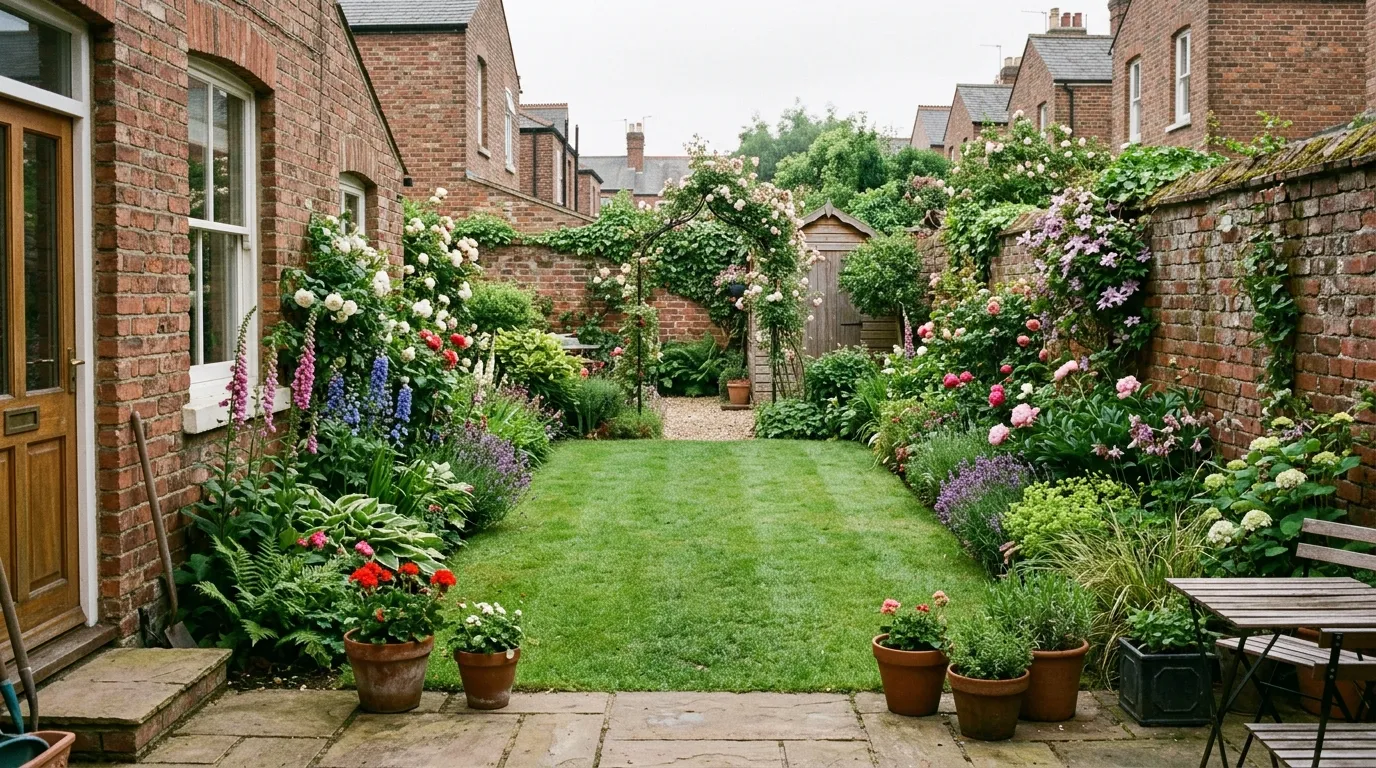 The lawn here sits at about 45 per cent of the plot. Wide borders on both sides give the small garden depth and shape.
Skipping the evergreen structure
Owners plant for summer. They buy what looks good at the garden centre in June, which means herbaceous perennials and bedding that vanish by autumn. By winter the garden is bare soil and a fence.
Planting in even numbers and straight rows
Plants set out in pairs, fours and straight lines look planted rather than grown. It is a small mistake with a big effect on how natural a border feels.
People reach for even numbers because they feel orderly. Two shrubs either side of a path, four plants in a square, a row along the fence.
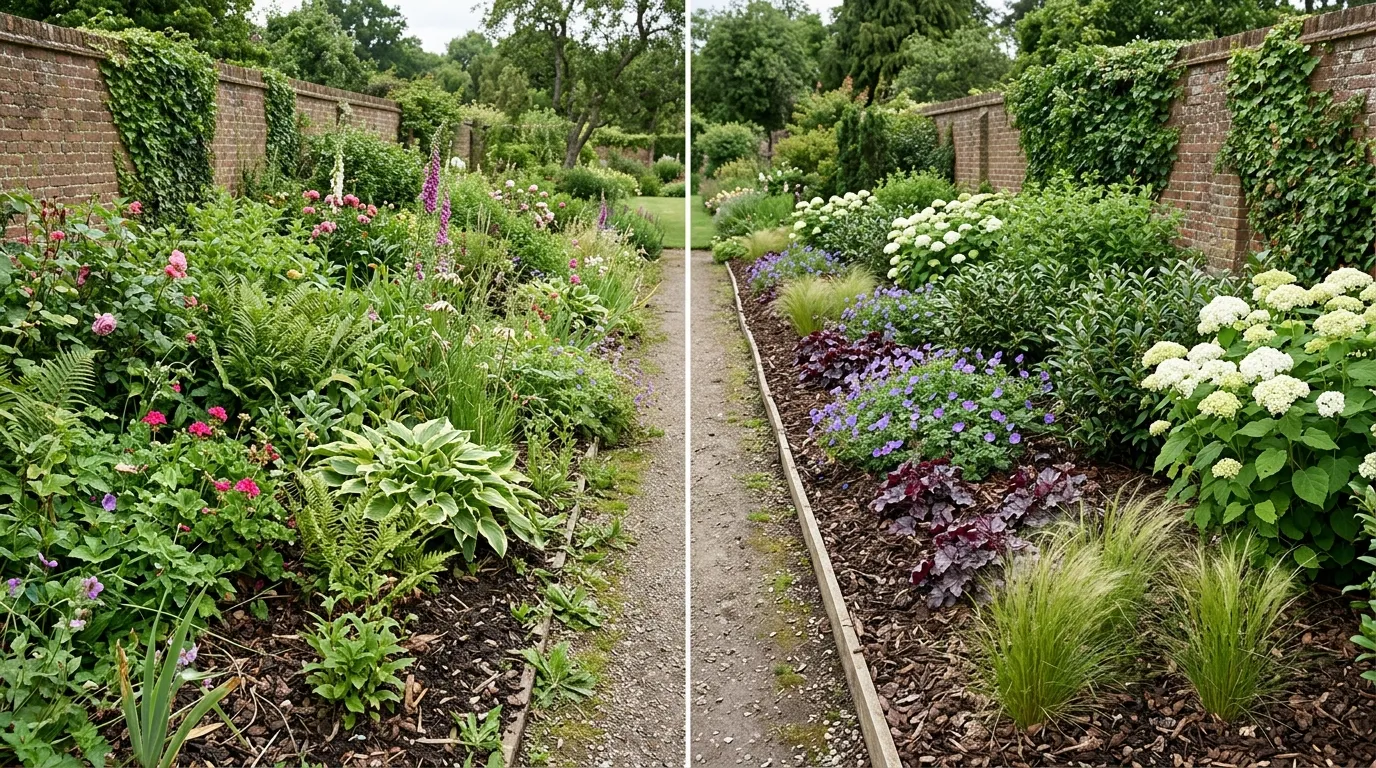 A jumble of single plants with no repetition, left, against a calmer scheme using groups of three and five, right.
Paving laid at the wrong scale
Paving units that are too small for the space make a patio look fussy and cheap. Tiny setts across a large terrace are a frequent fault, and so is one oversized slab in a small courtyard.
The mistake comes from picking paving by the sample, not the area. A 300mm sett looks fine in your hand and wrong across 20 square metres.
Match the unit size to the area. For a patio of 15 square metres or more, use large-format slabs of 600mm by 600mm or 600mm by 900mm. For a small courtyard under 8 square metres, a 450mm unit suits the scale. Lay slabs with a consistent 5 to 10mm joint, not random gaps. Run the long edge of rectangular slabs across the space, not along it, to make a narrow garden feel wider. Cheap paving fails most often at the base, not the surface: a 100mm compacted MOT sub-base under 30mm of mortar is what stops slabs rocking within two winters.
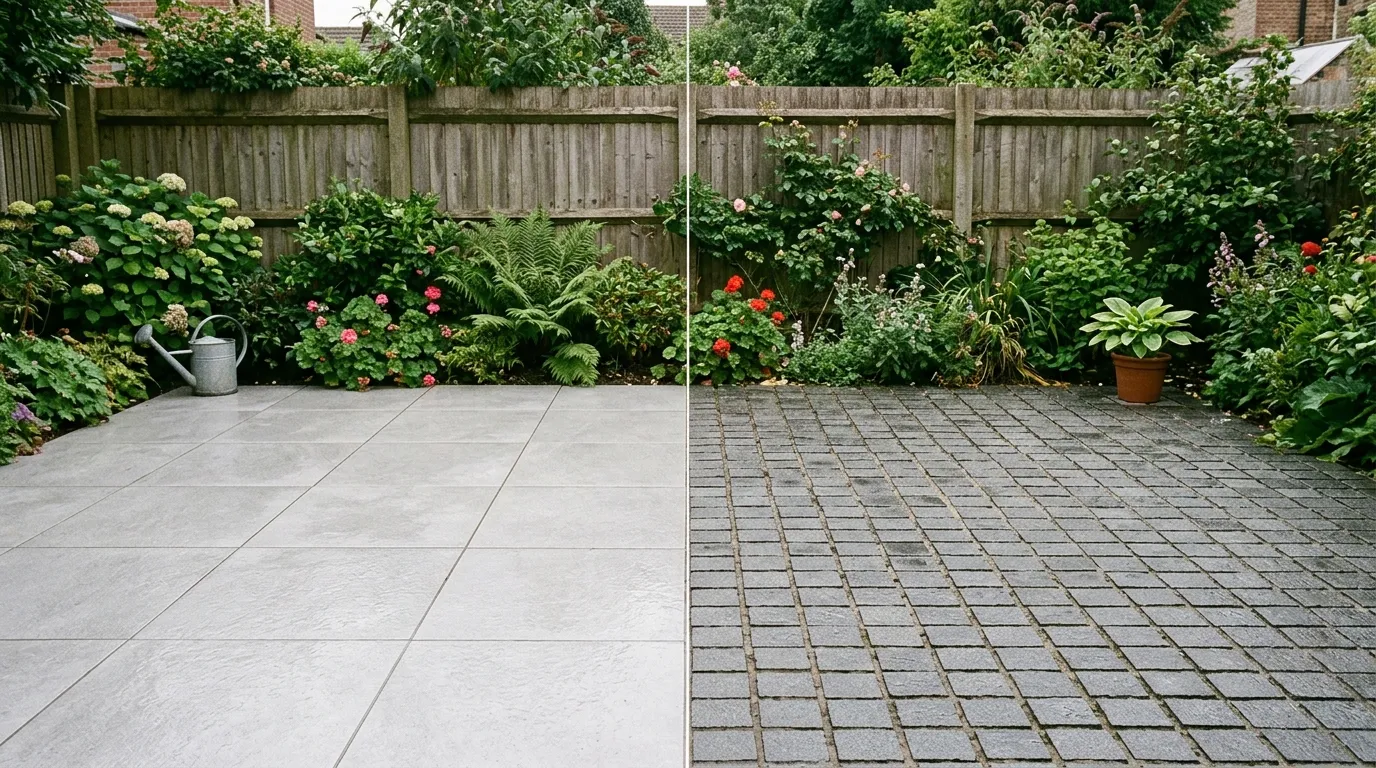 The same patio area in 600mm slabs, left, and 300mm setts, right. The larger format reads as calmer and more spacious.
Buying plants before you have a plan
Impulse plant buying is the most expensive mistake in this list. A car boot of garden centre plants with no plan means money spent twice when half of them come out again.
It happens because plants are tempting and plans are not. A flowering shrub in May sells itself; an empty plan does not.
Ignoring how the garden is used
A garden designed only to look at, never to use, is a common and quiet mistake. The seating ends up in the wrong place, the bins have no home, and the children have nowhere to play.
This happens when the plan starts with planting instead of function. Pretty borders get drawn before anyone asks where the sun falls at 6pm or where the washing goes.
Poor soil preparation before planting
Planting into unimproved soil is a hidden mistake that shows up two years later as struggling, gappy borders. The plants survive but never thrive, and the owner blames the choice rather than the ground.
People skip soil prep because it is invisible work. Digging in compost does not look like progress the way planting a shrub does.
Cramming in too many materials
Five different paving types, three fence colours and a mix of edging styles make a garden feel chaotic. Material overload is a frequent fault in gardens that have been changed piecemeal over years.
It builds up slowly. A new patio here, a different gravel there, a fence panel in another colour, and the eye has nothing consistent to hold.
Limit the palette. Use two hard materials at most, for example one paving and one gravel, repeated through the whole garden. Pick one timber colour for fences, trellis and structures. Repetition is what makes a design feel calm and deliberate. Each new material you add divides the garden into more visual fragments. A small garden with one paving, one gravel and one fence colour looks larger and more settled than the same plot with five finishes.
How the mistakes compare and what they cost to fix
Common mistakes to avoid
A quick recap of the faults that sink most UK gardens, and the single number that fixes each one.
- Narrow paths. Anything under 900mm fails for two people. Set primary routes at 1,200mm.
- Thin borders. Under 600mm holds one row. Go to 1,200mm to layer planting.
- No focal point. The eye needs a destination. One per sightline, placed off-centre.
- Too much lawn. Over 70 per cent reads as empty. Aim for 50:50 lawn to planting.
- No winter structure. Under 15 per cent evergreen empties the garden. Lift it to 40 per cent.
- Even-number planting. Pairs and rows look planted. Use threes and fives at two-thirds spread.
Frequently asked questions
What is the most common garden design mistake in UK gardens?
Paths that are too narrow, usually under 900mm wide. In 38 of 60 gardens assessed, two people could not pass on the main route. A primary path should be 1,200mm so two adults walk side by side. Widen it before you spend money on planting.
How deep should a garden border be?
How much of a garden should be lawn?
Keep lawn under 60 per cent of the usable plot. A 50:50 split between lawn and planting reads as a designed garden. Above 70 per cent lawn, the space feels empty and unfinished. Reducing the lawn is the cheapest single improvement most gardens can make.
Why does my garden look unfinished?
Usually because it has no focal point and no winter structure. The eye needs somewhere to rest, such as a tree, bench or pot. Without 40 per cent evergreen planting, the garden also empties out from November to March. Both faults are common and both are fixable.
Should you plant in odd or even numbers?
Plant in odd numbers: threes, fives and sevens. Odd groups read as natural drifts rather than rows. Even numbers, especially pairs, force a symmetry that rarely suits an informal UK garden. Space each plant at two-thirds of its mature spread so the group knits together.
Next step
Our team produces practical UK gardening guidance from source research, contributor records and established horticultural practice. Editorial standards are overseen by Matt W.