Key takeaways
- Margery Fish began making East Lambrook Manor Garden in Somerset in 1937
- Winding paths should reveal the garden gradually, not simply consume planting space
- One or two enclosed areas can make a small plot feel deeper and more useful
- Self-seeders need editing twice a year so useful plants do not become a thicket
- Ground-cover plants reduce bare soil, but still need water while establishing
- The 3m x 5m example uses one 800mm route and about 8m2 of planting
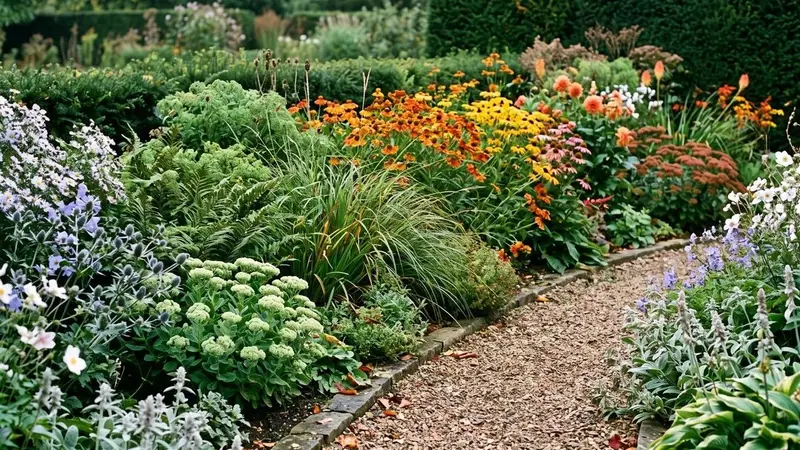
Margery Fish made cottage gardening feel possible without making it careless. Her planting looked generous, but paths and small rooms gave it order. She let useful plants seed into gaps, then edited the result.
That balance matters in a small garden. A loose planting style can quickly become cramped when every path, seat and plant competes for space. Fish’s documented ideas offer a better starting point. Give the garden a route, create a reason to pause and let plants soften the edges.
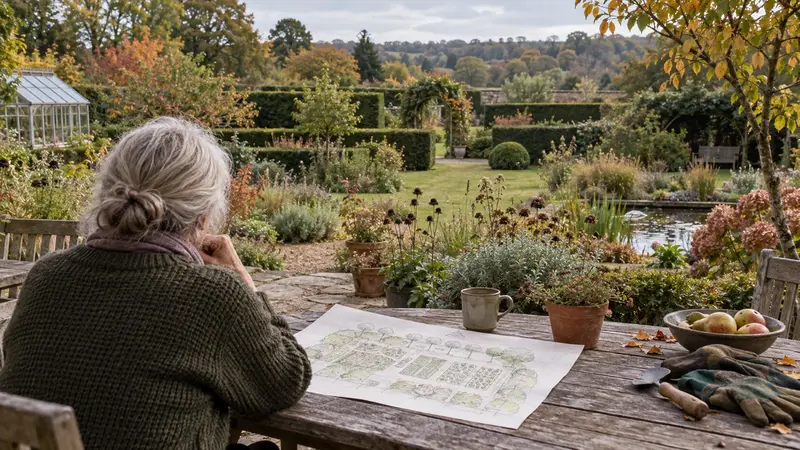
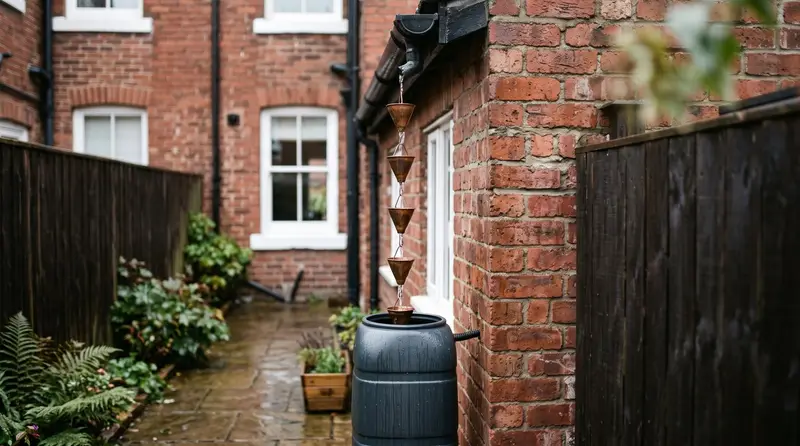
The seven lessons below turn those ideas into a measured 3m x 5m example. The images are modern editorial illustrations. They do not show Margery Fish, East Lambrook or any private property.
Who was Margery Fish?
Margery Fish was a writer and plantswoman known for modern English cottage gardening. She was born in 1892 and bought East Lambrook Manor with her husband Walter in 1937.
The garden started as a neglected farmyard and rubbish heap. Extra land brought the site to about two acres. Paths, walls and terraces created its first structure. Fish then developed informal planting around those bones.
The Gardens Trust history of East Lambrook records winding paths, themed areas and planting for contrasting conditions. These included a sunny Silver Garden, a White Garden and a rocky, damp area called the Lido.
Fish wrote about the process in We Made a Garden, first published in 1956. The garden entered the national register at the highest heritage grade in 1992. The official East Lambrook garden history also stresses that it has never remained static. Trees aged, later owners made changes and today’s team continues the work.
Garden UK already has a practical East Lambrook Manor Gardens profile. This article focuses on design choices that transfer safely to an ordinary plot.
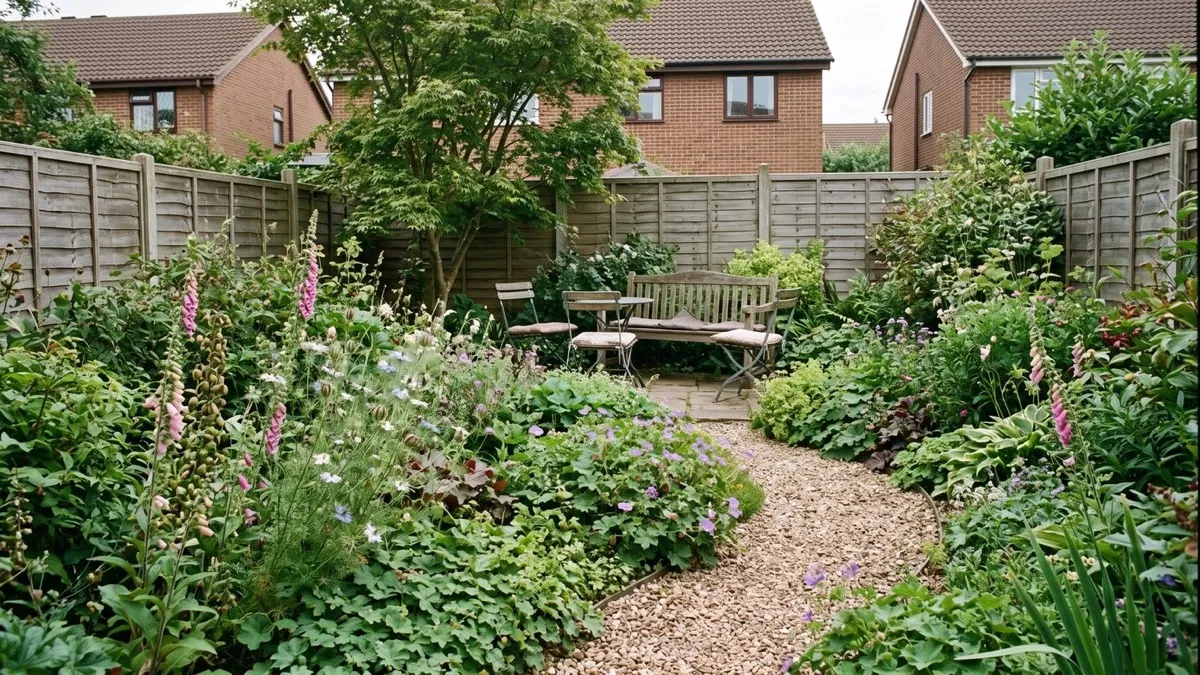 Editorial illustration: a modern small garden combines a winding route, layered planting and soft self-seeded edges.
What made Margery Fish’s cottage garden different?
Fish joined informal planting to a clear route and varied spaces. This gave loose planting a clear framework.
Pre-war cottage gardens could demand heavy seasonal labour. Fish showed that ground-cover plants, spreading perennials and self-seeders could provide long interest with fewer repeated planting jobs. They did not remove maintenance. They changed it from constant replacement to selective editing.
Her plant choices also responded to place. Sunny slopes, damp ground and tree shade received different planting. Low plants spread between paving and over walls. Taller plants gave brief vertical accents rather than forming a solid back row.
The approach accommodates change. A seedling may appear in a better position than its parent. A growing tree can turn sun into shade. The garden remains designed because the gardener decides what stays.
| Documented idea | Small-garden translation | Useful annual work | What to avoid |
|---|---|---|---|
| Winding paths | One route that hides its end | Edge once in spring | Curves with no purpose |
| Themed areas | One sunny room and one shaded pocket | Review boundaries in May | Too many tiny themes |
| Ground-cover planting | Repeat three or four reliable spreaders | Thin congested clumps | Assuming no weeding is needed |
| Self-seeders | Keep seedlings that improve the pattern | Edit in May and September | Letting every seedling remain |
| Seasonal change | Combine bulbs, perennials and seedheads | Note gaps four times yearly | Buying only in peak summer |
Lesson 1: make a winding route earn its space
A curved path should control what the visitor sees next. It needs a destination, a hidden section or a reason to slow down.
In a 3m-wide garden, an exaggerated snake of paving wastes valuable ground. Use one shallow curve instead. An average width of 800mm suits a private garden route. Keep at least 900mm where two people often pass or where a wheelbarrow turns.
Set out the line with an unbranded garden hose. Walk it in both directions before lifting turf or soil. The route should briefly disappear behind planting, a low screen or a change in level. Its end must still feel believable.
A narrow path can widen beside a seat, water bowl or favourite plant. That pause makes the curve useful. It also creates a small room without adding another material.
Our guide to designing a garden from scratch explains how to measure access, sun and existing features first. Draw the route only after those facts are fixed.
Gardener’s tip: Mark both path edges, not just its centre. A graceful centre line can still produce unusable narrow points.
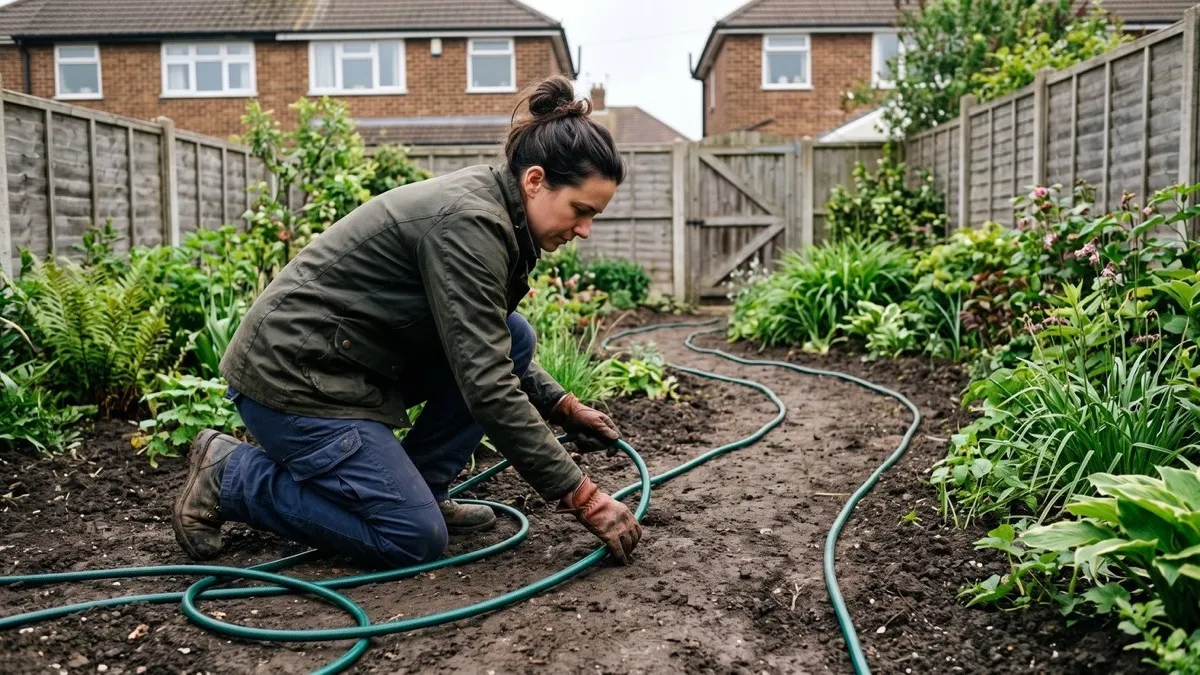 Editorial illustration: a hose tests the full path curve before any soil or turf is removed.
Lesson 2: build one or two intimate garden rooms
A small garden needs fewer rooms than a large historic garden. One sitting area and one planted pocket are often enough.
Use planting to suggest enclosure rather than building several hard screens. A waist-high evergreen, a loose shrub or a short run of trellis can interrupt the view. Keep the next area partly visible. Total concealment makes a very small plot feel boxed in.
Give each room one job. A morning seat belongs where early sun reaches it. A shaded fern pocket can occupy the cooler end. A tiny White Garden only works if white flowers and pale foliage suit the actual light.
Repeat one plant across the boundary. Hardy geranium, lady’s mantle or a suitable grass can link both spaces. That visual echo stops the rooms feeling like unrelated displays.
The principle also supports a cottage garden planting plan. Keep the plant list short, then vary height, texture and flowering time.
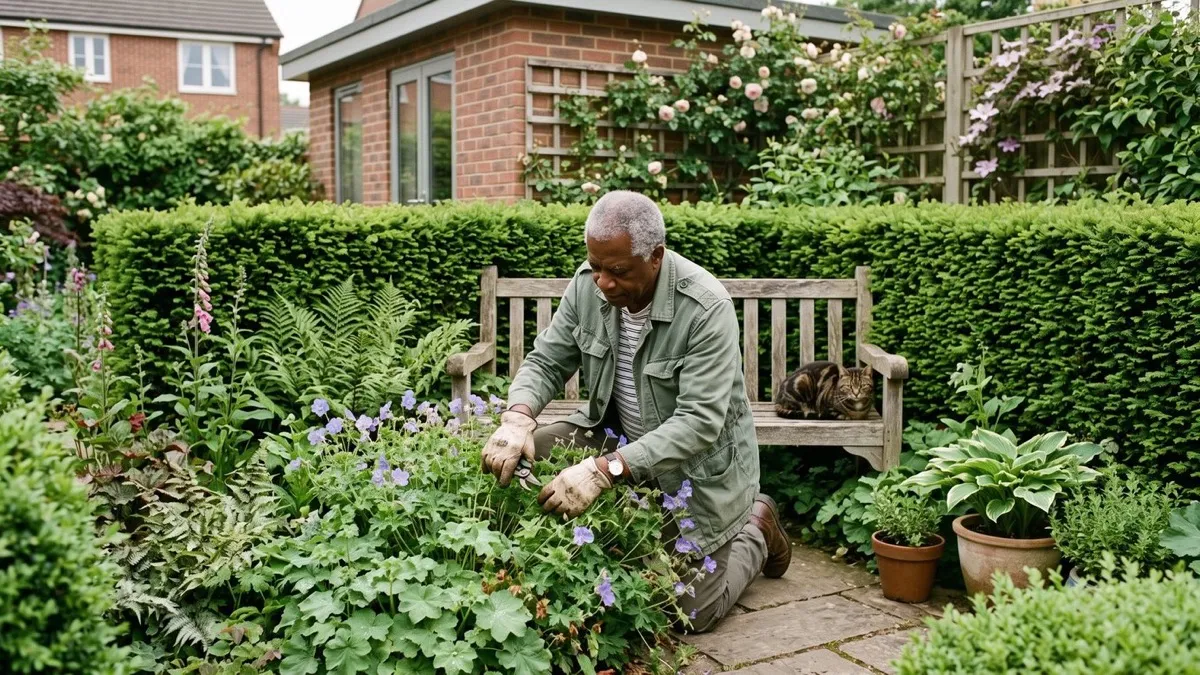 Editorial illustration: low screening and repeated planting make an intimate room without closing the plot completely.
Lesson 3: use self-seeders, then edit them
Self-seeders create movement only when the gardener keeps making choices. Leaving every seedling is neglect, not design.
Good candidates include foxglove, nigella, honesty and forget-me-not. Their behaviour varies with soil, light and winter conditions. Start with one or two species, not six.
Learn each seedling before hoeing. Keep plants that fill a real gap or connect two groups. Remove seedlings crowding a path, smothering slower plants or forming a solid block.
Use two main editing sessions. In May, thin crowded seedlings while roots are small. In September, remove unwanted seedheads before they scatter. Leave selected heads where you want the next generation.
Move useful seedlings on a cool day. Water them before lifting and again after replanting. Very small seedlings establish more easily than flowering plants.
The easiest flowers to grow from seed guide helps identify reliable choices. Check each species before allowing it to spread near wild ground.
Warning: Never introduce a plant simply because it spreads. Check current invasive-plant guidance and control any plant escaping its intended area.
 Editorial illustration: crowded seedlings are thinned while well-placed plants remain beside the paving.
Lesson 4: layer planting for a longer season
Layered planting gives several plants the same patch at different times. It makes a small area work harder without requiring constant colour.
Begin with a ground layer. Hardy geraniums, lady’s mantle and suitable ferns cover soil and soften edges. Add middle plants such as astrantia or pulmonaria. Let a few foxgloves or alliums rise through them.
Spring bulbs can emerge before perennial leaves expand. Summer plants then hide fading bulb foliage. Autumn seedheads keep shape after the main flower period.
Use mature spread, not pot size, when planning. Five young plants can look sparse in April and overcrowded by the second summer. A plant expected to reach 600mm across needs roughly that width, even when purchased in a 2-litre pot.
The year-round interest planting guide helps identify quiet months. Plan one useful feature for each season instead of demanding peak flower every week.
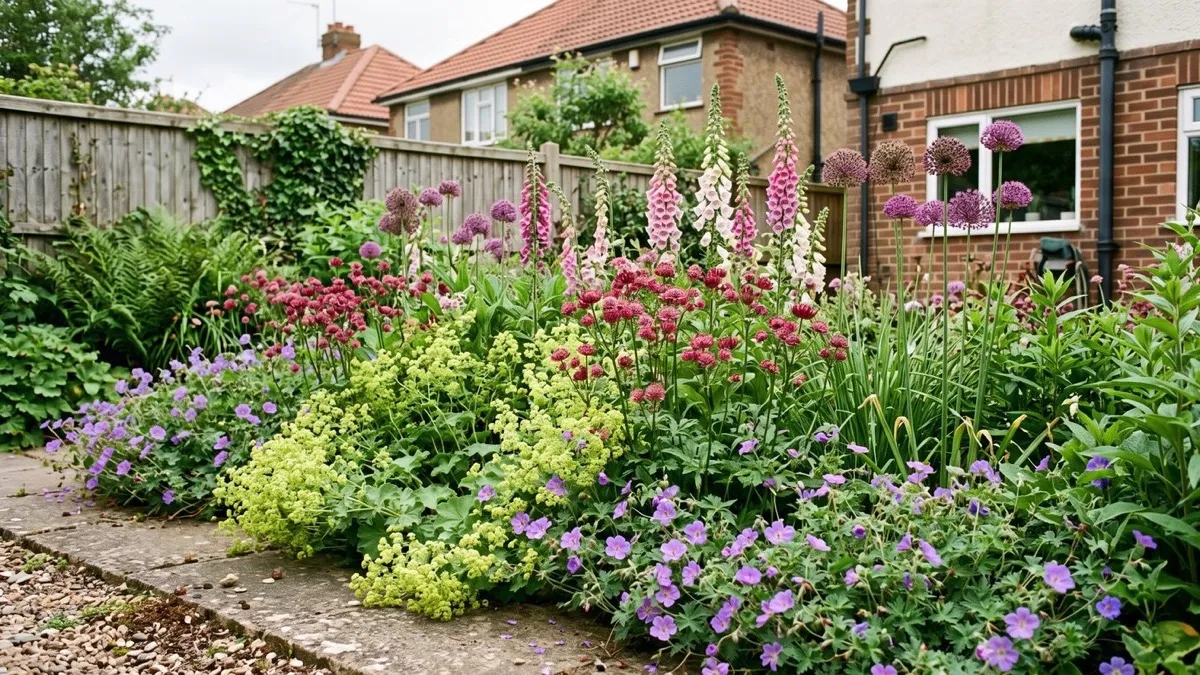 Editorial illustration: ground cover, mid-height perennials and a few vertical accents share one compact border.
Lesson 5: lower maintenance by covering the soil
Ground cover reduces bare soil, but it does not remove the establishment period. New plants still need water and space to develop.
Choose a small set that suits the site. Hardy geraniums can cover sun or partial shade. Lady’s mantle handles ordinary moisture-retentive soil. Ferns fit cooler shade. No single plant suits every position.
Set young plants at their expected mature spread. Mulch exposed soil with a 50mm layer after planting. Keep mulch clear of crowns and woody stems.
Water during dry spells through the first growing season. Check beneath foliage before watering because dense leaves can hide dry soil. Remove perennial weeds before the cover closes.
Once established, the layer reduces new weed space and protects the soil surface. It still needs occasional thinning where one plant overwhelms its neighbours.
Our low-maintenance garden plants guide offers choices for different soils and light levels. Treat low maintenance as fewer repeated jobs, not no work.
Lesson 6: match each plant to changing light
A garden’s light changes as trees and shrubs grow. Fish’s garden evolved partly because mature trees altered shade patterns and views.
Record direct sun in April, June and September. A spot receiving six hours in June may get far less in spring or autumn. Walls, fences and neighbouring trees can change the pattern again.
Use the observation to place broad plant groups. Silver foliage usually needs sun and free drainage. Ferns and many spring woodland plants suit cooler shade. Damp pockets need different choices from dry soil beneath a tree.
Do not force a named historic palette into the wrong conditions. The lesson is to work with the place. Repeating a healthy ordinary plant is better than nursing a famous choice in unsuitable soil.
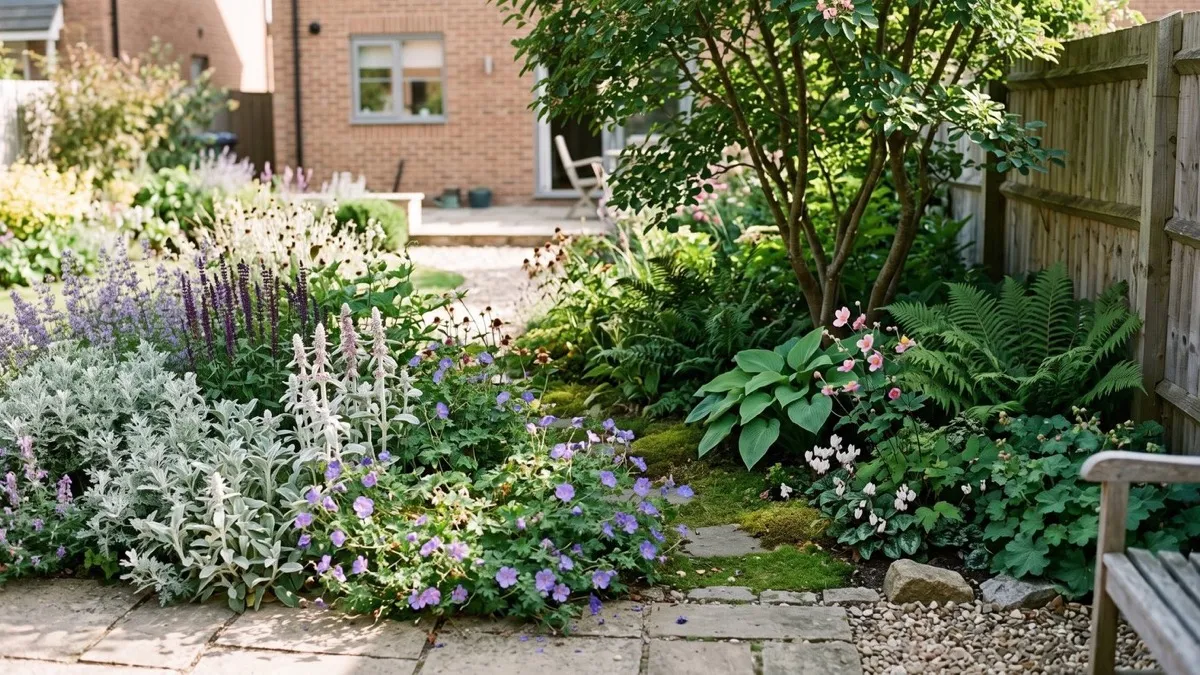 Editorial illustration: sun-loving plants occupy the open side while ferns and spring plants sit near light shade.
Lesson 7: let the garden change without losing control
An informal garden needs a simple editing rule. Keep changes that improve the route, season or plant health.
Take four photographs from the same viewpoint each year. Use late February, May, August and November. Those dates reveal bare soil, spring crowding, summer height and winter structure.
Mark one problem in each image. A path may disappear under floppy stems. A self-seeder may block a slower perennial. A gap might need bulbs rather than another summer plant.
Change one area at a time. Divide a successful clump and repeat it elsewhere. Remove a poor plant only after checking light, drainage and competition.
This rhythm accepts that a garden matures. It also protects the clear route and room structure that keep loose planting readable.
 Editorial illustration: selective thinning preserves useful seedheads and restores a clear path edge.
A 3m x 5m Margery Fish-inspired layout
This measured example uses one route, one sitting pocket and about 8m2 of planting. It is an original small-plot interpretation, not a plan of East Lambrook.
Start with a 3m x 5m rectangle, giving 15m2 in total. Use an 800mm-wide route averaging 5.5m long. It occupies about 4.4m2. Add a 1.5m x 1.5m sitting pocket of 2.25m2. Curves and overlaps leave roughly 8m2 for planting.
Use 20 to 24 perennial or biennial plants with mature spreads near 450mm to 600mm. Add 30 to 40 small bulbs between them. Final quantities must follow each plant’s label and the actual bed shape.
| Area | Size or quantity | Main role | Example planting |
|---|---|---|---|
| Curved route | 800mm average width | Reveal the plot gradually | Gravel or another stable local surface |
| Sitting pocket | 1.5m x 1.5m | Create one intimate room | Simple bench with low screening |
| Ground layer | 10 to 12 plants | Cover soil and join areas | Hardy geranium, lady’s mantle, ferns |
| Middle layer | 6 to 8 plants | Carry spring and summer interest | Astrantia, pulmonaria or suitable alternatives |
| Vertical accents | 3 to 4 plants | Break the low layers | Foxglove or allium where conditions suit |
| Bulb layer | 30 to 40 bulbs | Provide early colour | Snowdrops and narcissus in small groups |
Place repeated ground-cover plants on both sides of the route. Keep the sitting pocket open on one side so it does not feel trapped. Put the tallest accents near bends, not in a straight back row.
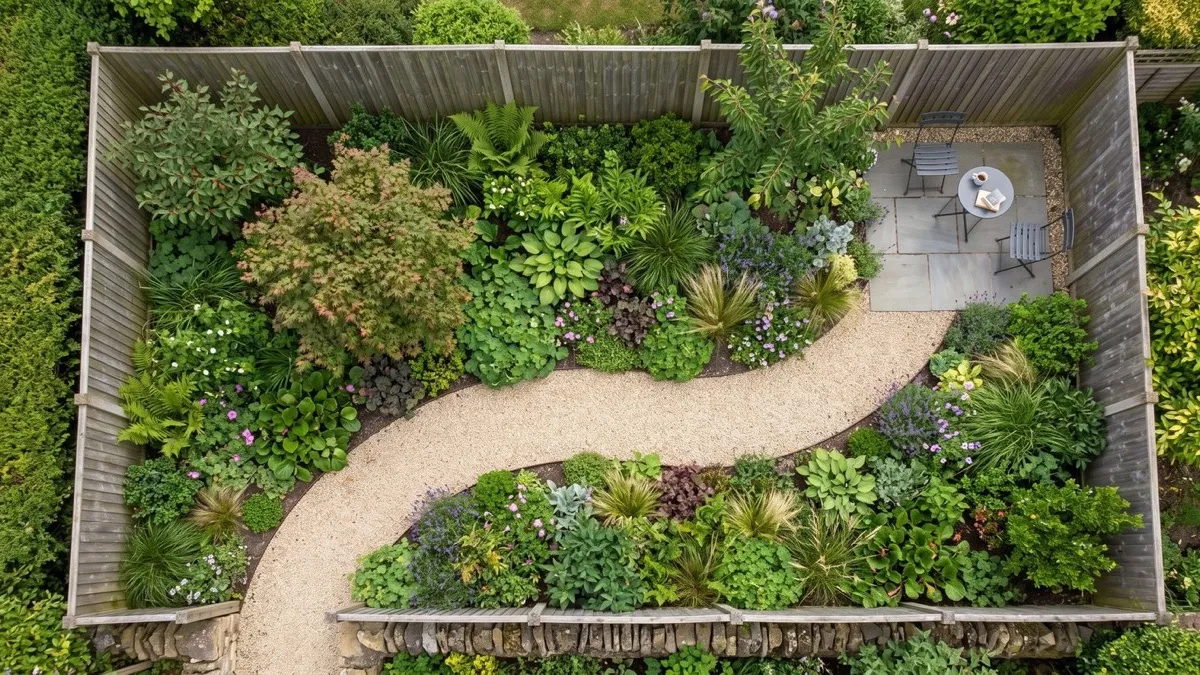 Editorial illustration: the 3m x 5m example gives one curved route, one sitting pocket and linked planting areas.
A light-touch annual editing calendar
Most work falls into two editing periods, with smaller checks between them. Weather and plant choice will change the exact dates.
| Month | Main job | Decision to make |
|---|---|---|
| February | Photograph structure and clear collapsed growth | Which stems still help winter shape? |
| March | Divide suitable congested perennials | Where can a good plant be repeated? |
| May | Thin self-seeders and redefine path edges | Which seedlings improve the pattern? |
| June | Note light and support top-heavy stems | Has growing shade changed the plan? |
| August | Photograph the main planting height | Which plants hide paths or neighbours? |
| September | Edit seedheads before scattering | Where is next year’s self-seeding welcome? |
| November | Photograph winter structure | Does the route still read without flowers? |
Keep a one-page note with plant name, flowering month, final height and any support needed. Two years of notes reveal recurring jobs. That evidence is more useful than copying a maintenance routine from another garden.
Common mistakes with a Fish-inspired garden
The common errors copy informality while leaving out the editing. A useful cottage garden still needs decisions.
Adding too many curves
One purposeful bend creates interest. Several tight curves waste planting room and make edging harder. Test full path width before digging.
Treating self-seeding as no maintenance
Seedlings appear where conditions suit them, not where the plan needs them. Thin twice yearly and remove plants that block routes.
Making every corner a separate theme
Too many small themes fragment a compact plot. Use one or two rooms and repeat plants across their boundaries.
Copying a historic plant list
East Lambrook has its own soil, light and long management history. Choose plants for your current conditions, then borrow the design reasoning.
Filling every gap immediately
Young plants need time to reach mature spread. Use bulbs or a light mulch while permanent plants establish. Do not crowd them with impulse purchases.
Frequently asked questions
What was Margery Fish’s garden style?
Her style used informal planting within a clear garden structure. Winding paths, themed areas, ground cover and self-seeders created variety without losing order.
Where is Margery Fish’s garden?
East Lambrook Manor Garden is in Somerset. It remains registered at the highest heritage grade, although planting has changed as the garden matured.
Which plants suit a Margery Fish-inspired garden?
Choose plants that suit your soil and light first. Hardy geraniums, lady’s mantle, ferns, astrantia, foxgloves and spring bulbs can support the style.
Are self-seeding plants low maintenance?
They can reduce replanting, but they still need editing. Thin crowded seedlings in May and remove unwanted seedheads before they spread.
Can Margery Fish’s ideas work in a small garden?
Yes, the principles scale down well. Use one curving route, one intimate sitting place and a limited plant list repeated through the plot.
Now use our modern mixed-border design guide to turn the plant layers into a practical shopping and spacing plan.
Our team produces practical UK gardening guidance from source research, contributor records and established horticultural practice. Editorial standards are overseen by Matt W.