Key takeaways
- Monty Don is leaving Gardeners' World after the 2026 series, while continuing other BBC work
- Longmeadow remains a private garden; no sale, closure or public opening has been announced
- A BBC contribution towards two gardeners' wages will end, according to a reported public interview
- The garden's future form is undecided, so claims of decline or redevelopment are speculation
- A four-zone audit separates signature areas from productive, support and lower-input spaces
- Autumn is the best time to identify repeated jobs before planning next year's changes
Monty Don’s departure from Gardeners’ World has prompted an obvious question: what happens to Longmeadow next? The honest answer is that no final plan is public. No closure, sale or abandonment has been announced. What will change is the support behind a garden kept ready for weekly television.
That distinction matters. The story is less about celebrity and more about hidden garden labour. A beautiful, mature plot contains repeated mowing, edging, watering, pruning, propagation and path work. When time or help changes, the useful response is a clear maintenance plan, not panic.
What has actually been announced about Longmeadow?
Monty Don will leave Gardeners’ World after the 2026 series. The BBC’s official announcement says he remains involved with other BBC programmes. It does not announce Longmeadow’s closure, sale or redevelopment.
Longmeadow has been the programme’s main garden since 2011. Monty and Sarah Don began making the garden in 1991 from a neglected field. It developed as a collection of distinct garden rooms rather than one open design.
A public interview at the Malvern Autumn Show produced the new detail. The Guardian reported that the BBC contributes towards two gardeners’ wages. That contribution will end with the present arrangement.
Don said he needs to consider how the garden could support that cost. He did not announce redundancies or a commercial plan. Those possible outcomes remain unresolved.
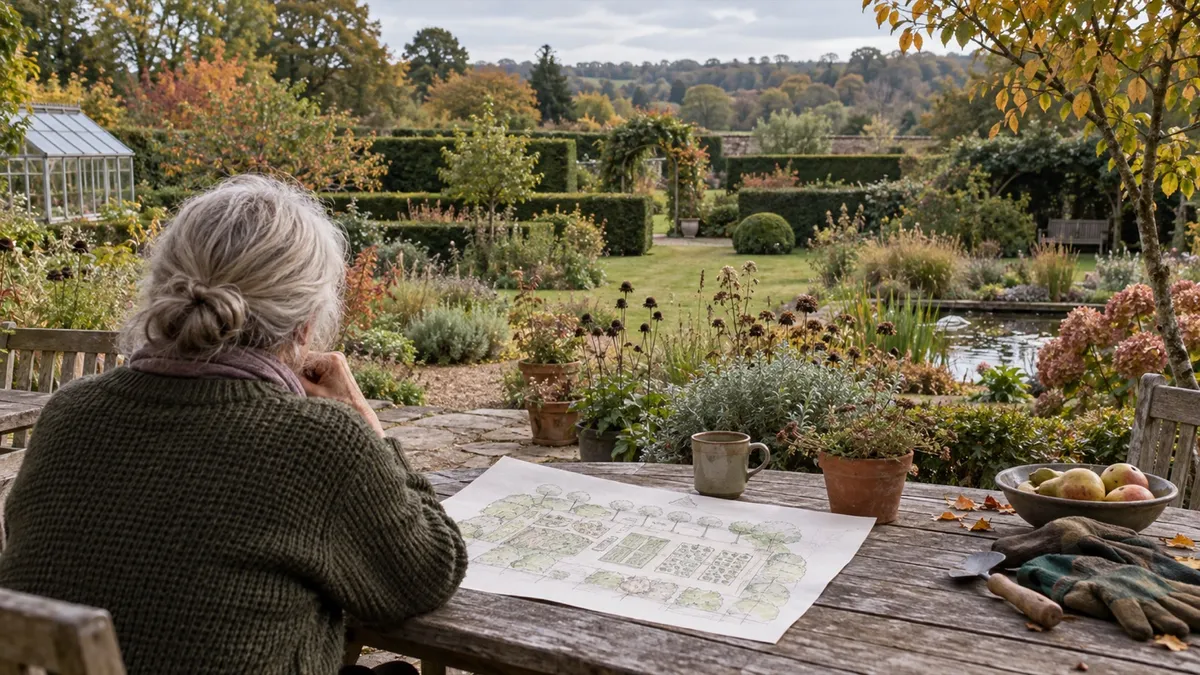
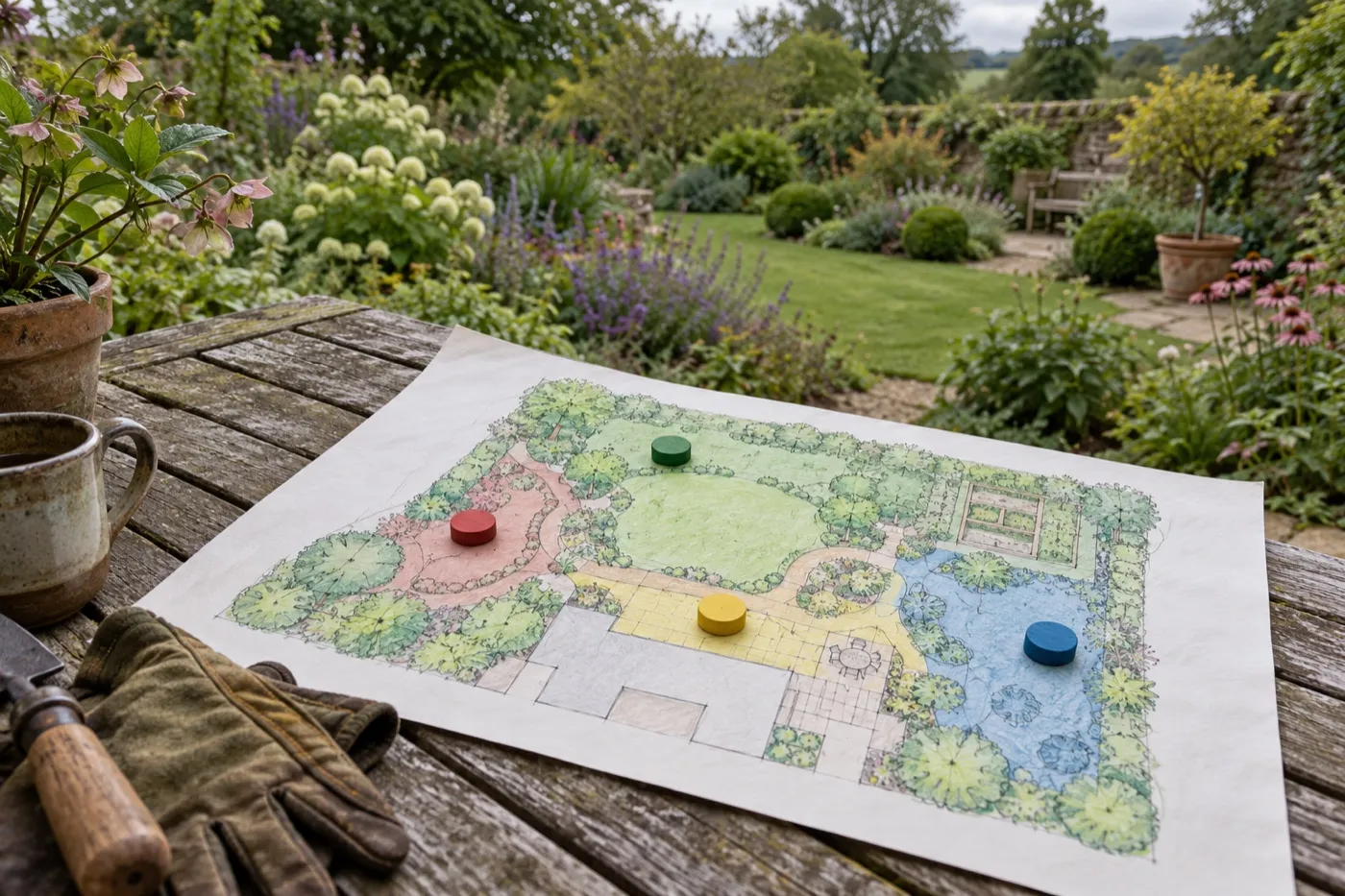 Illustrative image: a four-zone review helps separate essential character from repeated background work. This is not Longmeadow.
What might change at Longmeadow?
The only safe prediction is that priorities may change. A garden can remain recognisable while its maintenance pattern becomes lighter. Mature trees, hedges, permanent paths and established shrubs do not disappear when a weekly filming schedule ends.
The areas most likely to demand regular attention are productive beds, containers, seasonal displays and sharply finished edges. None has been confirmed for removal. They simply contain more repeating jobs than mature woody planting.
Television adds another layer. A presenter may film a task when it is useful for viewers, rather than when the entire garden needs it. Paths, working areas and sight lines must also remain clear for crews and equipment. Removing that production timetable could allow some jobs to move back to their normal seasonal window.
Longmeadow also belongs to a private home. Public interest does not create public access. No precise address, route, security detail or speculative visitor plan belongs in responsible coverage.
Privacy warning: Longmeadow is not a visitor attraction. Do not seek its address, travel there uninvited or share access details.
Use a four-zone garden maintenance audit
A four-zone audit protects character before cutting work. It prevents the common mistake of simplifying everything equally. Some areas earn their labour because they define the garden. Others can change without harming its identity.
| Zone | Purpose | Keep doing | Simplify first |
|---|---|---|---|
| Signature | The views and planting that make the garden recognisable | Structural pruning, key plant care, path access | Fussy edging, short-lived fillers, surplus pots |
| Productive | Vegetables, fruit, herbs and cutting flowers | Crops genuinely used, soil care, crop rotation | Oversized sowing lists, empty beds, thirsty containers |
| Support | Composting, propagation, storage and access | Safe paths, useful propagation, sound structures | Duplicate stock, awkward routes, scattered materials |
| Lower-input | Lawns, rough grass, hedges and outer boundaries | Safety, access and essential seasonal cuts | Weekly mowing, unnecessary tidying, repeated shaping |
Start with a printed plan or a simple sketch. Mark every recurring job for one normal month. Do not redesign yet. The first pass is observation.
This method adds a decision missing from most low-maintenance advice: protect the garden’s identity first. Our guide to designing a garden from scratch helps if the audit reveals that the layout itself causes wasted work.
How to run a one-hour garden maintenance audit
One hour is enough for a useful first record. Choose a dry day and divide the visit into four timed stages. Carry paper, a pencil and a phone camera. Do not start gardening during the audit.
Spend the first 15 minutes walking the main routes. Note slippery surfaces, steps, blocked gates and anything needing prompt repair. Safety and access always come before appearance.
Use the next 15 minutes to mark the garden’s signature areas. Take one photograph from each important viewpoint. Write the single quality that each view must retain, such as enclosure, colour or an open route.
Spend another 15 minutes listing repeated jobs. Include mowing, edging, watering, staking, deadheading, pot care and moving materials. Record frequency beside each task. A ten-minute job done three times weekly matters more than a yearly afternoon.
Use the final 15 minutes to assign each area to one of the four zones. Mark one task to stop, reduce or combine. Avoid choosing permanent removal before seeing the area in another season.
Gardener’s tip: Repeat the same photographs in winter and summer. The pair shows which plants provide lasting structure.
Keep the first plan to one page. Add a second page only for plants requiring specific pruning or protection. A short record is more likely to be used when work becomes busy.
Share the completed page with anyone who helps. Keep a dated copy for comparison. Agree which zone takes priority when time is short. This prevents people repeating easy jobs while essential work waits.
Protect the signature areas first
Signature areas deserve a defined maintenance budget. In a garden of rooms, that may mean one border, a clipped entrance or a productive kitchen garden. The exact choice is personal.
Write down why each area matters. A space may hold the best view from the house. It may contain a valuable plant collection. It may also be the part the family actually uses.
Then name the minimum care needed to keep that quality. A rose border may need annual pruning, feeding and tying. It does not automatically need bare soil, constant deadheading or seasonal bedding around every plant.
This is where selective editing works better than wholesale removal. Keep the mature structure. Remove repeated jobs that add little. Our 70-30 garden design rule helps balance planted areas with paths, seating and other practical space.
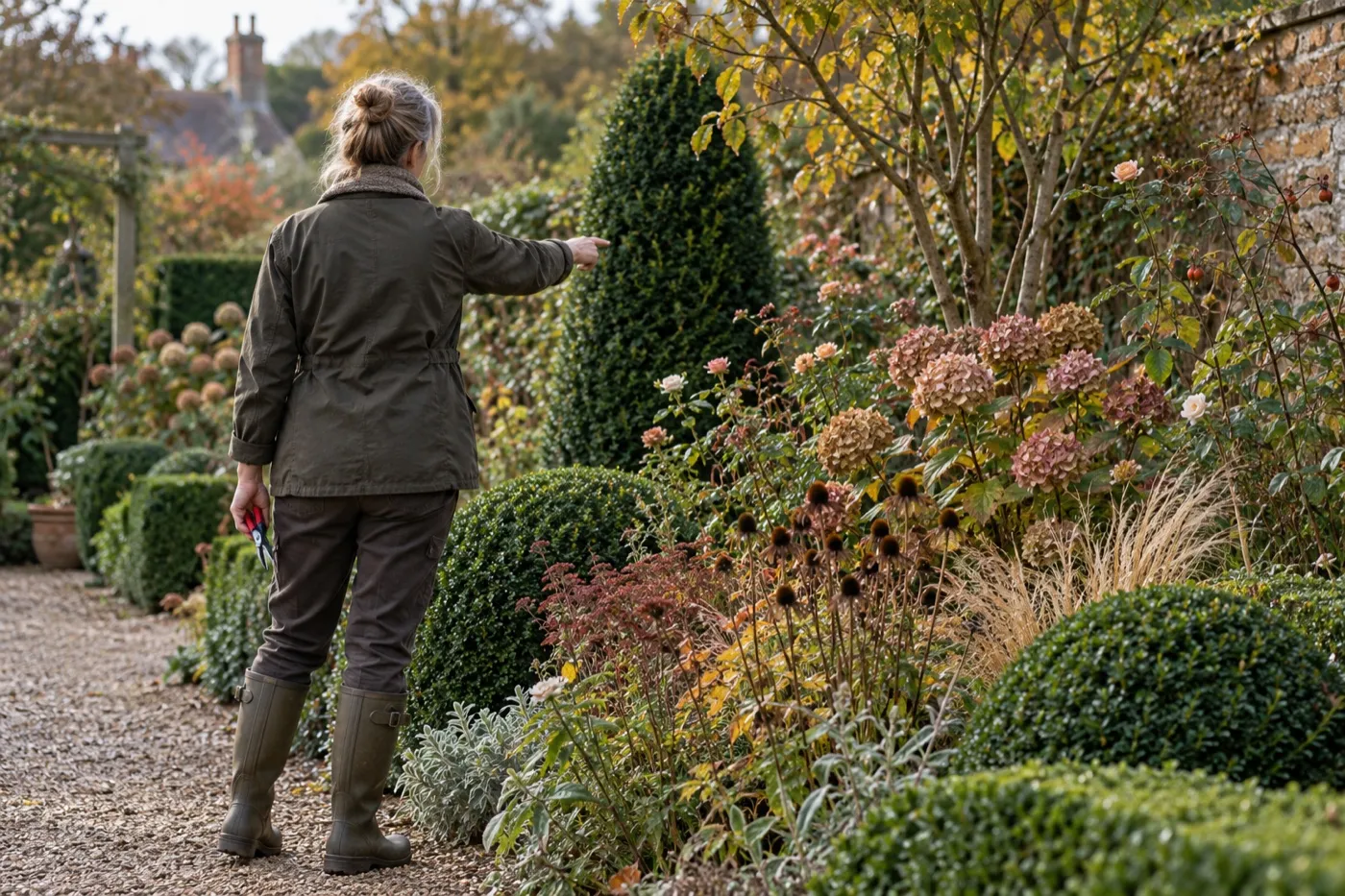 Illustrative image: permanent structure and key plants can stay while low-value tasks are reduced. This is not Longmeadow.
Reduce mowing, edging and path work
Edges create more work than area alone suggests. A narrow strip of lawn around beds needs turning, trimming and awkward mower passes. Small islands and tight corners repeat the problem.
Join small beds where the planting already reads as one group. Widen a border only when denser planting will reduce exposed soil. A larger bare bed is not a labour saving.
For lawns, decide which routes and sitting areas need short grass. Less-used sections can take fewer cuts or become meadow-like grass. Keep clear paths through any longer area so it looks intentional and remains usable.
Paths should lead somewhere and be wide enough for the tools they carry. Moving compost, pots or watering cans along an awkward route wastes time every week. The RHS low-maintenance gardening advice recommends placing labour-intensive features near the house or shed.
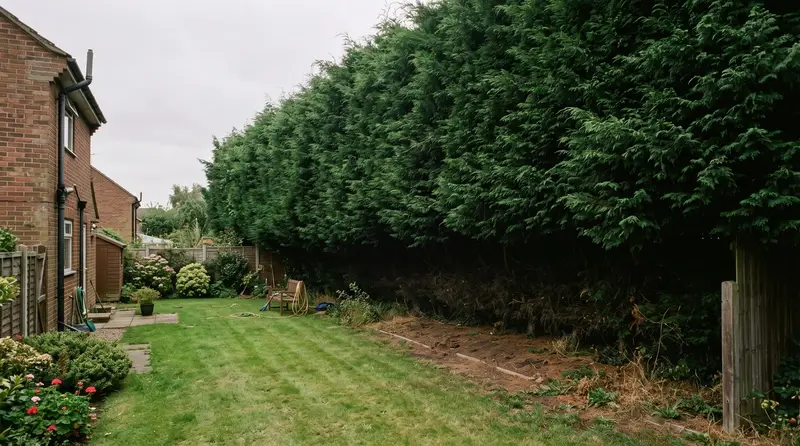
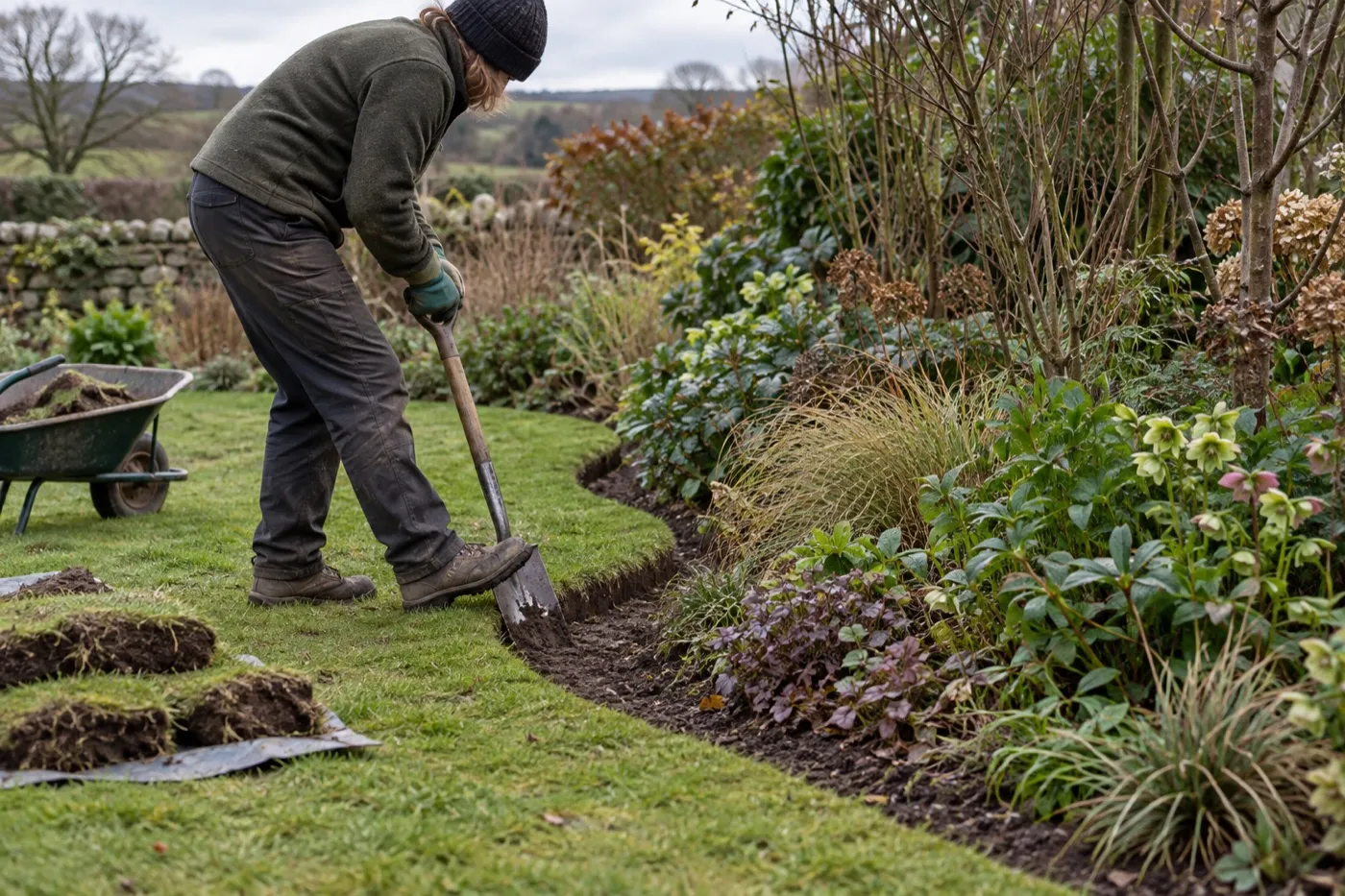 Illustrative image: joining awkward edges can remove repeated mowing and trimming. This is not Longmeadow.
Let sound perennials stand through winter
Autumn clearance does not need to remove every stem. Seedheads and grasses can provide winter structure. They may also shelter insects and feed birds.
Cut down growth that has collapsed onto paths. Remove stems showing obvious disease or soft decay. Leave firm, upright material when it still has a purpose. The RHS advises that many perennials can remain until spring for winter interest and wildlife.
This change shifts work instead of pretending it vanishes. Spring clearance still needs doing. However, the gardener avoids a rushed autumn strip and gains several months of structure.
Choose plants that hold themselves upright. Our guide to plants with winter seedheads gives reliable options. Avoid tall, weak growth beside narrow paths, where every storm creates another clearance job.
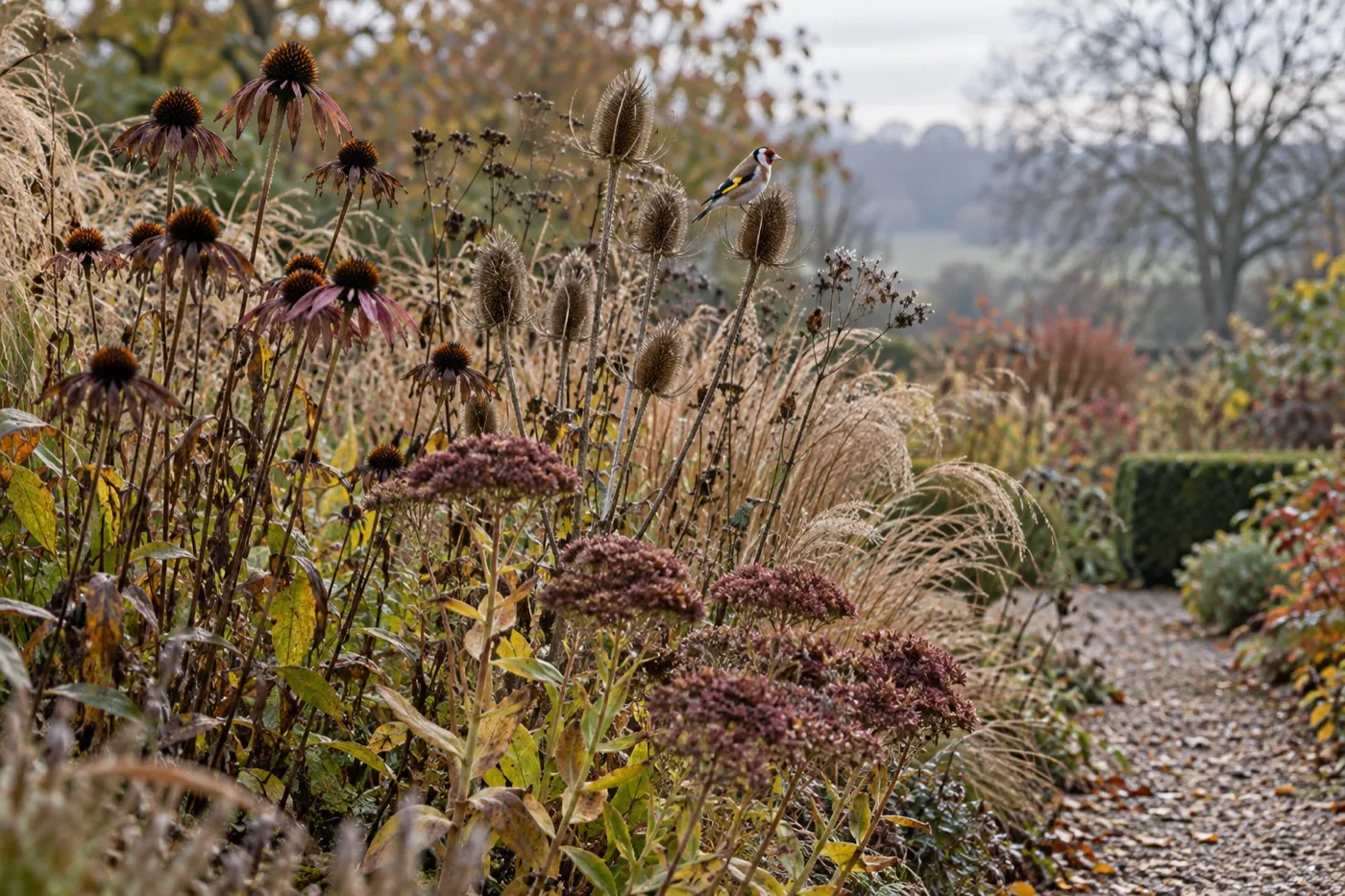 Illustrative image: firm seedheads can remain while diseased or collapsed growth is removed. This is not Longmeadow.
Cover soil instead of repeatedly weeding it
Open soil invites a repeated weeding cycle. Dense ground cover, mulch and wider permanent planting reduce the light reaching new weed seedlings.
Apply organic mulch after removing established perennial weeds. Keep it clear of woody stems and plant crowns. Top it up when the layer becomes thin, rather than following a fixed date regardless of condition.
Ground-cover plants are useful where shrubs leave light at soil level. Match them to aspect and moisture. A vigorous plant in the wrong place simply creates a different control job.
The same principle applies to vegetable beds. Compost spread on the surface can protect soil between crops. It also keeps digging to the places that genuinely require it. Our no-dig gardening guide explains the method and its limits.
For ornamental areas, choose low-maintenance plants by habit and site rather than flower colour alone.
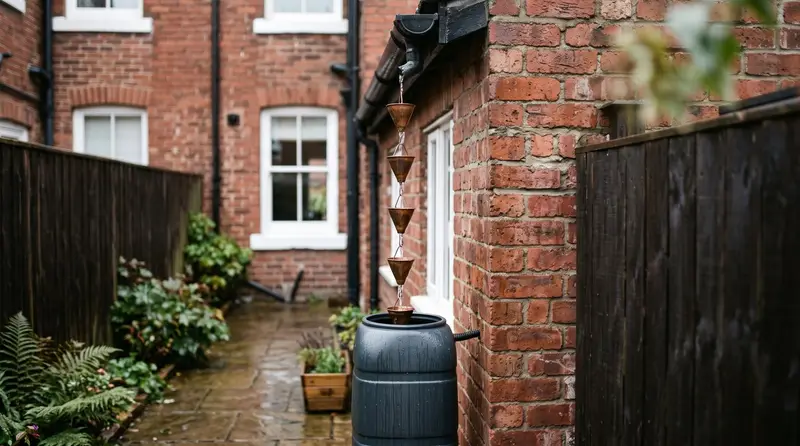
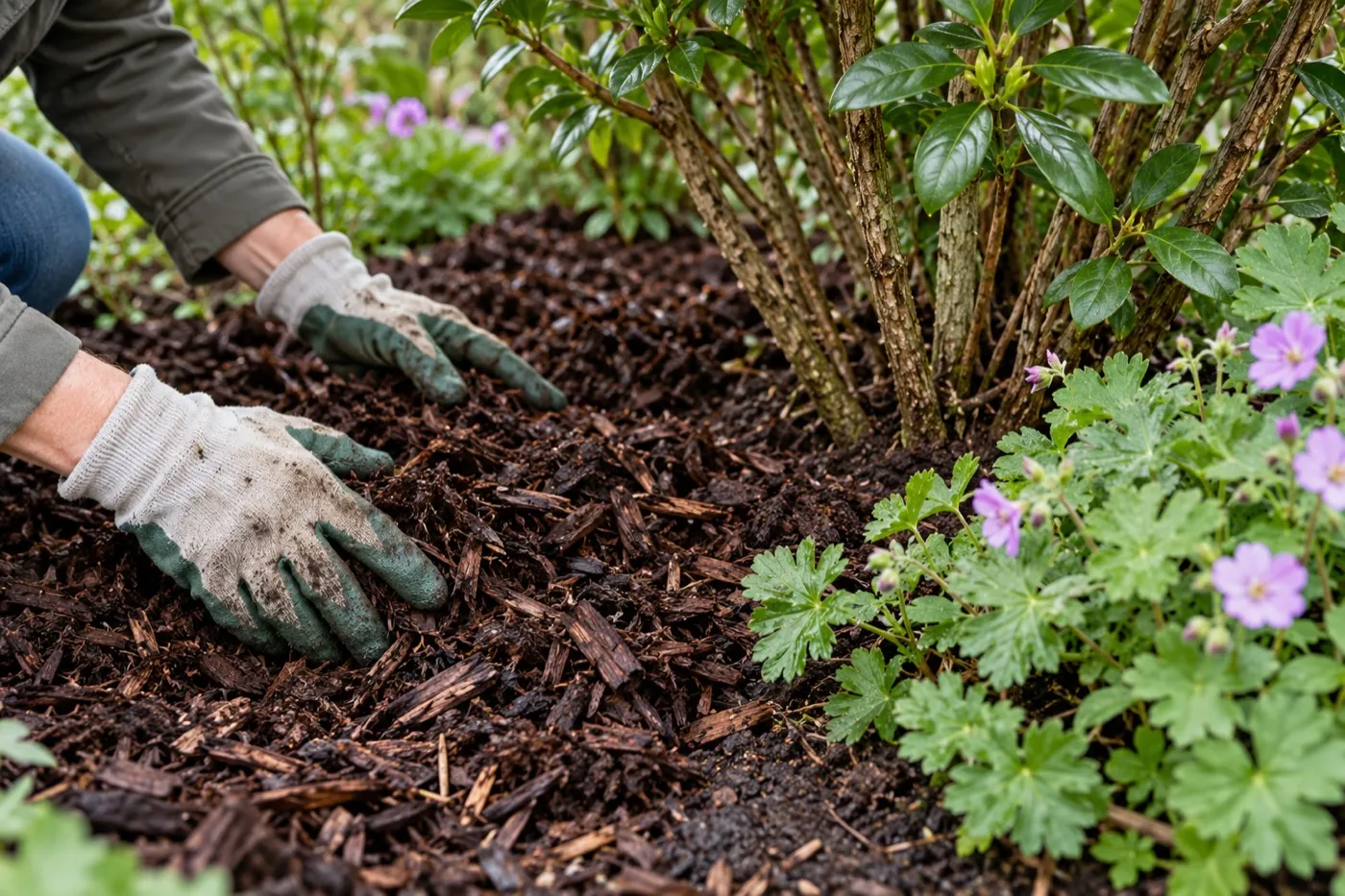 Illustrative image: mulch and suitable ground cover reduce exposed soil. This is not Longmeadow.
Keep a productive garden at a usable scale
A productive garden should match the food and flowers actually used. Large sowing lists generate propagation, watering, thinning, picking and storage work. Empty beds then create more weeding.
List the crops that are regularly eaten or shared. Give those crops the best beds. Reduce varieties grown mainly from habit, especially when harvests repeatedly go unused.
Perennial herbs, soft fruit and established fruit trees can provide useful crops with fewer sowing cycles. They still need pruning, feeding and harvesting, so they are lower-input rather than maintenance-free.
Keep the most visited crops near the main route. Salad leaves, herbs and courgettes need frequent picking. A storage crop can sit farther away. Grouping water-demanding plants also makes irrigation simpler.
Compost systems belong on a firm, accessible route. A hidden heap at the farthest boundary may look tidy, but every barrow journey adds work.
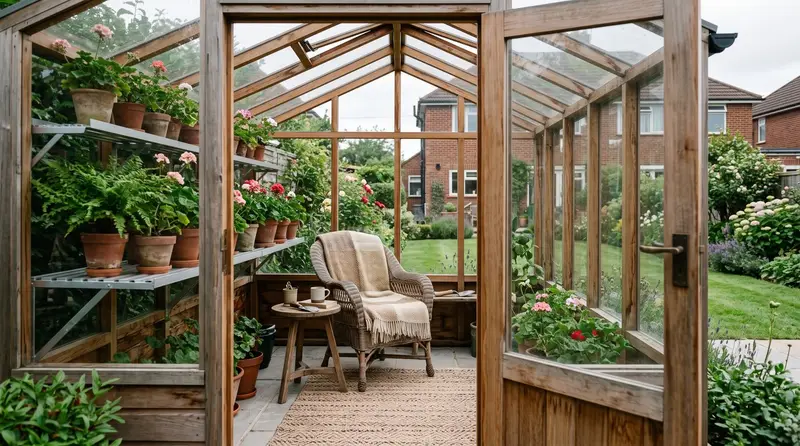
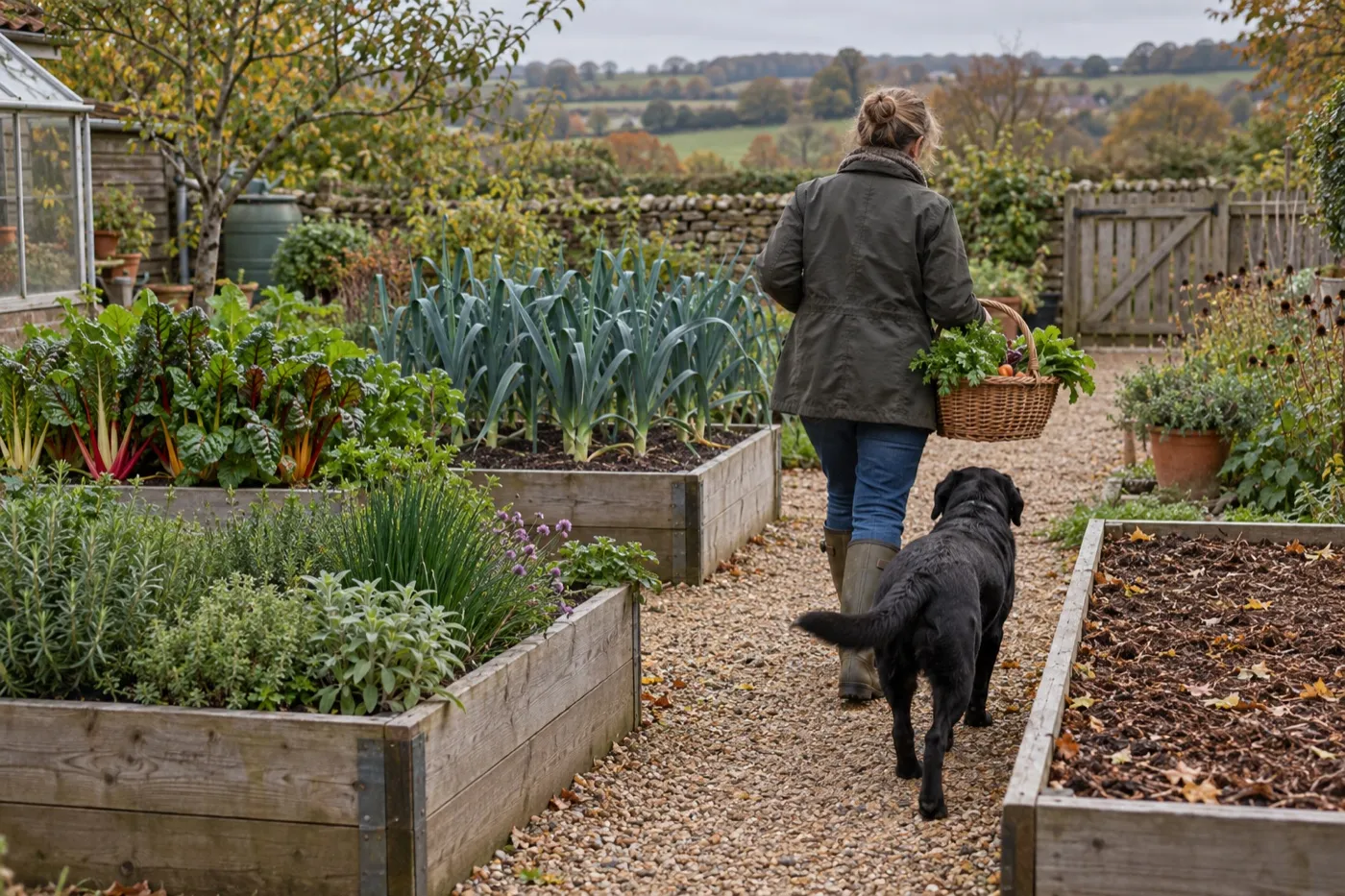 Illustrative image: grow the crops that earn their space, then reduce unused sowings. This is not Longmeadow.
Build a realistic seasonal maintenance calendar
A short calendar stops every job becoming urgent. Begin with safety, plant health and access. Add appearance work only after those needs are covered.
| Season | Essential priorities | Jobs that can often wait or reduce |
|---|---|---|
| Winter | Structural pruning where suitable, tool care, storm checks | Cosmetic tidying of sound seedheads |
| Spring | Path access, mulching, staking plans, first weed control | Filling every temporary gap with bedding |
| Summer | Watering new plants, harvesting, safety checks | Daily deadheading across the whole garden |
| Autumn | Planting, diseased material removal, drainage checks | Cutting every sound perennial to the ground |
Regional weather should overrule the date. Do not work saturated soil simply because the calendar says so. Delay heavy access until the surface no longer smears or compacts.
Use our year-round pruning calendar for plant-specific timing. The autumn gardening checklist separates worthwhile seasonal jobs from optional tidying.
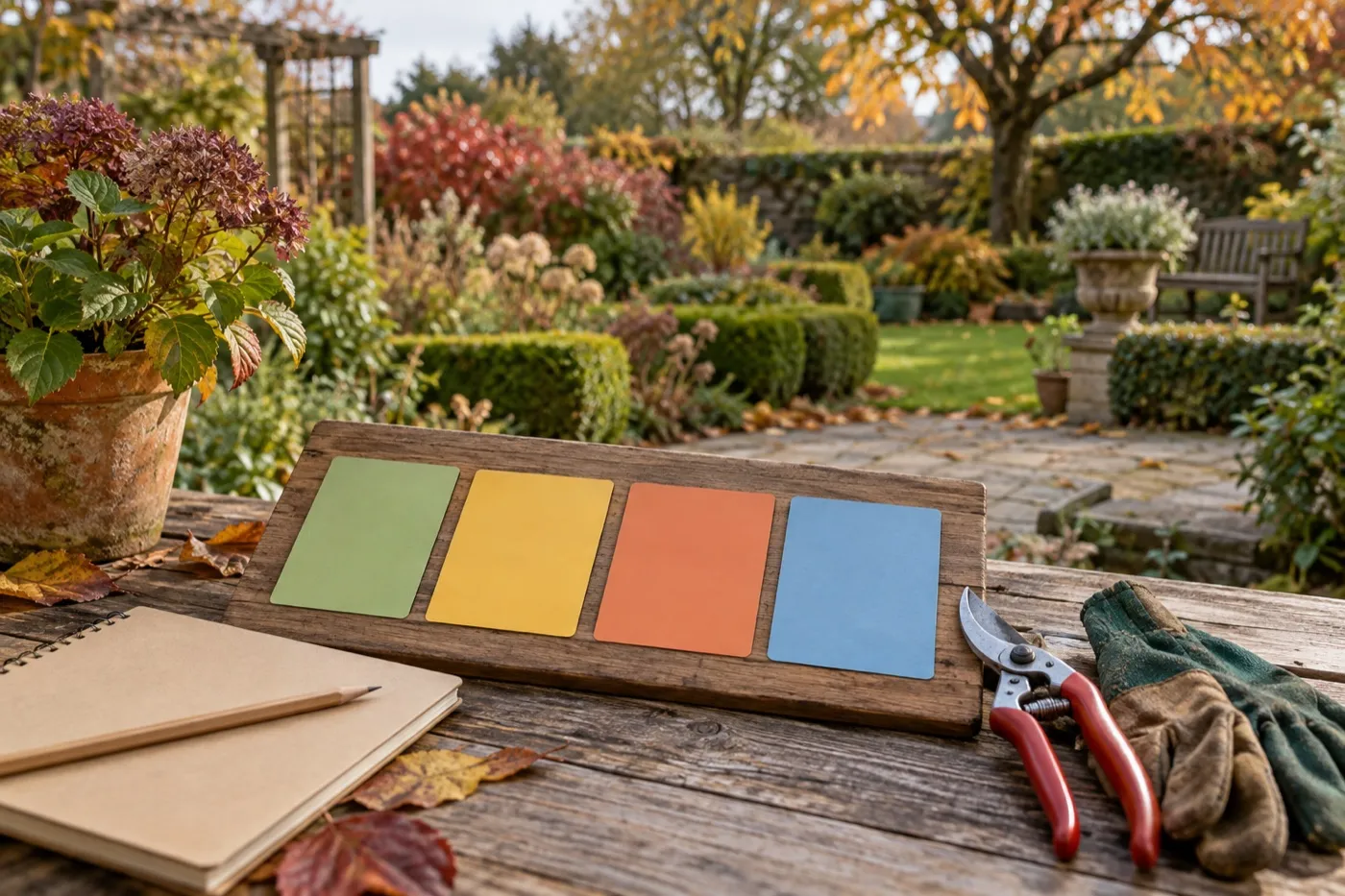 Illustrative image: a four-season plan makes essential work visible without manufacturing weekly urgency. This is not Longmeadow.
Common mistakes when simplifying a mature garden
Fast simplification can create more work than it removes. Mature gardens contain relationships that only become obvious after a season.
Removing structure before recording it
Photograph key views in winter and summer. Mark paths, shade, wet ground and important plants before lifting anything. Mature shrubs may be doing more visual work than their individual flowers suggest.
Replacing every border with paving
Hard surfaces still need drainage, cleaning and repair. Large impermeable areas can also move rainwater towards buildings. Simplify planting selectively before committing to major construction.
Choosing fast-growing replacements
Rapid growth brings pruning and clearance. Check mature height and spread. A slower shrub in the right space usually creates less work than a vigorous plant repeatedly cut back.
Calling neglect naturalistic management
Longer grass and standing stems still need decisions. Keep routes open, remove dangerous growth and stop invasive plants before they seed. A deliberate wildlife area can include a log pile without becoming inaccessible. Find broader planning help in our garden design guides.
What the Longmeadow story really tells gardeners
Finished-looking gardens conceal a great deal of labour. Weekly television made that work unusually visible, even if viewers did not see every maintenance hour.
The next stage of Longmeadow has not been announced. It may retain the same team, find income elsewhere or change how some areas are managed. Anything more definite is guesswork.
The transferable lesson is clearer. A garden does not need equal effort everywhere. Protect the places that carry its identity. Keep productive areas only at a useful scale. Make support routes efficient. Let suitable outer areas work more naturally.
That approach is not giving up. It is garden management based on priorities rather than habit.
Frequently asked questions
Will Longmeadow close after Monty Don leaves Gardeners’ World?
No closure has been announced. Longmeadow is a private garden, and Monty Don has not announced a sale, abandonment or public opening. He has said the garden’s finances and staffing need consideration after a BBC wage contribution ends.
Who owns Longmeadow?
Longmeadow is Monty and Sarah Don’s private garden. They began creating it from a neglected field in 1991. Gardeners’ World has filmed there since 2011, but the garden is not BBC property.
Will Longmeadow open to the public?
No public opening is planned. Monty Don has explained that it is a private home garden and that visitor parking would be difficult. Readers should not travel there or seek private access.
How can I reduce work in a large garden?
Protect the areas you value most and simplify repeated jobs elsewhere. Audit mowing, edging, watering, staking, seasonal bedding and container care. Replace low-value routines with shrubs, ground cover, mulch or more natural management.
Should I cut every perennial border back in autumn?
No, selective cutting is usually better. Remove diseased or collapsed growth, but keep sound stems and seedheads where they provide winter structure, food and shelter. Finish the main clearance in spring.
Why does a mature garden need a maintenance plan?
A plan protects the garden’s best features when time or help changes. It separates essential safety and plant care from repeated cosmetic jobs. That makes reductions deliberate rather than reactive.
How often should I review a garden maintenance plan?
Review it once each season for the first year. Record jobs that took longer than expected and areas nobody used. After that, an annual autumn review is usually enough.
Now the audit is clear, use our low-maintenance planting guide to reduce work while retaining the garden’s character.
Our team produces practical UK gardening guidance from source research, contributor records and established horticultural practice. Editorial standards are overseen by Matt W.