Raised Bed Garden Design Ideas UK
Raised bed design ideas for UK gardens with sizing, materials, layout plans and planting schemes. Tested builds in clay soil over 9 years.
Key takeaways
- Maximum width of 1.2m so you can reach the centre from either side without stepping on the soil
- 30cm height is enough for most vegetables; 45-60cm for root crops and accessible gardening
- Timber sleepers last 15-20 years; softwood boards last 5-8 years with treatment
- Fill with 50% topsoil and 50% compost for the best growing medium
- Raised beds warm 2-3 weeks faster than ground soil in spring, extending your growing season
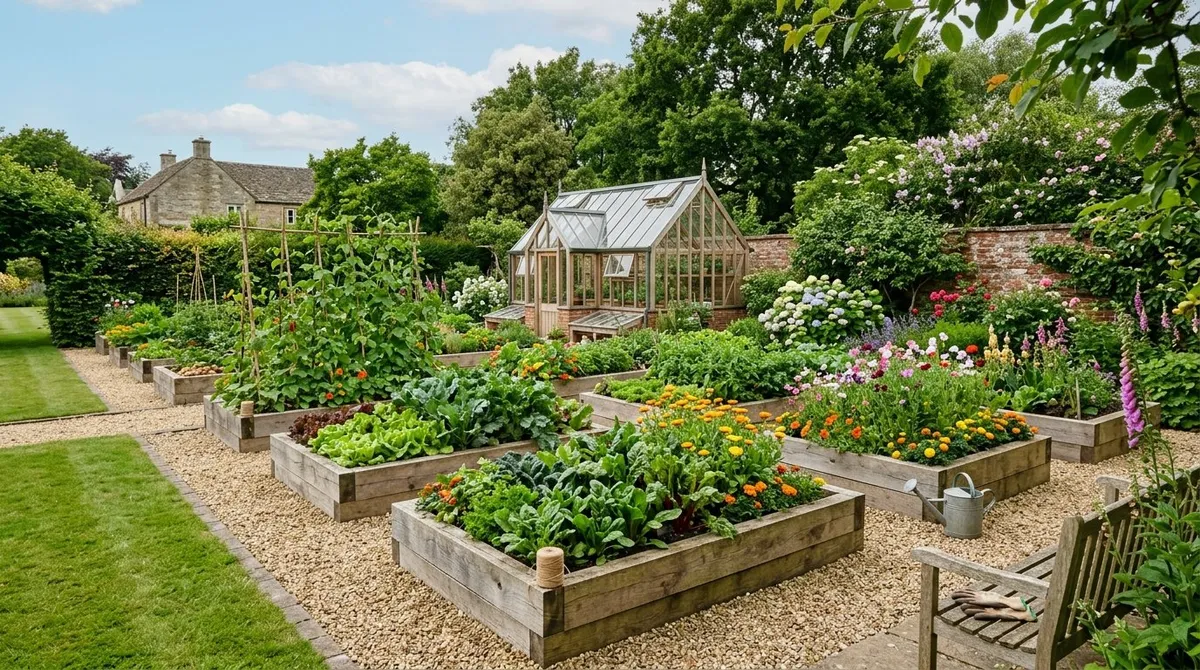
Raised beds solve the three biggest problems in UK gardening: poor drainage on clay soil, cold soil in spring, and the back pain that comes from working at ground level. A well-designed raised bed garden is productive from the first season and improves with each year as the soil biology establishes.
After building and maintaining 12 raised beds in various materials over 9 years in Staffordshire clay, I have learned what works, what fails, and what I would do differently. This guide covers design layouts, materials, dimensions and planting ideas for every size of UK garden.
Getting the dimensions right
The dimensions of a raised bed determine how practical it is to use. Too wide and you cannot reach the centre. Too narrow and you waste materials for the growing area you get.
Width: 1.2m maximum. This is the dimension that matters most. An adult can comfortably reach 60cm from a standing position. A 1.2m bed is reachable from both sides without stepping on the soil. If the bed is against a wall or fence, reduce to 60cm wide since you can only access from one side.
Length: 1.8m to 3m. Standard timber comes in 2.4m lengths, making this a practical size that avoids cutting. Keep under 3m or people will step across the bed instead of walking around it.
Height: 30cm to 60cm. For standard vegetable growing on reasonable soil, 30cm is sufficient. This gives root crops enough depth and lifts the growing surface above waterlogged clay. For wheelchair access or to eliminate bending, build to 60-80cm. For ornamental raised beds, 45cm looks proportionally right in most gardens.
| Purpose | Width | Length | Height | Fill volume |
|---|---|---|---|---|
| Standard veg bed | 1.2m | 2.4m | 30cm | 0.4m3 |
| Against a wall | 0.6m | 2.4m | 30cm | 0.2m3 |
| Accessible (seated) | 0.9m | 1.8m | 60cm | 0.5m3 |
| Deep root crops | 1.2m | 2.4m | 45cm | 0.6m3 |
| Ornamental | 1.2m | varies | 45cm | varies |
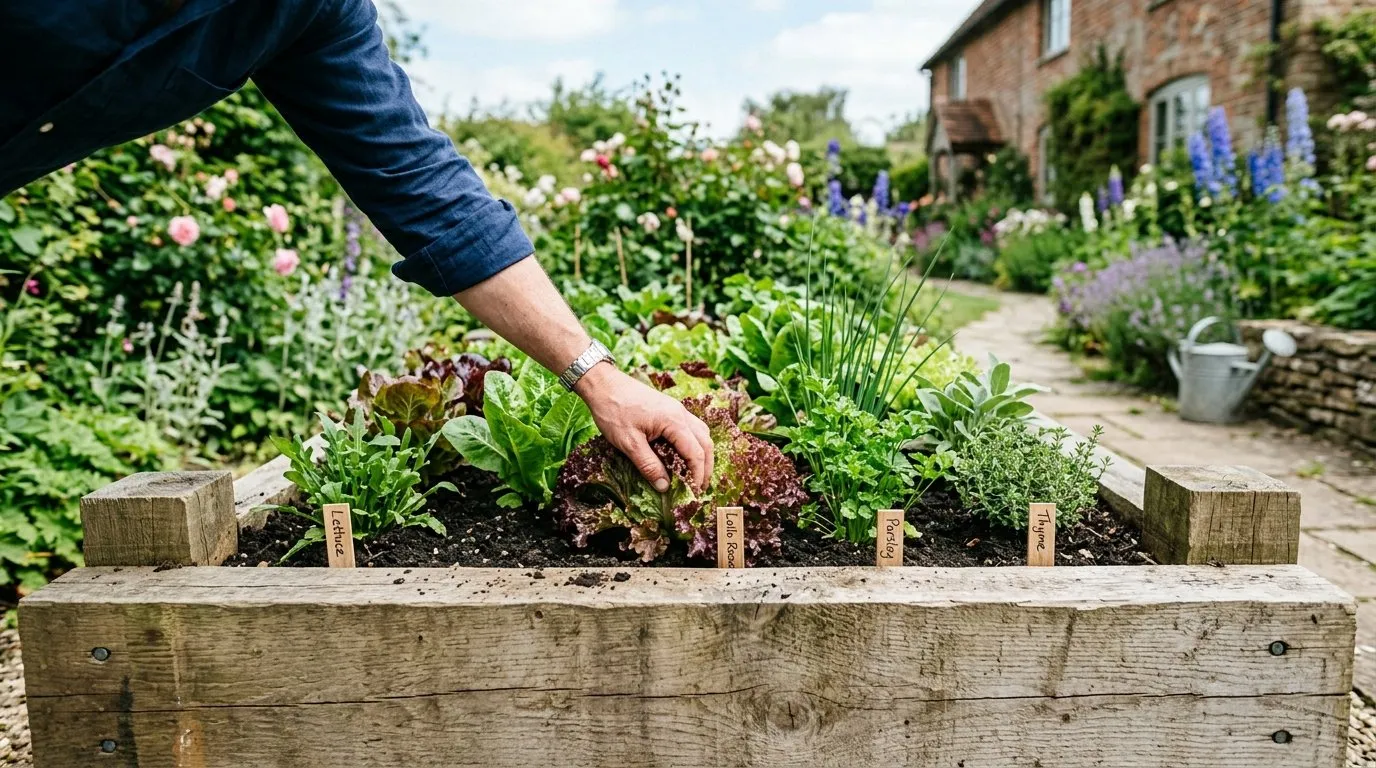
Standard raised bed dimensions: 1.2m wide for two-sided access, 30cm high for most vegetables, 2.4m long to match standard timber lengths.
Material options for raised beds
Timber sleepers (my recommendation)
Treated softwood sleepers (100mm x 200mm) are the best all-round choice for UK raised beds. They are heavy enough to stack without posts, thick enough to resist rot for 15-20 years, and give a solid, permanent look.
Cost: 12-18 pounds per 2.4m sleeper. A single 30cm-high bed needs two courses, so 8 sleepers for a standard bed: 96-144 pounds.
Stack sleepers directly on levelled ground. Drill and screw them together at the corners using 200mm coach screws. No concrete foundation needed.
Scaffold boards
Cheaper at 8-12 pounds per 3m length, but only 38mm thick. They need corner posts (75mm x 75mm) every 1.2m to prevent bowing under soil pressure. Treat with wood preservative annually. Expect 5-8 years before replacement.
Galvanised steel
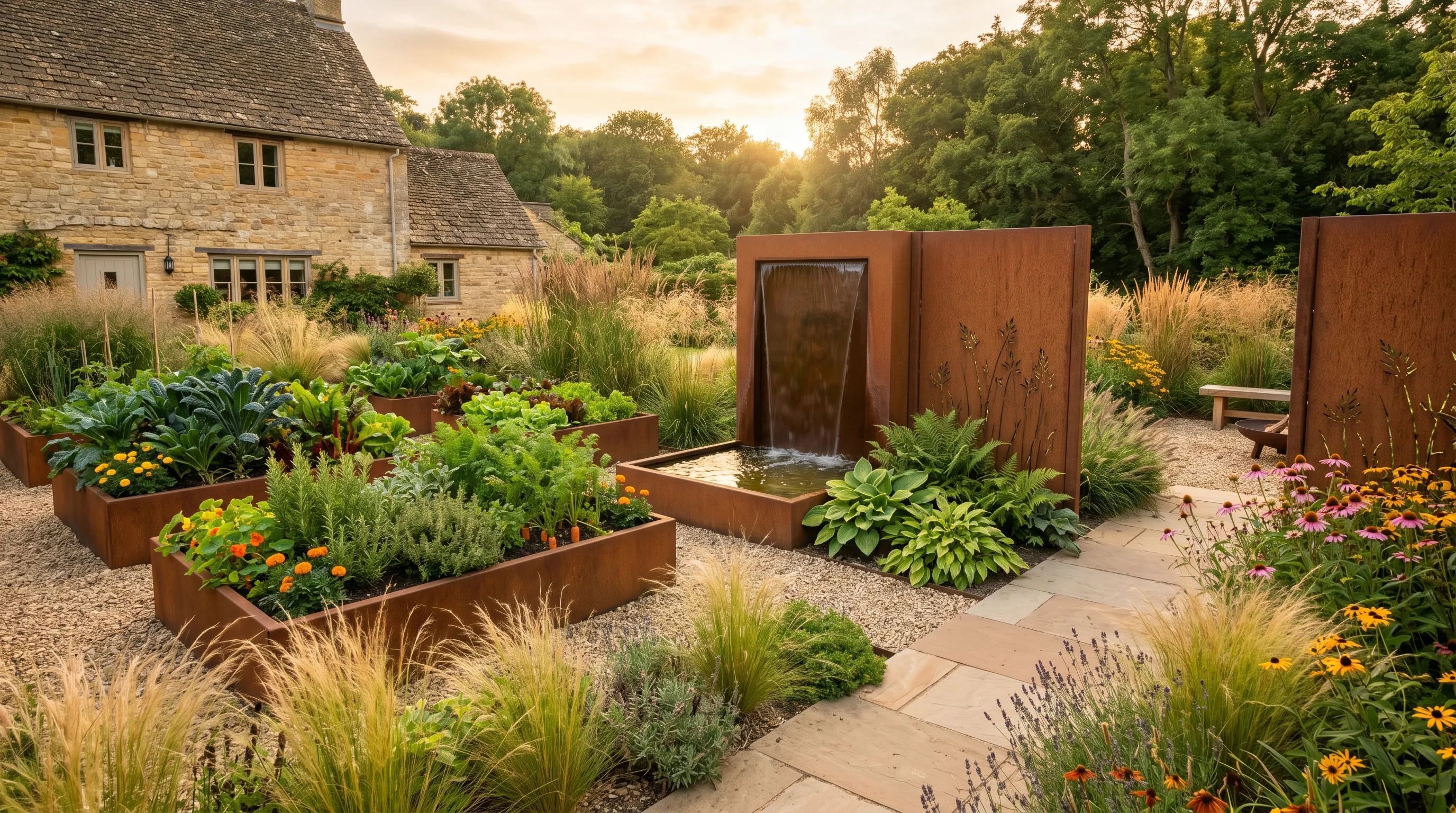
Corrugated galvanised steel raised beds have become popular and for good reason. They are completely rot-proof, look modern, and cost 60-120 pounds for a standard bed kit. The thin steel heats up faster in spring, warming soil earlier. The downside is that steel also cools faster at night and can overheat roots in full summer sun. A south-facing steel bed in July can reach soil temperatures above 35C.
Brick or stone
The most permanent and expensive option. A brick raised bed with proper foundations costs 300-500 pounds per bed in materials alone, plus the labour of building it. The result lasts decades and suits formal garden designs. Good thermal mass means the bed stays warm longer in autumn.
Layout designs for different garden sizes
Small garden (4-6 beds)
Four beds arranged in a square with a central crossing path. Each bed 1.2m x 1.2m with 60cm paths between them. Total footprint: 3.6m x 3.6m. This produces enough vegetables for salads, herbs and seasonal harvests for two people.
Medium garden (8-12 beds)
Two rows of four beds, each 1.2m x 2.4m, with 60cm paths between beds and a 90cm central path for wheelbarrow access. Total footprint: 6m x 8m. This feeds a family of four with surplus for freezing.
Allotment-style (full plot)
Longer beds (1.2m x 3m) in rows with 45cm working paths and one 1.2m main access path. Maximises growing area. Works well for serious vegetable production and follows traditional allotment principles.
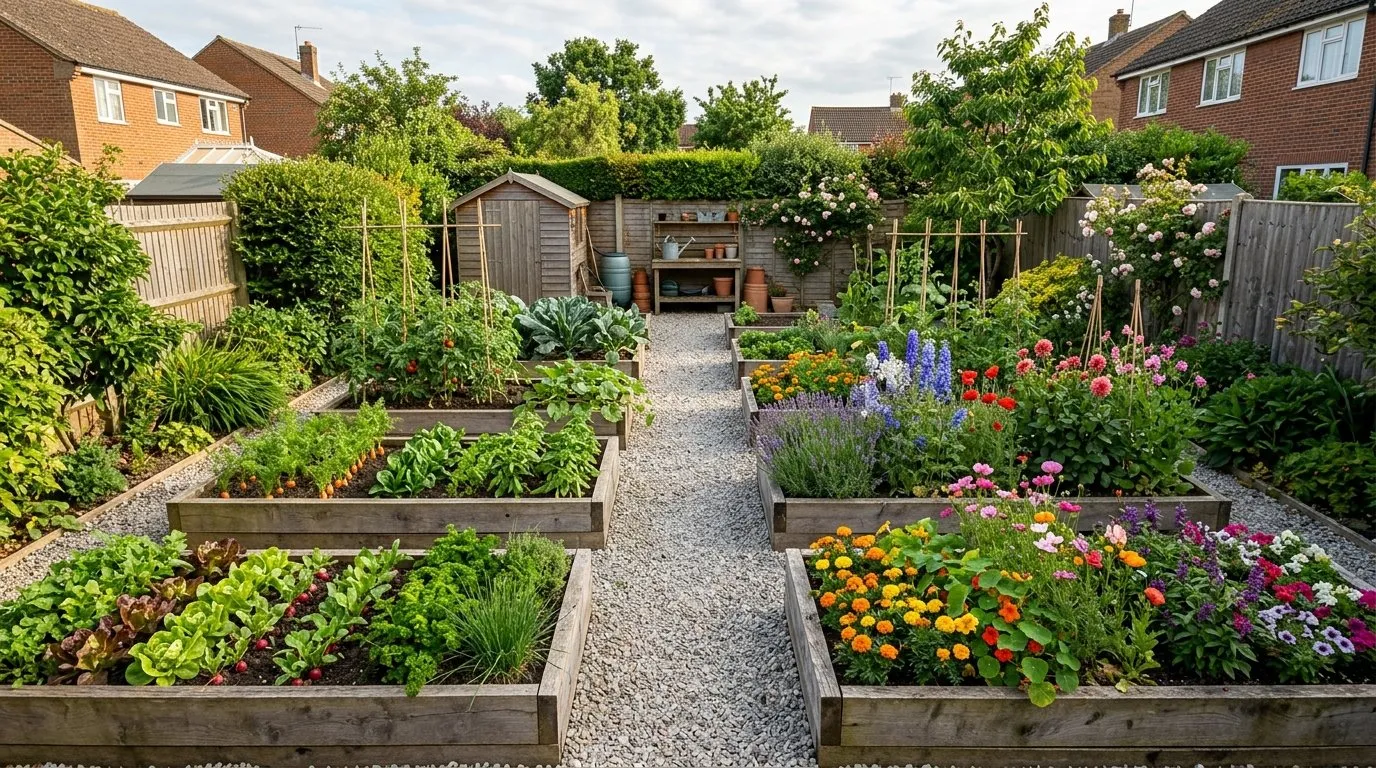
A medium garden layout: eight 1.2m x 2.4m beds with 60cm side paths and a 90cm central path for wheelbarrow access.
Filling raised beds: the right mix
What you fill the beds with matters as much as the structure itself. Do not use garden soil alone from clay sites - it compacts and drains poorly, defeating the purpose of raising the bed.
The mix I use:
- Bottom third (beds over 30cm): Rough organic matter - woody chippings, half-rotted compost, shredded prunings. This breaks down slowly over 2-3 years, creating air spaces and improving drainage.
- Top two-thirds: 50% screened topsoil and 50% garden compost. This gives a fertile, well-structured growing medium from day one.
Volume calculator: A standard 1.2m x 2.4m x 0.3m bed needs approximately 0.86 cubic metres of fill (0.4m3 accounting for settling). Order 10% extra as the mix settles over the first season.
Cost of fill: Bulk topsoil costs 25-35 pounds per cubic metre delivered. Bagged compost is significantly more expensive. For multiple beds, bulk delivery is essential. A standard bed costs 40-60 pounds to fill.
Planting ideas for raised beds
Vegetable raised beds
Crop rotation works perfectly with raised beds. Dedicate each bed to a plant family and rotate annually:
- Bed 1: Legumes - broad beans, peas, runner beans
- Bed 2: Brassicas - broccoli, cauliflower, kale
- Bed 3: Roots - carrots, beetroot, parsnips
- Bed 4: Alliums and others - onions, garlic, leeks
Ornamental raised beds
Raised beds work brilliantly for cottage garden borders, herb gardens and mixed planting. The raised height brings small plants closer to eye level and creates defined structure in an informal garden.
Fill with a mix of perennials, grasses and seasonal bulbs. Lavender, salvias, echinacea and dahlias all thrive in the improved drainage of a raised bed.
Cut flower raised beds
Dedicate one or two beds to cut flowers. Sweet peas, dahlias, cosmos and sunflowers produce better stems in the rich, well-drained conditions of a raised bed.
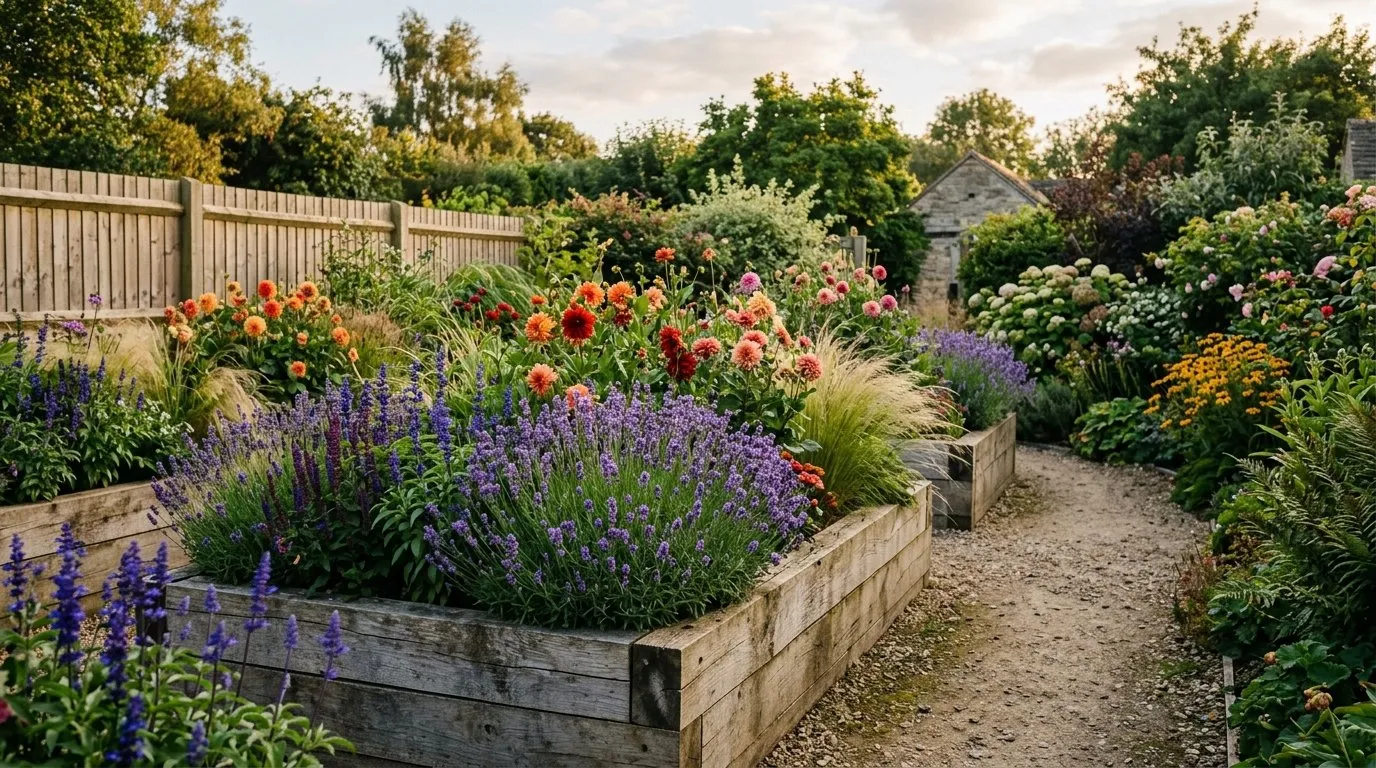
Ornamental raised beds filled with a mix of lavender, salvias, grasses and seasonal dahlias. The raised height brings smaller plants closer to eye level.
Maintaining raised beds year by year
Spring (March): Top up with 5cm of compost before the growing season starts. The fill level drops 3-5cm annually as organic matter decomposes. This annual top-dressing is all the soil improvement raised beds need.
Summer: Water as needed. Raised beds drain faster than ground-level soil, so expect to water more frequently during dry spells. Mulch with compost or straw to retain moisture.
Autumn: Clear spent crops. Plant green manures or cover with cardboard and compost to suppress weeds and feed the soil over winter.
Winter: Check timber for rot. Tighten any loose screws. Plan next year’s crop rotation and seed orders.
Related reading
Lawrie has been gardening in the West Midlands for over 30 years. He grows his own veg using no-dig methods, keeps a wildlife-friendly garden, and writes practical advice based on real UK growing conditions.